
Zen Garden Ideas: Gravel, Lanterns, Buddha & Basin Water
Written by Matt W on 11th Aug 2026.
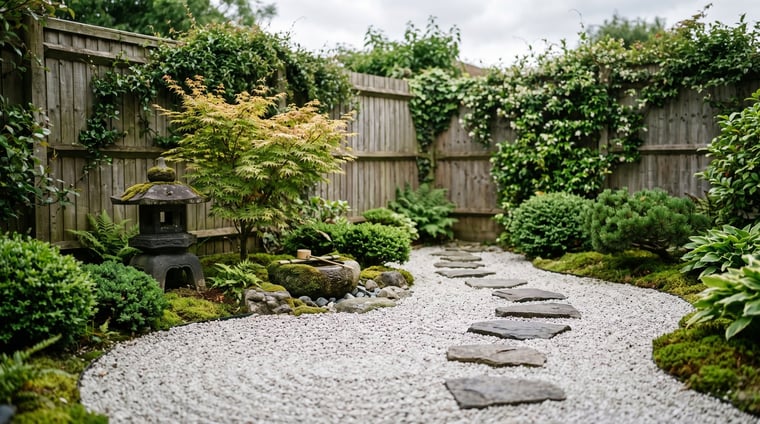
A zen or Japanese-style garden builds calm from five things. Raked gravel, natural stone, still water, restrained planting and one quiet focal point. In a UK garden the look works at any size, from a 2 square metre courtyard corner to a whole back garden. Anchor it with a stone lantern or a seated Buddha. Add a basin of moving water, then keep planting to two or three green species. The result is quiet, low upkeep and timeless.
By Matt W | Garden Ornaments Specialist
Key takeaways
- The Japanese look rests on five parts: raked gravel, natural stone, still water, sparse green planting and one restrained ornament
- Spread decorative gravel 50 mm deep over a weed membrane for clean rake lines; a 800 kg bulk bag covers about 10 square metres
- Use one focal ornament per view, not a group. A stone lantern, a pagoda or a single Buddha does the work
- A self-contained stone basin runs from roughly £4 a year in summer on a 10 watt pump
- Frost is the real UK test. Choose granite or reconstituted stone and raise pieces off wet ground
- Swap the traditional palette for hardy stand-ins: acer, clumping bamboo, moss and clipped box
Shop Japanese garden ornaments →
Matt's note
People think a Japanese garden means a big project and a specialist plant list. It does not. The quickest calm corner I set up starts with one bag of gravel, one stone lantern and one basin. Get those three right and give them empty space around them, and the mood arrives before a single plant goes in. Restraint is the whole trick. Add less than you want to.
What makes a garden look Japanese?
Five elements do nearly all the work: gravel, stone, water, sparse planting and a single restrained ornament. A Japanese garden is arranged, not filled. It leans on asymmetry, open space and one clear focal point per view rather than colour and abundance. Traditional gardens also borrow the scene beyond the boundary, a trick called shakkei, so a distant tree or roofline becomes part of the picture.
The style splits into two broad types. A dry garden, kare-sansui, uses raked gravel and rock to suggest water without any at all. A stroll garden adds a real basin or pond, stepping stones and a lantern to light the path. Most UK gardens work best as a blend of the two. If you want to shop the individual pieces first, our guide to Japanese garden ornaments covers lanterns, pagodas and basins in detail. This article is about the whole look, and how the pieces sit together.
Prefer a warmer, sunnier feel? A Mediterranean garden uses the same idea of gravel plus a few strong ornaments, in a completely different mood.
How do you make a zen garden with gravel?
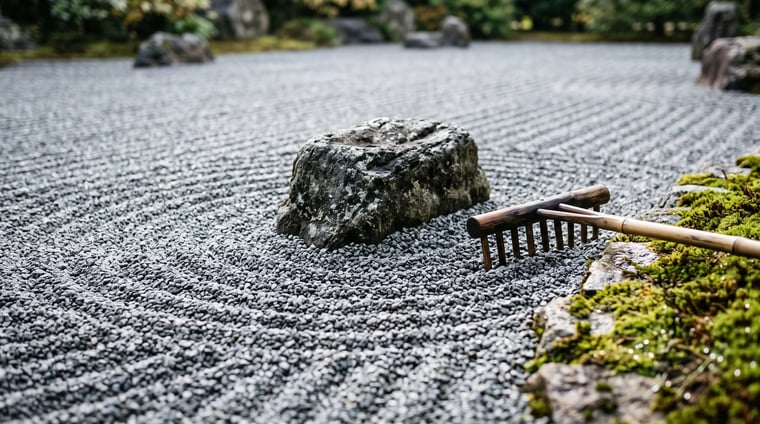
Lay a weed membrane, then spread decorative gravel 50 mm deep and rake it into simple lines or gentle curves. The gravel is the canvas. Rake lines flowing around a rock stand in for ripples around an island, which is the heart of the dry-garden idea. Pale grey or buff angular gravel holds a raked line far better than rounded pea shingle, which slumps back flat.
Depth matters for two reasons: too shallow and the membrane shows through, too deep and the rake drags. Fifty millimetres is the sweet spot. Use this table to order the right amount. Gravel weighs roughly 1.6 tonnes per cubic metre, and a standard 800 kg bulk bag holds about half a cubic metre.
| Raked area | Gravel volume | Approx weight | 800 kg bulk bags |
|---|---|---|---|
| 4 m² (small corner) | 0.20 m³ | 0.32 t | 1 (part used) |
| 10 m² | 0.50 m³ | 0.80 t | 1 |
| 20 m² | 1.00 m³ | 1.60 t | 2 |
| 30 m² | 1.50 m³ | 2.40 t | 3 |
Edge the gravel with a timber board, a steel edge or a line of flat stones so it does not migrate into borders. Set flat stepping stones proud of the surface, about 40 mm above the gravel, so the rake passes underneath. Then add rocks in odd-numbered groups, one, three or five, part-buried so they look settled rather than dropped.
Watch out for
Gravel laid straight onto soil turns into a weed bed by summer. A permeable membrane underneath is not optional. Skip it and you will be picking bindweed out of a raked surface for years, which defeats the entire calm idea.
Where should a stone lantern go in a Japanese garden?
Place a lantern near water, at a bend in the path, or where two areas meet, never dead centre. In a traditional garden the lantern lit the way to the tea house. So it belongs at a turning point or beside a basin, not marooned in gravel. One lantern per view is plenty. Two competing lanterns cancel each other out.
Two shapes suit most gardens. A low, wide snow-viewing lantern, yukimi-gata, sits beautifully at the edge of gravel or beside a basin, its broad cap catching frost or moss. A tall pedestal lantern, tachi-gata, reads as an upright accent near a path or a taller shrub. Whichever you choose, set it on a firm, level base. A heavy granite or reconstituted-stone lantern will lean or sink over a winter if it sits straight on soft ground. A single paving slab or a bed of compacted hardcore under the base solves it.
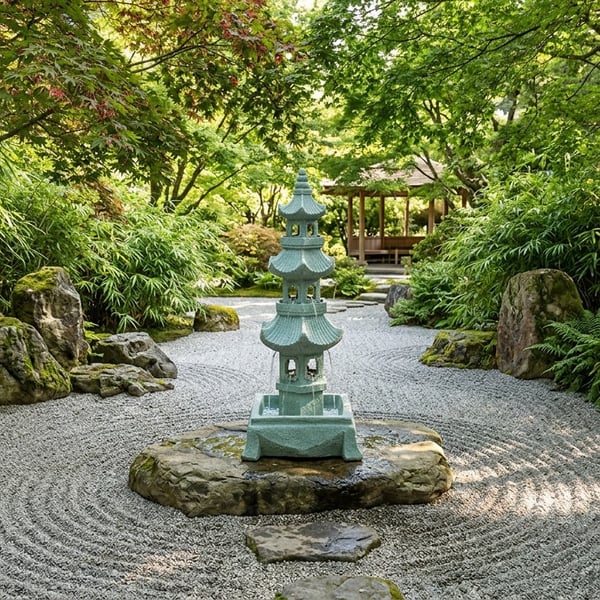
A pagoda plays a similar role with more height and tiers, and works as a focal point at the back of a gravel bed where its silhouette stands against a fence or hedge.
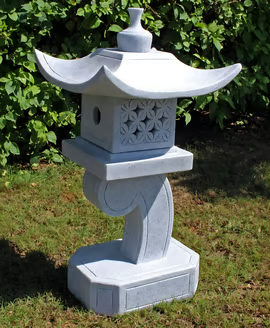
Matt's pick for the one piece that says Japanese garden
Best for: The single focal ornament a zen scheme is built around
Why I recommend it: The Granite Oriental Lantern is the low, snow-viewing shape that reads as Japanese instantly. Real granite weathers to a soft grey and takes moss well, so it looks settled within a season. Low and wide, it sits at the edge of gravel or beside a basin without dominating.
Price: £255
What is a tsukubai, and can you have basin water in the UK?
A tsukubai is a low stone water basin, traditionally used to rinse hands before a tea ceremony, and it is the simplest way to add water to a Japanese garden. Water trickles through a bamboo spout into the basin and recirculates, so no plumbing or pond is needed. Add a shishi-odoshi, the tipping bamboo deer-scarer, and you get a soft, periodic knock that masks traffic noise. Our guide to Japanese water features goes deep on tsukubai and frost-proofing.
For most UK gardens a self-contained stone water feature does the job with none of the maintenance of a pond. A hidden reservoir and a small pump sit under the stone, so you top up the water and that is it. Running costs are tiny. The figures below assume electricity at 30 pence per kilowatt-hour and a summer season of roughly 183 days.
| Pump | Summer only (8 hrs/day) | All year, running 24/7 |
|---|---|---|
| 10 W (typical basin) | £4.39 | £26.28 |
| 5 W (small) | £2.20 | £13.14 |
| 15 W (larger) | £6.59 | £39.42 |
The one winter job that matters: drain the reservoir and lift the pump before the first hard frost. Water left sitting in a basin freezes, expands and cracks the stone. It is the most common way these features fail. Reconstituted stone and granite handle UK winters well once emptied.
Shop self-contained water features →
Can you put a Buddha in a Japanese garden?
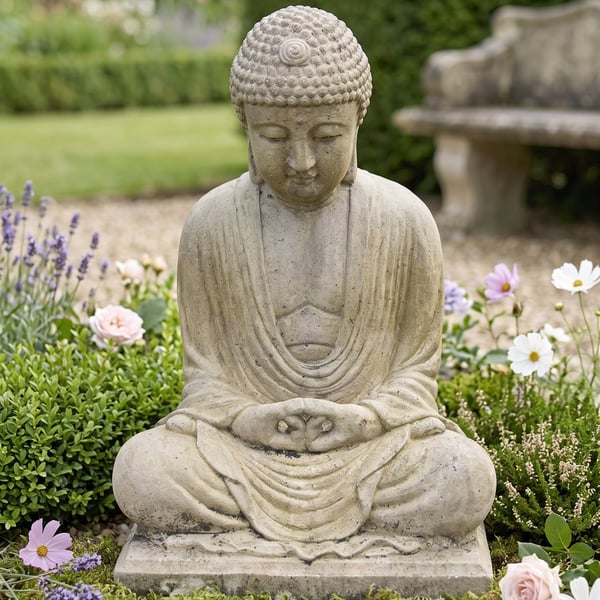
Yes, a Buddha suits a Japanese-style garden well as its single quiet focal point. A seated, meditating figure fits the mood of stillness better than a busy or ornate piece. Keep to one, give it plenty of empty gravel or moss around it, and face it into the space so it looks composed rather than staring at a fence. Our Buddha placement guide covers meaning and orientation in full.
Materials count in a British winter. Reconstituted stone, cast from crushed natural stone, weathers and mosses like the real thing and copes with frost. Raise the Buddha slightly on a flat stone or a low plinth so it is not sitting in a puddle after rain. A Buddha head, half-buried in gravel or moss, is a lower, subtler alternative that reads as calm and ancient.
Which zen ornament suits which spot?
Match the piece to the job. A lantern lights a turn or edges a basin. A pagoda gives height at the back. A Buddha or basin becomes the still centre of a view. This table pairs each ornament with its best position and role.
| Ornament | Best spot | Role in the scene | Price |
|---|---|---|---|
| Granite Oriental Lantern (Matt's pick) | Edge of gravel, beside a basin | Low focal point, catches moss | £255 |
| Tall White Lantern | Beside a path or taller shrub | Upright accent, pale contrast | £289 |
| Grey Pagoda | Back of a gravel bed | Height and tiered silhouette | £230 |
| Seated Meditating Buddha | Still centre of a view | Calm focal figure | £370 |
| Stone Buddha Head | Half-set in gravel or moss | Low, subtle accent | £241 |
| Temple Water Feature | Corner or against a fence | Sound and movement, no pond | £499 |
| Meditating Buddha Fountain | Still centre with water | Focal figure plus trickle | £410 |
Do Japanese gardens work in the UK climate?
Yes, and the UK climate actually suits the look. Cool, damp British air grows the moss and lush green a Japanese garden depends on. That is harder to achieve in a hot, dry country. The trick is choosing hardy stand-ins for the traditional plants, and frost-proof stone for the ornaments. This table swaps the classic palette for reliable UK performers.
| Traditional element | Hardy UK stand-in | Why it works |
|---|---|---|
| Japanese maple | Acer palmatum | Fully hardy here; give it shelter from cold wind |
| Running bamboo | Clumping Fargesia | Stays put; running types invade the whole garden |
| Moss carpet | Natural moss or Soleirolia | Thrives in UK damp and shade with no effort |
| Clipped azalea | Buxus or Ilex crenata | Takes tight clipping; Ilex dodges box blight |
| Japanese pine | Pinus mugo (dwarf) | Slow, compact and evergreen through winter |
Keep the planting sparse. Two or three species repeated beats a dozen dotted about. Green, texture and shape carry a Japanese garden, not flower colour. A plain evergreen and a single acer beat a full border.
We stock lanterns, pagodas, Buddhas and self-contained water features. They are the pieces a Japanese garden is actually built from. Buy one good focal piece and give it space. Add gravel and a basin, and you have the calm without the upkeep. Browse the full range of Buddha water features to find the still centre for your scheme.
- Matt W, Garden Ornaments
Frequently asked questions
What is a zen garden?
A zen garden is a minimal, raked-gravel garden built for calm. It uses gravel, rock and space, often with little or no planting, to suggest water and islands. The dry style is called kare-sansui.
What gravel is best for a zen garden?
Angular gravel in pale grey or buff, spread 50 mm deep. Angular stone holds a raked line, while rounded pea shingle slumps flat within a day. Lay it over a weed membrane.
How much does a Japanese garden cost to set up?
A simple corner starts under £300 for gravel, one lantern and a basin. Gravel runs about £60 to £90 a bulk bag, and one stone ornament sits between £200 and £500.
Where should I put a Buddha statue in a Japanese garden?
Use one Buddha as the still centre, with empty space around it. A seated, meditating figure suits the mood best. Raise it off wet ground and face it into the garden.
Do stone lanterns need light inside them?
No, most stone lanterns are decorative and hold no light. They read as Japanese by shape alone. You can set a small solar tea light in the window for a soft evening glow.
Will a stone water feature survive a UK winter?
Yes, if you drain it and lift the pump before hard frost. Water left in the basin freezes and cracks the stone. Reconstituted stone and granite cope well once emptied.
Can you make a Japanese garden in a small space?
Yes, a 2 square metre corner is enough. Zen design favours restraint. A small space with gravel, one ornament and a single acer often beats a large busy one.