
Mediterranean Garden Ideas: A Sun-Baked Look for UK Gardens
Written by Matt W on 30th Jun 2026.
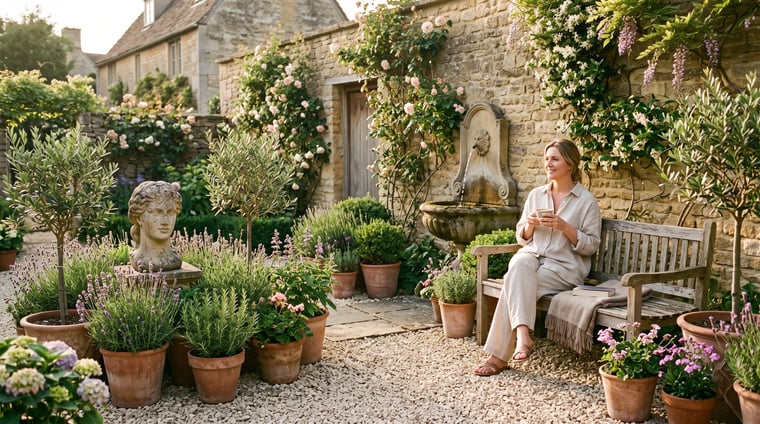
A Mediterranean garden recreates the sun-baked courtyards of Italy, Greece and the south of France using gravel, warm stone, weathered classical ornaments and a few drought-tolerant plants. In a UK garden the look works best in a sunny, free-draining spot. Anchor it with one classical head or bust, add a stone urn and a gentle fountain, then plant an olive, lavender and rosemary. The result is calm, low-maintenance and timeless.
By Matt W | Garden Ornaments Specialist
Key takeaways
- The Mediterranean look rests on four parts: pale gravel, warm stone, weathered classical ornaments and sparse, sun-loving planting
- One statement piece does the heavy lifting; a single classical head, bust or seated figure anchors the whole garden
- Cast stone weathers to a soft honey colour in two or three UK seasons, which reads as warm and sun-aged without any terracotta pots
- A small self-contained stone fountain gives the courtyard trickle without a pond or any digging
- An olive, lavender, rosemary and a few clipped balls complete the scheme and ask for very little water
- Choose a sunny, free-draining position; this style suits the spot where a lawn struggles
Shop classical stone statues →
Matt's note
People think a Mediterranean garden means buying a lot of things. It is the opposite. The gardens this style copies are sparse and restrained, with bare gravel, a few big terracotta-coloured pots and one good piece of statuary that has weathered for fifty years. The mistake I see most is overcrowding: too many small ornaments, too much fussy planting, no breathing space. Start with one classical head or a single seated figure, give it room, surround it with gravel and three or four sun-loving plants, and stop there. Restraint is what makes it read as Mediterranean rather than busy. Our cast stone also greys and softens within a couple of British winters, so a new piece looks aged far quicker than people expect.
What makes a garden look Mediterranean?
A garden looks Mediterranean when it combines pale gravel, warm-toned stone, weathered classical ornaments and a few drought-tolerant plants. The style comes from the dry, sunny courtyards of southern Europe, where water is scarce and shade is precious. The planting is sparse, the hard surfaces are warm and gritty underfoot, and the ornaments are classical: heads, busts, urns and simple fountains in aged stone.
The trick in the UK is to lean on the ornaments and the gravel rather than the plants. Our summers are too short and our winters too wet to grow a true olive grove, but the look is set far more by a weathered stone head, a classical urn and a gravel floor than by the planting. Get those right and a few pots of lavender finish the job. This sits between the soft, packed planting of a cottage garden and the bleached, breezy feel of a coastal scheme, and it suits a hot, dry corner where grass gives up.
Which ornaments give a Mediterranean garden its character?
The ornaments that define a Mediterranean garden are weathered classical pieces: heads, busts, urns and seated figures in aged stone. A single classical head is the strongest signal of the style. It carries the same Greek and Roman roots the whole look is built on, and one well-placed head among gravel and olive does more than a dozen smaller ornaments. Our cast stone copies the worn, lichen-spotted surface of an antique original.
Start with one focal piece and build out. A head or bust on a low plinth works at the end of a gravel path or against a warm wall. A seated figure suits the centre of a courtyard, where it can be seen from every side. Keep everything in the same family of aged, pale stone so the scheme holds together. For the full range of figures, see our guide to classical Greek, Roman and Renaissance statues, and our piece on stone busts and heads.
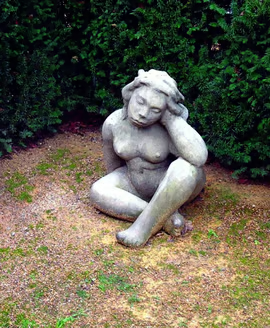
Matt's pick for a courtyard centrepiece
Best for: The single statement piece a Mediterranean scheme is built around
Why I recommend it: The Seated Gaia is a classical figure you can see from every angle, so it works in the middle of a gravel courtyard rather than tight against a wall. The pose is calm and the cast stone weathers fast, picking up the soft grey and lichen that makes a piece look a century old. Give it a clear metre of gravel on all sides and it carries the whole garden on its own.
Price: £314
How do you get the terracotta colour without terracotta pots?
You get the warm terracotta colour from stone that weathers, not from buying terracotta pots. Real terracotta cracks in a hard UK frost when water soaks into the clay and freezes. Cast stone does not. It starts off pale and creamy, then within two or three seasons it greys, softens and picks up the honey and ochre tones that read as sun-baked. A classical urn or tazza gives you the same warm, aged colour with none of the winter risk.
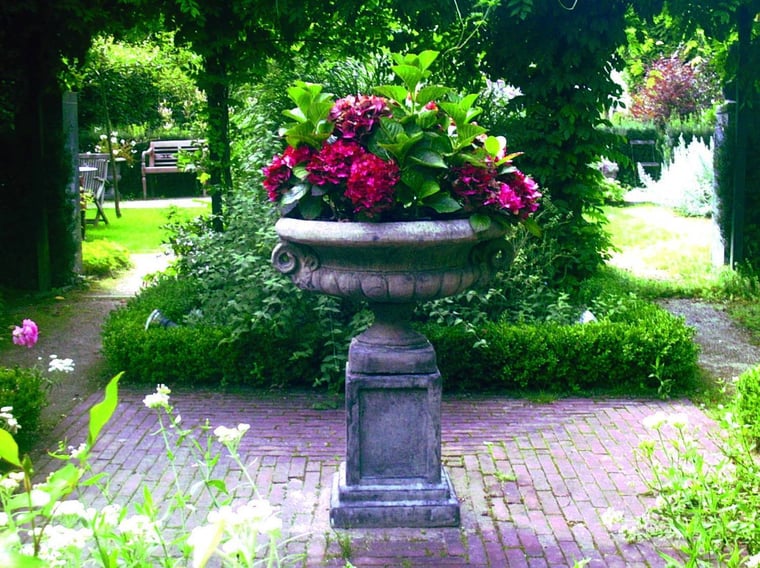
Use urns and vases the Mediterranean way: raised, classical and a little austere. A tazza, a wide shallow bowl on a stem, is the signature shape. Stand one on a plinth at the end of a path, or pair two by a doorway. Plant them sparingly with trailing rosemary, an aeonium or simply a clipped ball, never crammed. Browse the full stone urns range for the classical shapes, and our guide on what to plant in stone urns season by season.
Watch out for
Do not chase the look with cheap terracotta pots from a supermarket. They split at the first hard frost, the colour fades to a flat orange in one summer, and a row of them looks busy rather than calm. The other common mistake is too much, too small. A Mediterranean garden is defined by space and restraint, so resist filling every corner. One large urn beats five small pots. One classical head beats a scattering of figures. If a corner looks crowded, take something out rather than adding more.
Do you need a water feature in a Mediterranean garden?
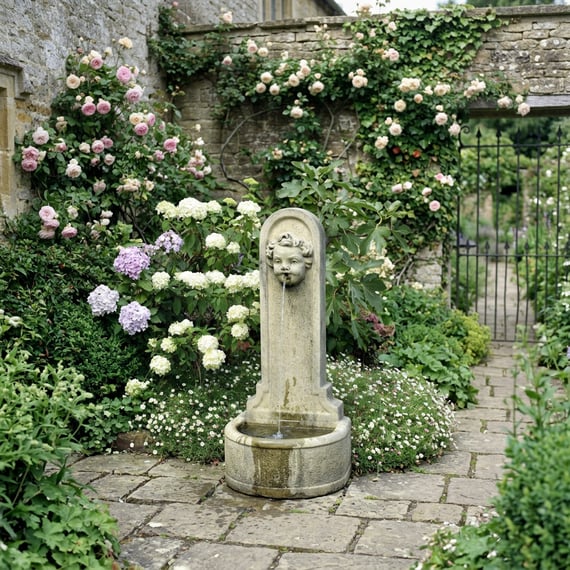
You do not need water, but a gentle fountain transforms the feel. The courtyards this style copies almost always had a small fountain or wall spout, partly for the cooling sound in the heat. A self-contained stone fountain gives you that quiet trickle with no pond, no digging and no separate reservoir to build. It recirculates the same water through a hidden pump, so it suits a small paved or gravel courtyard perfectly.
Keep it small and classical. A low upright fountain or a cherub spout fits the style far better than a big tiered showpiece. Aim for a soft, steady trickle rather than a loud splash, which sits at a relaxing background level close to your seat. Set it where you sit most, because the sound only works if you can hear it. Our garden fountains guide compares the stone, pedestal and wall styles, and the full fountains range covers the self-contained options.
What plants and trees complete the sun-baked look?
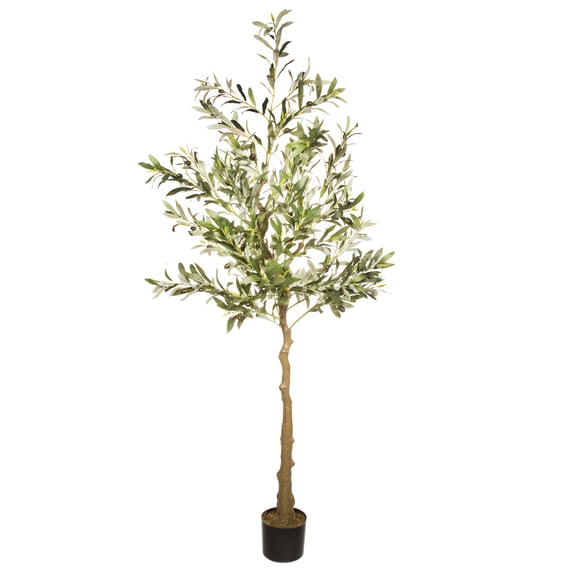
An olive, lavender, rosemary and a few clipped evergreen balls complete the Mediterranean look. These are the plants of the region: silvery, aromatic and happy in heat and poor soil. In the UK a real olive needs a sheltered, sunny spot and protection in a hard winter, so many gardeners use a lifelike artificial olive for year-round shape with no care. The grey-green leaf is the single most recognisable plant of the style.
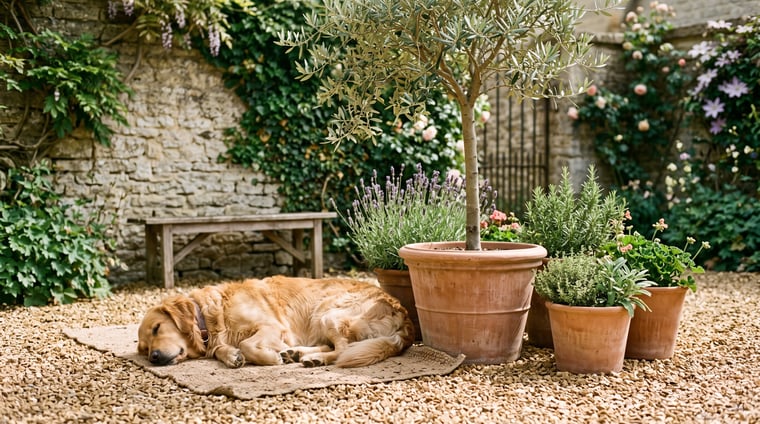
Plant sparingly and let gravel show between the plants. A Mediterranean garden is not packed; the bare ground is part of the design. Group a couple of pots of lavender and rosemary near where you sit so the scent carries on a warm evening. Add an olive for height and a clipped box or bay ball for structure, then leave space. A relaxed dog stretched out in the shade of an olive is the whole point of the style: a calm, low-effort place to sit out the heat of the day.
| Piece | Role in the scheme | Where to put it | Price |
|---|---|---|---|
| Seated Gaia Statue | Central statement figure | Middle of a gravel courtyard | £314 |
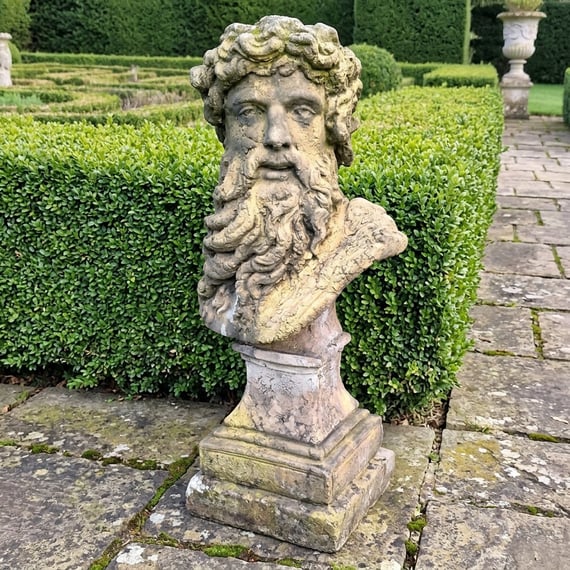
| Hercules Bust | Eye-level focal head | On a plinth against a warm wall | £285 |
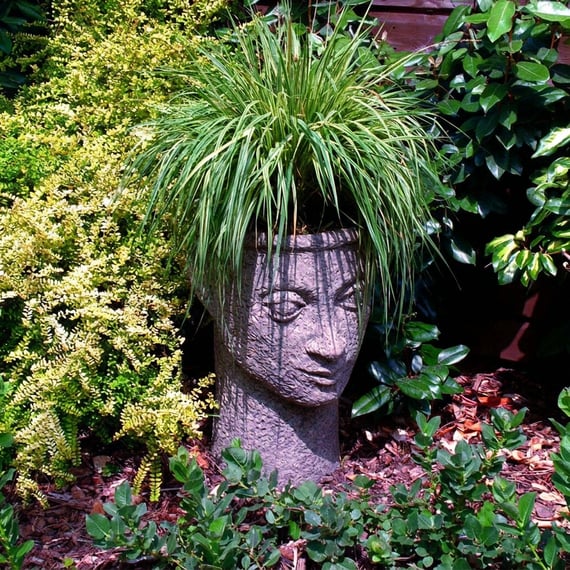
| Gaia Head Vase | Sculpture and planter in one | End of a path or beside a doorway | £205 |
| Edwardian Tazza | Classical raised urn | Paired by a door or on a plinth | £291 |
| Cherub Upright Fountain | The courtyard trickle | Within earshot of your seat | £414 |
| 1.7m Artificial Olive | Year-round Mediterranean shape | For height beside a seating area | £79 |
Matt's tip: weather a new piece faster
A brand-new cast stone ornament looks pale and clean for the first few weeks, which can jar against an aged scheme. You can speed up the weathering. Stand it outside through autumn and winter, where rain and frost do most of the work. Keep it in light shade rather than full sun so moss and lichen take hold. A wash of natural yoghurt or diluted liquid seaweed feeds the lichen and greys the stone within a season. Within two British winters a new head or urn looks like a piece that has stood there for decades. That worn, sun-aged surface is exactly what this style wants.
We stock classical heads, busts, urns and fountains because they are the pieces a Mediterranean garden is actually built from. Get one good focal piece, give it room, add gravel and a few sun-loving plants, and you have the look without the upkeep of a real olive grove. Browse the full range of stone garden statues to find your centrepiece.
- Matt W, Garden Ornaments
Frequently asked questions
How do I make my UK garden look Mediterranean?
Use gravel, warm stone and one classical ornament. Add an olive, lavender and rosemary, keep the planting sparse, and pick a sunny, free-draining spot. The ornaments and gravel set the style more than the plants.
What ornaments suit a Mediterranean garden?
Weathered classical heads, busts, urns and small stone fountains. Choose aged, pale stone and keep everything in the same family. One large statement piece works better than several small ornaments.
Can you grow a real olive tree outside in the UK?
Yes, in a sheltered sunny spot, but it needs winter protection. Many gardeners use a lifelike artificial olive instead for year-round shape with no frost risk or care.
Do I need real terracotta pots?
No, and they often crack in frost. Cast stone urns weather to the same warm honey colour within a couple of seasons. They survive a UK winter too, so they give the look without the risk.
Does a Mediterranean garden need a water feature?
No, but a small fountain adds the courtyard trickle. A self-contained stone fountain needs no pond or digging and gives a relaxing background sound close to where you sit.
What is the easiest way to start?
Buy one classical head or seated figure and build around it. Surround it with gravel, add two or three pots of lavender and rosemary, and stop there. Restraint is the whole point.