
The Wellbeing Garden: Water Features for a Calm Space
Written by Matt W on 30th Jun 2026.
A wellbeing garden is a space designed to calm you, and a gentle water feature is the quickest way to create one. Moving water masks background stress noise and gives the mind a soft, steady sound to settle on. We measured our features with a sound meter: the calm ones read 34 to 46 dB at one metre, a quiet, soothing level. Place one within earshot of your seat and aim for a soft 40 to 45 dB at the chair.
By Matt W | Garden Ornaments Specialist
Key takeaways
- A wellbeing garden uses water and sound to calm a space; a small feature is the simplest place to start
- Our gentle features measure 34 to 46 dB at one metre, between a whisper and a quiet library
- 45 dB of water sound masks 5 to 10 dB of background noise, about the same as a solid 2m fence
- Sound falls roughly 6 dB each time you double the distance, so a feature close to your seat works best
- Aim for a soft 40 to 45 dB at the chair where you actually sit, not a loud splash across the garden
- Only a large tiered fountain at 50 to 55 dB with a 25cm drop is loud enough to mask a busy road
Matt's note
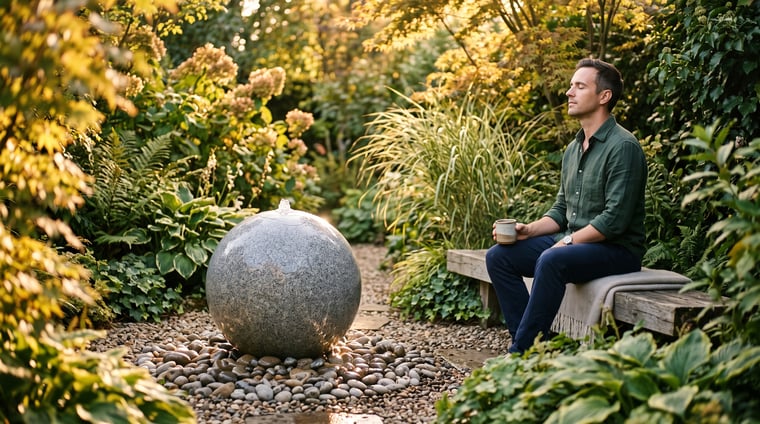
People buy a water feature for a calm garden, then put it at the bottom of the plot where it looks tidy. That is the wrong place. The sound is the point, and sound fades fast with distance. A feature you cannot really hear from your chair does almost nothing for wellbeing. So I tell customers to forget the showpiece and think about the seat. Pick a gentle feature, a sphere, a bowl or a Buddha, and stand it within two or three metres of where you actually sit. You want a soft, steady trickle in the background, not a loud splash you tune out within a week. Get the placement right and a small feature does far more than a big one in the wrong spot.
What is a wellbeing garden?
A wellbeing garden is a space designed to lower stress and help you rest, using calm planting, a place to sit and, very often, the sound of moving water. It is less about a particular style and more about how the space makes you feel. The aim is a quiet corner that pulls your attention away from screens, traffic and the to-do list, and a gentle water feature is the single most effective tool for it.
Water works on two senses at once. You watch it move, which is naturally absorbing, and you hear a soft, steady sound that the mind finds easy to settle on. That same sound also covers the sharper background noise that keeps you alert. A wellbeing garden does not need to be large or expensive. A single feature, a comfortable seat and a little soft planting around them is enough to change how a space feels.
How does a water feature make a garden feel calmer?
A water feature calms a garden by masking background noise and giving the mind a soft, constant sound to focus on. This is sound masking. The steady trickle of water raises the gentle background level just enough to cover the sharper, more intrusive sounds, such as distant traffic or a neighbour's voice, so they stop catching your attention. Our own figures show what this takes: a feature producing 45 dB of water sound masks 5 to 10 dB of background noise, which is about the same effect as a solid 2m garden fence.
The numbers stay surprisingly gentle. A quiet bubble fountain runs at 30 to 40 dB, between a whisper and a soft library; an indoor conversation, by contrast, runs at about 60 dB. So a calm water feature sits well below the level of speech. It is loud enough to soften the edges of background noise, but never so loud that it becomes noise itself. The detail behind these readings is in our guide to cascading water features rated by sound, where we measured each style with a meter.
How loud should a calm water feature be?
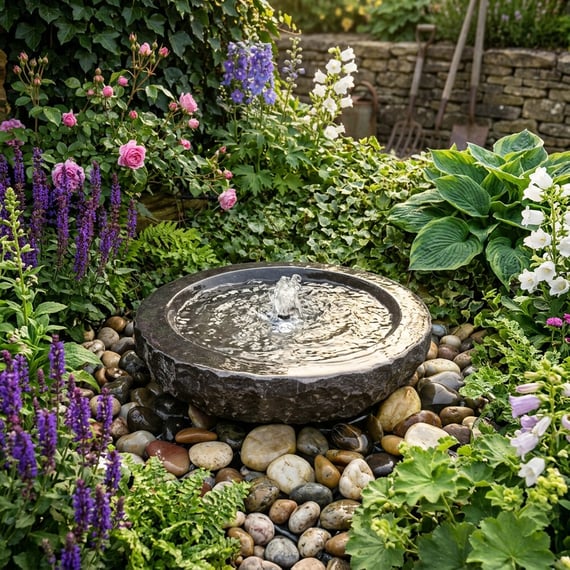
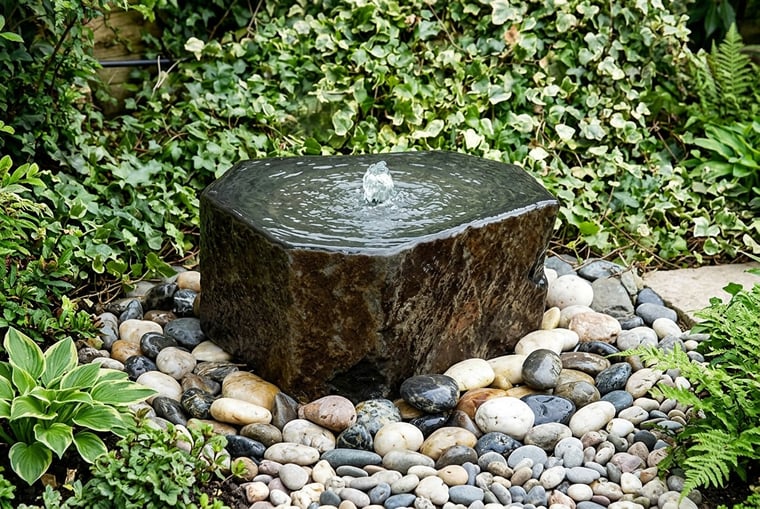
For a wellbeing garden, aim for a feature that reads 34 to 46 dB at one metre. That covers the gentle styles: babbling bowls, spheres, drilled columns and self-contained Buddha features. We measured ours so you do not have to guess. A babbling bowl sits at 34 to 38 dB, a sphere fountain at 34 to 40 dB, and a drilled basalt column at 38 to 42 dB. All of these give a soft, steady sound rather than a splash, which is exactly what a calm space wants.
Distance changes everything, so plan around your seat. Sound falls by roughly 6 dB every time you double the distance from the source. A feature reading 46 dB at one metre is down to about 40 dB at two metres and roughly 34 dB at four metres. That is why placement matters more than power: aim for a soft 40 to 45 dB at the chair where you actually sit. The table below sets out the measured level and character of each style so you can match one to your spot.
| Style | Sound at 1m | Character | Best for a wellbeing garden | Price |
|---|---|---|---|---|
| Babbling bowl | 34 to 38 dB | Soft welling trickle | A small, calm corner by a seat | £499 |
| Sphere fountain | 34 to 40 dB | Smooth sheeting water | A focal point you sit beside | £495 |
| Drilled basalt column | 38 to 42 dB | Steady gentle flow | Naturalistic, planted corners | £455 |
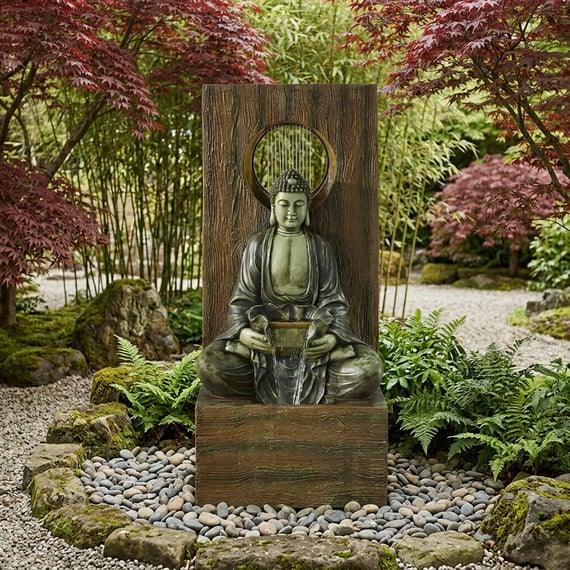
| Self-contained Buddha | 42 to 46 dB | Layered, soft fall | Masking light background noise | £699 |
| Large tiered fountain | 50 to 55 dB | Strong, steady rush | Only if you need to mask a road | £445 |
Watch out for
Do not buy the loudest feature you can find in the hope it will be the most relaxing. It will not. A big tiered fountain at 55 dB close to your seat becomes intrusive within days, and you end up turning it off. The same goes for a tall blade or a sharp, splashing fall. For a wellbeing space you want the opposite: a soft, low sound you can sit beside for an hour and barely register. If a neighbour boundary is close, keep to features under 50 dB, and fit a timer so the pump stops at night. Calm comes from the right level in the right place, not from sheer volume.
Can a water feature mask traffic and neighbour noise?
A gentle water feature masks background and neighbour noise well, but masking a busy road takes more. For everyday background sound, a feature close to your seat is the answer: 45 dB of water close by hides 5 to 10 dB of background noise, the same as a 2m fence. That is plenty to soften a distant road, an air-conditioning hum or voices over the boundary, and it keeps the garden calm without being loud.
A genuinely busy road is different. To mask heavy traffic you need a large tiered fountain at 50 to 55 dB with at least 25cm of total drop, which is the only style loud enough to do the job. For a wellbeing garden that is usually too much, so the better fix is to place a gentle feature between you and the noise and sit close to it. If you do face real traffic, our waterfalls rated by sound guide covers the louder tiered options and their flow rates.
Which water features are best for a wellbeing garden?
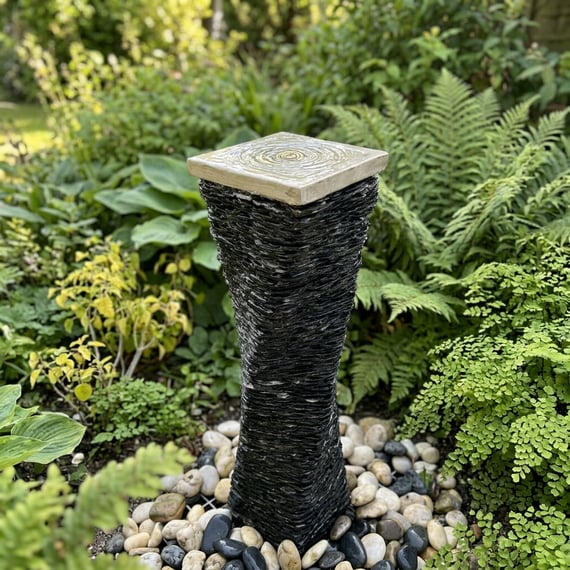
The best features for a wellbeing garden are the gentle, self-contained kinds: spheres, babbling bowls, drilled columns and Buddha features. They recirculate the same water through a hidden pump, so there is no pond to build and nothing to dig. That makes them easy to place exactly where the sound matters, close to your seat, and easy to move if you get it wrong the first time.
A Buddha feature adds a second layer of calm. The still, seated figure is a natural focal point for a quiet corner, which is why it pairs so well with the sound of water. If that is the direction you want, our guide to Buddha water feature placement and meaning covers the styles and where to put them, and the full Buddha water features range shows the self-contained options.
Matt's pick for a calm focal point
Best for: A quiet seating corner that needs one gentle, year-round feature
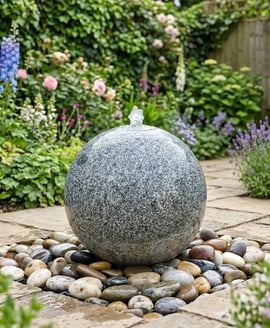
Why I recommend it: The Grey Flame Granite Sphere reads 34 to 40 dB, a smooth sheet of water down polished stone rather than a splash. It is self-contained, so it sits on a pebble reservoir with no digging, and the rounded form is calm to look at as well as to hear. Stand it two metres from your seat and the sound lands at about 38 dB, right in the soothing range.
Price: £495
Where should you place a wellbeing water feature?
Place a wellbeing water feature within two or three metres of where you sit, with a clear line to your ear. The sound is the whole point, and because it fades by about 6 dB every time you double the distance, a feature across the garden barely registers. Close to the seat, a gentle feature gives you a soft 40 to 45 dB exactly where you rest, which is the level that soothes without intruding.
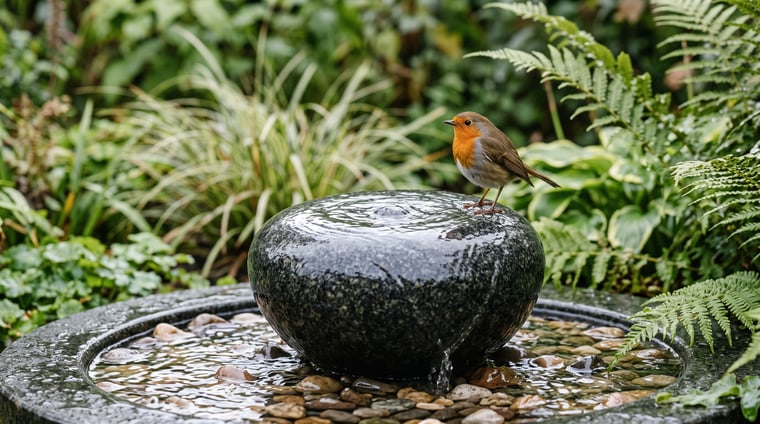
Tuck it into soft planting so it looks settled and the water becomes the focus, not the hardware. Ferns, grasses and hostas around the base hide the reservoir and frame the feature. Moving water also draws wildlife, and a robin or blackbird at the edge adds birdsong to the calm. If you have young children or pets, our guide on water feature safety for children and pets covers the self-contained, pond-free designs that carry the least risk.
Matt's tip: test the level before you fix anything
Before you settle a feature in place, run it where you think it should go and sit in your chair for ten minutes. A free sound-meter app on your phone is close enough to check. You are looking for a reading around 40 to 45 dB at the seat, a sound you notice when you listen for it but forget when you do not. If it reads higher, move the feature back half a metre or turn the pump down a touch with its flow valve. If you can barely hear it, bring it closer. Five minutes of testing saves you living with a feature in the wrong spot, which is the most common regret people tell us about.
We measured our water features because the sound is what makes a wellbeing garden work, and guesswork helps no one. The calm ones land between 34 and 46 dB, soft enough to sit beside for an hour. Pick a gentle feature, place it close to your seat, and a small corner becomes the part of the garden you go to first. Browse the full range of water features to find yours.
- Matt W, Garden Ornaments
Frequently asked questions
How does a water feature help wellbeing?
It masks background noise and gives a soft, steady sound to settle on. Moving water covers sharper, distracting noises and is naturally absorbing to watch, which helps the mind relax.
How loud should a calm water feature be?
About 34 to 46 dB at one metre. That is the range of gentle bowls, spheres and columns, between a whisper and a quiet library, and well below the 60 dB of conversation.
Can a water feature block out traffic noise?
It masks background traffic, but a busy road needs a louder feature. Only a large tiered fountain at 50 to 55 dB with a 25cm drop is loud enough to cover heavy traffic.
Where should I put a water feature for the most calm?
Within two or three metres of your seat. Sound falls about 6 dB each time you double the distance, so a feature close to the chair gives the soft 40 to 45 dB that soothes.
Are wellbeing water features safe around children and pets?
Self-contained designs are the safest choice. They have no open pond, just a hidden reservoir under pebbles, so there is no standing depth of water for a child or pet.
Do I need a pond for a wellbeing water feature?
No, a self-contained feature needs no pond. The pump recirculates the same water through a hidden reservoir, so there is nothing to dig and it can sit on a patio.