
Choosing a stone garden pedestal
A stone garden pedestal is a tall decorative support for a statue, bust or urn. It brings smaller ornaments closer to eye level. The extra height also helps a feature remain visible above low planting.
Match the top surface to the ornament's footprint. Then check the combined height, width and weight. A narrow column suits a compact bust. Larger statues and urns need a broader top and heavier base.
| Pedestal style | Best for | Garden style | Main check |
|---|---|---|---|
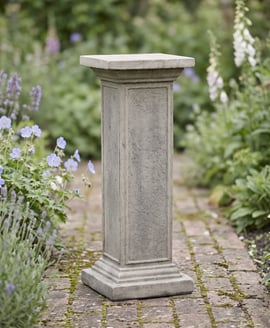
| Plain column | Modern figures and urns | Simple or contemporary | Top width |
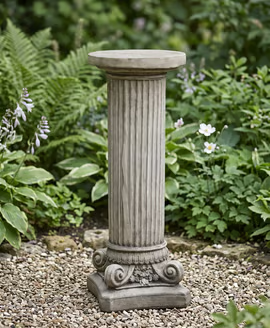
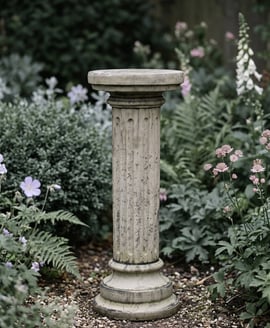
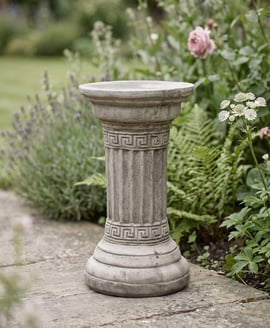
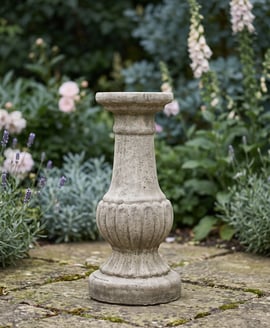
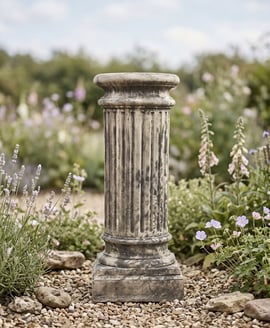
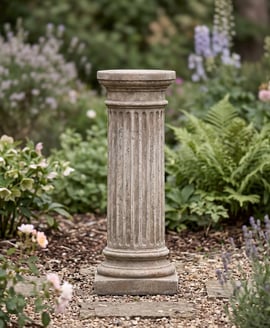
| Fluted column | Classical busts and statues | Formal or period | Combined height |
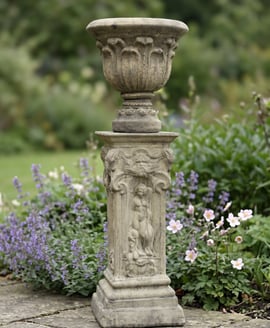
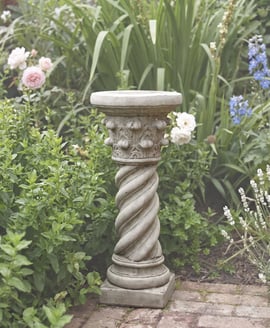
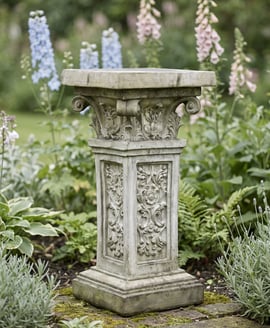
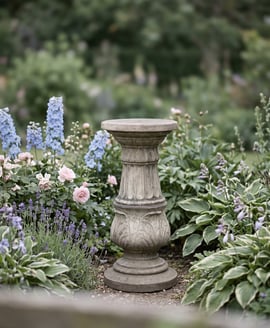
| Corinthian | Decorative figures and urns | Classical | Visual proportion |
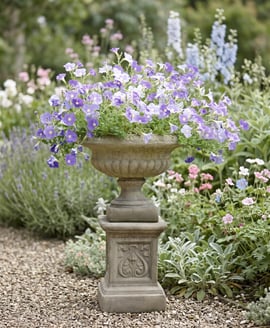
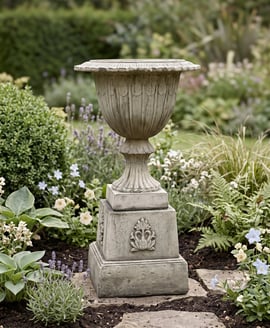
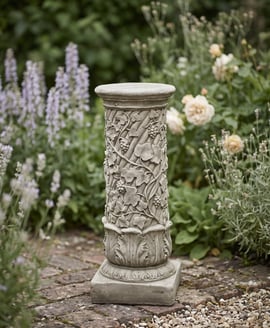
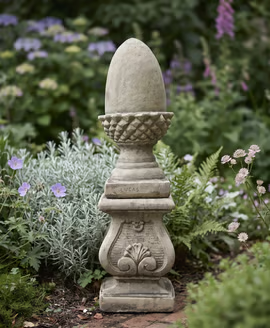
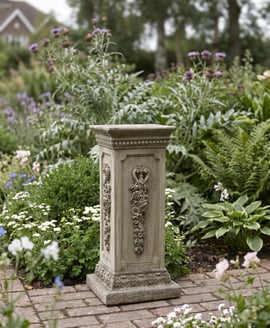
| Motif pedestal | Smaller focal pieces | Cottage or traditional | Pattern compatibility |
How pedestals differ from plinths
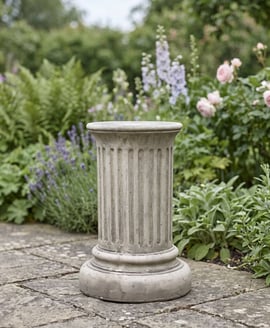
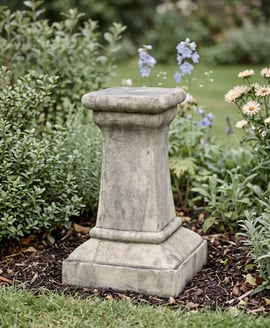
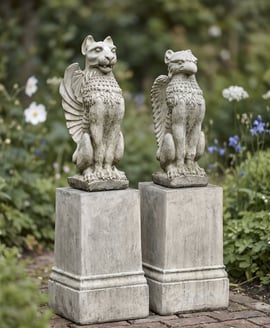
Pedestals provide noticeable height and often include column details. Plinths are lower bases that lift an ornament only a short distance. The right choice depends on the viewing height and the ornament's scale.
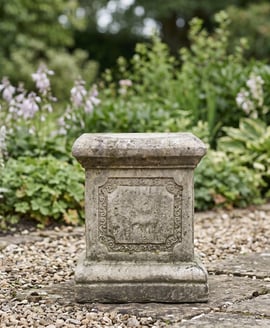
Use a pedestal for a bust, urn or compact statue that needs more presence. Use a plinth when stability matters more than height. Browse our stone plinths for statues and planters if you need a lower base.
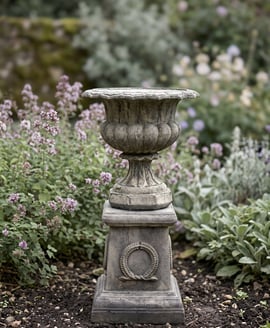
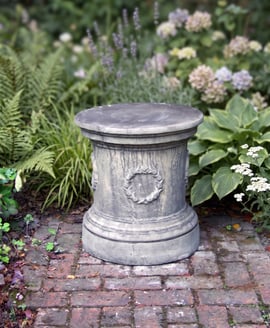
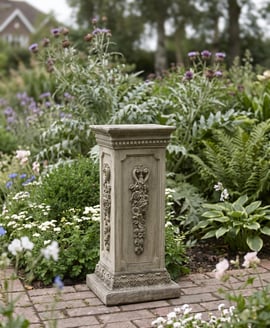
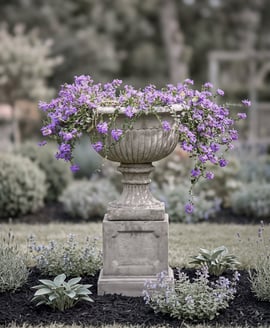
Popular stone pedestals and columns
Stone garden pedestals and columns
Measuring the ornament and pedestal together
Measure the ornament's base at its widest and deepest points. Compare those figures with the pedestal's top surface. The complete base should sit within the top edges.
Add both heights before ordering. Mark the result against a wall or garden cane. A bust often looks best near eye level. A tall statue may need only a modest lift.
Consider the view from inside the house as well as the garden. A pedestal can keep a smaller ornament visible above a window sill or border. Step back from several viewpoints before deciding.
Choosing a classical or simple design
Plain columns give the displayed ornament most of the attention. They suit cleaner gardens, simple urns and modern figures. Fluted and Corinthian designs add their own architectural detail.
Motif pedestals work well when the support forms part of the feature. Laurel, floral and emblem patterns suit cottage and period settings. Avoid combining several competing patterns in one display.
Finish can unite the two pieces. Similar stone colours create a single composition. Contrasting finishes separate the ornament from its support. Outdoor weathering will gradually soften the difference.
Getting the proportions right
View the ornament and pedestal as one feature. A tall pedestal can overwhelm a small figure. A short column can leave a detailed bust below its best viewing height.
Measure the total height and mark it against a wall or cane. Step back to the main viewpoint before ordering. This simple check shows whether the feature will suit the border, terrace or entrance.
Use a firm, level base for every heavy pedestal. Paving or compacted aggregate prevents settling. Position the pedestal before lifting the ornament into place. Check the level from two directions.
Complete the display with a suitable stone garden statue, stone bust or stone garden urn.
Preparing the site and access route
Complete the base before delivery. A level paving slab or compacted foundation spreads the weight and reduces movement. Check the finished level in two directions.
Measure gates, paths and turns along the route. Remove pots and low branches that could restrict handling. Heavy pedestals may require suitable lifting equipment and more than one person.
Place the pedestal without its ornament first. Check its stability, then lift the displayed piece into position. Do not drag cast stone across paving because the lower edges can chip.
Frequently asked questions
What can I display on a stone pedestal?
Use one for a statue, bust, urn or other compact ornament. Check the top measurements first.
How tall should a garden pedestal be?
Choose a height that puts the ornament near your preferred viewing level. Check the combined height outdoors.
Can a stone pedestal stay outside all year?
Yes. These cast stone pedestals are intended for permanent outdoor display in UK gardens.
Does a pedestal need fixing down?
Many heavy pedestals remain stable on a firm, level base. Exposed sites may need additional securing.
Is a pedestal the same as a plinth?
No. A pedestal is taller and more decorative. A plinth is a lower supporting base.