
Pondless Water Features: Blades, Rills and Hidden Reservoirs
Written by Matt W on 6th Jul 2026.
A pondless water feature recirculates water from a buried reservoir instead of an open pond. A pump in the sump pushes water up to a blade, rill or column. It falls onto pebbles over a grid and drains straight back. Reservoirs run 60cm to 115cm across and pumps from 450 to 2,500 litres per hour. A 20W pump costs about £1.30 a month to run.
By Matt W | Garden Ornaments Specialist
Key takeaways
- Pondless means the water disappears: it falls onto pebbles, drains through a grid and recirculates from a sump
- Our galvanised steel grids span 60cm to 115cm and carry up to 300kg of stone and pebbles
- All-in-one plastic reservoirs with grids run from £145; the 112cm sump holds 90 litres
- Stainless waterfall blades come in 45cm, 60cm and 90cm widths with 3cm or 15cm projection lips
- Pumps from 450 to 2,500 litres per hour cost £49 to £75; a 20W pump uses about 4.8kWh a month
- With no standing water, pondless designs are the safer choice around young children and pets
Shop water feature accessories →
Matt's note
Half the people who ask us about ponds do not want a pond. They want the sound and the movement without the maintenance, the safety worry or the hole in the lawn. That is exactly what pondless gives you. The water only exists for the second it is falling. Everything else lives in a buried box under pebbles. If you have young children, or you are tired of fishing leaves out of standing water, start pondless. You can always dig the pond later once the kids are past the paddling stage.
What is a pondless water feature?
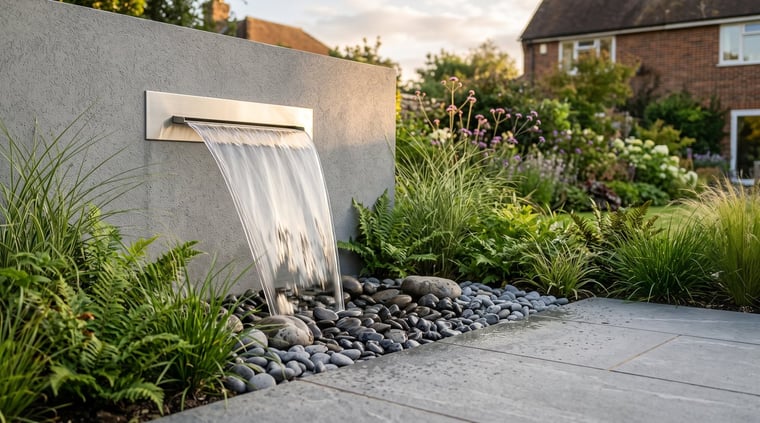
A pondless water feature is any fountain, cascade or rill where the water drains into a hidden reservoir instead of pooling in the open. The visible part is the falling water. Below it sits a sump, covered by a load-bearing grid and dressed with pebbles or cobbles. A pump in the sump sends water up a hose to the outlet, it falls, drains between the stones, and goes round again. The same closed loop drives every self-contained water feature we sell.
The format solves the three usual pond objections in one go. There is no open water, so it is far safer around toddlers and pets. We cover that in our guide to water feature safety for children and pets. There is no sunlit standing water, so algae gets little chance. And there is no excavation beyond the sump itself, a hole roughly 40cm deep rather than a full pond dig.
How does the hidden reservoir actually work?
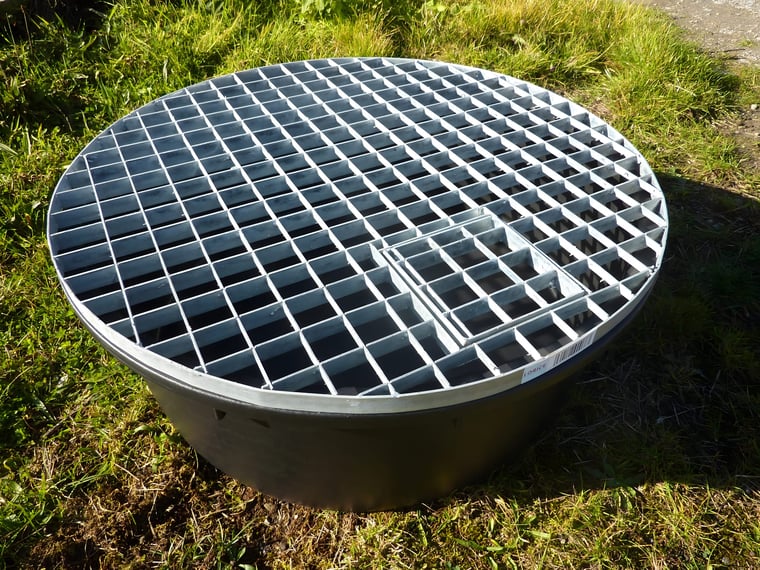
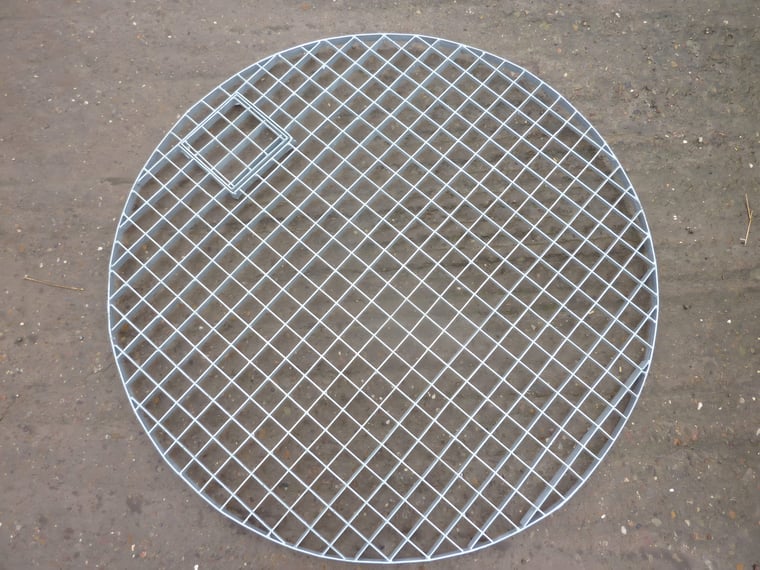
The reservoir is a buried tank that stores the water and houses the pump. Ours come two ways. The all-in-one plastic sumps include a galvanised steel grid. They run from a 70cm unit at £145 to a 112cm sump holding 90 litres at £339. Or dig your own lined sump and cap it with a heavy-duty steel grid alone. Grid sizes run 60cm to 115cm across, from £95. Each is reinforced to carry up to 300kg of feature and stone.
Every grid we stock has an inspection hatch, and it matters more than any other spec. The pump lives underwater, and its filter needs a rinse a few times a year. With a hatch you lift a flap and reach the pump in seconds. Without one you are unstacking pebbles and lifting a loaded grid every time. Our water feature pump guide covers the maintenance routine in full. The complete range of water feature reservoirs is online.
Watch out for
Size the sump for the water in flight, not just the pump. The moment the pump stops, every drop that was travelling up the hose and across the blade drains back into the reservoir. A tall blade run off a small sump will overflow at switch-off and run dry at switch-on. As a working rule, choose a reservoir holding at least three times the water your feature has in flight. Then top it up in warm weeks. Evaporation is the only water a pondless feature loses, but in July it is real.
How do you build a pondless blade cascade?
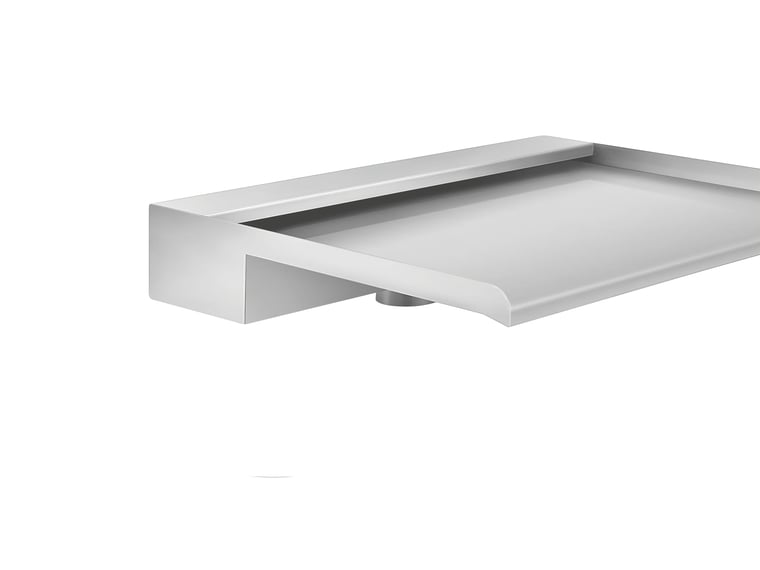
A blade cascade needs four parts. You need a wall or raised bed, the blade itself, a sump below and a pump to connect them. Our stainless steel blades come in 45cm, 60cm and 90cm widths. Each has a rear or bottom hose inlet and produces a single clean sheet of water. The choice that matters is the lip. A 3cm lip hugs the wall and suits sheltered corners, from £89. The 15cm projecting lip throws the sheet clear of the wall, which cuts splash-back onto brickwork, from £119.
Height and width set the sound. A 60cm blade at 15cm lip, mounted 80cm above the pebbles, gives a steady curtain that reads clearly across a patio. Go wider or higher and the noise steps up with it. We measured this across styles in our guide to garden waterfalls rated by sound. The full set of waterfall blades includes a wall-mounted 45cm unit for solid masonry.
What size pump does a pondless feature need?
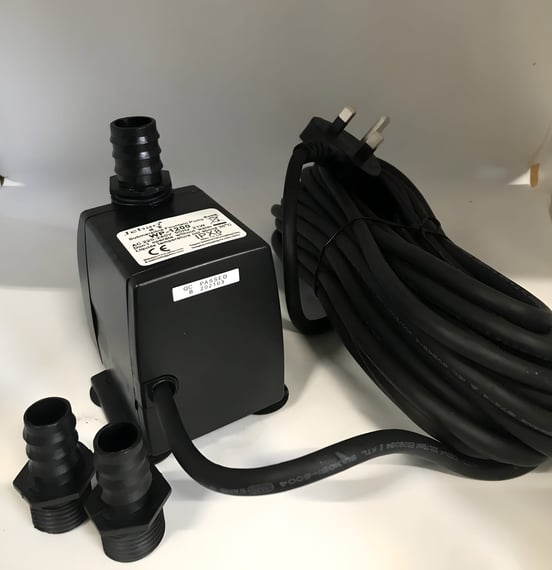
Match the pump to the height of the outlet and the width of the fall. Our mains pumps run from 450 to 2,500 litres per hour, priced £49 to £75. The mid-range 1,500 litres per hour unit is the workhorse: a 2.5m maximum delivery head, 20 watts, a 10m cable and both half-inch and three-quarter-inch hosetails in the box. For a 45cm blade we pair the 1,500. For the 60cm and 90cm blades we step up to the 2,000 or 2,500, so the sheet stays unbroken.
Running costs stay small. At 20 watts for eight hours a day, the 1,500 uses about 4.8kWh a month, around £1.30 at typical 2026 rates. Full figures for every style are in our water feature running costs guide. No outdoor socket? The solar pump shifts 980 to 1,560 litres per hour with a 3.2m head and a timer, and the wider water feature pumps range covers spares and upgrades.
Can you build a pondless rill or stream?
Yes, a rill is a pondless build stretched sideways: a narrow channel that carries water from an outlet back to the sump. The sump, grid and pump are exactly the pieces above, sized to the length of the run. Being straight and shallow, a rill suits formal plots, and it turns a plain path edge into the best thing in the garden. Plan the fall at about 1cm per metre so the water moves without racing.
One honest note. We supply the sump, grid, pump and blade for a rill, but not the flexible liner for the channel itself. That comes from any aquatics or pond supplier in a metre-cut roll. Lay the liner, dress it with cobbles, and bring the ends home to our reservoir. If a channel feels like too much digging, a container patio pond gives you still water with even less work.
Are self-contained features easier than a DIY pondless build?
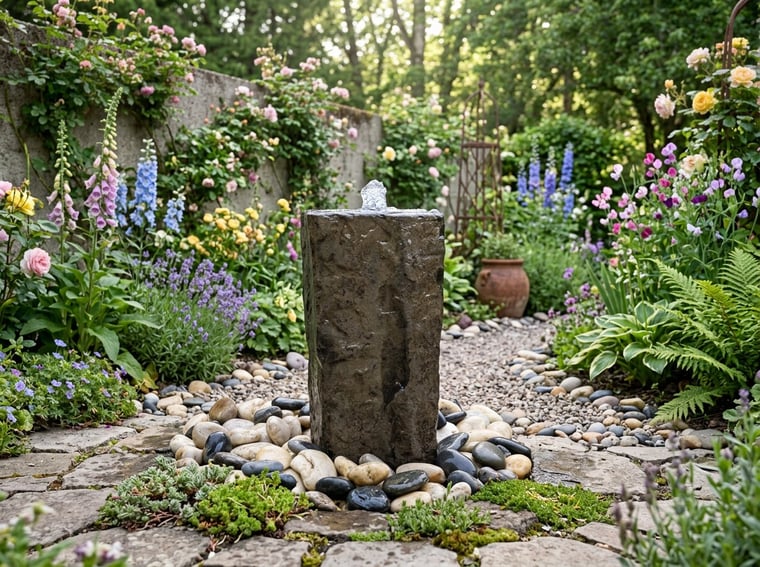
They are the same idea with the engineering done for you. A drilled column or sphere arrives as a complete kit: feature, pump, reservoir and grid in one box. Unpack, part-bury the sump, fill and plug in, and the first water moves the same afternoon. The 60cm drilled basalt column includes its pump, reservoir, grid and an LED for evening light at £415. The 40cm Corten sphere pairs 1.5mm weathering steel with the same buried-sump setup at £419.
Choose the DIY route when you want a specific look, a wider fall or a longer run than any kit offers. Choose a kit when you want moving water this weekend. Both end up with the same buried box and the same £1.30-a-month pump. The self-contained water features range shows every kit format we carry.
| Component | Sizes | Key spec | Price from |
|---|---|---|---|
| Steel reservoir grid | 60cm to 115cm | Carries up to 300kg, inspection hatch | £95 |
| Plastic sump with grid | 70cm, 87cm, 112cm | Up to 90 litres, all-in-one unit | £145 |
| Stainless waterfall blade | 45cm, 60cm, 90cm | 3cm or 15cm lip, rear or bottom inlet | £89 |
| Mains pump | 450 to 2,500 L/h | Up to 2.5m head, 10m cable | £49 |
| Solar pump | 980 to 1,560 L/h | 3.2m head, timer, no socket needed | £209 |
| Complete basalt kit | 50cm to 70cm columns | Pump, sump, grid and LED included | £399 |
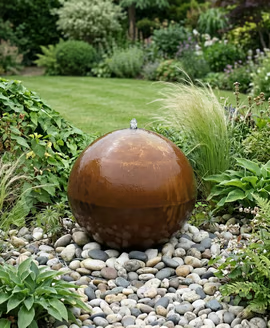
Matt's pick for a first pondless feature
Best for: A patio or gravel corner that needs moving water without any digging beyond the sump
Why I recommend it: The 40cm Corten sphere is the pondless format at its simplest. The 1.5mm weathering steel develops its rusted finish over a few months. The pump and reservoir come in the box. Water slides over the curve into the pebbles with barely a splash. It looks deliberate in both modern and cottage plots, which is rare.
Price: £419
Matt's tip: bed the grid on paving slabs, not soil
The grid carries the whole show: feature, cobbles and anything that stands on them. Rated capacity only counts if the edges cannot sink. Dig the sump hole with a 10cm shelf around it. Bed two or three concrete slabs flat on the shelf and sit the grid rim on those. On bare soil the rim creeps down over a wet winter. The pebbles dish in the middle and the blade goes off level. Ten minutes with slabs and a spirit level keeps the fall dead straight for years.
We stock the sumps, grids, blades and pumps separately because pondless builds are personal. One customer wants a 90cm sheet of water off a rendered wall; the next wants a trickle through cobbles by the back step. Buy the parts, or buy a kit with the thinking done. Either way the water disappears into the pebbles, and that trick never gets old. Browse our full collection of garden ornaments and water features to start.
- Matt W, Garden Ornaments
Frequently asked questions
What is a pondless water feature called?
You will see pondless waterfall, reservoir feature, sump feature and disappearing fountain. All describe the same thing: falling water that drains into a hidden, pump-fed reservoir.
How deep does a pondless reservoir need to be?
Around 40cm deep for our plastic sumps, plus pebbles on top. The hole is a fraction of a pond dig, and the grid sits flush with the finished ground level.
Do pondless water features need cleaning?
Yes, but far less than a pond: rinse the pump filter a few times a year. With no sunlit standing water, algae barely takes hold in the covered sump.
How much water does a pondless feature lose?
Only what evaporates, typically a watering-can top-up every week or two in summer. The loop is closed, so nothing drains away in normal running.
Are pondless water features safe for children?
They are the safest moving-water option, with no standing depth to fall into. The reservoir sits under a steel grid rated to 300kg, hidden beneath pebbles.
Can a pondless water feature run on solar power?
Yes, our solar pump moves 980 to 1,560 litres per hour with a 3.2m head. It includes a timer and needs no outdoor socket, though winter output drops with the light.