
Tropical Garden Ideas for UK Gardens: The Jungle Look
Written by Matt W on 24th Jul 2026.
A tropical garden works in the UK by layering bold foliage in three storeys. A canopy of tree ferns, hardy banana and palms sits over ferns, phormium and low ground cover. Plant in odd-numbered groups for a wild look. Where shade or frost beats real plants, faux foliage and stone focal points from £25 hold the look.
By Matt W | Garden Ornaments Specialist
Key takeaways
- Build the look in three storeys: tree ferns and banana overhead, ferns and phormium mid-level, ground cover below
- Plant in odd-numbered groups of three, five or seven. Even numbers read as formal and kill the wild effect
- Hardy exotics like Musa basjoo and Dicksonia antarctica survive most UK winters if you mulch the roots
- UV-stable faux foliage fills deep shade where real tropicals sulk. Monstera runs £309, Bird of Paradise £164
- Granite picture-planters from £155 and self-contained water features add instant structure and sound
- A Buddha statue from £25 gives the scheme a calm focal point among the leaves
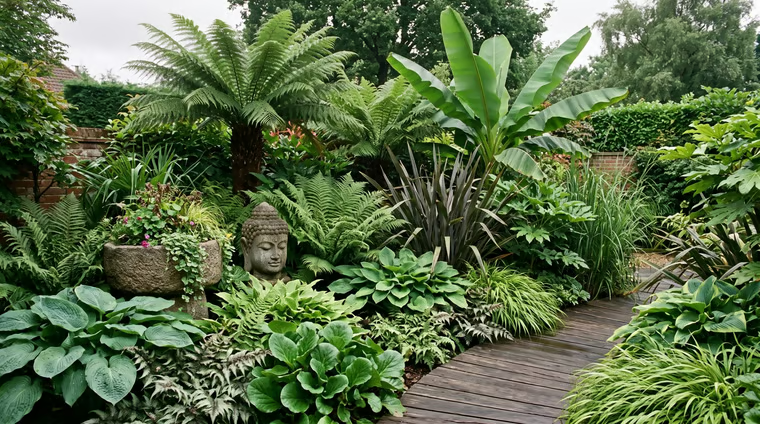
Browse the Buddha statues and ornaments range →
Matt's note
People think a jungle garden means a heated conservatory and a plant-hunter's budget. It does not. The trick British gardeners miss is simple. The tropical look is about leaf shape and layering, not tenderness. A tree fern, a hardy banana and a mass of ordinary hostas already read as jungle. Get the bones right with a few bold plants and two or three stone focal points. The rare tender stuff is optional seasoning, not the main course.
How do you make a tropical garden in the UK?
Build it in layers, the way a real jungle stacks up. Start with a canopy of tall, bold plants. Tree ferns, a hardy banana and a windmill palm all work. Add a mid-storey of large-leaved ferns, fatsia and spiky phormium at chest height. Finish with low ground cover of hostas, bergenia and hardy geraniums. This layering, or planting in storeys, is what makes a border read as jungle.
Spacing matters as much as choice. Plant in odd-numbered groups of three, five or seven. Even numbers look stiff and planned. Overlap the leaves so light filters through, rather than hitting bare ground. A curving path of decking or dark gravel reads as a jungle trail. It also makes a small plot feel deeper. For more on garden moods, see our garden zoning ideas guide.
Which tropical plants survive UK winters?
More than most people expect, if you choose hardy exotics rather than true tropicals. The plants below give big-leaf drama and cope with a British winter. Most want a little protection. The Gardeners' World jungle border guide backs the same layered approach.
- Tree fern (Dicksonia antarctica): the classic canopy plant. Evergreen in mild areas, and hardy to around minus 5C if you pack the crown with straw.
- Hardy banana (Musa basjoo): paddle leaves to 2m in a season. The top dies back in a hard winter, but the roots resprout if mulched.
- Canna: showy flowers and paddle foliage. Lift the rhizomes or heap on a thick mulch over winter.
- Phormium (New Zealand flax): sword leaves in green, bronze and stripes. Fully hardy across most of the UK.
- Fatsia japonica and Tetrapanax: huge glossy hands of foliage for shade. Both are tough and evergreen.
Protect the borderline plants before the first hard frost. Straw, horticultural fleece or a deep bark mulch is usually enough. A steel screen behind the border adds a warm backdrop and cuts the wind. Wind is what shreds big leaves. Our 1.8m bamboo-pattern steel screen does that job for £179 without the spread of real bamboo.
What if my garden is too shady or small for real tropicals?
Use UV-stable faux foliage where real plants would fail. Deep shade, a rented courtyard or a north-facing balcony all defeat a real banana. A good artificial plant gives the same bold leaf shape with no worry. It needs no light, water or frost protection. UV-stabilised means the polymer resists sunlight bleaching. That is the key spec for anything used outdoors. Our guide to artificial topiary that looks real explains what to check.
The stars for a jungle look are the large-leaved fakes. A 150cm artificial Monstera gives instant Swiss-cheese drama in a dark corner. A 120cm Bird of Paradise brings the arching, tropical fan shape. It is also fire-retardant for covered spaces. Both drop straight into a decorative planter and never need a hosepipe.
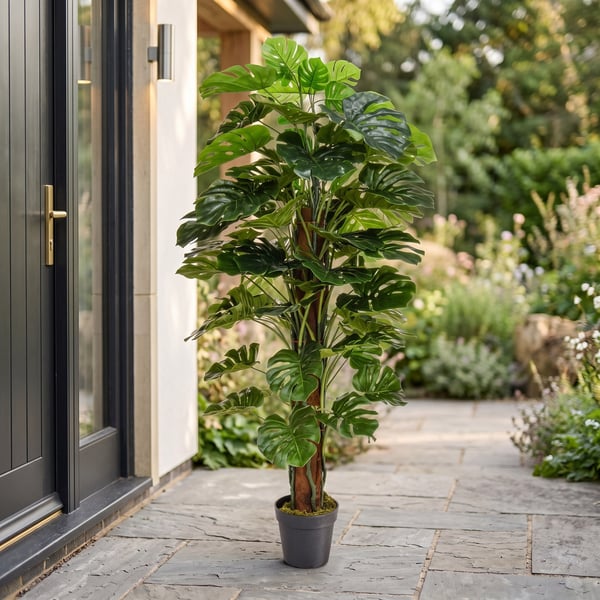
Shop the 150cm Artificial Monstera →
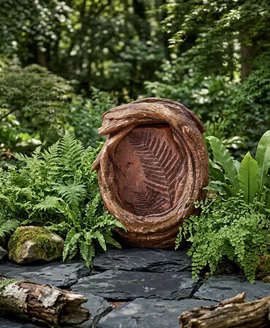
Matt's pick for jungle sound and movement
Best for: Adding the trickle of water a jungle needs, with no pond to dig
Why I recommend it: The Ancient Fern water feature suits this look better than any sleek modern design. Water runs over cast fern fronds into a hidden reservoir. It plants straight into a leafy border and disappears. It is self-contained, so the pump recirculates a fixed tank of water. No plumbing, no mains water, just a nearby outdoor socket.
Price: £225
Real or faux: which bold-leaf plants should you use?
Mix both, and let position decide. Real plants win in an open, sheltered border with decent light. They also suit a gardener happy to mulch each autumn. Faux wins in shade, in pots on hard standing and in rented gardens. The table compares the workhorse plants for each job. It shows our prices where we stock the faux version.
| Plant | Real or faux | Mature height | Hardy in the UK? | Our price |
|---|---|---|---|---|
| Tree fern (Dicksonia) | Real | 1.5-3m | Borderline, mulch the crown | Grow your own |
| Hardy banana (Musa basjoo) | Real | 2-4m | Roots hardy, top dies back | Grow your own |
| Canna | Real | 1-1.8m | Lift or mulch heavily | Grow your own |
| Phormium | Real | 1-2m | Fully hardy in most areas | Grow your own |
| Artificial Bird of Paradise 120cm | Faux | 1.2m | Any position, fire-retardant | £164 |
| Artificial Monstera 150cm | Faux | 1.5m | Any position, UV-stable | £309 |
| Artificial Yucca 110cm | Faux | 1.1m | Any position, UV-stable | £144 |
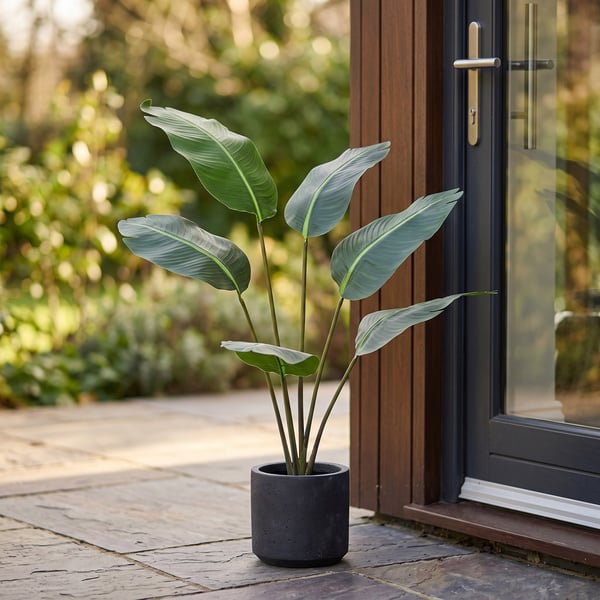
Shop the 120cm Bird of Paradise →
Which ornaments suit a jungle garden?
The best jungle ornaments are calm and half-hidden, not loud. A stone Buddha reads as a temple lost in the leaves. It gives the eye somewhere to rest. Place one where a path turns, so it appears as a reward. We cover the symbolism in our Buddha garden ornaments guide. Prices start at £25 for the bronzed Thai Buddha. The larger Lotus Meditating figure runs to £394.
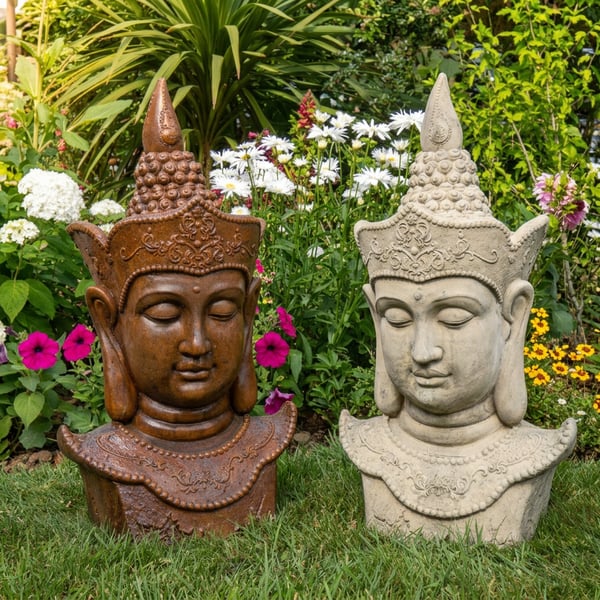
Shop the Large Thai Buddha Head →
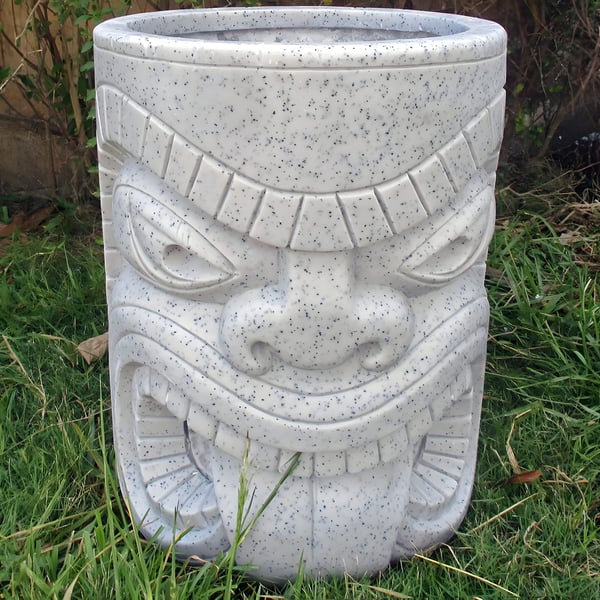
Bold planters do double duty as containers and sculpture. A granite Tiki or Buddha head planter suits the theme. It holds a fern or a trailing plant in its crown. Both cost around £162. Plant them up well, because a bare picture-planter looks unfinished. Our guide to filling a large planter covers drainage and lightweight fillers.
How do you add water to a tropical garden?
Use a self-contained water feature and skip the pond. A jungle needs the sound and glint of moving water. A dug pond is a big job and a safety worry. A self-contained feature recirculates a hidden tank. It needs only a level base and a nearby socket. The trickle masks traffic noise and draws birds. Both sell the jungle illusion.
Match the feature to the mood. The Ancient Fern design at £225 hides among real ferns. For a stronger focal point, the Heavenly Buddha feature at £699 gives water and a calm face together. For placement and meaning, see our Buddha water feature guide.
Watch out for wind and frost
Big leaves are the whole point, and big leaves tear in wind. Site a jungle border in a sheltered spot. Keep it out of the funnel between two buildings. Wind also dries and browns the edges of banana and canna leaves. Before the first hard frost, mulch the roots of borderline plants deeply. Pack straw into a tree fern crown. Drain and cover a water feature over winter, because trapped ice cracks the bowl.
How do you keep the look going all year?
Lean on evergreens and structure so the border does not vanish in winter. Fatsia, phormium, hardy ferns and the faux plants all hold their shape. They carry on when the banana has died back. Stone ornaments and planters see the scheme through the bare months. That is the quiet advantage of building around focal points rather than flowers. For container ideas, see our seasonal guide to what to plant in stone urns and planters.
A jungle garden shares plenty with the hot, dry Mediterranean look. The two want opposite soils, though. A sunny, free-draining plot suits a different scheme. Read our Mediterranean garden ideas instead. The ornament choices overlap, but the planting does not.
We stock this range because a bold garden should not depend on tender plants and a mild winter. Layer a few hardy exotics. Add faux foliage where the light runs out. Anchor it with a stone Buddha and a trickle of water. The look holds in January as well as July. Browse our full collection of garden ornaments to build the rest of the scene.
- Matt W, Garden Ornaments
Frequently asked questions
Can you have a tropical garden in the UK?
Yes, using hardy exotics that give big-leaf drama and survive a British winter. Tree ferns, hardy banana and phormium do the work. True tropicals are optional and need lifting or heat.
What is the easiest tropical plant to grow in Britain?
Phormium, because it is fully hardy across most of the UK. It needs no winter protection. Fatsia japonica is a close second for bold, glossy, evergreen foliage in shade.
How do you protect a hardy banana over winter?
Cut back frosted top growth and heap a deep mulch of straw or bark over the roots. The stem may die back, but Musa basjoo resprouts from the base in spring.
Do artificial tropical plants fade outside?
UV-stabilised foliage holds its colour outdoors for years, unlike untreated bargain plants. Check the listing says UV-resistant before buying anything for an exposed spot.
What ornaments suit a jungle garden?
Calm, half-hidden pieces work best: a stone Buddha, a granite planter or a fern water feature. Place them where a path turns so they appear as a reward.
Do I need a pond for a tropical garden?
No, a self-contained water feature gives the same sound and movement with no dug pond. It recirculates a hidden tank and needs only a level base and a socket.