
Feng Shui Water Features: 5 Traditional Garden Positions
Written by Matt W on 19th May 2026.
In compass-school feng shui, water is commonly associated with the north, east and south-east areas of a garden. These are traditional symbolic guidelines, not physical rules. Start with a safe, level position that suits the feature's power source and lets you enjoy the sound. Then use direction and visible flow as optional finishing choices.
Key takeaways
- ✓ Compass-school feng shui commonly associates water with north, east and south-east
- ✓ Some interpretations avoid moving water in the south, west and centre
- ✓ Inward-looking flow is a common symbolic preference, not a practical requirement
- ✓ Self-contained designs recirculate water, but reservoir size and top-up needs vary by product
- ✓ A Buddha or quiet cascade can provide a calm visual focus in a respectful setting
- ✓ Solar performance depends on direct light and season; mains models need a suitable outdoor power supply
- ✓ Many bagua layouts keep the garden centre visually open
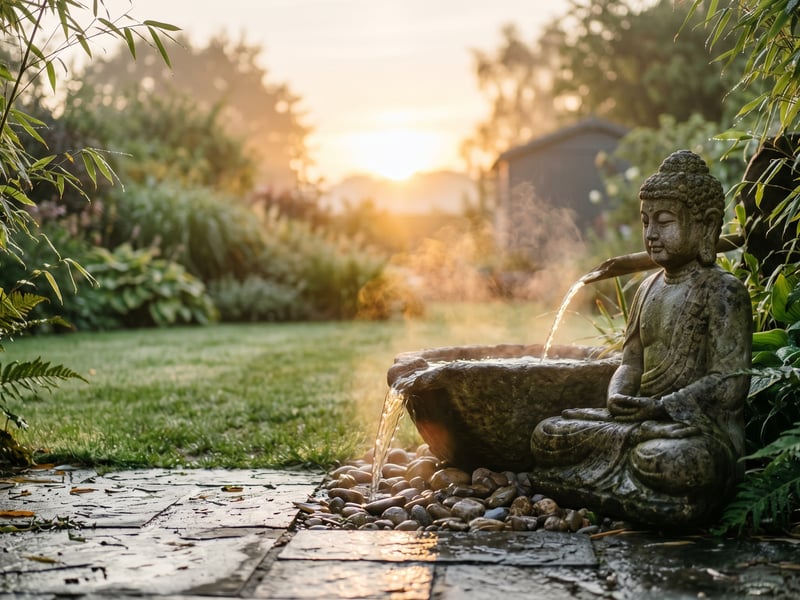
How to use feng shui placement ideas
Use this guide as a way to compare traditional symbolism with the practical needs of a UK garden. Direction can influence the final choice, but safety, a level base, power access, sunlight and whether you can see and hear the feature matter more. The five ideas below explain one common compass-school approach.
Five traditional feng shui guidelines for garden water
In feng shui traditions, water represents movement, energy and prosperity. Different schools use different maps and interpretations. The five guidelines below describe common compass-school associations rather than guaranteed outcomes.
- Direction: Compass-school traditions commonly favour north, east and south-east for water. Some interpretations avoid south and west.
- Flow: Water moving toward the home or seating area is a common symbolic preference.
- Sound: A gentle flow is usually easier to enjoy near a window or seating area than loud splashing.
- Containment: Keep the reservoir topped up as directed and deal with leaks or blocked pumps promptly.
- Visibility: A feature within sight or earshot of the house or seating area is more likely to be enjoyed.
Treat these as symbolic preferences. If a suggested area is unsafe, permanently shaded for a solar panel or too far from a suitable power supply, choose a more practical position.
Cardinal directions: where water works and where it doesn't
Compass-school feng shui associates directions with elements and areas of life. The table summarises those traditional associations for water. Interpretations vary, so use it as a planning aid rather than a promise of a particular result.
| Direction | Element | Life area | Traditional view |
|---|---|---|---|
| North | Water | Career, path in life | Best — native element |
| East | Wood | Health, family, growth | Excellent — water feeds wood |
| South-east | Wood | Wealth, abundance | Excellent — the wealth corner |
| North-east | Earth | Knowledge, wisdom | Acceptable — small features only |
| North-west | Metal | Helpful people, travel | Acceptable — metal-styled pieces only |
| South-west | Earth | Love, relationships | OK with paired symbolism (otters, swans) |
| South | Fire | Fame, reputation | Avoid — water douses fire |
| West | Metal | Children, creativity | Avoid — water rusts metal |
Use a reliable compass to identify true north, east, south and west. Do not assume the back of the house faces north. If you follow a different feng shui school, its bagua method may map the garden differently.
North: the career corner
Compass-school feng shui associates north with water, career and life path. A vertical feature such as a pillar, sphere or column can echo an upward visual line. Choose that shape for its appearance rather than expecting a guaranteed effect.
A north-facing area is often shaded, although every garden differs. If a solar panel cannot receive adequate direct light, consider a mains-powered option instead. The dark finish and upward water movement of the Poseidon Self-Contained Water Feature can suit this traditional area.
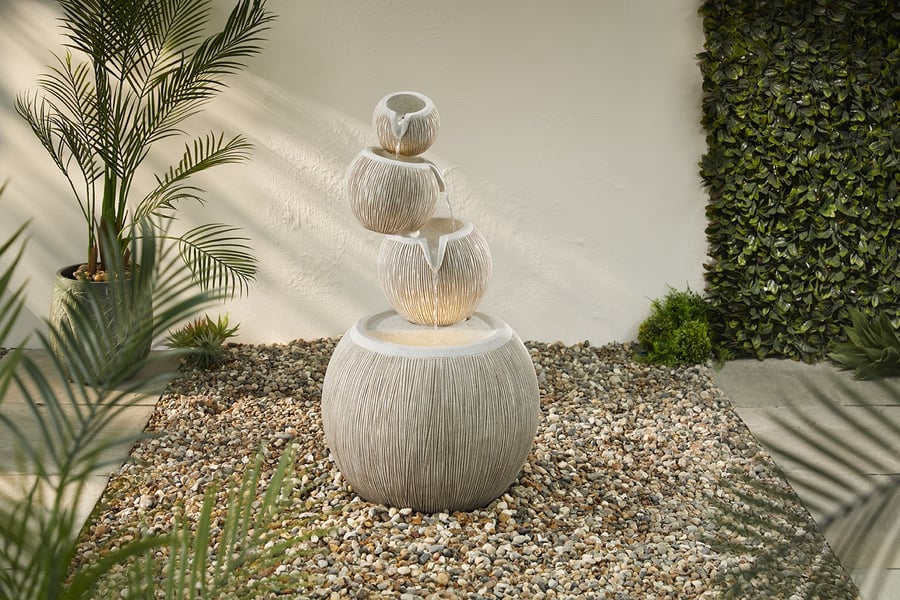
Shop the Poseidon Self-Contained Water Feature — £400 →
East: the health and family corner
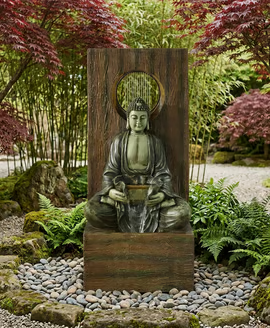
Compass-school feng shui associates east with wood, health and family, and water is traditionally said to support wood. A Buddha water feature can also provide a quiet visual focus. Keep religious imagery in a respectful, uncluttered position.
For an east-facing area, consider a contained flow such as water moving into a bowl or down a figure. The Calming Buddha Solar Water Feature needs adequate direct light on its panel. Choose a mains model such as the Heavenly Buddha if you want operation that is not dependent on sunshine.
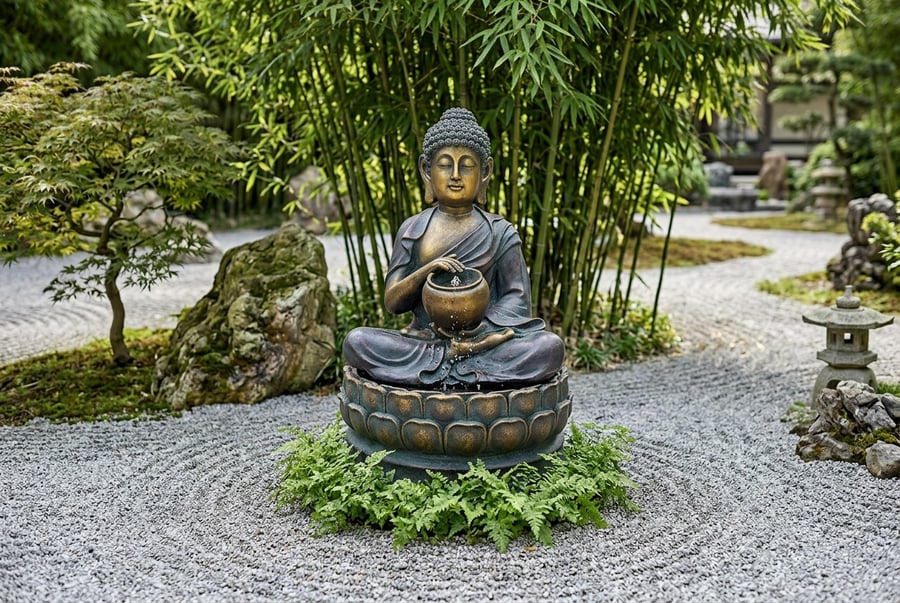
Shop the Calming Buddha Solar Water Feature — £229 →
If you want to go deeper on the Buddha specifics — mudra meaning, height-to-eye-line, indoor vs outdoor — our Buddha water feature placement guide covers placement, meaning and sizing in more detail.
South-east: the wealth corner
In compass-school feng shui, the south-east is traditionally associated with wealth and abundance. An inward-looking cascade is a common symbolic choice. Treat that as a design preference, while keeping safe access, light and power requirements first.
A tiered or multi-level cascade makes the water movement easy to see. The Forest Springs Solar Water Feature uses three stacked rock forms. Its solar panel still needs a position with adequate direct light.
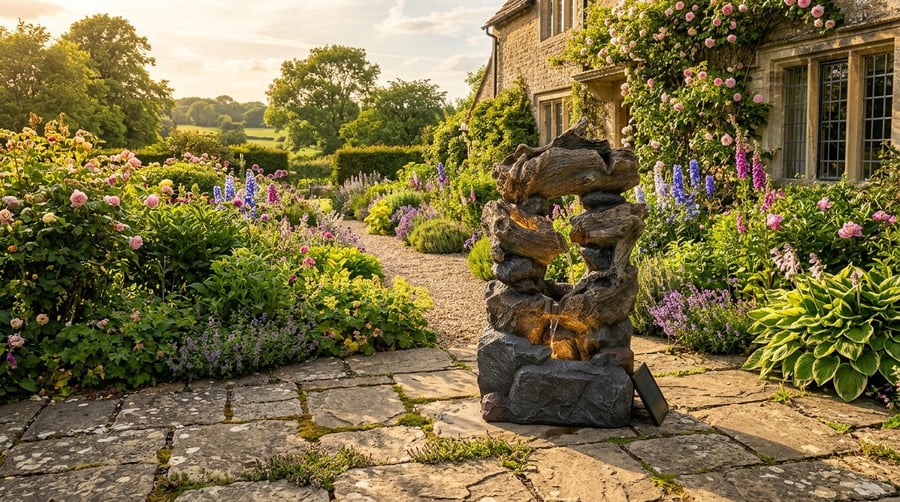
Shop the Forest Springs Solar Water Feature — £329 →
South-west: the love and relationships corner
Compass-school feng shui associates the south-west with earth, love and partnership. Some interpretations use paired figures here as a relationship symbol. This is optional symbolism, not a requirement for placing a water feature.
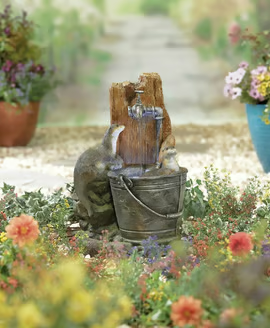
If paired symbolism appeals to you, the Bathing Otters Self-Contained Water Feature uses two animal figures. The Garden Cherub Upright Stone Fountain is another decorative option for a shared garden setting.
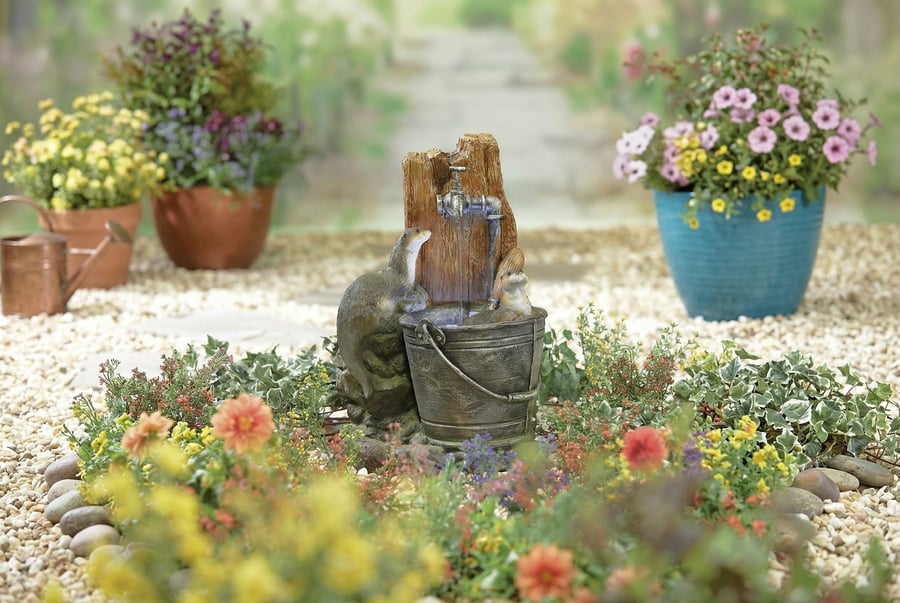
Shop the Bathing Otters Self-Contained Water Feature — £239 →
Areas traditionally avoided in compass-school feng shui
Some compass-school interpretations avoid moving water in the south, west and centre. These are symbolic associations. Practical concerns such as a level base, safe power, splash, access and visibility should decide whether a position actually works.
Due south (fire / fame area): Traditional compass-school feng shui treats water and fire as conflicting elements. If you use this system, another area may fit the symbolism more closely.
Due west (metal / children area): Some interpretations treat water and metal as an awkward pairing here. A stone-look design can provide a softer visual transition if west is the most practical position.
The centre of the garden (the tai chi area): Traditional bagua layouts often keep the centre visually open. In practical design terms, a central feature needs sufficient clearance and should not obstruct a route across the garden.
Flow direction and the main viewpoint
Many feng shui guides prefer water that appears to move toward the home or main seating area. This is a symbolic interpretation of energy being retained rather than carried away. It can also orient the most attractive view and sound toward the place you use.
Stand at the usual viewing point and check the visible water path. If you prefer inward flow, rotate only a freestanding design that the product instructions say can be repositioned safely. Keep cables, level and splash direction in mind.
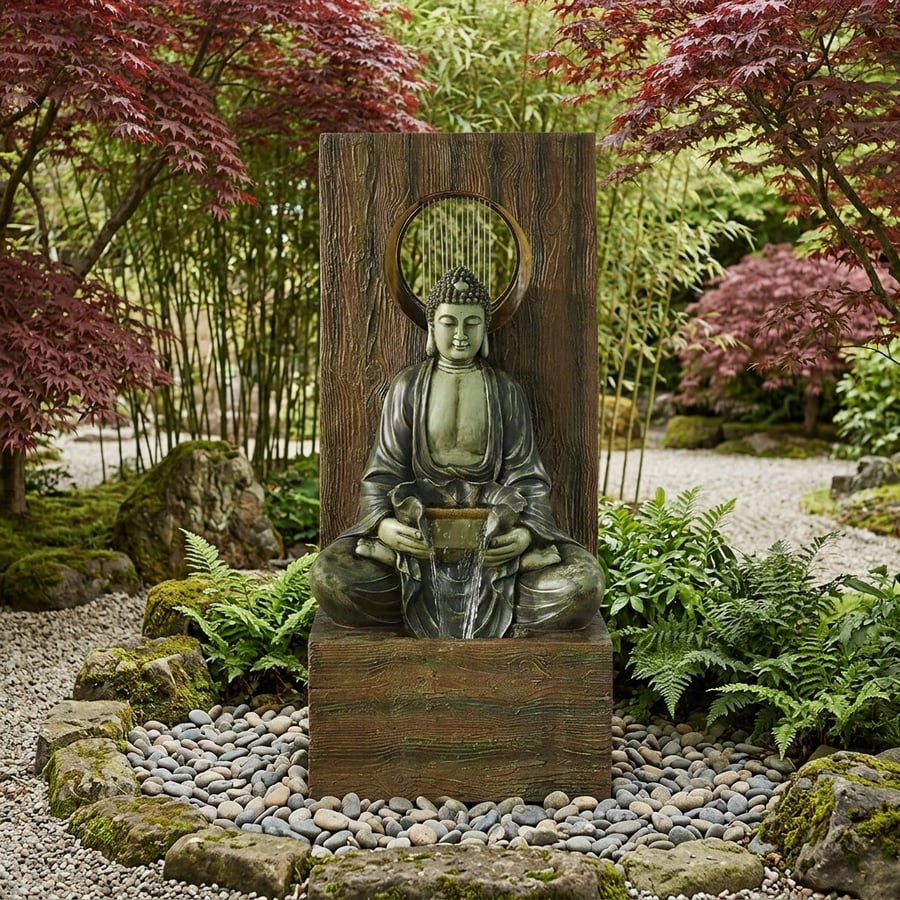
Shop the Heavenly Buddha Self-Contained Water Feature — £699 →
Nine feng shui water-feature ideas by direction
The table compares nine current examples by their traditional directional fit, pump type and live product price. Check the linked product page for the latest dimensions, delivery position and care details.
| Direction | Pick | Why it suits this corner | Pump | Price |
|---|---|---|---|---|
| North (career) | Poseidon Self-Contained | Dark finish and vertical water movement for a north-facing area | Mains | £400 |
| North (career) | Snowdonia Monolith LED | Tall form with mains-powered pump and integrated LEDs | Mains, LED | £389 |
| East (health) | Calming Buddha Solar | Buddha design with a separate solar panel that needs direct light | Solar | £229 |
| East (health) | Heavenly Buddha (Matt's Pick) | Large mains-powered Buddha with LED lighting and a 45kg listed weight | Mains | £699 |
| South-east (wealth) | Forest Springs Solar | Three tiered rock forms make the cascade easy to see | Solar | £329 |
| South-east (wealth) | Grecian Bowls Solar | Multiple bowls suit the traditional abundance theme; panel needs direct light | Solar | £229 |
| South-west (love) | Bathing Otters Self-Contained | Paired animal figures suit the traditional relationship theme | Mains | £239 |
| South-west (love) | Garden Cherub Upright Stone Fountain | Romantic symbolism for couples and anniversary gifts | Mains | £414 |
| Rock Pool (universal) | Rock Pool Self-Contained | Naturalistic stone-look option where practical siting comes first | Mains | £400 |
Matt's tip: pair the water feature with where you actually sit
Start with the seat or window from which you will most often see the feature. If that practical position does not match a preferred compass area, choose safe access and regular enjoyment first. You can still orient the visible flow toward the seating area if the design and cable route allow it.
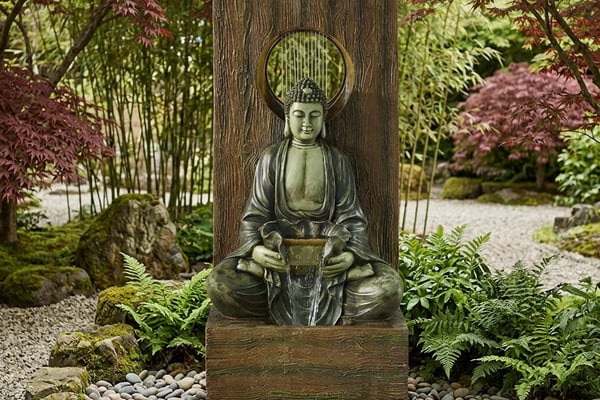
Matt's Pick: Heavenly Buddha Self-Contained Water Feature
Best For: A large focal position with a firm base and access to a suitable mains power supply.
Why I Recommend It: This 1,520mm-tall, 45kg self-contained model has a 45W low-voltage pump, LED lighting and a 10m cable. Its size suits a clear focal position with a firm, level base.
Price: £699
Setting up a feng shui water feature in your garden
Installation differs by model. Read the named product instructions, prepare a firm and level base, and use a suitable outdoor power supply for mains-powered designs. Fill and test the reservoir before making final placement adjustments.
- Use a reliable compass to identify north, east, south and west; do not infer them from the house layout.
- Pick the corner that matches your priority: career (north), health (east), wealth (south-east) or love (south-west).
- Set the feature so the visible water flows toward the house, not toward the boundary.
- Prepare the firm, stable and level base specified for the product. Keep the cable route and splash area clear.
- Fill the reservoir as directed in the product instructions and make sure the pump is adequately submerged before switching it on.
- View and listen to the running feature from your usual seat. Adjust only if the product can be moved safely and the new position keeps the base level.
Frequently asked questions
What is the best feng shui direction for a garden water feature in the UK?
North, east and south-east are common choices in compass-school feng shui. Different schools map space differently. Use a compass, then put safety, power access, sunlight and a level base before symbolic direction.
Which direction should water flow in a feng shui garden?
Inward flow is a common traditional preference. It symbolises retaining energy and prosperity. Orient the feature only where its design, cable route, base and splash direction make that safe.
Can I put a water feature in the centre of my garden?
Many traditional bagua layouts keep the centre open. A central feature can still work as garden design if it has safe clearance, a level base and an unobstructed route around it.
What feng shui water feature is best for wealth and prosperity?
South-east and inward-flowing cascades are traditional wealth symbols. A tiered or multi-bowl design makes that movement visible. Choose a model that also suits the available light, power and space.
Does a Buddha water feature have to face east?
No universal rule requires a Buddha water feature to face east. East is used in some traditions, but schools differ. Give the figure a clean, respectful setting and follow the practical installation requirements.
Is a solar water feature OK for feng shui?
Yes, if the solar panel receives adequate direct light. Performance changes with season, weather, panel angle and shading. Choose the sunniest practical panel position rather than relying on compass direction alone.
What size water feature suits a small UK garden under feng shui?
Measure the available width, depth and viewing distance first. Leave room for access and splash. A compact design can suit a courtyard, while taller pieces need a clear sightline and a suitably scaled setting.
Can I move a water feature once it's installed?
Many self-contained features can be moved after draining and disconnecting them. Check the product weight and instructions first. Larger pieces may need extra people or lifting equipment.
Browse our full range
Browse our water features across self-contained, solar, stone and modern designs. Check each product page for the current pump, dimensions, warranty and setup details. Our wider garden ornaments range can help complete the surrounding scheme.
Best feng shui water features by direction
Related articles
- Buddha Water Feature: Placement, Meaning & 5 Best UK Picks
- The 2026 UK Water Feature Buyer's Guide
- Best Solar Water Features UK 2026: 12 Picks
- Best Places to Position Garden Statues for Feng Shui
- Buddha Garden Ornaments: Placement, Meaning and Feng Shui
Matt W
Garden & Outdoor Specialist
Matt writes practical buying and placement guides for Garden Ornaments, using current product specifications and clear care guidance.