
How to Set and Level a Heavy Stone Statue, Urn or Pedestal
Written by Matt W on 24th Jul 2026.
Set a heavy stone statue, urn or pedestal on a firm, level base. Lay 100mm of compacted aggregate under 200mm of concrete, cured 48 hours. Bed the piece on an 8:1 soft sand and cement mortar so its weight spreads evenly. Fix pedestals and statues together with a stainless dowel set in slow-cure epoxy. Move heavy pieces low, never upright.
By Matt W | Garden Ornaments Specialist
Key takeaways
- A large cast-stone urn weighs about 138kg; a life-size dog statue tops 254kg. Plan the lift first
- Move heavy pieces low on a sack truck, rollers or a pallet. Never carry a big statue upright
- Set the base first: 100mm of compacted aggregate under 200mm of concrete, cured for 48 hours
- Bed the piece on an 8:1 soft sand and cement mortar to spread the weight and stop pivoting
- Fix a pedestal to its statue or urn with a stainless dowel set in slow-cure structural epoxy
- Check level in both directions and pack thin shims before the mortar goes off
Browse the cast-stone statues range →
Installer's note
The call we get most often is the same every time. A pallet has arrived, and the piece is heavier than the customer pictured. It is sat on the drive. Cast stone is dense. An urn that two people expected to lift weighs as much as a washing machine. The job is not hard, but it rewards preparation over muscle. Read the weight on the product page first. Then plan the route, the base and the lift before you cut the straps.
How much does a stone garden statue actually weigh?
More than almost everyone expects, because reconstituted stone is nearly as dense as quarried stone. Our figures are cast solid, not hollow, so weight climbs fast with size. A Roman column pedestal is a manageable 40kg. A grand Buddha head is 120kg. A large fluted urn is 138kg. A life-size Great Dane reaches 254kg, more than three average adults. Those are real numbers from our own product data.
Weight decides everything that follows. It sets how many people you need, how you move it, and what base it wants. Read it off the listing before delivery day. Anything over about 60kg is a two-person job at least. Anything over 150kg usually wants mechanical help or a small team. The right size for your space is a separate question. We cover it in our guide to garden statue sizes.
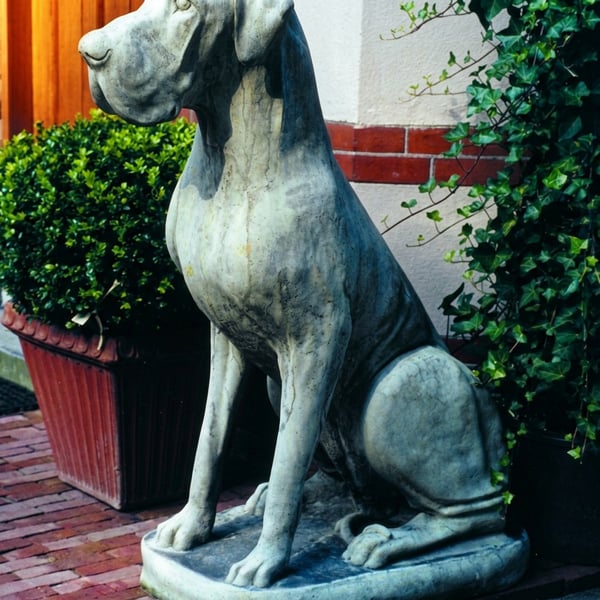
View the Male Great Dane Statue →
How do you move a heavy stone statue safely?
Keep the weight low and let equipment do the work. Do not carry a heavy statue upright. A top-heavy load twists your back and threatens the piece. Use a sack truck for anything up to about 120kg. For the really heavy pieces, roll them on tubes under a scaffold board. Slide the item, do not lift it. The HSE manual handling guidance is worth a read before you start.
- Clear and plan the route. Remove steps, gravel drag and tight corners. Lay boards over soft lawn.
- Protect the corners. Wrap plinths and fine detail in old blanket or foam first.
- Use rollers for the heaviest pieces. Three tubes under a scaffold board move 250kg with gentle pushing.
- Walk a piece upright only in short arcs. Tip it onto one base edge and rotate, keeping it low.
- Never put fingers under a lowered piece. Bed it onto timber battens you can slide out.
Protect your back and your fingers
Cast stone does not forgive a trapped hand. Wear steel-toe boots and gloves. Keep the piece within the load capacity of any truck. When you set it down, rest it on two timber battens. That leaves a gap to slide out ropes and straps. It also gives a finger-safe way to make the final nudge. If a piece feels beyond your team, stop. Hire a mini-crane or an extra pair of hands.
What foundation does a stone statue or pedestal need?
A firm, level base that will not sink, matched to the weight above it. A light ornament sits happily on existing paving. Anything heavy needs a proper footing, or it settles unevenly and leans. For heavy pedestals, statues and fountains, dig out and lay 100mm of compacted aggregate. Add 200mm of concrete on top. Let it cure for 48 hours before you build on it.
Soft ground is the enemy. A statue placed straight onto lawn sinks on one side after a wet winter. A tall piece then leans. That lean is how most toppling starts. We cover it in our guide to stopping garden statues falling over. A footing spreads the load and keeps the piece plumb for good. On a hard patio already laid on concrete, you can usually bed straight onto the slabs.
How do you bed and level a stone urn or statue?
Bed it on mortar and adjust before the mix goes off. Use an 8:1 soft sand and cement bedding mortar, kept fairly soft. That ratio spreads the weight evenly across the base. It stops the piece pivoting or twisting on a high spot. Never sit heavy stone directly on bare concrete. Any lump becomes a rocking point and a stress crack waiting to happen.
- Lay a full mortar bed. Trowel an even bed across the whole footprint, not five dabs.
- Lower the piece onto it. Set it square and press to squeeze mortar out all round.
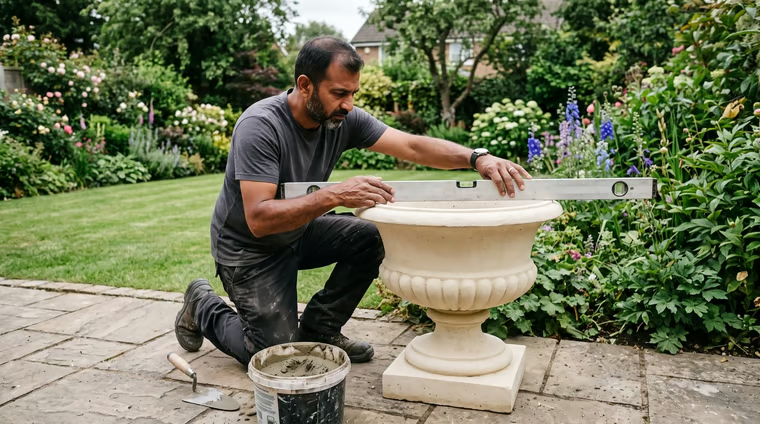
- Check level both ways. Lay a spirit level across the top, then turn it 90 degrees.
- Pack thin shims. Tap slate or plastic shims under the low side until the bubble centres.
- Point the joint. Strike off the squeezed-out mortar for a clean, weather-tight base line.
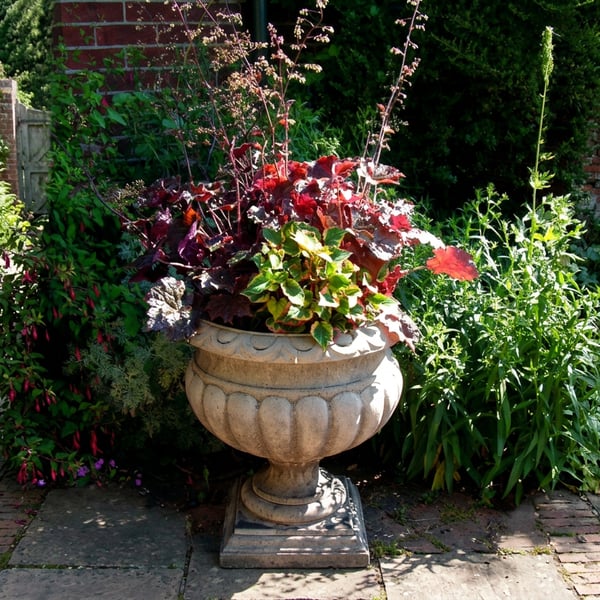
View the Large Buckingham Urn →
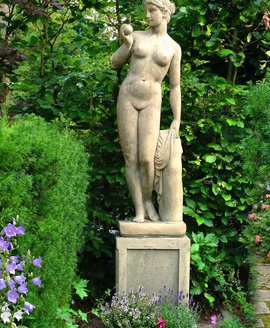
Matt's pick for a solid base
Best for: Lifting an urn, sundial or bust to eye level on a base that will not shift
Why I recommend it: At 160kg with a 430mm square top, this plinth is heavy enough to stay put. It is also wide enough to carry a big urn or statue. The square top makes levelling simple and gives a generous mortar bed. Set it on a concrete footing and dowel the piece on top. You then have a display that survives decades and gales alike.
Price: £370
How do you fix a statue to a pedestal so it cannot be knocked off?
Pin the two pieces together with a dowel set in epoxy. A statue balanced on a pedestal is a theft and accident risk. A strong gust can shift it too. Drill a matching hole in the base of the statue and the top of the pedestal. Then bed a stainless steel or threaded rod across both in a two-part structural epoxy. When one pin cannot stop rotation, add a second offset registration dowel to lock the angle.
Use a slow-cure epoxy, not a five-minute one. A resin with a 30-minute working time develops far higher strength. It also shrugs off impact better than a fast-set glue. And it gives you time to seat the piece and check level before it grabs. This dowel-and-mortar method sits behind our wider advice on securing garden ornaments against theft and wind.

Weights and bases for our heavy stone pieces
Match the base and fixing to the weight. The table pulls the real weights from our range. It pairs each piece with the base it needs and the way to fix it. Use it as a planning sheet before delivery day.
| Piece | Weight | Base it needs | How to fix |
|---|---|---|---|
| Roman Column Pedestal | 40kg | Firm paving or a slab | Bed on mortar, dowel the top |
| Large Stone Pedestal | 105kg | Concrete footing | Bed on mortar, dowel to statue |
| Grand Buddha Head | 120kg | Levelled slab or footing | Bed on mortar, dowel to base |
| Twin Standing Cherub Statue | 136kg | Concrete footing | Bed on mortar, dowel to plinth |
| Large Buckingham Urn | 138kg | Levelled base or pedestal | Bed on mortar, level both ways |
| Large Stone Plinth | 160kg | Concrete footing | Bed on mortar |
| Viewpoint Stone Fountain | 160kg | Level concrete base | Bed on mortar, add reservoir |
| Male Great Dane Statue | 254kg | Concrete footing | Bed on mortar, rollers to move |
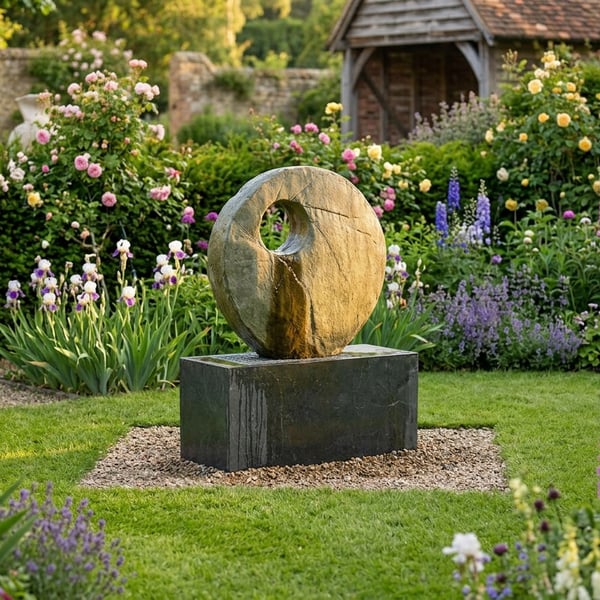
Fountains add one more step. The Viewpoint fountain arrives without its pump and reservoir. Plan a hidden sump and a socket before you set the stone. Level is even more critical here. A tilted bowl sends water over one lip. The same care applies to any bowl you plant rather than plumb. See our guide to filling a large planter or urn.
How do you protect a newly set piece?
Let the mortar cure, then seal against frost. Leave a freshly bedded piece undisturbed for 48 hours. Only then plant or plumb it. New cast stone is porous. Water soaked into an unsealed surface expands when it freezes and spalls the face. A breathable stone sealer in the first dry spell cuts that risk. Our full routine sits in the guide to weatherproofing garden statues and ornaments.
We stock heavy cast stone because weight is what makes a piece look permanent. It is also what keeps it put. The trade-off is that it must be moved, based and fixed properly. Nobody in ornament retail explains how. Read the weight, prepare the base, bed on soft mortar and dowel the joints. Do that and a 200kg statue outlives the people who set it. Browse our full range of stone pedestals and plinths to pair with your piece.
- Matt W, Garden Ornaments
Frequently asked questions
What base do I need for a heavy stone statue?
A firm, level footing of 100mm compacted aggregate under 200mm of concrete for heavy pieces. Light ornaments sit fine on existing paving. Anything over about 100kg wants a proper footing.
What mortar do you use to set a stone statue?
An 8:1 soft sand and cement bedding mortar, kept fairly soft. The full bed spreads the weight evenly and stops the piece pivoting on a high spot.
How do you move a very heavy garden statue?
Keep it low on a sack truck, or roll it on tubes under a scaffold board. Never carry a big statue upright. Use a team or a mini-crane above 150kg.
How do you fix a statue to its pedestal?
Drill both pieces and bed a stainless dowel across the joint in slow-cure structural epoxy. Add a second offset dowel to stop the piece rotating on the pin.
Can I put a stone statue straight onto the lawn?
No, a heavy piece sinks on one side after a wet winter and starts to lean. Lay a levelled slab or a concrete footing so the load cannot sink.
How long before I can plant or plumb a newly set piece?
Leave the bedding mortar to cure for 48 hours before adding soil, water or a pump. Seal porous new cast stone in the first dry spell to guard against frost.