
Japanese Garden Ornaments: Lanterns, Pagodas & Cranes
Written by Matt W on 9th Mar 2026.
Key Takeaways
- Japanese lanterns split into four traditional forms: tachi-gata pedestal lanterns, yukimi snow-viewing lanterns on legs, ikekomi buried-post lanterns and small oki-gata placed lanterns
- Pagoda ornaments always carry an odd number of roofs, 3, 5, 7 or 9, because odd numbers are auspicious in the tradition; an even-tier pagoda reads as wrong
- Our lanterns run from a 410mm grey path lantern at £99 to the 80cm Granite Oriental Lantern at £255 and a red oriental lantern at £385
- Pagodas span a 41cm Oriental Pagoda at £199 up to a 98cm double cantilever pagoda at £359, with a 650mm three-tier sandstone pagoda at £249
- Place lanterns to light a real edge, a path turn or the waterside, and use a pagoda as a single focal point seen from the house
- Every stone piece is frost-proof; the sandstone pagoda weighs 40.4kg and the tall white lantern 24kg, so they stay put without fixing
Japanese garden ornaments fall into three groups: stone lanterns, tiered pagodas and bronze cranes. Lanterns come in four classic forms, from tall tachi-gata pedestal lanterns to low oki-gata pieces tucked by water. Pagodas always carry an odd number of roofs, 3, 5, 7 or 9, never even. Our lanterns run from £99 to £385, and pagodas from £199 to £359. Used well, one lantern and one pagoda turn a corner of a UK garden into a calm, ordered scene.
By Matt W | Garden Ornaments Specialist
Shop the Granite Oriental Lantern →
Matt's Experience
The mistake I see most often with Japanese ornaments is treating them as decoration to dot about. They are not. In the tradition each piece marks something: a lantern lights a step or a water's edge, a pagoda anchors a view. Buy one lantern and one pagoda, place each where it does a job, and the corner reads as intentional. Buy five and scatter them, and it reads as a garden centre display. Restraint is the whole point, and it is the hardest part for most of us to accept.
What are the different types of Japanese stone lantern?
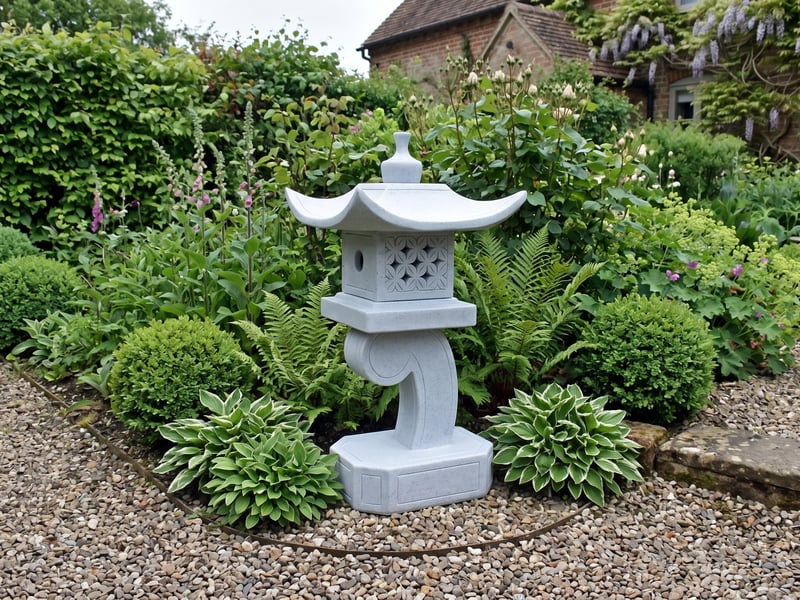
There are four traditional types of Japanese stone lantern, defined by how they stand. The tachi-gata is the tall pedestal lantern on a single column, the formal piece you picture first. The yukimi, or snow-viewing lantern, sits low on three or four curved legs with a wide roof to catch snow, made for the water's edge. The ikekomi has its post buried straight into the ground, with no base, so it suits informal planting. The oki-gata is a small lantern simply placed on the ground or a rock.
Each form has a job. Tall tachi-gata lanterns suit a path or a gateway where height reads well. Low yukimi and oki-gata pieces belong by water and stepping stones, where a tall piece would loom. Our Granite Oriental Lantern is a tachi-gata at 80cm, while the 410mm grey path lantern works as an oki-gata accent. The same placement logic runs through our guide to Japanese water features, where the tsukubai basin and lantern were always designed as a pair.
Shop the Granite Oriental Lantern →
Why do pagodas always have an odd number of tiers?
Pagodas carry an odd number of roofs because odd numbers are auspicious in Japanese and wider East Asian tradition. You see 3, 5, 7, 9 and 13-tier pagodas, never 4 or 6. The number four is avoided outright, because the Japanese word for four sounds like the word for death. So a stone garden pagoda almost always shows three or five roofs, and an even-tier piece looks wrong to anyone who knows the form.
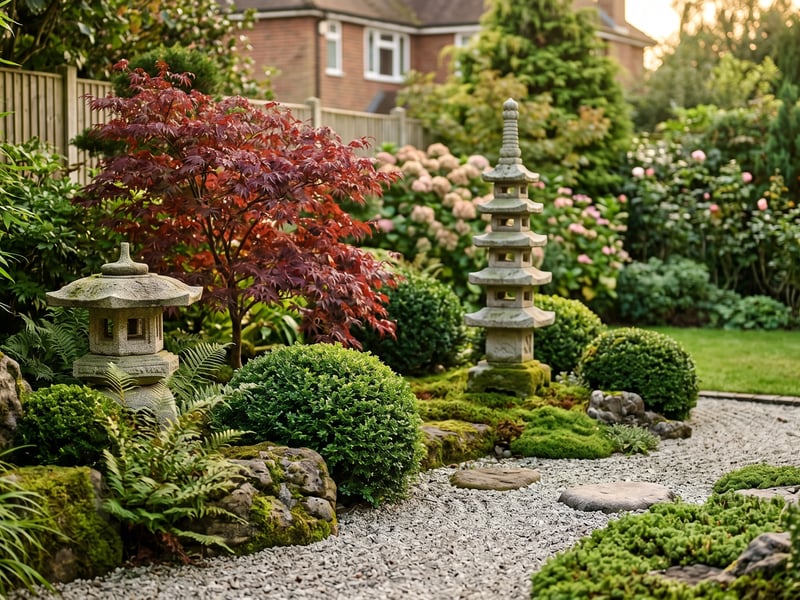
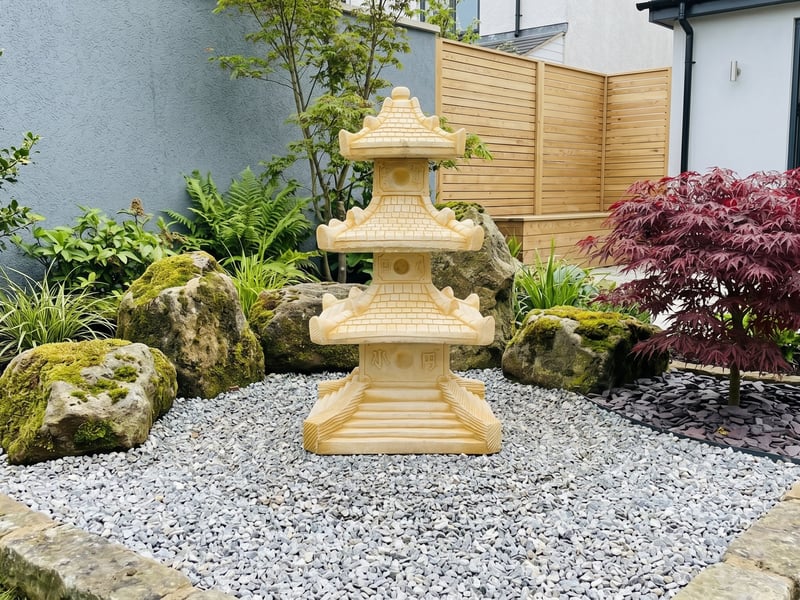
For a garden ornament, the tier count also sets the proportion. A three-tier pagoda like our 650mm sandstone piece reads as compact and grounded, right for a border or a gravel bed. Taller stacked forms draw the eye upward as a vertical accent. If you want the meaning behind these shapes, our guide to what garden statues symbolise covers the symbolism that sits behind Eastern ornaments.
Shop the Grand Pagoda in Sandstone →
Matt's pick for most gardens
Best For: A border or gravel bed that needs one calm, grounded focal point
Why I Recommend It: The Grand Pagoda in Sandstone is the one I steer most people to. The three-tier form is correct, the warm sandstone tone settles into UK planting instead of shouting, and at 40.4kg it never moves. It does the focal-point job without dominating the garden.
Price: £249
Where should you place a Japanese lantern in the garden?
Place a Japanese lantern where it marks an edge or a turn, not in open space. The tradition puts lanterns at path junctions, by stepping stones, beside a gate and above all at the water's edge, where the low yukimi form was made to glow over a still surface. A lantern lighting nothing looks lost. A lantern lighting a real step or a pond margin looks inevitable.
In a UK garden that means setting a tall tachi-gata lantern at a path corner so it guides the eye round the bend, and tucking a low lantern by a pond or a basin. Pre-drilled pieces like the tall white lantern take a solar or mains light for a soft evening glow. Keep one lantern to a sightline; two competing lanterns cancel each other out. Our guide to choosing the right statue height helps you match the lantern to the space.
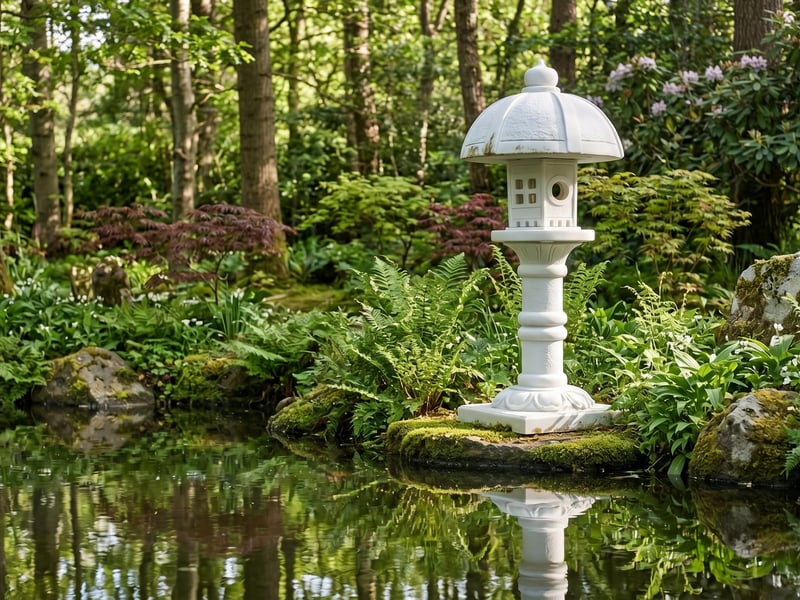
Shop the Tall Lantern in White →
Matt's Tip: One Focal Point, Then Stop
A Japanese-style corner works on a single moment of focus. Choose one piece to be the star, usually the pagoda, and place it where you see it from the house or a seat. Everything else, the lantern, a crane, a basin, supports that view from the side or behind. The instant you give a corner two equal focal points, the eye does not know where to rest and the calm is gone. When in doubt, take one piece away.
Which Japanese garden ornaments can you buy in the UK?
The range covers lanterns, pagodas and cranes across stone-effect and metal finishes. Lanterns start with the 410mm Garden Lantern in grey or white at £99, rise to the 80cm Granite Oriental Lantern and the White Oriental Lantern at £255, the 90cm Tall Lantern at £289, and the striking red Oriental Lantern at £385. Pagodas run from the 41cm Oriental Pagoda in white or grey at £199, through the 650mm three-tier sandstone and stone Grand Pagodas at £249 and the 82cm Modern Pagoda at £289, up to the 98cm Double Cantilever Pagoda at £359.
For movement and grace, the bronzed Love Cranes pair stands 370mm tall and brings the classic waterside bird to a pond or border. Stone-effect lanterns and pagodas are hand-cast from crushed marble and resin with a frost-proof finish, while the sandstone Grand Pagoda is true cast stone at 40.4kg. Browse the full collection of japanese garden ornaments to see lanterns, pagodas and cranes side by side. For more on Eastern figures, our Buddha placement guide covers the same calm, considered approach.
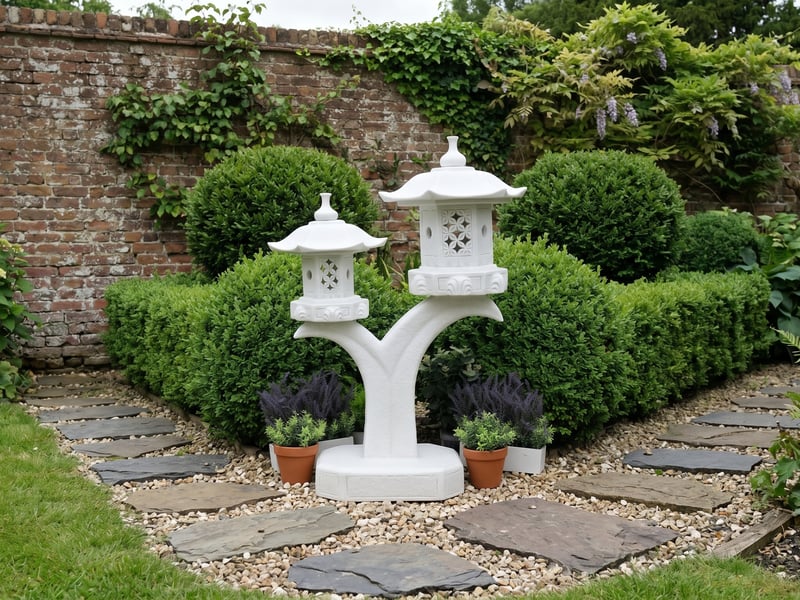
Shop the Double Cantilever Pagoda →
| Ornament | Type | Height | Price | Best for |
|---|---|---|---|---|
| Garden Lantern (Grey/White) | Oki-gata lantern | 410mm | £99 | Path edges, low accents |
| Oriental Pagoda (White/Grey) | Tiered pagoda | 41cm | £199 | Borders, rockeries, patios |
| Grand Pagoda Sandstone | Three-tier pagoda | 650mm | £249 | Matt's Pick - grounded focal point |
| Granite Oriental Lantern | Tachi-gata lantern | 80cm | £255 | Path corners, gateways |
| Modern Pagoda White | Pagoda lantern | 82cm | £289 | Minimalist gravel gardens |
| Double Cantilever Pagoda | Twin pagoda | 98cm | £359 | Tall statement pieces |
| Love Cranes Bronzed (Medium) | Bronze cranes | 370mm | £245 | Pond and waterside grace |
What do cranes mean in a Japanese garden?
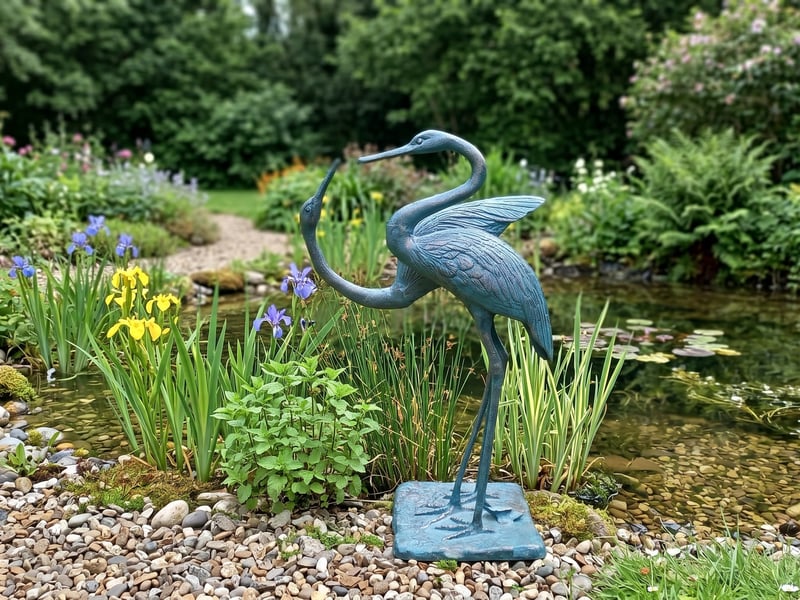
Cranes symbolise longevity, good fortune and fidelity in Japanese tradition. The crane was believed to live a thousand years, and a pair stands for a long and faithful marriage, which is why crane ornaments come as a couple so often. Placed by water, they echo the real birds that feed at pond margins, so they sit naturally at the edge of a wildlife pond or a still basin.
Our bronzed Love Cranes are cast aluminium with a hand-applied aged bronze patina, light at around 1.5kg each so they suit a pond surround or a gravel margin. Set them where a real crane would stand, at the water's edge among reeds and irises, rather than marooned on a lawn. For more waterside birds, our bird garden ornaments guide covers herons and songbirds that keep the same company.
How do you design a small Japanese garden corner?
Start with one focal point and build a calm, asymmetric scene around it. Japanese design avoids straight lines and matched pairs; it favours odd groupings, open gravel and restraint. Set a pagoda or a tall lantern as the anchor, lay raked gravel or moss around it, add one or two natural rocks of different sizes, and keep planting simple with a single acer, some ferns and clipped mounds.
Then add a lantern to mark an edge and, if you have water, a low piece or a crane at the margin. Leave space. The empty gravel is part of the design, not a gap to fill. A 2m by 2m corner is plenty for one pagoda, one lantern and a rock or two. Our guide to where to position a water feature applies the same thinking to flow and sightlines.
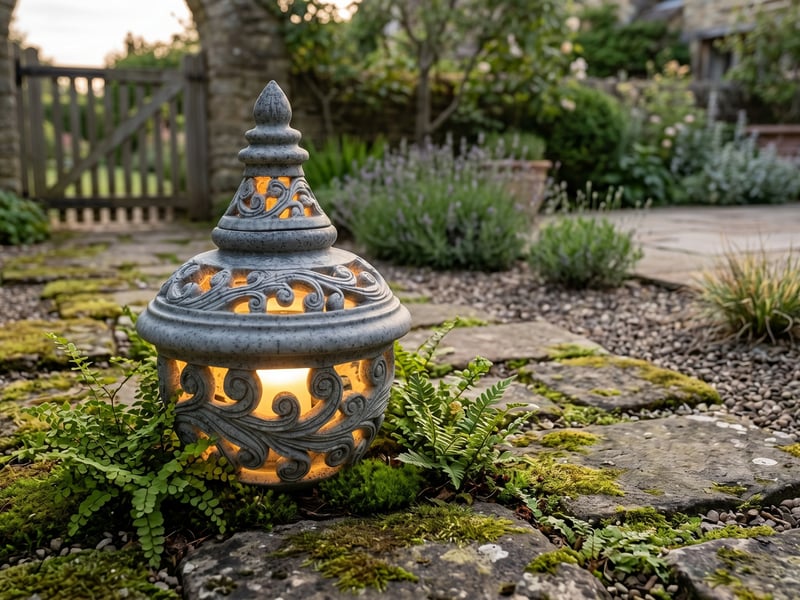
Shop the Garden Lantern in Grey →
Are Japanese stone ornaments frost-proof and heavy enough to stay put?
Yes, every stone and stone-effect piece we stock is frost-proof and built to stay outside all year. The hand-cast marble-and-resin lanterns and pagodas resist frost and weather without sealing, and the true cast stone Grand Pagoda needs only a wipe clean. Weight keeps them stable: the Tall Lantern is 24kg, the Pagoda in White 16kg and the sandstone Grand Pagoda 40.4kg, so none needs fixing down.
The bronzed cranes are cast aluminium and never rust through, though at around 1.5kg each they are best placed out of the worst wind. As the stone pieces age they pick up a little moss and soften into the planting, which is exactly what you want in a Japanese-style scene. The look improves with time rather than fading.
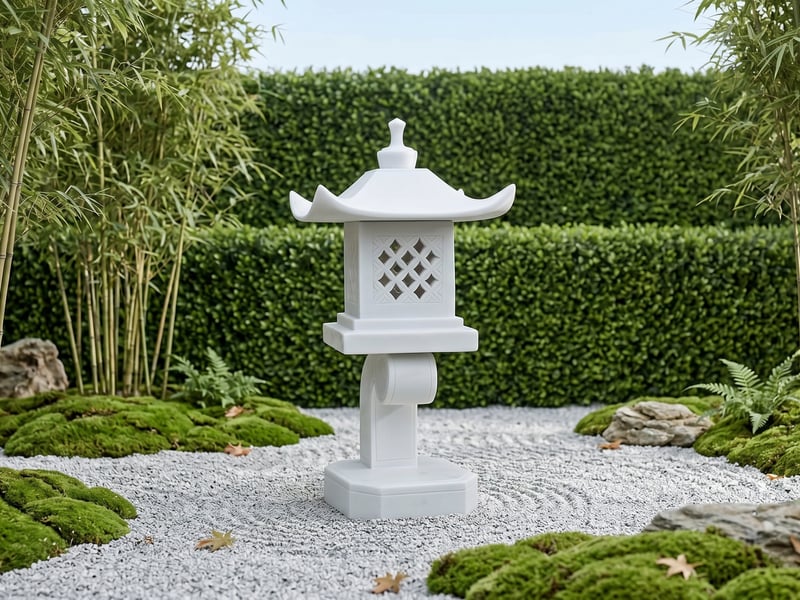
Shop the Modern Pagoda in White →
We stock Japanese lanterns, pagodas and cranes because they reward restraint. One well-placed pagoda or lantern does more for a garden than a shelf of ornaments ever could. We choose stone-effect that weathers honestly, true cast stone that lasts decades, and bronzed metal that never rusts. The calm corner you set this season still reads right in ten years. Browse our full range of garden ornaments for more ideas.
- Matt W, Garden Ornaments
Frequently asked questions
What are the four types of Japanese stone lantern?
The four types are tachi-gata, yukimi, ikekomi and oki-gata. Tachi-gata stand tall on a pedestal. Yukimi sit low on legs for the waterside. Ikekomi have a buried post, and oki-gata are small lanterns simply placed on the ground or a rock.
Why do Japanese pagodas have an odd number of tiers?
Odd numbers are auspicious in Japanese tradition. Pagodas show 3, 5, 7 or 9 roofs, never four, because the word for four sounds like the word for death. An even-tier pagoda looks wrong to anyone who knows the form.
How much do Japanese garden ornaments cost in the UK?
They cost from £99 to £385. The 410mm path lantern is £99, the 650mm sandstone pagoda £249, the 80cm Granite Oriental Lantern £255 and the red Oriental Lantern £385. Cranes are £245 a pair.
Where should I place a Japanese lantern?
Place a lantern to mark a real edge or turn. Path junctions, gateways and the water's edge all work. Low lanterns suit ponds and stepping stones; tall pedestal lanterns suit path corners. Avoid setting a lantern in empty open space.
What do cranes symbolise in a Japanese garden?
Cranes symbolise longevity, good fortune and a faithful marriage. The crane was thought to live a thousand years, so they come as a pair. Place them at the water's edge among reeds, where real cranes feed, not on open lawn.
Are Japanese stone ornaments frost-proof?
Yes, every stone and stone-effect piece we stock is frost-proof. They stay outside all year and weather naturally with moss. Their weight, from 16kg to 40.4kg, keeps them stable in wind without fixing down.