
Choosing a stone plinth for a garden ornament
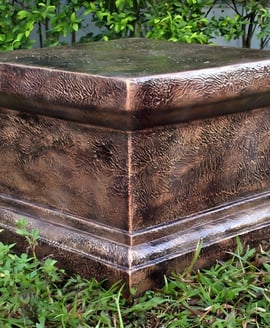
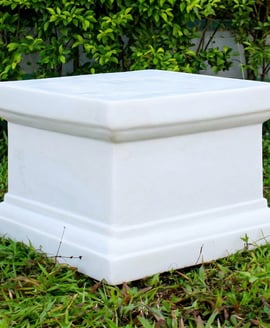
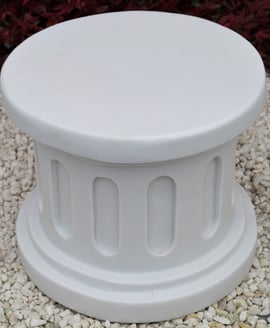
A stone plinth is a low display base. It raises an ornament above damp ground and gives the piece a clearer outline. Our plinth range focuses on round, square and Victorian bases for statues, urns and planters.
Start with the base measurements of the ornament. The top of the plinth should support the full footprint without an overhang. A little spare space around the edge makes positioning easier. Check the combined height before ordering, especially near windows or paths.
| Plinth type | Best for | Look | Check before buying |
|---|---|---|---|
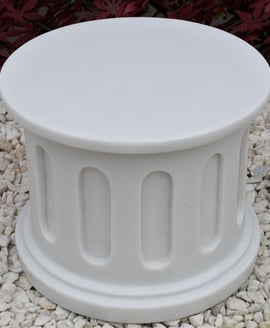
| Round | Urns, busts and curved statue bases | Soft and traditional | Top diameter |
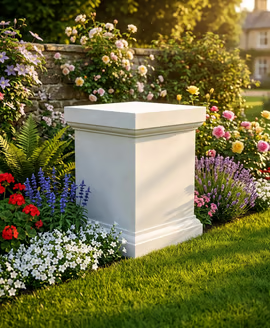
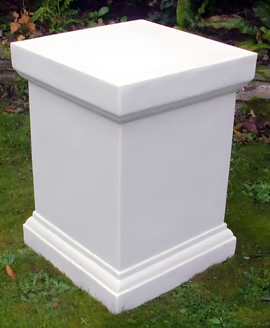
| Square | Figures, planters and straight-sided bases | Clean and formal | Top width and depth |
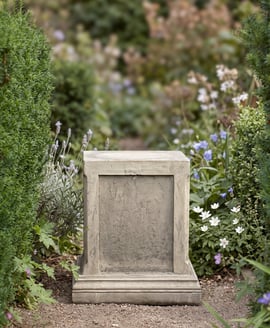
| Victorian | Period gardens and decorative statues | Detailed and architectural | Overall height |
Plinth or pedestal: which do you need?
Choose a plinth when you need a low, stable base. Choose a pedestal when you want to lift a statue or bust closer to eye level. Pedestals are taller and often use fluted or classical column details.
Keeping these jobs separate makes sizing easier. A small figure can look lost on a tall column. A bust or urn may need the added height of a pedestal. See our stone garden pedestals for taller supports.
Popular stone plinths
Stone plinths for garden ornaments
How to measure for a plinth
Measure the widest points of the ornament's base. Record both width and depth, even when the base looks square. Cast stone pieces can vary slightly. Allow enough space to centre the ornament without leaving its edges unsupported.
Next, measure the plinth's top rather than its widest lower section. Decorative bases often taper. The top dimensions determine whether the ornament will sit safely. Sketching both footprints on paper can reveal a mismatch before ordering.
Finally, add the ornament and plinth heights together. Mark the total height with a garden cane. View it from the house, path and seating area. A low plinth should improve visibility without making the feature feel top-heavy.
Matching the plinth to the ornament
Simple square bases suit modern figures and straight-sided planters. Round plinths work naturally with urns, bowls and curved statues. Victorian detailing complements classical figures and period gardens.
Colour matters too. A pale plinth can create contrast beneath a darker ornament. Similar finishes make two pieces read as one feature. Natural weathering will soften small colour differences over time.
Keep the visual weight balanced. A narrow ornament usually needs a compact base. A broad urn or seated figure needs more width. If the plinth looks too small from a distance, the complete display can feel unstable.
Positioning a heavy plinth
Use a firm, level surface. Paving or compacted aggregate helps prevent leaning and keeps the ornament stable. Soft soil can settle unevenly after rain. Check the level again after the first few weeks.
Place the empty plinth first. Once it sits level, add the ornament and check every side. Heavy items may need two people or suitable lifting equipment. Avoid dragging cast stone across paving because the edges can chip.
For compatible figures, compare our stone garden statues and stone busts.
Common plinth mistakes to avoid
Do not order from the ornament's overall width alone. Arms, wings or foliage may extend beyond a much smaller base. Measure the part that touches the plinth.
Avoid placing a heavy plinth on loose topsoil. Seasonal movement can produce a visible lean. Do not use timber packing beneath one corner because it can rot and change the level.
Check access before delivery. Narrow gates, steps and sharp turns can make a heavy piece difficult to position. Prepare the base and clear the route before the plinth arrives.
Frequently asked questions
What is a stone plinth used for?
A stone plinth raises and supports an outdoor ornament. It also keeps the piece above damp ground.
How wide should a plinth be?
Choose a top that supports the ornament's complete footprint. Avoid any unsupported overhang.
Does a stone plinth need a concrete base?
Not always. A firm, level paved or compacted base works for many garden positions.
Can a stone plinth stay outside all year?
Yes. These cast stone plinths are intended for permanent outdoor display in UK gardens.
What is the difference between a plinth and pedestal?
A plinth is a low base. A pedestal is taller and raises ornaments closer to eye level.