
How to Fill a Large Planter or Urn: Drainage, Soil Depth and Lightweight Fillers
Written by Matt W on 24th Jun 2026.
To fill a large planter or urn, work in layers. Make sure water can drain, then part-fill deep pots with a lightweight filler such as upturned pots or capped bottles. Lay a membrane over the filler, then top with loam-based compost. Leave the right soil depth for your plant: 30cm for bedding, 45cm or more for shrubs. Keep a 3cm gap at the rim for watering.
By Matt W | Garden Ornaments Specialist
Key takeaways
- Fill in four layers: drainage, lightweight filler, a membrane, then compost
- A large urn needs drainage. Drill 3 to 5 holes with a masonry bit if it has none, then cover each with a crock
- Part-fill the bottom third to half of a deep planter with upturned pots, capped plastic bottles or polystyrene to save compost and weight
- Match soil depth to the plant: 30cm for bedding, 40cm for perennials, 45cm or more for shrubs and small trees
- Use loam-based John Innes No.3 for permanent planting, with 20% to 30% grit mixed in for drainage
- Leave a 3cm to 5cm gap below the rim so water soaks in instead of running off
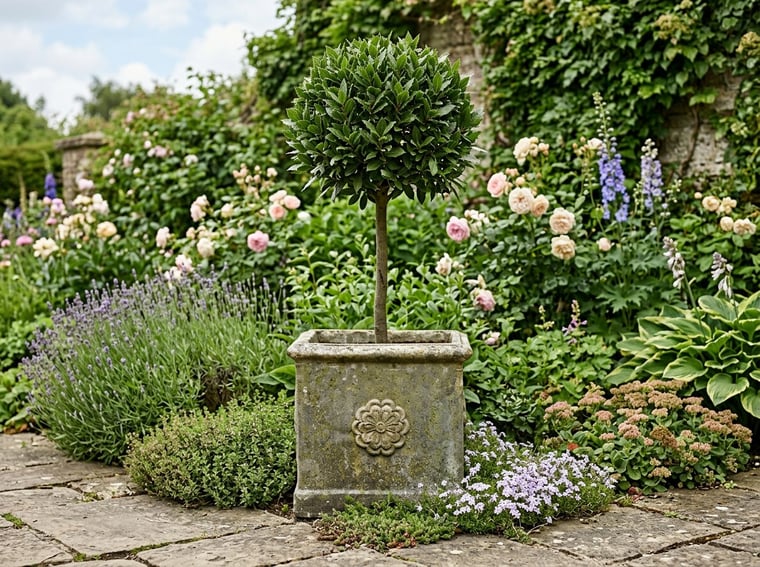
Shop the Tudor Rose Stone Urn →
Matt's note
The mistake I see most is filling a deep urn to the brim with compost. It costs a fortune in bags, holds too much water and gets impossibly heavy to move. A large urn does not need a metre of soil. Bedding and most perennials root in the top 30cm to 40cm. Fill the void below with something light. Keep the good compost where the roots actually live, and the planter performs better and stays liftable.
How do you fill a large planter or urn?
Fill a large planter in four layers, bottom to top. First, make sure water can escape through drainage holes, and cover each hole with a crock or a piece of broken pot. Second, part-fill the lower third to half of a deep planter with a lightweight filler. Third, lay a permeable membrane over the filler. Fourth, top up with good compost to the depth your plant needs.
This layered method does three things. It cuts the amount of compost you buy. It keeps the planter light enough to move and stops water sitting in the base. The membrane is the part people skip, and it matters: it stops compost washing down into the gaps and slumping over the season. Once filled, choose plants to suit the pot. Our guide on what to plant in stone urns and planters runs through the seasons.
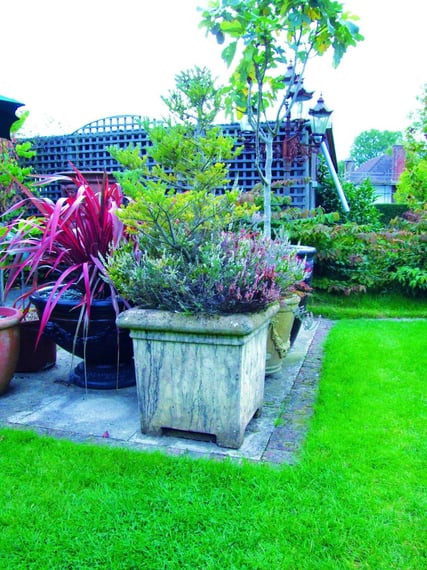
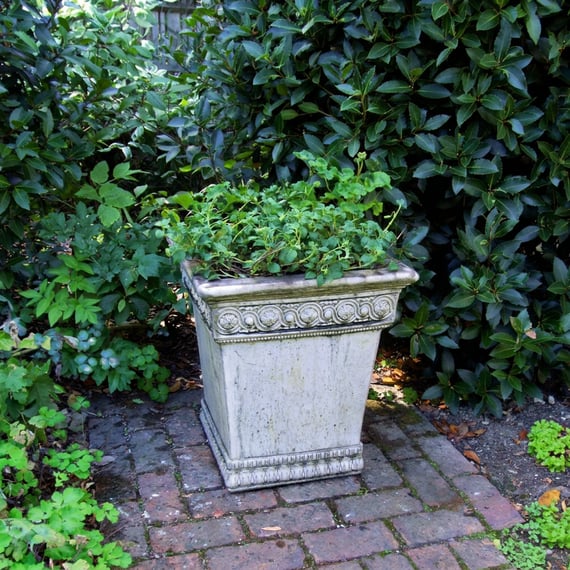
Shop the Grand Square Stone Planter →
Do planters need drainage holes?
Yes, almost every planter needs drainage holes. Without them, water collects in the base, roots sit wet and the plant rots. If your urn has no hole, drill three to five in the base. Use a masonry bit at slow speed for cast stone or concrete, and keep the bit cool with a little water. Aim for holes around 12mm to 16mm wide, spread across the base.
Cover each hole with a crock, a curved shard of broken terracotta, so compost cannot wash straight through or block the hole. A thin layer of gravel over the crocks helps on very wet sites. Raise the planter on pot feet or three small tiles so the holes never sit flush against paving. Free-flowing drainage also protects stone in winter, as our guide to winter protection for ornaments explains.
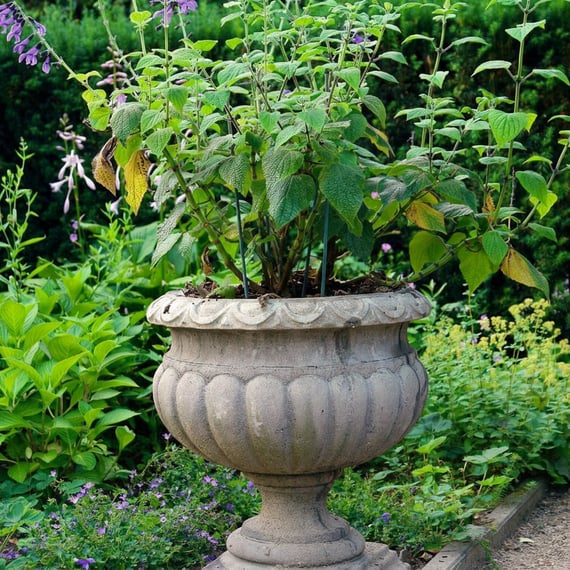
Shop the Buckingham Stone Urn →
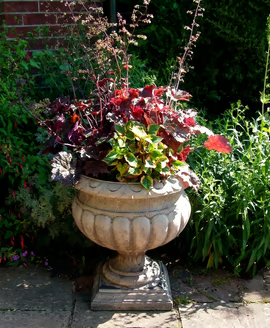
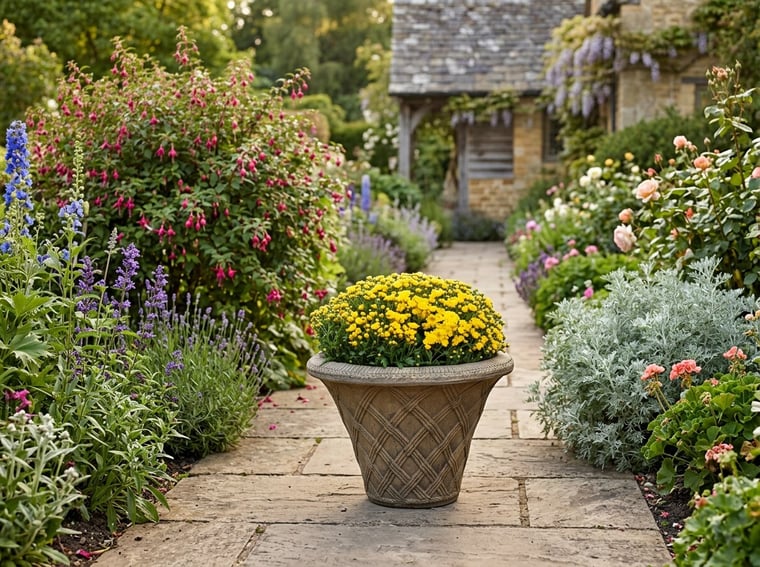
Matt's pick for a large statement planter
Best for: A generous, deep urn that takes a full seasonal display
Why I recommend it: The Large Buckingham is roomy enough for a real planting scheme, yet the wide bowl shape gives plenty of root depth up top. Layer the base with filler and it holds a brimming summer display without needing endless compost. Cast stone, frost-proof and heavy enough to stay put.
Price: £341
What can you use as a cheap filler for large planters?
The best cheap fillers are clean, light and slow to rot. Upturned plastic plant pots are ideal, because they trap air and add almost no weight. Capped empty drinks bottles work well too, as do chunks of polystyrene packaging and cut-up pool noodles. Anything inert that fills space without holding water will do. Avoid anything that breaks down quickly, like wood, paper or grass, which rots and slumps.
Use filler only where roots will not reach. It suits bedding, summer pots and shallow-rooted perennials. Do not part-fill a planter meant for a shrub, a small tree or anything permanent, since those roots need the full depth. As a rule, fillers fill the bottom third of a planter under 50cm deep. In a very tall urn, they can take up to half. Always lay a membrane over the top so compost stays where you put it.
Watch out for
Do not block the drainage holes with filler. Keep the lowest layer just above them so water can still escape. Never use soil that holds water around the base of a frost-prone position, as trapped water freezes and stresses the pot. And do not over-lighten a tall urn in an exposed spot. If wind is a worry, keep heavier gravel low in the base for ballast rather than filling the whole cavity with light material.
How much soil does a large planter need?
A large planter needs enough compost to match its plant's root depth, not a full pot of soil. Bedding and annuals root in the top 20cm to 30cm. Hardy perennials want 30cm to 40cm. Shrubs need at least 45cm, and small trees or permanent specimens want 50cm or more of unbroken depth. Measure from the rim down and fill compost to that depth, then use filler below.
Leave a watering gap of 3cm to 5cm between the compost surface and the rim. Without it, water runs straight over the edge instead of soaking in. Firm the compost gently as you go to remove air pockets, but do not compact it hard. A planter filled this way drains freely, holds the right moisture and keeps roots in the zone where they grow best. Browse our full range of stone garden planters to find the right depth for your scheme.
| Planter | Shape | Filler needed | Best soil depth | Price |
|---|---|---|---|---|
| Thatched Stone Urn | Shallow bowl | Little, mostly compost | 25 to 30cm | £164 |
| Buckingham Stone Urn | Fluted bowl | Bottom third | 30cm | £235 |
| Olympic Urn with Lid | Tall lidded | Half, when planted | 30cm | £177 |
| Large Buckingham Urn | Wide deep bowl | Bottom third | 35 to 40cm | £341 |
| Empire Stone Urn | Tall narrow | Up to half | 30cm | £314 |
| Grand Square Planter | Deep square | Bottom third to half | 40 to 45cm | £410 |
What is the best compost for pots and urns?
The best compost for a permanent urn is a loam-based mix such as John Innes No.3. It holds nutrients and moisture, drains well and gives weight that steadies a tall planter. For seasonal bedding, a good peat-free multipurpose compost is fine and lighter to handle. Whichever you use, mix in 20% to 30% horticultural grit to keep the structure open and stop waterlogging.
Avoid filling a planter with garden soil alone. It compacts in a pot, drains poorly and brings in weeds. A loam-based compost lasts far longer than multipurpose before it breaks down, which matters for a planting you want to leave in place for years. Top-dress permanent urns each spring with fresh compost and a slow-release feed. For a fuller comparison of pot materials, see our guide to stone, terracotta and fibrecite planters compared.
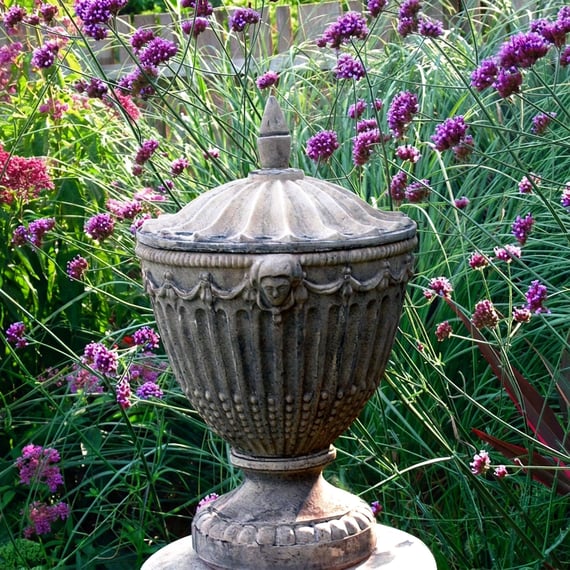
Shop the Olympic Urn with Lid →
Matt's tip: water the filler before you finish
Once the filler and membrane are in, soak that layer with a can of water before you add compost. It settles everything, shows you whether the drainage runs freely, and stops a dry pocket forming under the roots. A dry void at the base wicks moisture away from the compost above and leaves plants thirsty in summer. Thirty seconds with the watering can saves a lot of puzzled watering later.
How do you stop a tall urn blowing over?
Keep the weight low and the base broad. A solid cast stone urn rarely topples, but a tall, narrow one part-filled with light material can catch the wind once planted. Put a layer of gravel or stone in the very base for ballast, then add your lighter filler above it. The heavy bottom keeps the centre of gravity low while still saving compost higher up.
Position matters too. Set a tall urn against a wall, in a corner or among other planting that shelters it, rather than alone in an open, windy spot. On a pedestal, make sure the urn is bedded level and secure. A planted urn is heaviest when the compost is wet, so the riskiest moment is a dry pot in a gale. Keep it watered through windy spells. Our guide to weatherproofing stone ornaments covers stability and frost together.
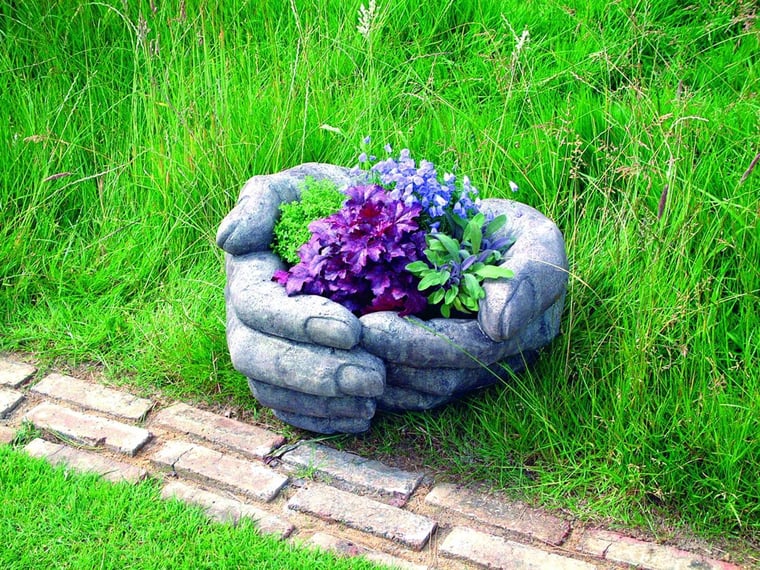
Shop the Cupped Hands Planter →
We stock stone urns and planters because a well-filled one lasts for decades and only looks better with age. We choose frost-proof cast stone with the depth and shape that take real planting. Fill it in layers, match the soil to the plant, and a single urn becomes the anchor of a border or a doorway. Browse our full range of garden ornaments for more ways to dress your garden.
- Matt W, Garden Ornaments
Frequently asked questions
What do you put in the bottom of a large planter?
A lightweight filler over the drainage layer. Use upturned pots, capped bottles or polystyrene in the bottom third, with crocks over the holes. Lay a membrane on top before adding compost.
Should you put rocks or gravel in the bottom of a planter?
Only a thin layer over the drainage holes, or as ballast. A deep gravel layer does not improve drainage and adds weight. A little gravel low down steadies a tall urn against wind.
Can you fill a planter with polystyrene?
Yes, clean polystyrene is a good filler. It is light, inert and slow to break down. Use it in the bottom third, below the root zone, with a membrane over the top to hold the compost.
How deep should soil be in a large urn?
Match the plant: 30cm for bedding, 45cm for shrubs. Most roots grow in the top 30cm to 40cm. Fill compost to that depth and use a lightweight filler below it.
What is the best compost for a stone urn?
Loam-based John Innes No.3 for permanent planting. Mix in 20% to 30% grit for drainage. Use peat-free multipurpose for lighter seasonal displays. Avoid garden soil, which compacts.
Do stone planters crack in frost?
Frost-proof cast stone resists cracking; trapped water is the real risk. Keep drainage holes clear so water cannot freeze in the base. Raise the pot on feet through winter.