
Garden Zoning Ideas: Create Outdoor Rooms Without Fences
Written by Matt W on 27th Jun 2026.
Garden zoning splits one outdoor space into separate rooms, each with its own job: sitting, dining, growing or a quiet corner. The 2026 way to do it skips fence panels. Instead you mark each zone with a focal point, a change of level or a band of planting. A statue, a water feature, a fire pit or a row of planters tells the eye where one room ends and the next begins.
By Matt W | Garden Ornaments Specialist
Key takeaways
- Zoning divides a garden into two or three rooms by use, not by building fences
- Anchor each zone with a single focal point: a statue, a water feature, a fire pit or a group of planters
- Water features add sound that masks traffic and screens one zone from the next without a solid barrier
- A fire pit creates a gathering zone that works after dark, when the rest of the garden goes quiet
- Planters make movable, green dividers; group three at staggered heights to break a sightline
- Keep one focal point per zone. Two strong features in the same room fight each other for attention
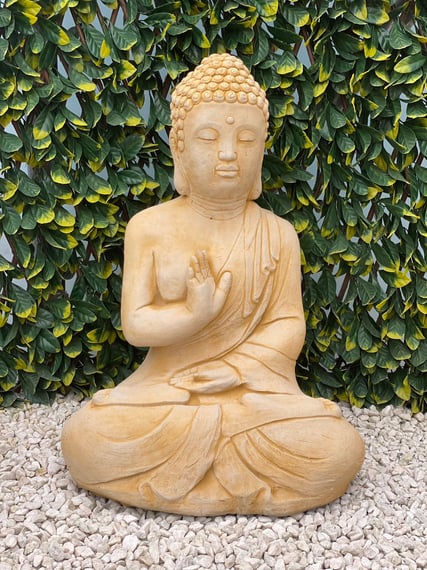
Shop the Buddha Prince Statue →
Matt's note
The mistake I see most with zoning is people reaching for trellis and fence panels straight away. Solid barriers chop a small garden into boxes and make it feel smaller. The trick is to divide by suggestion, not by walls. A statue at the end of a path, a water feature half-hidden by planting, a fire pit sunk into a circle of paving. The eye reads each one as the edge of a room, yet you can still see right through. The garden stays open and feels bigger, but it has clear zones. Spend the fence money on one good focal point per zone instead.
What is garden zoning?
Garden zoning is the practice of dividing a single garden into separate areas, each with a clear purpose. One zone is for sitting, another for dining, a third for a quiet bench or a vegetable patch. It is the outdoor version of having a kitchen, a living room and a study indoors. Each zone gets its own surface, planting and focal point so it reads as a distinct room rather than one flat expanse.
The 2026 approach has moved away from fences and trellis. Design magazines now favour focal points and changes of level to separate space, because solid screens make a garden feel smaller and boxed in. Garden Ornaments is one of the few UK retailers that stocks every kind of zone anchor under one roof, from statues and water features to fire pits and planters. Our guide on choosing the right statue size for your space pairs well with this one.
How do you zone a garden without fences?
You zone a garden without fences by marking each room with something the eye stops on. A focal point such as a statue, a change in paving, a step up or down, and a band of taller planting all signal a boundary without blocking the view. Together they tell anyone walking through that they have moved from one zone into another, while the garden stays open and feels its full size.
Start by deciding how each part of the garden is used, then give each use its own anchor. A pair of stone lions either side of a path frames an entrance to the next room. A low planted bed separates a dining terrace from a lawn. A surface change, gravel to paving, marks the shift underfoot. None of these are barriers, yet they read as clear edges. The result is a garden that flows but never feels like one undivided slab.
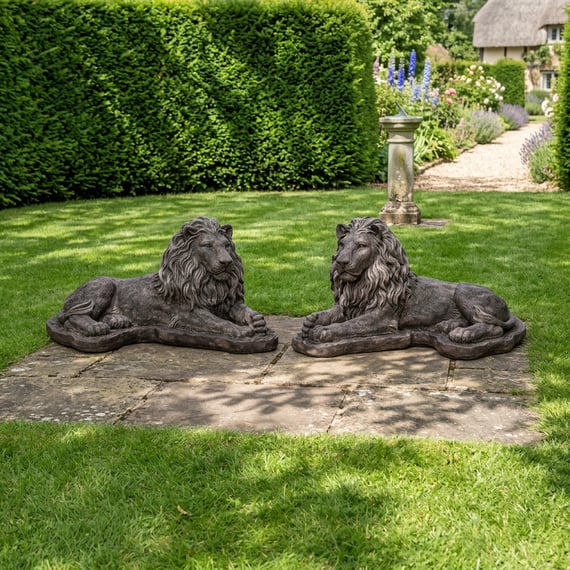
Shop the Chatsworth Lion Statues →
Which ornaments make the best focal points?
The best focal point is a single, taller piece placed where a sightline naturally ends. A statue, an urn on a pedestal or a tall water feature all work, because the eye travels along a path or across a lawn and rests on them. Place one at the far end of each zone. That one strong object does more to define a room than any amount of edging or fencing.
Match the piece to the mood of the zone. A Buddha or a classical figure suits a quiet, reflective corner. A pair of lions or a grand urn suits a formal entrance. Scale matters more than people expect: a focal point that is too small disappears, while one sized to its space holds the whole zone together. Our guide to what garden statues symbolise helps you pick a piece that fits the feeling you want.
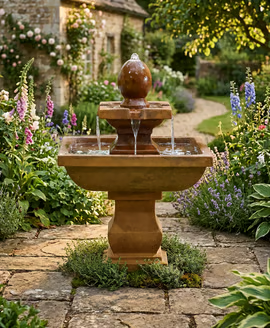
Matt's pick for a water zone anchor
Best for: Marking and screening a quiet seating zone with sound
Why I recommend it: The Journey is tall enough to act as a real focal point and the moving water gives you a sound screen as well as a visual one. Set it between a patio and a lawn and it both marks the edge of the sitting zone and masks road noise. Self-contained, so there is no pond to dig, and the natural stone settles into any planting.
Price: £679
How do water features define a zone?
A water feature defines a zone in two ways: it draws the eye as a focal point, and it adds sound that screens one area from another. Moving water masks traffic, neighbours and general background noise, so a seating zone behind a fountain feels separate and calm even with nothing solid between it and the road. Sound does the screening that a fence would, without blocking light or the view.
Place a water feature on the edge of the zone you want to protect, not in the middle of it. Sat between a patio and the boundary, it becomes a soft wall of sound. A self-contained feature needs no dug pond, just a level base and a socket, which makes it easy to drop into an existing layout. For the full range of options, see our 2026 water feature buyer's guide. Browse the whole water feature collection to find one sized to your zone.
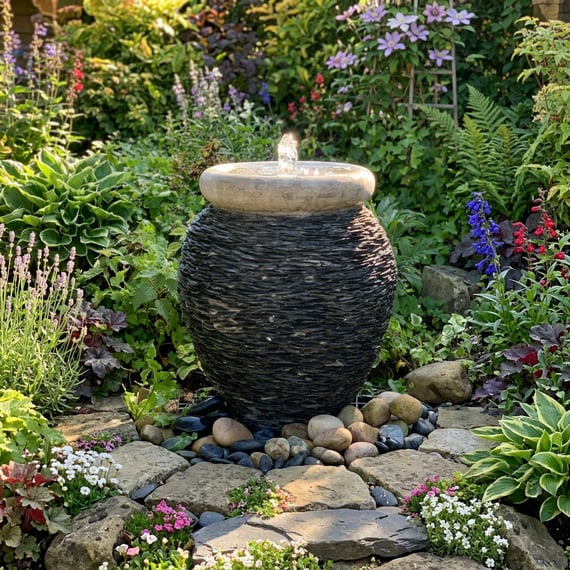
Shop the Slate Urn Water Feature →
Can a fire pit create a zone?
Yes, a fire pit creates one of the strongest zones in any garden. A ring of seating around a fire pit becomes a gathering room that pulls people in, especially after dark when the rest of the garden falls quiet. The fire is both the focal point and the reason to use the space, so the zone defines itself the moment it is lit. No edging or screen is needed.
Set a fire pit in its own circle of paving or gravel, a safe distance from planting, seating and the house. Allow at least a metre of clear space around the bowl. This gathering zone works best a little away from the dining and sitting areas, so an evening round the fire feels like moving to a different room. For lighting it cleanly, see our guide on what every fire pit fuel costs per evening, and shop the full fire pit range.
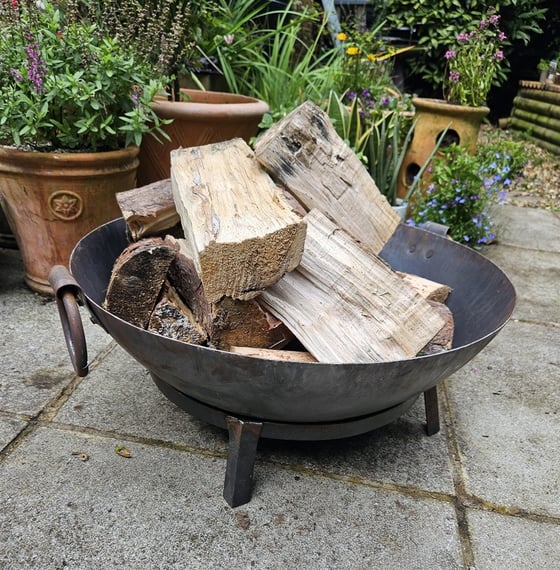
Shop the 60cm Kadai Fire Pit →
Watch out for
Do not crowd a fire zone against fences, sheds or overhanging branches. Keep at least a metre of clear space on every side and never site a fire pit under a tree or a pergola. Check whether you live in a smoke control area before you burn wood, and use the right fuel. Keep the gathering zone separate from the dining one too. A fire pit and a dining table in the same tight space leaves nowhere safe to put hot food or to pull a chair back.
How do planters divide a garden?
Planters divide a garden as movable, green walls. A group of three tall planters breaks a sightline and screens one zone from the next, yet you can shift them when the layout needs to change. Unlike a fence, a run of planters lets light through, softens hard edges and can be replanted with the seasons. They are the most flexible divider there is.
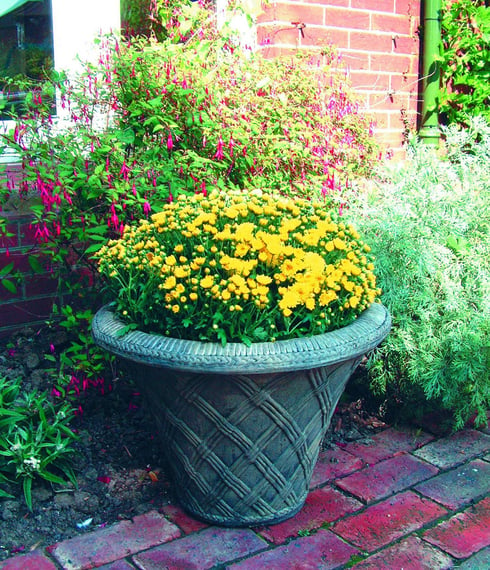
Stagger planters at different heights for the best screening, and plant them with something upright such as grasses, bamboo or a clipped shrub. A single grand urn works differently: placed alone, it becomes a focal point that marks a corner of a zone rather than a divider. Use both. Group planters to separate spaces, and stand one statement urn where a path ends. To plant them well, see our guide on what to plant in stone urns and planters.
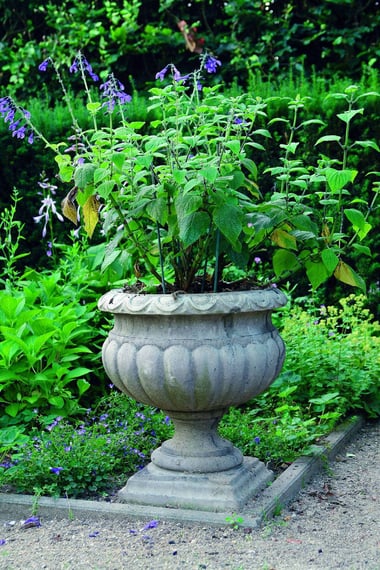
Shop the Buckingham Stone Urn →
| Zone anchor | Best zone | What it does | Screens noise? | From |
|---|---|---|---|---|
| Statue (Buddha Prince) | Quiet corner | Focal point at a path's end | No | £209 |
| Lion pair (Chatsworth) | Entrance / threshold | Frames the way into a room | No | £275 |
| Water feature (Journey) | Seating zone | Focal point plus sound screen | Yes | £679 |
| Fire pit (60cm Kadai) | Gathering zone | Draws people in after dark | No | £110 |
| Grand urn (Buckingham) | Corner accent | Marks the edge of a zone | No | £235 |
| Planter group (Thatched) | Divider between zones | Movable green screen | Partly | £164 |
How many zones should a garden have?
Most UK gardens work best with two or three zones. A small garden suits two: a sitting area and one quiet or growing corner. A medium garden takes three: sitting, dining and a gathering or quiet zone. Beyond three, the rooms get too small to use and the garden starts to feel busy rather than ordered. Fewer, well-defined zones beat many cramped ones.
Give each zone one clear job and one focal point, then link them with a path so the garden flows. The 40cm Kadai suits a smaller fire zone, the 60cm a larger one. A small water feature anchors a tight courtyard where a grand urn would overwhelm it. The rule holds whatever the size: one purpose, one anchor, room to move. Our piece on small water features for tiny gardens covers zoning where space is tight.
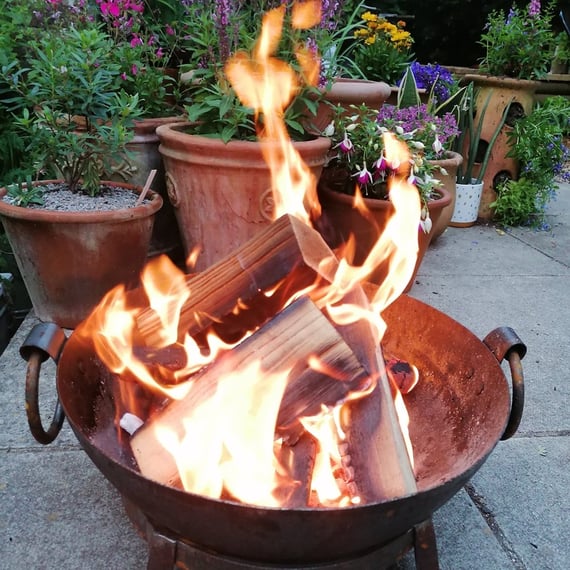
Shop the 40cm Kadai Fire Pit →
Matt's tip: walk the route before you place anything
Before you buy a single ornament, walk your garden the way you actually use it: back door to the table, table to the seats, seats to the quiet corner. Stand a cane or a bucket where you think each focal point should go, then look back from each seat. You will spot at once if a piece blocks a view, sits off-centre or vanishes against a busy border. Move the marker until every zone has one thing the eye lands on. Only then order the real piece. It saves shifting forty kilos of stone twice.
We stock every kind of zone anchor because a garden divided by focal points beats one chopped up with fence panels every time. Statues, water features, fire pits and planters each mark a room without closing it off, and they last for decades while a fence rots. Plan two or three zones, give each one anchor, and a flat garden becomes a set of rooms you actually use. Browse our full range of garden ornaments to find the right anchor for every zone.
- Matt W, Garden Ornaments
Frequently asked questions
What does garden zoning mean?
Zoning splits one garden into separate rooms by use. Each zone has its own purpose, surface and focal point, so sitting, dining and quiet areas read as distinct spaces rather than one open expanse.
How do you divide a garden without a fence?
Use focal points, level changes and planting instead of panels. A statue, a water feature or a group of planters marks the edge of a zone while keeping the view open, so the garden still feels its full size.
What is the best focal point for a garden?
A single tall piece where a sightline ends. A statue, an urn on a pedestal or a water feature all work. Keep one focal point per zone so they do not compete for attention.
Do water features help with garden noise?
Yes, moving water masks traffic and background noise. Place the feature between your seating and the boundary and the sound screens the zone without blocking light or the view.
Where should a fire pit go in a zoned garden?
In its own paved circle, away from the house and planting. Allow at least a metre of clear space all round, and keep it apart from the dining zone so each room stays usable.
How many zones can a small garden have?
Two zones suit most small gardens. A sitting area and one quiet or growing corner is plenty. More than that and each room becomes too cramped to use comfortably.
Related articles
- Garden Statue Meanings: What Lions, Angels, Dragons and Buddhas Symbolise
- Patio Ponds: Container Water Gardens in 6 Steps
- Feng Shui Water Features: The 5 Garden Positions That Work
- Chimenea vs Fire Pit: Which Heats a British Patio Best?
- How to Fill a Large Planter or Urn: Drainage, Soil Depth and Fillers