
How to Stop Garden Pots and Planters Cracking in Frost
Written by Matt W on 16th Oct 2026.
Expands by about 9%
Remove trays and saucers
Both supplied with 3 pot feet
Keep outside with clear drainage
To stop garden pots cracking in frost, keep drainage holes clear and remove saucers before winter. Water expands by about 9% as it freezes. That pressure can act inside porous pots, hairline cracks and waterlogged compost. Raise suitable pots on feet or bricks. Store small terracotta or glazed pots without a frost-proof label. Keep large planted stone planters outside with clear drainage.
Key points
- Freezing water expands by about 9%, with outward pressure inside pores and cracks.
- Remove trays and saucers before winter so pots cannot stand in collected water.
- The Large and Grand Long Tom pots each include 3 matching pot feet.
- Frost-proof and frost-resistant labels still require attention to drainage.
- Check tall, narrow pots sit level on a firm base, especially when wet.
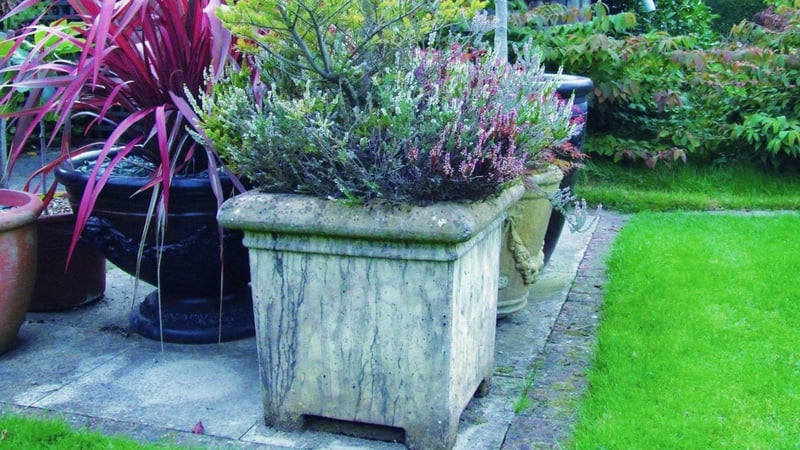
Browse our stone garden planters
Start underneath the pot
Our advice is to check the base before choosing winter protection. Clear drainage and a firm, level position come first. Then decide which pots need storage and which planted containers can stay outside.
Why do garden pots crack in frost?
Garden pots can crack when trapped water freezes and expands outwards.
Water can collect in the material's pores, an existing hairline crack or waterlogged compost. As it freezes, it expands by about 9%. The pressure acts against the surrounding pot.
Check beneath the container for collected water, including inside any saucer. Our guide to planter materials compares stone, terracotta and fibrecite.
What type of planters can stay out in winter?
Planters described as frost-proof by their maker, with clear drainage, can usually stay out. The Grand Square planter (126kg) and Catalan trough (60kg) are examples of large frost proof planters.
The Shire trough is also listed as frost-proof. Check each product's description, because stone planters do not all have the same frost rating.
The Shire Stone Garden Trough is reconstituted stone, weighs 38kg and is listed as frost-proof and UV stable. It measures 660mm long, 280mm wide and 200mm high, with a 580mm by 250mm planting area. The planting depth is 150mm.
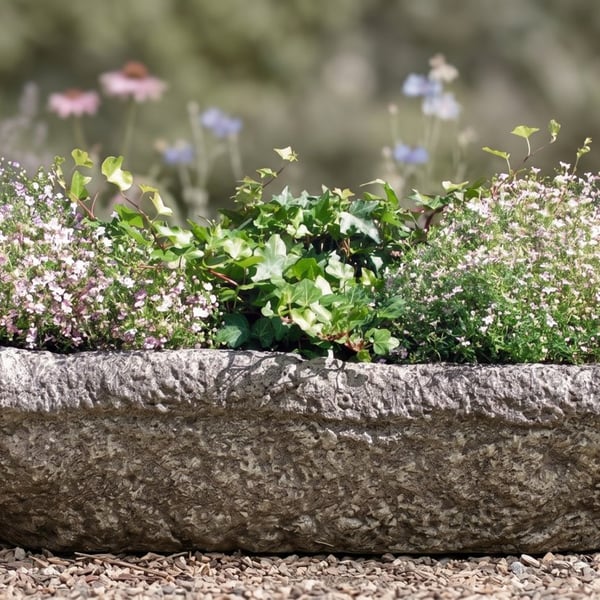
View the Shire Stone Garden Trough – £184
The Catalan Stone Garden Trough is cast stone, listed as fully frost proof and UV stable. It measures 800mm long, 290mm wide and 330mm high, with a planting area of 680mm by 230mm. At 60kg, two people are recommended for positioning.
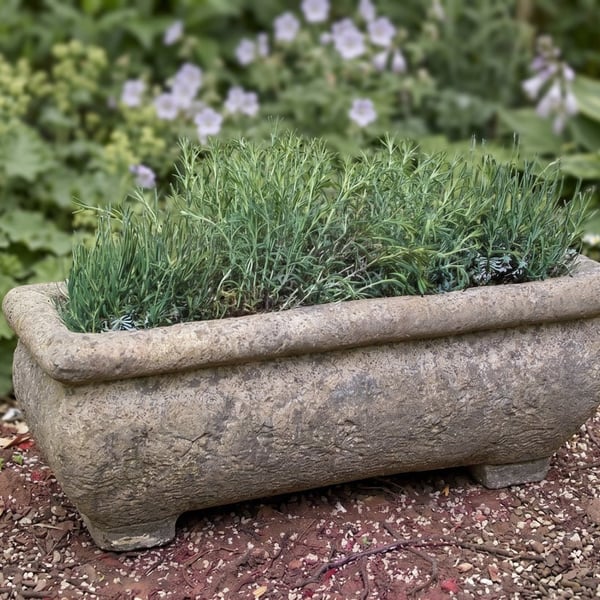
View the Catalan Stone Garden Trough – £294
The Grand Square Stone Garden Planter measures 600mm by 600mm by 630mm, with a 530mm by 450mm planting area. This frost-proof cast stone planter weighs 126kg and has pallet delivery. We recommend choosing its firm, level position before delivery.
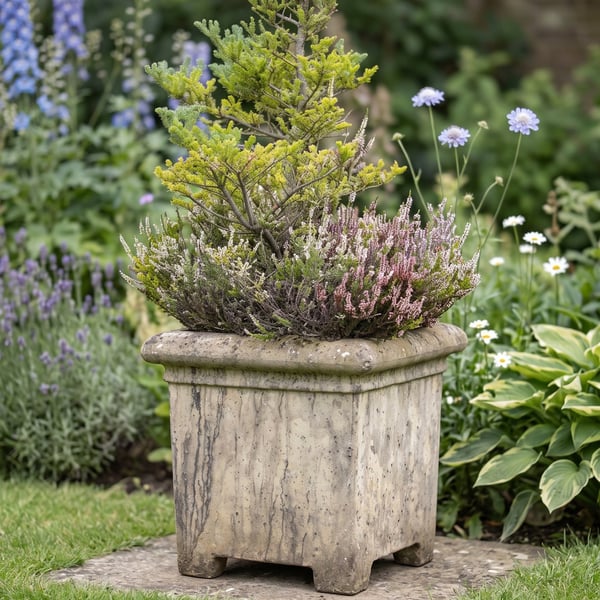
View the Grand Square Stone Garden Planter – £410
What is the difference between frost-proof and frost-resistant?
Frost-proof and frost-resistant are maker descriptions, and neither removes the need for drainage.
The RHS container-growing guide recommends frost-proof pots rather than frost-resistant ones, particularly because terracotta can crack in winter. Neither label means a container can sit full of frozen, waterlogged compost without risk.
The Swan Garden Planter is crushed marble and resin, listed as frost resistant for year-round display. It has an open-back planting design and measures 370mm tall and 460mm by 260mm.
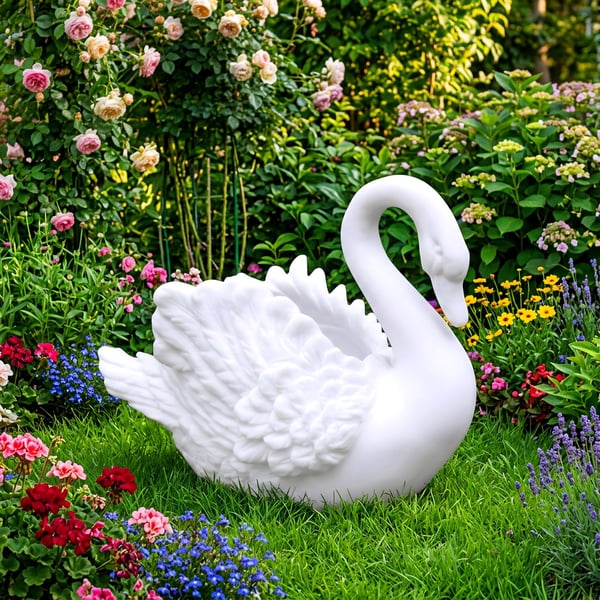
View the Swan Garden Planter – £179
Should you empty pots for winter?
Empty and store small terracotta or glazed pots that are not labelled frost-proof.
Large planted stone planters stay outside with clear drainage. Use the material and individual product description to decide which pots need storage.
| Material | Winter risk | What to do |
|---|---|---|
| Terracotta | Prone to winter cracking | Empty and store small pots without a frost-proof label. |
| Glazed ceramic | Water can enter through the base, drainage hole or damaged glaze | Store small unlabelled pots; raise large pots and keep drainage clear. |
| Cast or reconstituted stone | Trapped water remains a risk | Keep large planted containers draining. |
| Crushed marble and resin | The Swan is listed as frost resistant | Check the product description and keep drainage clear. |
Can ceramic and glazed pots stay outside in winter?
Small glazed or ceramic pots without a frost-proof label are safest emptied and stored.
Glazed ceramic pots are fired clay with a glaze. Water can enter through an unglazed base, the drainage hole, chips or crazing in the glaze. That water can then freeze.
If a large pot stays outside, lift it on pot feet. Remove its saucer and keep the drainage hole clear. We do not sell glazed or ceramic pots.
Do pot feet stop pots cracking?
Pot feet help drainage, but they do not remove every frost risk.
The RHS recommends bricks or pot feet to keep drainage holes clear. When positioning tall pots, we recommend checking that the supports leave the pot level on a firm base. Tall, narrow pots and urns are top-heavy when wet.
The Large Long Tom Stone Garden Pot includes 3 matching stone feet to promote drainage and protect patio surfaces. This Lucas Stone pot is cast, or reconstituted, stone and weighs 20kg. It is 490mm tall, with a 360mm diameter and a 290mm deep planting area.
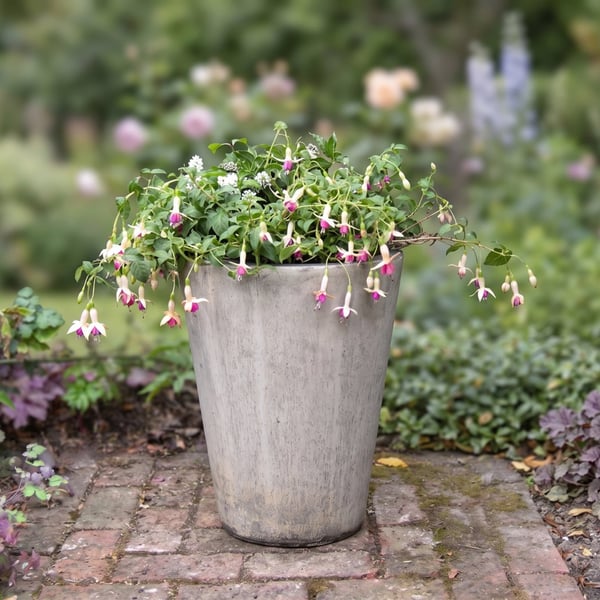
View the Large Long Tom Stone Garden Pot – £147
The Grand Long Tom has a base drainage hole and 3 large pot feet to help prevent waterlogging. It is cast stone, listed as frost-resistant, and weighs 35kg. It measures 630mm tall and 440mm wide, with a 550mm by 360mm planting area.
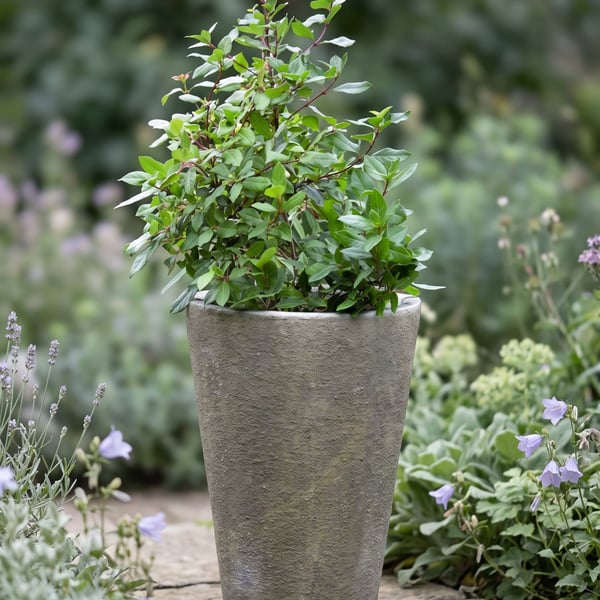
View the Grand Long Tom Stone Garden Pot – £214
A saucer can leave a raised pot standing in water. Remove trays and saucers before winter, even with pot feet.
How do you protect a planted stone planter over winter?
Keep drainage clear, then use wrapping or a sheltered grouping to help protect roots.
The RHS container-maintenance guide recommends bubble wrap or hessian around containers for root protection. Grouping pots close together near a house wall also helps protect roots from cold. These measures do not replace drainage.
The Edwardian Stone Garden Tazza is frost resistant when properly drained, according to its maker. Make sure water can escape its bowl in winter, and add drainage material before compost. Our planter-filling guide covers drainage and planting depth.
This cast stone tazza has a 660mm diameter bowl, stands 470mm tall and weighs 58kg.
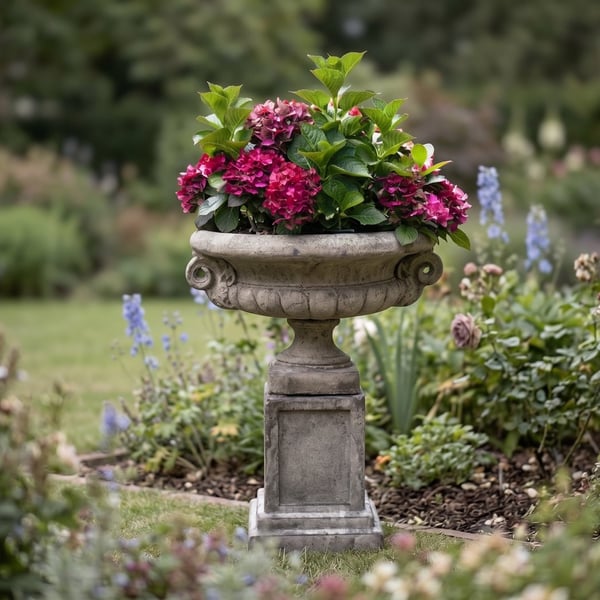
View the Edwardian Stone Garden Tazza – £291
For trough planting, see our stone garden trough planting guide.
What should you do with a pot that has started to crack?
Keep the pot clear of standing water, because water inside a hairline crack expands as it freezes.
Check its drainage hole and remove any saucer. Empty and store small terracotta or glazed pots without a frost-proof label. An existing crack still needs attention, whatever the original frost description.
For planters from Garden Ornaments, check the individual product's drainage advice before winter.
Frequently asked questions
Can terracotta pots stay outside in winter?
Store small terracotta pots unless they are labelled frost-proof. Terracotta is prone to winter cracking. Check the maker's description before leaving a pot outside.
Do stone planters crack in frost?
Stone planters can be at risk when water becomes trapped and freezes. Cast or reconstituted stone is a cement-based material. The same advice applies to cement and concrete planters: trapped water is the risk, and clear drainage is the fix.
What makes a planter frost-proof?
The maker's frost-proof label states the material is made to cope with freezing. Check the product's own description, because the label still depends on clear drainage.
Do frost-proof pots work?
Yes, pots labelled frost-proof by their maker are made to withstand freezing weather. They can still be damaged if they stand in water or hold waterlogged compost. Follow the drainage steps above: remove saucers, clear drainage holes and raise suitable pots on feet or bricks.
What should you cover pots with in winter?
Bubble wrap or hessian around the pot helps protect roots. The RHS recommends these materials for root protection. Grouping pots near a house wall also helps.
Why are terracotta pots flaking?
Flaking usually means absorbed water froze and pushed thin surface layers off. Keep the pot drier, raise it and remove its saucer. Store small pots without a frost-proof label.
Can ceramic pots be left outside in winter?
Small ceramic pots without a frost-proof label are safest emptied and stored. For large pots left outside, follow the pot feet and drainage advice in the ceramic section above.
Should large planted stone pots be emptied?
Large planted stone pots stay outside with clear drainage. Check their base and supports. Tall, narrow pots must sit level on firm ground.