
How to Clean Outdoor Furniture: UK Care Guide
Written by Matt W on 6th Aug 2026.
Clean outdoor furniture with a soft brush, cool water and mild soap. Rinse away loose grit before wiping any surface. Aluminium, painted steel and synthetic rattan need gentle cleaning. Timber should be washed along the grain. Cushions need their care labels checked first. Dry every part before fitting a cover, because trapped moisture encourages marks, smells and corrosion.
Key takeaways
- Brush off grit before using a wet cloth or sponge.
- Wash coated metal and synthetic rattan with mild soapy water.
- Remove bird mess, sap and wet leaves promptly.
- Check metal welds, feet and fixings while cleaning.
- Let frames and cushions dry completely before covering or storing them.
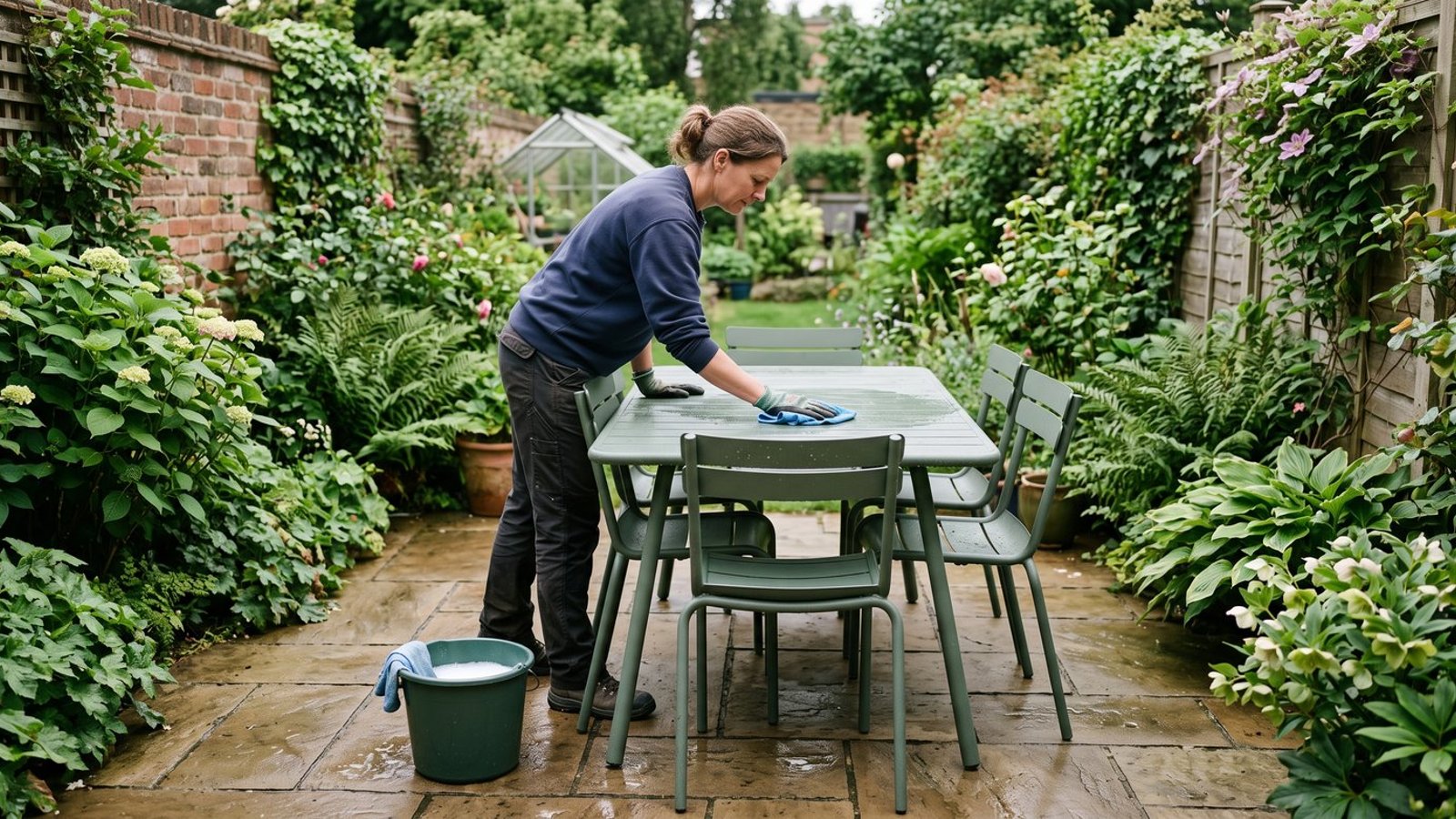
Browse easy-care tables, chairs and benches in our metal furniture range
A useful check before you start
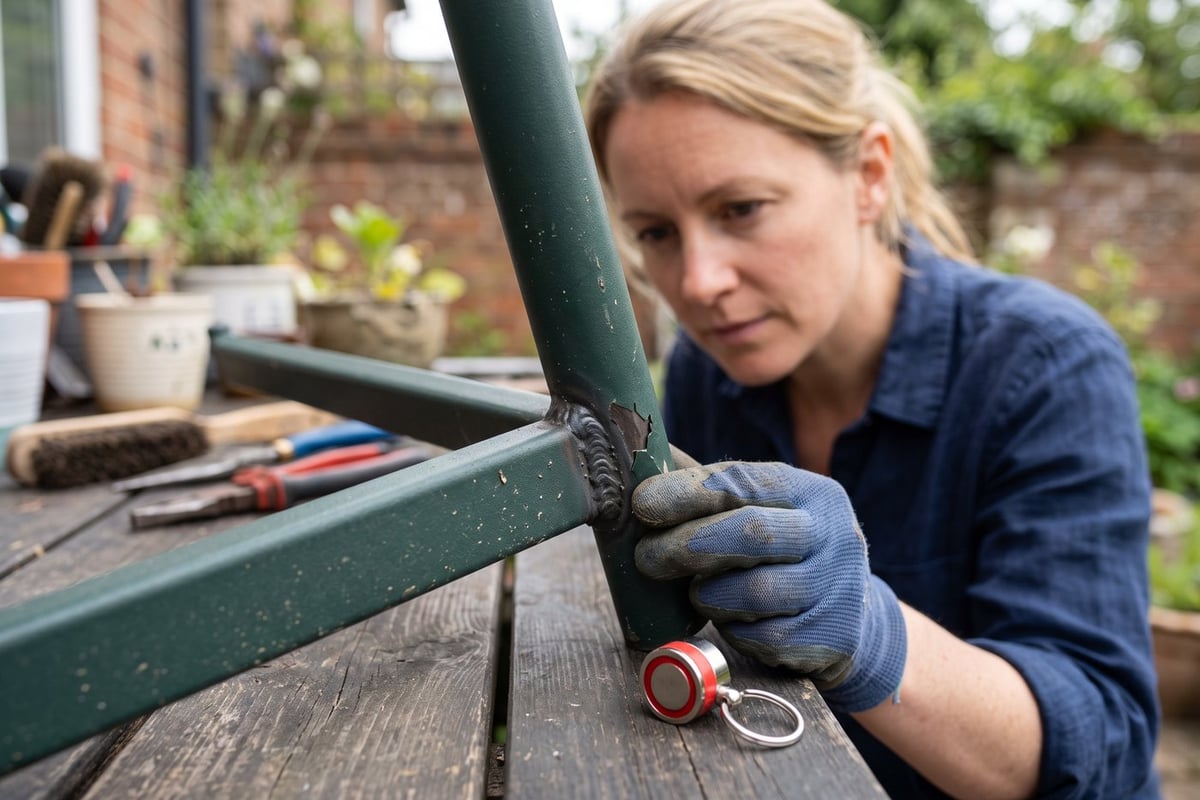
In our experience checking metal furniture, chips often hide near welds, feet and seat undersides.
Finding them during a routine wash makes a small repair much easier.
What should you use to clean outdoor furniture?
Most outdoor furniture only needs cool water, mild washing-up liquid and a soft cloth.
Use a soft brush for dry leaves and loose soil. Rinse away gritty dirt before wiping painted or polished surfaces.
Keep a second cloth for drying. An old toothbrush helps around fixings, slats and decorative metalwork.
Avoid bleach, wire wool and abrasive cream on painted or powder-coated furniture. These can dull the finish or create scratches.
Test any unfamiliar cleaner beneath a seat first. Stop if the colour or sheen changes after drying.
| Material | Good everyday cleaner | Pay attention to | Avoid |
|---|---|---|---|
| Powder-coated aluminium | Mild soap and cool water | Joints, fixings and white oxidation | Abrasive polish |
| Painted steel or iron | Mild soap and cool water | Welds, feet and paint chips | Wire wool on sound paint |
| Synthetic rattan | Soft brush and soapy water | Gaps beneath the weave | Close pressure-washer jets |
| Teak or acacia | Damp cloth and mild soap | End grain, joints and standing water | Bleach unless the maker approves it |
| Outdoor cushions | Care-label method | Seams, zips and inner filling | Storing while damp |
How do you clean aluminium garden furniture?
Powder-coated aluminium needs a gentle wash that leaves its protective finish intact.
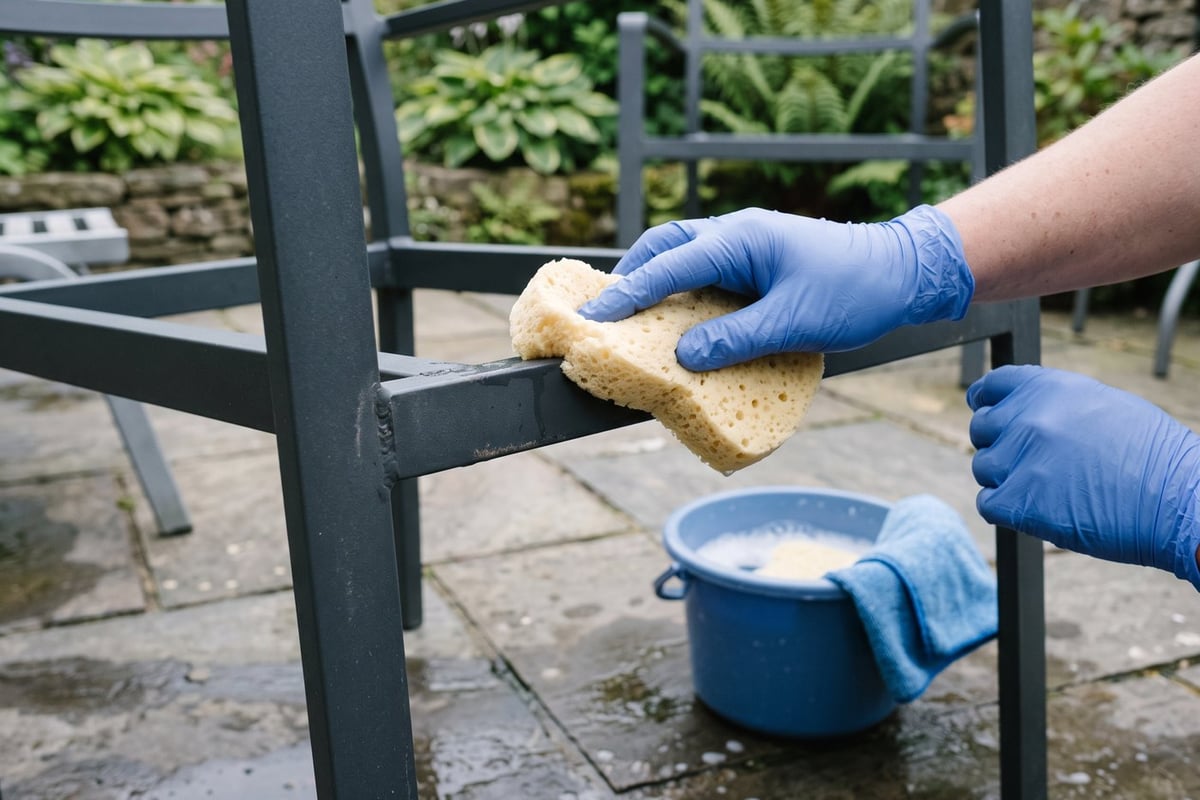
- Remove cushions and brush loose debris from the frame.
- Rinse the furniture using low-pressure water.
- Wash with a soft cloth and mild soapy water.
- Clean beneath seats, around feet and inside accessible joints.
- Rinse again, then dry the whole frame.
Aluminium cannot form red iron rust. Bare areas can develop pale, chalky oxidation instead.
Steel screws and brackets may still rust on an aluminium set. A magnet helps identify these smaller steel parts.
Our garden furniture materials guide explains the main differences before buying.
How do you clean painted steel and cast iron?
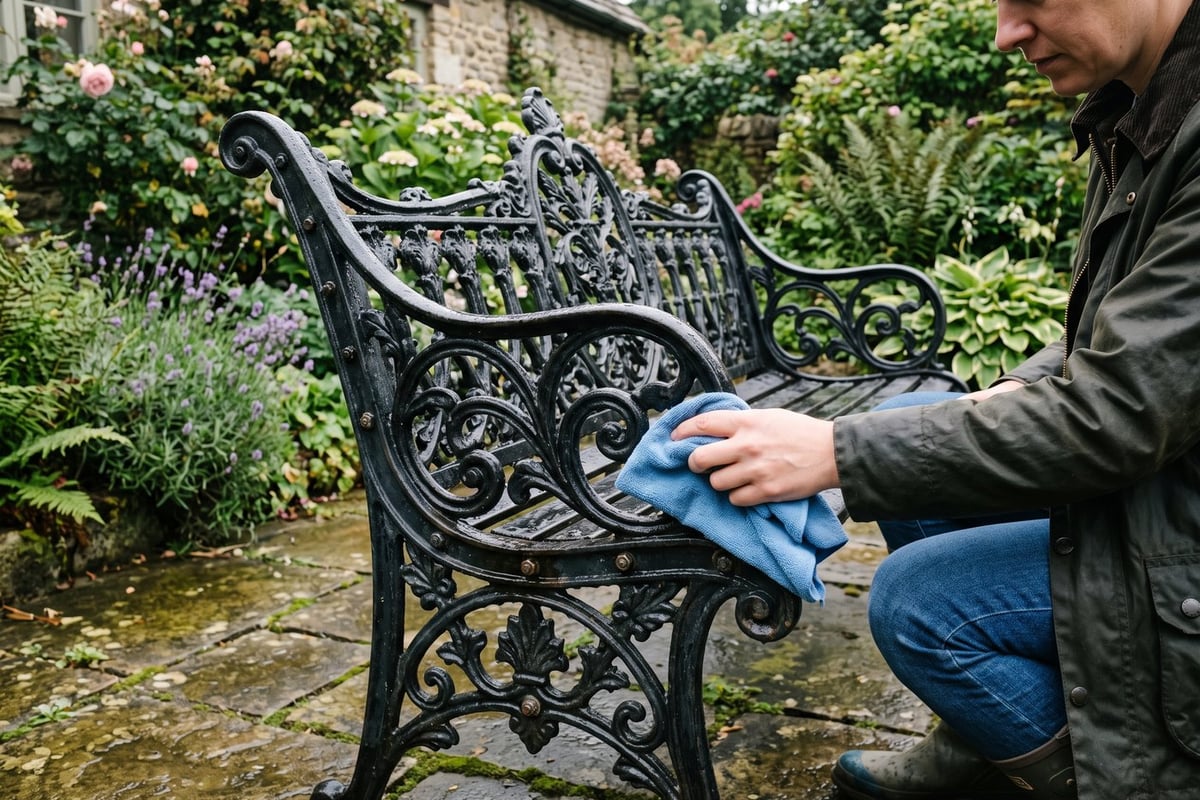
Painted steel and cast iron need gentle washing followed by a careful chip inspection.
Use the same mild soapy water as aluminium. Dry recesses, bolt heads and feet before replacing any cushions.
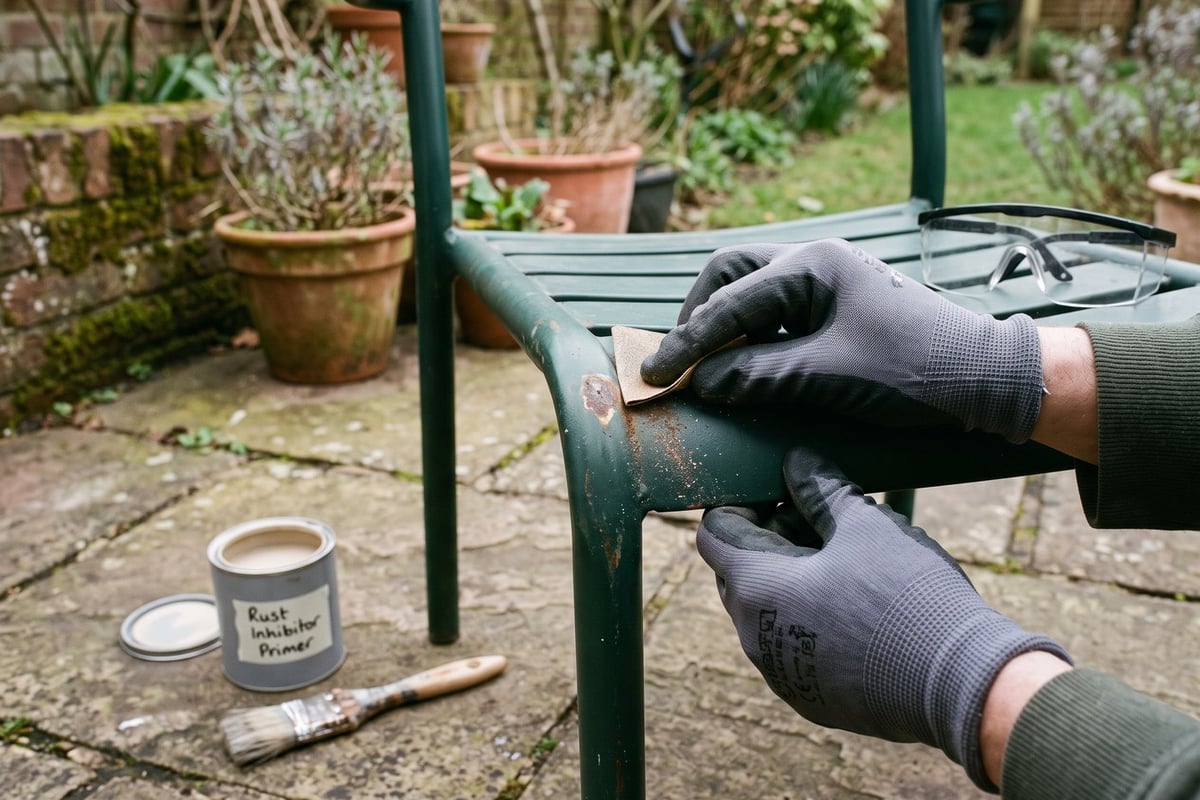
Repair small orange rust spots promptly. Wash and dry the area, then remove loose paint with 120-to-240-grit paper.
Keep sanding within the damaged area. Apply a suitable rust-inhibiting primer and matching exterior metal paint.
Do not use a wire brush across sound paint. It can turn a small repair into a much larger job.
For decorative seats, our metal garden bench guide shows the different shapes available.
Keep pressure low. A close pressure-washer jet can lift weak paint and force water into hollow steel frames.
A garden hose on a gentle setting is the safer choice.
How do you clean synthetic rattan furniture?
Synthetic rattan cleans well with a soft brush, mild soap and plenty of rinsing.
Remove cushions first. Brush along the weave, then wash between the strands with a cloth or soft brush.
Do not pull loose strands while cleaning. Check beneath the seats because leaves often collect between the weave and frame.
Rinse away all soap. Let the furniture drain before covering it.
Many rattan-style sets use steel or aluminium beneath the weave. Check visible feet and fixings for chips or corrosion.
Our lounge and corner sofa guide helps with layout and seating choices.
How do you clean teak and acacia garden furniture?
Wash outdoor timber gently and follow the grain whenever you use a cloth or brush.
Remove loose dirt first. Wipe with mild soapy water, then remove any remaining soap with a clean damp cloth.
Do not leave water pooled around joints or on flat surfaces. Let the furniture dry naturally with space around every side.
Natural timber changes colour outdoors. Use oil or another treatment only when the product instructions recommend it.
A small test beneath the seat helps reveal any colour change before treating the whole piece.
How do you remove bird mess, algae and tree sap?
Soak stubborn deposits before wiping them away, rather than scraping a dry surface.
Lay a wet cloth over bird mess for several minutes. Lift the softened deposit and repeat if needed.
Use a soft brush and soapy water on green surface growth. Work gently around paint edges and timber grain.
Tree sap can need several short washes. Avoid strong solvents unless the furniture maker specifically approves them.
Rinse and dry the cleaned patch. Check whether the deposit hid a chip, stain or loose strand.
How should outdoor cushions be cleaned?
Check the cushion label before washing because covers, fillings and water resistance vary.
Vacuum or brush dry crumbs first. Treat small marks promptly and avoid soaking the inner filling unnecessarily.
Removable covers may be washable, but the label should decide the temperature and method.
Air-dry covers and fillings completely. Reassembling a cushion while damp can cause smells and mildew marks.
Store clean cushions indoors during long wet spells and through winter where the product guidance recommends it.
When should garden furniture be cleaned?
A spring and autumn clean suits most sheltered UK gardens.
Furniture beneath trees or near the coast may need quicker attention. Remove wet leaves, sap and bird mess when noticed.
- Spring: Wash the frame and inspect every fixing.
- Summer: Deal with food spills, sap and bird mess promptly.
- Autumn: Clean, dry and repair before fitting a cover.
- Winter: Keep covers secure, ventilated and clear of pooled water.
Read our winter furniture storage guide before packing cushions or fitting covers.
Outdoor furniture in aluminium, steel and timber

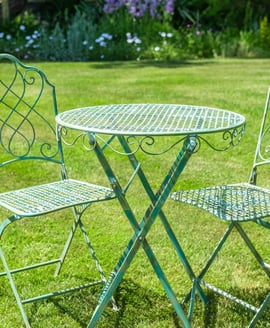
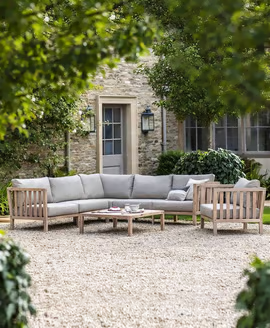
Choosing easy-care outdoor furniture
Material, finish and storage space all affect how much care a set needs.
Frequently asked questions
Can you pressure-wash garden furniture?
Low-pressure rinsing is safer for most outdoor furniture. A close jet can damage paint, timber and synthetic weave.
What is the best cleaner for aluminium garden furniture?
Use mild soap diluted in cool water. Apply it with a soft cloth, rinse fully and dry.
Can aluminium garden furniture rust?
Aluminium cannot form red iron rust. Bare areas may oxidise, while steel fixings can still corrode.
How do you remove green algae from outdoor furniture?
Use mild soapy water and a soft brush. Rinse thoroughly and repeat instead of scrubbing aggressively.
Should garden furniture be covered while wet?
No, let furniture dry before fitting its cover. Trapped moisture can cause marks, smells and corrosion.
How often should outdoor furniture be cleaned?
Clean it thoroughly in spring and autumn. Remove spills, sap, leaves and bird mess whenever they appear.
Related articles
Matt W co-founded Greenhouse Stores in 2012. He selects Garden Ornaments products and writes its maintenance guides.