
How to Stop a Bird Bath Freezing or Cracking in Winter
Written by Matt W on 14th Sep 2026.
Replace ice with fresh water
Salt, glycerine or antifreeze
Empty if hard frost is forecast
Refresh daily, disinfect weekly
To stop a bird bath freezing, replace ice with fresh tap water each morning. Empty the bowl before a hard overnight frost. Warm water can loosen ice, but boiling water risks sudden temperature shock. Never add salt, glycerine or antifreeze. A frost-proof bird bath can remain outdoors, although an undamaged finish and a level base still matter.
The winter rule that clears up most confusion
In our experience, the safest advice is to treat the bath and water separately. A frost-proof body may stay outside all winter. The water still needs daily attention because birds cannot use a solid sheet of ice. Before freezing nights, an empty bowl is the lowest-risk choice for the bird bath. Refill it during daylight so birds still have clean drinking and bathing water.

See the Blue Tit Birdbath in Sand Stone
Should you keep a bird bath filled during winter?
Birds need clean water in winter for drinking and feather care. Natural puddles and shallow water can disappear during a cold spell. The British Trust for Ornithology advises defrosting bird baths and checking them regularly. The RSPB also recommends keeping water fresh during freezing conditions.
The practical answer is to refill during daylight and watch the forecast. Empty the bowl before a hard overnight frost if you want to minimise stress on the material. Refill it the following morning with fresh tap water. This routine protects the bath without removing an important water source for days at a time.
If you cannot maintain clean water, leave the bowl dry temporarily. Stagnant water creates a hygiene problem. The RSPB's water guidance recommends replacing water daily and cleaning thoroughly each week.
Why can a bird bath crack when water freezes?
Water expands by roughly nine per cent as it becomes ice. That expansion does not automatically break every bird bath. Damage becomes more likely when water enters an existing chip, surface crack or porous patch. Repeated freezing and thawing can then widen the fault.
A level bowl matters too. Water sitting deeply on one side creates uneven loading. A rocking pedestal may also move as wet soil freezes and thaws. Set the base on firm, level paving or compacted gravel. Check that separate bowl and pedestal sections sit squarely.
Inspect the rim and bowl before winter. Look for new chips, flaking, fine cracks or a loose joint. Our broader guide explains how to protect outdoor ornaments during winter. Do not apply a sealant unless the product maker recommends one for that material.
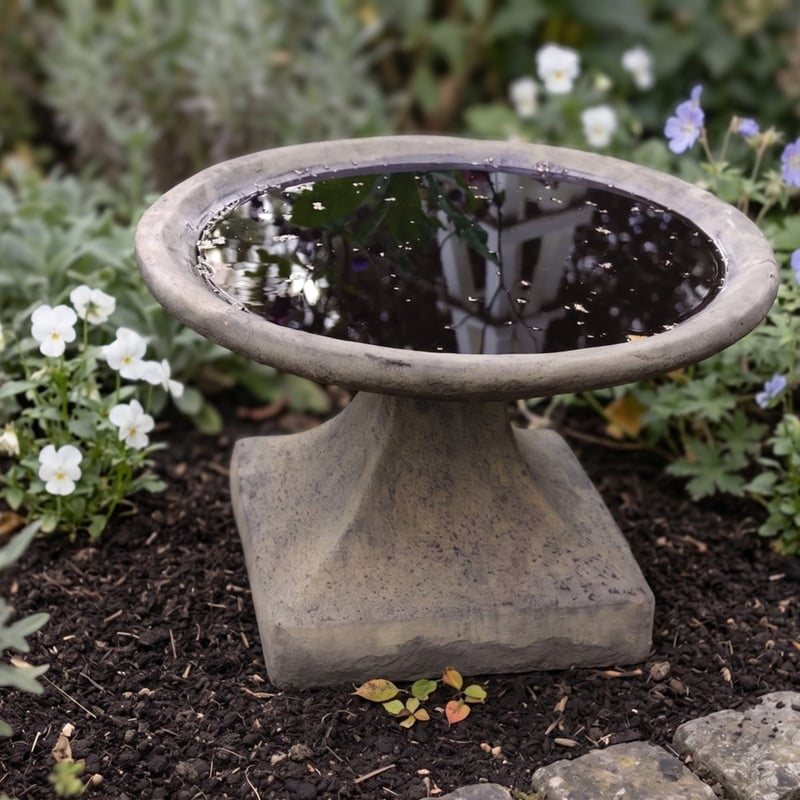
See the Low Height Stone Birdbath
A simple bird-bath routine for freezing weather
A two-minute morning check is usually more useful than a complicated winter setup. Keep a watering can, stiff brush and pair of gloves nearby. Then use this routine whenever frost is forecast:
- Lift out loose ice rather than striking it.
- Pour warm water slowly around stubborn ice. Avoid boiling water.
- Remove the loosened ice and rinse away debris.
- Refill with clean tap water during daylight.
- Empty the bowl before a hard overnight frost.
Never hit the ice with a hammer, stone or garden tool. The impact can chip the bowl and may turn a small weakness into a crack. Do not twist a frozen removable bowl away from its pedestal. Let the joint thaw first.
For general siting and visibility advice, use our guide to helping birds find and use a bird bath.
Which anti-freezing methods are safe for birds?
Fresh water and regular checks are the dependable options. Shortcuts should never change the water's chemistry. This table separates useful methods from unreliable or unsafe ones.
| Method | Does it help? | What to know |
|---|---|---|
| Fresh tap water each morning | Yes | Restores access after overnight ice and improves hygiene. |
| Warm water poured slowly | Yes | Loosens ice. Avoid boiling water and sudden temperature changes. |
| Light floating ball | Sometimes | A breeze may move it and delay a small patch freezing. |
| Bird-bath heater | Only if purpose-made | Follow its electrical and depth instructions exactly. |
| Salt, glycerine or antifreeze | Never | These can harm birds or damage feather waterproofing. |
| Breaking ice by force | No | Impact can damage the bowl. |
The RSPB suggests that a light ball can help keep a small area open when wind moves it. Treat this as a delaying tactic, not a guarantee. A still ball can freeze into the surface. Remove it when cleaning and continue checking the water.
Safety warning: never add antifreeze, salt, glycerine, alcohol or household chemicals. The RSPB warns that chemicals may be toxic and can damage feather waterproofing.
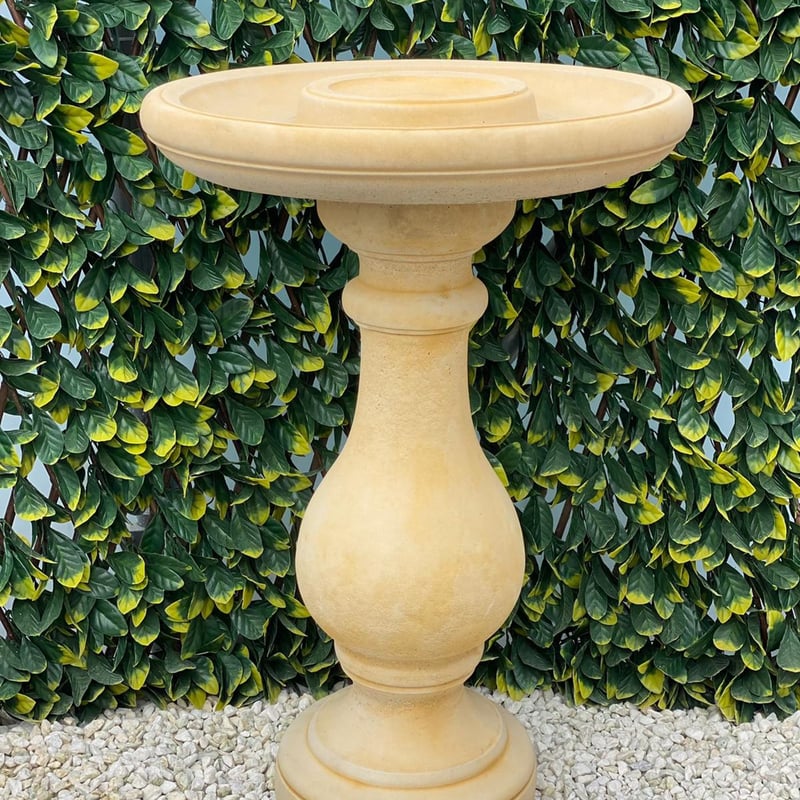
See the Fosse Birdbath in Sandstone
What does frost-proof mean on a bird bath?
Frost-proof describes the product's construction, not a promise that winter care is unnecessary. Check the exact product specification rather than assuming every stone-effect item performs identically. Cast stone, natural stone and marble-resin mixtures have different compositions.
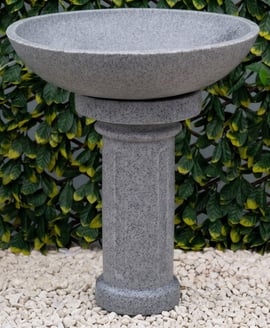
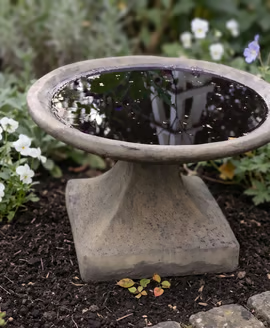
Our current range illustrates that difference. The 45kg Blue Tit model and 48.7kg Fosse model are described as frost-proof cast stone. The 20kg Round Grey model uses crushed marble with architectural-grade resin and is also described as frost-proof. The 76kg Low Height model is cast stone and described as safe for frost, rain and ultraviolet exposure.
Weight improves stability, but it does not create frost resistance. Surface condition, construction and the maker's care instructions matter more. Compare the materials in our stone bird-bath material guide before choosing.
| Example | Construction | Bowl or height | Listed weight |
|---|---|---|---|
| Blue Tit | Frost-proof cast stone | 450mm bowl | 45kg |
| Fosse | Frost-proof cast stone | 480mm bowl | 48.7kg |
| Round Grey | Crushed marble and resin | 500mm bowl | 20kg |
| Low Height | Weather-resistant cast stone | 550mm bowl | 76kg |
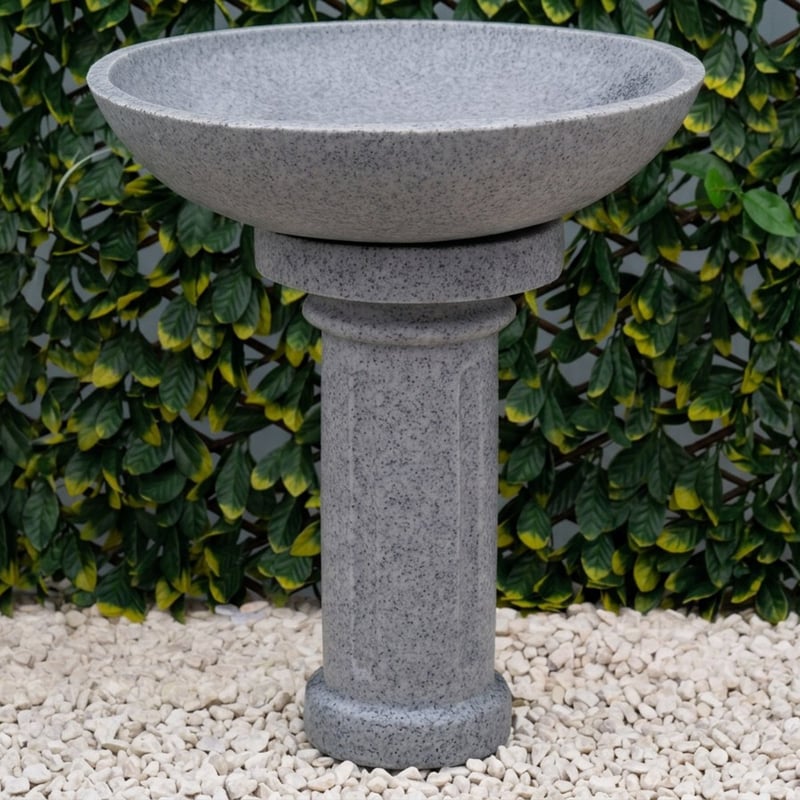
See the Round Stone Birdbath in Grey
How should you clean a bird bath during winter?
Replace the water daily and clean the bowl thoroughly every week. Remove leaves, droppings and old water outdoors while wearing gloves. Use separate cleaning tools rather than kitchen brushes or bowls.
Scrub the surface according to the product's care instructions. Rinse repeatedly so no cleaning residue remains. The RSPB recommends an animal-safe disinfectant for a thorough clean. It also advises stopping temporarily if you cannot maintain clean water.
Do not pressure-wash a weathered or chipped bowl. The concentrated jet can lift loose surface material. A stiff hand brush gives more control. Our stone ornament cleaning guide covers gentle cleaning methods for the surrounding pedestal.
What should you do with an existing crack?
Empty a cracked bowl before the next freeze and let it dry naturally. Do not keep refilling it while water can enter the damaged area. Photograph the crack and check the product's care and guarantee information.
A surface mark may be harmless, while a moving or leaking crack needs attention. Do not apply random glue, mortar or waterproof coating to a damp bowl. The wrong repair can trap moisture or make a guarantee claim harder to assess.
If the bowl separates from its pedestal, move the dry bowl under cover. Use two people for a heavy section. Leave the base stable and upright until you have the correct repair advice. Never lift a frozen or waterlogged casting by a decorative rim.
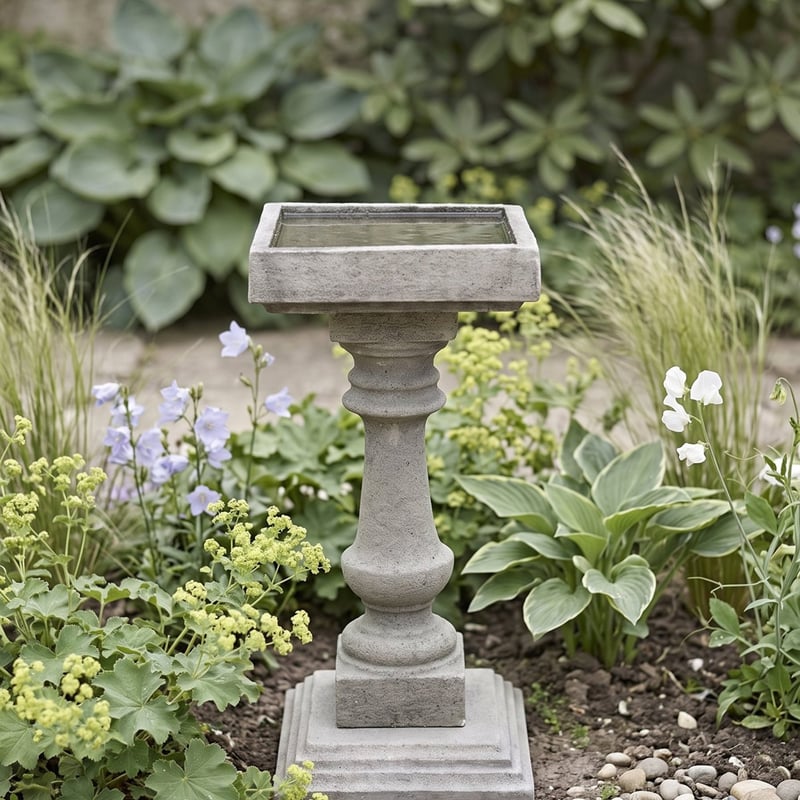
See the Baluster Stone Birdbath
Your five-minute winter checklist
- Check the forecast for an overnight frost.
- Remove leaves, droppings and loose ice.
- Refill with fresh tap water during daylight.
- Keep salt and all chemicals away from the bowl.
- Empty before a hard freeze when practical.
- Inspect chips, joints and the level of the base.
- Clean thoroughly each week using wildlife-safe guidance.
Bird baths suited to year-round gardens

Frequently asked questions
How do I stop my bird bath freezing overnight?
Emptying it before a hard frost is the safest option. Refill with fresh tap water the following morning. A light floating ball may delay a small patch freezing, but it still needs checking.
Can I pour hot water onto a frozen bird bath?
Use warm water slowly rather than boiling water. Sudden heat can stress cold stone, ceramic or damaged surfaces. Remove loosened ice before refilling.
Can I put salt in a bird bath to prevent ice?
No, never add salt or antifreeze to a bird bath. These substances may harm birds and interfere with the waterproofing of their feathers.
Should a frost-proof bird bath be emptied?
Yes, emptying before a hard freeze remains sensible. Frost-proof construction helps the body withstand winter weather, but existing chips and trapped water still deserve care.
Do birds need a bird bath in winter?
Yes, birds need clean water throughout winter. They use it for drinking and bathing, particularly when natural shallow water has frozen.
Choose a bird bath for year-round use
Compare construction, bowl size, weight and care instructions before choosing. The collection includes traditional and modern designs for different garden positions.