
Stone Garden Troughs: Alpine, Herb and Display Planting Ideas
Written by Matt W on 27th Jun 2026.
A stone garden trough is a long, low planter, ideal for alpines, herbs and seasonal display. Plant alpines in a gritty, free-draining mix just 150 to 200mm deep. Mediterranean herbs thrive in the warm, dry root run that stone gives them. Keep the drainage holes clear, choose frost-proof cast stone, and a single trough becomes a living tabletop garden that lasts for decades.
By Matt W | Garden Ornaments Specialist
Key takeaways
- A stone trough is a long, low planter suited to alpines, herbs and low seasonal display
- Alpines need only 150 to 200mm of depth, so even a shallow trough like the Shire works
- Use a gritty, free-draining mix: roughly equal parts loam-based compost, horticultural grit and leaf mould or fine bark
- Mediterranean herbs such as thyme, rosemary and oregano love the dry, warm conditions stone gives
- Every trough needs drainage holes and crocks; standing water in frost is what cracks stone, not the cold itself
- Top-dress alpines with 10 to 15mm of grit to keep collars dry and stop weeds
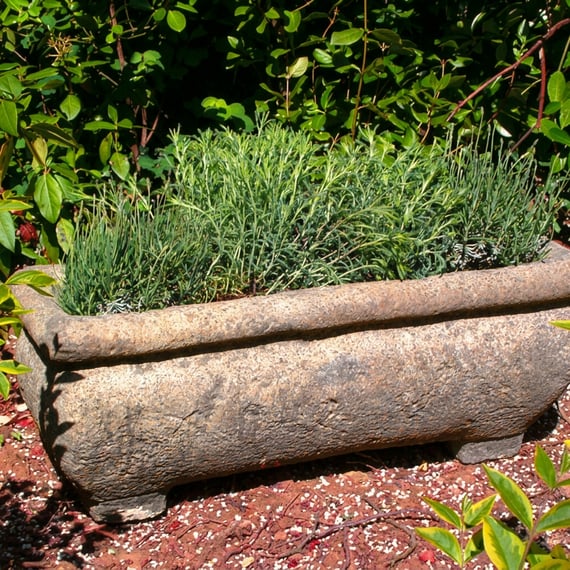
Shop the Catalan Stone Trough →
Matt's note
People worry a trough is too shallow to plant. It is the opposite. The old stone sinks and animal troughs that gardeners have prized for a century are valued precisely because they are shallow. Alpines come from thin mountain soils and rot in deep, wet compost, so a low trough with sharp drainage suits them perfectly. The same goes for thyme and the other dry-loving herbs. Fill a deep planter with rich compost and they sulk. Plant them in a gritty trough and they thrive. Match the plant to the depth and a trough outperforms a big pot every time.
What is a stone garden trough?
A stone garden trough is a long, low, open planter, usually rectangular, designed for low-growing plants rather than deep-rooted shrubs. The form comes from genuine stone sinks and farm animal troughs that gardeners repurposed for decades, and modern cast stone versions copy their proportions. Ours run from the 660mm Shire up to the metre-long Large Catalan, all with the shallow, broad planting area that suits alpines and herbs.
The appeal is the growing conditions a trough creates. Stone walls keep roots cooler in summer and the shallow profile drains fast, which is exactly what plants from mountains and the Mediterranean evolved to need. A trough also raises a small, detailed planting up to where you can see it, like a living tabletop garden. Stone only improves with age, as our piece on why stone ornaments get better with age explains. Browse the full range of stone troughs and planters to find a size for your spot.
What can you plant in a stone trough?
Three groups suit a stone trough best: alpines, herbs and low seasonal display. Alpines such as saxifrage, sempervivum and dwarf dianthus are the classic choice, because they want the sharp drainage and shallow root run a trough gives. Mediterranean herbs thrive in the same dry conditions. For colour, low bedding like violas, alyssum and trailing lobelia spills over the edges without needing depth.
Avoid anything that roots deep or grows large. Shrubs, small trees and tall perennials need far more depth than a trough offers and will struggle. Think of a trough as a miniature garden for small, slow plants rather than a scaled-down border. A single trough can hold a whole alpine collection or a working herb garden by the kitchen door. For deeper containers and bigger plants, our guide on what to plant in stone urns and planters covers the season-by-season options.
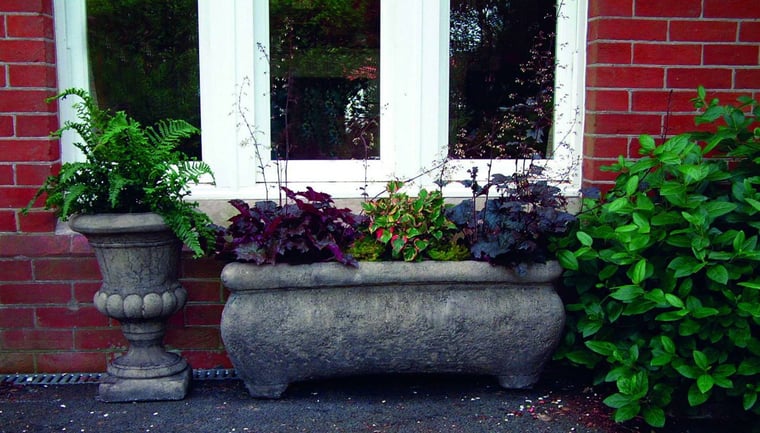
Shop the Large Catalan Trough →
How do you plant up an alpine trough?
Plant an alpine trough in a free-draining, low-nutrient mix and keep it shallow. Mix roughly equal parts loam-based compost, horticultural grit and leaf mould or fine bark. Cover the drainage holes with crocks, half-fill with the gritty mix, set out your plants while still in their pots to judge spacing, then plant and firm them in. Alpines need only 150 to 200mm of depth, so most troughs barely need filling.
Finish with a top-dressing of 10 to 15mm horticultural grit spread right up to each plant's collar. This is the step people skip, and it matters: the grit keeps the crown dry, stops rain splashing soil onto the leaves and suppresses weeds. Add a few small rocks for height and to mimic a mountain scree. Water it in once, then water sparingly, because the quickest way to lose alpines is to keep them wet. For more on getting the fill right, see our guide on how to fill a planter properly.
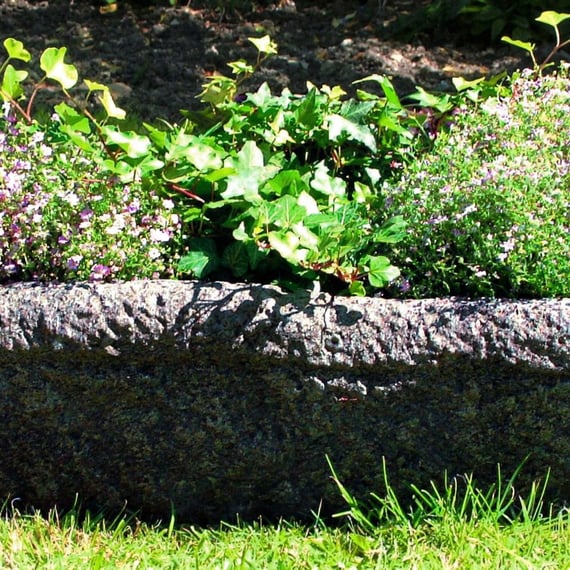
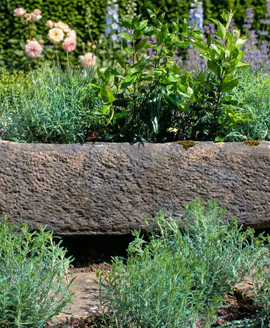
Matt's pick for herbs and mixed display
Best for: A working herb trough or a generous mixed planting
Why I recommend it: The Rustic is nearly a metre long with an 850mm planting area and a useful 220mm of depth, so it takes herbs, alpines and trailing colour together. The dimpled, weathered texture looks like a hundred-year-old find from day one. Heavy at 120kg, it sits dead still on a patio and ages beautifully.
Price: £345
Which herbs grow best in a stone trough?
The herbs that grow best in a stone trough are the Mediterranean, dry-loving kinds: thyme, rosemary, oregano, marjoram, sage and chives. They evolved on thin, stony hillsides, so the sharp drainage and warm stone of a trough suits them far better than rich, damp border soil. Plant them in the same gritty mix you would use for alpines, with a little less grit and a touch more compost.
Keep thirstier, leafier herbs separate. Mint, basil, parsley and coriander want richer, moister soil and will struggle alongside the dry-lovers, so give them their own pot. Site a herb trough in full sun close to the kitchen, where the warmth concentrates the oils and the flavour, and you can snip a handful while cooking. One Rustic or Large Catalan trough holds a full year's supply of the woody herbs for most households.
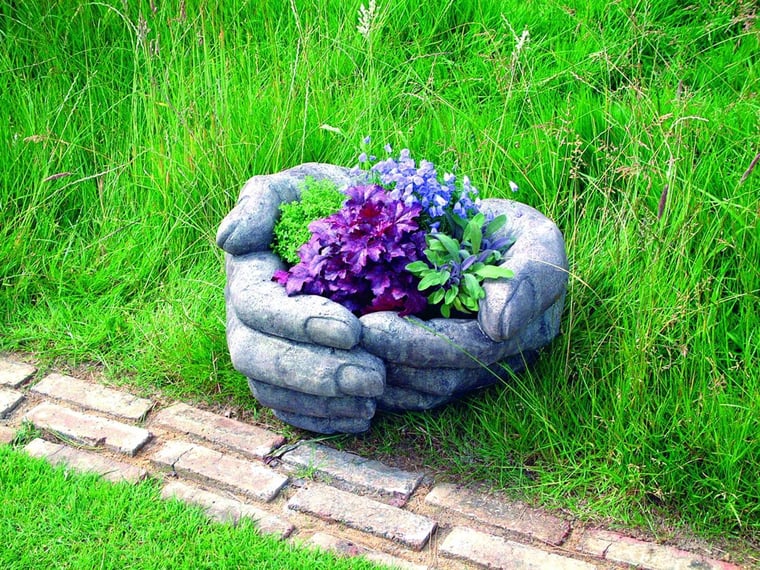
Shop the Cupped Hands Planter →
Watch out for
Do not plant a trough in ordinary multipurpose compost on its own. It holds too much water for alpines and dry herbs, and they will rot at the collar over a wet winter. Always cut it with grit. Do not overcrowd either: troughs look best slightly sparse at planting, because alpines and herbs spread to fill the gaps within a season. And never let a trough sit in a saucer or flush on paving where the holes block. Trapped water is the one thing that kills these plants and stresses the stone.
How deep should a stone trough be?
For alpines, a stone trough needs only 150 to 200mm of planting depth. For herbs, 200 to 250mm is ideal, and for low seasonal bedding 150mm is enough. This is why troughs work so well: the plants suited to them are shallow-rooted by nature. Only if you want to mix in a small dwarf shrub or a deeper-rooted perennial do you need to step up to a deeper trough or a planter.
Match the trough to the planting rather than buying the biggest. The Shire gives 150mm, fine for a pure alpine collection. The Rustic and Catalan offer 220 to 230mm, which suits herbs and mixed display. Step up to the Grand Square planter or the Grand Flower Pot when you want depth for something bigger. The table below sets out which of our troughs and planters suits each job.
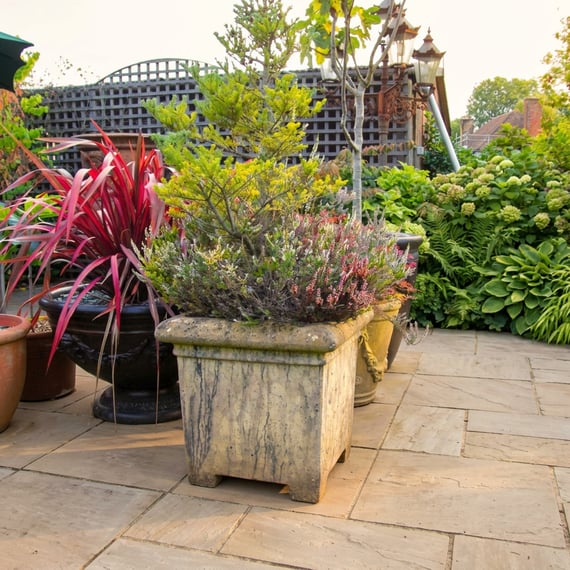
Shop the Grand Square Planter →
| Piece | Length / size | Planting depth | Best for | Price |
|---|---|---|---|---|
| Shire Stone Trough | 660mm | 150mm | Pure alpine collection | £184 |
| Catalan Stone Trough | 800mm | 230mm | Alpines and herbs together | £294 |
| Rustic Stone Trough | 980mm | 220mm | Herbs and mixed display | £345 |
| Large Catalan Trough | 1000mm | 400mm | Big herb garden, deeper roots | £370 |
| Empire Stone Urn | 550mm tall | Deep bowl | A single statement alpine cushion | £314 |
| Grand Square Planter | 600mm | Deep well | Dwarf shrubs and bigger plants | £410 |
Do stone troughs need drainage?
Yes, every stone trough needs drainage. Standing water is the single biggest killer of alpines and dry herbs, and trapped water that freezes is what stresses the stone in winter, not the cold itself. All our cast stone troughs come with drainage holes. Cover each with a crock or a curved shard of broken pot so the gritty mix cannot wash out or block the hole.
Raise the trough off the ground on pot feet or a couple of slate offcuts so the holes never sit flush against paving. A 20mm air gap underneath lets water run clean away and keeps the base from sitting in a puddle. On a very wet site, add a thin layer of coarse grit over the crocks before the compost. Good drainage protects both the plants and the stone, as our guide to winter protection for ornaments sets out month by month.
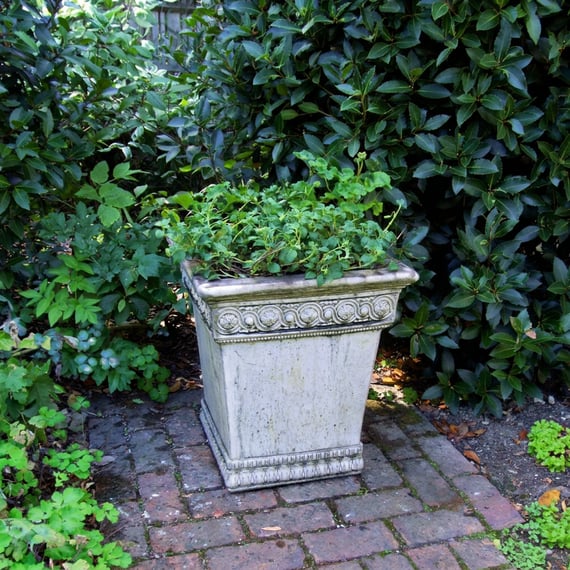
How do you stop a stone trough cracking in frost?
You stop a stone trough cracking in frost by keeping it well drained, not by wrapping it up. Frost-proof cast stone resists the cold itself. What cracks any planter is water that collects in the base or the soil, freezes, expands and forces the stone apart. Keep the drainage holes clear all winter, raise the trough on feet and use a gritty mix that never gets waterlogged, and a quality trough lasts decades.
In a hard freeze, a free-draining trough planted with hardy alpines needs no extra protection: they are mountain plants and shrug off frost. Tender seasonal bedding is a different matter, so lift or replace it before winter. For a stone trough left empty over winter, tip it slightly or cover it so rain cannot pool inside and freeze. Our guide on stone, terracotta and fibrecite planters compared explains why cast stone outlasts other materials in a UK winter.
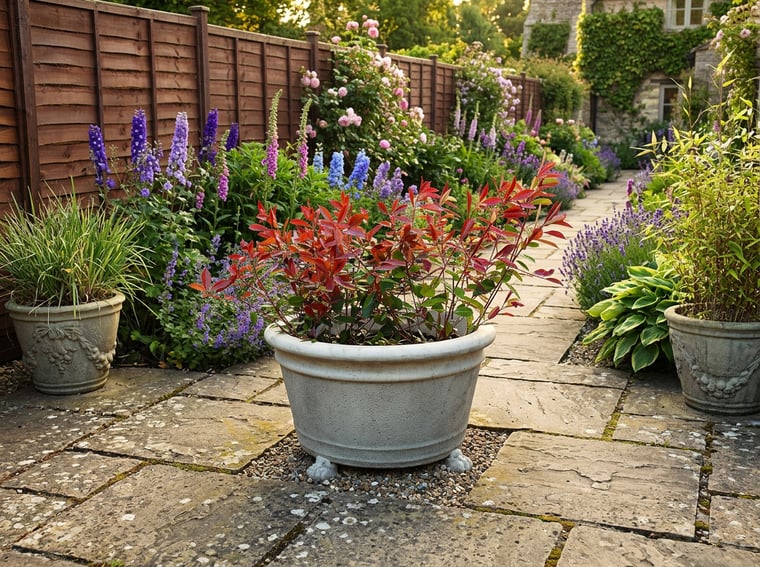
Shop the Grand Stone Flower Pot →
Matt's tip: dress the surface with grit and a few rocks
The detail that turns an ordinary trough into something special is the top-dressing. After planting, spread 10 to 15mm of horticultural grit right across the surface and tuck a few weathered rocks among the plants. It does three jobs at once. It keeps plant collars dry so they never rot, it stops weed seeds taking hold, and it mimics the scree slope alpines come from, so the planting looks settled from the first day. It takes ten minutes and a single bag of grit, and it is the difference between a trough that looks planted and one that looks grown.
We stock stone troughs because they do something no deep planter can: they give shallow-rooted alpines and dry herbs exactly the conditions they want, in a piece that only looks better with age. Match the trough to the plant, get the drainage right, and one trough by the door becomes a tiny garden you tend for years. Browse our full range of garden ornaments for more ways to plant up your space.
- Matt W, Garden Ornaments
Frequently asked questions
What is a stone garden trough used for?
For growing alpines, herbs and low seasonal display. Its shallow, free-draining shape suits plants from mountains and the Mediterranean, which rot in deep, wet compost but thrive in a gritty trough.
How deep should a stone trough be for alpines?
Just 150 to 200mm of planting depth. Alpines are naturally shallow-rooted, so even a low trough like the Shire holds a full collection. Sharp drainage matters far more than depth.
What compost do you use in a stone trough?
A gritty mix of loam-based compost, horticultural grit and leaf mould. Use roughly equal parts for alpines, with a little more compost for herbs. Avoid plain multipurpose, which holds too much water.
Which herbs grow best in a stone trough?
Mediterranean herbs: thyme, rosemary, oregano, marjoram and sage. They love the dry, warm, free-draining conditions stone gives. Keep thirsty herbs like mint and basil in a separate, richer pot.
Do stone troughs crack in frost?
Frost-proof cast stone resists cracking; trapped water is the real risk. Keep drainage holes clear and raise the trough on feet so water cannot pool, freeze and force the stone apart.
How do you top-dress an alpine trough?
Spread 10 to 15mm of horticultural grit across the surface. Take it up to each plant's collar to keep crowns dry, suppress weeds and give the natural scree look alpines suit.