
Metal Gazebo Base Preparation & How to Fix One Down
Written by Matt W on 10th Jul 2026.
Metal gazebo base preparation means giving the frame a firm, level footing before you fix it down. Most decorative steel gazebos sit on paving slabs or a concrete pad, then bolt down with M10 expansion anchors set 60-75mm into the base. Budget a 100-150mm compacted sub-base under any paving. Keep the base level within 5mm across its width. A flat, well-anchored base stops the frame racking, rusting and shifting in wind for years.
Matt W, Garden Ornaments
Founder of Garden Ornaments, working with a team of fitters who install metal gazebos, arches and statuary in gardens across the UK and Ireland
Key takeaways
- ✓A metal gazebo needs a flat base, level within 5mm across the whole footprint
- ✓Paving slabs on a 100-150mm compacted sub-base suit most Ascalon gazebos (1.4m to 2m footprints)
- ✓Fix every foot-plate with M10 masonry or expansion anchors, 60-75mm into concrete
- ✓Ground screws or 300mm concrete post-pads work where you cannot pave
- ✓A DIY slab base costs £40 to £150; the fixings add under £20
- ✓Never stand a permanent gazebo straight on grass, the legs sink and the frame twists
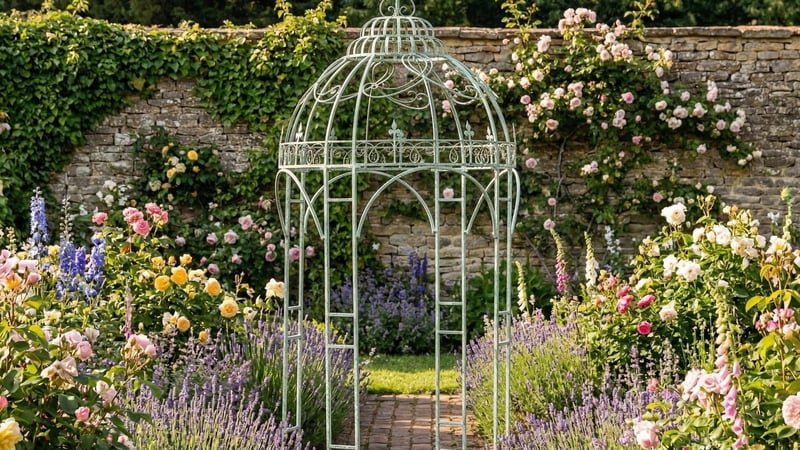
Shop the Cockerell Metal Garden Gazebo →
Installer's Note
The base is where most wobbly gazebos are lost, not the assembly. I have gone back to gardens where a lovely ornate frame leans because it went straight onto soft lawn. Spend the first afternoon getting a flat, firm pad. The gazebo then goes up in a couple of hours and stays put through every winter storm. Get the base wrong and no amount of tightening later will square the frame.
What base do you need for a metal gazebo?
A metal gazebo needs a flat, solid, free-draining base that you can bolt into. The four bases that work in UK gardens are paving slabs, a poured concrete pad, a timber or composite deck, and ground screws. Each foot-plate must land on something firm enough to hold an anchor bolt.
Match the base to the frame weight. A light open-frame gazebo like the vintage Ascalon models, roughly a 1.5m square footprint, sits happily on four paving slabs bedded on mortar. A tall, heavy piece like the 2m by 2m Arcadia earns a full concrete pad or slabs across the whole footprint.
Grass and bare soil are the two surfaces to avoid. The legs sink unevenly, the frame twists, and rain splashes soil onto the powder coat. If you want the gazebo on a lawn, lift the turf and build a proper pad first. For help picking a frame before you dig, read our guide to choosing a metal garden gazebo.
How to prepare a paving slab base for a gazebo
A paving slab base is the most common and forgiving option for a metal gazebo. You lay a compacted sub-base, bed slabs on mortar, and set them dead level. Most UK homeowners can build one over a weekend with hand tools.
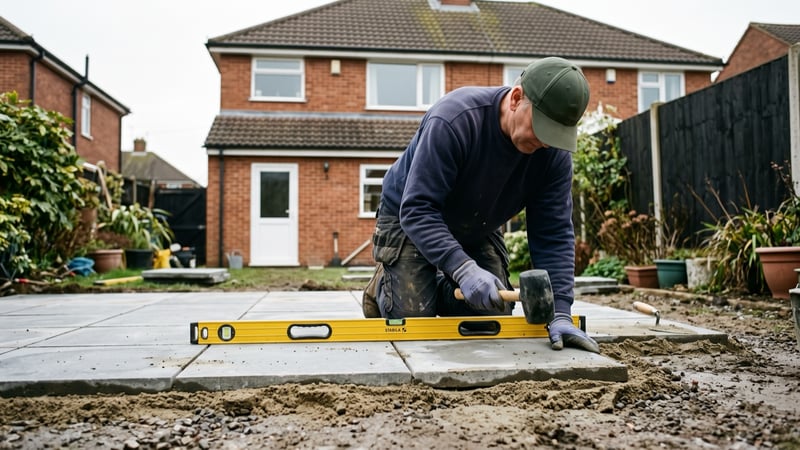
Bed each slab on a full mortar bed and check it level before the next one goes down.
Mark the footprint with pegs and string, adding 150mm all round. Dig out 150-200mm of soil. Fill with 100-150mm of MOT type-1 hardcore and compact it in layers with a whacker plate or a hand tamper. Bed 50mm paving slabs on a 30-40mm mortar bed of four parts sharp sand to one part cement.
Work from one corner, tapping each slab down with a rubber mallet. Lay a spirit level across every slab and across the diagonals. Aim for level within 5mm over the base, or a barely perceptible fall away from any nearby wall for drainage. Let the mortar cure for 24 hours before you stand on it, and 48 hours before you drill anchors.
Do you need concrete footings for a metal gazebo?
You do not need full concrete footings for most decorative metal gazebos, but heavier and taller frames benefit from them. A concrete pad or individual post-pads give the anchor bolts more to bite into and resist wind uplift on tall canopies.
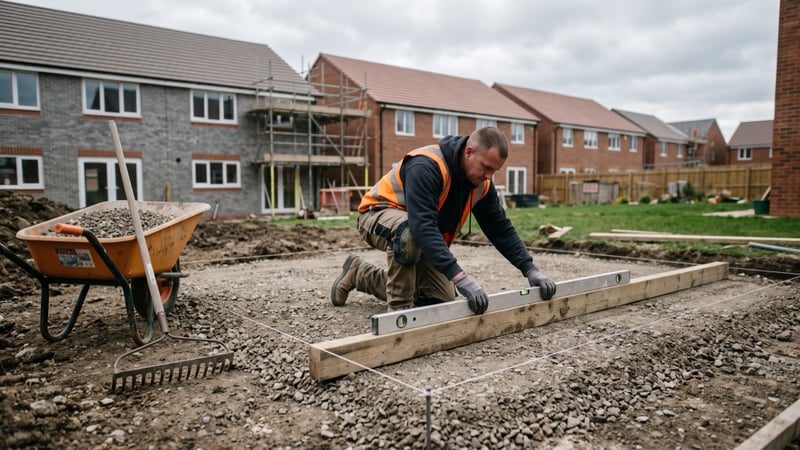
The compacted sub-base does the real work; slabs or concrete just spread the load.
For a poured pad, dig 150mm deep, lay 100mm of compacted hardcore, then 100mm of C20 concrete over the footprint. For post-pads, dig a 300mm by 300mm hole 300mm deep at each leg and fill with concrete, setting a fixing plate or resin anchor in the wet mix. Both give a permanent, rock-solid mount.
Ground screws are the no-dig alternative. A 550-865mm steel screw winds into firm ground with a bar and takes a bolt-on bracket. They suit sloping plots and clay where digging is hard work. Whatever base you choose, the heavy 3.5m tall Arcadia below wants concrete or full slabs, not four loose pads.
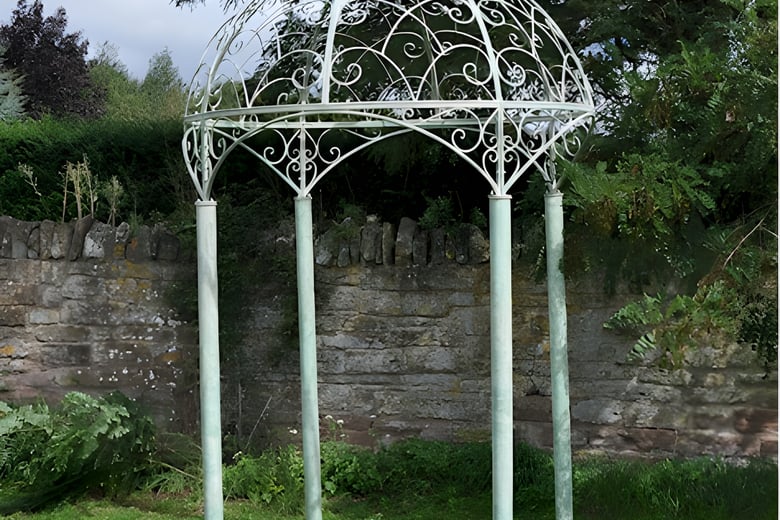
Shop the Arcadia Metal Garden Gazebo →
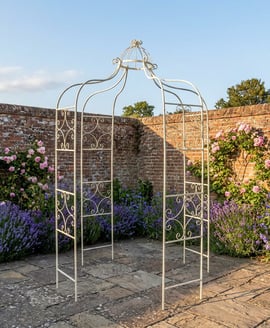
Matt's Pick for a first bolt-down base
Best For: a simple four-slab base you lay yourself
Why I Recommend It: at 1.55m square and light, it sits on four slabs and takes four M10 anchors in an afternoon
Price: £259
How to bolt a metal gazebo to the ground
Bolt a metal gazebo down with M10 expansion or masonry anchors driven through each foot-plate into concrete or paving. This is the single step that stops the frame moving. Skip it and even a heavy gazebo can lift or creep in a gale.
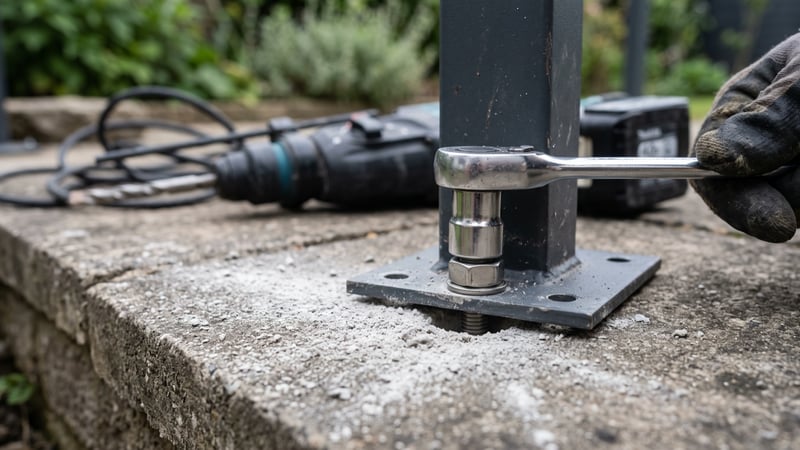
Drill, blow out the dust, then tighten each anchor to draw the foot-plate flat.
Stand the assembled frame on the base and mark the fixing holes. Drill with a 12mm SDS bit to a depth of 60-75mm, keeping at least 50mm from any slab edge so it cannot crack. Blow out the dust, drop in the anchor, and tighten to around 40-50Nm so the sleeve expands and grips.
Use stainless steel or hot-dip galvanised fixings only. Plain zinc bolts rust within a season and stain the paving. Fit a stainless washer under each nut to spread the load on the foot-plate. Once all legs are anchored, go round a second time and nip each nut tight after the frame has settled.
Watch the slab edge
Drilling too close to the edge of a paving slab is the most common way to ruin a good base. The anchor expands, the corner spalls off, and the leg is left loose. Keep every hole at least 50mm in from the edge. If a foot-plate hole falls near a joint, shift the whole frame 20-30mm rather than risk it.
How do you level a metal gazebo frame?
Level a metal gazebo by checking each upright is plumb as you assemble, then packing under any low foot before you bolt down. A base level within 5mm rarely needs packing, but no base is perfect. The frame tells you the truth once it is standing.
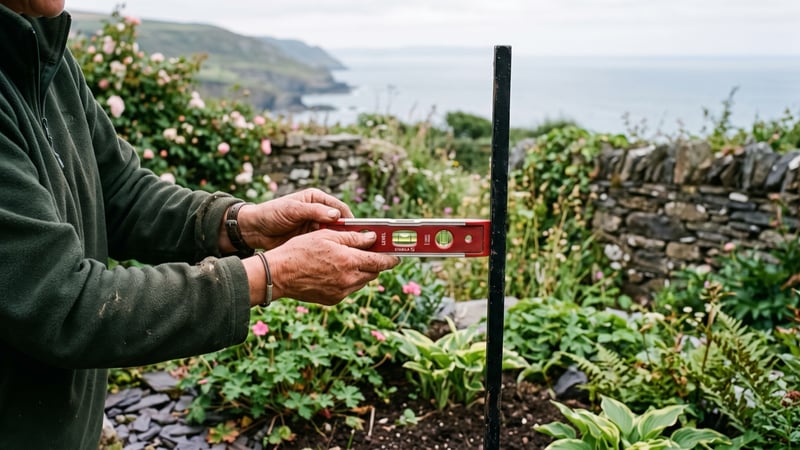
Check each leg on two faces; a plumb upright means a square, rattle-free roof.
Build the sides loosely first and leave the bolts finger-tight. Stand the frame up and hold a torpedo level against each upright on two faces. Slide thin stainless or plastic packing shims under any leg that sits low. Only tighten the leg bolts once every upright reads plumb and the roof sits square.
Assemble in the right order and levelling is easy. Roof last, sides squared first. Two people make this far safer than one. If your frame will carry climbing plants, the same squareness rules apply to arches, covered in our wood versus metal garden arch guide.
How do you stop a metal gazebo blowing over in the UK?
Stop a metal gazebo blowing over by anchoring every leg and reducing the wind it can catch. Open scrollwork frames let gusts pass through, so anchoring is usually enough. Canopy models act like a sail and need the most care in exposed or coastal gardens.

Shop the Avignon Gazebo with Canopy →
Anchor all four legs into concrete or full slabs, not loose pads. On a 4.02m wide canopy model, take the canvas down before autumn gales and heavy snow. A fixed canopy left up over winter tears at the seams and can drag the whole frame. Removing it takes ten minutes.
In coastal gardens, salt air attacks fixings first. Rinse the frame and check the anchors twice a year, once in spring and once before winter. Touch up any chips in the powder coat straight away. Our metal ornament rust and weathering guide covers salt-air care in detail.
Metal gazebo base options compared
The right base depends on your ground, your budget and the weight of the frame. This table sets the four workable options side by side, from the quick slab base to a permanent poured pad. All prices are for a base you build yourself.
| Base type | Rough DIY cost | Best for | Fixing method |
|---|---|---|---|
| Paving slabs on mortar | £40 to £90 | Most open-frame gazebos, 1.4m to 2m | M10 expansion anchor per leg |
| Poured concrete pad | £80 to £150 | Tall or heavy frames, canopy models | M10 anchor or cast-in bolt |
| Timber or composite deck | Existing deck | Gazebos over an existing patio deck | Coach screw into a joist |
| Ground screws | £60 to £120 | Sloping or clay plots, no-dig jobs | Bolt-on bracket per leg |
"We stock the Ascalon metal gazebo range because the frames are honest, powder-coated steel that takes an anchor bolt cleanly and lasts. A good gazebo is only as good as the base under it, so we tell every customer the same thing: get the pad flat and fix all four legs down. Do that and the frame outlives the fashion for it."
- Matt W, Garden Ornaments
Ready to start? Browse the full metal gazebo range, or see every style of structure in our gazebos collection. For statues, planters and finishing touches to sit alongside it, the whole garden ornaments catalogue is worth a look.
Frequently asked questions
What base do you need for a metal gazebo?
A flat, firm base of paving slabs, concrete, deck or ground screws. Each leg must land on something solid enough to hold an anchor bolt. Avoid grass and bare soil, as the legs sink and the frame twists over time.
How deep should a gazebo base be?
Allow 150-200mm of dug-out depth for a slab base. That holds 100-150mm of compacted MOT type-1 hardcore plus a 30-40mm mortar bed and a 50mm slab. Post-pads go 300mm deep for extra hold.
Can you put a metal gazebo on grass?
Not as a permanent fixture. Legs sink unevenly and the frame racks out of square within a season. Lift the turf and build a slab or concrete base first, then bolt the gazebo down onto it.
How do you anchor a metal gazebo to paving?
Drill each foot-plate hole with a 12mm SDS bit, 60-75mm deep. Fit an M10 stainless or galvanised expansion anchor and tighten to around 40-50Nm. Keep every hole at least 50mm from the slab edge.
Do you need planning permission for a metal gazebo?
Usually no, under permitted development rules. It must be single storey, under 2.5m tall near a boundary, and cover under half the garden. Conservation areas and listed buildings have stricter rules, so check locally.
How much does it cost to build a gazebo base?
A DIY slab base costs roughly £40 to £150. Paving slabs, sub-base and mortar make up most of it. Stainless fixings for all four legs add under £20. A tradesperson would charge more for labour.
How long should you leave a gazebo base before fixing?
Let a mortar-bedded slab base cure 48 hours before drilling anchors. A poured concrete pad needs longer, ideally five to seven days. Drilling too soon can crack the bed and loosen the fixings.