
Patio Ponds: Container Water Gardens in 6 Steps
Written by Matt W on 6th Jun 2026.
A patio pond is a watertight container planted as a tiny water garden. Use a half-barrel, glazed pot or a lined stone trough, at least 30cm deep, filled with rainwater rather than tap water. Add three to five plants, an oxygenator, a marginal and a dwarf waterlily, then either leave the water still for wildlife or add a cable-free solar pump for gentle movement. The whole project takes an afternoon and suits a balcony, courtyard or paved corner.
Matt W | Garden Ornament Specialist
Key Takeaways
- ✔ A patio pond is any watertight container, 30cm or deeper, planted as a mini water garden
- ✔ Fill with rainwater from a butt, not tap water, which feeds algae
- ✔ Three to five plants are plenty: an oxygenator, a marginal and a small waterlily
- ✔ Add a stone or brick ramp so frogs and insects can climb in and out
- ✔ A solar pump adds movement with no cable across the patio, from £209
- ✔ Want no standing water for child safety? A pondless stone bowl feature is the safer route
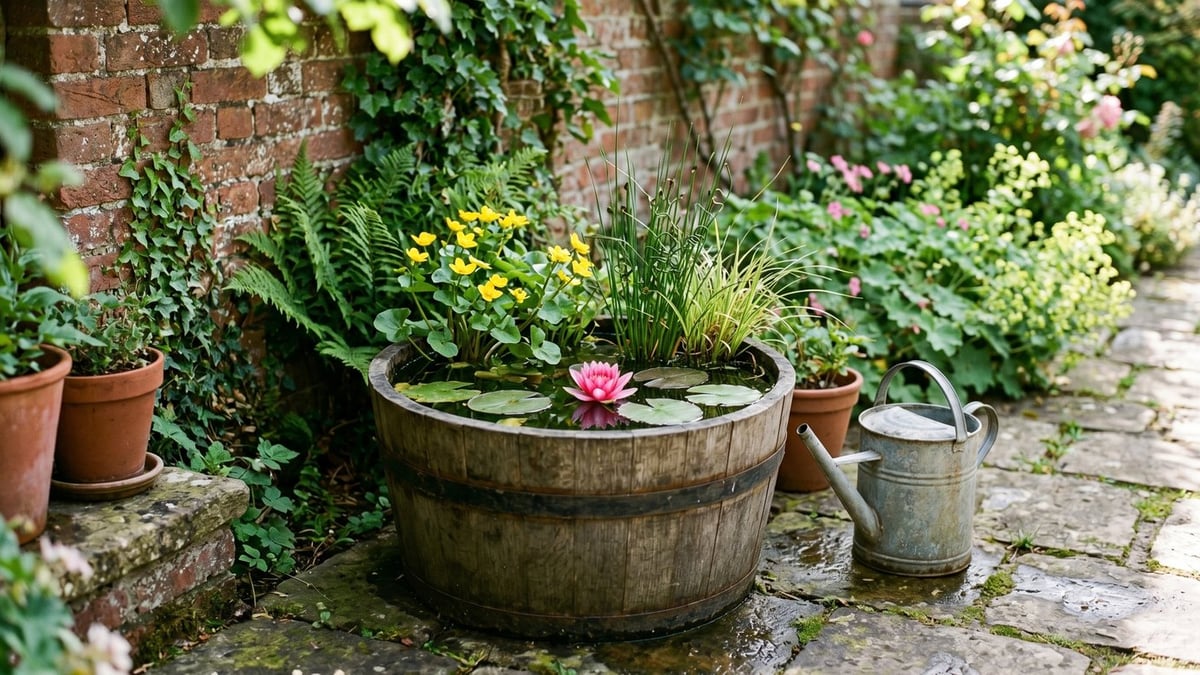
A half-barrel container pond with a dwarf waterlily and marginal plants. Prefer no open water? Browse self-contained stone water features.
A container pond brings water, plants and wildlife to a space far too small for a dug pond. It works on a balcony, in a courtyard, or in a corner of a paved patio, and it costs little to start. We do not sell aquatic plants or ready-made pond vessels, so this guide is honest about what to source where: the container and plants come from a garden centre or aquatic nursery, while the pump and the no-dig alternatives are ours. For the plant side, the RHS container pond guide is the best free reference in the UK.
What we have learned about water on a patio
We fit and supply water features across every kind of UK garden, and the patio-pond question we hear most is about depth. People build a shallow bowl pond, 10cm or 15cm deep, then find it warms up, greens over and freezes solid. A container pond needs to hold a body of water to stay stable. We tell everyone the same minimum: 30cm of depth, more if the pot allows. That single number fixes most of the problems a mini pond runs into.
The second thing we have learned is that movement and stillness serve different goals. Frogs, newts and pond insects want still, shallow-edged water, so a wildlife pond is best left without a pump. If you want the sound and sparkle of moving water instead, a small solar pump does it without a cable, and a 980 to 1560 litre-per-hour unit is far more than a container pond needs, so you run it on its lowest setting.
How to make a patio pond in 6 steps
The whole job takes an afternoon. The only rule that really matters is depth: aim for at least 30cm so the water stays cool and stable. Everything else is straightforward.
Step 1: Choose a watertight container
Pick a container at least 30cm deep that holds water or can be lined to. A wooden half-barrel, a glazed ceramic pot with the drainage hole sealed, a galvanised trough, or a lined cast-stone trough all work. Avoid thin plastic in full sun, which warms too fast. A wider container is more stable than a tall, narrow one because the larger surface suits plants and wildlife.
Step 2: Position it before you fill it
Stand the container where it gets some sun but not all day, ideally three to five hours. Too much sun warms the water and feeds algae; too little and a waterlily will not flower. Place it on firm, level ground near where you sit, because a full barrel is far too heavy to move later. On a balcony, check the loading first, as water weighs about a kilogram per litre.
Step 3: Make it watertight and add a wildlife ramp
Line a stone trough or barrel with butyl pond liner if it is not already watertight, and test it with water for a day before planting. Then build a ramp from a stack of stones, bricks or a piece of untreated wood, running from the floor up over the rim and down into the water. This lets frogs, hedgehogs and insects climb in and out instead of drowning.
Step 4: Fill with rainwater and let it settle
Fill the container with rainwater from a water butt. Tap water carries nutrients that trigger an algae bloom in the first few weeks. If you must use tap water, let it stand for several days before adding plants, so the chlorine gasses off. Leave the filled pond a few days to reach garden temperature.
Step 5: Add three to five plants
A mini pond needs only three to five plants in mesh baskets: one submerged oxygenator such as hornwort, one or two marginals such as marsh marigold or water forget-me-not, and one small or dwarf waterlily for surface cover. Stand the baskets on bricks so each plant sits at its correct depth. Aquatic plants and aquatic compost come from a garden centre or specialist nursery; the RHS lists suitable species.
Step 6: Add movement, or leave it still for wildlife
Decide what the pond is for. For wildlife, leave the water still, as frogs and insects prefer it. For sound and sparkle, drop in a small solar pump set to its lowest flow. You can have both by keeping the spray gentle and the edges planted. Top up with rainwater through summer, as a small pond loses water fast to evaporation.
Best containers for a patio pond
Almost any watertight vessel 30cm deep can become a container pond. Stone and glazed pots look the part and hold heat steadily; a half-barrel is the cheapest classic; a galvanised trough gives a modern edge. A cast-stone trough is worth lining for a pond with real presence, because the weight keeps it stable and the surface ages with moss and lichen.
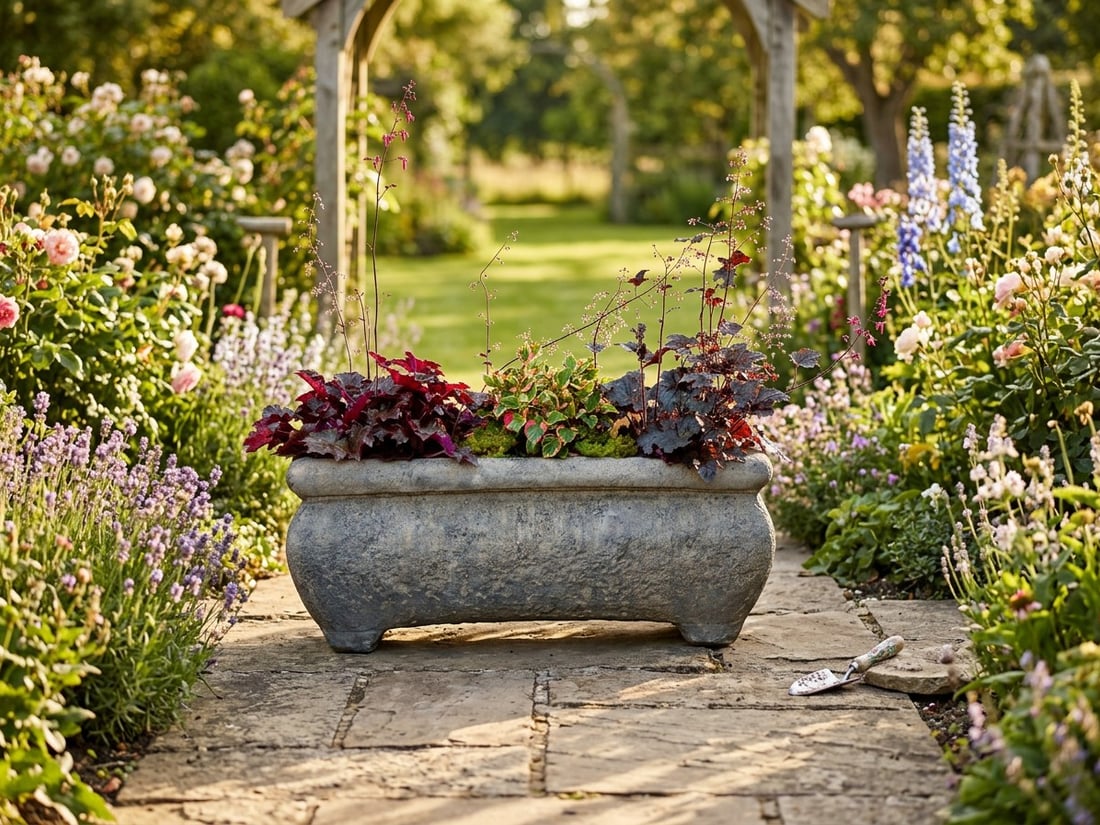
A cast-stone trough like the Large Catalan, lined with butyl, makes a heavy, characterful container pond. Shop the Large Catalan Stone Trough →
| Container | Depth | Best for | Watch out for |
|---|---|---|---|
| Wooden half-barrel | 40–45cm | Classic look, low cost | May need a liner once the wood dries |
| Glazed ceramic pot | 30cm+ | Courtyards and modern patios | Seal the drainage hole; frost can crack thin glaze |
| Galvanised trough | 30–40cm | Contemporary, industrial look | Heats fast in full sun |
| Lined cast-stone trough | 30–40cm | Weight, stability, period character | Needs a butyl liner; very heavy when full |
Adding gentle movement: solar or mains pump
A still pond is best for wildlife, but moving water brings sound and stops the surface stagnating in a heatwave. The choice is solar or mains. Solar wins on a patio because there is no cable to run across paving from the house, and the panel sits on a wall in the sun. Mains gives constant flow whatever the weather, if you have an outdoor socket nearby.
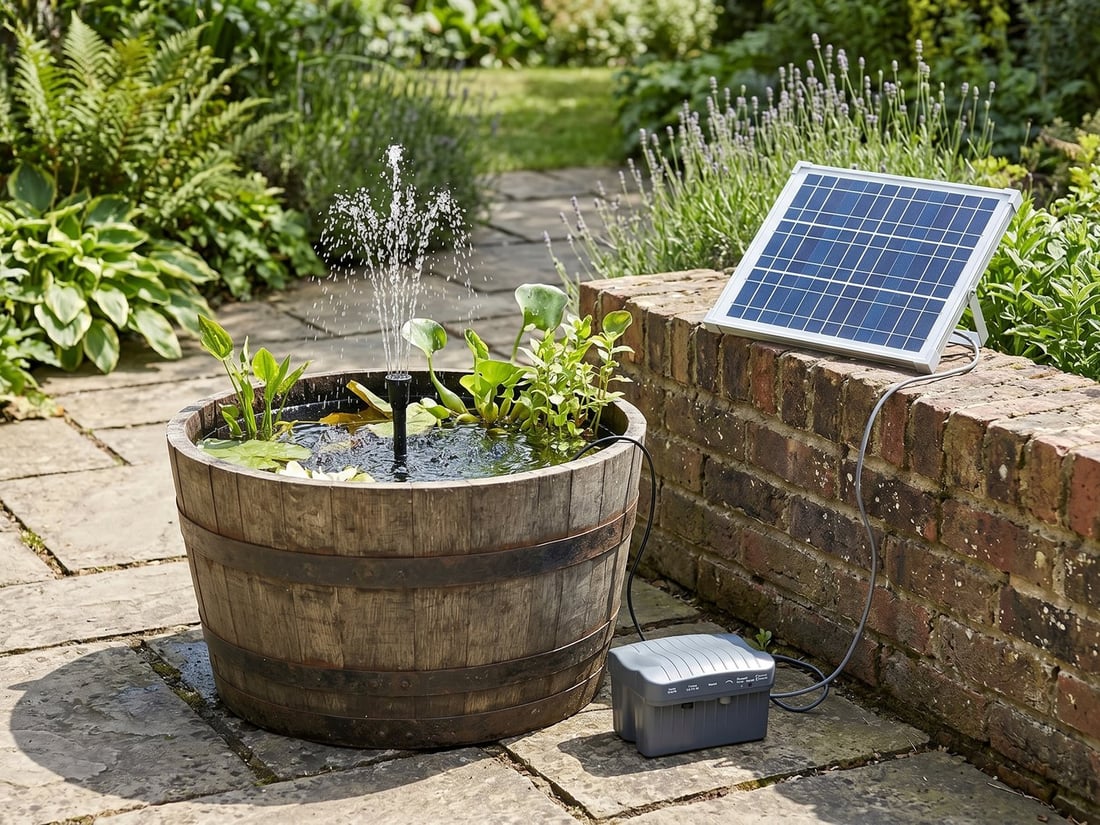
A solar pump puts movement in a container pond with no cable across the patio. Shop the Solar Water Feature Pump →
Solar Water Feature Pump — £209Flow: 980 to 1560 litres per hour, adjustable Power: Solar with a built-in battery, no mains cable Reach: 5m panel cable, 3.2m maximum lift Why it works: The battery stores charge so the pump can run after the sun moves off the panel. Set it to its lowest flow for a container pond and angle the panel south. Several fountain heads are included for a low bell or a fine spray. The cable-free choice for a patio. |
If you do have an outdoor socket, a small mains pump is cheaper and runs at a steady flow. The 450 litre-per-hour mains pump at £49 draws just 20 watts and is the right size for a container fountain. Either way, keep the spray low, because a tall jet empties a small pond fast and splashes plants out of position. Our guide to water feature running costs has the real numbers on pump wattage, and for solar specifically see the best solar water features tested for UK runtime.
The no-dig alternative: a pondless stone feature
Open water is not for everyone. With young children, or if you simply do not want plants to manage, a self-contained stone feature gives you the sound and movement of water with no standing pool. The water sits in a hidden reservoir below, so there is nothing for a child to fall into and nothing to net over. This is the route we recommend most often for family patios.
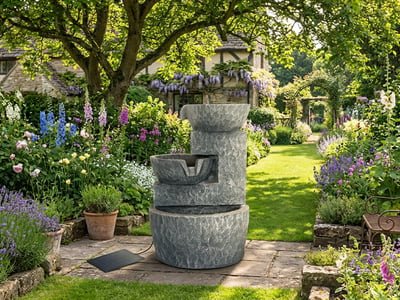
|
Babbling Bowl Grey Granite — £495Size: 500mm x 500mm x 150mm Type: Self-contained, pump and reservoir included Safety: No open standing water Why it works: A carved granite bowl with water welling up and brimming over a shallow lip onto pebbles. The weight holds it in place without fixing, and the hidden reservoir keeps the deck child-safe. A calm, low pondless feature for a patio corner. |
|
Stone Bowls Solar Water Feature — £145Size: 440mm tall, just 3.5kg Power: Solar, 4 to 6 hours on a full charge Safety: Self-contained, no cable, no open water Why it works: Three cascading bowls on solar power, light enough for a balcony and the cheapest pondless route in the range. No socket, no plumbing, no pond to net. Stand it where the panel catches sun and it runs within minutes. |
Both sit in our range of solar water features, alongside larger cascades. They are the safe middle ground between a bare patio and a full container pond.
Plants for a container pond
Three plant jobs cover a mini pond: oxygenate the water, soften the edge, and shade the surface. One plant from each group is enough to start. Buy them in mesh baskets with aquatic compost, never garden soil, which clouds the water and feeds algae.
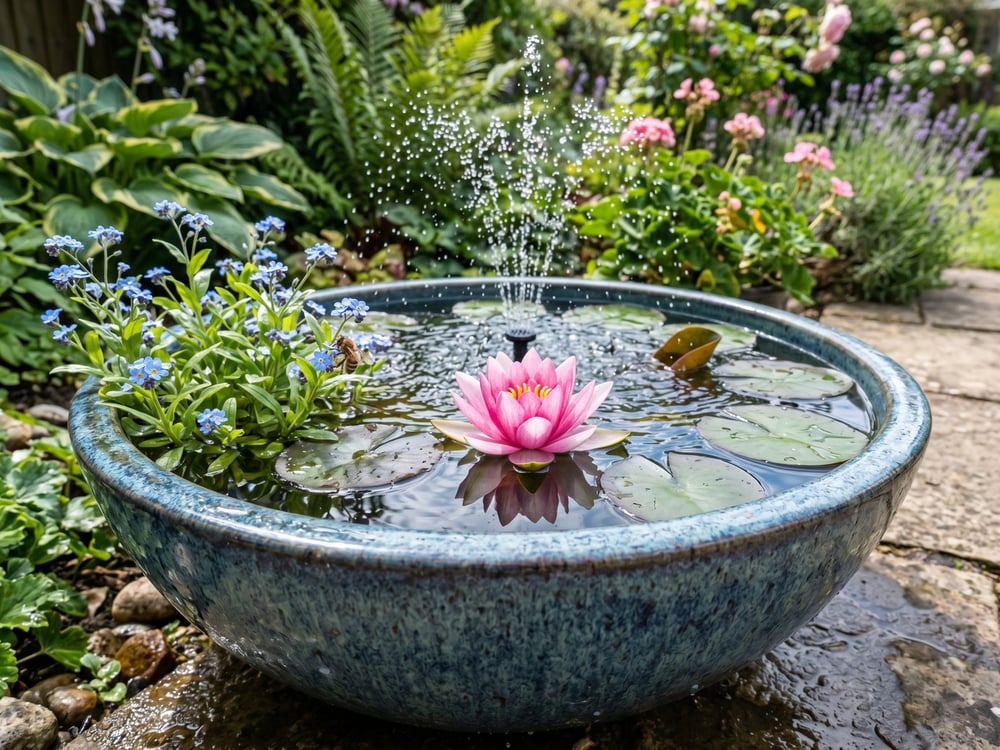
A dwarf waterlily, a marginal at the edge and a gentle solar spray in a glazed bowl pond. Browse cable-free solar pumps and features →
- Oxygenator (submerged): hornwort or water crowfoot keeps the water clear and feeds tadpoles.
- Marginal (the edge): marsh marigold, water forget-me-not or a dwarf reed for height and a wildlife perch.
- Surface cover (the lily): a true dwarf waterlily such as Nymphaea 'Pygmaea Helvola' shades the water and curbs algae.
Match the species to the depth your container allows; the RHS list of water habitat plants is a reliable starting point for UK gardens.
Wildlife in a container pond
Even a barrel of water finds visitors within weeks. Pond skaters and water beetles arrive first, then birds come to drink and bathe, and frogs may move in if there is a ramp. A still pond draws more wildlife than a pumped one, so keep any spray gentle and the edges planted. For the full picture, our guide to water features for wildlife covers the specs that actually bring birds, bees and hedgehogs in.
Leave the edges shallow. Stones or a planted shelf at the rim let small creatures climb out and birds bathe safely.
Skip the fish. A container pond is too small for fish, and they eat the insect life that makes a wildlife pond work.
Top up with rainwater. Use a butt rather than the tap so nutrient levels stay low and algae stays down.
Caring for a patio pond through the year
Top up weekly in summer. A small pond evaporates fast. Keep the level up with rainwater so plants and any pump stay submerged.
Thin plants in late summer. Oxygenators and marginals grow quickly. Pull excess out and leave it by the pond overnight so creatures can crawl back in.
Net or clear leaves in autumn. Rotting leaves foul the water. Scoop them out, or cover the pond with netting through leaf fall.
Stop a full freeze in winter. A 30cm depth resists freezing solid, but in a hard frost float a ball on the surface or stand a pan of hot water on the ice to keep a gas hole open for wildlife. Never crack the ice, which harms anything below.
Lift solar pumps over winter. Drain and store the pump and panel somewhere frost-free from November to March, as a frozen pump can split.
Add water to your patio
Whether you want a planted container pond or a no-dig stone feature, the pump and the pondless options are here, with free UK mainland delivery and 30-day returns.
Browse Stone Water Features Browse Solar Water FeaturesFrequently asked questions
How deep does a patio pond need to be?
Aim for at least 30cm deep. A shallower container warms up fast, greens over with algae and freezes solid in winter. Thirty centimetres holds enough water to stay cool and stable, and lets a dwarf waterlily sit at its proper depth. Deeper is better if the container allows it.
Can I make a container pond without a pump?
Yes, and for wildlife a still pond is better. Frogs, newts and pond insects prefer water that is not moving, so a wildlife container pond needs no pump at all. Add a pump only if you want the sound and sparkle of moving water, and keep the flow low so it does not empty a small pond or push plants about.
What plants go in a patio container pond?
Use three to five plants: an oxygenator, a marginal and a small waterlily. Hornwort oxygenates, marsh marigold or water forget-me-not softens the edge, and a dwarf waterlily shades the surface. Plant them in mesh baskets with aquatic compost, not garden soil, and stand each at its correct depth on bricks.
Is a container pond safe with young children?
Any open water is a hazard for young children, so position it carefully or choose a pondless feature. If toddlers use the garden, a self-contained stone bowl gives the sound and movement of water with no standing pool to fall into. Where you do keep an open pond, place it out of play areas and supervise closely.
Should I fill a patio pond with tap or rainwater?
Use rainwater from a water butt wherever you can. Tap water carries nutrients that trigger an algae bloom in the first weeks. If only tap water is available, let it stand for several days before planting so the chlorine escapes, then top up with rainwater from then on.
Will a container pond freeze in winter?
A 30cm-deep pond resists freezing solid, but the surface can still ice over. In a hard frost, float a small ball on the water or rest a pan of hot water on the ice to melt a breathing hole for wildlife. Never smash the ice, as the shockwave harms creatures below, and lift any solar pump indoors for winter.
Related guides
- The 2026 UK water feature buyer's guide — stone, solar, corten and more, with 12 picks across every size.
- Small water features for tiny gardens — nine picks for balconies and courtyards, sized by footprint.
- Self-contained water features explained — how the hidden-reservoir design works, the no-dig route.
- Granite vs sandstone vs slate vs basalt — how each stone behaves outdoors in the UK.
- Browse our full range of garden ornaments to dress the area around your new patio pond.