
Garden Fire Pit Guide: What Every Fuel Costs Per Evening, Plus the UK Rules
Written by Matt W on 10th Jun 2026.
There are four practical fire pit fuels in the UK: kiln-dried wood (£6-9 per evening), charcoal (£4-6, best for cooking), bottled propane gas (£3-4) and bioethanol (£10-15). Fire pits are legal in every UK garden, including Smoke Control Areas if you burn the right fuel. Keep any fire pit 3 metres from fences and structures, on a hard level base. This guide compares all four fuels, then covers the safety and legal rules that matter.
Key takeaways
- ✓ Gas is the cheapest per evening: a £42 propane refill ran our 61cm test pit for 11 evenings (about £3.60 each)
- ✓ Kiln-dried hardwood under 20% moisture is the only wood worth burning. Wet wood means smoke, complaints and tar
- ✓ Charcoal wins for cooking: steady embers in 25 minutes, no flame licking the food
- ✓ Bioethanol looks neat but costs £10-15 per evening and gives the least heat
- ✓ The 3-metre rule covers fences, sheds, hedges and anything overhanging, in every direction
- ✓ No UK law bans garden fire pits. Smoke Control Areas restrict what you burn, not whether you burn
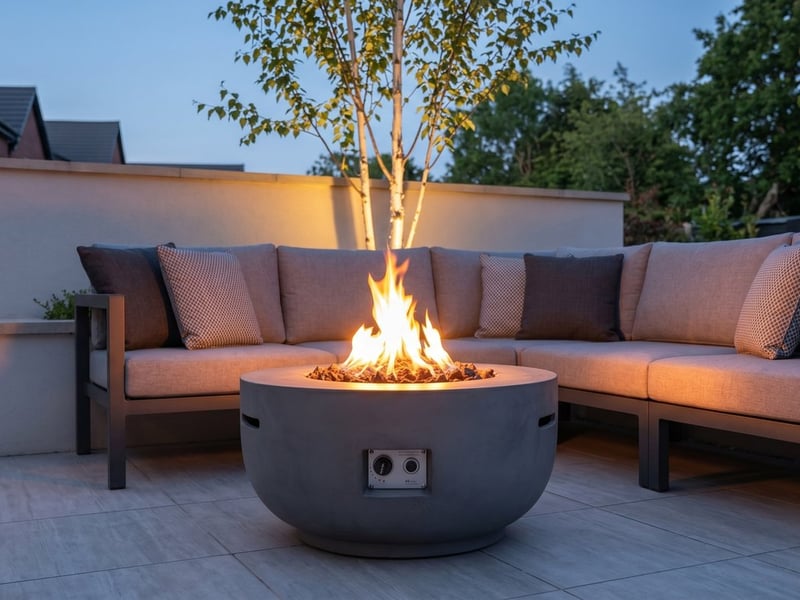
Shop the Happy Cocoon 91cm Round Bowl Grey Fire Pit →
Installer's note
We stock 15 fire pits across wood, charcoal and gas, and the question we get most is not "which fire pit" but "which fuel". People underestimate how different the running costs and the evenings feel. A gas pit lights in three seconds and costs less than a pint to run all evening. A log fire takes twenty minutes to settle and twice the money, and it is still what half our customers choose, because crackle and woodsmoke are the point. There is no wrong answer, but there is a wrong fuel for your situation, and it is usually wet wood.
The four fire pit fuels compared
Every fuel below is priced for a typical 2.5-hour evening, using June 2026 prices from UK suppliers: £8-10 for a 40-litre net of kiln-dried logs, £10 for an 8kg bag of lumpwood charcoal, £42 for a 13kg patio gas refill, and £5 per litre of bioethanol.
| Fuel | Cost per evening | Heat | Smoke | Cooking | Smoke Control Area |
|---|---|---|---|---|---|
| Kiln-dried hardwood | £6-9 | High, wide circle | Low if under 20% moisture | Good once embers form | Yes, on exempt appliances or "Ready to Burn" fuel |
| Charcoal | £4-6 | Steady, close range | Very low after lighting | Best of all four | Yes |
| Propane gas | £3-4 | Instant, adjustable | None | Not on lava-rock pits | Yes, fully exempt |
| Bioethanol | £10-15 | Lowest | None | No | Yes |
Two fuels to rule out entirely. Green or "seasoned" wood sold damp off a roadside trailer smokes heavily and coats your pit in tar. And never burn treated timber, pallets or household rubbish; it is illegal under waste rules and the fumes are genuinely toxic.
Wood: the full experience, at a price
Wood gives you everything people picture when they think of a fire pit: tall flames, crackle, scent, and enough radiated heat to warm a full circle of chairs. Expect to feed it a log or two every 20-30 minutes, and budget £6-9 for an evening from a 40-litre net.
The moisture number decides everything. Logs under 20% moisture light fast and burn clean. Logs above it waste half their energy boiling off water, and that wasted energy leaves as thick white smoke. Buy bags marked with the "Ready to Burn" logo, or check with a £15 moisture meter if you season your own. Our deep-sided guide to fire pit metals and heat retention explains why a heavier bowl keeps that wood heat radiating long after the flames drop.
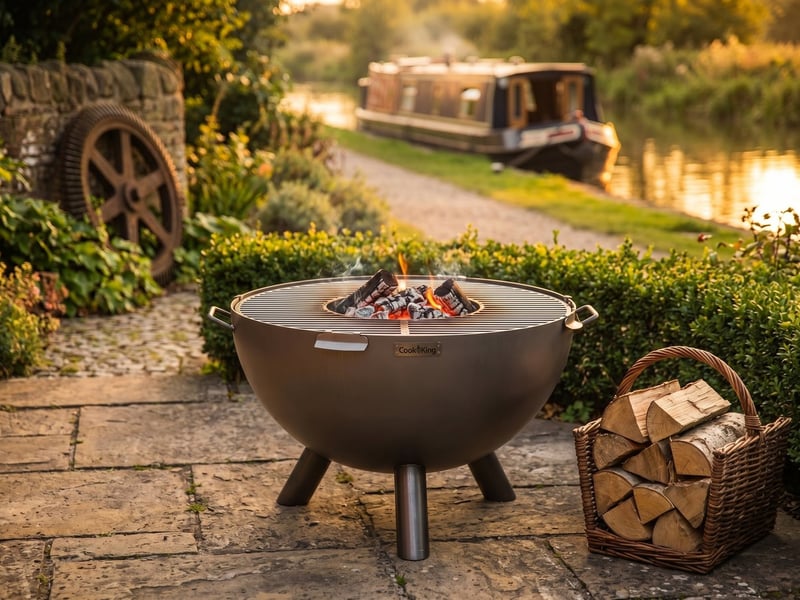
Shop the Cook King Kongo Deep Fire Bowl →
Charcoal: the cook's fuel
Charcoal is the right answer if food is the main event. Lumpwood charcoal reaches steady cooking embers in about 25 minutes, holds that heat for over an hour, and produces almost no smoke once it is going. Flames are short, so nothing licks up and blackens the food.
An 8kg bag costs about £10 and covers two cooking sessions on a 60cm bowl. Light it with a chimney starter or natural firelighters; petrol-based lighter fluid taints food and flares dangerously in an open bowl. The technique that works on our Kadai bowls: pile charcoal in the centre, light it, wait until the surface turns grey, then spread it flat and drop the grill on. Sausages over flames burn outside and stay raw inside. Sausages over grey embers cook through in 15 minutes.
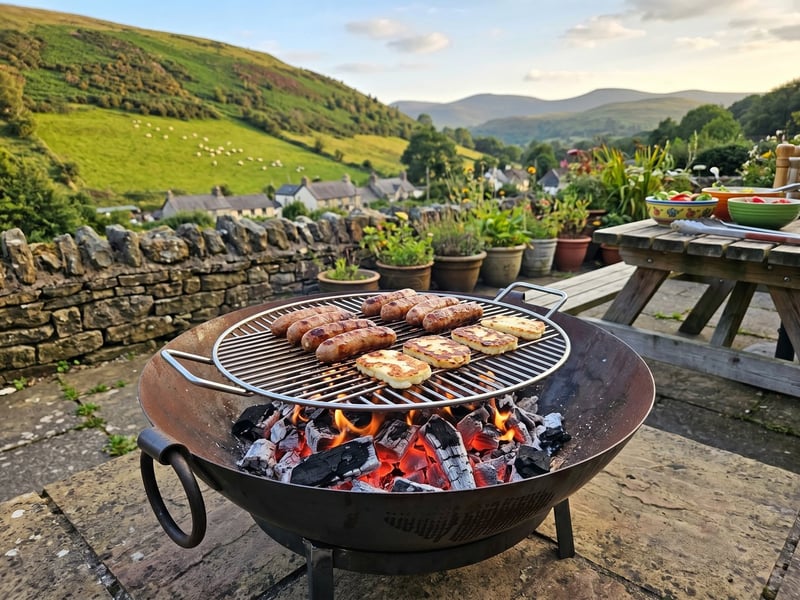
Shop the 60cm Kadai BBQ Fire Pit Bowl Set →
Gas: cheapest to run, instant to light
Gas fire pits surprise people twice. First the purchase price (£285-£879 in our range, against £89-£249 for wood burners). Then the running cost, which goes the other way. In April 2026 we ran a 61cm Happy Cocoon on a fresh 13kg propane bottle at mid flame and logged 11 evenings of about 2.5 hours before the bottle ran out. At £42 a refill, that is roughly £3.60 an evening, the cheapest of any fuel we tested.
You also get push-button ignition, adjustable flame height, no sparks, no ash, and no smoke at all, which makes gas the zero-hassle choice in a Smoke Control Area or close to neighbours. The bowls are cast composite with a concrete look, and each set ships with lava rocks, ceramic logs, regulator and a 2.5m hose. One rule from every manufacturer: the bottle stands beside the pit, never sealed inside the base.
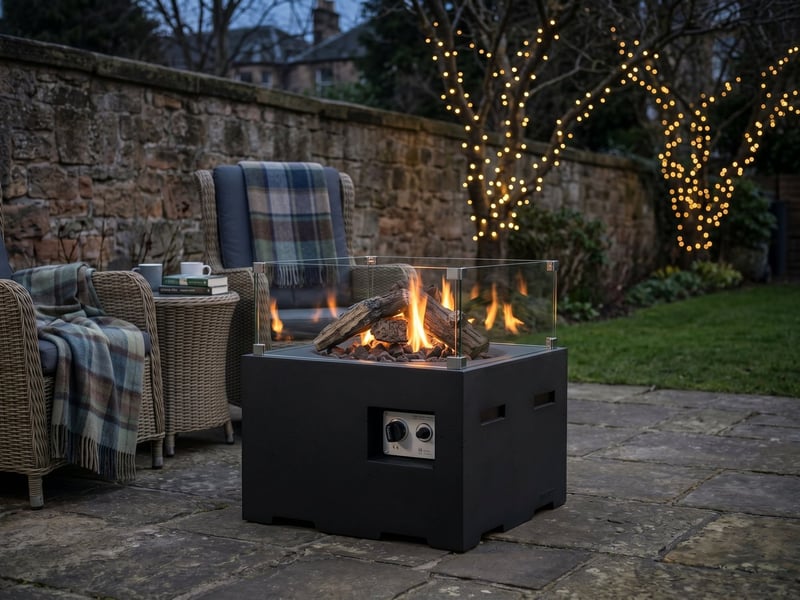
Shop the Happy Cocooning 60cm Black Gas Fire Pit →
Bioethanol: looks over warmth
Bioethanol burners give a clean, real flame with no flue, no smoke and no ash, which is why they took over indoor fireplaces. Outdoors they are the weakest option. A litre of fuel costs £4-6 and burns for roughly an hour, so an evening runs £10-15, and the heat output is the lowest of the four fuels, more candle-glow than campfire.
Wind troubles them too. An open garden breeze flattens and gutters the flame, so most outdoor bioethanol pieces work best in sheltered courtyards as a visual feature rather than a heat source. If you want flame purely as decoration on a calm patio they do the job. If you want a circle of warm people in October, choose wood or gas. We do not currently stock bioethanol burners, and that is a deliberate range decision.
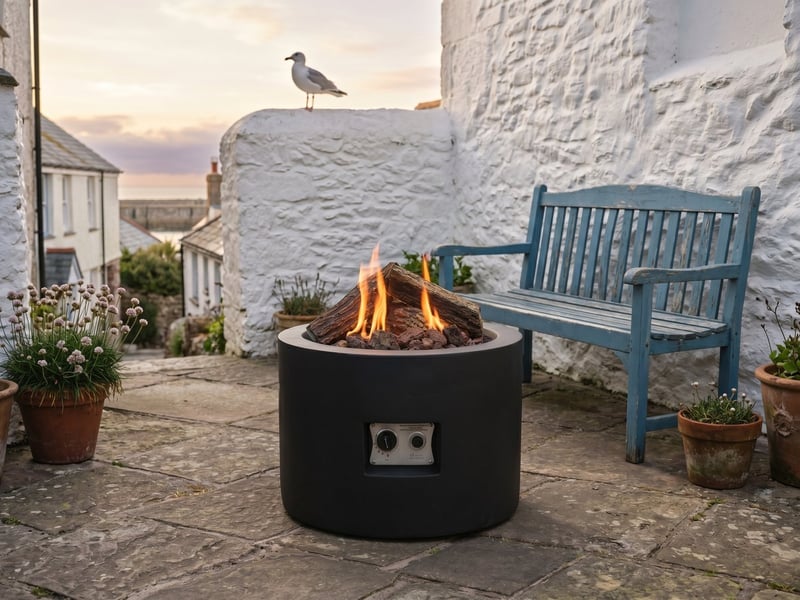
Shop the Happy Cocoon 61cm Round Black Fire Pit →
The safety rules that actually prevent accidents
Fire pit accidents in the UK follow the same few patterns every summer, and all of them are avoidable with the basics below.
- 3 metres of clearance from fences, sheds, hedges, parasols and anything overhanging, in every direction. Heat rises further than you think; a parasol 2 metres up can scorch.
- Hard, level base. Paving, gravel or bare earth. Never decking (embers), never directly on grass (kills it and tips easily), never artificial turf (melts).
- Check the wind before lighting. Above a stiff breeze, embers travel. A spark screen turns a windy evening from a risk into a non-event.
- Keep water or sand within reach. A bucket of sand smothers; a hose handles a spreading ember. Never pour water into a hot metal bowl to finish the night.
- One adult owns the fire. Children and dogs treat a fire pit as furniture. The bowl stays hot for 30-90 minutes after flames die.
- Let it die down, then leave the lid off. Cover a warm pit and you trap fumes and moisture; cap it only when stone cold.
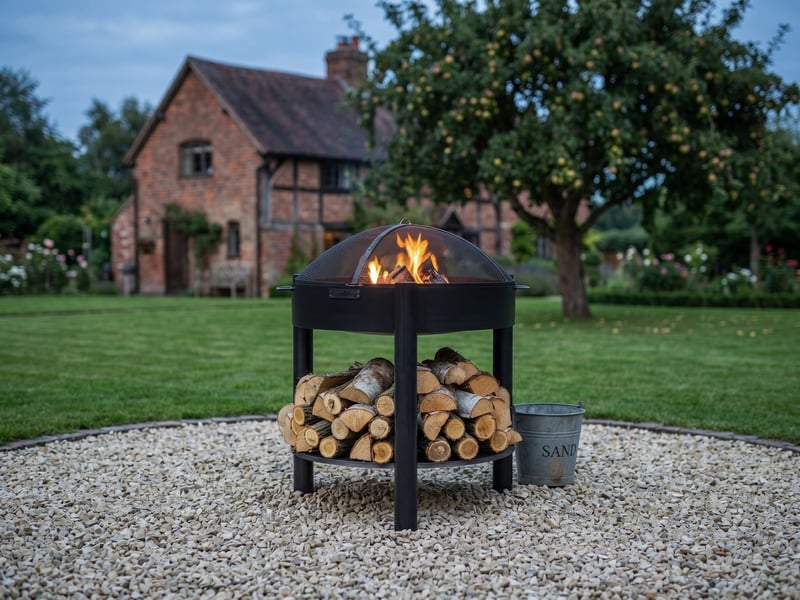
Shop the Cook King Montana 80cm High Fire Bowl →
What the law says: the short version
No UK law bans fire pits. There is no curfew hour, no permit, and no garden-size minimum. The two legal mechanisms that do apply are Smoke Control Areas and statutory nuisance.
Most cities and many towns are Smoke Control Areas. Within one, an open fire pit may only burn authorised smokeless fuel or wood certified "Ready to Burn" (under 20% moisture), and the simplest fully-exempt route is a gas pit, which produces no smoke at all. Fines for burning the wrong fuel reach £300. Separately, any garden anywhere can attract a statutory nuisance complaint if smoke regularly drifts into neighbouring homes, so even in open countryside, burn dry wood and pick still evenings. Our full guide to Smoke Control Areas and what is legal covers postcode checks, the 2021 reform and the fine structure in detail.
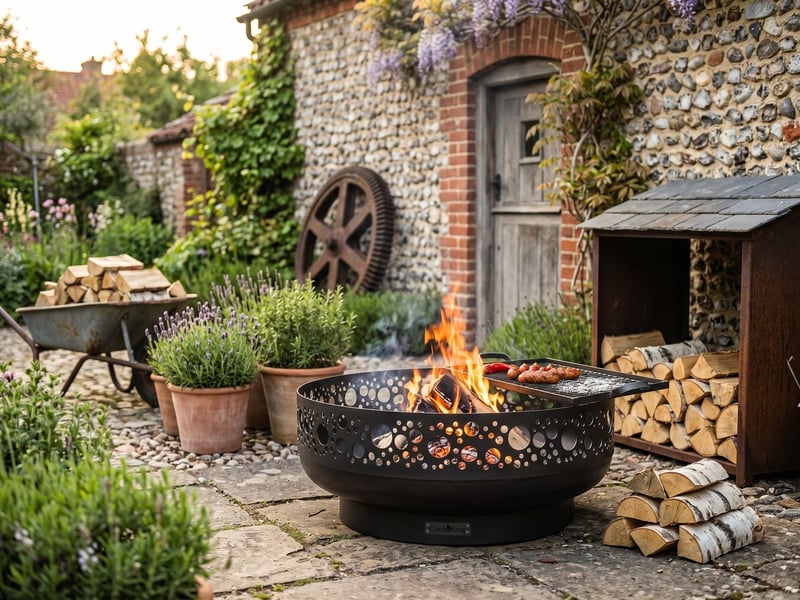
Shop the Cook King Boston 80cm Decorative Fire Bowl →
Matching fuel to garden: a decision table
| Your situation | Best fuel | Why |
|---|---|---|
| City garden, close neighbours | Gas | Zero smoke, zero sparks, off at the turn of a dial |
| Smoke Control Area, want real wood | "Ready to Burn" kiln-dried logs | Certified under 20% moisture keeps you legal and your neighbours friendly |
| Cooking most weekends | Charcoal | Steady embers, clean flavour, cheap per session |
| Large rural garden, long evenings | Kiln-dried hardwood | Maximum heat circle and atmosphere, no restrictions to worry about |
| Balcony or tiny courtyard | Small gas pit | Controllable flame, no embers in a confined space |
| Sheltered patio, decoration only | Bioethanol | Clean flame where heat does not matter and wind cannot reach |
If you are still deciding on the vessel itself, our fire pit materials buying guide compares steel, cast iron and corten bowl by bowl, and you can see every wood, charcoal and gas model we stock in our fire pit and fire bowl collection.
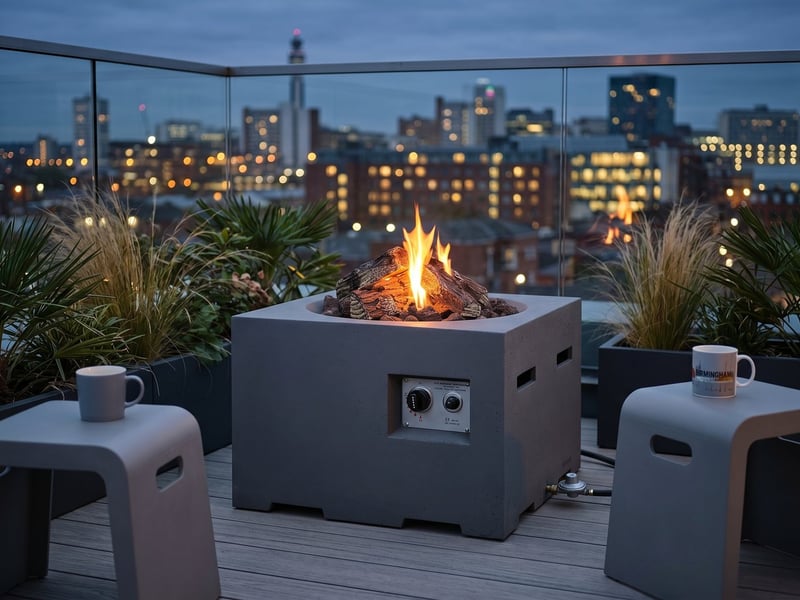
Shop the Happy Cocoon 60cm Small Square Grey Fire Pit →
Matt's tip: buy logs in September
Kiln-dried log prices move with the seasons more than people realise. The same crate that costs £165 delivered in December is £120-135 in September, because demand has not switched on yet. Buy a crate in early autumn, stack it off the ground under cover with airflow, and you burn all winter at last summer's price. Buying nets of logs one at a time from the petrol station is the most expensive way to run a fire pit in Britain.
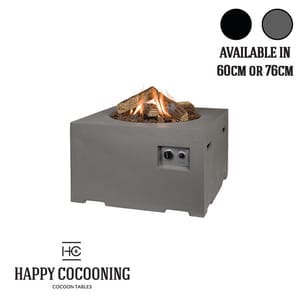
Matt's pick for entertaining
Best For: Hosts who want the fire lit before guests reach the patio
Why I Recommend It: The 76cm square Happy Cocoon seats six people around it comfortably and lights at the push of a button. At mid flame a 13kg bottle gives around ten evenings, there is no smoke to chase anyone indoors, and the concrete-look composite shrugs off frost so it stays out all year under its included cover. It is the pit I would buy for a family patio in a Smoke Control Area.
Price: £439
Frequently asked questions
What is the best fuel for a garden fire pit?
Kiln-dried hardwood for atmosphere, charcoal for cooking, gas for convenience and cost. Gas worked out cheapest in our testing at about £3.60 per 2.5-hour evening, against £6-9 for kiln-dried logs. Wood gives the most heat and the real campfire feel. Charcoal gives steady cooking embers with almost no smoke.
How much does it cost to run a gas fire pit?
Around £3-4 per evening on bottled propane. In our April 2026 test, a 13kg patio gas refill costing £42 ran a 61cm gas fire pit at mid flame for 11 evenings of roughly 2.5 hours. Turning the flame to full roughly halves the bottle life; low flame stretches it past 15 evenings.
Can I burn wood in a fire pit in a Smoke Control Area?
Yes, if the wood is certified "Ready to Burn" or you use authorised smokeless fuel. The certification guarantees under 20% moisture, which is the line between clean burning and the smoke that triggers £300 fines and neighbour complaints. A gas fire pit avoids the question entirely because it produces no smoke.
How far should a fire pit be from a fence?
At least 3 metres from fences, sheds, hedges and anything overhanging. Radiated heat scorches timber fence panels well before flames could ever reach them, and overhanging branches dry out and catch from rising heat. Measure the 3 metres in every direction, including upwards.
Can you put a fire pit on grass or decking?
No to decking, and grass only with a heat shield underneath. Embers burn holes in timber boards, and composite decking distorts from radiated heat alone. On grass, the pit kills a circle of lawn and sits less stable. Paving slabs or a gravel circle are the right base, and both cost little to lay.
What should I do with fire pit ashes?
Leave them 48 hours, then bin or compost cold wood ash. Ash holds enough heat to restart a fire a full day after the flames die, which is how most wheelie-bin fires start. Pure wood ash from untreated logs can go on the compost heap in thin layers. Charcoal ash with firelighter residue belongs in general waste.
Are garden fire pits legal in the UK?
Yes, in every part of the UK, with no permit or curfew. Two rules sit on top: in a Smoke Control Area you must burn smokeless fuel, certified dry wood or gas, and anywhere at all your smoke must not become a regular nuisance to neighbours. Burn dry fuel on still evenings and you will never meet either rule in practice.
Further reading
- Garden Dining Sets: How to Choose by Garden Size and Group
- Lounge Sets vs Corner Sofas: Which Garden Set Wins for British Weather?
- Bistro Sets for Small Gardens: 9 Best 2-Seater Patio Sets
- How to Protect Garden Ornaments in Winter: A Month-by-Month UK Guide
- Garden Furniture Buying Guide UK: Aluminium vs Rattan vs Polywood vs Steel
For the rest of the outdoor range, from statues to water features, browse our full collection of garden ornaments.
Matt W
Garden & Outdoor Specialist
Matt has spent over 16 years working hands-on with garden products across the UK. He tests materials in Staffordshire clay soil and hard water conditions, and writes from direct experience fitting, maintaining, and repairing everything from stone statues to cast iron furniture. His advice is based on what actually survives a British winter, not what looks good in a catalogue.