
Water Feature Not Working? Pump, Leaks and Splashing Fixed
Written by Matt W on 19th Jun 2026.
Key Takeaways
- A water feature that has stopped usually has a blocked impeller, a tripped fuse or a pump that lost its prime, not a failed motor
- Clear an airlock by tilting the running pump underwater until the trapped air burps out, then setting it level again
- Most water loss is evaporation: 5 to 10mm a day in summer is normal, so top up before assuming a leak
- To find a real leak, run the pump and mark the level, then switch off for 24 hours and compare the two drops
- Cut splashing by lowering the flow valve, reducing the fall height and laying pebbles where the water lands
- A replacement mains pump costs from £75, far less than a new feature, and fits most self-contained designs
A water feature that has stopped working is rarely broken for good. The usual faults are a blocked pump impeller, a tripped fuse or RCD, debris in the reservoir or an airlock in the pump body. Water loss is usually evaporation, around 5 to 10mm a day in warm weather, not a leak. Splashing comes from too much flow, too high a fall or wind. This guide walks through each fault in order, with the fix we use and the parts that solve it.
By Matt W | Garden Ornaments Specialist
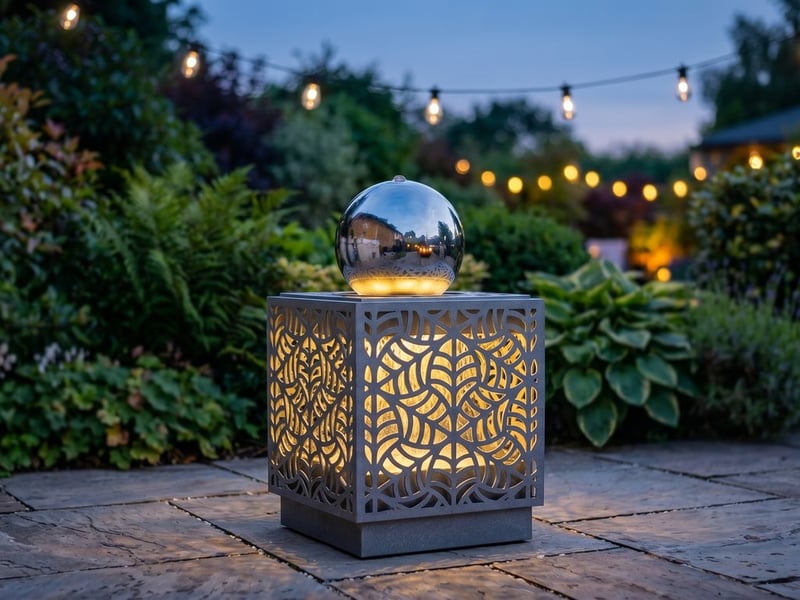
Shop the Gilded Cascade Water Feature →
Matt's Experience
Almost every "my water feature has died" call we take ends the same way. The pump is fine. It is choked with leaf litter, or the reservoir ran dry while the owner was away, or the fuse in the plug has quietly blown. Before you buy anything, switch off at the socket, lift the pump out and look at the impeller. A blade of grass wrapped around it will stop a healthy pump dead. I have rescued features the owner had already written off, with nothing more than a bowl of warm water and ten minutes of cleaning.
Why has my water feature stopped working?
A water feature stops working for one of five reasons: no power, a blown fuse, a blocked pump, an airlock, or a dry reservoir. Work through them in that order. Check the socket and any RCD first, then the fuse in the plug, which is the single most common cause and a two-minute swap. If power is reaching the pump and it still sits silent, the fault is almost always inside the pump itself.
Lift the pump out and remove the front cover. Clear any debris from around the impeller, the small magnetic rotor that pushes the water. Hair, algae and leaf fragments jam it constantly. Spin it by hand to check it turns freely, rinse the cover and refit it. If the reservoir was low, a pump can run dry, overheat and cut out on its thermal trip, so it pays to keep the water topped up. Our guide to stopping algae and smells in a water feature covers the gunk that causes most of these blockages.
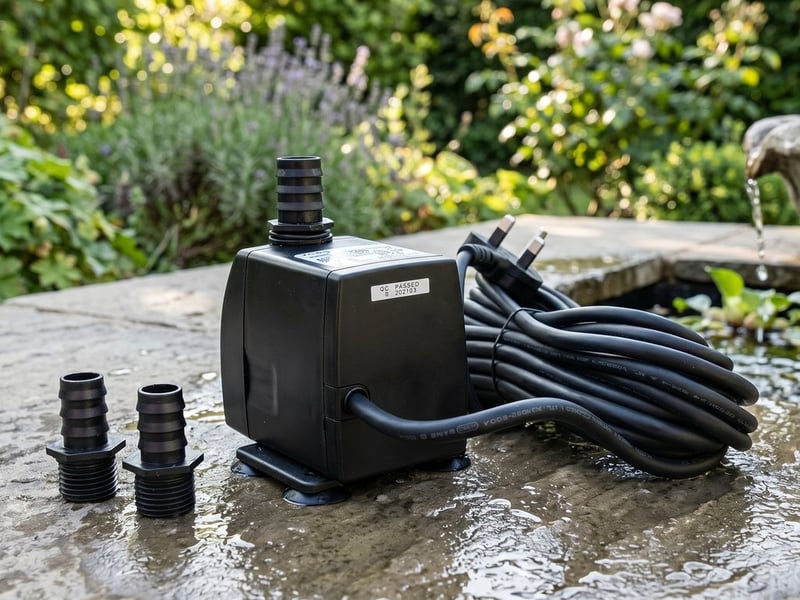
Shop the 2500 L/H Replacement Pump →
How do I prime a water feature pump and clear an airlock?
An airlock is trapped air that stops the pump moving water, even though the motor hums. It is the classic fault after you refill a feature or restart it in spring. The pump runs, but nothing comes out of the spout. The fix takes seconds once you know it.
With the pump running and fully submerged, tilt it onto its side underwater. You will see a stream of bubbles burp out of the outlet as the trapped air escapes and water floods in. Set the pump back level and the flow should return at once. If it does not, the impeller chamber may be blocked, so clean it as above. Always keep the pump under the water line: a pump sucking air at the surface will never prime and will wear out fast. The team that supplies our replacement pumps and parts rates most airlocks as a 30-second fix, not a fault.
Never run a pump dry
A submersible pump is cooled by the water around it. Run it in an empty or near-empty reservoir, even for a few minutes, and the motor overheats. Some cut out and recover; many do not. If your feature loses water fast in hot weather, fit it where you will notice the level, and never switch it on without checking the reservoir first. This one habit prevents most dead pumps we see.
Why is my water feature losing water?
Most water loss is evaporation, not a leak. A feature with moving water and a large surface can lose 5 to 10mm of depth a day in summer, more in wind and full sun. That is normal and simply needs topping up. Before you hunt for a leak, rule out evaporation, splash-out and wicking, where water creeps up a porous stone or a stray plant leaf and drips over the edge.
To test for a real leak, fill the reservoir and run the pump for an hour, then mark the water level. Switch the pump off and leave it 24 hours. If the level holds with the pump off but drops with it on, the leak is in the pipework or the spout alignment, not the tank. If it drops with the pump off too, the reservoir or liner is leaking. Check our water feature running costs guide for how top-up frequency affects the small print of ownership.

Shop the Ancient Fern Water Feature →
How do I stop a water feature splashing too much?
Reduce splashing by lowering the flow, dropping the fall height and managing where the water lands. Start at the pump: most have a flow valve or you can fit an inline tap, so turn it down until the water sheets rather than jets. A gentler flow looks better and loses far less water over the edge.
Next, look at the height the water falls from. The higher the drop, the wider it splashes, so shorten the spout or lower the top bowl if the design allows. Finally, lay smooth pebbles in the landing zone to break the impact and stop water bouncing out, and shift the feature out of the worst wind, which carries spray sideways. A feature that loses water to splashing is also pushing up your top-up and safety workload, so it is worth getting right.
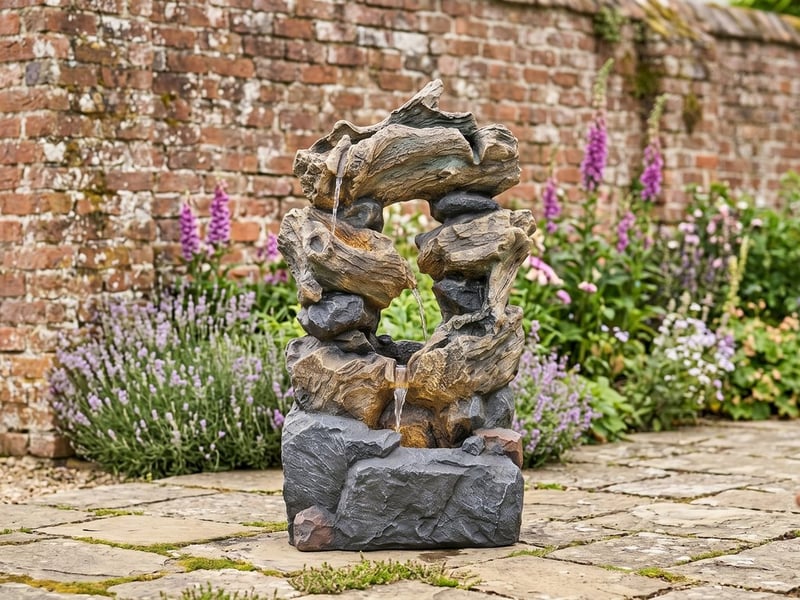
Shop the Forest Springs Water Feature →
Why won't my solar water feature run?
A solar water feature needs direct, bright sun on the panel to run, and most stop the moment a cloud passes or shade falls across the panel. This is normal for panel-only models with no battery. Before assuming a fault, check the panel is in full sun, clean and angled towards it, with no leaves or bird mess dimming the cells.
If the pump still will not run in bright sun, lift it and clear the impeller as with any pump, then check the connector between panel and pump is seated and dry. Models with a battery or timer keep running through cloud and into the evening, which is why they cost more. For how solar features behave in real UK light, our guide to self-contained water features sets out what to expect.
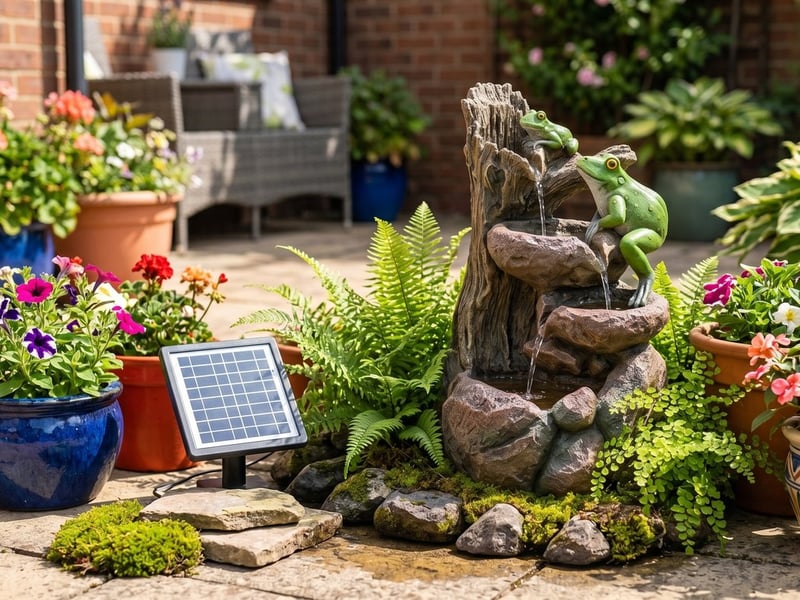
Shop the Froggy Falls Solar Feature →
Which water feature and pump should I buy if mine keeps failing?
If you are forever nursing an old feature, a fresh pump or a sealed self-contained design ends the cycle. A new mains pump from £75 fixes most features where the body is sound but the pump has worn out. Match the flow rate to the old one: too weak and the spout dribbles, too strong and it splashes. For a fault-free start, a self-contained feature arrives with the right pump already fitted and tuned.
The table below sets out the features and pumps we sell most, from a budget solar frog to a plug-and-play stone column. Prices are live and frost-proof builds are noted, so you can match the fix to your garden and budget. Browse the full range of water features for the rest.
| Product | Type | Power | Price | Best for |
|---|---|---|---|---|
| 2500 L/H Pump | Replacement pump | Mains, 20W | £75 | Reviving a sound feature |
| Froggy Falls | Solar feature | Solar, no mains | £175 | No-electrics sunny spots |
| Ancient Fern | Self-contained | Mains, LED | £225 | Compact shaded courtyards |
| Forest Springs | Solar + battery | Solar, 4 to 6hr backup | £329 | Solar that runs into evening |
| Gilded Cascade | Self-contained, LED | Mains, 6.6W | £429 | Modern statement features |
| Bella Water Feature | Self-contained | Mains, 25W | £649 | Matt's Pick - reliable plug-and-play |
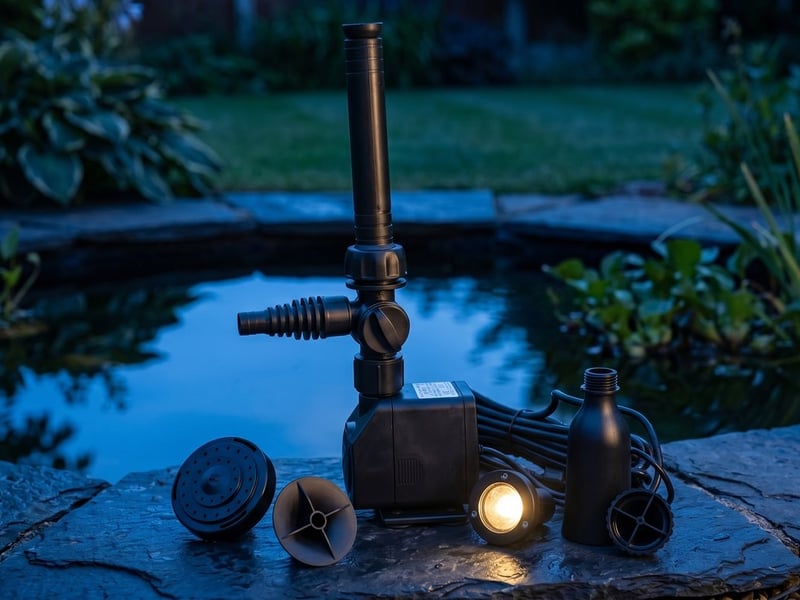
Shop the Pump with Spot Light →
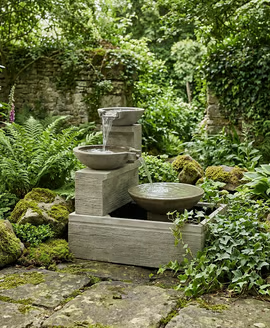
Matt's Pick for a fault-free feature
Best For: Anyone tired of reviving an old feature who wants one that simply works
Why I Recommend It: The Bella arrives self-contained with a 25W low-voltage pump already fitted and tuned, so there is no priming, no matching parts and no guesswork. At 1000mm of composite stone it has real presence, and the sealed reservoir keeps splash and evaporation low. It is the feature I point people to when they have had enough of fixing.
Price: £649
Matt's Tip: Spring Restart
The best time to dodge faults is the spring restart. Before you switch the pump on for the first time, lift it out, strip the cover and clean the impeller, top the reservoir to the full mark, and only then power up. Nine out of ten spring faults are an airlock or a winter's worth of debris, both sorted in five minutes if you do it before, not after, the pump struggles. A quick descale of the impeller in white vinegar each spring keeps the flow strong for years.
How do I get to the pump in a pebble-pool or reservoir feature?
On a pebble-pool or sump feature, the pump sits in a buried reservoir under a steel grid and a layer of cobbles, so access means lifting the grid. Good reservoirs include an inspection hatch in the grid for exactly this, so you can reach the pump without clearing every stone. Scoop the cobbles off the hatch, lift it, and the pump is right there on its base.
This is why grid quality matters when you build a feature: a flimsy grid sags, traps the pump and makes every clean a chore. A galvanised steel grid with a hatch turns a 30-minute job into a 5-minute one. If you are planning a new reservoir-fed feature, our guide to choosing a garden water feature covers reservoir sizing and pump matching in full.
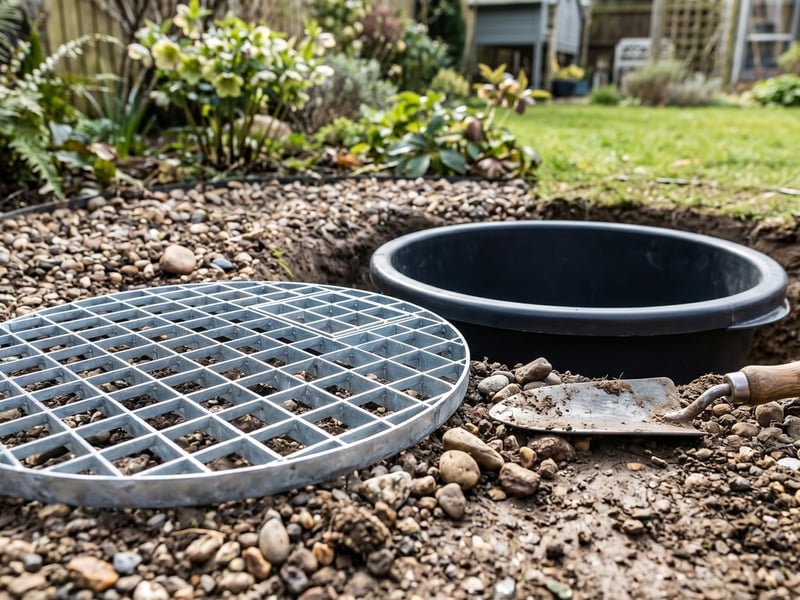
Shop the Reservoir with Grid →
We sell water features because moving water changes a garden. We sell pumps, reservoirs and grids because features need looking after. The honest truth is that most "broken" features are five minutes from running again. We stock the parts that fix them, and the sealed designs that rarely fail. You spend your time enjoying the sound, not chasing the fault.
- Matt W, Garden Ornaments
Our guide to winter care for water features explains how to lay a feature up for the cold months. Done well, it survives the frost and starts cleanly in spring. You can also browse the wider range of garden ornaments to set your feature off.
Frequently asked questions
Why has my water feature stopped working?
The pump has usually lost power, blocked or lost its prime. Check the socket, RCD and plug fuse first, then lift the pump and clear debris from the impeller. A dry reservoir can trip the pump's thermal cut-out, so keep the water topped up.
Why is my water feature losing water so fast?
Most loss is evaporation, around 5 to 10mm a day in summer. Splash-out and wind add to it. Top up first. To find a real leak, mark the level running, switch off for 24 hours, then compare the drops.
How do I prime a water feature pump?
Tilt the running, submerged pump on its side to burp out trapped air. Bubbles will escape from the outlet and water floods in. Set it level again and the flow returns. Always keep the pump fully under the water line.
Why is my water feature splashing everywhere?
The flow is too high, the fall too tall, or wind is carrying spray. Turn down the flow valve, lower the spout or top bowl, and lay pebbles in the landing zone. Move the feature out of strong wind to cut sideways spray.
Can I leave a water feature pump running all the time?
Yes, but never let the reservoir run dry. Mains pumps are built to run continuously and use little power. A low reservoir can overheat the pump. Top up regularly in hot weather, or fit a feature with a larger sump.
Why won't my solar water feature work?
Panel-only solar pumps need direct, bright sun and stop in shade or cloud. Clean and angle the panel, and check the connector. Models with a battery or timer keep running through cloud and into the evening.
How often should I clean a water feature pump?
Rinse the impeller every few weeks in the season and descale it each spring. A quick soak in white vinegar clears limescale and keeps the flow strong. Clearing debris regularly is the single best way to avoid a dead pump.
Related articles
- The 2026 UK Water Feature Buyer's Guide: Stone, Solar, Corten and More
- Garden Fountains UK: Stone, Tiered, Pedestal & Wall Designs Compared
- Best Solar Water Features UK: 12 Picks Tested with Honest Runtime Data
- Small Water Features: 9 Picks for Balconies, Courtyards & Tiny Gardens
- Patio Ponds: Container Water Gardens in 6 Steps