
Winter Care for Stone, Steel and Resin Water Features
Written by Matt W on 6th Jun 2026.
Winter damage to a water feature is nearly always the same fault: water left in the pump, reservoir or carved channels freezes, expands by about nine per cent, and cracks the feature from inside. The fix differs by material. Drain and cover natural stone, drain steel and corten but leave the rust patina alone, and move lightweight resin features under cover. Every material shares one job: drain the pump and store it frost-free from November to March.
Matt W | Garden Ornament Specialist
Key Takeaways
- ✔ Frost damage comes from trapped water, not the cold itself: water expands about 9% as it freezes
- ✔ Stone: drain fully, lift off the ground, and cover or fleece against repeated freeze-thaw
- ✔ Steel and corten: drain the reservoir, but leave the rust patina, which is doing its job
- ✔ Resin: lightweight at 6–7kg, so move it to a shed, porch or garage for winter
- ✔ Every material: lift the pump, rinse it, and store it submerged in a bucket of water indoors
- ✔ Do this in November, before the first hard frost, not after

A stone feature drained and switched off for winter. Frost on the outside is fine; water trapped inside is what cracks stone. Browse our water features.
A water feature survives a UK winter if you give it ten minutes of the right care, and fails if you ignore it. The mistake people make is treating every feature the same. A poly resin fountain wants moving indoors; a heavy stone millstone cannot be lifted, so it has to be drained and covered in place; a corten sphere needs draining but nothing else, because the rust people worry about is the protective finish. This guide gives the right job for each material, then the one step they all share. For the wider ornament picture, our month-by-month winter protection guide covers statues and pots too.
What we see every January
The water-feature calls we get most in winter fall into two camps, and both are avoidable. The first is cracked natural stone: a sandstone ball or a carved sphere splits along a hidden seam because the owner left water sitting in the drilled centre, and it froze. The crack is almost never the surface; it starts inside, where water pooled and could not drain. Once stone cracks from a freeze, it cannot be repaired invisibly.
The second is a panicked call about corten steel, where the owner thinks their feature is rusting away. It is not. Corten is weathering steel; the rust is a sealed surface layer that stops deeper corrosion. We tell every corten owner the same thing: drain it so the reservoir does not freeze, then leave the patina alone. The metal is meant to look like that, and it will outlast a painted finish.
Why water features crack in winter
Cold air alone does not break a water feature. Water does. When water freezes it expands by about nine per cent, and that expansion has to go somewhere. Trapped in a pump housing, a reservoir, or the drilled core of a stone sphere, it pushes outward with enough force to split stone, burst a plastic reservoir or crack a pump body.
The danger is worst during freeze-thaw cycles, which the UK has in abundance. Water seeps into a tiny pore or seam by day, freezes and widens it overnight, then thaws and seeps deeper. Repeat that for a fortnight and a hairline becomes a crack. This is why draining matters more than any cover: no trapped water means nothing to expand.
Winter care for stone water features
Natural stone is the most frost-vulnerable material and the hardest to move, so it needs the most thorough shutdown. Granite and basalt are dense and cope better; sandstone and limestone are porous and most at risk. The job is to remove every drop of water it can hold, then slow the freeze-thaw at the surface.
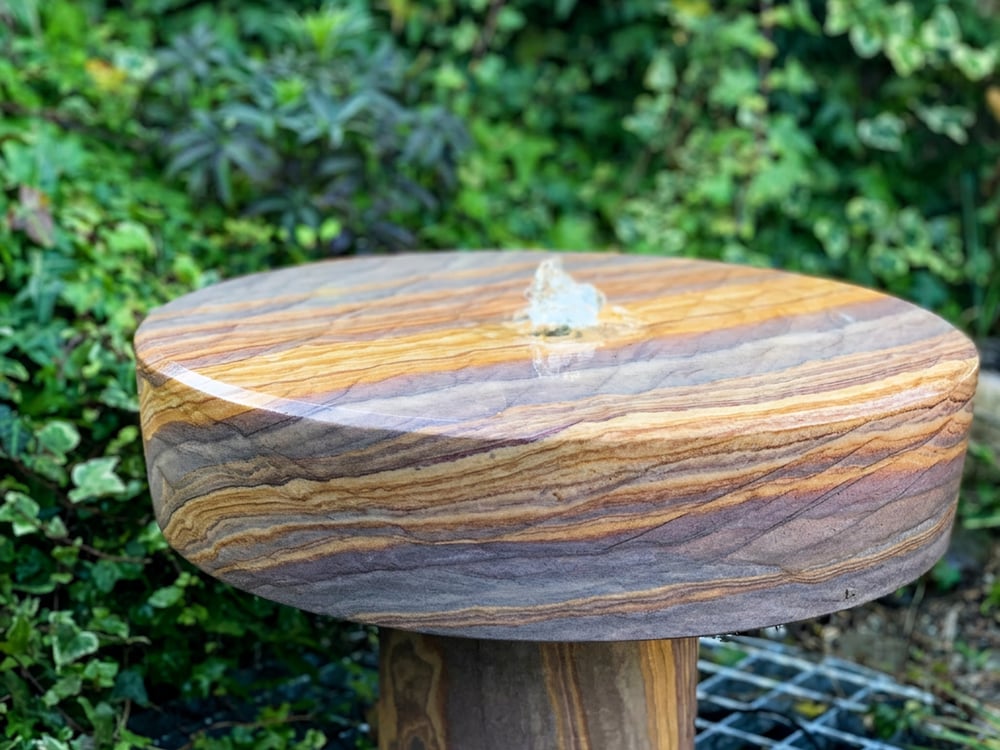
Porous sandstone like this millstone must be drained fully, as water left in the core can split it. Shop the Rainbow Sandstone Millstone →
- Drain it fully. Empty the reservoir and tip or siphon any water from the drilled centre or carved channels. This is the single most important step.
- Lift it off the ground. Stand the base on pot feet or battens so meltwater drains away rather than freezing underneath and lifting the stone.
- Cover or fleece it. A breathable cover or a double layer of horticultural fleece slows freeze-thaw at the surface. Avoid sealed plastic, which traps damp.
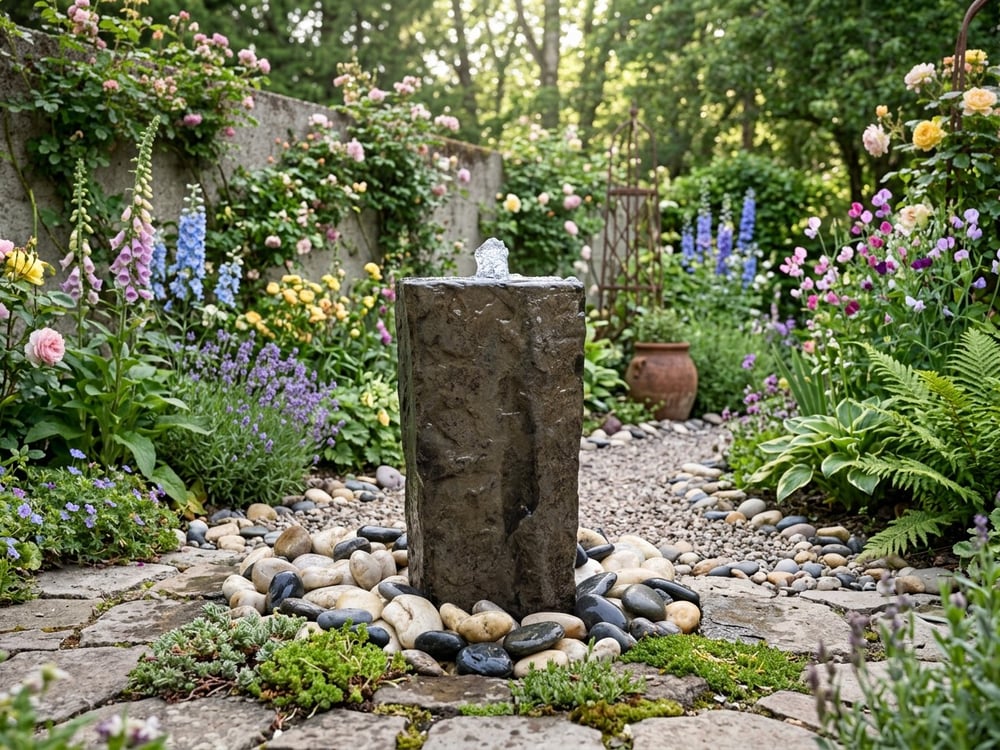
Dense basalt copes with frost better than sandstone, but a drilled column still holds water in its core, so drain it. Shop the Drilled Basalt Column →
Which stone you have matters. Our guide to granite vs sandstone vs slate vs basalt explains how each behaves outdoors, and why a porous stone needs more winter care than a dense one.
Winter care for steel and corten water features
Steel features split into two jobs. Powder-coated or stainless steel needs draining and a wipe-dry to protect the finish. Corten, the weathering steel behind the rust-brown sphere trend, needs only draining, because the patina is the protection. The worry we hear most is that corten is corroding; it is not. The stable rust layer seals the surface and stops deeper attack.
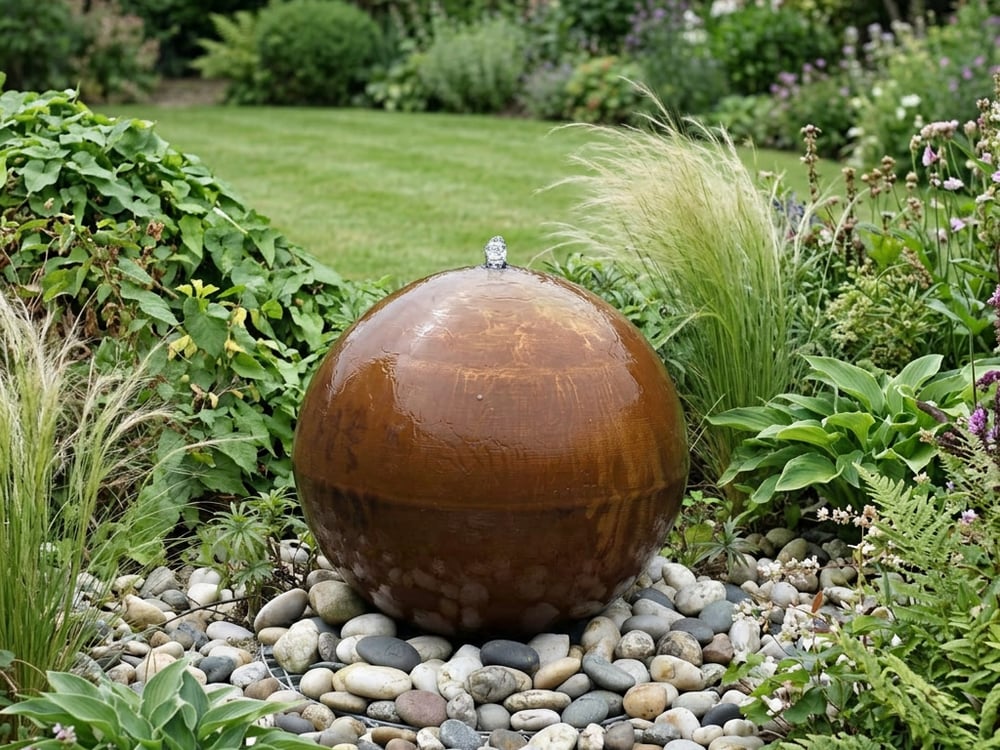
Corten's rust-brown patina is the finish, not damage. Drain the reservoir and leave the surface as it is. Shop the Corten Steel Sphere →
- Drain the reservoir. The shell sheds water, but the sump below holds it. Empty it so it cannot freeze and crack.
- Leave corten as it is. Do not sand, paint or seal the patina. A run-off stain on paving beneath is normal in the first year and eases as the surface stabilises.
- Wipe coated or stainless steel dry. For painted or stainless finishes, dry the surface and touch up any chips to keep water out of the steel below.
The 40cm corten sphere is light enough to move under cover if you prefer, while the larger 80cm version at £925 is better drained and left in place. For the full modern-steel range, see our guide to corten, sphere and monolith designs.
Winter care for resin water features
Poly resin is the easiest material to protect, because it is light enough to move. A resin feature weighs a fraction of the stone it imitates, so the best winter care is simply to bring it under cover. Resin shrugs off cold, but water frozen inside a hollow resin body can still crack it, and the built-in LED and pump prefer to be dry and frost-free.

Poly resin features like the Ancient Fern weigh only a few kilograms, so the simplest winter care is to move them under cover. Shop the Ancient Fern →
- Empty and move it. Drain the reservoir, then carry the feature into a shed, garage or porch. At 6–7kg, most resin fountains lift easily.
- If it must stay out, drain and cover. A feature too awkward to move should be emptied fully and covered, with the pump removed.
- Store the LED dry. Disconnect the built-in light and keep the electrics frost-free over winter.
Resin self-contained features such as the Fairyland at £215 and the Bathing Otters at £239 are designed to lift and store. If you are unsure how the hidden pump and reservoir come apart, our guide to self-contained water features explained walks through every part.
The one job every material shares: the pump
Whatever the feature is made of, the pump is the part most likely to die over winter. A pump left in a frozen reservoir cracks its housing or seizes its impeller, and a dry pump left in a cold shed perishes its seals. The fix is the same for stone, steel and resin.
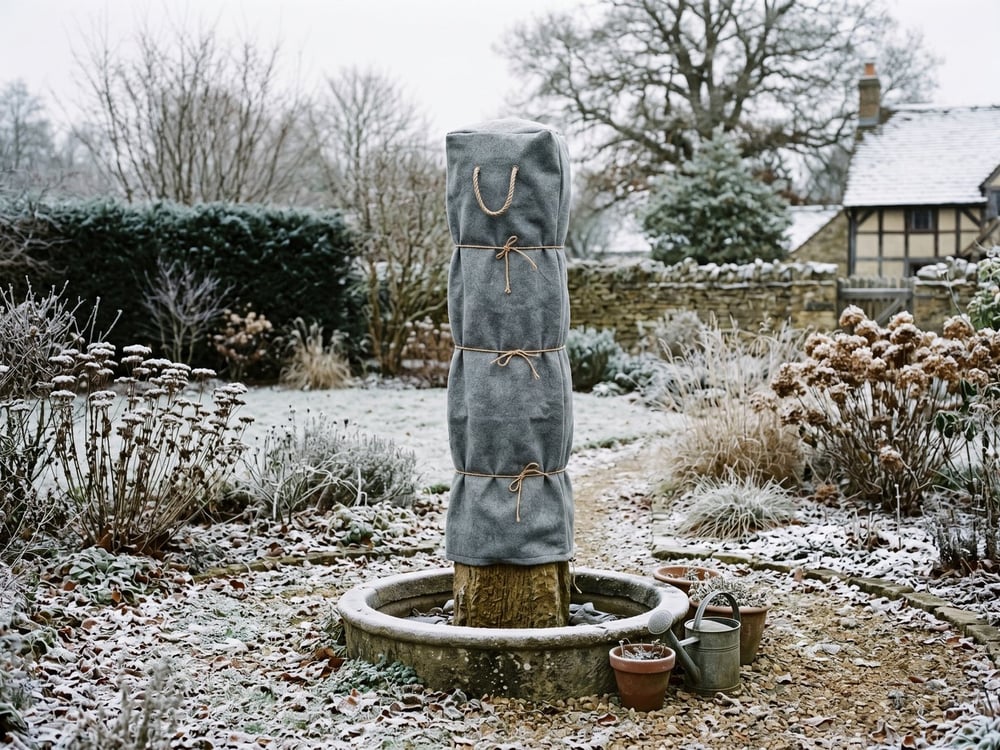
A heavy feature that cannot be moved is drained and wrapped in a breathable cover, with the pump lifted out and stored indoors. Browse the full water feature range →
- Lift the pump out of the reservoir once the feature is drained.
- Rinse the impeller under a tap to clear grit and algae that would set hard over winter.
- Store it submerged in a bucket of water in a frost-free shed or garage. Keeping the seals wet stops them drying out and cracking.
Winter care by material at a glance
| Material | Frost risk | Winter job | Move indoors? |
|---|---|---|---|
| Sandstone / limestone | High (porous) | Drain fully, raise off ground, cover or fleece | Too heavy; protect in place |
| Granite / basalt | Medium (dense) | Drain core and reservoir, raise off ground | Too heavy; protect in place |
| Corten steel | Low (shell), drain sump | Drain only; leave the patina | 40cm yes, 80cm no |
| Coated / stainless steel | Low | Drain, wipe dry, touch up chips | Optional |
| Poly resin | Low–medium (hollow) | Drain and move under cover | Yes, 6–7kg lifts easily |
Shutting a feature down for winter, step by step
- Switch off and unplug at the first sign of a hard frost forecast, usually November.
- Drain every reservoir, channel and drilled core until no water remains.
- Lift, rinse and store the pump submerged in a bucket indoors.
- Move resin and small features to a shed, garage or porch.
- Raise heavy stone off the ground on pot feet and cover with breathable fleece.
- Leave corten to weather, drained but otherwise untouched.
Matt's pick: the most winter-tolerant feature

|
Matt's pick for low winter fussFeature: Corten Steel Sphere 40cm Best for: Anyone who wants water with the least winter work Why I recommend it: Corten is the most forgiving material we sell over winter. Drain the sump and you are done: no fleece, no repainting, no worry about the finish, because the patina is the finish. The 1.5mm shell sheds water and the 40cm size is light enough to tuck in a shed if a brutal freeze is coming. It is the feature I point people to when they say they forget to winterise. Price: £419 |
Browse water features built to last
From hand-carved stone to weathering corten and lightweight resin, every feature comes with free UK mainland delivery, a matched pump and 30-day returns.
Browse All Water FeaturesFrequently asked questions
Do I need to drain a water feature in winter?
Yes, draining is the most important winter job for every material. Water left in a pump, reservoir or the drilled core of a stone feature freezes, expands by about nine per cent, and cracks the feature from inside. Empty every reservoir and channel, then lift out and store the pump. No trapped water means nothing to expand and split.
Can I leave a stone water feature out all winter?
Yes, if you drain it fully, raise it off the ground and cover it. Most stone features are too heavy to move, so protect them in place. Empty the reservoir and any carved channels, stand the base on pot feet so meltwater drains away, and cover with breathable fleece. Porous sandstone needs this more than dense granite or basalt.
Will a corten steel water feature rust away in winter?
No, the rust on corten is a protective patina, not corrosion. Corten is weathering steel; its stable rust layer seals the surface and stops deeper attack. Over winter you only need to drain the reservoir so it does not freeze. Do not sand, paint or seal the surface, as the patina is the intended finish and will outlast a painted one.
How do I look after a resin water feature in winter?
Drain it and move it under cover, because resin is light enough to lift. Most poly resin fountains weigh only 6 to 7kg, so carry them into a shed, garage or porch for winter. Empty the reservoir first, remove the pump, and store the built-in LED and electrics somewhere dry and frost-free.
What should I do with the pump over winter?
Lift it out, rinse the impeller, and store it submerged in a bucket of water indoors. A pump left in a frozen reservoir can crack, while one stored bone dry can perish its seals. Keeping it in water in a frost-free shed protects both the housing and the seals until spring.
When should I winterise my water feature?
Do it in November, before the first hard frost. The damage happens on the first freeze, so waiting until you see ice is too late. Shut the feature down, drain it and store the pump as soon as frost is forecast, and leave it off until the risk of freezing has passed in spring.
Related guides
- How to protect garden ornaments in winter — a month-by-month UK guide for statues, pots and more.
- Why stone garden ornaments get better with age — how weathering and patina add character.
- Water feature running costs UK — real numbers on pump wattage and what a feature adds to your bill.
- The 2026 UK water feature buyer's guide — stone, solar, corten and more, with 12 picks.
- Browse our full range of garden ornaments to pair with your water feature.