
How to Stop Algae, Smells and Insects in a Garden Water Feature
Written by Matt W on 15th Jun 2026.
Algae, smells and insects in a garden water feature all come from the same thing: still, sun-warmed water with debris rotting in it. Keep the pump running so the water keeps moving, clear leaves and debris before they sink, shade the water from full midday sun, and use an algae treatment matched to your feature's material. Do those four things and the water stays clear, odour-free and mosquito-free through summer.
Matt W | Garden Ornament Specialist
Key Takeaways
- ✔ Moving water is the single biggest defence: algae and mosquito larvae both need still water to take hold.
- ✔ Run the pump continuously in summer, including overnight, rather than switching it off.
- ✔ Smells come from leaves and debris rotting in the reservoir, not from the water itself. Clear them weekly.
- ✔ Mosquitoes breed only in standing water and take about a week to hatch, so flowing water breaks the cycle.
- ✔ Shade matters: a feature in full all-day sun greens up far faster than one in part shade.
- ✔ Match the cleaner and treatment to the material. Never use bleach or acid on natural stone.
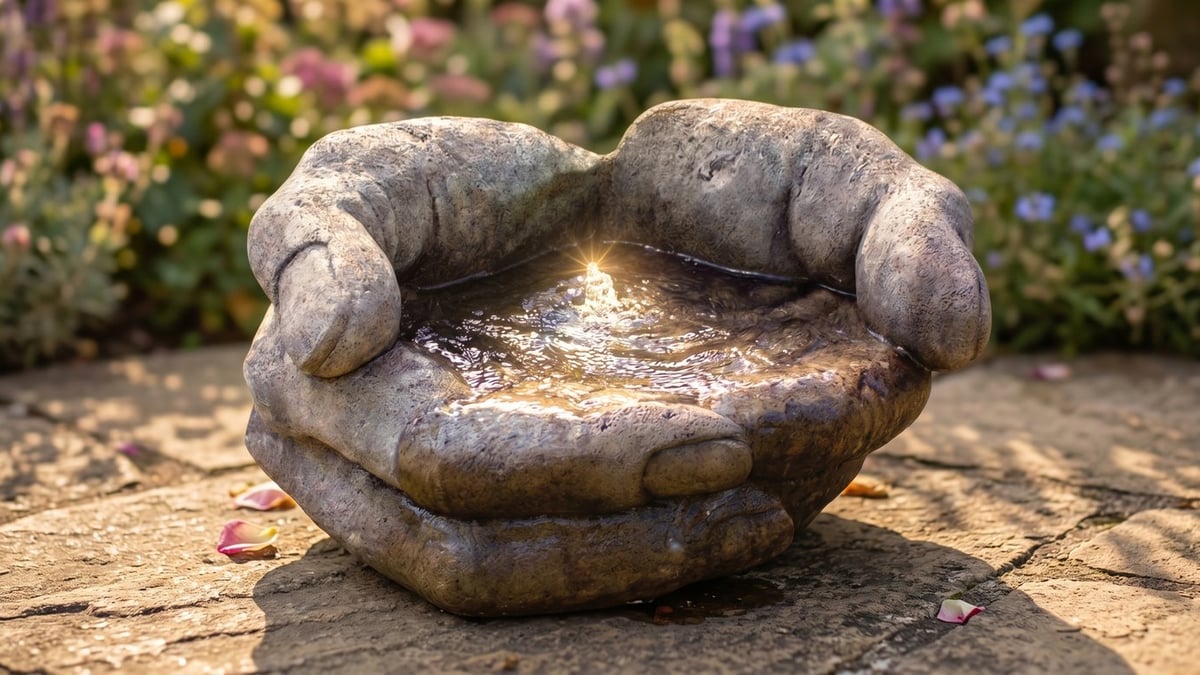
Clear water is the result of moving water and a clean reservoir, not luck. Browse our water features.
A water feature that has turned pea-green, started to smell, or grown a wriggle of mosquito larvae has not failed. It has simply been left in the conditions algae and insects love. All three problems trace back to one state: water sitting still, warmed by the sun, with organic matter breaking down in it. Fix the conditions and you fix all three at once, without dumping chemicals in every week. This guide gives the four things that keep water clear, a cleaning routine, and a treatment table by material. For green growth on the stone itself rather than the water, our guide to how to clean stone garden ornaments covers moss and stains.
What we see every summer
The green-water calls we get from June onwards almost always share two things. The feature has been switched off at night to save electricity, and it sits in full sun with a tree or shrub dropping debris into it. Both are fixable in minutes. People reach for algaecide first, but a bottle of treatment in still, sunlit, leaf-fed water is a losing battle: it clears for a week, then greens again. We tell owners to fix the conditions first, treat second. The features that stay glass-clear all summer are the ones whose pumps never stop and whose reservoirs get a quick scoop-out every week or two. Treatment then becomes a top-up, not a rescue.
Why water features turn green, smell or breed insects
Algae are tiny plants, and like any plant they need light, warmth and nutrients. A water feature in full sun gives them light and warmth; leaves, pollen and dust give them nutrients; and still water lets them settle and multiply. Bad smells come from the same debris breaking down without oxygen in the bottom of the reservoir, which produces the rotten-egg odour of anaerobic decay. Mosquitoes need only a patch of standing water to lay eggs, which hatch in about a week. Every one of these problems needs the water to be still. Keep it moving and clean, and none of them get a foothold.
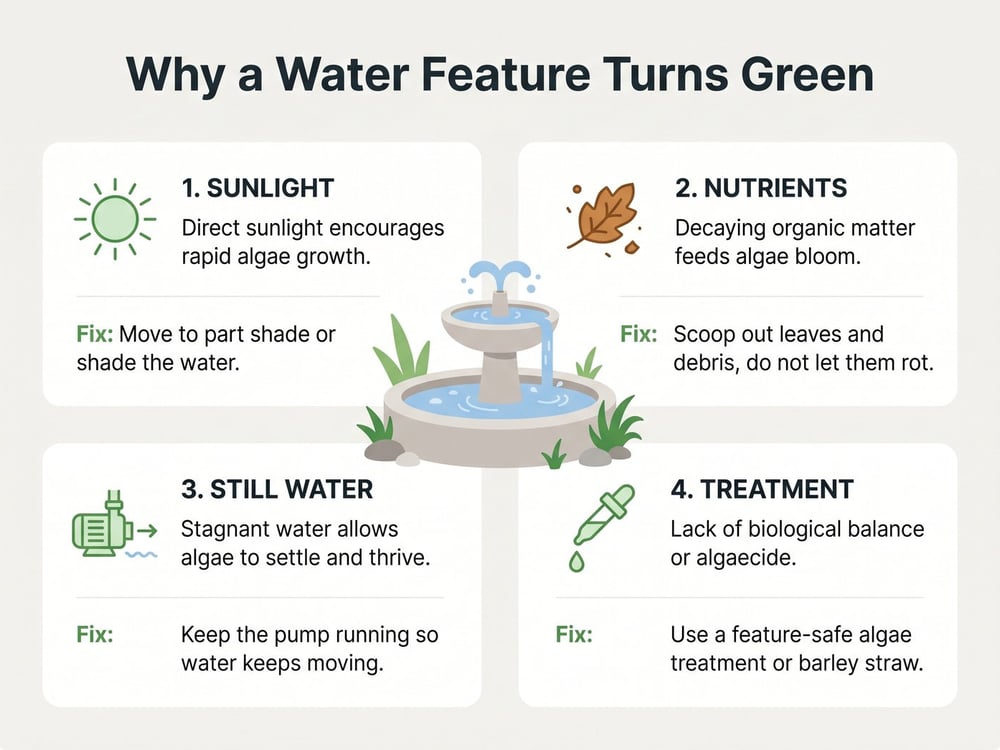
The four drivers of green water, and the fix for each. Tackle the conditions before reaching for treatment.
How to stop algae in a water feature
Stopping algae is about removing what it needs rather than fighting the bloom after it appears. Four levers do almost all the work, and the first two cost nothing. Keep the water moving, because algae struggle to colonise a surface that is constantly disturbed. Cut the light by siting the feature in part shade or shading the water itself. Starve it by removing the leaves, pollen and debris it feeds on. Only then top up with a treatment, and choose one suited to your material. Get the first three right and you will use a fraction of the treatment most people pour in.
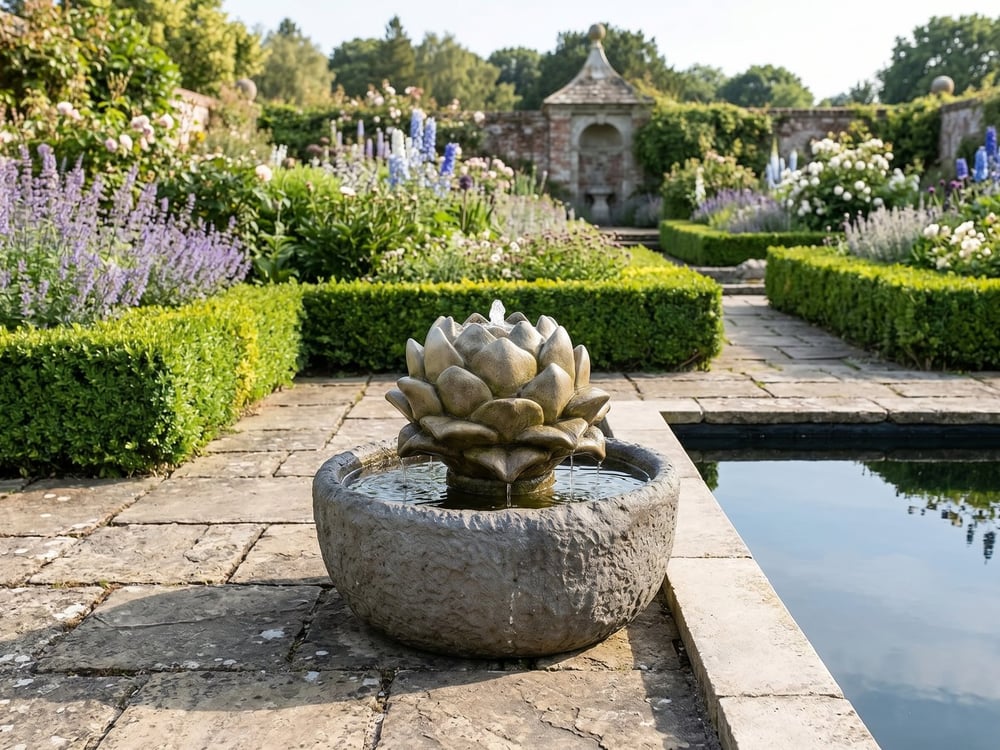
A small bowl fountain like this artichoke holds little water, so it is quick to keep moving and clear. Shop the Artichoke Fountain →
- Keep it moving. A running pump is your best algaecide. Leave it on through summer, day and night.
- Shade the water. Full all-day sun is the fastest route to green. Part shade slows algae sharply.
- Remove the food. Scoop floating leaves and net out sunken debris before it rots and feeds a bloom.
- Treat, then top up. Use a feature-safe algae treatment or barley straw extract once the conditions are right.
Stop the water smelling: clear the reservoir
A water feature that smells is telling you debris is rotting in the reservoir. When leaves, blossom and dead insects sink and break down without oxygen, they give off the rotten-egg smell of anaerobic decay. The water itself is rarely the culprit. The fix is to empty and rinse the reservoir, clear the grid of trapped debris, and keep the pump running so the water stays oxygenated. A feature that is moving and clear of debris does not smell. Letting the pump stop for days in warm weather, with leaves sitting in the sump, is what turns a fountain sour.
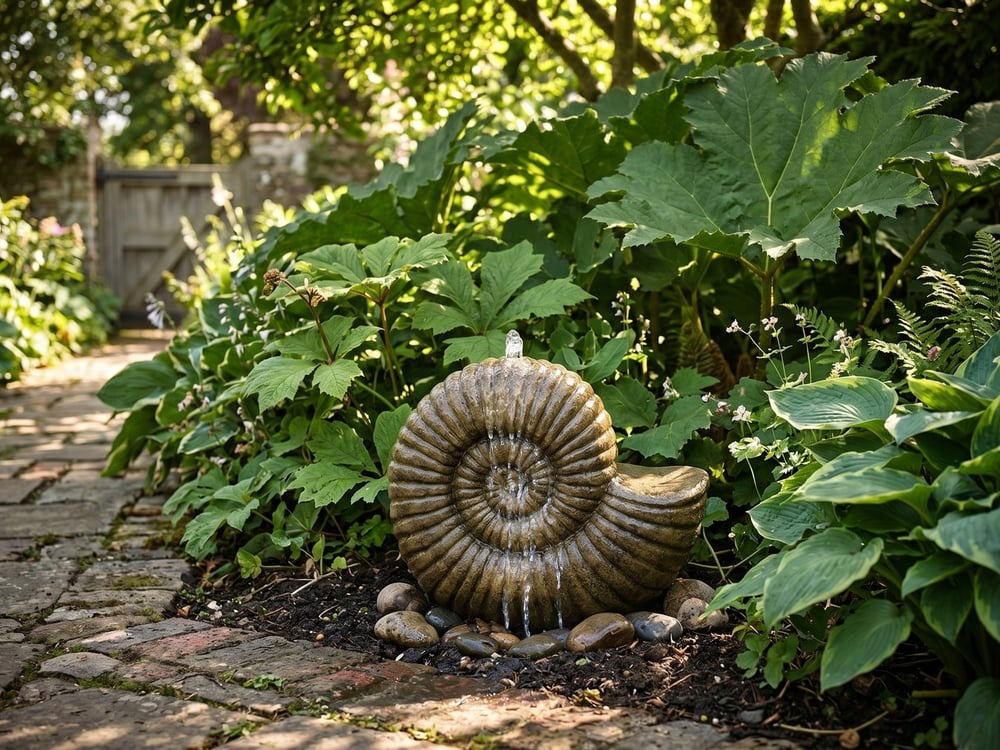
A fountain set among planting catches falling leaves, so site it where you can reach the reservoir to clean it. Shop the Grand Ammonite Fountain →
Stop mosquitoes and midges: keep it moving
Mosquitoes lay their eggs on the surface of still water, and the larvae need roughly a week of calm water to develop. Moving water breaks that cycle completely: the surface is never still long enough, and the larvae cannot breathe at a disturbed surface. This is the strongest argument for running the pump continuously rather than overnight off. Solar features that stop the moment cloud passes or the sun sets are the ones most likely to grow larvae, because the water sits still for hours. If you run a solar feature, choose one with a battery backup so the pump keeps the surface moving.
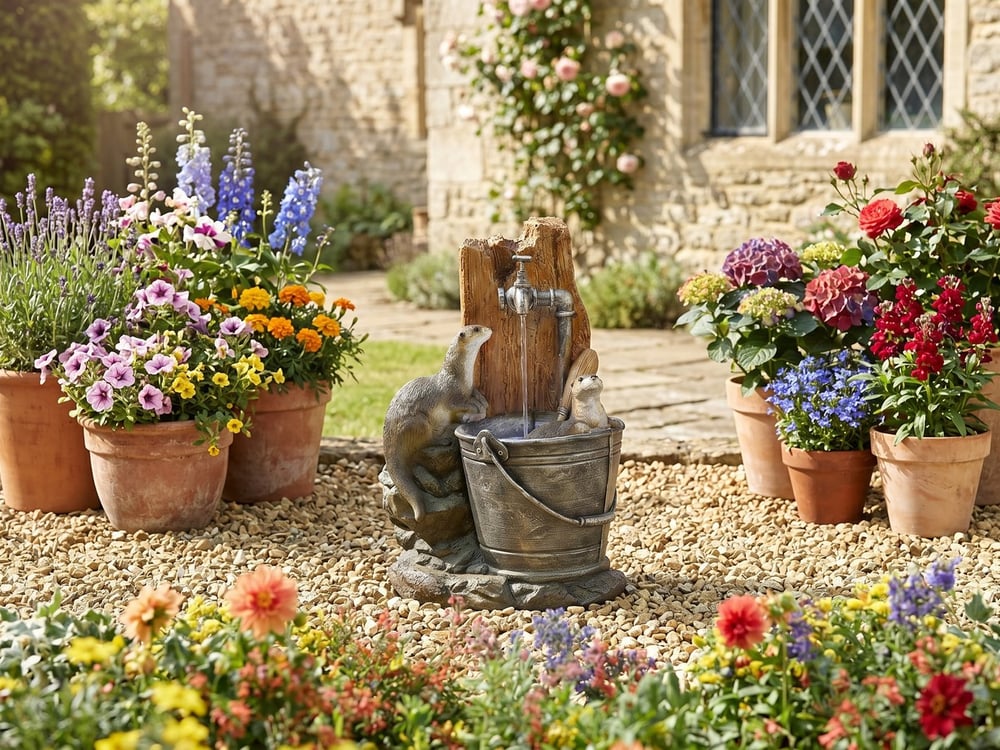
A self-contained feature with a continuous pump keeps its small water volume moving, so mosquitoes never settle. Shop the Bathing Otters Feature →
A weekly and seasonal cleaning routine
Clear water is a habit, not a one-off scrub. A few minutes a week through summer keeps a feature from ever reaching the green, smelly stage. Here is the routine we give customers.
- Weekly: scoop floating leaves and debris, check the water level and top up, and make sure the pump is running freely.
- Monthly: lift and rinse the pump, clearing the impeller and intake of grit and algae that slow the flow.
- Each season: drain and rinse the reservoir, wipe the bowl, and refresh any treatment.
- Autumn: net the feature or move it clear of heavy leaf fall, the biggest single source of debris.
- Winter: drain it down and store the pump frost-free, as covered in our winter care guide below.
How much a continuously running pump adds to your bill is a fair question, and a small one: our guide to water feature running costs gives the real numbers for typical pump wattages.
Algae treatments that are safe by material
The wrong cleaner can ruin a feature. Bleach and acidic descalers etch and stain natural stone; harsh chemicals can strip the finish from metal and shorten a pump's life. Match the treatment to the material, and where wildlife or fish share the water, avoid copper-based algaecides altogether. Barley straw extract is the gentlest option and is safe across every material.
| Material | Safe to clean with | Avoid | Best treatment |
|---|---|---|---|
| Natural / cast stone | Soft brush, water, stone-safe cleaner | Bleach, acid descalers, pressure washing | Barley straw extract or stone-safe algaecide |
| Poly resin | Mild soapy water, soft cloth | Abrasive pads, strong solvents | Feature-safe liquid algae treatment |
| Corten / steel | Plain water, soft cloth | Acids, salt-based products | Barley straw extract (leave the patina) |
| Slate / basalt | Water, soft brush | Bleach, acidic cleaners | Barley straw or feature-safe algaecide |
| With fish or wildlife | Net out debris by hand | Any copper-based algaecide | Barley straw only |
Matt's Tip: never run the pump dry
The fastest way to kill a water feature in summer is to let the reservoir run low while the pump keeps going. A pump running dry burns out in minutes, and it is the most common failure we see in July and August, when evaporation is highest. Check the level weekly and top up before it drops below the pump intake. A feature that loses a centimetre of water on a hot day is normal; one that is gulping air is about to cost you a pump.
Self-contained features are easiest to keep clear
If clear water with the least fuss is the goal, a self-contained feature is the easiest type to own. The whole thing sits over a small hidden reservoir with the pump built in, so there is little water to go green and nowhere for much debris to gather. A small volume warms and cools quickly but is also quick to drain, rinse and refill, which is the whole battle. Compared with a large pond or a tiered fountain on a big sump, a compact self-contained feature is the simplest to keep glass-clear through a British summer. Our guide to how self-contained water features work explains the parts.

A tiered fountain keeps water moving across every level, which helps it stay clear. Larger pools need more frequent debris clearing. Shop the Two Cherub Fountain →
Matt's pick: the easiest feature to keep clear
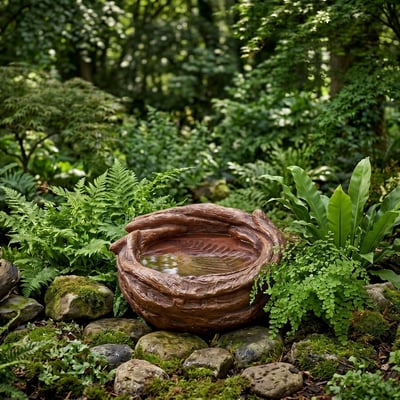
Matt's Pick for clear water with least effort
Best For: Anyone who wants moving water without the maintenance of a pond
Why I Recommend It: A self-contained feature like the Ancient Fern holds only a few litres over a hidden reservoir with the pump built in. Small volume means it stays clear easily and drains and rinses in minutes. Keep the pump running and scoop the odd leaf, and it looks after itself.
Price: £225
Water features that stay clear
More than 150 self-contained fountains, cascades and stone features, each supplied with a matched pump, plus free UK mainland delivery and 30-day returns.
Browse All Water FeaturesFrequently asked questions
How do I stop my water feature going green?
Keep the water moving, cut the light and remove the debris that feeds algae. Run the pump continuously through summer, site the feature in part shade rather than full all-day sun, and scoop out leaves and pollen before they rot. Once those conditions are right, a feature-safe algae treatment or barley straw extract keeps it clear with very little top-up.
Why does my water feature smell bad?
The smell comes from leaves and debris rotting in the reservoir without oxygen. That anaerobic decay produces a rotten-egg odour, and the water itself is rarely to blame. Drain and rinse the reservoir, clear the grid and sump of trapped debris, and keep the pump running so the water stays oxygenated. A moving, debris-free feature does not smell.
Will a water feature attract mosquitoes?
Only if the water sits still, because mosquitoes breed in standing water. The larvae need about a week of calm water to develop, so a pump that runs continuously breaks the cycle and keeps the surface moving. Features most at risk are those switched off overnight or solar ones that stop when cloud passes. Keep it flowing and mosquitoes cannot settle.
Can I put bleach in a stone water feature?
No, never use bleach or acidic cleaners on natural or cast stone. They etch the surface, leave white marks and can damage the pump. Clean stone with a soft brush and plain water or a stone-safe cleaner, and treat algae with barley straw extract or a product labelled safe for water features. Save harsh chemicals for surfaces that can take them.
Should I leave my water feature pump on all the time?
Yes, run the pump continuously through the warmer months, including overnight. Constant movement is what stops algae settling and mosquitoes breeding, and it keeps the water oxygenated so it does not smell. The running cost is small for a typical low-wattage feature pump. Only switch off to clean it, or to drain it down for winter.
How often should I clean a water feature?
Scoop debris weekly, rinse the pump monthly, and drain the reservoir each season. A few minutes a week stops a feature ever reaching the green or smelly stage. Clear leaves as they fall, check the water level so the pump never runs dry, and give the reservoir a full clean at the start and end of the season.
Related guides
- Winter care for water features — draining and storing the pump before the first frost.
- Patio ponds in 6 steps — building a small container water garden that stays balanced.
- Wildlife water features that work — balancing clear water with bird, bee and hedgehog access.
- The 2026 UK water feature buyer's guide — stone, solar, corten and more, with 12 picks.
- Browse our full range of garden ornaments to pair with your water feature.