
Water Features for Wildlife UK: Bird, Bee and Hedgehog-Friendly Specs That Actually Work
Written by Matt W on 18th May 2026.
Keep water at 2-4cm at the landing edge
Rough stone, not polished. Bees need grip
Always include a sloping stone or branch
Cuts mosquitoes, signals safety to birds
By Matt W | Updated 18th May 2026 | Garden ornaments specialist, 14+ years on UK retail, Garden Ornaments
A proper water feature for wildlife in a UK garden is built around four specs nobody publishes. Water depth of 2-4cm at the landing edge for birds, rough unpolished stone for bees to grip while drinking, a sloping exit route for hedgehogs that fall in, and gently moving water to discourage mosquitoes and signal safety. Get those four right and a single basin will pull robins, blackbirds, blue tits, honeybees, solitary bees, hoverflies and the occasional hedgehog into your garden through the entire UK growing season.
This guide is built from 14 years of selling cascading and stone water features into UK gardens, plus our own observations of which designs actually get used by wildlife and which sit ornamental and ignored. Browse our full range of cascading water features for wildlife or our stone water features to see what we currently stock at each spec.
Key Takeaways
- Birds need shallow water at the rim. 2-4cm at the bathing edge, sloping down to 5-7cm in the centre. Deeper than 7cm is a drowning hazard for fledglings.
- Bees need rough stone, not polished. Honey and solitary bees grip the surface to drink. A polished granite sphere is decorative; a textured sandstone basin is functional.
- Hedgehogs need an exit ramp. Any feature deeper than 10cm needs a sloping stone, half-submerged log or pebble pile so a fallen hog can climb out.
- Moving water beats still water. A gently cascading feature attracts more birds (the splash signals safety), reduces mosquito breeding, and keeps algae down.
- Landing stones matter more than spray. Birds prefer a flat, dry stone next to the water to perch on before drinking, set 5-15cm above the water line.
- Position determines visits. 2-3m from cover (shrub or hedge), out of direct midday sun, away from cat ambush lines. Get the position wrong and the prettiest basin will sit empty.
Garden Specialist's Note
We have sold water features into UK gardens since 2012. The customer email we still see most often after install is "lovely fountain, but no wildlife." Nine times out of ten the answer is the same: too deep at the edge, too smooth on the surface, or sited too far from cover. The basins we recommend below are the ones we actually see attracting consistent wildlife visits across our customer base, not just the prettiest pictures on the website. This is the buying brief we send to anyone who asks specifically for a wildlife feature.
Why most water features fail as wildlife habitats
The single biggest reason a water feature gets ignored by wildlife is depth at the landing edge. Most decorative basins are built with vertical walls and a uniform 8-15cm pool inside. Birds will not bathe in water they cannot stand in. A blue tit weighs around 11g and can comfortably bathe in 2-3cm of water. A blackbird needs 4-5cm. Anything deeper than 7cm forces them to perch on the rim and lean awkwardly, which they do not bother doing if a better option exists nearby.
The second issue is surface texture. Polished granite, glazed ceramic and resin-stone composites all look beautiful but they shed water like glass. Bees cannot grip a polished surface. They tip into the water and drown trying to drink. Rough sandstone, basalt and natural slate hold a thin film of water on the surface that bees can drink from safely. Our stone water features comparison covers texture properties by material in more depth.
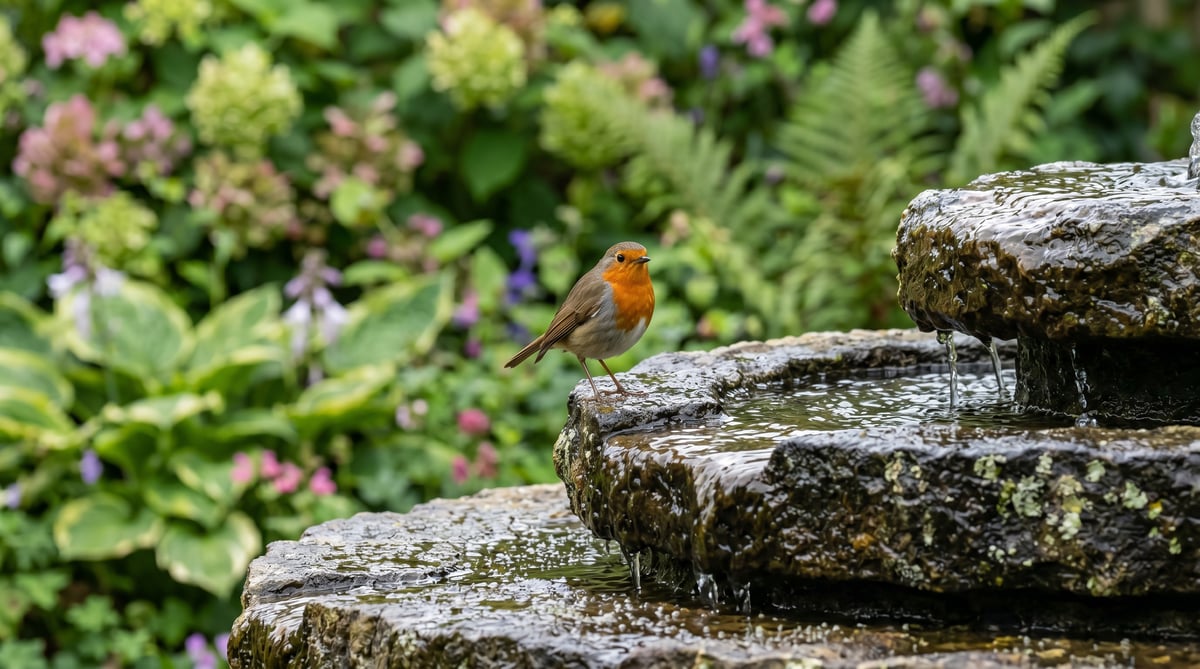
The third is moving water. A still bowl looks calmer to humans but a gently cascading or rippling feature is more attractive to birds. The splash sound carries. Robins, blue tits and blackbirds locate water by sound first, sight second. Moving water also stops mosquito larvae establishing and reduces algae build-up, both of which matter through a UK summer.
Water depth: the specs nobody publishes
The right water depth depends on which species you want to attract. Here is the working spec sheet we use when advising customers:
- Blue tits, great tits, goldfinches: 1.5-3cm of water at the bathing edge. They are small and skittish, and prefer shallow water close to a perch.
- Robins, sparrows, dunnocks: 2-4cm at the edge. They will tolerate slightly deeper water than tits but still prefer a sloping rim they can wade into.
- Blackbirds, song thrushes, starlings: 4-7cm. They are confident bathers and like to fully immerse. Need a non-slip rim to stand on.
- Wood pigeons, collared doves: 5-10cm. Heavy birds that prefer a wide stable rim. They drink rather than bathe most of the time.
- Bees and wasps: 0-1cm. A thin film of water on a textured stone is ideal. Anything deeper is a drowning hazard.
- Hedgehogs: A separate ground-level bowl is best. 1-2cm deep, with a rough-stone exit ramp if any depth exceeds 4cm.
The best wildlife basins solve all six profiles in one design. A sloping basin with rim depth of 2-3cm, dipping to 6-7cm in the centre, hits the bird range. A textured rough-stone outer rim catches the splash and gives bees a wet surface to drink from. A pebble pile in one quadrant gives hedgehogs an exit if they fall in. Hardly any commercial feature publishes these numbers. We measured them ourselves on the basins we ship most often.
Surface texture: why bees ignore polished stone
Bees grip with the claws on the end of their tarsus (foot) and rely on micro-texture to stay anchored when drinking. Polished surfaces such as high-gloss granite, glazed ceramic and resin-stone composites feel like ice to a bee. They land, slip, tip into the water, get their wings wet and drown. We have watched this happen on customer installs where a beautiful polished granite sphere went uncrossed by bees the entire summer.
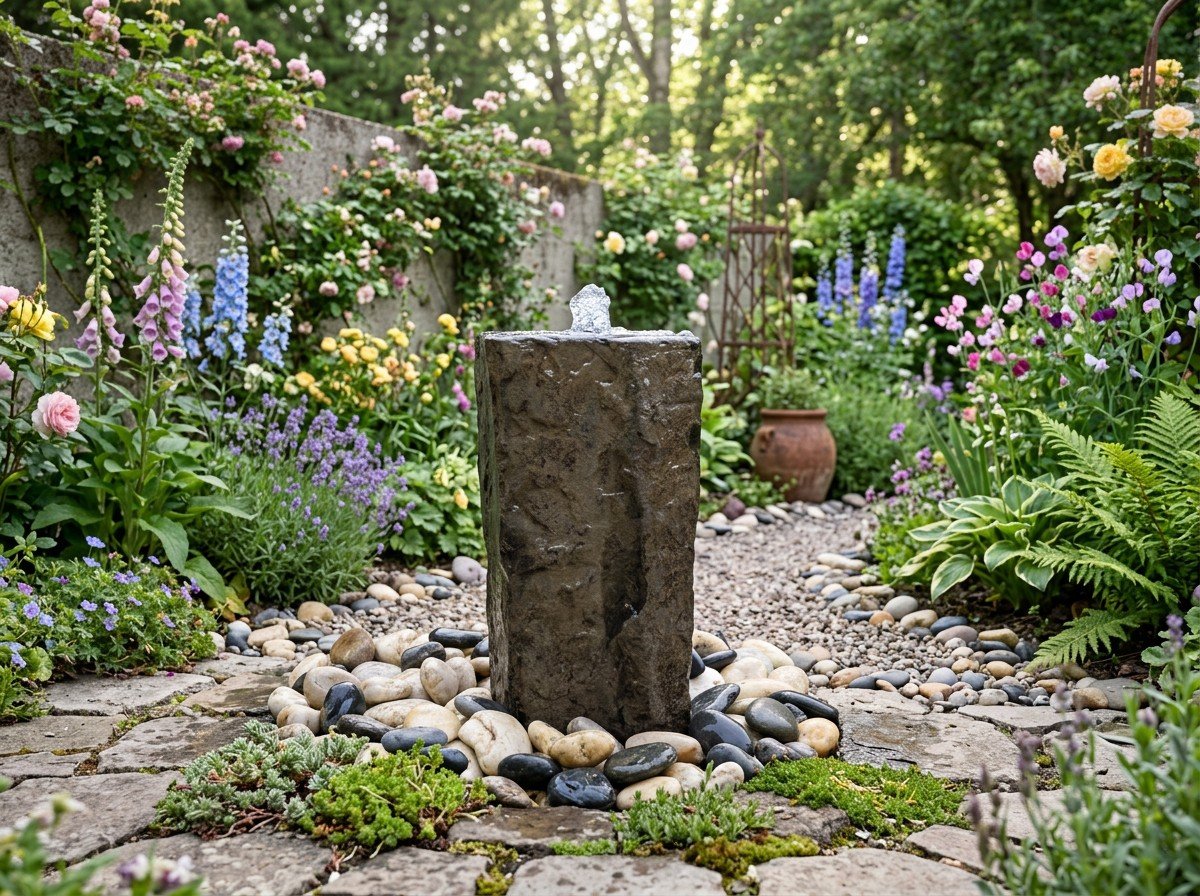
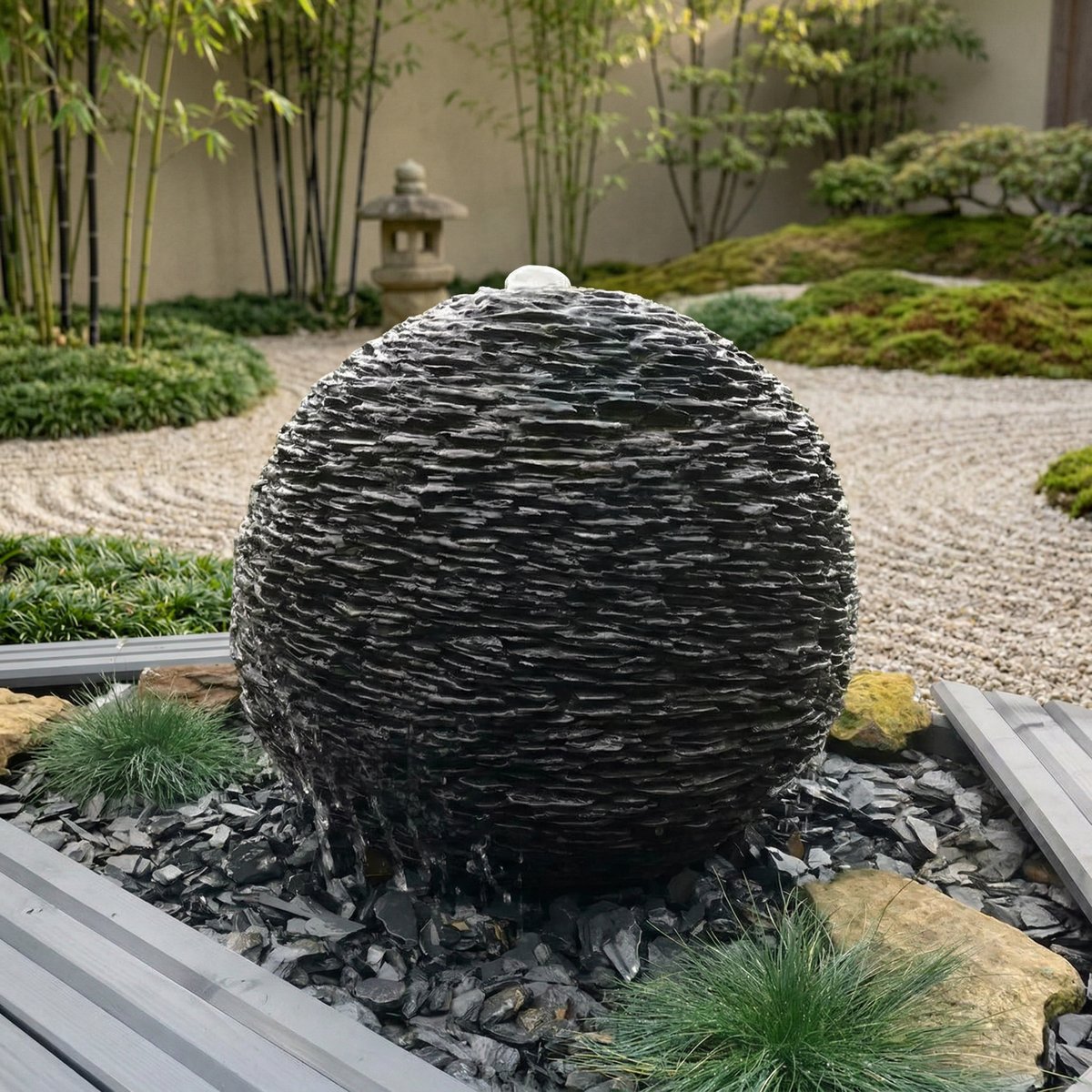
Textured stone behaves differently. Natural basalt has a slightly porous surface that holds a thin film of water. Rough-cut sandstone retains visible moisture for ten or fifteen minutes after the water stops. Slate, particularly the natural cleft variety used in basin features, has a layered grain that bees grip easily. A drilled basalt column with water emerging from a centre hole and trickling down the rough outer surface is the single most reliable bee-magnet design we sell. Bees queue at the wet zone on warm days.
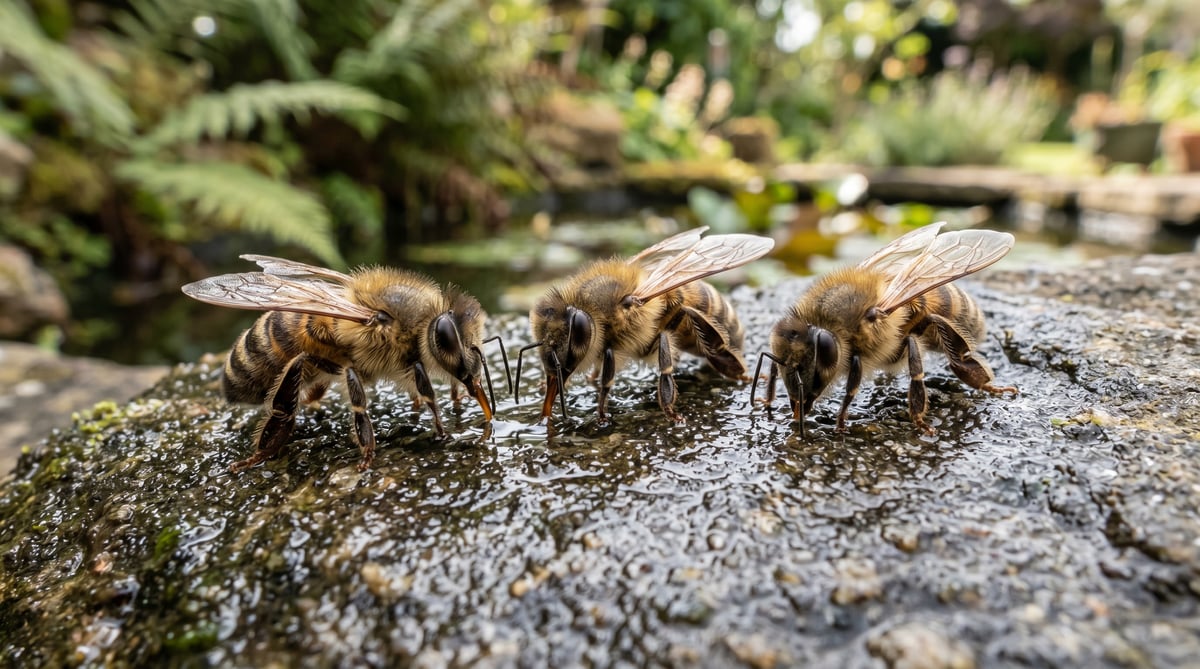
If you already own a polished feature, you can rescue it for bees by adding a row of rough pebbles or marbles to one section of the rim. Half-submerged pebbles give bees a textured landing surface and a wet-but-grippable zone to drink from. We tell customers with mirror-polished fountains exactly this. For wider tactics on attracting bees and butterflies, our wildlife garden ornaments guide covers complementary plantings and habitat structures.
Landing-stone height: the bird perch nobody mentions
A water feature with no dry perch beside it gets used less. Birds approach water in stages: cover → flight → perch → assess → drink/bathe. They will not skip the perch step. The ideal landing stone is flat, dry, 5-15cm above the water surface, and within 30cm of the bathing edge. Pebble piles do not count. The foot positioning is wrong.
On our cascading water features, the upper tier acts as the landing stone for birds bathing in the lower tier. On stone basin features, the lipped rim is the landing zone, provided it is wide enough (we recommend 6cm minimum) and slightly rough so feet do not slip. On tall column features, birds typically use the top of the column as a perch and drink from the water film running down the side; landing height in this case is the column height itself.
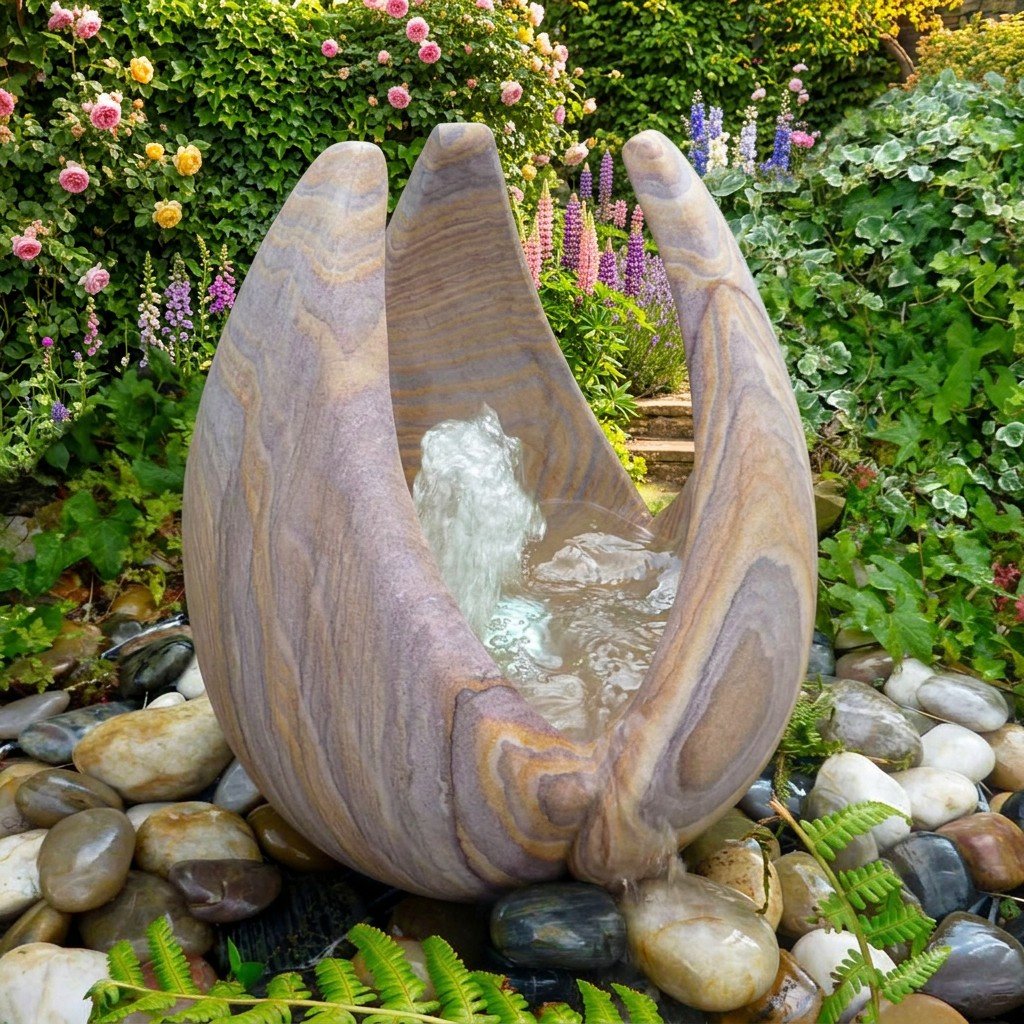
If the basin you like has no natural perch, add one. A piece of slate or stone roughly 10x15x3cm placed on the rim creates an instant landing zone. We have customers who report bird visits doubling within a week of adding one. The detail is small; the effect is not.
Hedgehog access and exit: the safety spec
UK hedgehog populations have dropped roughly 30% since 2000 according to the British Hedgehog Preservation Society, and garden drowning is a contributor. A hedgehog can scramble through a 13cm gap, climb low garden walls, and is a competent swimmer for short distances. What they cannot do is exit a feature with a vertical rim above water level. They get tired, panic, drown.
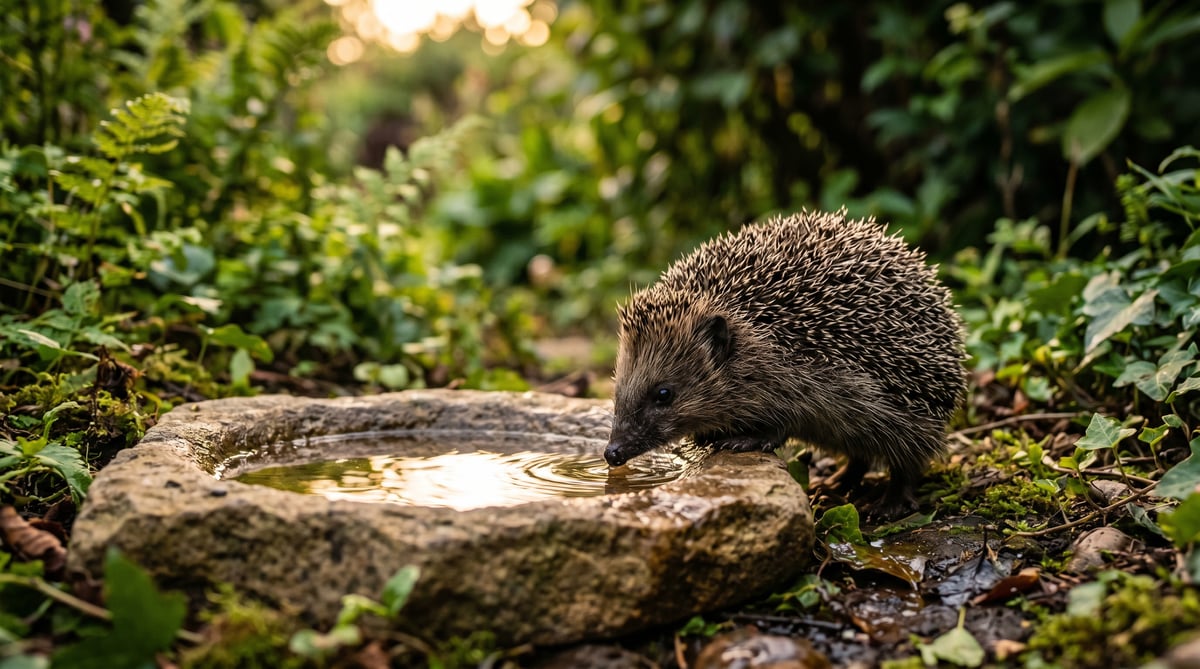
Two design rules cover them. First, any water feature with a depth above 10cm needs a sloping exit route: a half-submerged stone, a piece of rough timber, or a chicken-wire ramp pinned to the rim. Second, any wildlife garden should include a separate ground-level drinking dish at hedgehog height. A shallow stone basin or even an upturned dustbin lid set into the ground at 1-2cm depth is enough. Refresh it daily in summer, more often in heatwaves. We sell several stone basin designs that work as standalone hedgehog dishes by sitting them on a flat ground stone rather than the supplied pedestal.
For broader wildlife garden design and how to layer features for different species, see our bird bath fountains and moving water guide.
The seven specs every wildlife water feature needs
| Spec | Target value | Why it matters |
|---|---|---|
| Water depth at rim | 2-4cm | Birds need to stand in the bathing zone, not perch on the edge |
| Water depth at centre | 5-7cm max | Deeper risks drowning small fledglings and bees |
| Surface texture | Rough / natural-cleft stone | Bees need grip; polished surfaces shed water and slip |
| Landing perch | Flat dry stone, 5-15cm above water, 30cm from rim | Birds stage their approach via dry perches |
| Water movement | Gentle cascade / trickle | Attracts birds by sound, prevents mosquito breeding, deters algae |
| Hedgehog exit ramp | Any feature deeper than 10cm needs one | UK hedgehog populations are vulnerable; drowning is preventable |
| Position from cover | 2-3m from hedge or shrub | Birds need fast retreat from cats; too close hides cat ambushers |
Best UK stone for wildlife water features
Material matters more than design when you are picking for wildlife. From 14 years of watching basins go in and seeing which ones attract:
- Rainbow sandstone: Best all-rounder. Rough surface, holds water film, weathers attractively, frost-stable in UK winters. Our top-selling wildlife basin material.
- Natural slate: Excellent grip for bees, layered grain gives birds confident footing. Slightly darker so warms in sun, drying faster than sandstone, so it can need topping up more often.
- Basalt: Drilled basalt columns are the bee-magnet of the range. Porous enough to hold water film, dark colour to warm in spring, frost-stable.
- Granite: Polished granite is decorative-only for wildlife. Tumbled or split-face granite is fine. Avoid mirror-polished surfaces.
- Limestone: Naturally porous and rough. Excellent for bees. UK frost can break softer grades; specify hard limestone for outdoor wildlife use.
- Resin composite: Most "stone-look" resins are smooth on the surface. Functional water capacity is fine; bee accessibility is poor. Add rough pebbles to the rim.
Position and approach: getting wildlife to use the feature
Even the right feature gets ignored from the wrong position. The siting rules we give every wildlife customer:
- 2-3m from cover. A shrub, hedge or small tree close enough that birds can retreat in two wingbeats if a sparrowhawk appears, but not close enough to hide a stalking cat.
- Out of direct midday sun. Partial shade keeps the water cooler in summer and stops algae blooming. Morning sun is ideal. It warms the basin for early bathers.
- Above ground-level cat ambush lines. Cats will hide under decking or behind ornaments to ambush bathing birds. A raised feature on a low plinth, away from low cover, is safer.
- Within sight of the house. You will refill it more reliably if you see it. Out-of-sight features become forgotten features in mid-July.
- Power within reach. Pumped features need an outdoor power point or a long armoured cable. Plan this before siting; do not site first and trail an extension lead.
For more on positioning bird-friendly water specifically, and how proximity to roosts and feeding stations affects visitation, read our how to attract birds to your bird bath guide.
Maintenance: what wildlife features need that decorative features don't
A wildlife water feature is dirtier than a purely decorative one. Birds shed feather dust and droppings into the bowl. Bees drown occasionally and need scooping out. Hedgehog drinking dishes attract slugs and decaying plant matter.
Our weekly routine for wildlife customers:
- Top up daily in summer. Evaporation rates can hit 1-2cm per day in July heat.
- Scoop out debris twice a week. Feathers, drowned insects, leaves. A small fish net costs £5 and lasts years.
- Drain and brush the basin every 4-6 weeks. No soap or detergent: they kill the biofilm that pollinators rely on. Plain water and a stiff brush only.
- Check the pump screen monthly. Feathers and algae clog pumps quickly. Most kits include a removable foam pre-filter that rinses clean in 30 seconds.
- Winter prep: drain and store the pump, leave the basin in place. Birds still drink from rainwater that collects in the empty bowl through winter.
Matt's Tip: Refill with the Hose, Not the Watering Can
The biggest avoidable failure we see is people refilling water features with stale watering-can water. The chlorine off-gases overnight in a watering can left outside, but so do nitrates, copper and any garden chemicals that splashed in. A hose run for 30 seconds before filling delivers fresh, oxygenated tap water that is far better for the wildlife drinking from it. We rinse customer basins this way during installs and the difference in algae appearance four weeks later is obvious.
Matt's Pick: the best small-space wildlife water feature
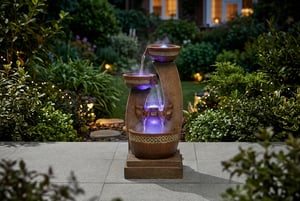
Matt's Pick for Small Wildlife Gardens
Best For: Patios, courtyards and small back gardens where space rules out a full stone basin but wildlife still matters
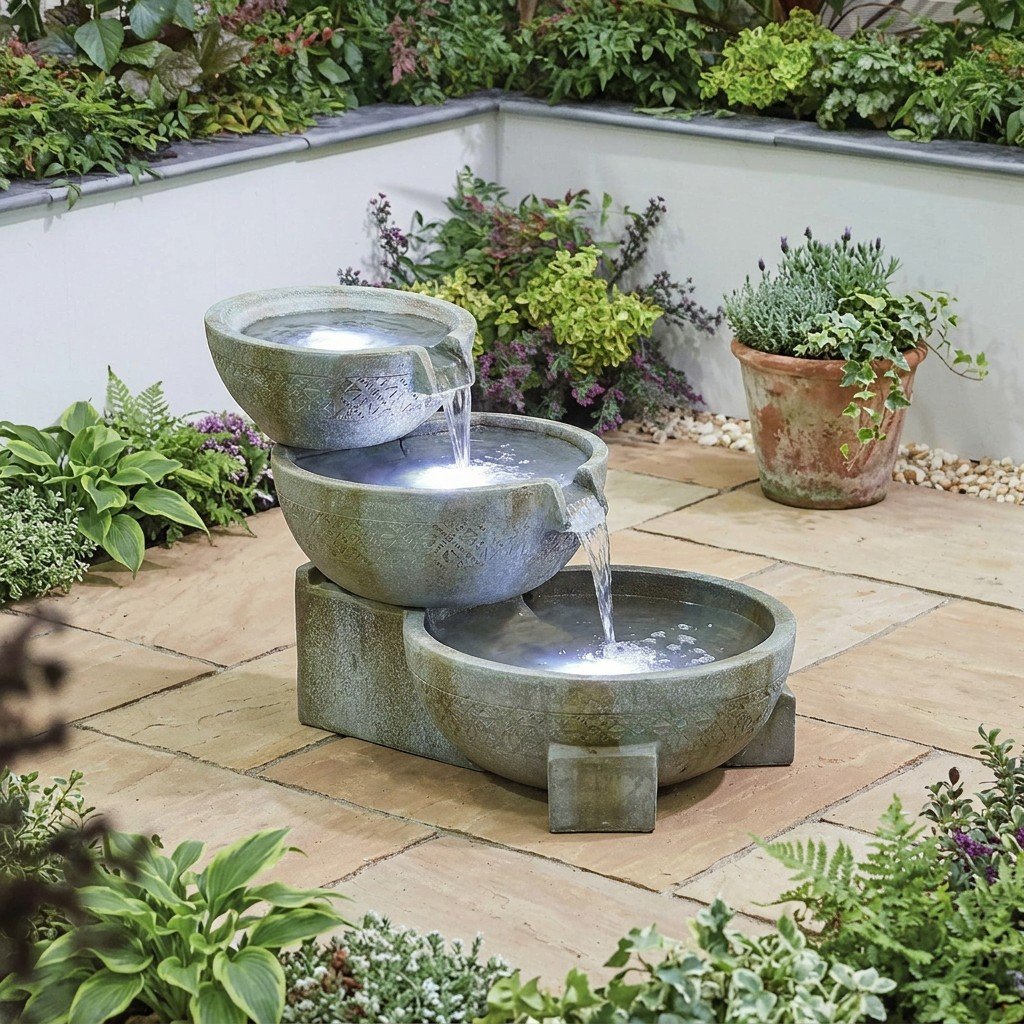
Why I Recommend It: The four stacked bowls give birds four landing-and-drinking levels in a 55cm footprint. The cascade sound carries enough to attract birds from neighbouring gardens, the rough resin-stone finish holds enough water film for bees, and the integrated LEDs let you watch evening visits in late summer. After 14 years selling water features, this is the small-space wildlife pick I recommend most often.
Price: £185
Frequently asked questions
What is the best water feature for wildlife in a UK garden?
A textured stone cascade with rim depth 2-4cm and a landing perch is the best all-round wildlife water feature. Rough sandstone, natural slate or drilled basalt all work. Add a separate ground-level shallow dish for hedgehogs. Site 2-3m from cover, out of direct midday sun. For a deeper read on material options, see our 2026 UK water feature buyer's guide.
How deep should a wildlife water feature be?
2-4cm at the bathing edge, sloping to 5-7cm at the centre. Deeper than 7cm is a drowning risk for fledglings and bees. If your feature is deeper than 10cm, add an exit ramp, a half-submerged stone or piece of rough timber, for hedgehogs that fall in.
Will bees drink from a garden water feature?
Yes, if the surface is rough enough to grip. Honey and solitary bees rely on micro-texture to stay anchored while drinking. Rough sandstone, natural slate and basalt all work. Polished granite and glazed ceramic do not. Bees slip in and drown. Adding rough pebbles to the rim of a polished basin solves it.
Do birds prefer still or moving water?
Moving water consistently attracts more birds. The sound of a gentle cascade carries further than still water and signals safety to wary species. Moving water also stops mosquito breeding and reduces algae growth. A trickle or dripper costs nothing extra to run and roughly doubles bird visits in our experience.
How do I make a water feature hedgehog-safe?
Add a sloping exit ramp if water is deeper than 10cm. A half-submerged rough stone, a pile of pebbles in one quadrant, or a piece of timber pinned to the rim all work. Provide a separate ground-level dish at 1-2cm depth as a dedicated hedgehog drinking station. Refill daily in summer.
Where should I position a wildlife water feature?
2-3m from cover, out of direct midday sun, raised above cat-ambush lines. Birds need fast retreat to a shrub or hedge but not so close that cats can hide behind it. Morning sun is ideal. It warms the water for early bathers. Within sight of the house so you actually keep it topped up.
How often should I clean a wildlife water feature?
Top up daily in summer, scoop debris twice a week, drain and brush every 4-6 weeks. Use plain water only: no detergent, which kills the biofilm wildlife relies on. Check the pump screen monthly and rinse the foam pre-filter clean. Drain and store the pump for winter; leave the basin in place for rainwater.
Do solar water features work for UK wildlife?
Solar features cycle on and off depending on cloud cover, which actually mimics a natural stream. Birds tolerate the intermittent flow well. The downside is reliability in winter. Many solar pumps stop entirely from November to February. A mains-powered feature delivers consistent flow year-round. See our solar water features tested guide for runtime data.