
Lounge Sets vs Corner Sofas: Which Garden Set Wins for British Weather?
Written by Matt W on 18th May 2026.
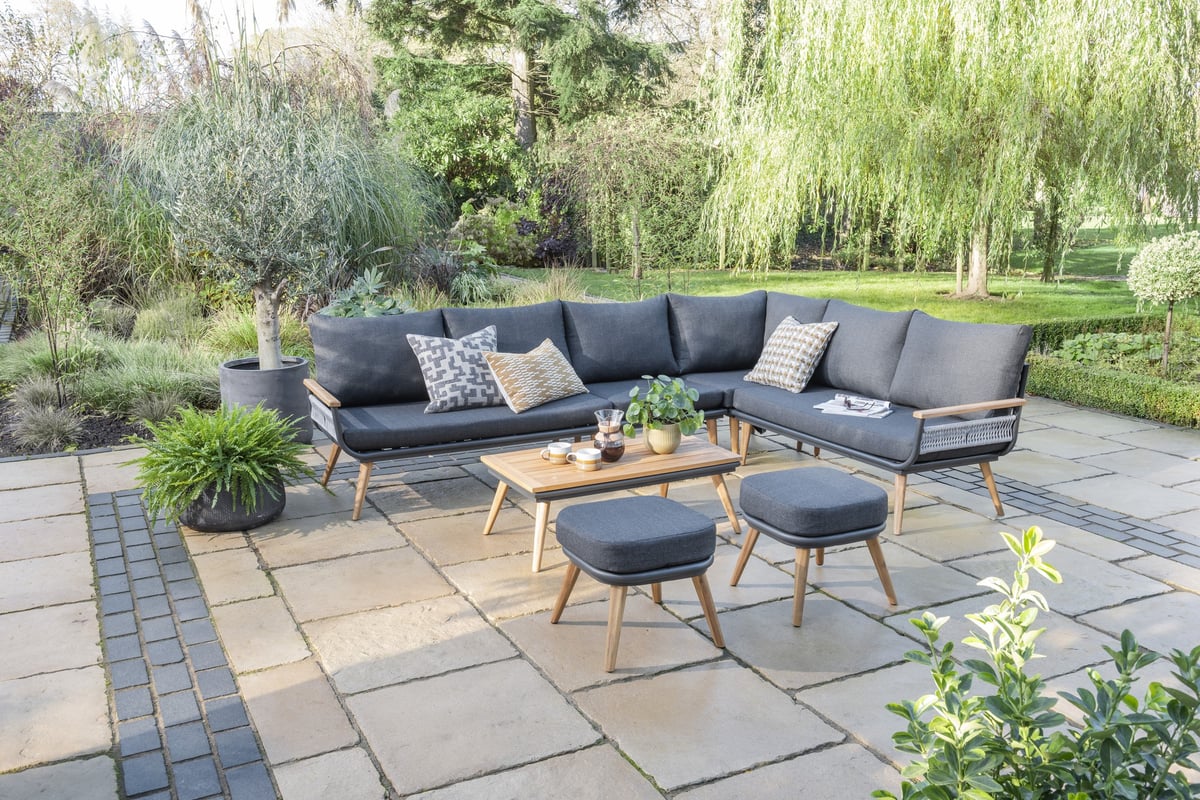
Corner sofa: one footprint, four seats
Powder-coated aluminium beats rattan
Bring indoors at every rain forecast
You rearrange the layout often
By Matt W | Updated 18th May 2026 | Garden ornaments specialist, 14+ years on UK retail, Garden Ornaments
A garden lounge set UK buyer faces one main fork in the road: corner sofa or lounge set? The corner sofa wins on space efficiency: four seats in a single L-shaped footprint, ideal for compact UK patios. The lounge set wins on flexibility: separate chairs and a sofa that you can rearrange around the garden as the year shifts. Both are vulnerable to British weather, and after 14 years selling outdoor furniture into UK homes the single biggest predictor of which set still looks good in year five is not the style but the frame material and how you store the cushions.
This guide compares the two formats on space, weather durability, cushion handling, price and resale value. Browse our full range of garden lounge sets UK to see what we currently stock, or look at our metal garden furniture for the powder-coated aluminium and steel options that hold up best in British damp.
Key Takeaways
- Corner sofa is the better choice if your patio is under 4x4m: one footprint seats four, and the L-shape uses dead corner space efficiently.
- Lounge set wins if you rearrange seating across the season: separate chairs, sofa and table can be split between patio and lawn.
- Powder-coated aluminium frames outlast synthetic rattan in UK damp by 5-10 years. Rattan strands fray and fade; alu just needs a wipe.
- Cushions are the weak point. Even "shower-proof" covers fade and grow mildew if left out. Bring them in overnight or use a proper storage box.
- Rope weave is the premium middle ground: it looks like rattan, lasts like aluminium and costs around 30-50% more than basic rattan sets.
- Mini corner sets at 1.8x1.8m fit small UK gardens and start around £999. Full corner sets need 2.5x2.5m clear space and start around £1,499.
Garden Specialist's Note
Lounge set vs corner sofa is the question we get more than any other in spring. The honest answer depends on three things we ask every customer: how much patio space have you got, do you move your furniture around through the year, and where will the cushions live overnight? Most buyers underestimate the cushion question. The set that looks beautiful in May looks tired by August if the cushions sit out through every rain shower. This guide is the full conversation we have on the phone, written down once.
Corner sofa vs lounge set: the practical difference
A corner sofa is one piece of furniture in an L or U shape. A lounge set is a collection of separate pieces, typically a sofa, two armchairs and a coffee table. The corner gives you continuous seating along two walls or boundaries. The lounge set gives you discrete furniture you can rearrange into a circle, a row, or split across two parts of the garden.
For UK gardens the calculation usually comes down to footprint. A full corner set seats four to six people in an area roughly 2.5x2.5m. A four-seat lounge set with the same capacity needs roughly 3x3m by the time you allow walking space between the pieces. That 0.5m of extra depth matters in a small London courtyard or a typical 1990s-build patio. If your patio is under 4x4m, the corner is usually the better choice on space alone.
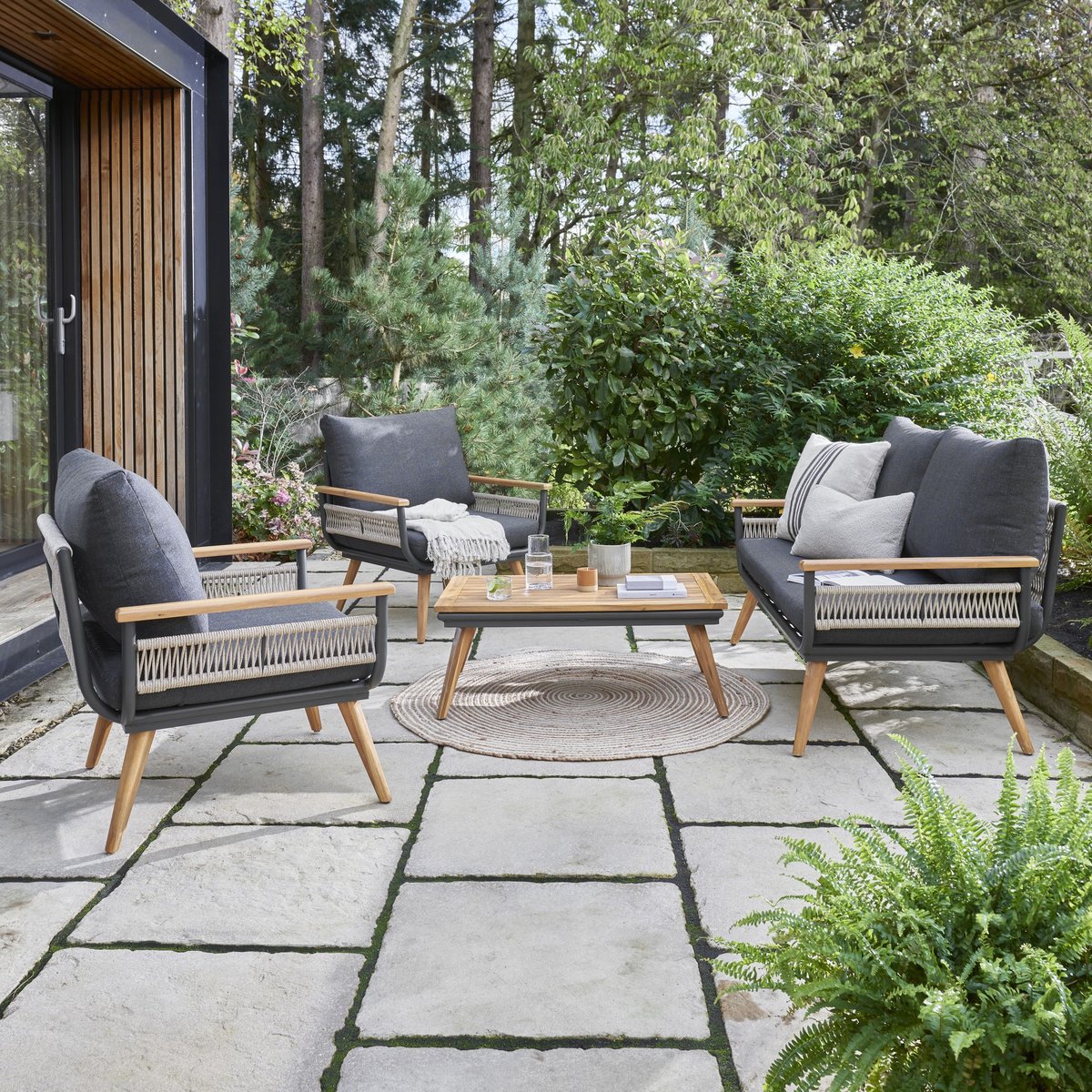
The lounge set's advantage is rearrangement. We have customers who run their lounge set as a single conversation circle in May, split the armchairs around the fire pit in August, and pull the sofa onto the lawn for parties. A corner sofa is anchored. You put it in one position and that is where it lives. If your garden hosts varied use through the year, the lounge set earns its larger footprint. If you have a fixed seating zone, the corner wins.
For a broader comparison of bistro, dining and lounge configurations and which suits which space, see our garden furniture buying guide UK 2026.
Why British weather is harder on garden furniture than people think
The UK climate is the slow killer of garden furniture. It is not a single storm that destroys a set. It is 220 days a year of damp at 80%+ humidity, 70+ rain days, UV exposure on the few sunny days, and temperature swings between -3°C in February and 31°C in July. Different materials handle this load very differently.
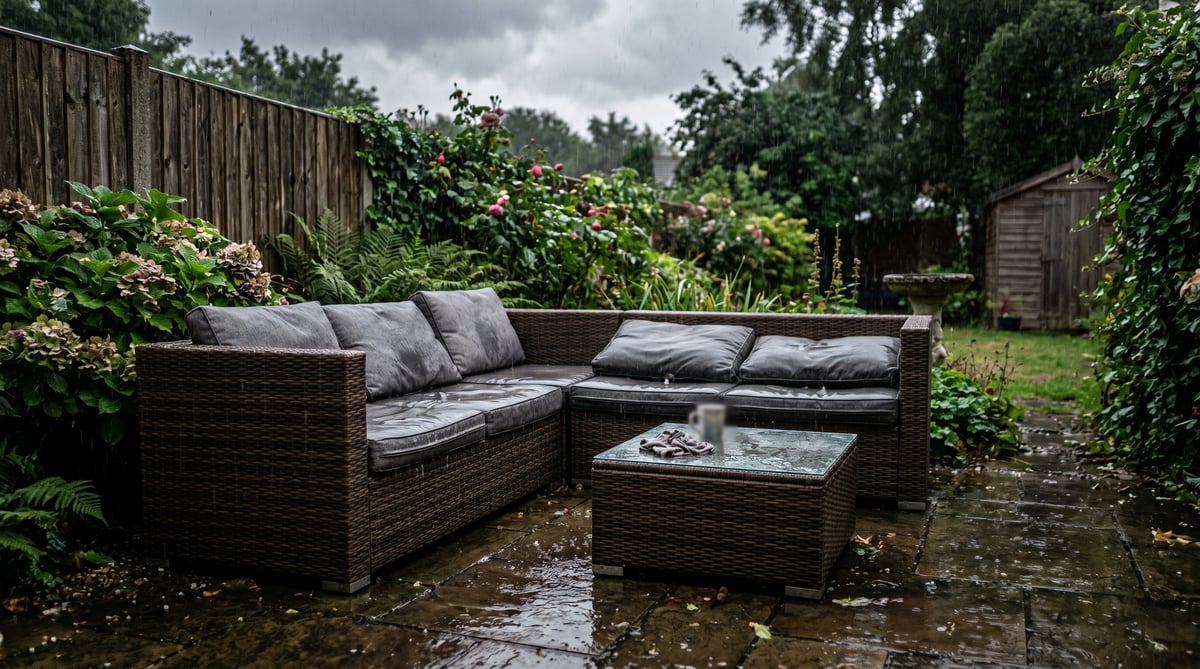
The two failure modes we see most often: rattan strands working loose and fraying at the corners after three or four winters, and aluminium frames showing white powdery oxidation if the powder-coating is chipped and not touched up. Cushions are a different problem. Even shower-resistant fabrics absorb water through repeated rain cycles, and the foam inside takes weeks to dry out properly. By the third or fourth wet weekend in a row, a cushion that has not been brought in is heavier, smells musty, and sometimes starts growing visible mildew on the underside.
The fix is partly material choice and partly behaviour. Pick aluminium over rattan if your set lives outside year-round. Bring cushions in overnight when rain is forecast. Use a storage box on the patio if indoor storage is not realistic. The rest of this guide breaks down how each material actually performs.
Powder-coated aluminium vs synthetic rattan in UK damp
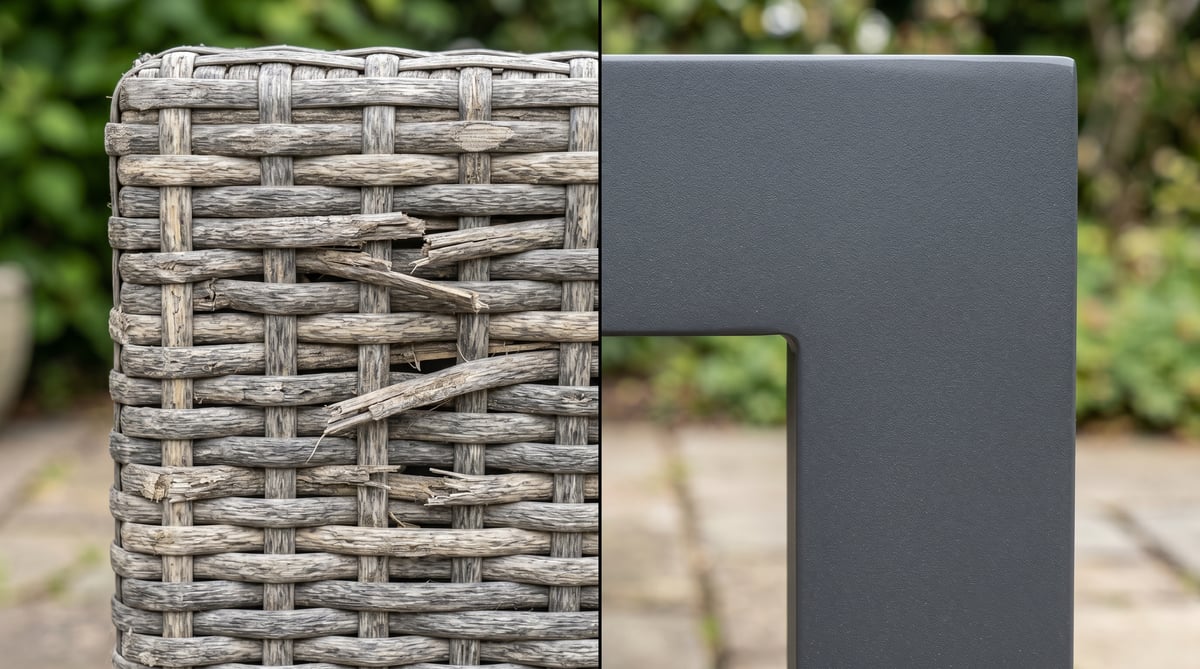
Powder-coated aluminium frames will typically outlast synthetic rattan by five to ten years in the UK. The frame is the structural skeleton, and aluminium does not rust, does not absorb water, and only fails if the powder-coating is physically damaged. Even then a small touch-up pen seals the spot in seconds. Premium powder-coated finishes on garden furniture carry 5-10 year warranties as standard, and we routinely see frames still in service after 15 years on customer call-backs.
Synthetic rattan is a different beast. The strands are typically high-density polyethylene (HDPE): UV-stabilised and weather-resistant, but ultimately a thin plastic ribbon wrapped around a metal frame. UV degradation is gradual: colour fades from year three or four, brittleness creeps in around year six, and individual strands start working loose at corner joints by year eight. We have replaced rattan sets after seven seasons that were "still functional" but visibly tired. Aluminium sets of the same age look essentially new with a wipe down.
Cost-wise, basic synthetic rattan is the cheapest entry point. Corner sets start around £999 in rattan, the same size in powder-coated aluminium starts around £1,499. The aluminium premium pays back across the lifespan if you keep the set more than five years. If you rotate furniture every three or four years, rattan makes financial sense.
Rope weave: the premium middle ground
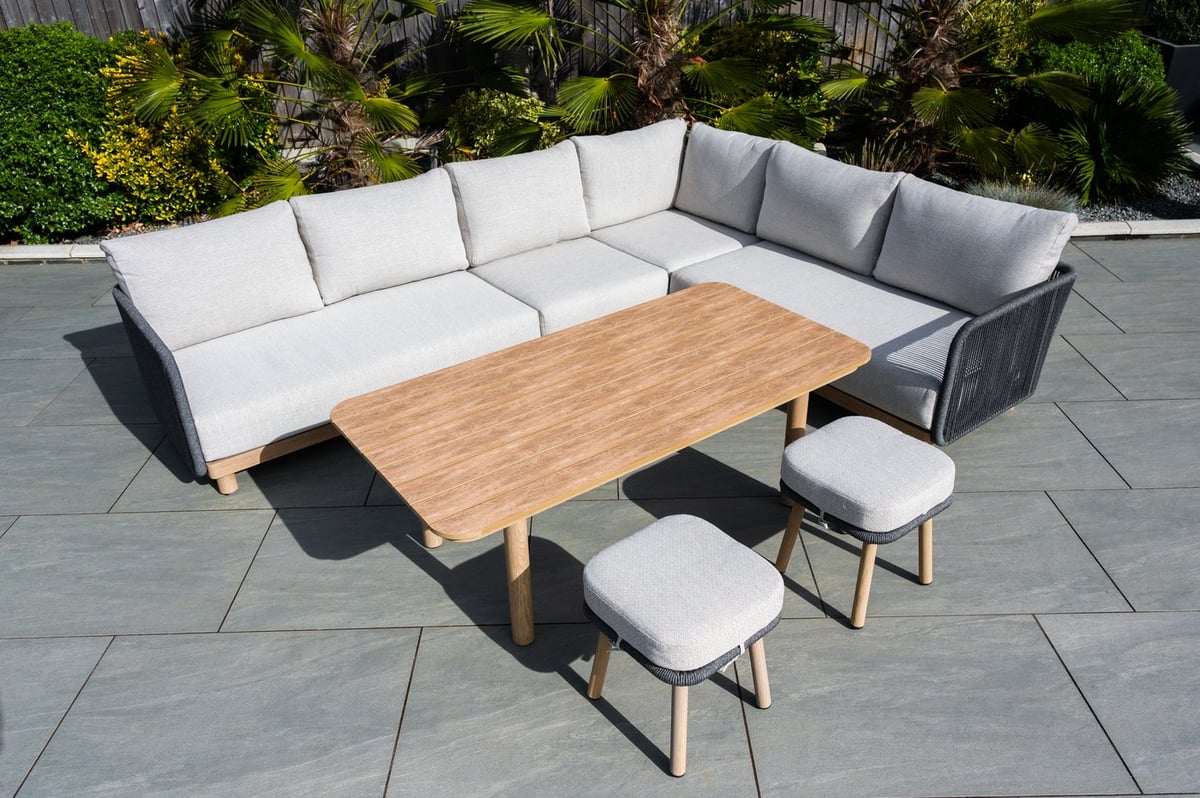
Polyester rope weave on a powder-coated aluminium frame is the durability-first upgrade over rattan. The rope itself is solid polyester fibre wound into a thick cord, typically 8-20mm in diameter. It does not fray the way rattan strands do, does not work loose at corner joints, and the larger weave gaps mean water drains through rather than pooling. The aluminium frame underneath gives you the structural longevity of full alu construction.
Rope weave sits at a price premium: corner sets start around £1,799 and run to £2,500 for larger configurations. We sell more of these every year as customers who have replaced their first rattan set in year five or six come back looking for something that will last properly. The aesthetic also reads as more contemporary than traditional rattan, a useful match for newer-build UK gardens with composite decking and minimalist planting.
For smaller spaces the same rope-weave construction is available in mini corner footprints. If you are weighing rope weave against a basic two-seater patio set for a small garden, our bistro sets for small gardens guide covers the under-2m-square options.
The cushion storage problem nobody talks about
Cushions are the part of any garden lounge set that fails first. The fabric covers are typically olefin (polyolefin) or shower-proof polyester. Both shed light rain effectively, but neither is genuinely waterproof. After repeated soaking and drying cycles, the foam inside compresses unevenly, the cover stretches and goes baggy at the seams, and the underside starts to grow mildew where moisture lingers. We see cushions reach the end of their useful life around year four to six, while the frame they sit on is still good for another decade.
Three storage options actually solve this:
- Indoors: the gold standard. Bring cushions into a hallway, conservatory or porch when rain is forecast. The annoying option, but the one that doubles cushion lifespan.
- Outdoor storage box: a dedicated waterproof box sized to fit the cushions. Roughly £120-£250 for a quality 270-litre box. Stores cushions dry and pre-fluffed for the next dry day. Lives on the patio next to the set.
- Bench-storage hybrid furniture: some garden benches and ottomans now include hollow seat compartments designed for cushion storage. Useful if patio space is tight and a separate box is one item too many.
Cushion covers should always come off for winter. November to March in the UK is too wet and too cold for any outdoor cushion to dry out between rain events. The fabric ages fast, foam breaks down, and the mildew on the cover transfers to your soft furnishings the moment you bring them back into use in spring. Strip them, store them in a dry place, and refit in April. This single habit roughly doubles cushion life.
Side-by-side comparison: lounge sets vs corner sofas
| Spec | Corner Sofa | Lounge Set |
|---|---|---|
| Typical footprint | 2.5 x 2.5m (full) / 1.8 x 1.8m (mini) | 3 x 3m or larger |
| Seating capacity | 4-6 (continuous L or U) | 4-6 (separate pieces) |
| Flexibility | Fixed configuration | Rearrangeable through the year |
| Best for patio shape | Rectangular or corner spaces | Square or open spaces |
| Entry price (rattan) | £999 mini / £1,499 full | £899 four-seat |
| Entry price (aluminium) | £1,499 | £1,299 |
| Entry price (rope weave) | £1,799-£2,299 | £1,449 |
| Cushion count | 6-10 (more to store) | 4-7 |
| Setup time | Single pre-assembled L shape | Separate pieces, easier to move |
| Resale value | Lower (large bulky item) | Higher (sells as individual pieces) |
Mini corner sets for small UK patios
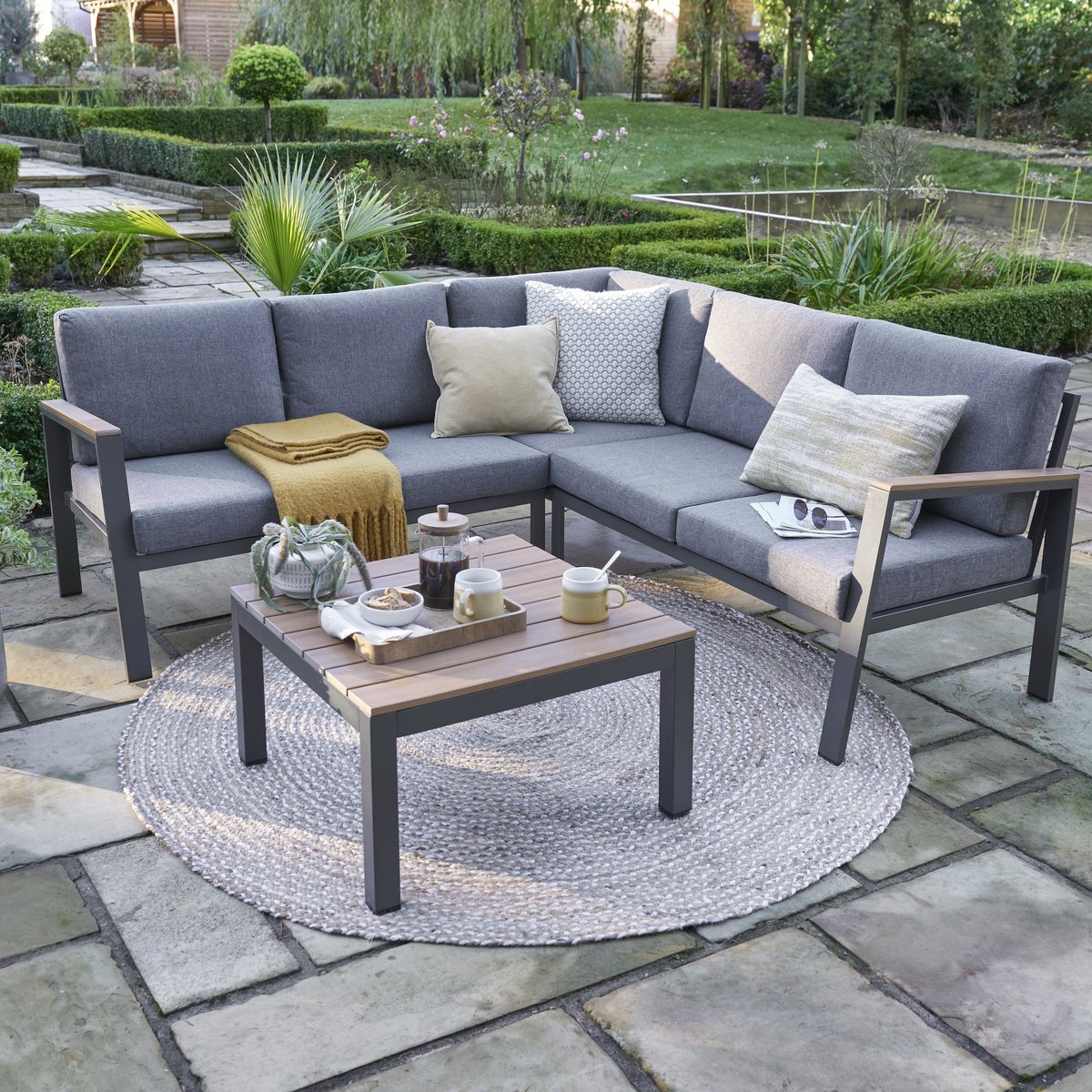
Mini corner sets fit footprints of 1.8 x 1.8m and seat 3-4 adults comfortably. They are the right pick for new-build courtyards, terraced-house back patios, and any garden where the lounge zone has to share space with planting, a shed or a fire pit. The trade-off is depth. Mini corner seats tend to sit slightly more upright than full corners, suiting evening conversation over long lounging.
Anthracite and beige are the two dominant colourways. Anthracite (very dark grey) hides leaf debris and grit and reads as contemporary against most paving. Beige is lighter and brighter on a north-facing patio but shows dirt sooner and needs a fresh wipe-down each week to stay sharp. For coastal UK gardens, anthracite is also less prone to showing salt residue.
If you are weighing furniture against permanent features like benches that need no cushion storage, our metal garden benches guide covers the cast-iron and steel options that live outside year-round without packing-away rituals.
When to upgrade to powder-coated aluminium
The clearest signal that aluminium is the right call: if you intend to keep the set outside through the British winter without covering or storing it, choose aluminium framing. Rattan tolerates winter exposure but ages noticeably faster, and the frame underneath rattan strands (typically steel) can corrode if the strands fail and water reaches the metal.
Aluminium also wins on weight handling. Heavier furniture is more stable in wind. A full aluminium-framed corner set typically weighs 20-30% more than the rattan equivalent, and that mass matters during the November storms that move loose rattan furniture across patios. We have customers in coastal Cornwall and the Scottish Highlands who specifically request aluminium for the wind stability alone.
Matt's Tip: Buy the Cover with the Set
The single best-value accessory we sell with any lounge set is the matching weatherproof cover. Most customers skip it on the first order to save £60-£90, then call us in November asking how to protect the set through winter. A proper cover doubles the useful life of cushions and roughly halves the routine cleaning effort across the season. Specify it with the set on the original order. It costs less when bundled and you have it from day one rather than scrambling for one when the first October cold front arrives.
Matt's Pick: the best lounge set/corner combo for UK weather
Matt's Pick for British Weather
Best For: UK gardens where the set will live outside year-round and durability matters more than the lowest entry price
Why I Recommend It: Heat-transfer oak-effect powder-coated aluminium framing with a polywood coffee top. No rattan strands to fray and no real-wood top to weather. The corner footprint suits the small-to-medium UK patio, the olefin cushions are the better-than-shower-proof spec, and the aluminium frame is the version of this set we expect to still see in service in 15 years.
Price: £1,749
Frequently asked questions
What is the best garden lounge set for UK weather?
A powder-coated aluminium frame with polywood or rope-weave detailing handles UK damp best. Aluminium does not rust, polywood does not warp, and rope-weave does not fray like synthetic rattan. Add a weatherproof cover and you have a set that genuinely lasts ten years outside.
Is a corner sofa or lounge set better for a small garden?
A corner sofa uses space more efficiently. A mini corner set seats 3-4 in a 1.8x1.8m footprint. A lounge set with the same capacity typically needs 3x3m by the time you allow walking room between separate pieces. Pick a corner if your patio is under 4x4m.
How long does synthetic rattan furniture last in the UK?
Synthetic rattan typically lasts 6-8 years before visible wear sets in. Colour fades from year three, brittleness creeps in by year six, and individual strands work loose at corners by year eight. Powder-coated aluminium frames easily reach 15 years in the same conditions.
Do garden cushions really need to come inside every night?
Not every night, but every time rain is forecast. Shower-proof fabric sheds light rain but absorbs water during sustained or repeated wet weather. Foam takes weeks to dry through. A storage box on the patio works if indoor storage is not realistic. Always strip cushions for winter.
Can a corner sofa be left out all winter?
The frame yes, the cushions no. A powder-coated aluminium frame survives a UK winter outside without issue, especially under a proper weatherproof cover. The cushions should always come inside between November and March. Wet UK conditions degrade fabric and foam faster than continuous summer use.
What is rope weave garden furniture?
Rope weave uses thick polyester cord wrapped around a powder-coated aluminium frame. It looks similar to rattan but does not fray, drains water through the larger weave gaps, and lasts longer in UK weather. It costs around 30-50% more than basic rattan and is the durability-first upgrade for serious UK gardens.
How much space do I need for a garden lounge set?
Allow 3x3m minimum for a four-seat lounge set, 2.5x2.5m for a full corner sofa, 1.8x1.8m for a mini corner set. Add 50cm walkway on at least two sides for access. Measure twice before ordering. Most returns we see are size-related rather than quality-related.
Are powder-coated aluminium frames better than rattan in winter?
Yes. Aluminium frames handle UK winter without storage or covering. Synthetic rattan tolerates winter exposure but ages faster, and the steel frame underneath rattan strands can corrode if strands fail. Aluminium also weighs more, making it stable in winter storms. Coastal customers should always specify aluminium.