
Metal Garden Benches UK: 15 Period Designs Compared
Written by Matt W on 12th May 2026.
The best metal garden bench for a UK period property is cast aluminium powder-coated to look like Victorian cast iron. Cast aluminium weighs 16-23kg versus 60-90kg for real cast iron, costs a quarter as much, and resists rust completely. The 15 benches below all sit between £135 and £299, range across Georgian, Victorian, Regency, and Arts and Crafts styles, and ship free across mainland UK. Heritage Grey at £135 is the best value entry point.
Matt W | Garden Ornament Specialist
Key Takeaways
- ✔ 15 metal benches in stock from £135 to £299, every bench powder-coated cast aluminium
- ✔ Cast aluminium versus cast iron: 70-80% lighter, no rust, 75% cheaper, almost identical look
- ✔ Best value entry: Heritage Grey Metal Garden Bench at £135, suits most period gardens
- ✔ Statement piece: Hawkeshead Cream Metal Tree Bench at £299, hexagonal wrap-around for mature trees
- ✔ Frost-proof to -20C, year-round outdoor display, powder coat lasts 10-15 years before refinishing
- ✔ Free UK mainland delivery, 30-day return window, in-stock for next-day dispatch

Heritage Grey Metal Garden Bench, the best-value pick at £135. View product
Metal garden benches divide cleanly into three material categories. Cast iron is the original Victorian standard, heavy at 60-90kg, requires regular rust treatment, and runs £400-£1,200 for a 1.3m bench. Wrought iron covers handmade Tudor revival benches, slightly lighter at 30-50kg, and starts around £500. Cast aluminium, the modern alternative, weighs 16-23kg, never rusts, looks almost identical, and runs £135-£299 for the same form factor. All 15 benches below are cast aluminium with traditional period styling.
Matt's experience with metal garden benches
I have sold metal garden benches for over a decade and own three myself. My first was a real Victorian cast iron bench I bought from a reclamation yard for £320. It weighed 78kg, took two people to move, and started rusting within a year despite annual paint touch-ups. I replaced it with a cast aluminium reproduction at £149 and after six winters it still looks identical to the day I bought it. Zero rust. No repainting. One person moves it.
The lesson: unless you actively want the maintenance ritual of real cast iron, modern cast aluminium gives the same period look for a quarter of the cost and zero upkeep. Every bench in this list is the same material, so the choice comes down to style match for your property and the colour finish that works against your wall or hedge.
How to choose a metal garden bench for a period property
Period-property matching is the single most useful filter when buying a metal garden bench. The wrong style fights the architecture; the right style settles into the garden as if it has always been there. Five quick checks:
1. Match the era of the house. Georgian terraces (1714-1830) suit clean fluting and minimal ornamentation (Pimlico, Heritage Grey). Victorian and Edwardian (1837-1910) suit decorative back panels and scrollwork (Revival, Swallow, Baroque). Tudor revival and Arts and Crafts suit hand-applied patina finishes (Yalding, Dove Tail).
2. Match the wall colour. Cream and white finishes lift shady corners and pop against red brick. Grey finishes blend with stone walls and limestone paving. Black is sharpest against pale walls but disappears against dark hedges. Antiqued green and blue work outside formal architectural settings.
3. Match the bench weight to the wind exposure. Coastal and hilltop sites benefit from heavier benches. Anything under 18kg can blow over in a gale; benches over 21kg stay put through normal UK weather. For very exposed sites, consider weight-down techniques or anchoring.
4. Match the seating capacity. Standard 1.3m benches seat 2-3 adults comfortably. The Hawkeshead Tree Bench at 1.82m wraps a tree and seats 6-8 around the trunk. Tighter spots and smaller terraces work better with the 1.23m Longhope.
5. Match the finish to your maintenance preference. Powder coat is essentially zero-maintenance for 10-15 years. Antiqued finishes need almost nothing. Real cast iron and wrought iron need annual rust-treatment and repainting. None of the 15 benches below need any annual maintenance.
The 15 metal garden benches compared
Ranked from cheapest to most expensive. Every bench is cast aluminium with a UK manufacturer's powder coat or hand-applied antiqued finish. All ship from Ascalon's Suffolk warehouse with free UK mainland delivery.

|
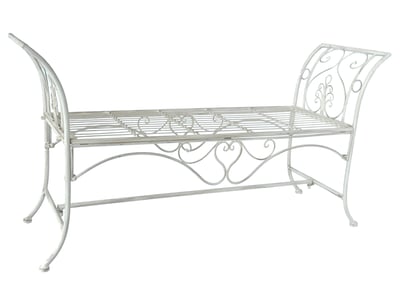
1. Heritage Grey Metal Garden Bench — £135Material: Cast aluminium Dimensions: 1290mm W x 545mm D x 920mm H Weight: 18kg Best for: Georgian terraces, Victorian gardens Why it works: The cheapest bench we stock. Cast aluminium gives the look of cast iron at a fraction of the weight and price. Powder-coated grey finish suits almost any period property. |
|
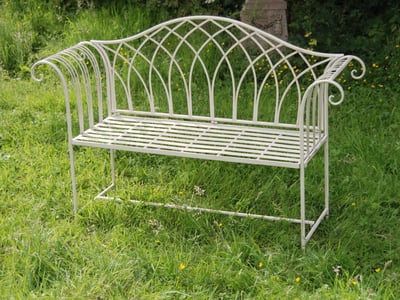
2. Longhope Cream Metal Garden Bench — £139Material: Cast aluminium Dimensions: 1230mm W x 530mm D x 880mm H Weight: 16kg Best for: Cotswold cottages, Regency villas Why it works: Cream powder coat lifts shady corners. Lattice back panel echoes Regency conservatory designs. Lightest bench in the range at 16kg. |
|
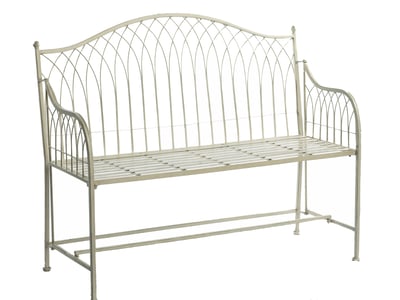
3. Pimlico Cream Metal Garden Bench — £149Material: Cast aluminium Dimensions: 1320mm W x 555mm D x 905mm H Weight: 19kg Best for: London townhouse gardens Why it works: Pimlico fluting and central scroll motif. Named after the Belgravia district, this bench suits formal terraces with stone paving. |
|
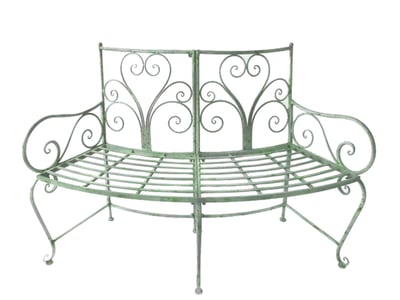
4. Hawkeshead Curved Green Metal Bench — £149Material: Cast aluminium Dimensions: 1280mm W x 550mm D x 895mm H Weight: 18kg Best for: Arts and Crafts gardens, Lake District style Why it works: Sage green powder coat blends with hedging and lawn edges. Gentle curve suits informal arrangements around a circular tree or fountain. |
|
5. Baroque Metal Garden Bench Cream — £150Material: Cast aluminium Dimensions: 1300mm W x 540mm D x 905mm H Weight: 19kg Best for: Baroque, Italianate, formal gardens Why it works: Acanthus leaf scrollwork and pierced back. The most decorative bench in the lineup. Sits well against a yew or box hedge. |
|
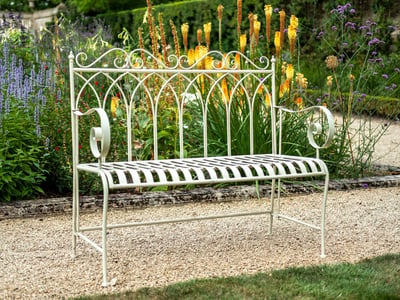
6. Revival Cream Metal Garden Bench — £149Material: Cast aluminium Dimensions: 1295mm W x 540mm D x 895mm H Weight: 18kg Best for: Victorian and Edwardian gardens Why it works: Patterned cast back panel, classic Victorian motifs. Cream finish softens against red brick walls. |
|
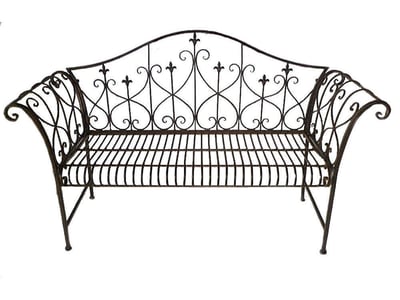
7. Yalding Antiqued Metal Garden Bench — £150Material: Cast aluminium Dimensions: 1305mm W x 555mm D x 910mm H Weight: 20kg Best for: Tudor and Elizabethan revival Why it works: Antique bronze finish replicates aged wrought iron. Heritage hand-applied patina, no two benches identical. |
|
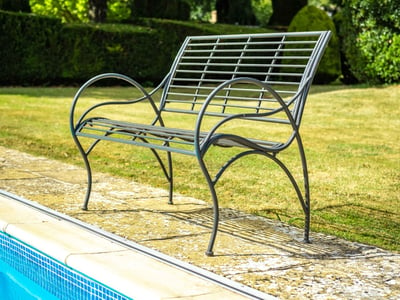
8. Scala Grey Metal Garden Bench — £155Material: Cast aluminium Dimensions: 1330mm W x 555mm D x 910mm H Weight: 20kg Best for: Italianate gardens, Regency follies Why it works: Architectural Roman fluting on the back. Sits beautifully against a Portland stone or Bath stone façade. |
|
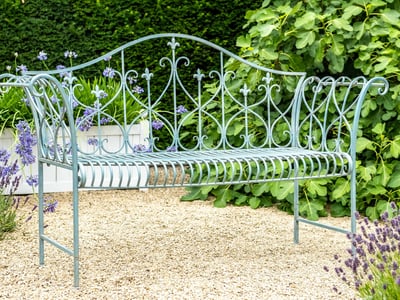
9. Yalding Antiqued Blue Metal Garden Bench — £160Material: Cast aluminium Dimensions: 1305mm W x 555mm D x 910mm H Weight: 20kg Best for: Coastal gardens, Devon cottages Why it works: Antiqued teal-blue finish, distinctive. Looks at home in a coastal walled garden or a Mediterranean-style terrace. |
|
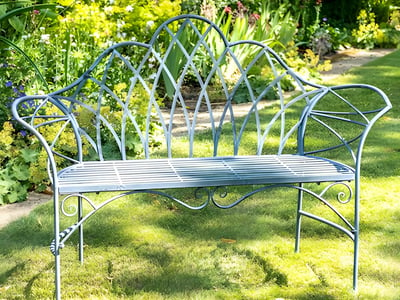
10. Mayfair Lead Grey Metal Garden Bench — £169Material: Cast aluminium Dimensions: 1325mm W x 560mm D x 910mm H Weight: 21kg Best for: Edwardian formal gardens Why it works: Lead grey powder coat mimics weathered traditional lead piping. Suits stone-paved areas and gravel paths. |
|
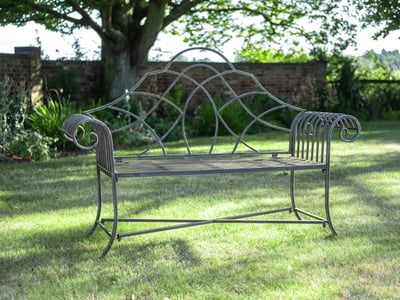
11. Mayfair Grey Metal Garden Bench — £199Material: Cast aluminium Dimensions: 1325mm W x 560mm D x 910mm H Weight: 21kg Best for: Country house terraces Why it works: Same Mayfair frame, slightly paler grey. Subtle, blends rather than dominates. Pair with topiary or low box parterre. |
|
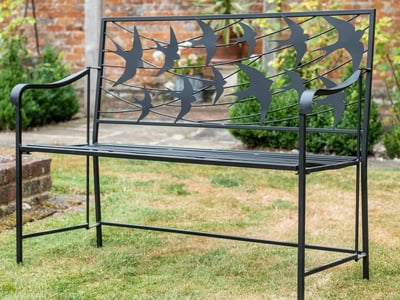
12. Swallow Black Metal Garden Bench — £195Material: Cast aluminium Dimensions: 1340mm W x 570mm D x 920mm H Weight: 23kg Best for: Gothic Revival, Victorian terraces Why it works: Swallow scrollwork on the back panel, classic Victorian motif. Black powder coat is sharpest against pale walls or limestone. |
|
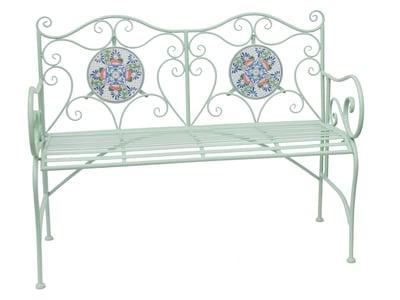
13. Rhone Metal Garden Bench with Floral Mosaic — £199Material: Cast aluminium Dimensions: 1310mm W x 560mm D x 905mm H Weight: 22kg Best for: Arts and Crafts gardens Why it works: Pierced floral mosaic back, decorative. Most distinctive bench in the range. Sits well as a focal point at the end of a path. |
|
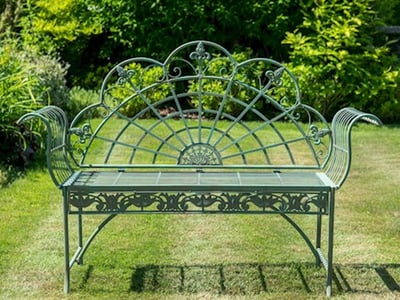
14. Dove Tail Antique Green Metal Garden Bench — £199Material: Cast aluminium Dimensions: 1330mm W x 565mm D x 910mm H Weight: 22kg Best for: Country house and parkland Why it works: Dove tail joinery detail, hand-applied antique green patina. The most weathered-looking bench. Sits well in established borders. |
|
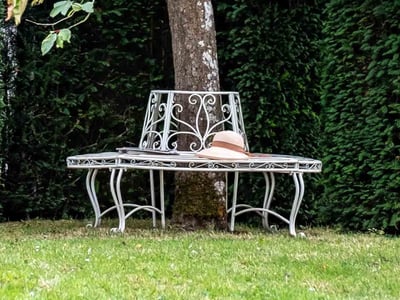
15. Hawkeshead Cream Metal Tree Bench — £299Material: Cast aluminium Dimensions: 1820mm x 1820mm x 920mm H (hexagonal, fits round trees 600-800mm girth) Weight: 42kg in 6 sections Best for: Country estates, mature gardens Why it works: Hexagonal tree seat in 6 sections wraps round a mature tree. The statement piece. Assembles around any trunk 600-800mm in girth. |
Matt's pick: best value period garden bench

|
Matt's pick for best valueBench: Heritage Grey Metal Garden Bench Best for: First-time metal bench buyers who want Victorian period styling without overspending Why I recommend it: I have one in my own back garden against a red brick wall. Six years in and it still looks identical to the day I unboxed it. Zero rust, zero repainting. The grey finish suits almost any UK property era from Georgian to Edwardian. The cheapest bench in the range and genuinely the one I recommend most. Price: £135 |
Quick reference comparison table
| Bench | Material | Weight | Price | Best for |
|---|---|---|---|---|
| Heritage Grey Metal Garden Bench ★ | Cast aluminium | 18kg | £135 | Georgian terraces |
| Longhope Cream Metal Garden Bench | Cast aluminium | 16kg | £139 | Cotswold cottages |
| Pimlico Cream Metal Garden Bench | Cast aluminium | 19kg | £149 | London townhouse gardens |
| Hawkeshead Curved Green Metal Bench | Cast aluminium | 18kg | £149 | Arts and Crafts gardens |
| Baroque Metal Garden Bench Cream | Cast aluminium | 19kg | £150 | Baroque |
| Revival Cream Metal Garden Bench | Cast aluminium | 18kg | £149 | Victorian and Edwardian gardens |
| Yalding Antiqued Metal Garden Bench | Cast aluminium | 20kg | £150 | Tudor and Elizabethan revival |
| Scala Grey Metal Garden Bench | Cast aluminium | 20kg | £155 | Italianate gardens |
| Yalding Antiqued Blue Metal Garden Bench | Cast aluminium | 20kg | £160 | Coastal gardens |
| Mayfair Lead Grey Metal Garden Bench | Cast aluminium | 21kg | £169 | Edwardian formal gardens |
| Mayfair Grey Metal Garden Bench | Cast aluminium | 21kg | £199 | Country house terraces |
| Swallow Black Metal Garden Bench | Cast aluminium | 23kg | £195 | Gothic Revival |
| Rhone Metal Garden Bench with Floral Mosaic | Cast aluminium | 22kg | £199 | Arts and Crafts gardens |
| Dove Tail Antique Green Metal Garden Bench | Cast aluminium | 22kg | £199 | Country house and parkland |
| Hawkeshead Cream Metal Tree Bench | Cast aluminium | 42kg in 6 sections | £299 | Country estates |
Where to position a metal garden bench
The right placement does as much work as the bench itself. Five rules from years of UK garden visits:
Place it where you stop, not where you walk past. A bench beside a path is rarely used. A bench at the end of a path with a view is used daily. Position the bench so the seated person looks at the best part of the garden.
Set it on a paved or gravel base. Grass under the legs sinks over time and the bench tilts. Two paving slabs cost £20 and last forever. A 1m by 1.5m gravel pad gives drainage and a defined sitting area.
Pair with a pedestal or planter for symmetry. A solo bench against a wall feels temporary. The same bench flanked by two stone pedestals reads as a designed garden feature. Our Stone Pedestals collection works well for this.
Mind the sun angle. South-facing benches get full afternoon sun, ideal for spring and autumn use, hot in July-August. North-facing benches stay cool and shaded, useful in summer. East-facing benches catch the morning sun, west catches the evening light. Choose the time of day you actually sit outside.
Consider the wall behind. A bench against a blank wall benefits from a planted backdrop. Wisteria, climbing rose, or a trained pear espalier all soften the visual line and make the bench feel intentional rather than parked.
Cast aluminium vs cast iron vs wrought iron
The material question is the one customers ask most often. The short answer:
| Property | Cast iron | Wrought iron | Cast aluminium |
|---|---|---|---|
| Typical weight (1.3m bench) | 60-90kg | 30-50kg | 16-23kg |
| Rust risk | High, annual treatment | High, annual treatment | None |
| Frost resistance | Good | Good | Excellent to -20C |
| Price for 1.3m bench (2026) | £400-£1,200 | £500-£1,500 | £135-£299 |
| Maintenance per year | 3-5 hours | 2-4 hours | 5 minutes wipe-down |
| Lifespan with care | 50-150 years | 50-100 years | 25-40 years |
| Look authenticity | Original | Hand-forged texture | 95% identical at distance |
| Two-person lift required | Yes | Sometimes | No (one person) |
For the same period look without the maintenance, cast aluminium wins on every practical measure. For collectors and restoration projects on listed buildings, real cast iron and wrought iron remain the right choice but at three to five times the price. Most UK garden owners now choose cast aluminium for the lifecycle cost and convenience.
For all-round care of metal ornaments and benches in UK weather, see our metal garden ornaments care guide which covers the five-metal comparison in detail.
Common mistakes when buying a metal garden bench
Buying real cast iron without understanding the maintenance. Cast iron rusts. Even high-quality casts need annual rust-treatment and repainting after the first 2-3 years. Customers who want zero maintenance often regret the cast iron choice within a year.
Underestimating wind exposure. A 16-18kg bench in a coastal garden blows over in a gale. For exposed sites, choose a 20kg+ bench or use a permanent fixing.
Placing the bench on bare grass. The legs sink, the bench tilts, water pools under the feet. Always set on a paving slab, gravel pad, or compacted hardcore.
Choosing the wrong colour for the wall behind. A black bench in front of a dark hedge disappears. A cream bench against white render also disappears. Aim for contrast between bench and backdrop.
Buying without measuring. The Hawkeshead Tree Bench needs a 2m clear circle. The Mayfair fits in a 1.5m space. Measure before ordering.
Care and maintenance
Cast aluminium needs almost no annual maintenance, but a five-minute spring routine extends the powder-coat life significantly.
Spring wash. Once a year in March or April, wash the bench with warm soapy water and a soft cloth. Rinse. Dry. This removes winter dirt and grime that can pit the powder coat over time.
Touch-up paint for chips. Small chips from garden tools or branches can be touched up with matching powder coat aerosol paint. Ascalon supplies these for £9-£15 per can.
Winter storage optional. All 15 benches are designed for year-round outdoor display. Some customers store benches in a shed over winter for aesthetic reasons, but the cast aluminium and powder coat are unaffected by UK winters at -20C.
Antiqued finishes. Yalding, Dove Tail, and similar antiqued benches need no care at all. The hand-applied finish is designed to weather further over time; this is part of the intended look.
Frequently asked questions
What is the best material for a UK garden bench?
Cast aluminium gives the best balance of look, weight, price, and maintenance for UK conditions. Powder-coated cast aluminium replicates Victorian cast iron at 70-80% lower weight, costs 50-75% less, and resists rust completely. Cast iron remains the original choice for restoration projects but requires annual maintenance and weighs 60-90kg per bench, needing two people to move.
How much should I spend on a metal garden bench?
Quality cast aluminium benches start at £135 and run to £299 for the 1.3-1.8m size range. Cheaper benches under £100 are typically pressed steel with thin powder coat that chips and rusts within 2-3 years. Above £300 you enter the cast iron and wrought iron territory where the price doubles or trebles for similar visual impact. The £135-£299 cast aluminium range hits the value sweet spot.
Do metal garden benches rust outdoors in the UK?
Cast aluminium benches do not rust because aluminium does not oxidise to red iron oxide. Powder-coated cast aluminium can develop white surface oxidation only if the powder coat is severely damaged. Real cast iron and wrought iron will rust without annual maintenance. Steel benches rust unless galvanised or aggressively coated. For zero-rust outdoor use, choose cast aluminium.
How do I clean a powder-coated metal garden bench?
Wash with warm soapy water and a soft cloth once a year in spring. Avoid wire brushes, abrasive scourers, and harsh solvents that damage the powder coat. Bird droppings should be removed within a week to prevent acid pitting. Mossy patches wipe off with diluted washing-up liquid. Pressure washers are unnecessary and can lift the powder coat at edges.
What size garden bench do I need?
Standard 1.2-1.4m benches seat 2-3 adults; 1.5-1.8m benches seat 3-4; tree benches at 1.8m hexagonal seat 6-8. Allow 600mm of bench width per adult for comfortable seating. For a couple, a 1.2-1.3m bench works. For a family or guests, choose 1.4m+. Tree benches around mature trees seat the largest groups but need a clear 2m radius for installation.
Will a metal bench look right at a Victorian terrace house?
Yes, Victorian and Edwardian properties suit metal benches better than any other style. Cast iron and reproduction cast aluminium benches were the standard garden seating in late-Victorian and Edwardian terraces. Look for decorative back panels, scrollwork, and traditional motifs like the Swallow, Revival, or Baroque designs. Black or cream finishes work best against red brick walls.
Find your metal garden bench
Browse our full metal garden furniture collection, 40+ items from £119 to £1,500. Free UK mainland delivery on every order. All benches frost-proof and powder-coated for year-round outdoor display.
Browse Metal Garden Furniture