
Garden Bench Buying Guide UK: Stone, Metal or Teak? Weight Decides More Than Looks
Written by Matt W on 11th Jun 2026.
A garden bench costs £129 to £1,850 in the UK depending on material. Cast stone benches weigh 76-108kg and granite up to 200kg, so they stay put all year and cannot blow over. Metal benches give you a back and arms for the least money. Teak is the most comfortable but the dearest. Three specs decide the right bench: weight, seat height (420-450mm) and width (allow 550mm per person).
Key takeaways
- ✓ Weight is the spec to check first. Our cast stone benches run 76.3kg to 107.5kg, and the Epsom granite bench is 200kg. Nothing under 25kg should be left loose in an exposed garden
- ✓ Allow 550mm of seat width per adult: a 1080mm bench is an honest two-seater, a 1500mm bench seats three
- ✓ Seat height should be 420-450mm, the same as a dining chair. Lower than 400mm and older knees will struggle to stand back up
- ✓ Stone and granite need no winter storage and improve with weathering. Painted metal needs a five-minute touch-up check each spring
- ✓ Backless stone benches suit pausing and plant-level seating. If you plan to sit for an hour, you want a back, which means metal or timber
- ✓ A tree bench is the option most people forget: ours wraps a trunk up to 45cm across and turns dead shade into the best seat in the garden
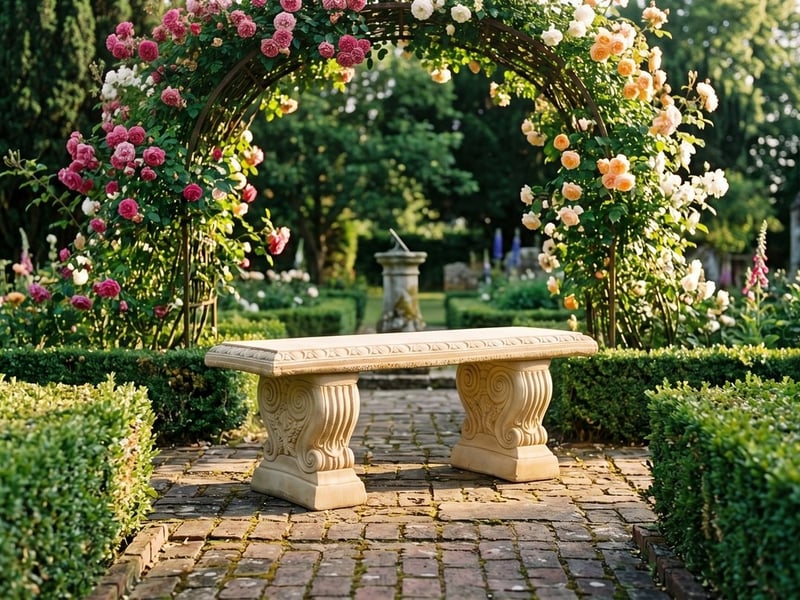
Shop the Gothic Stone Garden Bench in Sandstone →
Installer's note
We deliver benches every week, and the calls we get afterwards are never about colour. They are about weight, in both directions. The customer who bought a light sheet-metal bench rings in November because it has gone over in a gale and chipped the patio. The customer who bought granite rings because they want it moved two metres and cannot shift it. Decide how permanent you want the seat to be before you look at a single photo. Everything else in this guide hangs off that one decision.
The three numbers that decide a garden bench
Before material or style, settle three numbers. First, weight: under 25kg needs anchoring or winter storage, 70kg-plus stays put on its own, 150kg-plus is furniture-grade permanent. Second, width: 550mm of seat per adult is the honest figure, so treat anything under 1100mm as a two-seater. Third, seat height: 420-450mm matches a dining chair, and most people find that the comfortable range for sitting down and standing up again.
Material then follows from how you answered. Here is how the four main types compare across our range.
| Material | Typical price | Weight | Back & arms | Winter care | Best for |
|---|---|---|---|---|---|
| Cast stone | £259-£339 | 76-108kg | No | None | Permanent spots, borders, period gardens |
| Granite | £350 | 200kg | No | None | Modern schemes, one-time placement |
| Painted metal | £129-£299 | Under 25kg | Yes | Spring touch-up check | Comfort on a budget, movable seating |
| Teak | £1,850 | 40kg-plus | Yes | Optional oiling | Long sitting, decades of daily use |
How heavy should a garden bench be?
Heavy enough that the wind cannot claim it, light enough that you can live with where it lands. From our own delivery records: the Curved Leaf stone bench is 76.3kg, the Gothic is 107.5kg, and the Epsom granite bench is a flat 200kg. None of those has ever featured in a storm-damage call.
In March 2026 we delivered that Epsom to a back garden in Macclesfield. It took three of us with a sack truck and a pair of scaffold boards over the lawn, and once it sat on its slabs we gave the customer the standard speech: it is never moving again, so be sure of the spot before we let go. She was. That is the granite trade-off in one sentence: total permanence, zero flexibility.
Light benches are not wrong, they just need a plan. Anchor bolts into paving, or a spot sheltered from the prevailing south-westerlies, or a shed to overwinter in.
Cast stone benches: the permanent seat
Cast stone is reconstituted natural stone, moulded and cured rather than carved, which is how a 107.5kg Gothic bench with carved-effect legs costs £319 instead of a quarry price. It does not rot, rust, fade or blow over, and frost actually improves it: after two or three winters the surface picks up lichen and softens into something that looks original to the garden.
The Curved Leaf bench is the one we point first-time stone buyers to. It is 1100mm wide, 430mm high at the seat, 76.3kg, and the curved seat with leaf-carved supports reads as period without being fussy. At £259 it is also the cheapest stone bench we stock. Stone weathers on a schedule you can read about in our guide to why stone garden ornaments get better with age.
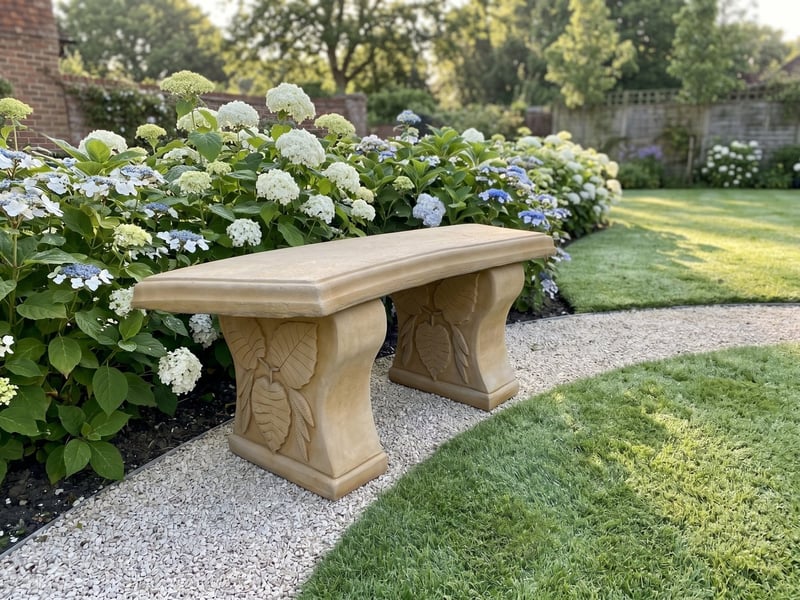
Shop the Curved Leaf Stone Garden Bench in Sandstone →
Granite: the bench you place once
Granite is the densest material we sell seating in. The Epsom two-tone bench is 1200mm wide, 420mm high and 200kg, with a polished dark slab on pale dressed-granite supports. Polished granite ignores everything Britain throws at it: no sealing, no green film that wipes into the grain, and bird mess sponges straight off the polished face.
It suits modern gardens the way cast stone suits period ones. Against porcelain paving and steel planters, a granite slab bench looks deliberate where a carved sandstone seat would look borrowed. At £350 it costs less than many softwood benches that will be in a skip inside ten years, which is the quiet maths that sells it.
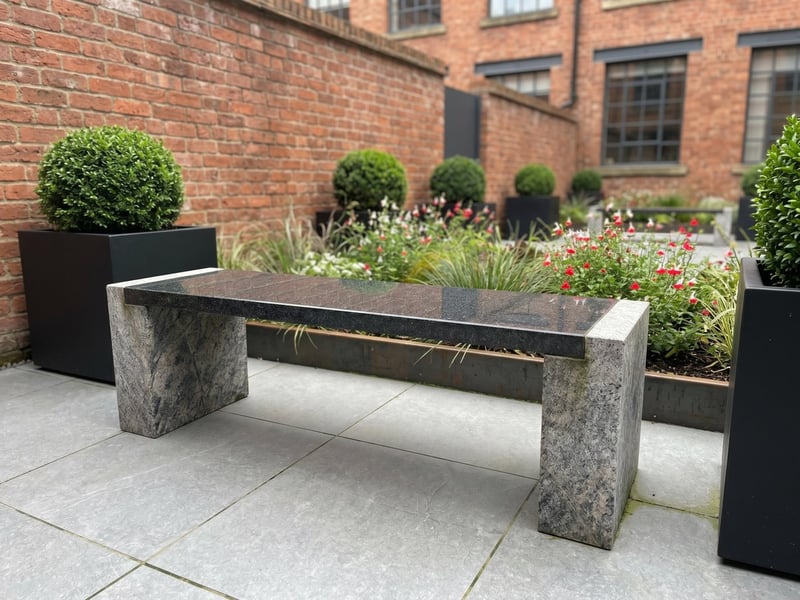
Shop the Epsom Two Tone Granite Garden Bench Large →
Metal benches: a back and arms for the least money
If you want to sit for longer than ten minutes, you want a backrest, and metal is the cheapest way to get one. The Alsace is a 105cm two-seater in sage green with scrolled arms at £129, which makes it the lowest-priced bench in our range. The Mayfair stretches to 150cm in a Lutyens-style silhouette for £199 and genuinely seats three.
The honest caveats: painted steel benches are light, so site them out of the wind or fix them down, and the coating wants a once-a-year inspection. Find a chip, dab it with exterior metal paint, done in five minutes. Skip that for three years and rust gets under the coating. We compared every style we stock, from Victorian scrollwork to Lutyens, in our round-up of 15 period metal bench designs.

Shop the Alsace Green Metal Garden Bench →
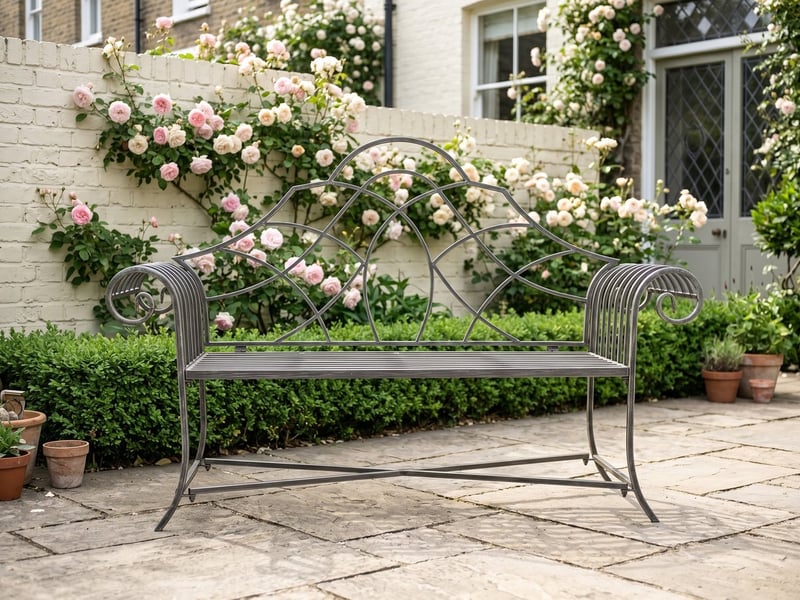
Shop the Mayfair Grey Metal Garden Bench →
Teak: the comfort benchmark
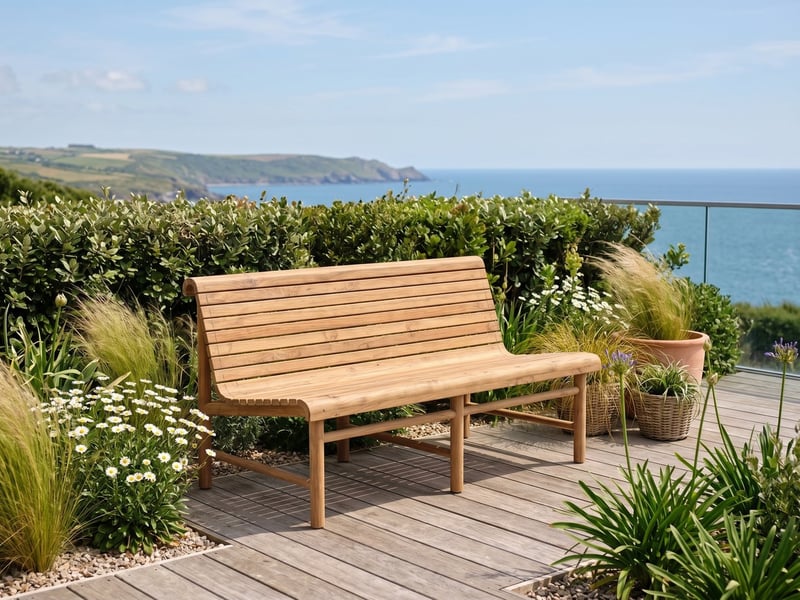
Teak is what every "weatherproof timber" imitates. Its natural oils mean it can live outside untreated for decades, fading from honey to silver-grey unless you oil it annually to keep the colour. The Station Bench Double is our flagship: 140cm of slatted teak rated to 250kg, with copper wire detailing along the frame, at £1,850.
That price buys the thing stone and metal cannot offer: warmth. Teak never feels cold through clothing the way stone does at 8am, the slats flex a little under you, and the contoured seat is the one bench in this guide you could read a book on without a cushion. If the bench is going beside a back door and will be sat on daily, timber earns its premium. If it is a focal point at the end of the garden used twice a week, it does not.
Shop the Station Bench Double in Teak →
Tree benches: the seat most buyers forget
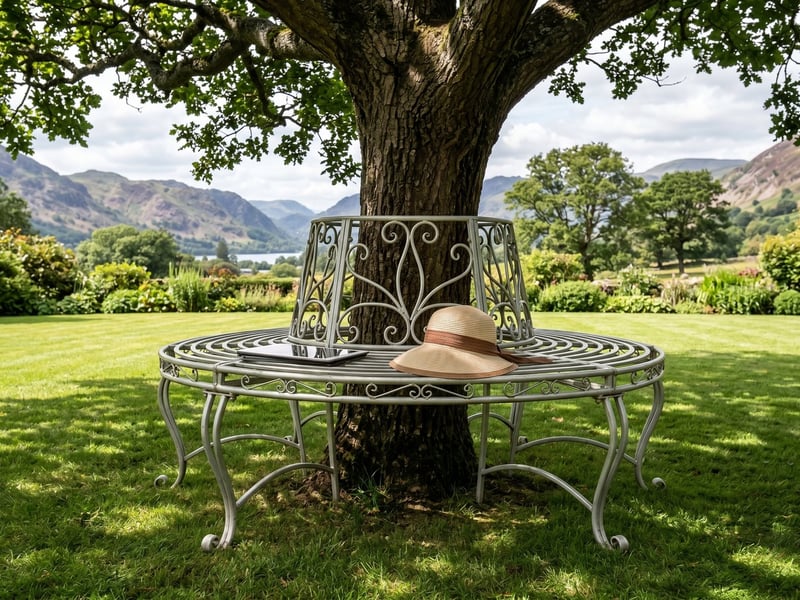
A tree bench wraps the trunk of a mature tree and faces outward in every direction, which turns the shadiest, least usable patch of lawn into the most popular seat from June to August. The Hawkeshead is a cream metal wrap-around with scrolled panels, 151cm across, and fits any trunk up to 45cm in diameter, at £299.
Measure before ordering: trunk circumference at seat height, divided by 3.14, gives the diameter. Leave at least 5cm of clearance for the tree to thicken, and check the ground between the roots is level enough for all the feet to touch. On a sloping root plate, a paving slab under the low side stops the permanent wobble that ruins these benches.
Shop the Hawkeshead Cream Metal Tree Bench →
Comfort: seat height, depth and the backrest question
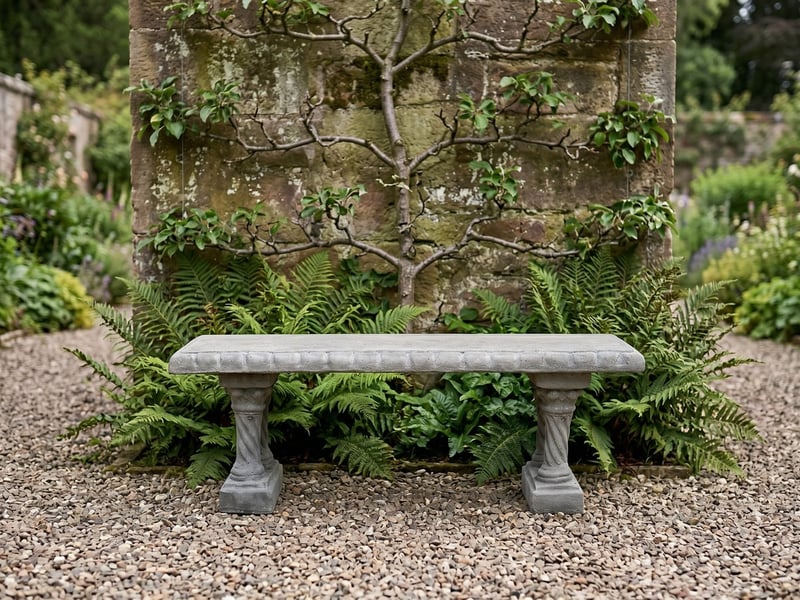
Comfort comes down to three measurements you can check on any product page. Seat height: 420-450mm suits most adults; the Curved Leaf sits at 430mm, the Epsom at 420mm. Seat depth: stone benches run 300-400mm, fine for sitting upright, while timber benches with backs run deeper. Backrest: stone and granite benches are backless by design, which is right for a five-minute pause and wrong for a long afternoon.
The fix for stone's hardness is not buying a different bench, it is a 40mm outdoor cushion that lives in a basket by the door. The fix for backlessness is placement: set a backless bench against a wall, hedge or border so there is something behind your shoulders, the way the Straight Pattern bench sits below.
Shop the Straight Pattern Stone Garden Bench →
Matt's tip: level the base before the bench arrives
Nine out of ten "my stone bench wobbles" calls are the ground, not the bench. Stone legs do not flex, so a 5mm dip under one pedestal becomes a rock you feel every time you sit. Before delivery day, set two paving slabs where the legs will land, bedded level on sharp sand, and check them with a spirit level both ways. It takes twenty minutes and it is much easier than nudging a 107kg bench around afterwards with a crowbar and regret.
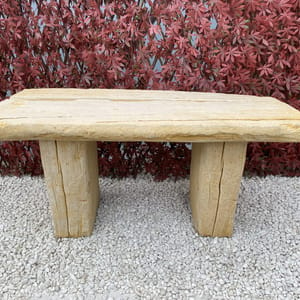
Matt's pick for a first stone bench
Best For: Anyone who wants one bench that will still be standing in thirty years
Why I Recommend It: The Sleeper hits every number in this guide: 1030mm wide for a snug two, a 450mm seat height that matches a kitchen chair exactly, 400mm of depth, and 107kg of cast sandstone that shrugs off gales. The railway-sleeper styling works in cottage and modern gardens alike, and it is the bench in our range I have never had a complaint about.
Price: £319
Looking after a garden bench through a UK year
Stone and granite need nothing. Let lichen come; if you ever want it gone, our guide to cleaning stone garden ornaments covers the soft-brush method that removes growth without scarring the surface. Painted metal gets one spring inspection: wash, dry, dab any chips. Teak gets a choice: oil each May to keep the honey colour, or do nothing and let it silver, which protects it just as well.
The full cast stone and granite bench range is built for exactly this hands-off life, and if comfort with a backrest is the priority, the painted steel seating range starts at £129.
Frequently asked questions
What is the best material for a garden bench?
Cast stone or granite for permanence, metal for comfort per pound, teak for daily sitting. Stone benches weigh 76-200kg, never blow over and need no winter care. Metal gives you a back and arms from £129 but wants an annual paint check. Teak is the most comfortable and the dearest at £1,850.
How heavy is a stone garden bench?
Between 76kg and 200kg across our range. The Curved Leaf cast stone bench is 76.3kg, the Gothic is 107.5kg and the Epsom granite bench is 200kg. That mass is the point: nothing in that bracket moves in a gale, and none of them has ever come up in a storm-damage call to us.
What height should a garden bench seat be?
Between 420mm and 450mm, the same as a dining chair. Our stone benches sit at 420-450mm depending on the design. Below 400mm, getting up becomes hard work for older knees; above 480mm, shorter sitters' feet leave the ground.
How wide should a bench be for two people?
At least 1080mm, allowing 550mm of seat per adult. A 1030-1100mm bench is a true two-seater, 1200mm gives two adults breathing room, and 1500mm seats three. Manufacturers' seat counts run optimistic, so measure against the 550mm figure rather than the listing.
Can you leave a garden bench outside all winter?
Stone, granite and teak yes; light painted metal benches are better sheltered or fixed down. Frost improves cast stone by weathering it, polished granite is unaffected, and teak's oils protect it untreated. Painted steel survives winter fine but a sub-25kg bench can blow over in exposed gardens, which is how coatings get chipped and rust starts.
Do stone benches need a base?
Yes: two level paving slabs bedded on sharp sand, one under each pedestal. Stone legs sink into bare lawn within a season and a 5mm dip makes a rigid bench rock permanently. Twenty minutes of base preparation before delivery saves levering a 100kg bench around afterwards.
Further reading
- Garden Furniture Buying Guide UK: Aluminium vs Rattan vs Polywood vs Steel
- Garden Dining Sets: How to Choose by Garden Size and Group
- Corner Sofa Sets: 5 Layouts for Awkward UK Garden Shapes
- The Complete Guide to Garden Ornament Materials
- How to Protect Garden Ornaments in Winter: A Month-by-Month UK Guide
For statues, water features and the rest of the outdoor range, browse our full collection of garden ornaments.
Matt W
Garden & Outdoor Specialist
Matt has spent over 16 years working hands-on with garden products across the UK. He tests materials in Staffordshire clay soil and hard water conditions, and writes from direct experience fitting, maintaining, and repairing everything from stone statues to cast iron furniture. His advice is based on what actually survives a British winter, not what looks good in a catalogue.