
Elephant Garden Statues: Meaning, Luck & Best UK Picks
Written by Matt W on 23rd Jun 2026.
Elephant garden statues symbolise wisdom, strength, good luck and family. A raised trunk is read as good fortune in most traditions, a lowered trunk as protection and longevity. Our UK range runs from a £49 sandstone Indian elephant to a £739 cast-aluminium fountain, in frost-proof terrazzo, cast stone and resin, from 200mm to 710mm tall.
Key Takeaways
- Elephants stand for wisdom, strength, luck, protection and family across Hindu, Buddhist and African tradition
- A trunk up is widely read as good fortune and energy; a trunk down as protection and longevity, though traditions differ on which is luckier
- In Feng Shui an elephant facing into the garden draws luck inward; facing the gate it stands guard
- Our range spans £49 to £739 across terrazzo marble, true cast stone, crushed marble resin and cast aluminium
- Heights run from 200mm to 710mm and weights from 8kg to 55kg, so the larger pieces never need fixing down
- Every stone and resin piece we stock is frost-proof for year-round outdoor display in the UK
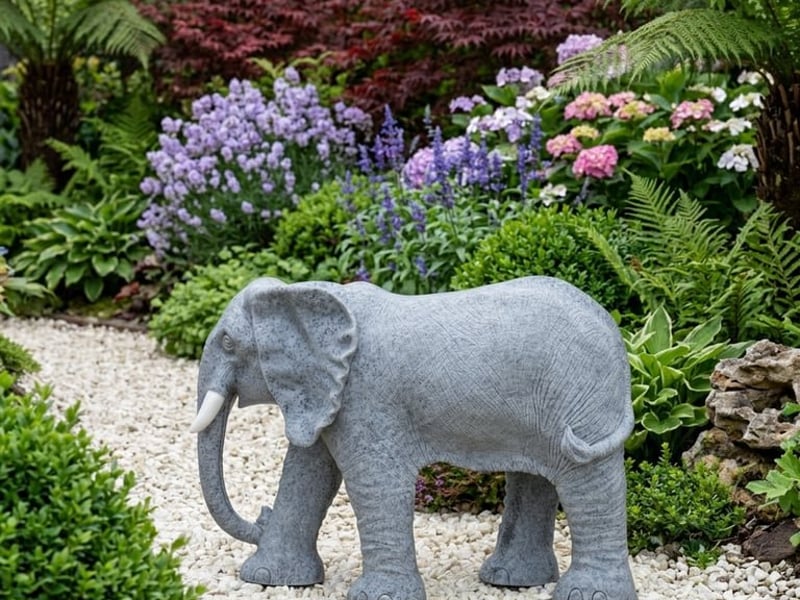
Shop the Extra Large Elephant in Grey →
Matt's Note
An elephant is the one animal ornament people place for meaning as much as looks. So the question I get is never just "where does it go", it is "which way should it face". My advice is simple. Decide what you want the piece to do first. If it is there to welcome people and pull good energy into the garden, turn the trunk and face toward the house. If it is guarding a gate or a boundary, face it outward. Pick the job, then place it. A statue that means something to you reads better than one chosen on size alone.
What does an elephant garden statue symbolise?
An elephant garden statue symbolises wisdom, strength, good luck, protection and family loyalty. The animal carries this meaning across several traditions at once. In Hindu culture the elephant-headed god Ganesha is the remover of obstacles and the patron of new beginnings. In Buddhism the elephant stands for mental strength, patience and calm. Across many African cultures it represents leadership, memory and the bond of the herd.
That mix is why an elephant suits a garden so well. It is a centrepiece that also carries intent, the same reason people choose Buddhas, lions or hares. If you want the full picture of what each figure means, our guide to what garden statues symbolise sets elephants alongside the other classic symbols. The mother-and-baby form, in particular, is read as maternal love and the protection of family, which makes it a popular gift.
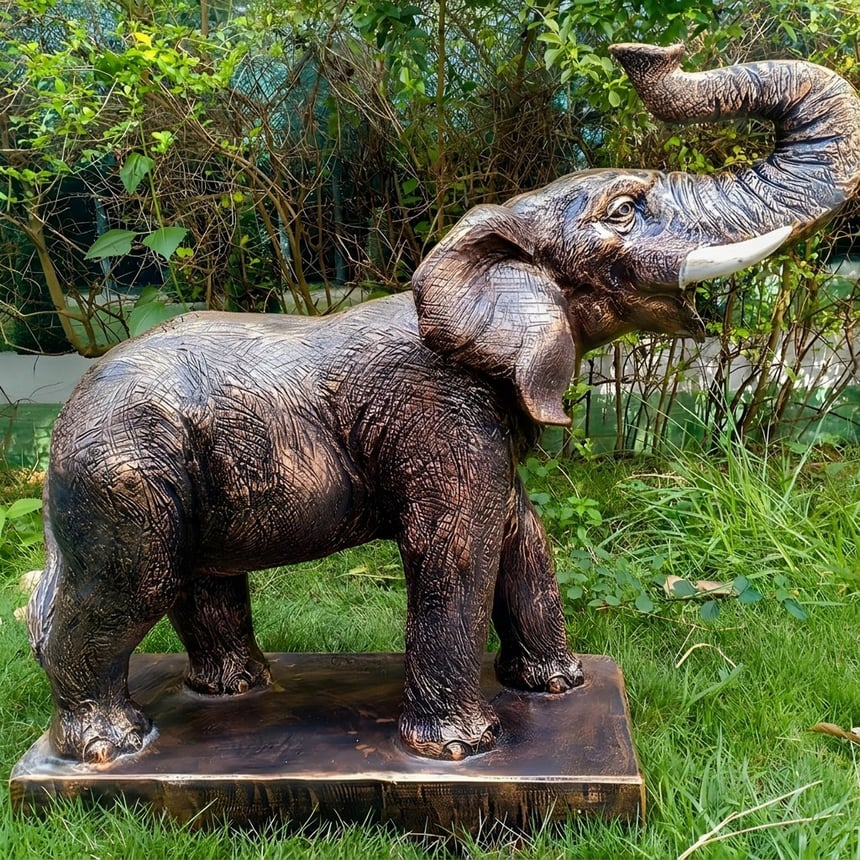
Shop the Roaring Elephant in Bronze →
What does an elephant's trunk up or down mean?
A raised trunk is the lucky pose in most traditions, read as good fortune, energy and victory. The idea is that the lifted trunk showers blessings outward, the way an elephant sprays water, so trunk-up pieces are the popular choice for entrances and places you want to feel welcoming. Our 700mm Roaring Elephant in Bronze and the small Indian Elephant both raise the trunk, and the Baby Elephant Fountain takes it literally, spraying water from the tip.
A lowered trunk is not unlucky. Many traditions read it as protection, longevity, patience and the gathering of resources, the steady rather than the celebratory virtues. It is worth knowing that sources do disagree here, and a few reverse the two meanings entirely, so choose the pose that speaks to you rather than treating one as a rule. Our Extra Large Elephant in Grey carries a calm curved trunk, which suits a quiet corner more than a busy doorway.
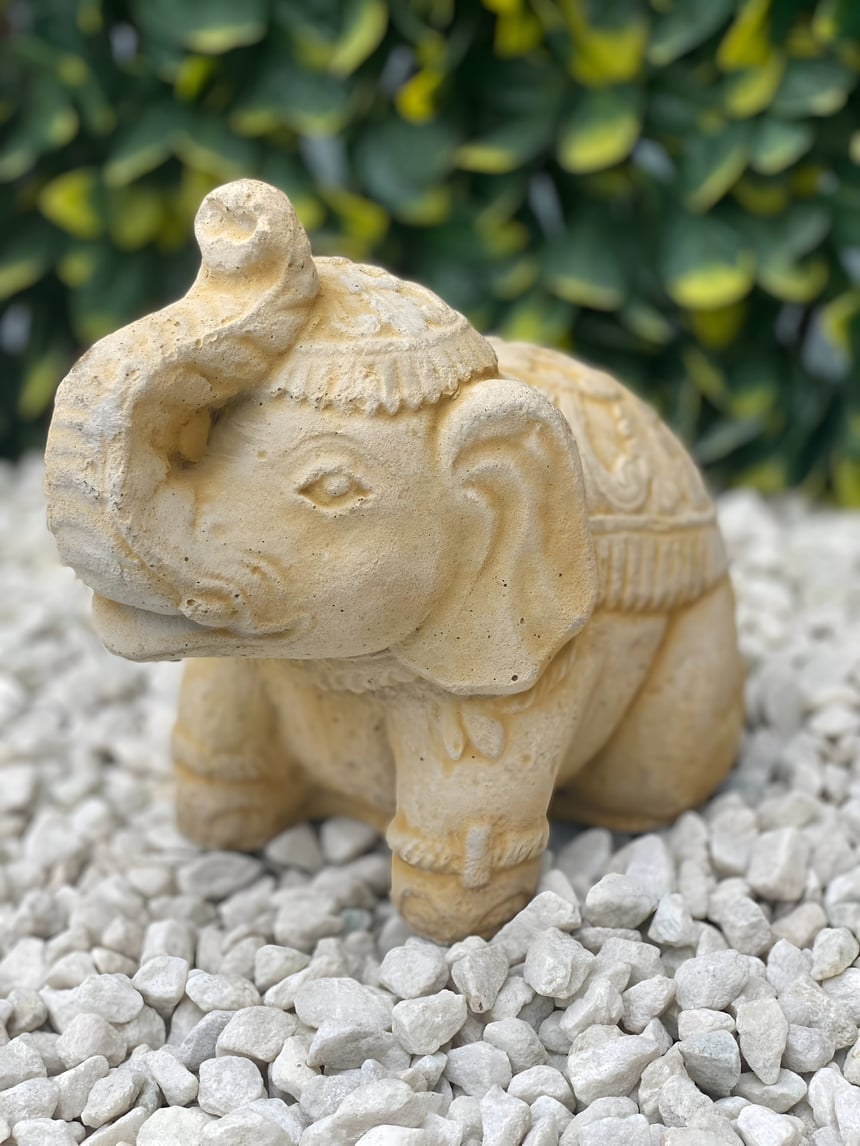
Shop the Indian Elephant in Sandstone →
Which way should an elephant statue face in the garden?
In Feng Shui an elephant facing into the home or garden draws good fortune inward, while one facing the entrance acts as a guardian. Both are valid, so the direction depends on what you want the piece to do. Place it looking in toward a seating area or the back of the house to gather positive energy where you spend time. Place it looking out at a gate, drive or boundary to stand watch over the space.
Some traditions add that north is the luckiest direction for an elephant to face, but do not force an awkward position to chase a compass point. The same logic of intent guides where people set a Buddha and its placement: the meaning comes first, the spot follows. A pair flanking a path or gateway is the classic guardian arrangement, one elephant each side, both facing out.
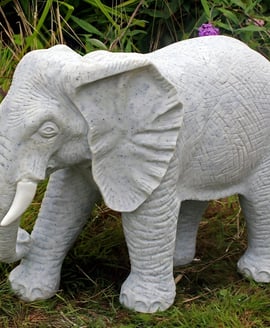
Matt's Pick for most gardens
Best For: A border or lawn edge that wants real presence without a huge piece
Why I Recommend It: The Standing Elephant in Granite is the one I steer most people to. At 420mm it reads clearly from across a garden, the hand-painted granite finish looks like real stone rather than a casting, and it is frost-resistant for year-round use. It costs far less than the big terrazzo pieces but still holds a sightline.
Price: £189
Where should you place an elephant statue?
Place an elephant where it marks something: a doorway, a path, a gateway or the edge of a pond. Real elephants live near water, so a piece by a wildlife pond or a water feature looks settled rather than stranded. A large elephant works as a single anchor seen from the house, while small sitting elephants suit a rockery, a border gap or a step where a tall piece would loom.
Scale the elephant to the spot. A 200mm Indian elephant is lost in the middle of a lawn but perfect tucked into planting; a 520mm or 700mm piece needs space around it to breathe. Our guide to how tall a statue should be walks through matching height to a space. For a family feel, set a larger elephant with a baby alongside, the way you might group wildlife garden ornaments into a natural scene.
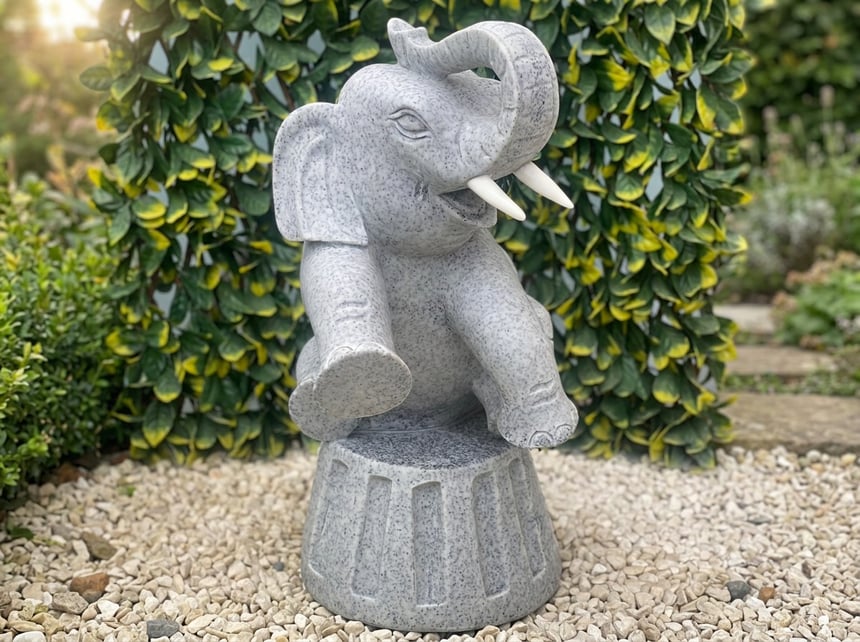
Shop the Sitting Elephant in Grey →
Watch the weight before you buy
Cast stone is heavier than it looks. The sandstone Ellie elephant weighs 55kg and the Fighting Elephant 33kg, so plan how you will move them before they arrive. Carry from the base, never the trunk or ears, which are the weak points on any cast piece. Set heavy elephants on a firm slab or compacted ground, not soft soil, or they will lean over a wet winter. Resin and aluminium pieces are far lighter and easier to reposition while you settle on the right spot.
What are elephant garden statues made from?
Most outdoor elephant statues are made from one of four materials: terrazzo marble, true cast stone, crushed marble with resin, or cast aluminium. Each behaves differently outdoors. Terrazzo marble, used in our Extra Large and Sitting grey elephants, sets crushed granite into a stone-effect finish that is frost-proof and weathers naturally. True cast stone, like the 55kg Ellie elephant, is the heaviest and ages with a little moss, exactly the patina you want.
Crushed marble and resin, the make-up of the Roaring and Standing elephants, gives the sharpest detail and a lighter piece that still feels solid. Cast aluminium, used for the Baby Elephant Fountain, never rusts and shrugs off UK weather year-round, which is why it suits a working water feature. Whichever you choose, browse the full range of animal garden ornaments to compare finishes side by side.
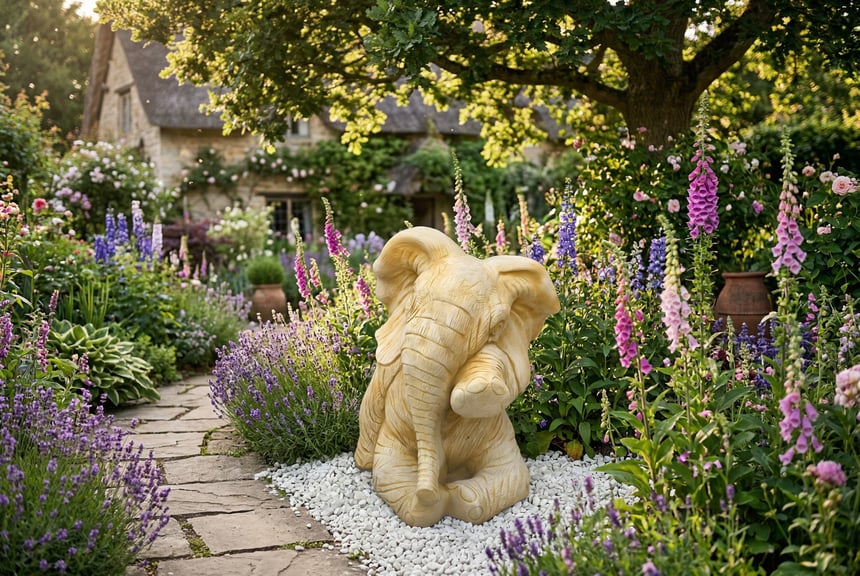
Shop Ellie the Elephant in Sandstone →
Should you buy one elephant or a pair?
Buy a pair when you want a guardian arrangement or a family scene, a single when you want one clear centrepiece. Two elephants flanking a gate, a path or a doorway is the traditional protective setting, both facing outward like sentries. It reads as deliberate and balanced, and it doubles the presence at an entrance.
A mother-and-baby grouping tells a different story. It stands for the bond of family and maternal care, so it sits well near a seating area or a spot the family gathers. You can build this from our range by setting a large elephant, such as the Fighting or Extra Large piece, with a small Indian elephant alongside. If you only want one statue, let it stand alone with space around it. One elephant doing a job beats three competing for the same view.
| Statue | Material | Height | Trunk | Price | Best for |
|---|---|---|---|---|---|
| Indian Elephant Sandstone | Cast stone | 200mm | Up | £49 | Rockeries, borders, gifts |
| Extra Large Elephant Grey | Terrazzo marble | 400mm | Down | £245 | Statement border piece |
| Standing Elephant Granite | Marble & resin | 420mm | Down | £189 | Matt's Pick - best value all-rounder |
| Ellie the Elephant Sandstone | True cast stone | 520mm | Up | £209 | Characterful sitting piece |
| Fighting Elephant Grey | Terrazzo marble | 680mm | Up | £289 | Bold centrepiece |
| Roaring Elephant Bronze | Marble & resin | 700mm | Up | £289 | Dramatic trunk-up statement |
| Baby Elephant Fountain | Cast aluminium | 710mm | Up (sprays) | £739 | Working water feature |
Are stone elephant ornaments frost-proof?
Yes, every stone and stone-effect elephant we stock is frost-proof and built to stay outside all year. The terrazzo marble, cast stone and crushed-marble-resin pieces resist frost without sealing, and the cast-aluminium fountain is frost and UV resistant too. Weight keeps the bigger ones stable: the Extra Large elephant is 8kg, the Fighting 33kg and Ellie 55kg, so none of the large pieces needs fixing down.
Aftercare is light. A wipe or a soft brush in spring clears winter grime, and a little moss on the stone pieces only adds to the look. Stand any statue on a firm, level base so it does not sink or tilt in wet ground. Done once at the start, the elephant then looks after itself, and the stone improves with age rather than fading.
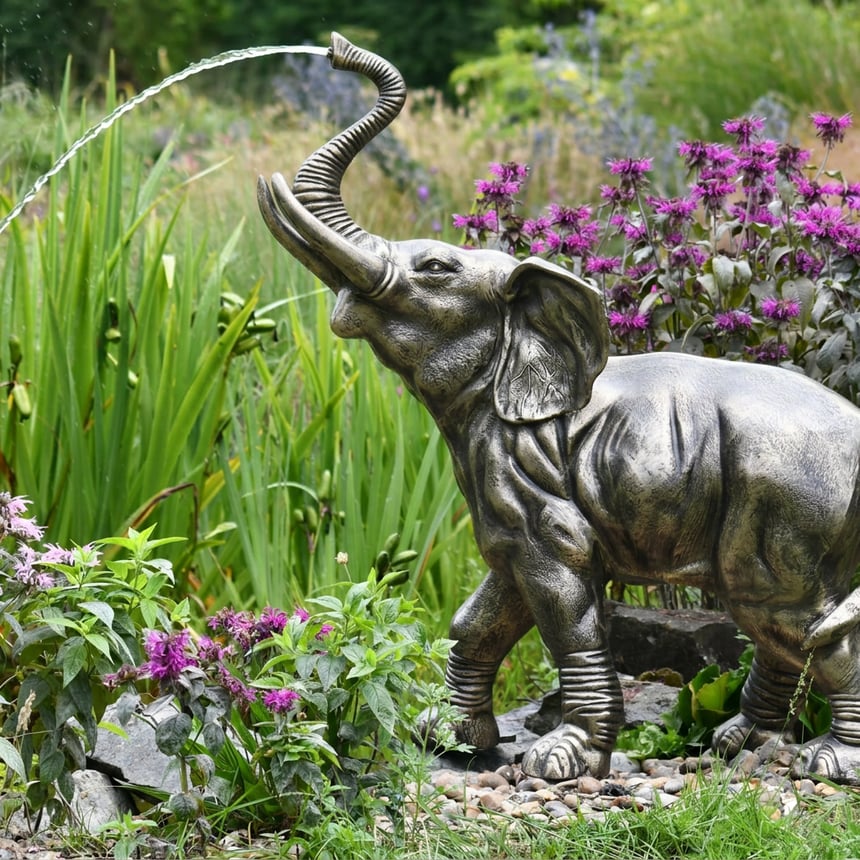
Shop the Baby Elephant Fountain →
Which elephant garden statue should you choose?
Choose by the job first, then the size and finish. For a welcoming, lucky feel at a doorway, pick a trunk-up piece like the Roaring Elephant in Bronze or the small Indian Elephant. For a calm anchor in a border, the Extra Large or Standing elephants do the work. For movement and sound by a pond, the Baby Elephant Fountain earns its higher price by becoming a water feature in its own right.
Match the budget to the spot too. The £49 Indian elephant is the easy first buy or gift; the £189 Standing Granite is the value focal point; the £739 fountain is the centrepiece. For a bold statement on a patio, the 680mm Fighting Elephant holds a large space on its own. Whatever you choose, one well-placed elephant adds more than a cluster of smaller pieces ever will.
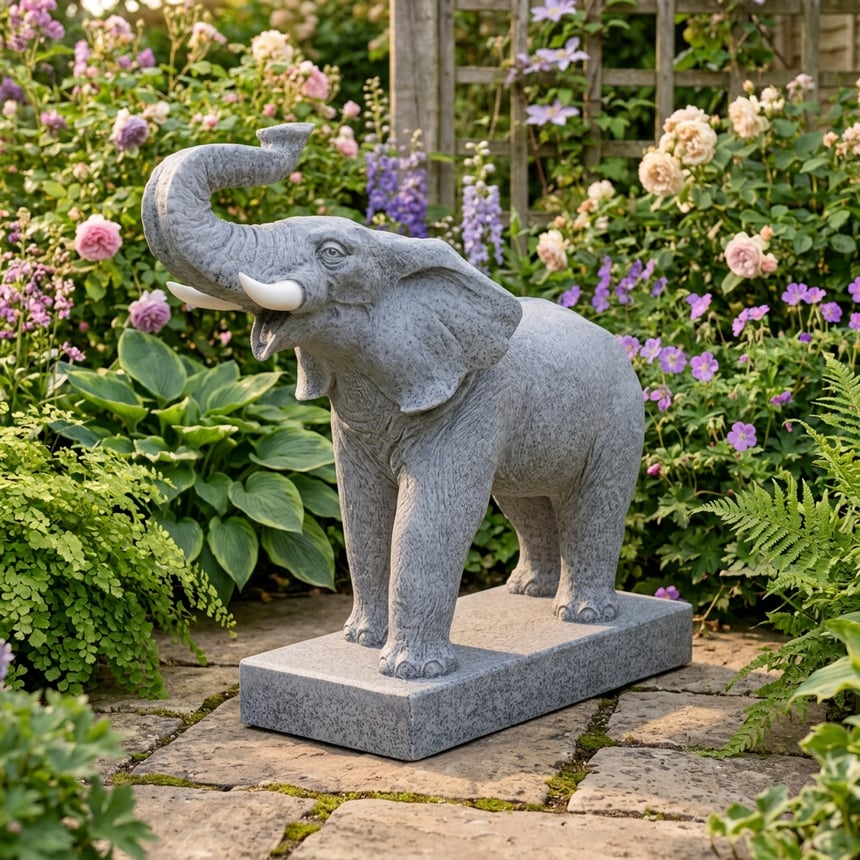
Shop the Fighting Elephant in Grey →
We stock elephants because they reward a bit of thought. People choose them for what they mean, not just how they look, and that makes for happier gardens. We pick frost-proof terrazzo and cast stone that weather honestly, sharp crushed-marble resin for detail, and cast aluminium for the working fountain. Place one well and it still reads right in ten years. Browse our full range of garden ornaments for more ideas.
- Matt W, Garden Ornaments
Frequently asked questions
What does an elephant statue symbolise?
An elephant symbolises wisdom, strength, luck and family. The meaning spans Hindu, Buddhist and African tradition. The elephant stands for protection, patience, leadership and the herd bond. A mother-and-baby form reads as maternal love.
Does an elephant with its trunk up mean good luck?
Yes, a raised trunk is widely read as good luck. Most traditions link the lifted trunk to good fortune, energy and victory, the idea being that it showers blessings outward. A lowered trunk is read as protection and longevity, though sources do differ.
Which way should an elephant statue face?
Face it inward to draw luck in, or out to stand guard. An elephant looking inward gathers positive energy where you spend time. One facing the gate or boundary stands guard instead. Both are valid choices.
Are elephant garden statues frost-proof?
Yes, every stone and stone-effect elephant we stock is frost-proof. Terrazzo marble, cast stone and crushed-marble resin all resist frost without sealing. The cast-aluminium fountain is frost and UV resistant too.
Should elephant statues be bought in pairs?
Buy a pair for a guardian or family setting, a single for one focal point. Two elephants flanking a gate or path is the classic protective arrangement; a mother and baby reads as family. One statue alone makes a cleaner focal point.
How much do elephant garden statues cost in the UK?
They cost from £49 to £739. The 200mm Indian elephant is £49 and the 420mm Standing Granite £189. Larger terrazzo pieces run £245 to £289, and the metal fountain is £739.
Where is the best place for an elephant statue in a garden?
Place it at a doorway, path, gateway or pond edge. Real elephants live near water, so a piece by a pond looks settled. Large elephants suit an open focal point; small sitting elephants suit rockeries, borders and steps.