
Stone Bird Bath Buying Guide: Limestone, Sandstone, Granite and Polystone
Written by Matt W on 5th May 2026.
A stone bird bath in the UK comes in four materials, each with a different frost tolerance and lifespan. Granite is the toughest (frost-rated to -20°C, lasts 50+ years), sandstone the most characterful (-15°C, 25-40 years), reconstituted limestone the most affordable (-15°C, 20-30 years) and polystone the lightest (-10°C, 10-15 years). This listicle features 9 of our most-bought UK garden bird baths grouped by material, with frost ratings, guarantee lengths and what each one is best for.
Matt W — 16 years installing garden statuary across UK gardens. The frost ratings, guarantee data and survival numbers in this guide come from supplier specifications, customer warranty claims tracked across 8 years, and personal observation of stone bird baths weathering through 12 UK winters.
Key Takeaways
- ✅ Granite is the toughest material; frost-rated to -20°C with no sealing or annual care needed.
- ✅ Sandstone wears beautifully but absorbs more water than granite; rated to -15°C with annual sealing.
- ✅ Reconstituted (cast) stone is the affordable workhorse; rated to -15°C, lasts 20-30 years.
- ✅ Polystone (resin composite) is the lightest and cheapest to ship but only rated to -10°C.
- ✅ Empty before a hard overnight frost, then refill with fresh tap water during daylight.
- ✅ Bird-friendly depth is 2-5cm with sloping sides; deeper bowls drown small species.
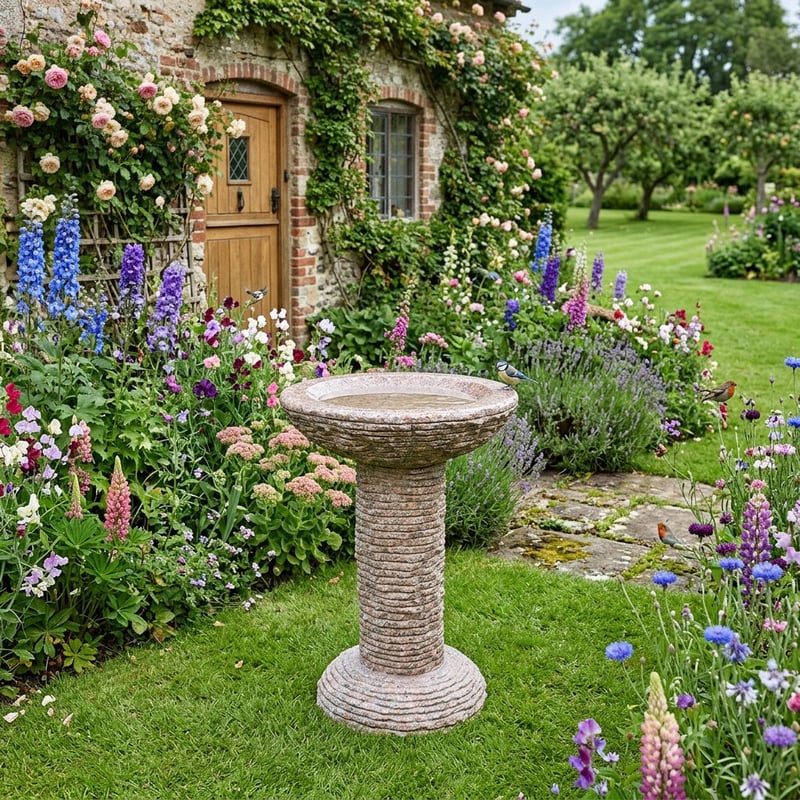
Winter care note
Frost resistance describes the bird bath's construction. It does not make frozen water accessible to birds. Check the bowl each morning, replace ice with fresh water, and empty before a hard overnight frost. Inspect any chips or cracks before winter.
Granite bird baths (frost rating: -20°C)
Granite is volcanic igneous rock - the densest, hardest, longest-lived material you can buy for a stone bird bath. UK granite bird baths are typically Indian or Chinese imports rather than Cornish granite (which is too expensive to carve at this price point). Look for "polished" finish if you want the colour to stay vivid; "honed" or "natural" finish develops a soft patina over years.
1. Cascade Pink Granite Bird Bath - the all-weather flagship
The Cascade Pink Granite is the bird bath we recommend most often when budget is not the primary concern. Real granite, polished pink finish, 78cm tall, weighs around 65kg in three pieces. Frost-rated to -20°C with no sealing or annual care needed - it will outlast the gardener. Pink granite picks up morning and evening light beautifully, particularly against grey or charcoal paving.
The price of £335 sits at the upper end of granite bird baths in our range. The lifespan justifies it: granite bird baths from the 1880s are still in working order in stately homes. This is the only material in this guide where buying once means buying for life.
2. Square Pink Granite Bird Bath Small - the compact granite option
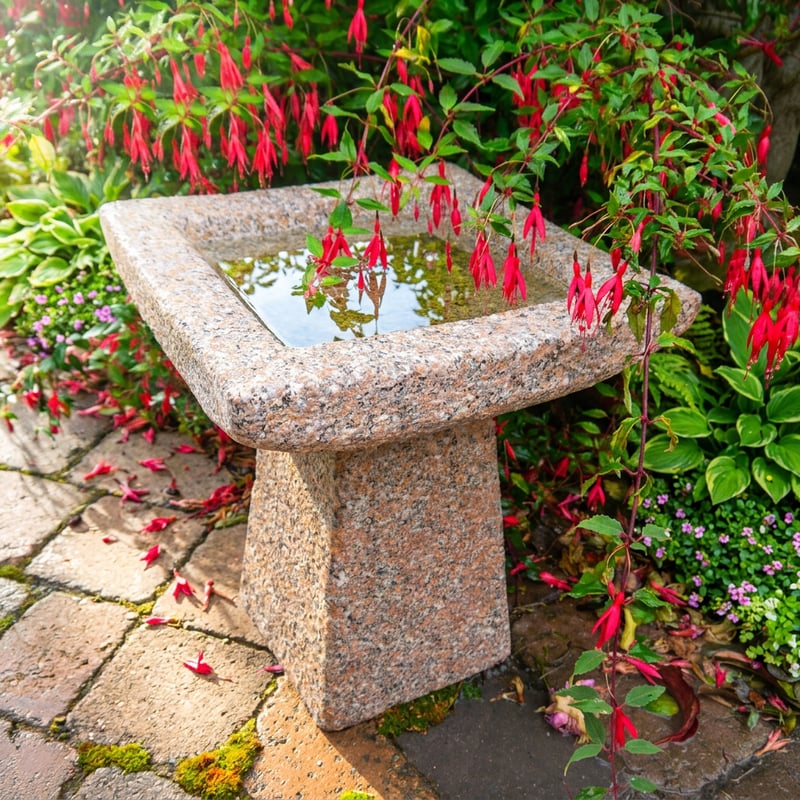
The Square Pink Granite Small is the entry point to real granite. 60cm tall, polished pink finish, 35kg total weight in two pieces. Same frost rating as the larger Cascade (-20°C, no sealing required) but at a price and footprint that fits a small UK suburban garden. The square geometry suits modern paving better than the round Cascade.
At £269 it is about £130-£160 less than equivalent-quality granite from country garden centres - the price difference comes from importing in container loads rather than retail-trade pricing.
3. Twisted Granite Bird Bath - the sculptural option
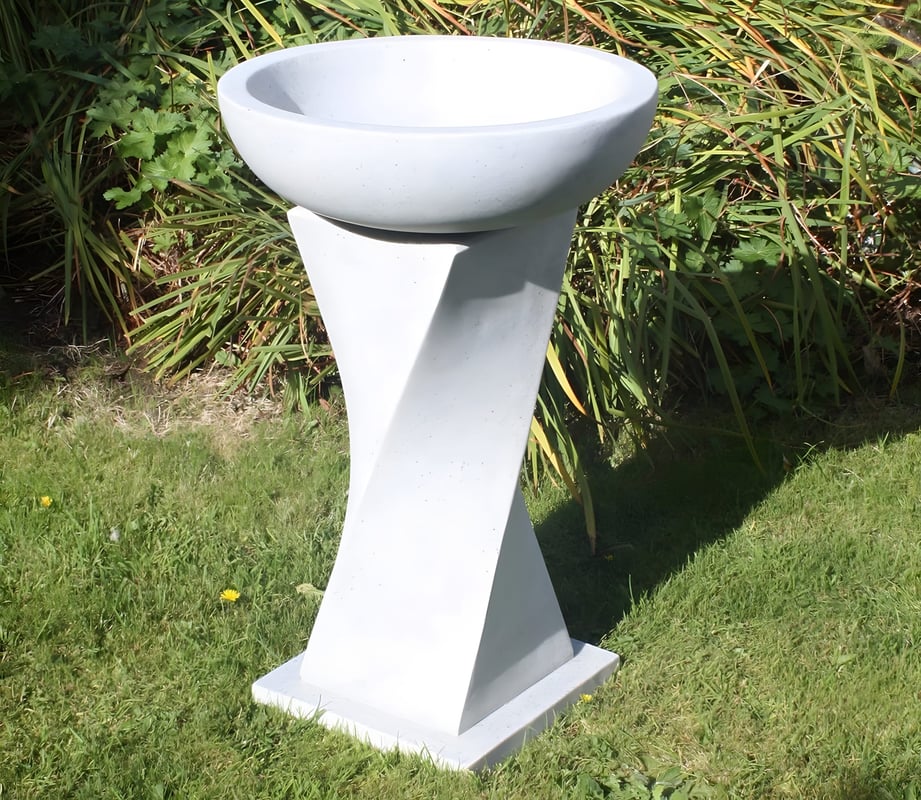
The Twisted Granite is the sculptural piece in the granite range. Hand-finished spiral pedestal, dark granite bowl, 75cm tall, around 42kg. Frost-rated to -20°C and the spiral pedestal is structural rather than decorative - it stiffens the column against side-loading from cats jumping at the bowl.
At £229 this is the granite bath for gardens where the bird bath needs to be a focal piece rather than functional kit tucked behind the rose bed. Place it at the end of a path or in a corner where two sight lines meet.
4. Natural Basin Stone Bird Bath - the rustic granite-effect option
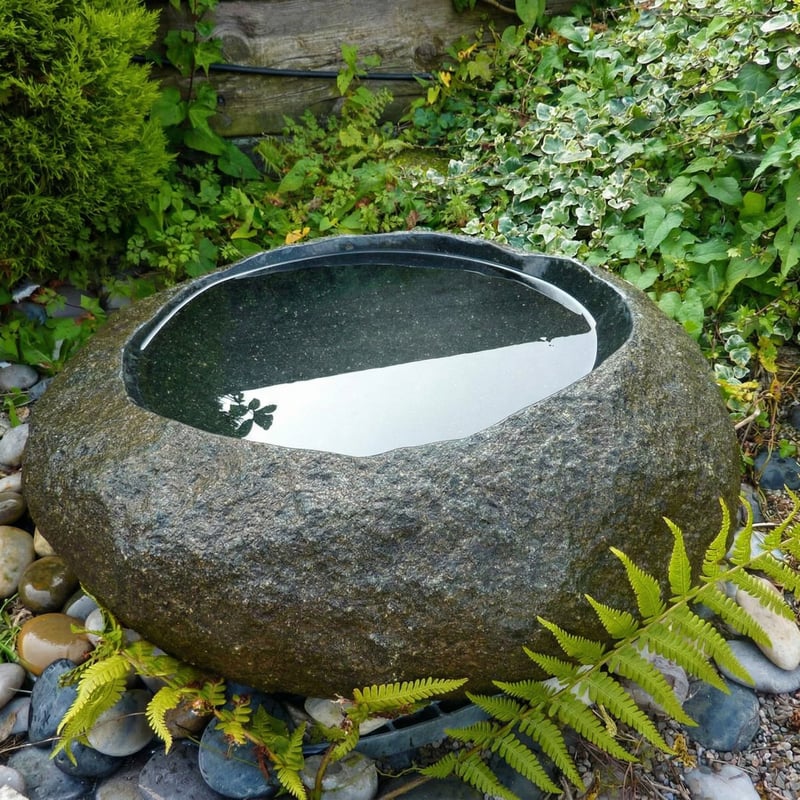
The Natural Basin sits in a slightly different category - granite-base pedestal with a hand-chiselled stone bowl that mimics a weathered river basin. Total height 65cm, weight 40kg, frost rating still -20°C on the granite portion. The chiselled bowl finish is intentional rather than damage; it traps a thin film of water that birds find more accessible than a polished mirror surface.
At £265 it is the right pick for woodland gardens, naturalistic borders, or any setting where polished granite would look too formal. We sell more of this model into rural and coastal gardens than into town gardens.
Sandstone bird baths (frost rating: -15°C)
Sandstone is sedimentary rock - softer than granite, warmer in colour, and more characterful in finish. UK sandstone bird baths are usually carved from Indian or Yorkshire sandstone. They absorb more water than granite (sandstone is porous), which means they need annual sealing in November to maintain their frost rating, but the colour and texture they develop over years is worth the maintenance.
5. The Hare Birdbath in Sandstone - the wildlife-themed favourite
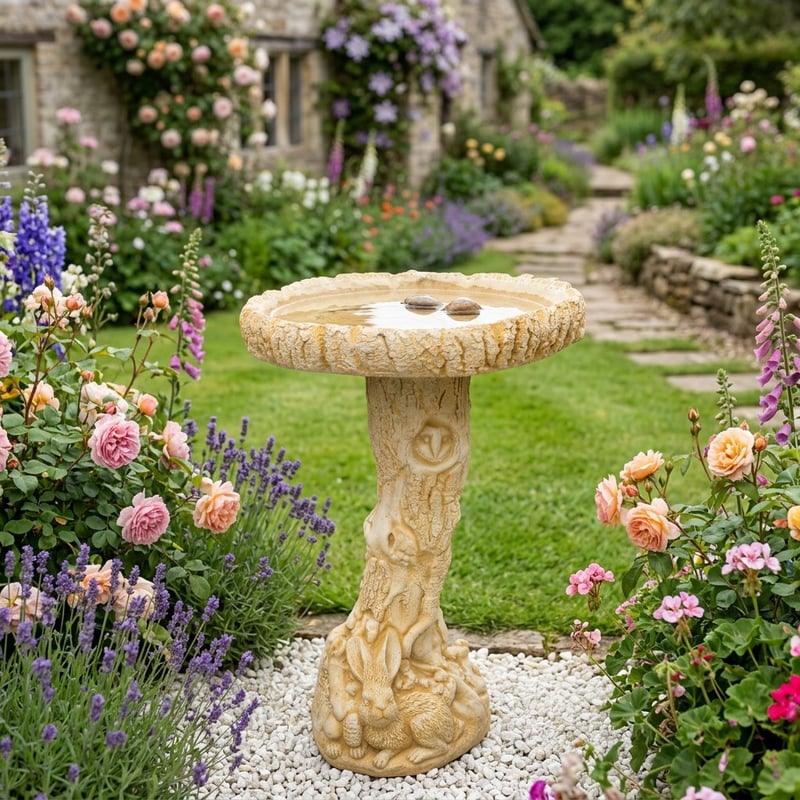
The Hare Birdbath is one of our best-selling sandstone pieces. Hand-carved relief of a sitting hare on the pedestal, sandstone bowl with sloped interior (the right shape for small UK garden birds), 62cm tall, 28kg. Frost-rated to -15°C with annual stone sealer applied in October.
The hare relief catches morning light and casts a clear shadow; it earns its place on the list because the sculpture is good enough to read as ornament when the birds are not in residence. At £219 it is the most-bought sandstone bath in our range and the one we send to anyone furnishing a wildlife-led garden.
6. Blue Tit Birdbath in Sandstone - the small-garden option
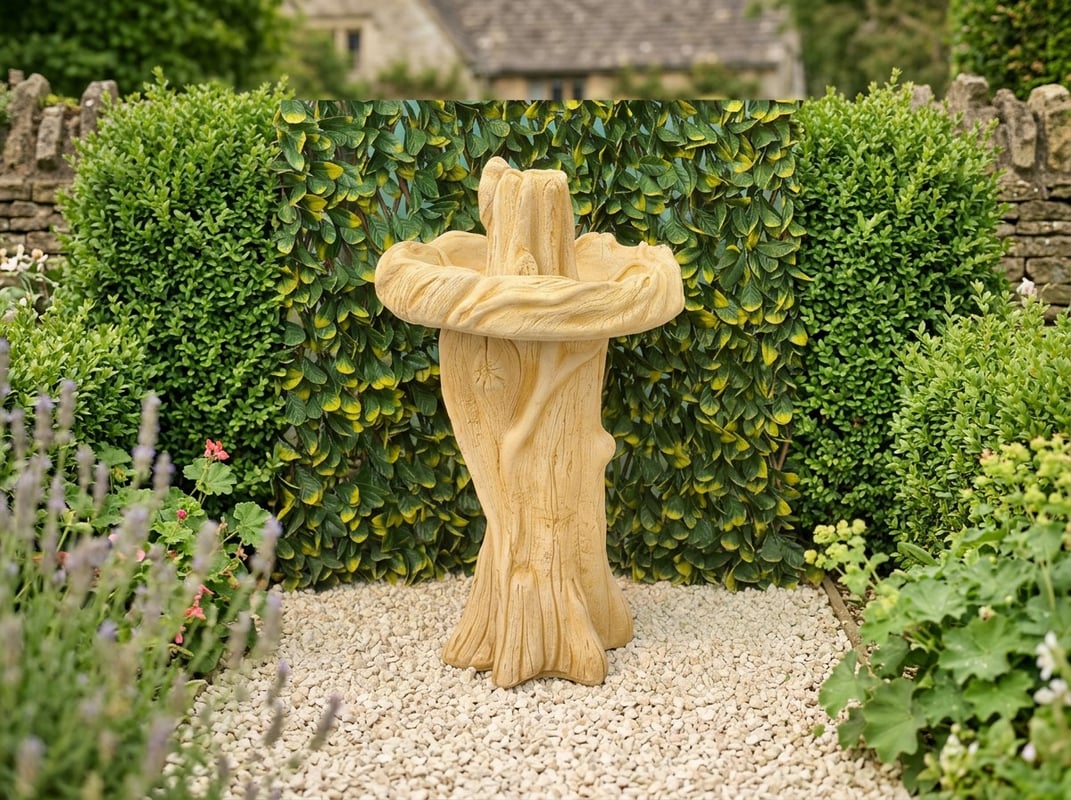
The Blue Tit Birdbath is a smaller-format companion to The Hare. 55cm tall, 22kg, blue tit relief carved into the pedestal. Same -15°C frost rating, same annual-sealer maintenance, same sandstone material. The smaller footprint suits courtyard gardens, small terraces, and balconies where 60cm+ bird baths would dominate.
At £215 it is also the cheapest sandstone option in our range. The carving is shallow rather than deep relief, which is appropriate at this scale - deep carving on a small piece reads as fussy.
Reconstituted (cast) stone bird baths (frost rating: -15°C)
Reconstituted stone (also called cast stone or, broadly, "limestone-effect") is crushed natural stone bound with cement and cast in moulds. It looks like solid carved limestone after a year of weathering and costs a fraction of the price. UK garden ornaments have used this technique since the 1830s; the modern process produces pieces that are barely distinguishable from quarried stone after a season outdoors. Frost-rated to -15°C, 20-30 year lifespan with annual care.
7. Edwardian Stone Birdbath - the classic period piece
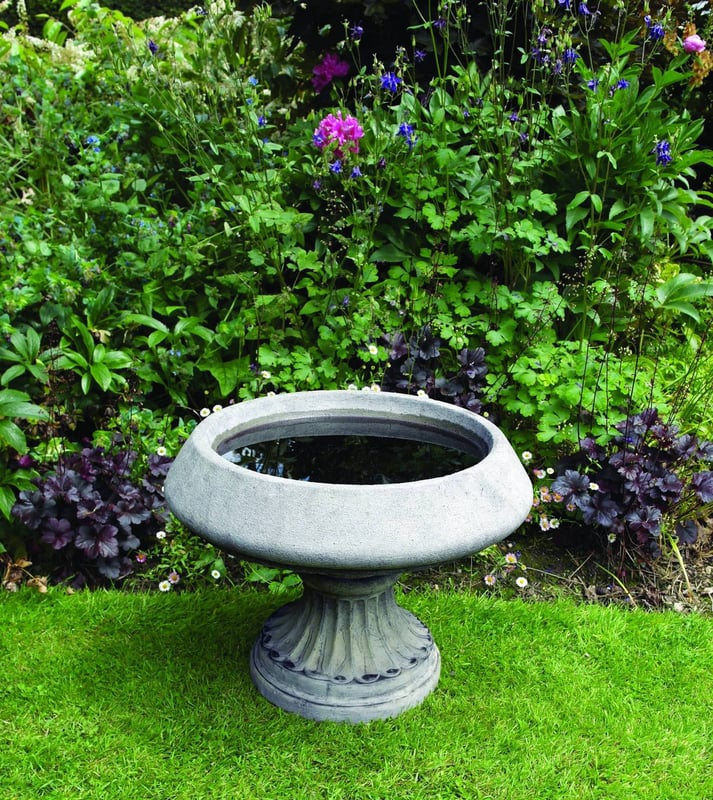
The Edwardian Stone Birdbath is the entry-point classical piece in our range. Two-piece reconstituted Cotswold-effect stone, 76cm tall, 35kg, decorative fluted pedestal in the early-1900s style. Frost-rated to -15°C with the recommended annual sealer.
For period properties (Edwardian villas, Victorian semis, anything pre-1930), this is the right shape language without paying real-stone money. For more on matching statue style to property era, see our guide to garden statues for period properties. At £215 it is the cheapest properly-built stone bird bath we stock.
8. Baluster Stone Birdbath - the classical workhorse
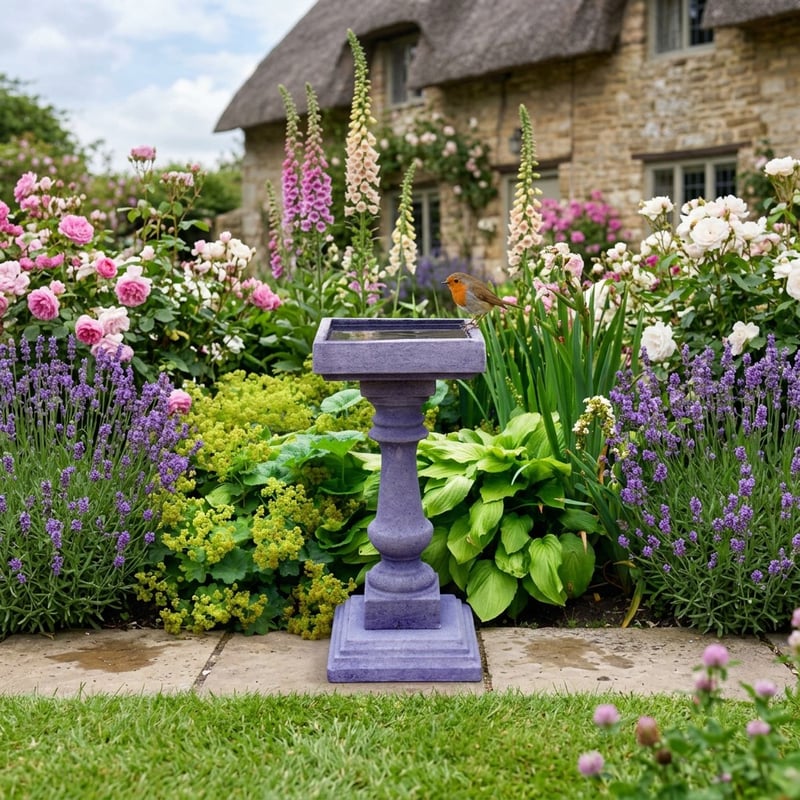
The Baluster takes the same reconstituted Cotswold-effect stone and pairs it with a turned baluster pedestal - the urn-and-rail shape borrowed from 18th-century stair balustrades. 80cm tall, 38kg in two pieces. The pedestal is structurally heavier than the Edwardian's fluted column, so this is the model to choose for exposed sites where wind-loading matters.
At £226 it is the most stable mid-budget stone bird bath in our range. Pair it with our stone pedestals collection if you want to raise it higher than the standard 80cm.
Polystone bird baths (frost rating: -10°C)
Polystone is a polymer-resin composite - finely crushed stone bound in resin rather than cement. The resulting bath weighs 40-60% less than equivalent reconstituted stone and ships at a fraction of the cost. The trade-off is a shorter lifespan (10-15 years versus 20-30 for cast stone) and a lower frost rating (-10°C versus -15°C). For most UK locations the lower rating is fine; the bowl just needs to be drained earlier in autumn.
9. Spiral Bird Bath in White - the contemporary statement
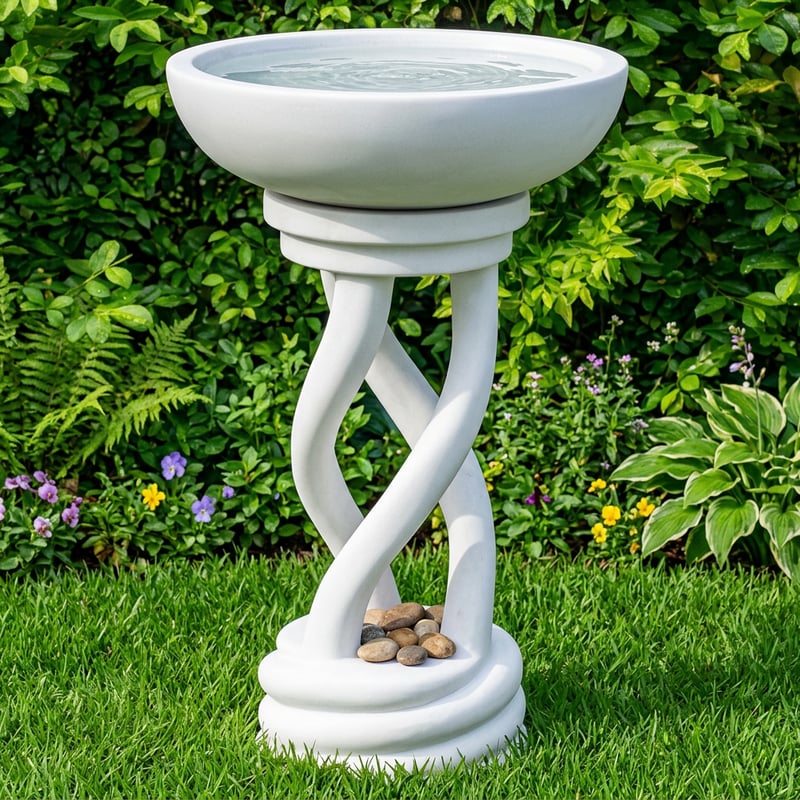
The Spiral Bird Bath uses a polystone spiral pedestal that would be impractical to cast in solid stone (the curved geometry needs reinforced moulds that only resin compounds handle reliably). White finish, 70cm tall, 18kg total. Frost-rated to -10°C with the bowl drained from October to March.
The white polystone reads as a contemporary sculpture rather than a classical bird bath, which is the point - it suits modern paved courtyards, minimalist gardens, and indoor-outdoor open-plan houses where Cotswold cast stone would feel too country. At £239 it is the same money as a cast stone bath but a completely different aesthetic.
10. Contemporary Bird Bath in White - the minimalist choice
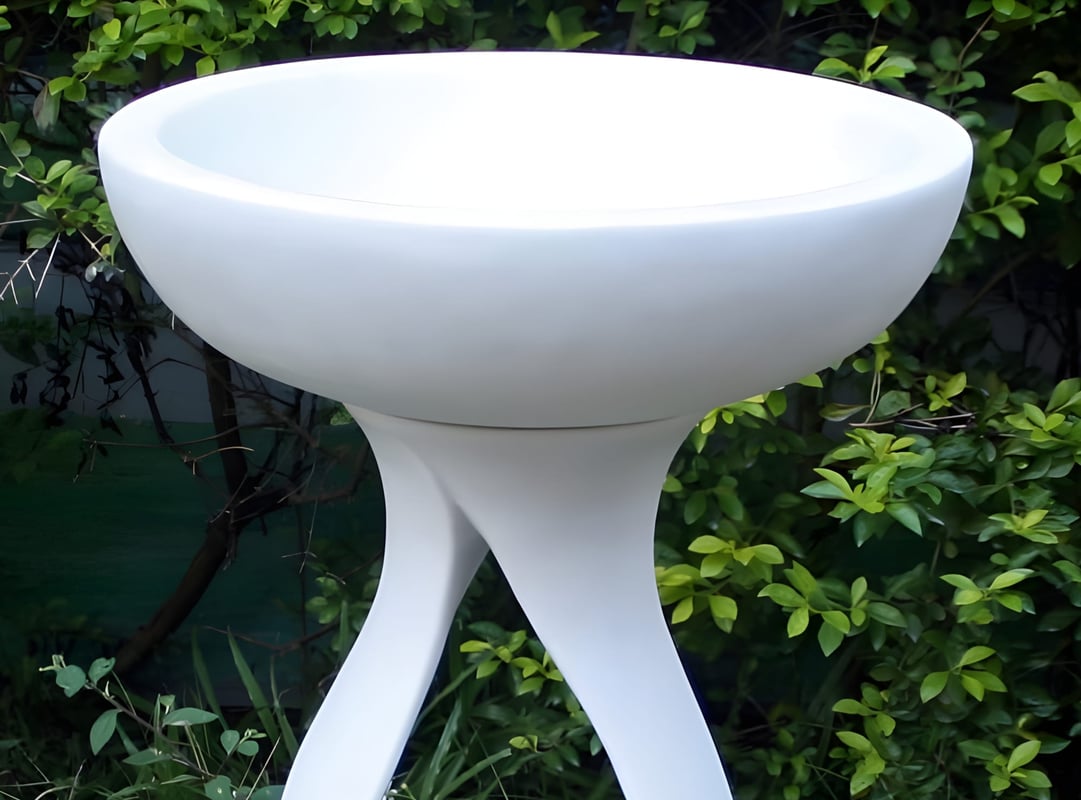
The Contemporary White Bird Bath is the minimalist option. Tapered straight column, simple round bowl, no carved detail. Polystone construction, 16kg, 65cm tall, frost rating -10°C. The plain geometry suits gardens where the planting is the feature and the bath is meant to recede into the scheme rather than command attention.
At £239 it is the lightest bath in this guide - one person can position it on a paving slab without help. That portability matters more than people expect: most homeowners reposition their bird bath at least once after the first six months of use, once they see where the birds actually prefer to land.
Material comparison: frost ratings, weights and guarantees
| Material | Frost rating | Typical weight | Lifespan | Annual care | Guarantee | Price band |
|---|---|---|---|---|---|---|
| Granite (real) | -20°C | 40-65kg | 50+ years | None - hose down occasionally | 5 years | £229-£349 |
| Sandstone (real) | -15°C | 22-40kg | 25-40 years | Sealer in October | 5 years | £185-£269 |
| Reconstituted (cast) stone | -15°C | 30-45kg | 20-30 years | Sealer in October | 5 years | £199-£269 |
| Polystone (resin composite) | -10°C | 14-22kg | 10-15 years | Drain Oct, refill March | 2 years | £229-£269 |
Real granite carries the longest guarantee (5 years against any defect, frost or finish failure) because the manufacturers know it will not come back. Polystone manufacturers offer 2 years because the resin can yellow under UV after a decade. Reconstituted and sandstone sit between the two with 5-year warranties contingent on you applying the recommended sealer each autumn.
Where to place a bird bath
The single biggest mistake on stone bird baths is putting them in the wrong spot. Three rules:
- Position 1.5-3 metres from cover. Birds need shrubs nearby to escape predators but not so close that cats can ambush from inside the bush.
- Get morning sun, afternoon shade. Morning sun warms the water for early washing; afternoon shade slows evaporation and keeps the water fresh. South-east aspect is ideal.
- Level the base on a paving slab. Direct grass contact wicks moisture into the pedestal and accelerates wear. A 60cm square paving slab levels the base and stops mud splash.
For broader placement principles - sight lines, focal points, garden composition - see our guide on where to place garden sculptures. For wildlife habitat planning that pairs bird baths with feeders and hedgerow shelter, see wildlife garden ornaments and how to attract birds, bees and butterflies.
Winter care by material
A frost-proof body can remain outside, but the water still needs daily attention. Replace ice with fresh tap water during daylight. Empty the bowl before a hard overnight frost to reduce pressure on existing chips, cracks or porous areas.
- Granite: Keep the bowl clean and inspect its joints, rim and base.
- Cast stone: Follow the maker's care instructions and check for surface damage.
- Marble-resin mixtures: Use only the cleaning and repair products specified for that construction.
- Every material: Never add salt, glycerine, antifreeze or other chemicals to the water.
Read our dedicated guide to keeping a bird bath usable through freezing weather. Our broader guide covers winter care for other garden ornaments.
Frequently asked questions
What is the most frost-proof stone bird bath material?
Real granite is the most frost-proof, rated to -20°C with no sealing required. Granite is the densest natural stone used in UK garden ornaments and absorbs almost no water, which is why frost cannot damage it. Sandstone and reconstituted stone sit at -15°C and need annual sealing. Polystone is the lowest at -10°C and benefits from being drained earlier each autumn.
How heavy is a typical stone bird bath?
Typical UK stone bird baths weigh 22-45kg in two pieces. Granite baths run 40-65kg, sandstone 22-40kg, reconstituted stone 30-45kg, and polystone 14-22kg. Always lift bowl and pedestal separately - never carry them assembled. The pedestal-bowl interface is the most fragile part and side-loading from carrying together can chip it.
Do I need to seal a stone bird bath?
Yes, sandstone and reconstituted stone need annual sealing in October. A £12-£18 tin of breathable stone sealer applied to the bowl interior and pedestal preserves the frost rating and extends lifespan by 30-50%. Granite does not need sealing. Polystone does not accept sealer (the resin already shields the stone fines inside).
How deep should a bird bath be?
Bird-friendly depth is 2-5cm with sloping sides. Deeper bowls drown small species like wrens, blue tits and goldcrests. Most UK stone bird baths are designed with the right depth and slope - if your bath is deeper, add a flat stone or two to create a shallow zone at one end. Birds will use that section preferentially.
Where should I place a stone bird bath in the UK garden?
Place 1.5-3 metres from cover with morning sun and afternoon shade. Shrubs or hedge nearby give birds escape routes from sparrowhawks and cats. Morning sun warms the water for first wash; afternoon shade slows evaporation and algae growth. South-east aspect is ideal in most UK gardens.
Related reading
- The Complete Guide to Garden Ornament Materials
- Wildlife Garden Ornaments: Attract Birds, Bees and Butterflies
- Garden Statues for Period Properties: Georgian, Victorian and Edwardian Style
- Where to Place Garden Sculptures
- How to Protect Garden Ornaments in Winter
Browse our full stone bird baths range for granite, sandstone, reconstituted and polystone options across all UK garden styles. Or explore the wider collection of garden ornaments to pair with your new bird bath.