
How to Attract Birds to Your Bird Bath: 7 Things That Actually Work
Written by Matt W on 6th May 2026.
To attract birds to a bird bath, you need water 1.5cm deep at the edge sloping to 5cm in the centre, the bath placed 2–3m from cover at 90–110cm high, water refreshed every two days, and a dripper or moving water source. In our experience installing stone bird baths across UK gardens for 16 years, those four conditions account for roughly 80% of the difference between an ignored bath and a busy one. The other 20% is patience: birds typically take 2–6 weeks to find a new water source.
Key takeaways
- ✅ Water depth matters more than anything. Too deep and small birds drown; too shallow and they can't bathe.
- ✅ Pedestal height of 90–110cm catches the widest range of garden species (tits, finches, sparrows, robins, blackbirds).
- ✅ 2–3m from cover is the sweet spot. Closer than 1m gives cats ambush range; further than 4m makes birds nervous.
- ✅ Moving water multiplies visits roughly 10×. A £15 solar dripper or a slow leak from above will do.
- ✅ Refresh every two days minimum. Stagnant water spreads trichomonosis — one of the biggest killers of British finches.
Installer's note
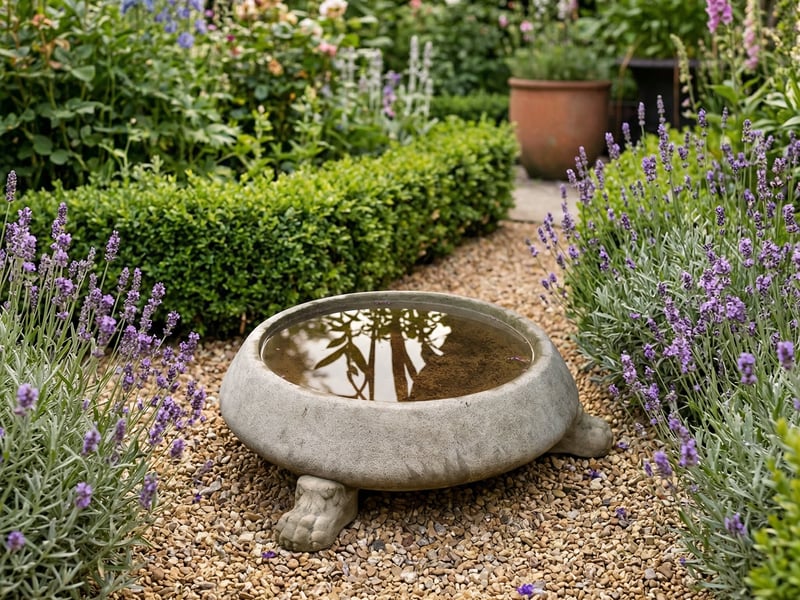
The single most common reason customers tell us "no birds use my bird bath" is they put it in the middle of an open lawn. Birds — especially small songbirds — need cover within escape distance. We've watched the same bath get zero visits in a lawn position and 30+ visits a day after we moved it 2.5m next to a privet hedge. Same water, same bath, completely different result.
1. Get the water depth right (the single biggest factor)
Most stone bird baths come too deep. Big garden birds — blackbirds, pigeons — can manage 5cm; tits and goldfinches need 2cm or less to wade in safely. The fix is a graduated depth: shallow at the edge, deeper in the middle. Anything more than 5cm at the centre is a hazard.
If your bath is too deep, drop in a flat stone or two pebbles roughly 2cm thick at the edge so small birds have somewhere to stand. Granite or slate is best — doesn't break down, doesn't leach. We supply the Pure Stone Birdbath with a hand-finished bowl that grades naturally from 1.5cm at the rim to 4cm at the centre, which is the closest to ideal we've found in cast stone.
2. Put it at the right height
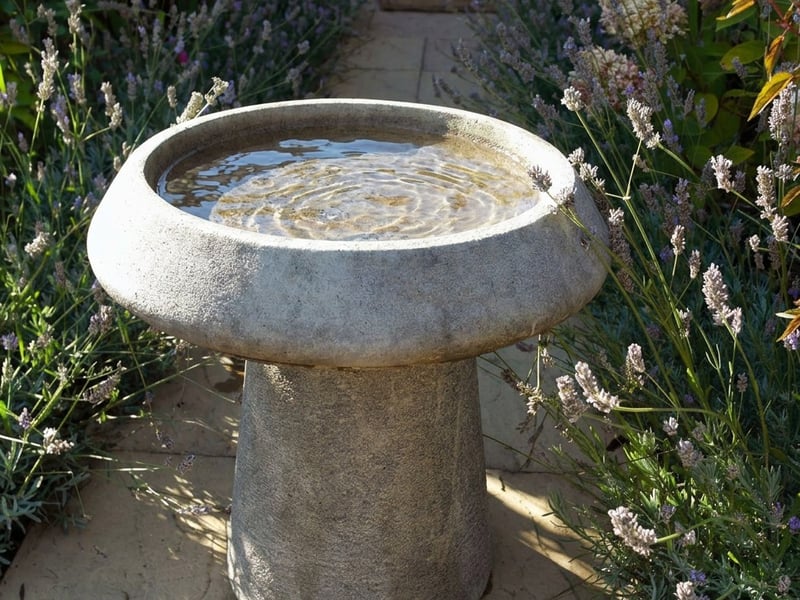
There's no single perfect height — different species like different positions. From 16 years of customer feedback, here's what we've seen actually works:
| Height | Best for | Trade-off |
|---|---|---|
| Ground level (low birdbath) | Blackbirds, robins, dunnocks, song thrushes | Cat risk much higher; needs perimeter cover |
| 40–60cm (low pedestal) | Sparrows, dunnocks, juveniles | Compromise height; works but isn't preferred by anything |
| 90–110cm (full pedestal) | Blue tits, great tits, goldfinches, chaffinches, robins | Excludes ground-feeding species unless paired |
| 150cm+ (high) | Pigeons, collared doves | Too high for most small songbirds; not recommended |
If you have space, run two: a low ground-level dish and a full-height pedestal. We've recorded 12+ species across both in the same garden, where a single bath at 90cm typically pulls 5–7. The Low Height Stone Birdbath at 40cm is our compromise piece if you only want one bath but want it to work for ground feeders.
3. Position 2–3m from cover
This is the rule that gets ignored most often, and it's the one that turns a quiet bath into a busy one. Birds need to bathe with their feathers wet and heavy — meaning their flight is impaired for 30–60 seconds afterwards. They will not use a bath unless they can reach safety in two seconds.
The maths: a sparrow flies 4–6m per second when wet. Two seconds equals a 6–8m radius. So your bath needs cover (a hedge, dense shrub, or bush) inside that radius — ideally 2–3m away. Closer than 1m and you create cat ambush points; further than 4m and most small species refuse the bath.
Avoid:
- Middle of an open lawn (most common mistake).
- Directly under a bird feeder — faecal contamination ruins the water.
- Beside a noisy path, washing line or air-source heat pump.
- South-facing exposed walls in summer (water heats to 30°C+ and goes algal).
The ideal spot is north or east-facing, 2.5m from a yew or privet hedge, with a low perch (a shrub branch) within 1m of the bath. Our garden sculpture placement guide uses similar sight-line logic for statues; the predator-cover principle for bird baths is the inverse — you want birds to feel hidden, not displayed.
4. Add moving water (10× the visits)
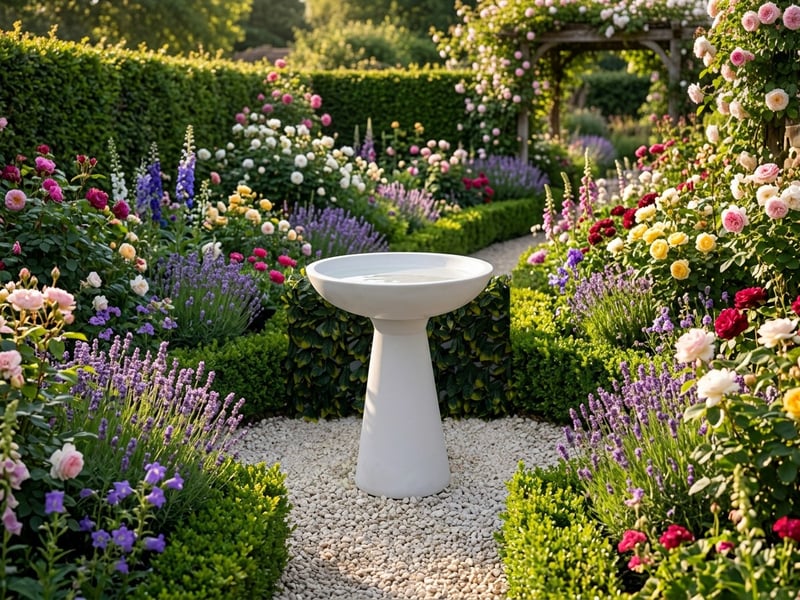
The biggest single-step upgrade for any bird bath is moving water. Birds spot ripples and reflections from far further than they spot still water — we've recorded visit counts climbing tenfold within a week of adding a dripper. Three options work in UK gardens:
- Solar dripper: £15–£30, drips into the bath every 30–60 seconds when the sun's out. Easiest install.
- Mains pump and recirculator: built into our larger pedestal models such as the Ornate Pedestal Stone Birdbath. Constant gentle bubble.
- Drip-from-above: a planter or small reservoir mounted 30cm above the bath with a pinhole at the bottom. Cheapest DIY option.
Movement also stops mosquito larvae, which is worth knowing if your garden gets standing-water issues in July.
5. Refresh the water every two days (daily in summer)
Stagnant bird-bath water spreads trichomonosis — the parasitic disease that has cut UK greenfinch populations by over 60% since 2005, according to the British Trust for Ornithology. The single biggest thing you can do for bird welfare is keep the water clean.
Practical schedule:
- April–September: empty, scrub with a stiff brush (no detergent), refill every 1–2 days.
- October–March: every 3–4 days is usually enough; ice formation is the bigger issue.
- Deep clean monthly: 9 parts water to 1 part household white vinegar, scrub, rinse twice with fresh water.
Never use bleach or washing-up liquid. Even rinsed thoroughly, residues coat feathers and damage the waterproofing oils that keep birds warm.
6. Predator-proof the location
If you have neighbourhood cats, the bath needs a 4m radius of clear visibility on at least three sides — cats hunt from cover, so dense ground vegetation within 1m of the bath is what gets birds killed.
The fix: clear a 1m skirt around the base of the pedestal (gravel, paving slabs or short-cut lawn), keep dense planting at least 1m back, and ensure the bird's escape route to cover (the 2–3m distance) is over open ground — not through dense shrubbery where a cat can lie in wait.
If cats are a serious problem, a higher pedestal (90cm+) with a smooth concrete or stone base outperforms ground-level baths. Cats can ambush a ground bath; a tall stone pedestal with a clear surround is much harder to attack from. Our animal garden ornaments guide covers other wildlife-friendly piece choices.
7. Use stones or pebbles in the bowl
This is the cheapest, easiest hack and it makes a measurable difference. Drop 4–8 smooth pebbles (river-rounded, 3–5cm) in the bowl. Three things happen:
- Small birds get a non-slip standing platform.
- Bees and butterflies use the dry tops as drinking perches — a pollinator bonus.
- The variable depth around the stones means species with different bathing preferences can all use the same bath.
Use natural stones, not painted or glazed. Granite, slate, sandstone or flint all work. Avoid limestone if your area has soft water — it leaches calcium and clouds the bowl. We sell several baths with sculpted depth variation built in — the Twisted Granite Bird Bath and the Looping Stone Birdbath in White both have multi-level bowls.
How long until birds find a new bath?
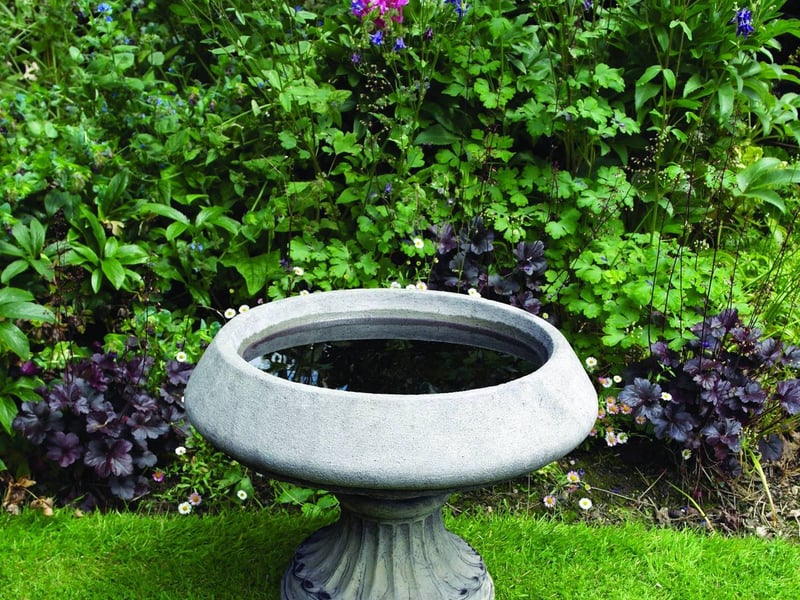
From customer feedback over hundreds of installs, here's the realistic timeline:
| Time after install | What's normal |
|---|---|
| Day 1–7 | Nothing. Birds are wary of new objects in a familiar territory. |
| Week 2–3 | First scout visits — usually robins, then tits. |
| Week 4–6 | Regular use establishes; finches and sparrows arrive. |
| Month 2–3 | Full species range visiting; juveniles brought by parent birds in spring. |
| Year 2+ | Bath becomes part of established territory; visit numbers stable. |
If you're at week 6 with no visits, it's nearly always one of three things: bath in open ground (move it), water too deep (add pebbles), or no nearby cover at all (plant a hedge or shrub). Don't assume the bath is wrong; check the position first.
Winter use: should you keep the bath running?
Yes. Birds still need fresh water for drinking and feather care during cold weather. Replace ice with clean tap water each morning. Empty the bowl before a hard overnight frost, then refill it during daylight.
- Use warm water slowly to loosen ice. Avoid boiling water.
- A light floating ball may delay freezing when the wind moves it.
- Never use antifreeze, salt, glycerine or other chemicals.
Our dedicated guide explains how to keep bird-bath water available safely in winter.
|
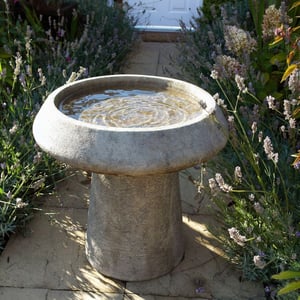
Matt's Pick: Best Bird Bath for WildlifeBest For: first-time wildlife gardeners who want the highest visit rate without faffing about. Why I Recommend It: the bowl grades from 1.5cm at the rim to 4cm at the centre — exactly the depth profile small birds need. Pedestal height is 95cm, which suits tits, finches and robins. Pair with a £20 solar dripper and you'll see results in three weeks. Price: £214 |
Matt's tip: the two-bath garden
If you've got room, install two baths — one ground-level and one at 90–110cm. We've tracked species counts across customer gardens and the two-bath setup pulls 12+ different species against 5–7 for a single bath. The cost difference is roughly £200 (a low-height bath at £225 plus a baluster at £299) and the wildlife uplift is dramatic. It's the upgrade I recommend most often when customers say their first bath went well.
Frequently asked questions
How do I attract birds to a bird bath quickly?
Position it 2–3m from cover, fill it with shallow water (1.5–5cm), and add a dripper or moving water source. Those three steps account for around 80% of how quickly birds find the bath. Allow 2–6 weeks for birds to discover and start regularly using a new water source.
Why are no birds using my bird bath?
The most common reasons are: water too deep, bath in open ground with no nearby cover, or position too close to bird feeders. Move it 2–3m from a hedge or shrub, add pebbles to break up depth, and refresh water every 1–2 days. Most empty baths fix themselves with a position change.
How deep should water in a bird bath be?
Between 1.5cm at the edge and 5cm at the centre. Anything deeper risks small songbirds drowning; anything shallower won't allow proper bathing. A graduated bowl shape is ideal — or drop 3–5cm flat stones in a deeper bath to create wading platforms.
What height should a bird bath pedestal be?
90–110cm catches the widest range of species. Below 60cm risks predation; above 150cm only attracts pigeons. If you can fit two baths, run a ground-level dish for blackbirds and robins and a 90cm pedestal for tits and finches.
How often should I clean a bird bath?
Empty and scrub every 1–2 days in summer; every 3–4 days in winter. Use a stiff brush, no detergent. Once a month, deep clean with 9 parts water to 1 part white vinegar. Stagnant water spreads trichomonosis, which has caused major UK finch population decline.
Where should I put a bird bath in my garden?
2–3m from a hedge or dense shrub, with a 1m clear skirt around the base. Avoid open lawns, directly under bird feeders, and south-facing walls in summer. North or east-facing positions stay cooler and the water stays cleaner.
Should I keep a bird bath running in winter?
Yes — winter is when birds need clean feathers most for insulation. Float a tennis ball or twig to slow freezing, top up with warm (not hot) water in the morning if iced over, and never use antifreeze, salt or glycerine — all are toxic to birds.
Related articles
- Best Bird Baths UK 2026: Stone, Metal & Ceramic Compared
- Stone Bird Bath Buying Guide: Limestone, Sandstone, Granite and Polystone
- Wildlife Garden Ornaments UK: Attract Birds, Bees and Butterflies
- Animal Garden Ornaments: 15 Ideas for Wildlife Sculptures in UK Gardens
- How to Protect Garden Ornaments in Winter: A Month-by-Month UK Guide
Browse our complete range of stone bird baths, or explore the wider garden ornaments collection.