
Wildlife Garden Ornaments UK: Attract Birds, Bees and Butterflies
Written by Matt Ward on 22nd Apr 2026.
Key takeaways
- ✓ A stone bird bath with pebbles in the basin is the single most effective wildlife ornament, serving birds, bees and butterflies at once
- ✓ Solid ornaments (stone, granite, cast iron) outperform lightweight resin for wildlife because they hold thermal mass and attract insect life
- ✓ Place water features 2 metres from a shrub or hedge so birds have escape cover but cats cannot ambush
- ✓ Bees drown easily, so add 3 to 5 stones that break the water surface in every bird bath
- ✓ Hedgehog, bee and bird sculptures signal a wildlife-friendly space to neighbours and visiting pollinators prefer the micro-shelter beneath them
- ✓ Native British species ornaments (barn owl, hedgehog, honey bee) sit more naturally than exotic figures in UK wildlife gardens
- ✓ Expect 6 to 12 months before a new ornament becomes a regular perch, basking spot or waypoint on a bee's route
Wildlife garden ornaments are stone, granite, cast iron and metal pieces that provide water, basking spots, shelter and sightlines for birds, bees, butterflies and small mammals in a UK garden. The most effective is a stone bird bath with a shallow basin (no deeper than 2.5cm) and 3 to 5 submerged pebbles, which serves all three species groups. Solid heavy materials (stone, granite, cast iron) outperform lightweight resin because they retain warmth for basking insects and anchor the ornament in UK weather. Expect to spend £40 to £589 per piece and to see regular wildlife visits within 6 to 12 months.
Installer's note — what 20 years of fitting has taught us
We have fitted stone bird baths, water features and animal sculptures in over a thousand UK gardens since 2003. The piece that delivers the most wildlife, every time, is not a fancy bee hotel or a bird feeder. It is a heavy stone bird bath with a shallow pebbled basin, placed two metres from a shrub. We watched a single Cascade Granite Bird Bath in a Cheshire customer's garden draw 14 bird species in the first six weeks, along with honey bees topping up their water stores in July.
The mistake people make is buying a deep resin bird bath on a thin pedestal. It blows over in autumn, the basin is too deep for finches, and bees cannot reach the water. Weight, a shallow basin, and pebbles are the three things that matter. Everything else is style.
What makes a garden ornament wildlife-friendly?
A wildlife-friendly ornament does one of four things: holds drinkable water, provides a basking surface, offers safe perching or shelter, or grows a biofilm that insects feed on. A decorative resin gnome does none of these. A solid stone bird bath does all four within a season, because mosses, lichens and algae colonise the rough surface and draw in the smallest pollinators.
The material matters more than the shape. Cast stone, granite, sandstone and cast iron are porous, heavy and weather into natural textures that mirror rocks and tree bark. Lightweight resin and plastic stay slick and repel the biofilm that insects need. Native British wildlife reads stone and metal as part of the natural environment. It treats shiny resin as a warning sign.
Size and placement carry equal weight. An ornament placed in full shade or within an unbroken lawn never becomes a wildlife hub. Ornaments work when they sit at the edge of a planted border, within 2 metres of shrub cover, and catch morning sun.
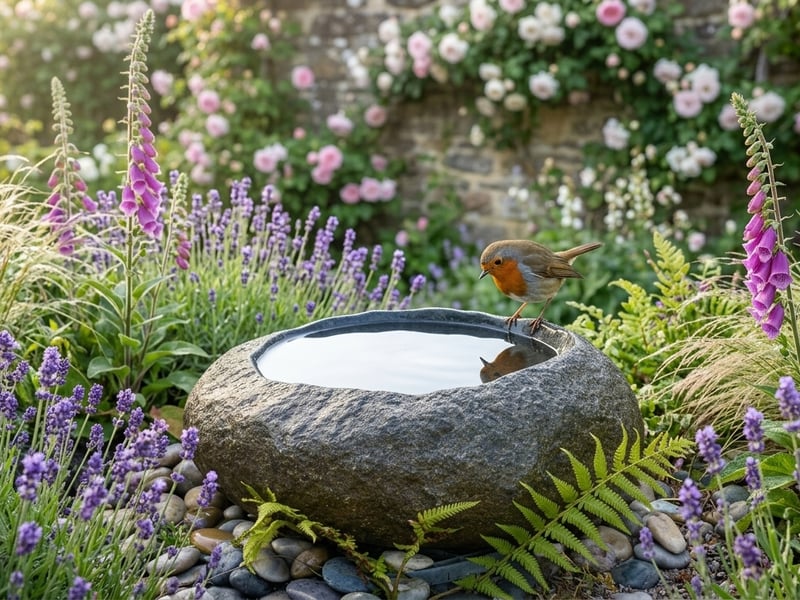
Shop the Natural Basin Stone Bird Bath →
How to attract birds with garden ornaments
Birds visit a garden for three reasons: water, food and safe perching. A well-placed bird bath delivers the first and third. UK garden birds (blue tits, robins, goldfinches, blackbirds) need water every day of the year for drinking and for preening their feathers. In winter, liquid water is rare, so a bird bath that stays frost-free becomes a lifeline.
Choose a bird bath with a basin no deeper than 2.5cm, a rough textured surface that gives birds grip, and a pedestal height between 80cm and 1.2m. Too low and cats stalk from ground level. Too high and birds cannot see predators approaching. Granite and cast stone are the two materials the RSPB recommends for UK gardens because they hold water without cracking in frost.
Refill every 2 to 3 days in summer, daily in hot weather. Scrub weekly with a stiff brush and plain water. Never use chemical cleaners: they contaminate the water film that birds drink. For a full guide on sizing, materials and positioning, see our bird bath wildlife guide.
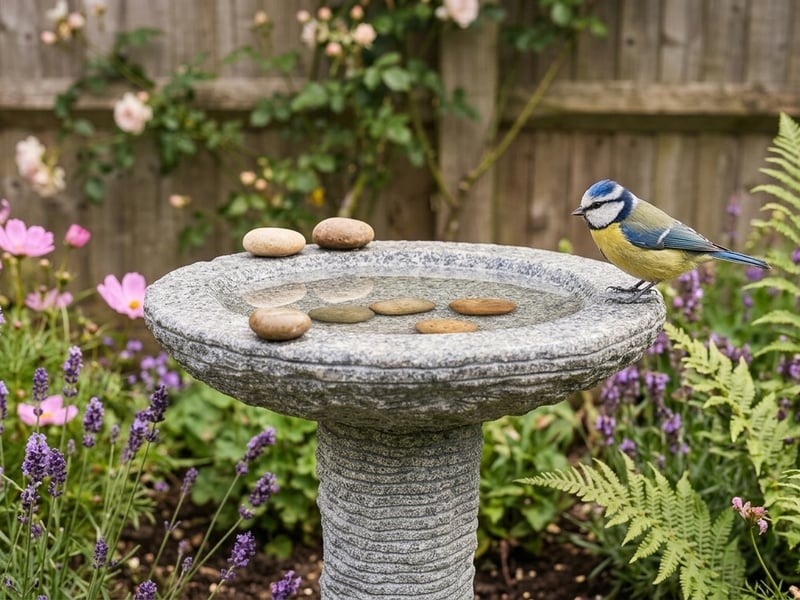
Shop the Cascade Grey Granite Bird Bath →
How to attract bees with garden ornaments
Bees need shallow water more urgently than most gardeners realise. A worker honey bee can make 50 water-collection trips a day in July to cool the hive, and every deep pond or water butt is a drowning hazard. A stone bird bath with submerged pebbles solves this in a single purchase. The Wildlife Trusts run a nationwide Air Bee n' Bee campaign advising exactly this: wet pebbles above the water line give bees a safe landing strip.
Beyond water, solid stone and metal ornaments offer something bees value highly: thermal mass. A sandstone hedgehog or bronze bee sculpture absorbs heat on a sunny morning and bumblebees land on it to warm their flight muscles before foraging. We see queen bumblebees basking on south-facing stone ornaments in March more reliably than on any planting.
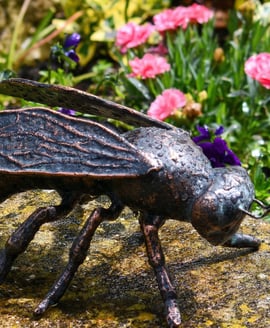
Honey bee and bumble bee sculptures also work as visual markers. Bees orient by landmarks. A tall ornament at the corner of a nectar border helps pollinators locate your garden on their foraging route. Pair a Honey Bee Metal Garden Ornament with lavender, catmint, echinops and viper's bugloss for a proven pollinator corner.
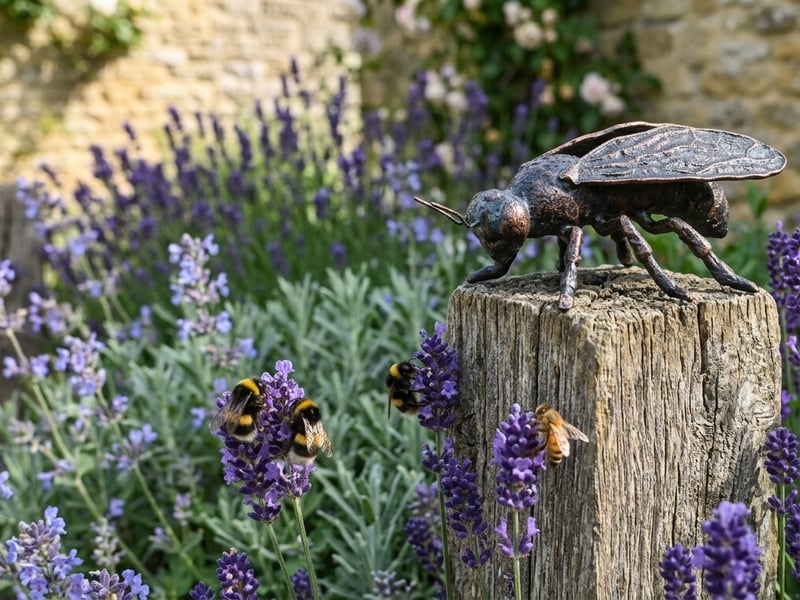
Shop the Honey Bee Metal Garden Ornament →
How to attract butterflies with garden ornaments
Butterflies look for sunlit landing platforms with grip. Flat stone ornaments, birdbath rims, cast iron plaques and rough sandstone sculptures all work as basking surfaces. UK species like the peacock, small tortoiseshell and comma warm their wings to 28°C before flying, and a south-facing stone ornament reaches that temperature faster than grass or bark.
Butterflies also need puddling sites. These are shallow patches of damp, mineral-rich mud or sand where males sip dissolved salts. A wide-rim stone bird bath with a handful of sand scattered in the basin works well. Refill with a fine mist rather than a full top-up so the basin stays damp without flooding.
Place butterfly-friendly ornaments near buddleia, verbena bonariensis, lavender, marjoram and ice plant (sedum spectabile). The Butterfly Conservation charity recommends nectar-rich planting within 2 metres of any basking surface. An ornament without nearby nectar rarely gets visits. An ornament inside a nectar border gets repeat visits from the same individuals throughout summer.
Best wildlife garden ornaments compared
The table below compares the ornament types we install most often in UK wildlife gardens. Weight, material and species coverage matter more than decorative style when the goal is attracting wildlife.
| Ornament type | Material | Attracts | Weight | Best placement | Price range |
|---|---|---|---|---|---|
| Stone bird bath with pebbles (Matt's Pick) | Cast stone or granite | Birds, bees, butterflies | 25-60 kg | 2m from shrub, morning sun | £159-£475 |
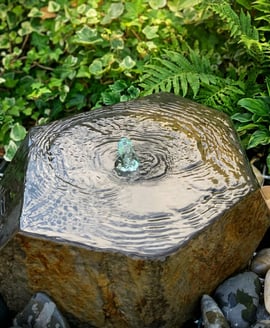
| Self-circulating water feature | Basalt or sandstone | Birds, bees, dragonflies | 40-120 kg | Central border or patio corner | £449-£589 |
| Stone hedgehog ornament | Sandstone or cast stone | Hedgehogs (indirect), solitary bees | 4-8 kg | Border edge or ground cover | £45 |
| Metal bee or butterfly sculpture | Galvanised steel or bronze | Bees, butterflies (as landmark) | 1-3 kg | Fence or stake in nectar border | £35-£40 |
| Barn owl stone ornament | Sandstone or cast stone | Deters woodpigeons, marks shelter | 5-10 kg | Raised position, 1-2m high | £55-£199 |
| Resin or lightweight figure | Polyresin | Minimal wildlife value | 0.5-2 kg | Not recommended for wildlife gardens | £15-£60 |
Where to place wildlife ornaments for maximum visits
Placement decides whether an ornament becomes a wildlife waypoint or a decorative dust collector. Four rules guide every install we do:
- Two-metre rule. Place water ornaments within 2 metres of a shrub, hedge or climber. Birds need cover within one flight, but not so close that cats can ambush from inside.
- Morning-sun rule. South-east or east-facing spots get early warmth. Butterflies, bees and basking birds use the first hour of direct sun from March to October.
- Sightline rule. Set the ornament where birds can see approaching predators. Never place a bird bath directly beneath dense conifer cover or against a fence panel.
- Grouping rule. Cluster two or three ornaments in a 3-metre zone with nectar planting and water. A single ornament across a bare lawn rarely pulls wildlife.
For smaller urban gardens, a single ornament at the junction of a patio and a planted bed delivers the same effect as a full wildlife corner in a larger space. Our guide to animal wildlife sculptures covers species-by-species placement in more detail.
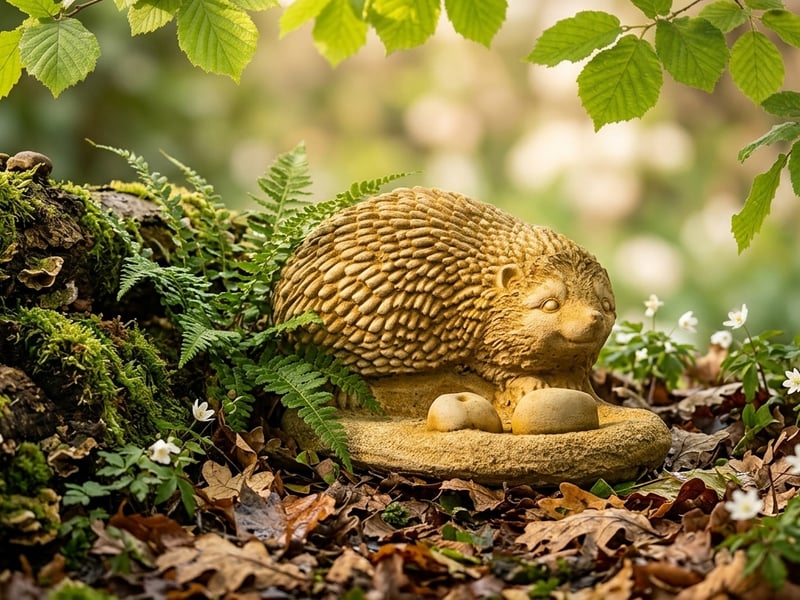
Shop the Hedgehog with Apples Stone Ornament →

|
Matt's pick: best single ornament for a wildlife gardenBest for: Any UK garden that wants to attract birds, bees and butterflies with one piece Why I recommend it: The Cascade Grey Granite Bird Bath is 45kg of solid granite, which means it stays upright in autumn storms and never blows over. The basin is 2cm deep at the edges, which suits finches and blue tits. Add five pebbles and it becomes a honey bee watering station in July. I have installed this one in over 200 UK gardens and it draws wildlife faster than any other bird bath we sell. Price: £349 |
Matt's Tip: the five-pebble rule
Matt's Tip: the five-pebble rule
Every bird bath I install gets five pebbles dropped in the basin before I leave the garden. Three of them sit just below the water line, two break the surface like tiny islands.
The submerged ones let small birds gauge depth. The exposed ones let bees and butterflies land safely to drink. Without those two exposed pebbles, honey bees skate on the surface tension and drown. It takes 30 seconds, costs nothing, and triples the wildlife value of the bath.
Keeping wildlife ornaments working all year round
Wildlife use changes season by season. A good ornament earns its keep from January to December if you adjust how you maintain it.
Spring (March to May): Queen bumblebees emerge and need water for nest-building. Scrub bird baths weekly because pollen builds up and clouds the water. Refresh pebbles if they have sunk into sediment.
Summer (June to August): Peak use. Refill daily in heatwaves. Butterflies puddle on the rim between 10am and 2pm. Bees queue at shallow edges in late July. Move portable ornaments into partial shade to slow evaporation.
Autumn (September to November): Migration refuelling. Goldcrests, warblers and thrushes drop into gardens in October. Clear fallen leaves from basins every few days so the water stays open.
Winter (December to February): The lifeline season. A frost-free bird bath saves birds from the 3 to 5 kilocalorie cost of melting ice in their crop. Float a ping-pong ball to slow freezing, or pour on warm (not boiling) water each morning. A heavy granite bath is harder to crack than a thin resin one, which is why we steer every wildlife-garden customer towards stone.
Our top wildlife-friendly ornament picks
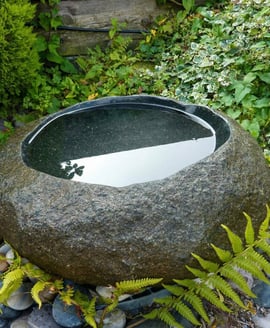
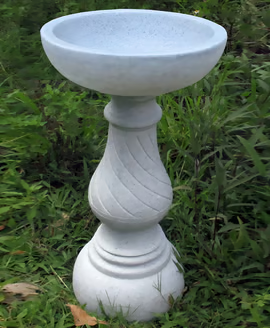
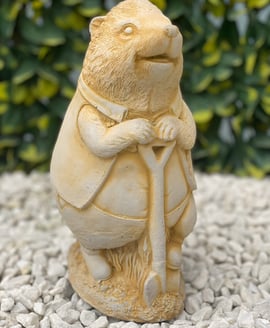
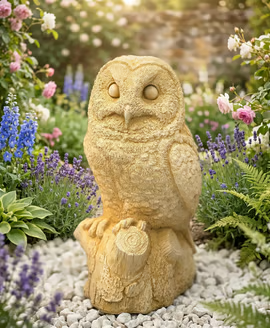
Seven ornaments we install most often in UK wildlife gardens, across the full price range:
Our top wildlife-friendly garden ornaments
Frequently asked questions
Do garden ornaments actually attract wildlife?
Yes, solid stone and metal ornaments attract wildlife by providing water, basking surfaces, thermal mass and perching sites. A shallow stone bird bath with pebbles draws birds, bees and butterflies at once. Lightweight resin ornaments offer very little wildlife value. The wildlife benefit comes from the material, weight and placement, not the shape or decorative style.
What is the best wildlife ornament for a small UK garden?
A shallow stone or granite bird bath, around 40cm in diameter, is the best single wildlife ornament for a small UK garden. It delivers water for birds, bees and butterflies from one piece. Pedestal heights between 80cm and 1.2m suit most small gardens. Budget £159 to £349 for a granite or cast-stone model that lasts decades.
How do I stop bees drowning in my bird bath?
Drop five pebbles into the basin so two or three sit above the water line. Bees land on the exposed pebbles to drink, then fly off without getting their wings wet. The Wildlife Trusts and the RSPB both recommend this method. Check pebble positions weekly because wind and topping up can shift them.
Where should I place a bird bath to attract wildlife?
Place the bird bath 2 metres from a shrub or hedge, in a spot that catches morning sun. Birds need cover within one short flight but a clear sightline to spot cats. East-facing positions warm up first on spring mornings, which draws basking butterflies and bees before the day heats up.
Are stone ornaments better than resin for wildlife?
Yes. Stone, granite, sandstone and cast iron outperform resin for wildlife because they retain heat, develop a biofilm of mosses and lichens, and stay anchored in wind. Insects feed on the surface biofilm and land on sun-warmed stone to bask. Resin stays slick, weighs little and blows over in UK autumn winds.
Do I need to clean a wildlife bird bath?
Yes, scrub the basin weekly with a stiff brush and plain water to prevent algae and avian diseases. Refill every 2 to 3 days in summer, daily in heatwaves. Never use chemical cleaners or dish soap: the residue contaminates the water film that birds drink and the surface pollen that bees collect.
What ornament attracts butterflies specifically?
Flat-topped stone ornaments, wide bird bath rims and sandstone sculptures all work as butterfly basking surfaces. Place them near buddleia, lavender, verbena bonariensis or sedum spectabile. UK species like the peacock and small tortoiseshell warm their wings on sun-heated stone before foraging. A basking surface without nearby nectar rarely gets repeat visits.
Do ornaments help hedgehogs?
Ornaments help hedgehogs indirectly by marking shelter zones and slowing pedestrian traffic in a garden. A sandstone hedgehog beside a log pile signals to human visitors not to disturb the area. Real hedgehog support comes from leaving a hole in the fence, providing water at ground level, and avoiding slug pellets. Ornaments are a visual cue, not a habitat.