
Buddha Water Feature: Placement, Meaning & 5 Best UK Picks
Written by Matt W on 15th May 2026.
A Buddha water feature combines a sculpted Buddha figure with a self-contained water flow, usually a recirculating pump in a hidden reservoir. UK garden picks range from £229 for a solar-powered resin model to £699 for a hand-finished stone piece. Placement matters more than price. East or south-east facing, eye level raised above seated eye line, water flowing toward the viewer (not away). All five featured here are mains or solar self-contained, no plumbing needed.
Key takeaways
- ✓ Face the Buddha east or south-east for traditional zen alignment
- ✓ Raise the eye line of the statue above your seated eye height for the calming effect to work
- ✓ Water must flow toward you, not away — outward flow drains energy in feng shui terms
- ✓ Mudra matters: meditating for quiet corners, blessing near paths, earth-touching in centrepiece positions
- ✓ Solar versions work on 6+ hours sun; mains versions run any time but need an outdoor socket within 10 m
- ✓ Top up reservoirs weekly in summer — running a pump dry kills it in 24-48 hours
Our experience installing Buddha water features
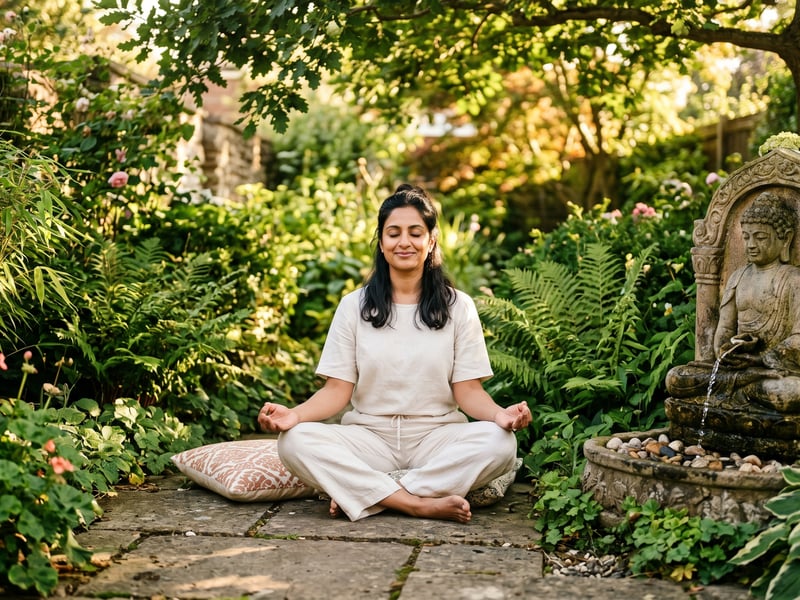
We have shipped Buddha water features to UK gardens for 14 years. The single biggest mistake is buying the right Buddha and the wrong height. Customers ring a fortnight later asking why it does not feel calming. Nine times out of ten, the statue sits on a paving slab at ankle height and gets ignored. Raise it onto a plinth, line up the Buddha's eye line with the viewer's seated eye height, and the entire piece changes character. We have also learned which pumps last a UK winter and which die in their second summer — that shapes the five picks below.
What is a Buddha water feature, exactly?
A Buddha water feature is a self-contained recirculating fountain built around a Buddha figure. Water sits in a hidden reservoir at the base, a small electric or solar pump lifts it up through the body or held vessel, and it cascades back into the reservoir. There is no plumbing to mains water, no overflow, no drain. You fill it from a watering can.
The reservoirs on our self-contained pieces hold between 6 and 20 litres. In a UK summer, expect to top up every 5-7 days as evaporation and breeze carry water away. In winter, drain the reservoir if you leave the feature outside in a frost-prone position. Frozen water expands and cracks resin shells and stone bases alike. Our UK frost protection guide covers winter shutdown in detail.
Cardinal direction: why east-facing matters
Traditional Buddhist and feng shui placement puts the Buddha facing east, the direction of sunrise and renewal. South-east is the next best option, associated with prosperity. Avoid west-facing, which represents sunset and decline, and avoid pointing the statue directly at a neighbour's house or a road.
In practical UK garden terms, east-facing means the Buddha greets the morning sun. The face catches first light, water droplets pick up the early glow, and the piece becomes the natural focal point of breakfast in the garden. South-east works almost as well and suits gardens with a fence or hedge running north to south. If your only option is west-facing, soften it by setting the Buddha among tall planting so the figure looks inward rather than outward, and avoid placing it in direct evening glare which bleaches resin finishes.
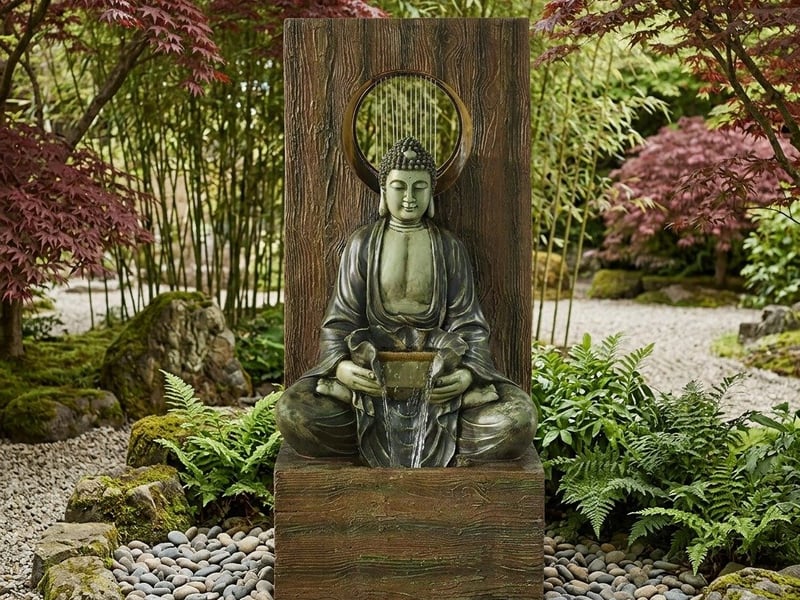
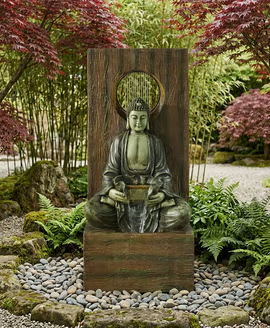
Shop the Heavenly Buddha Self-Contained Water Feature →
Height-to-eye-line: the rule almost everyone gets wrong
The calming effect of a Buddha water feature depends on the figure's eye line sitting above the viewer's eye line when seated. If you sit on a garden bench at typical UK height (45 cm seat, 110 cm eye height when seated), the Buddha's eyes should be at 120 cm or above. Most ground-placed Buddha features sit with eye lines at 40-70 cm. You end up looking down at them, which inverts the relationship.
The fix is a stone plinth or a low pedestal. Concrete plinths cost £25-£45 from a builders' merchant. Reclaimed millstone discs (around £60-£120 at architectural salvage yards) work beautifully and look like they have always been there. Our companion guide to stone pedestals and plinths covers sizing, fixing and weight ratings.
Mudras: what each hand position means
The hand position of a Buddha is called a mudra and changes the meaning of the statue. Picking a mudra that aligns with how you use the garden makes the feature feel intentional rather than decorative.
Dhyana (meditation): hands resting in lap, palms up. Quiet corners, contemplation spots, anywhere you want to unwind. Our Meditating Buddha Stone Fountain (£395) carries this mudra.
Bhumisparsha (earth-touching): right hand reaching down. Marks the moment of enlightenment. Strong centrepiece pose, suits visible-from-house positions where you see it daily.
Abhaya (blessing/no fear): right palm raised at shoulder height. Welcoming gesture, perfect near paths, gates, or entrances where it greets visitors.
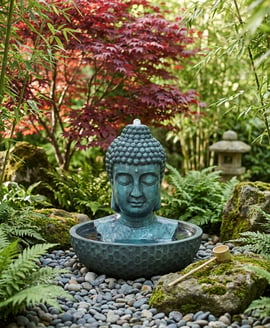
Ushnisha (crown topknot): seated Buddha with prominent crown bump, symbolising wisdom. Our Ushnisha Self-Contained Water Feature (£399) is a serene close-up of head and shoulders.
Indoor vs outdoor: which Buddha water feature for which space?
Self-contained Buddha water features split into two real categories, and the difference matters more than the marketing suggests. Indoor or sheltered-outdoor resin pieces are lighter, often have battery or low-voltage pumps, and live happily on a covered porch, conservatory or patio with a roof overhang. Full-outdoor stone and reconstituted-stone pieces weigh 40-150 kg, have IP44-rated mains pumps, and survive UK winter on an exposed lawn.
If your spot has no shelter, choose a stone-finished piece with a heavy reservoir. If you want flexibility — conservatory in winter, patio in summer — pick a lighter resin model. The Calming Buddha Solar Water Feature (£229) sits at the lighter end and moves easily; the Heavenly Buddha (£699) is the heavyweight outdoor option.
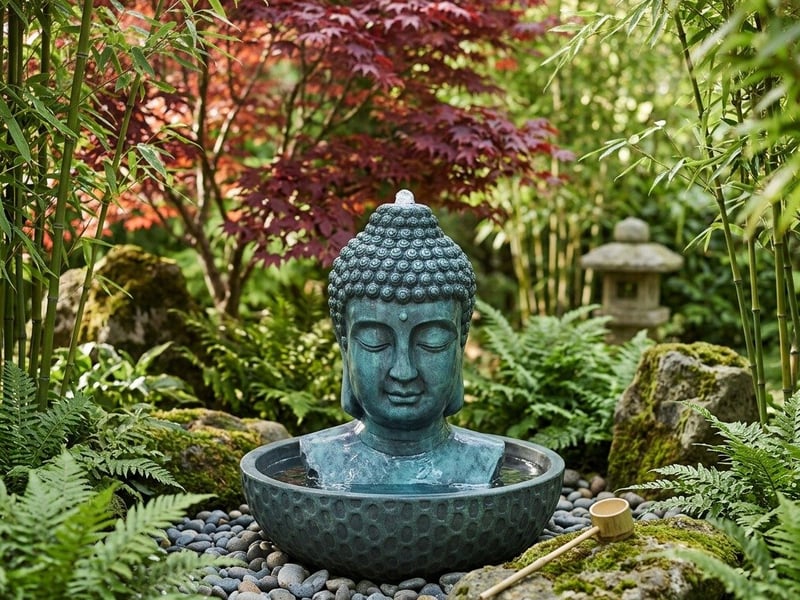
Shop the Ushnisha Self-Contained Water Feature →
5 best Buddha water features for UK gardens
The five picks below are the Buddha water features we ship most often, and the ones our service log shows holding up best after 18-36 months in a UK garden. Prices, pump types and best-use are based on our own returns and callback data, not manufacturer claims.
| Buddha water feature | Material | Pump type | Best for | Price |
|---|---|---|---|---|
| Calming Buddha Solar | Resin, bronzed finish | Solar, no mains | Allotments, off-grid corners, sunny patios | £229 |
| Meditating Buddha Stone Fountain | Reconstituted stone | Mains, IP44 | Quiet corners, meditation spots | £395 |
| Ushnisha Self-Contained | Polyresin stone-effect | Mains low-voltage | Patios, focal points near seating | £399 |
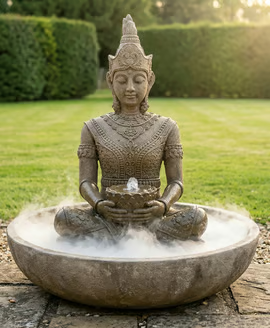
| Serene Buddha Stone Fountain | Hand-finished cast stone | Mains, IP44 | Centrepiece position, full outdoor | £430 |
| Heavenly Buddha (Matt's Pick) | Stone-effect resin, weighted base | Mains, low-voltage | Best all-rounder, zen patios and sheltered borders | £699 |
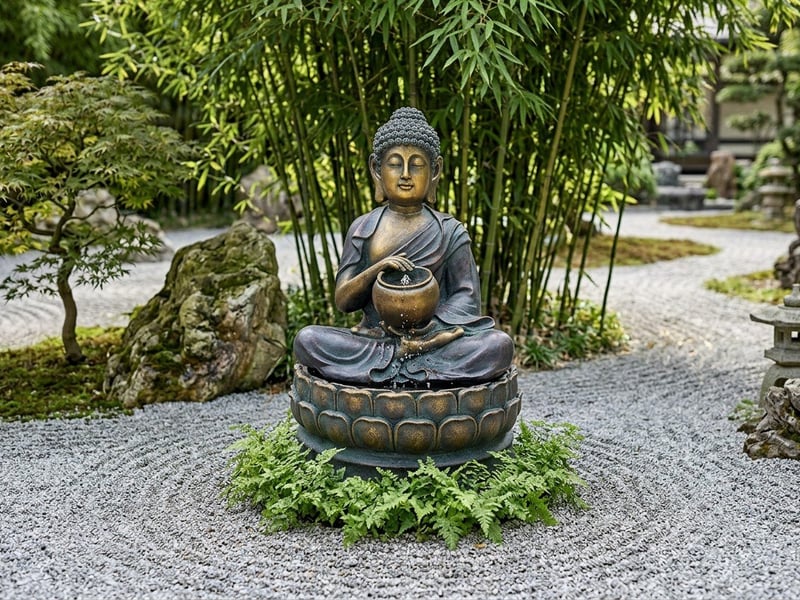
Shop the Calming Buddha Solar Water Feature →
Matt's tip: a Buddha that gets used, not just looked at
The Buddha water features that customers tell me transformed their gardens are the ones placed near a bench, a hammock, or a tea spot. Not in the middle of a lawn admired from the kitchen window. Build a 1.2 m by 1.2 m platform of slate chippings or pea shingle. Set the Buddha at the back on a plinth, put a single deep-seated chair facing it, and add a small side table for a cup of tea. That's where you sit at the end of a hard day. The water sound, the figure, the smell of warm gravel — that combination does the work the manufacturer copy promises.
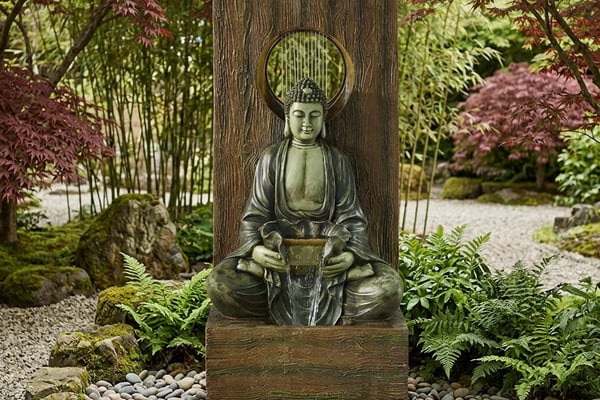
Matt's Pick: Heavenly Buddha Self-Contained Water Feature
Best For: Patios and sheltered borders where you want a full-size focal point without mains plumbing.
Why I Recommend It: The weighted base sits flat on uneven slabs without rocking. The pump is low-voltage and quiet enough to hear birdsong over the water. Two years in, the resin holds its colour where cheaper bronzed pieces have gone patchy. It's the one I would put in my own garden and have not had a single warranty callback on.
Price: £699
Setting up your Buddha water feature
Setup time on every model we sell is under 30 minutes. Find the level. Fill the reservoir to the marked line with rain water or filtered tap water (hard UK tap water deposits limescale on the pump impeller). Plug in the pump and run for 10 seconds. Adjust the flow valve until the water trickles rather than splashes — loud splashing is a sign the flow is too high and will empty the reservoir fast.
If you are running solar, point the panel south at 30-45 degrees for UK latitude. Solar pumps run only while sun hits the panel directly; expect 4-6 hours of running on a typical July day, and almost nothing in December. Mains pumps need an RCD-protected outdoor socket within cable reach — usually 5 m on a Calming Solar, 10 m on a Heavenly or Serene.
Frequently asked questions
Which direction should a Buddha water feature face?
East or south-east is the traditional and most popular choice. East-facing greets the morning sun and aligns with feng shui principles of renewal. South-east is associated with prosperity. Avoid west-facing (sunset, decline) and never point the Buddha directly at a road or a neighbour's house. If you cannot face east, soften the position with planting so the figure looks inward.
Can a Buddha water feature stay outside in winter?
Stone and reconstituted-stone pieces survive UK winters outdoors. Resin Buddhas with thinner shells should be sheltered or covered when frost is forecast for several consecutive nights. The pump must always be drained and disconnected. Frozen water inside the pump body cracks the housing and destroys the impeller. Our service log shows pump failures spike in March from owners who left water in over winter.
How much electricity does a mains Buddha water feature use?
Most pumps draw 5-15 watts — well under 1p an hour to run. A typical Heavenly or Serene Buddha pump uses 10 watts. Running it 8 hours a day in summer costs around 2-3p daily at 2026 UK electricity prices. Solar versions cost nothing to run but only work while the sun shines on the panel.
Do I need to use distilled or rain water in the reservoir?
Rain water is best; hard tap water leaves limescale on the pump. In hard-water areas (most of southern and eastern England), tap water scales the impeller within 6-9 months and reduces flow. A water butt nearby and a watering can solves it. If you must use tap water, descale the pump twice a year with a 50/50 vinegar-water flush.
What size Buddha water feature suits a small UK back garden?
Aim for a feature 50-80 cm tall in gardens under 30 sq m. Anything bigger overwhelms the space; smaller pieces get lost. The Calming Buddha Solar (44 cm) suits balconies and courtyards. The Ushnisha (about 60 cm) suits typical terraced-house gardens. The Heavenly Buddha (about 85 cm) needs at least 50 sq m of garden to read as proportioned.
Is it disrespectful to use a Buddha as a garden water feature?
Most Buddhist practitioners are comfortable with respectful outdoor display. The rules: raise the Buddha off the ground (a plinth or pedestal is essential), keep the area clean and free of clutter, do not place it near bins, drains or the floor where people step over it. Treating the figure with care matters more than the placement being "perfect" by feng shui standards.
How long do the pumps in self-contained Buddha water features last?
Three to five years on our service records, longer with annual descaling. Replacement pumps are typically £25-£60 and slot in within 5 minutes — you do not need a new water feature. The two biggest pump killers are running dry (so check water levels weekly in summer) and limescale buildup (so flush twice a year if you use tap water).
Browse our full range
We stock five Buddha water features covering solar, mains, and stone-finish options from £229 to £699. Every piece ships with a 12-month pump warranty and step-by-step setup notes. Not sure which size or pose suits your space? Send us a garden photo and we will suggest a piece that fits the proportions. Browse our wider collection of garden ornaments if you want to build a complete zen corner around the feature.
Popular Buddha water features
Related articles
- The 2026 UK Water Feature Buyer's Guide
- Buddha Garden Ornaments: Placement, Meaning and Feng Shui Guide
- Best Places to Position Garden Statues for Feng Shui
- Japanese Garden Ornaments: Lanterns, Pagodas & Water Basins
- Stone Pedestals and Plinths: How to Display Garden Statues
Matt W
Garden & Outdoor Specialist
Matt has spent over 16 years working hands-on with garden products across the UK. He tests materials in Staffordshire clay soil and hard-water conditions, and writes from direct experience installing, maintaining and repairing everything from stone water features to cast iron furniture. His advice is based on what actually survives a British winter, not what looks good in a catalogue.