
How to Protect Garden Ornaments in Winter: A Month-by-Month UK Guide
Written by Matt W on 17th Mar 2026.
Protecting garden ornaments in winter costs £8-£15 per year in sealant and horticultural fleece. The UK averages 15-80 frost days annually depending on region. Water trapped inside porous stone expands by 9% when it freezes, turning hairline cracks into visible splits within a single season. Cast stone statues rated to -15°C survive outdoors year-round. Terracotta and cheap concrete need bringing indoors before the first frost. A month-by-month plan from October to March prevents the damage that costs £99-£750 to replace.
By Matt W | 17 March 2026
Key Takeaways
- ✓ Water expands 9% when freezing, cracking porous stone and concrete from the inside out
- ✓ Cast stone ornaments rated to -15°C survive UK winters outdoors with basic sealant protection
- ✓ Terracotta and unglazed ceramic crack at -2°C and must come indoors before first frost
- ✓ Cover with breathable fleece or hessian, never plastic, which traps condensation that then freezes
- ✓ Raise stone ornaments 10mm off the ground using pot feet to prevent base cracking from ground frost
- ✓ Drain all bird baths and fountain pumps by late October to prevent ice damage
- ✓ Annual protection costs £8-£15 in sealant and fleece versus £99-£750 to replace a damaged piece

Browse our frost-resistant Garden Statues →
Matt's Experience
I have packed and dispatched thousands of stone ornaments over the years, and the damage reports that come back in spring follow the same pattern every time. A customer leaves a bird bath full of water through December, the bowl cracks clean in half, and they assume the stone was faulty. It was not. It was physics. Nine times out of ten, winter damage to garden ornaments is preventable with about fifteen minutes of preparation in October. The information in this guide comes from the returns we have processed and the patterns we have spotted over many years of selling stone, metal, and resin ornaments across the UK.
Why does frost damage garden ornaments?
Frost damages garden ornaments because water trapped inside porous materials expands by roughly 9% when it freezes, creating internal pressure that cracks stone, concrete, and ceramic from within. This is not a one-off event. The UK's maritime climate means temperatures hover around freezing for weeks at a time, creating repeated freeze-thaw cycles that are far more destructive than a single hard frost. A 2mm crack in October becomes a 20mm split by March.
Cast stone and reconstituted stone are engineered to handle this. Manufacturers rate quality cast stone to -15°C or lower. Cheap imported concrete and terracotta have no such protection. The difference is in the aggregate mix and density. Denser stone absorbs less water, so there is less to expand when temperatures drop. Our guide to garden ornament materials explains the differences between stone types in detail.
Which ornament materials are most vulnerable to winter damage?
Terracotta and unglazed ceramic are the most vulnerable materials, cracking at temperatures as mild as -2°C. Cheap imported concrete follows close behind. Cast stone, granite, bronze, and high-quality resin handle UK winters with minimal intervention. The table below ranks every common material by frost resistance so you can prioritise which pieces in your garden need the most attention.
| Material | Frost Rating | Winter Action | Risk Level |
|---|---|---|---|
| Terracotta / unglazed ceramic | Cracks at -2°C | Bring indoors | Very High |
| Cheap imported concrete | Cracks at -5°C | Bring indoors or seal and cover | High |
| Limestone / sandstone | Varies by density | Seal with silane sealant, raise off ground | Medium-High |
| Reconstituted stone | -10°C to -15°C | Seal and raise off ground | Medium |
| Cast stone (UK-made) | -15°C to -20°C | Optional seal, leave outdoors | Low |
| Resin (quality) | -10°C rated | Move small pieces indoors in hard frost | Low |
| Bronze / copper | No frost risk | None needed | Very Low |
| Iron / steel | No frost risk | Protect from rust (wet, not cold) | Very Low |
| Granite | Virtually immune | None needed | Negligible |
Our frost protection guide covers sealant application techniques in full detail.
Shop the Cascade Black Limestone Bird Bath £335 →
Month-by-month winter protection calendar
Winter protection for garden ornaments runs from October through March, with October being the most important month for preparation. Getting ahead of the first frost prevents 90% of avoidable winter damage. The calendar below is based on average UK conditions. If you live in Scotland or northern England, shift everything two to three weeks earlier. Southern and coastal gardens can shift two weeks later.
October: inspect, seal, and prepare
This is the month that matters most. Inspect every ornament for cracks, chips, and damage. Even a hairline crack will let water in, and that water will freeze and split the stone wider. Fill small cracks with a colour-matched stone repair compound, sand flush with 180-grit sandpaper, and let it cure for 48 hours. Apply a breathable silane or siloxane sealant to all porous stone. Thompson's Water Seal is widely available and works well. Never use varnish or polyurethane. These trap moisture underneath and make the problem worse.
Raise stone ornaments at least 10mm off the ground using terracotta pot feet or slate shims. The base of a statue cracks first because ground frost pushes moisture upward through direct contact. Drain all bird baths completely. Remove fountain pumps, dry them, and store indoors. If your bird bath is too heavy to tip, use a sponge to remove standing water. Browse our full range of garden ornaments to see which materials each piece is made from.
November: cover and move vulnerable pieces
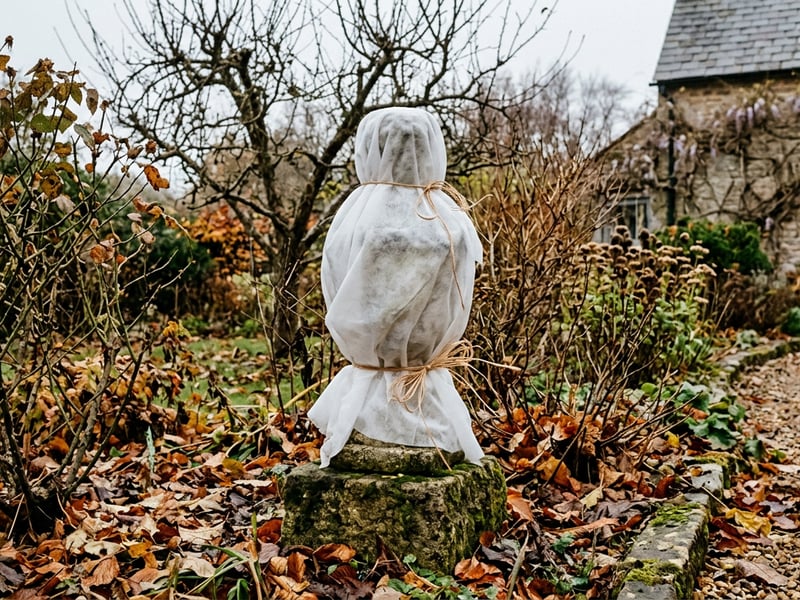
By November, all covers should be in place. Wrap vulnerable stone pieces in horticultural fleece or hessian, secured loosely with garden twine. The key word is breathable. Never use plastic sheeting, bin bags, or tarpaulins directly against stone. Plastic traps condensation against the surface, and that moisture freezes overnight. You end up causing the exact damage you were trying to prevent.
Move all terracotta, unglazed ceramic, and lightweight resin pieces (under 5kg) into a shed, garage, or greenhouse. If you have no indoor space, group small pieces together against a south-facing wall and cover them as a cluster. The wall radiates stored heat overnight and provides wind shelter.
December and January: monitor and protect
During the coldest months, your main job is to leave things alone. Do not move frozen ornaments. Stone becomes brittle at low temperatures and can snap at joints or weak points. If snow settles on covered ornaments, brush it off gently with a soft broom. Never chip ice off a stone surface. The chisel action damages the finish.
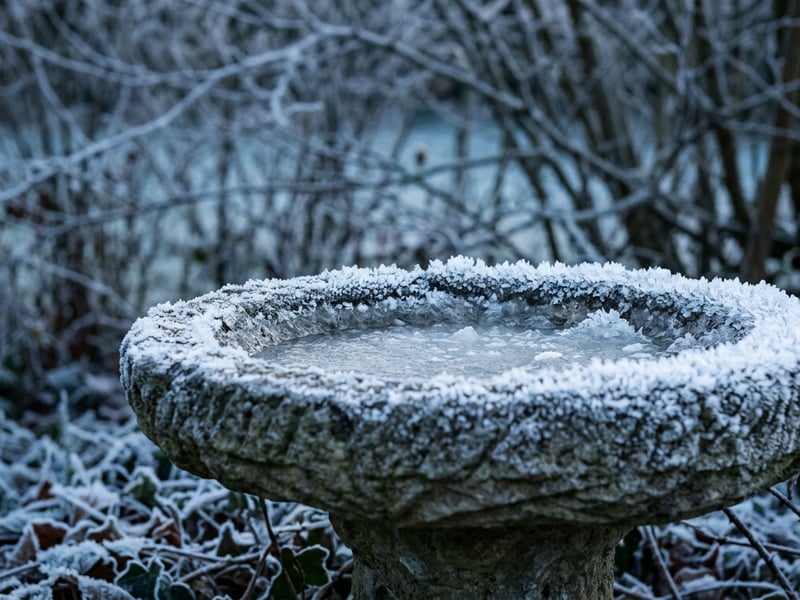
Keep bird baths empty or place a tennis ball in the water. The ball absorbs the expansion pressure when the water freezes, reducing the risk of the bowl cracking. Top up water on milder days for visiting birds, but empty again before the next overnight frost. Read our guide on why every garden needs a bird bath for year-round care advice.
February: hold steady and watch for late frosts
February is deceptive. A few mild days tempt people to uncover ornaments early, then a late frost catches everything exposed. Keep covers on through the entire month. Check that fleece wraps have not worked loose in winter storms. Replace any that have torn. Continue keeping bird baths and water features drained until you are confident the frost risk has passed.
March: uncover, clean, and inspect
In southern England, mid-March is usually safe to remove covers. Midlands and northern gardens should wait until late March or early April. Once covers are off, clean each ornament with clean water and a soft bristle brush. No pressure washers. No acidic cleaners. Inspect every piece for new cracks, flaking, or frost damage. Apply a fresh coat of sealant to any stone that looks dry or chalky. This is also the time to reposition ornaments that were moved against walls or brought indoors. Our stone cleaning guide covers spring cleaning techniques.
How do you protect stone statues from frost?
Protect stone statues from frost by sealing with a breathable silane sealant in October, raising off the ground by 10mm, and covering with horticultural fleece before the first hard frost. Quality cast stone from UK manufacturers is rated to -15°C or lower and can stay outdoors year-round with just sealant. Cheaper imported stone and reconstituted concrete need the full treatment: seal, raise, and cover.
The single most important step is raising the statue off direct ground contact. Use purpose-made pot feet, pieces of slate, or small timber offcuts. Ground frost travels upward through soil and concrete, and the base of a statue absorbs moisture through capillary action where it sits on wet paving. That absorbed moisture freezes first and cracks the base outward. Our guide to securing garden statues explains fixing methods that also improve drainage.

|
Matt's Pick for Frost-Proof Garden StatuesBest For: Year-round outdoor display without winter covers Why I Recommend It: The Friar is made from dense UK-manufactured cast stone rated to -15°C. We have never had a frost damage return on this piece. At 99 quid, it is the most affordable way to add character to a garden border without worrying about winter. Price: £99 |
How do you winterise a bird bath or water feature?
Winterise a bird bath by emptying all water before the first frost, scrubbing the bowl clean, and either covering it or turning it upside down. Water left standing in a stone bowl overnight in freezing conditions is the single most common cause of winter ornament damage we see. Ice expands against the inner walls of the bowl and cracks it outright. This applies to every material except solid granite.
For fountain water features, disconnect the pump, drain all hoses, and store the pump indoors. Solar panels can stay outside but should be covered to prevent scratching from wind-blown debris. If your water feature has a reservoir, either drain it completely or drop in a piece of polystyrene or a floating tennis ball. The compressible object absorbs the expansion pressure when the water surface freezes. Our guide to solar water features includes full winterisation steps for pump systems.
Shop the Artichoke Stone Fountain £210 →
Should you bring garden ornaments inside for winter?
Bring terracotta, unglazed ceramic, and lightweight resin ornaments indoors before the first frost. Leave cast stone, granite, bronze, and iron pieces outside. The decision depends entirely on the material. Moving a 60kg cast stone statue into a shed is unnecessary, impractical, and risks back injuries. Covering it in situ is safer and just as effective. A lightweight resin figure under 5kg is better off in a garage.
If you have limited indoor storage, prioritise the most vulnerable items. Terracotta pots and planters crack at just -2°C. Glazed ceramic is slightly tougher but still fragile. Resin pieces rated to -10°C handle most UK winters outdoors, but if Met Office warnings predict sustained temperatures below -8°C, move them inside temporarily. Our resin ornaments guide covers material durability in more detail.
What are the most common winter care mistakes?
The most common mistake is covering ornaments with plastic sheeting instead of breathable material. Plastic traps condensation against the stone surface. That trapped moisture freezes overnight, causing the exact frost damage you were trying to prevent. Horticultural fleece, hessian, or old cotton bedsheets all allow moisture to escape while blocking frost.
Other frequent mistakes include leaving water in bird baths, ignoring small cracks before winter, pressure washing in cold weather, moving frozen statues, and using acidic cleaners that etch stone surfaces. Leaving ornaments sitting directly on wet soil or clay is another common error. Clay soil heaves when it freezes, physically pushing the ornament upward while the base absorbs ground moisture. Placing a paving slab underneath and raising the ornament on pot feet solves both problems at once. Read our stone ornament care guide for full year-round maintenance advice.
Matt's Tip: The Tennis Ball Trick
If your bird bath is too heavy to drain or flip upside down, drop a tennis ball or a chunk of polystyrene into the water before a frost is forecast. When the water freezes, the ball compresses instead of the bowl walls taking the strain. It is not a perfect solution and I would still recommend draining the bowl whenever possible, but it has saved quite a few bird baths for our customers over the years. Just remember to remove the ball and refresh the water on milder days so birds can still drink.
How much does it cost to protect garden ornaments in winter?
Winter protection for garden ornaments costs £8-£15 per year in sealant and horticultural fleece. A 500ml tin of Thompson's Water Seal covers roughly 4-5 statues and costs around £8. A 10-metre roll of horticultural fleece costs £5-£7 from any garden centre. Compare that to the cost of replacing a damaged piece: stone statues range from £99 for a Friar statue to £750 or more for large water features.
| Protection Item | Cost | Coverage / Lifespan |
|---|---|---|
| Silane/siloxane sealant (500ml) | £8-£12 | 4-5 statues, reapply annually |
| Horticultural fleece (10m roll) | £5-£7 | Covers 6-8 medium ornaments, lasts 2-3 seasons |
| Terracotta pot feet (pack of 3) | £3-£6 | Permanent, reusable |
| Stone repair compound | £5-£10 | Multiple repairs per tube |
| Total annual cost | £8-£15 | Protects your full collection |
Does winter protection differ by UK region?
Scotland and northern England experience 50-80+ frost days per year, while southern coastal areas see as few as 15-20. This means timing and intensity of protection varies significantly. Northern gardeners should start sealing and preparing in late September, a full month before southern gardens. Coastal gardens face an additional threat from salt spray, which corrodes metal and etches soft stone. Granite handles coastal conditions best.
Midlands gardens average 30-50 frost days and follow the standard October-to-March timeline in this guide. South-east England often has algae and damp as a bigger concern than frost. A breathable sealant still helps here because it stops moisture penetrating the stone surface, which reduces both frost damage and algae growth. Our metal ornament care guide covers additional rust protection for iron pieces in high-rainfall areas.
Frequently asked questions
Can I leave stone garden ornaments outside all winter?
Quality cast stone rated to -15°C or lower can stay outside all winter. Apply a breathable silane sealant in October and raise the piece 10mm off the ground using pot feet. Cheap imported concrete, terracotta, and unglazed ceramic should come indoors before the first frost. Check the manufacturer's frost rating before deciding.
What should I cover garden ornaments with in winter?
Cover garden ornaments with horticultural fleece, hessian, or old cotton bedsheets. Never use plastic sheeting, bin bags, or non-breathable tarpaulins. Plastic traps condensation against the stone, and that moisture freezes overnight. Breathable fabrics allow moisture to escape while still blocking frost and wind chill. Secure loosely with garden twine so air can circulate underneath.
Do I need to drain my bird bath before winter?
Yes, drain all bird baths before overnight temperatures drop below 0°C. Standing water expands by 9% when it freezes, cracking stone and concrete bowls from the inside. If the bowl is too heavy to tip, soak up the water with a sponge. On milder days, refill for visiting birds but empty again before the next frost. A floating tennis ball in the water absorbs some expansion pressure as a backup.
How do I protect a fountain or water feature in winter?
Disconnect the pump, drain all water lines, and store the pump indoors in a dry place. Drain the reservoir completely or add a floating piece of polystyrene to absorb ice expansion. Cover exposed stonework with fleece. Solar panels can stay outside but benefit from a light cover to prevent scratching. Reconnect everything in March once frost risk has passed.
What is the best sealant for stone garden ornaments?
A breathable silane or siloxane sealant such as Thompson's Water Seal is the best option for stone ornaments. Apply it on a dry day when temperatures are above 5°C, usually in early October. It penetrates the stone surface and repels water without sealing moisture in. Never use varnish, polyurethane, or gloss sealants. These create a non-breathable film that traps moisture and actually accelerates frost damage.
How do I fix a cracked stone ornament after frost damage?
Fill the crack with a colour-matched stone repair compound, sand flush with 180-grit sandpaper, and let it cure for 48 hours. For clean breaks, use a two-part exterior stone adhesive. Clamp the pieces together while the adhesive sets. Once repaired, seal the entire ornament with silane sealant to prevent water re-entering the crack. Large structural breaks may not be repairable, so prevention is always cheaper than cure.
Do metal garden ornaments need winter protection?
Metal does not crack from frost, but iron and steel need rust protection during wet winter months. Bronze, copper, and aluminium are maintenance-free in winter. Cast iron and wrought iron benefit from a coat of exterior metal paint or wax before winter. Our metal care guide covers seasonal rust prevention in full.
Further reading
Matt W
Garden & Outdoor Specialist
Matt has spent over 16 years working hands-on with garden products across the UK. He tests materials in Staffordshire clay soil and hard water conditions, and writes from direct experience fitting, maintaining, and repairing everything from stone statues to cast iron furniture. His advice is based on what actually survives a British winter, not what looks good in a catalogue.