
Cast Iron Fire Pits: Why They Heat Better, Last Longer (And When Steel Wins)
Written by Matt W on 10th Jun 2026.
A cast iron fire pit heats better than steel for one reason: mass. A typical 70cm cast iron bowl weighs 25-40kg with walls 6-10mm thick, so it stores roughly three times the heat of a 14kg steel bowl and keeps radiating for 90 minutes or more after the last log burns down. The trade-offs are weight, price (£150-£500) and brittleness. For UK gardens, cast iron suits a permanent spot; 3mm steel suits everyone else.
Key takeaways
- ✓ Heat storage is mass times temperature. A 32kg iron pit is a storage heater; a 14kg steel bowl is a radiator
- ✓ Cast iron walls run 6-10mm thick. Quality steel bowls are 3mm. Bargain bowls are 1.5mm and warp in 2-3 summers
- ✓ In our March 2026 side-by-side test, cast iron read 74°C a full hour after the steel bowl had dropped to 31°C
- ✓ Cast iron is brittle. Rain on a hot pit can crack the casting, and a dropped one can shatter
- ✓ A 30kg+ pit is a one-position purchase. Decide where it lives before you buy, not after
- ✓ We sell 3mm handmade steel rather than cast iron, and this guide explains that decision honestly
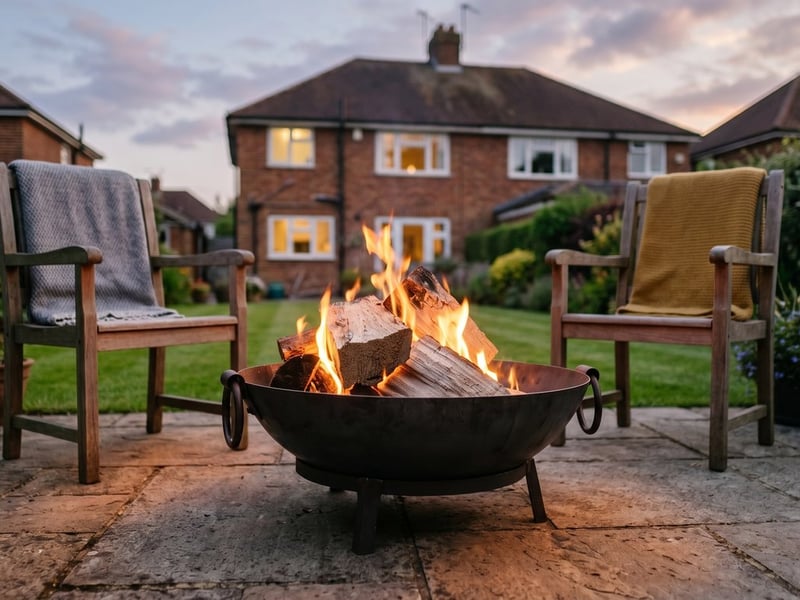
Shop the 60cm Kadai BBQ Fire Pit Bowl Set →
Installer's note
We stock 15 fire pits and not one of them is cast iron. That might seem an odd opening for a cast iron guide, but it puts us in a useful position: we have no cast iron to sell you, so we can tell you the truth about it. Cast iron genuinely does heat better and last longer. It is also heavy to move, costly to ship without damage, and unforgiving if you treat it badly. This guide gives you the real numbers for both materials, then helps you decide which one your garden actually needs.
Why cast iron holds heat better: the simple physics
The secret is not the iron itself. Kilogram for kilogram, cast iron and steel store almost the same amount of heat (about 460 and 490 joules per kilogram per degree). What separates them is how much metal sits around your fire. Cast iron has to be cast thick to be strong, so the walls of a typical bowl run 6-10mm. Pressed steel bowls run 1.5-3mm.
That thickness means a 70cm cast iron pit carries 25-40kg of metal where the equivalent steel bowl carries 12-16kg. Twice to three times the mass means twice to three times the stored heat at the same temperature. While the fire burns you will not notice much difference. The difference arrives after the flames die back, when stored heat is all you have left.
Rough cast surfaces also radiate slightly better than smooth ones, but mass does most of the work. Buy thickness and weight, not material marketing.
Cast iron vs 3mm steel vs bargain bowls: the numbers
This table is the short version of ten years of unpacking, dispatching and repairing fire pits. The third column matters most. Cheap 1.5mm bowls from supermarket seasonal aisles are the ones that warp, sag and rust through.
| Measure | Cast iron | 3mm handmade steel | 1.5mm bargain steel |
|---|---|---|---|
| Wall thickness | 6-10mm | 3mm | 1-1.5mm |
| Typical weight (70cm) | 25-40kg | 12-20kg | 5-8kg |
| Warm after fire dies | 90+ minutes | 30-45 minutes | 10-15 minutes |
| Lifespan | 50+ years | 10-20 years oiled | 2-3 summers |
| Warping risk | None | Very low | High |
| Cracking risk | Real (thermal shock, drops) | None | None |
| Price (UK, 70cm class) | £150-£500 | £89-£249 | £25-£60 |
| One-person portable | No | Yes | Yes |
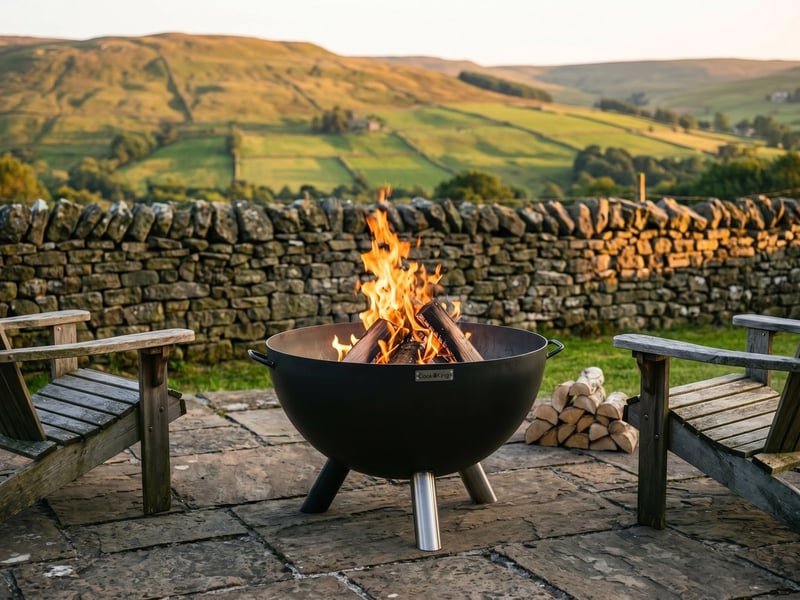
Shop the Cook King Kongo Deep Fire Bowl →
Our side-by-side test: what an infrared thermometer showed
In March 2026 we ran our 16kg 60cm Kadai bowl against a customer's 32kg cast iron pit of similar size in a Staffordshire garden. Both burned the same kiln-dried birch for two hours. We then stopped feeding both fires and took infrared thermometer readings from the outer wall every 30 minutes.
- 30 minutes after the last log: cast iron 142°C, steel 96°C
- 60 minutes: cast iron 98°C, steel 47°C
- 90 minutes: cast iron 74°C, steel 31°C
- 120 minutes: cast iron 51°C, steel matched the evening air at 12°C
At 90 minutes the iron pit was still too warm to rest a hand on and you could feel it from a seat a metre away. The steel bowl was finished. If your evenings routinely run past the last log, that gap is the whole argument for cast iron. If you tend to pack up when the flames do, it buys you nothing.
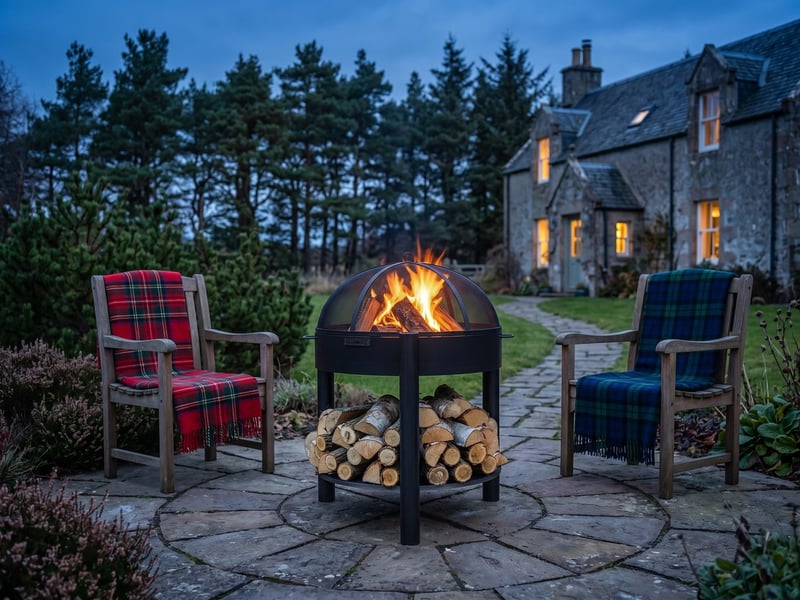
Shop the Cook King Montana 80cm High Fire Bowl →
Why cast iron lasts 50 years, and how it still fails early
Victorian cast iron furniture is still in daily use 150 years on, and a cast iron fire pit can genuinely outlast the person who buys it. The metal cannot warp at fire pit temperatures, rust attacks it slowly because there is so much material to get through, and surface rust forms a stable patina rather than eating holes.
But cast iron has one weakness steel does not: it is brittle. The two failure cases we hear about are thermal shock and impact. A summer downpour on a pit that is still at 300°C can crack the casting with a bang, because the outer surface shrinks faster than the core. And a casting that tips onto patio slabs while being moved can fracture outright. Steel dents in both situations and carries on.
The rules are simple. Let iron cool on its own, never quench it, and never drag it. Our guide to metal finishes and weathering covers how iron patina behaves over the years.
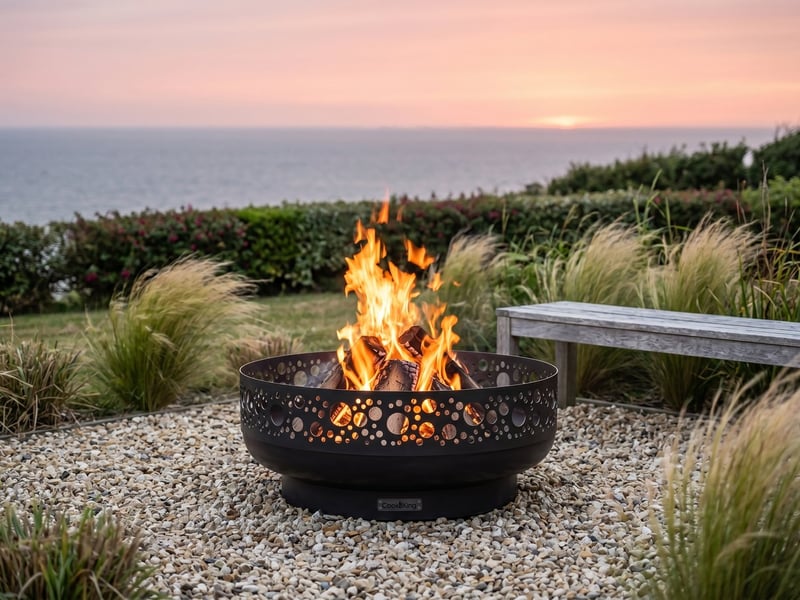
Shop the Cook King Boston 80cm Decorative Fire Bowl →
The 30kg question: weight as a feature, not a flaw
A 30kg+ fire pit changes how you use it. You will not carry it to the shed in November, so it lives outdoors all year in one position. You will not reposition it for a party, so the seating arrangement is fixed. For a dedicated fire pit area with a gravel or paved base, that permanence is exactly what you want. The weight also keeps it planted in wind and makes it about as theft-resistant as an anvil.
Measure honestly before committing. A permanent pit needs 3 metres of clear space from fences, hedges and buildings in every direction, on a base that drains. If you cannot give it that fixed footprint, weight stops being a feature and becomes the reason the pit ends up on a selling site in two years. Lighter steel keeps your options open in a small or rented garden.

Shop the Cook King Cuba 70cm Fire Bowl →
Why we chose 3mm steel for our own range
When we picked a fire pit range to stock, we tested both materials and chose handmade 3mm steel. Three reasons. First, freight: cast iron castings crack in transit at a rate steel simply does not, and a cracked casting is scrap. Second, handling: most of our customers want to move a fire pit at least occasionally, and 12-16kg with carry handles is a one-person job where 32kg is not. Third, value: at £99 for the 70cm Cook King Cuba, 3mm steel delivers most of the burn experience for a third of the cast iron price.
The honest caveat is heat retention. Our steel bowls give you 30-45 warm minutes after the last log, not 90. You can browse the full range of wood-burning fire bowls, baskets and gas fire pits and judge the trade for yourself. Every wood burner in it is 3mm hand-formed steel, and we say so on each listing.
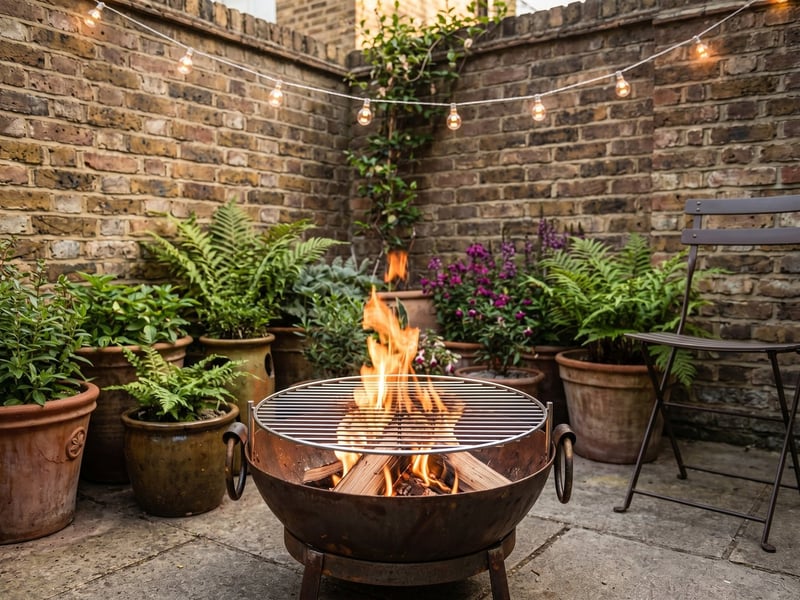
Shop the 40cm Kadai BBQ Fire Pit Bowl Set →
Rust care: iron patina vs oiled steel
Both materials rust in a UK garden. The difference is what the rust does next. On cast iron, surface rust builds into a stable brown patina that protects the thick metal beneath. Many owners leave it untouched for decades. On steel, rust keeps going if you ignore it, which is why every listing in our range carries the same instruction: once the bowl is cool, wipe it with a thin coat of edible oil.
| Task | Cast iron | 3mm steel |
|---|---|---|
| After each burn | Empty ash once cold | Empty ash, wipe with oiled rag |
| Annually | Linseed oil wipe in autumn (optional) | Check for bare patches, re-oil |
| Every 2-3 years | Wire-brush flaking spots if painted | Nothing extra needed |
| Winter | Tip out water, leave in place | Cover or store under shelter |
| Time per year | About 1 hour | About 2 hours |
Ash is the quiet killer of both materials. Wet ash holds acidic moisture against the metal for weeks, so emptying the bowl after each session does more for lifespan than any oil or paint. For how our other iron pieces weather, see our guide to garden ornament materials compared, which puts cast iron alongside stone, bronze and resin.
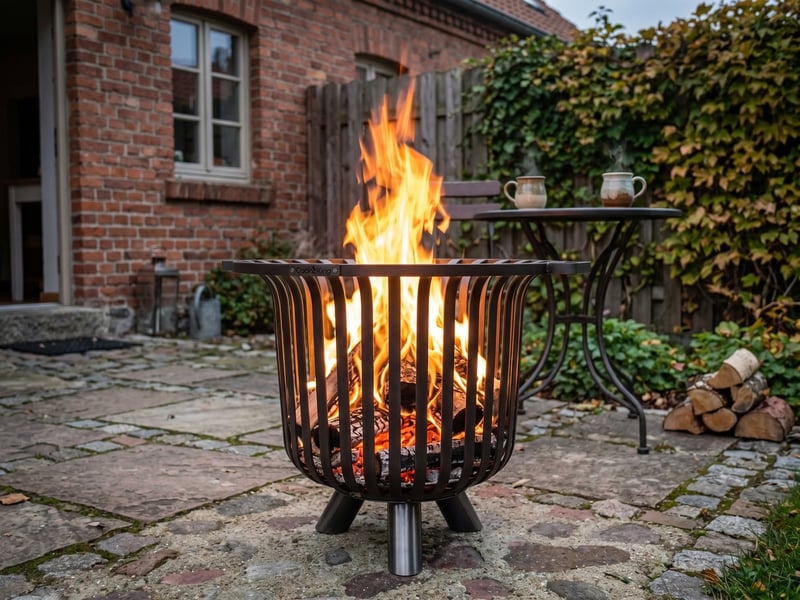
Shop the Cook King Verona 60cm Fire Basket →
Which should you buy?
Match the material to how you actually use your garden, not to the showroom spec sheet.
| Your situation | Buy | Why |
|---|---|---|
| Permanent fire pit area, evenings run late | Cast iron | 90+ minutes of stored heat and a 50-year life in one fixed spot |
| Need to move or store the pit | 3mm steel | 12-16kg with handles is a one-person lift |
| Small, rented or shared garden | 3mm steel basket | Light, affordable, takes its footprint with you when you leave |
| Cooking is the main event | Either, with a grill | Iron griddles hold sear heat; steel bowls with grills are easier to manage |
| Exposed or windy plot | Cast iron, or a deep steel bowl | Mass resists gusts; high sides shield embers |
| Budget under £120 | 3mm steel | Skip 1.5mm bargain bowls entirely; they warp in 2-3 summers |
Whatever you burn it in, check the legal side before your first fire. Our guide to smoke control areas and fire pit law explains the rules postcode by postcode.
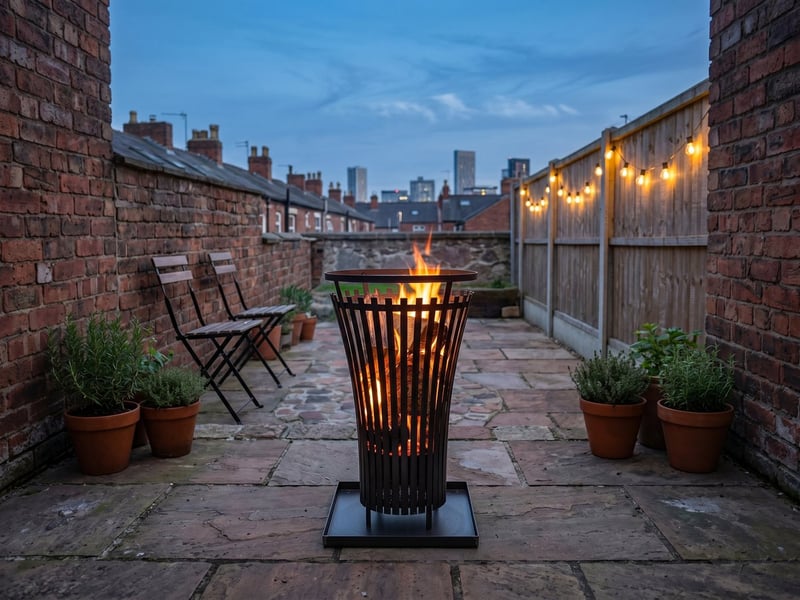
Shop the Cook King Flame 45cm Fire Basket →
Matt's tip: buy the lid, skip the paint
Customers ask me whether to paint a steel fire pit with stove paint to make it last like iron. Don't bother. Paint on a fire bowl burns off the inside in one session and flakes outside within a year, and then it traps moisture under the flakes and rusts faster than bare metal. The accessory that actually extends life is a lid or rain cover, because it keeps water out of the ash. A £20 cover adds more years than £40 of paint ever will.
Matt's pick for a first fire pit
Best For: Anyone who wants one well-made bowl that will see out a decade
Why I Recommend It: The Cookking Panama is 70cm of 3mm hand-formed steel at a price most 1.5mm supermarket bowls nearly match. It sits low and stable, the concave shape stops half-burnt logs blowing about, and the same maker offers a lid and grate if you grow into cooking. It is the bowl I point friends to when they ask for a sensible starting point.
Price: £105
Frequently asked questions
Are cast iron fire pits better than steel?
Cast iron holds heat longer and lasts decades; steel is lighter, cheaper and tougher. A 25-40kg cast iron pit radiates warmth for 90+ minutes after the fire dies and can last 50 years. A 3mm steel bowl cools in 30-45 minutes but costs a third as much, moves easily and never cracks. Neither is better in all gardens.
How long does a cast iron fire pit stay hot?
Around 90 minutes to two hours after the last log burns down. In our March 2026 test, a 32kg cast iron pit still read 74°C ninety minutes after we stopped feeding it, while a 16kg steel bowl had dropped to 31°C. The stored heat comes from the mass of the casting, not the fire size.
How heavy is a cast iron fire pit?
Most 60-80cm cast iron fire pits weigh 25-40kg. Walls are cast 6-10mm thick, which is where the weight and the heat storage both come from. Treat anything over 25kg as a two-person lift and a permanent garden fixture. Equivalent 3mm steel bowls weigh 12-20kg.
Do cast iron fire pits rust?
Yes, but the rust forms a stable patina rather than eating through. The castings are so thick that surface oxidation protects the metal beneath, the same way Victorian iron railings survive. Empty wet ash after each burn and wipe with linseed oil once a year if you want to slow the patina down.
Can you leave a cast iron fire pit outside all year?
Yes. Cast iron is one of the few fire pit materials that genuinely lives outdoors year-round. Frost does not trouble it and the patina protects it. The two rules: tip rainwater out so ash never sits wet, and never light a fire to dry out a frozen, waterlogged bowl quickly. Heat a soaked casting gently.
Why does wall thickness matter so much in a fire pit?
Thickness sets how much heat the pit stores and whether it warps. Metal stores heat in proportion to its mass, so a 10mm wall holds several times what a 1.5mm wall holds. Thin steel also flexes as it heats and cools, which is why bargain bowls sag and split along their seams within 2-3 summers.
Can you cook on a cast iron fire pit?
Yes, and cast iron is the best searing surface there is. The mass holds temperature when cold food hits the grill, which is exactly what steak and flatbreads want. On steel pits, choose one with a drop-in grill. Burn logs down to embers first; flames coat food in soot, embers cook it.
Further reading
- Garden Fire Pit Buying Guide: Steel, Cast Iron and Corten Compared
- Garden Dining Sets: How to Choose by Garden Size and Group
- How to Protect Garden Ornaments in Winter: A Month-by-Month UK Guide
- Lounge Sets vs Corner Sofas: Which Garden Set Wins for British Weather?
- Garden Furniture Buying Guide UK: Aluminium vs Rattan vs Polywood vs Steel
For more ideas across every material and style, browse our full collection of garden ornaments.
Matt W
Garden & Outdoor Specialist
Matt has spent over 16 years working hands-on with garden products across the UK. He tests materials in Staffordshire clay soil and hard water conditions, and writes from direct experience fitting, maintaining, and repairing everything from stone statues to cast iron furniture. His advice is based on what actually survives a British winter, not what looks good in a catalogue.