
Garden Fire Pit Buying Guide: Steel, Cast Iron and Corten Compared
Written by Matt W on 30th Apr 2026.
A garden fire pit in the UK comes in three materials: powder-coated steel (cheapest, lightest, 5-10 year life), cast iron (heaviest, longest-lived) and Corten weathering steel (premium patina, lifetime piece). This listicle ranks 9 of our most-bought UK fire pits by material, with wall thicknesses, weights, the Corten patina lifecycle and which size fits which patio. Skip the £60 thin-steel pits that warp in two winters - the £199 mid-range and £285+ Corten options are where the real value sits.
Matt W — 16 years installing garden statuary, gazebos and fire pits across UK gardens, from coastal Cornwall to inland Cheshire. The advice in this guide is based on watching customer fire pits weather over multiple winters, weighing real units in our warehouse, and tracking which models last and which warp.
Key Takeaways
- ✅ Wall thickness drives lifespan. 2mm steel warps within 2-3 winters; 3-5mm steel lasts 8-12 years; 8mm+ cast iron and Corten last 20+ years.
- ✅ Corten weathering steel develops a stable rust-coloured patina in 18-24 months and never needs painting.
- ✅ Cast iron retains heat 30-40% longer than steel of the same weight.
- ✅ UK Smoke Control Area rules apply to wood-burning fire pits in some urban postcodes.
- ✅ Size to seating zone: 60cm bowl = 4 people, 76cm = 6, 91cm = 8+. Allow 1m clear radius.
- ✅ Empty ash within 48 hours - wet ash on the bowl base is the single biggest cause of premature corrosion.
Installer's Note
The single biggest mistake I see is people buying a thin powder-coated steel fire pit at £60-£90 to "try it out" and then replacing it 18 months later when the base warps and the paint chips. Two thin pits costs more than one thick one. Buy once, buy thick. The £199-£305 mid-range steel pits in our range last 10+ years; the £285-£549 Corten range lasts the rest of your life.
The three materials in 60 seconds
Before the listicle - a quick refresher on the three categories. Each pit below is tagged with its material so you can match to your priorities (lifespan, weight, look, price).
- Powder-coated steel - Sheet steel coated with baked-on polyester paint. 1.5-3mm wall. Cheap, light, comes in decorative cut-outs. Paint chips at edges within a year; bowl warps after enough cherry-red cycles. 5-12 year life depending on wall thickness.
- Cast iron - Molten iron poured into sand moulds. 6-10mm wall. Heaviest material here (40-90kg for a 70cm bowl). Best heat retention, longest life (25-40 years), traditional foundry look. Weight is the main downside.
- Corten weathering steel - Structural alloy that forms a stable rust-coloured patina in 18-24 months. 3-5mm wall. The patina is the protection - never needs painting. Premium look, lifetime piece, mid-weight.
For the broader picture on garden metalwork care across all materials, our companion piece on metal garden ornaments rust finishes and care covers powder-coat behaviour and patina chemistry in more depth. Our pillar article on garden ornament materials ranks all common metals against stone, resin and concrete for outdoor use.
Corten weathering steel: the lifetime pieces
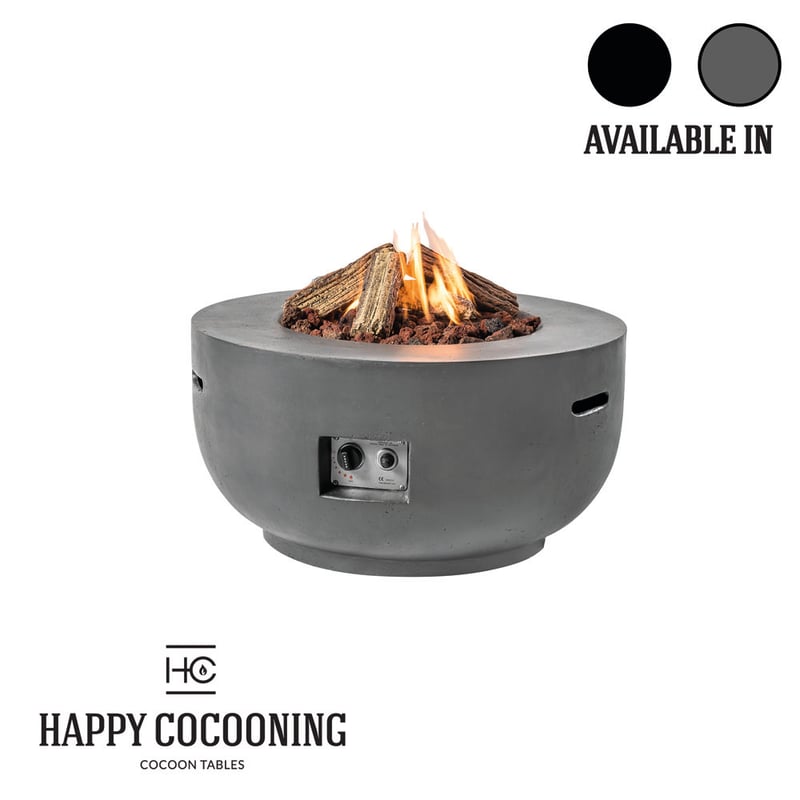
1. Happy Cocoon 91cm Round Bowl Grey - the centrepiece
Material: Corten weathering steel (3-5mm wall) · Weight: ~38kg · Best for: 8+ people, large patio or fire-pit zone · Price: £549
Pictured at the top of this guide, the 91cm Round Bowl is the largest piece in the Happy Cocoon range. Already weathered to its stable patina (the "Grey" naming refers to the post-patina state - it is actually a warm rust-orange in person). At 91cm diameter it commands the centre of any fire-pit zone and seats 8+ around the rim with the recommended 1m clear radius. This is the buy-once-buy-for-life option.
2. Happy Cocoon 76cm Square Black Fire Pit
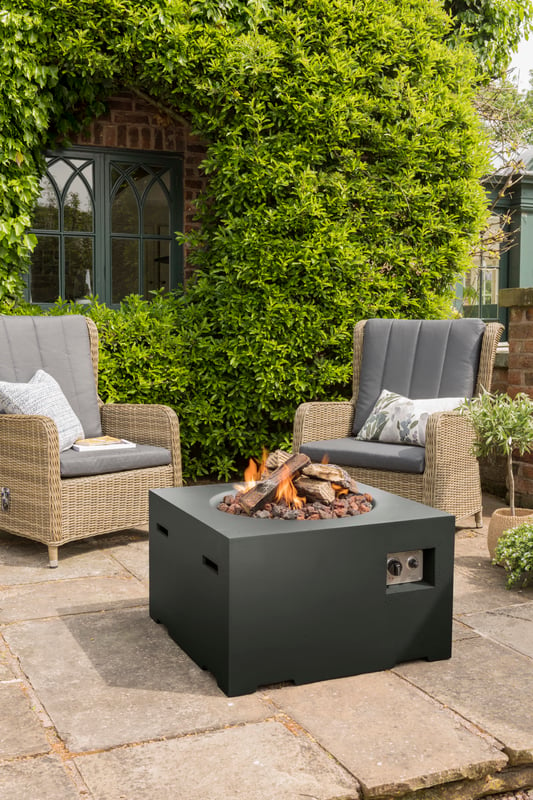
Material: Corten weathering steel (3-5mm wall) · Weight: ~30kg · Best for: 6 people, suburban patio · Price: £439
The most-bought Corten pit in our range. The "Black" finish here is the factory mill state before patina - over the first 12-18 months it develops the same warm rust-orange of the older Grey variants. Square geometry suits modern paving better than round, and 76cm is the right scale for a six-person patio without dominating the space.
3. Happy Cocoon 61cm Round Grey Fire Pit
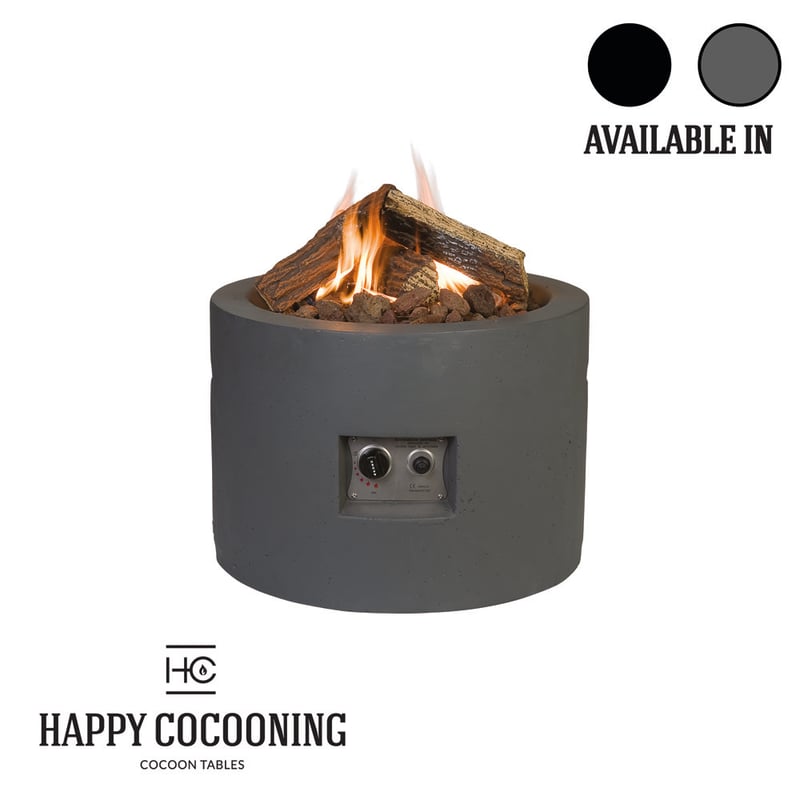
Material: Corten weathering steel (3-4mm wall) · Weight: ~24kg · Best for: 4-5 people, gravel-and-grasses gardens · Price: £305
The 61cm Round in the post-patina Grey finish is the model that lands in most informal suburban gardens. Round footprint sits naturally amongst gravel, ornamental grasses and herbaceous borders. 61cm is the right diameter for 4-5 people seated on garden chairs without anyone roasting their shins.
4. Happy Cocoon 60cm Small Square Black - Corten entry point
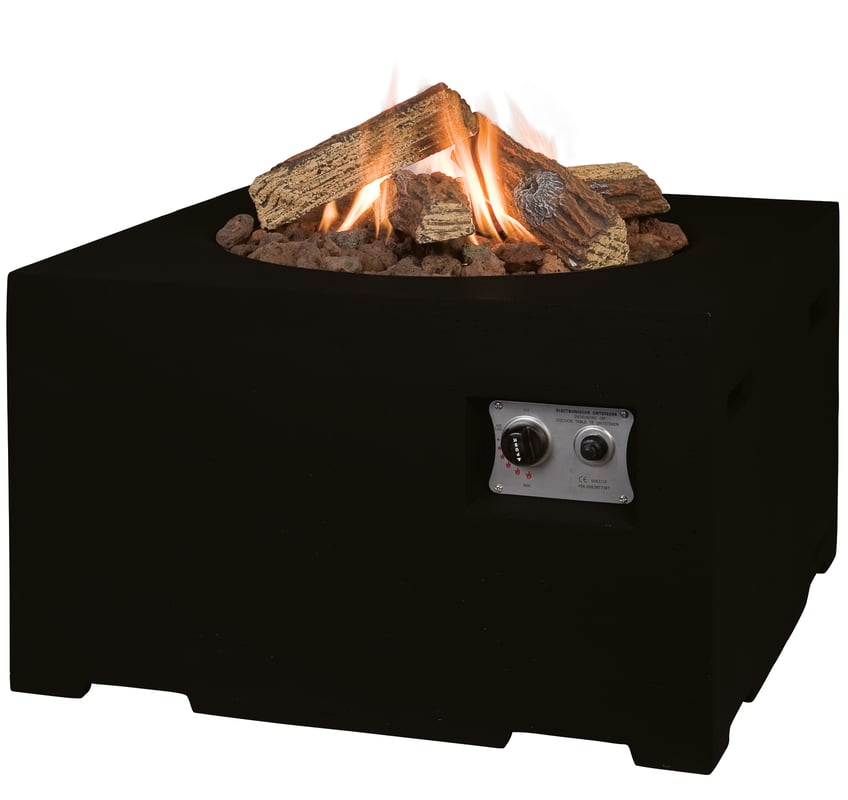
Material: Corten weathering steel (3mm wall) · Weight: ~22kg · Best for: 4-person courtyard or roof terrace · Price: £285
The smallest Corten pit in our range and the right model for courtyards, balconies and roof terraces where 76cm+ would dominate. Same patina chemistry, same lifetime durability, just scaled down. At £285 it is the cheapest entry point to the Corten category and the right buy if you eventually want a 91cm bowl but are not ready for the £549 spend yet.
Powder-coated steel bowls: the mid-budget classics
5. Cook King Boston 80cm Decorative Fire Bowl - the visual showpiece
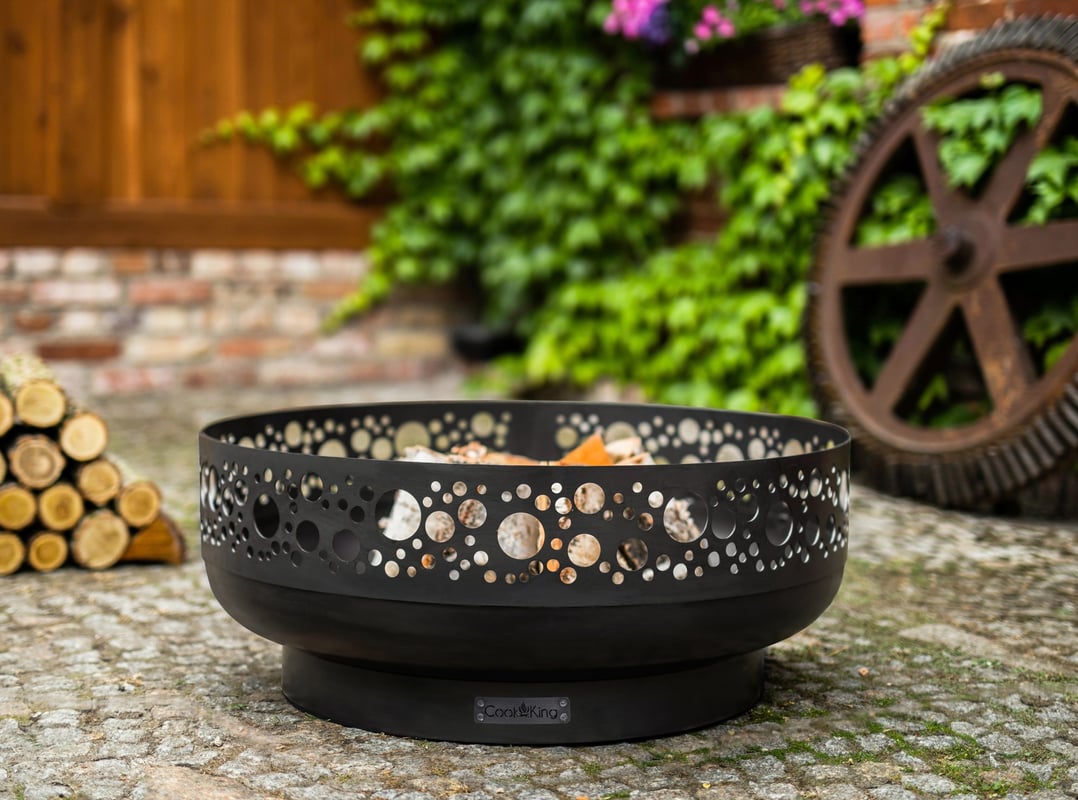
Material: Powder-coated steel (3mm wall) · Weight: ~18kg · Best for: 6-person patio with statement decoration · Price: £199
Decorative laser-cut star panels around the bowl throw shadow patterns when lit - the most visually striking pit in the steel range. 3mm wall thickness sits at the upper end of decorative steel pricing because most competitors fit 2mm at this price point. The trade-off versus Corten: half the price, same scale, but you will need to touch up paint chips every couple of years to extend the lifespan.
6. Cook King Montana 80cm High Fire Bowl - the standing-around pick
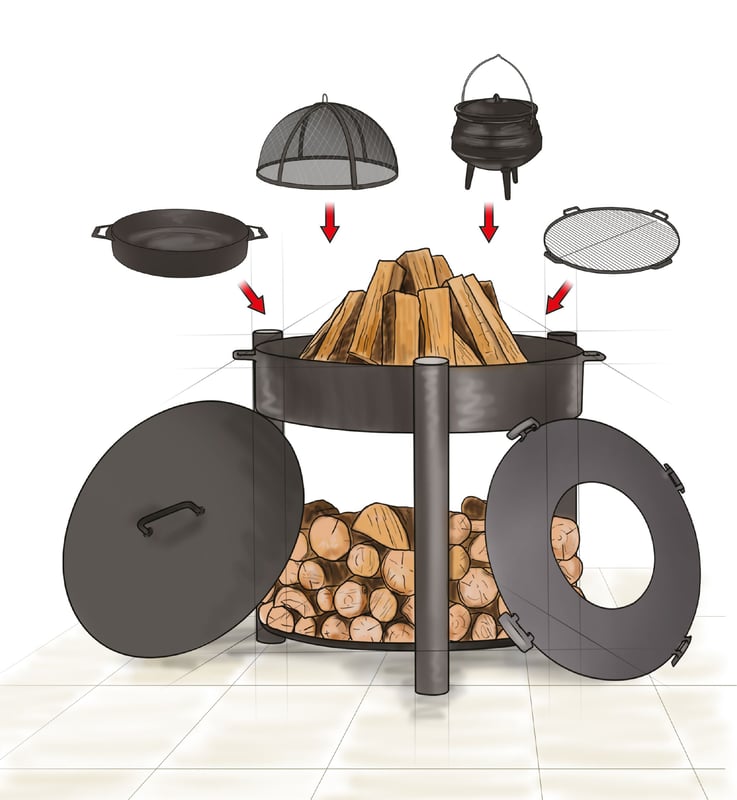
Material: Powder-coated steel (3mm wall) · Weight: ~22kg · Best for: Patios where guests stand and warm hands · Price: £219
Same 80cm bowl as the Boston, raised on a tall stand. The geometry suits patios where people stand around the pit at chest height rather than sitting low - drinks parties, autumn-evening gatherings, anywhere the pit doubles as ambient heat for upright guests. Raising the bowl also reduces scorched grass below the pit by keeping it further from the ground.
7. Cook King Indiana 70cm Fire Bowl - editor's choice
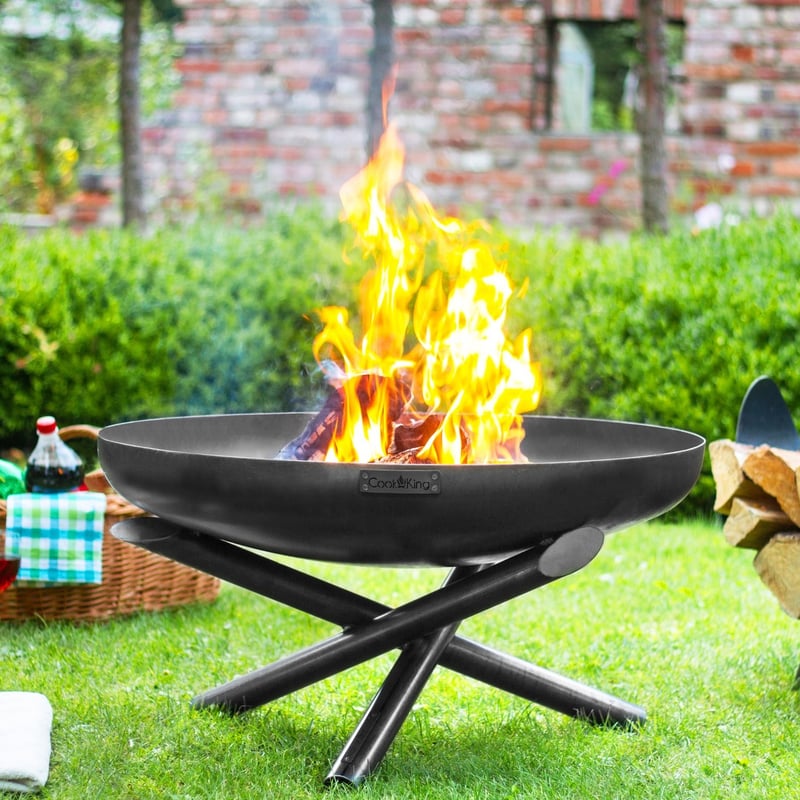
Material: Powder-coated steel (3mm wall) · Weight: ~14kg · Best for: 4-6 person suburban patio · Price: £119
Editor's choice. The Indiana 70cm is the most-bought fire pit in our range and the model I recommend most often. 3mm steel wall, classic plain-bowl geometry, integrated stand, and at £119 it is the price-performance sweet spot. Burns logs cleanly, holds heat well, light enough to move (14kg empty), and the bowl shape is generous enough that ash and embers stay contained without an extra tray. If your aim is "fire pit for autumn drinks on the patio without overthinking it", this is it.
Steel fire baskets: tall flame, taller cage
A "fire basket" is a steel cage rather than a sealed bowl. Air feeds the fire from underneath as well as above, giving bigger flames and a faster burn. Embers fall through, so baskets need a paved or gravel surface beneath - never decking, lawn, or anything you want to protect.
8. Cook King Verona 60cm Fire Basket - the small-garden favourite
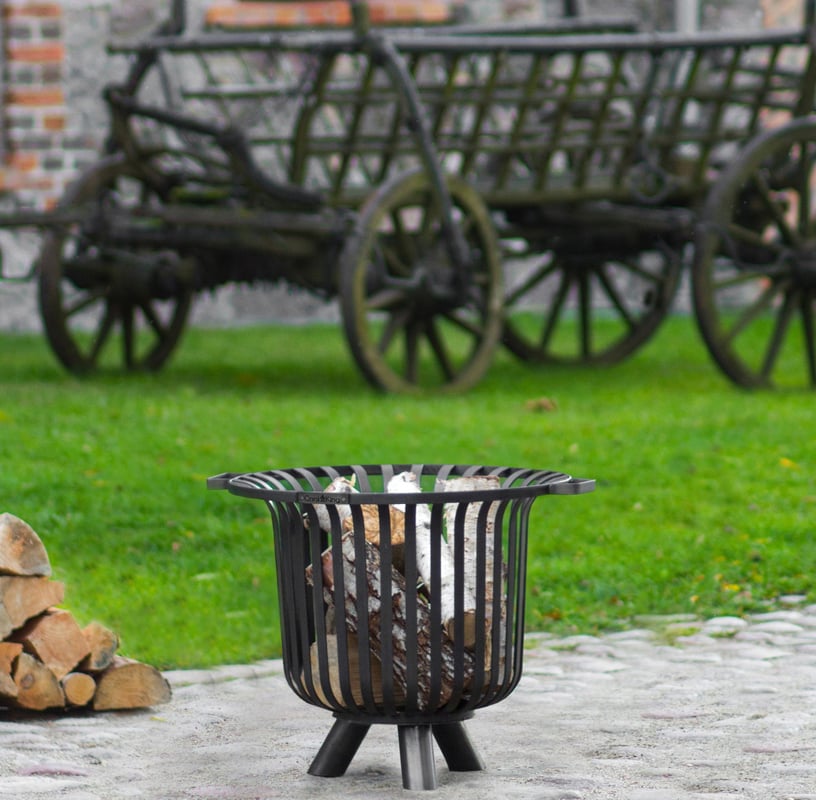
Material: Powder-coated steel (3mm wall) · Weight: ~12kg · Best for: 4-person courtyard, dramatic flame · Price: £89
The Verona has a 50cm tall cage - tall enough that you get a generous flame display without spitting embers across the patio. Integrated ash tray catches the fall-through, which means the basket can sit on paving slabs without scorching them. At £89 it is our entry point to fire baskets and a sensible first pit for a smaller garden where you do not want the visual mass of an 80cm bowl.
9. Cook King Flame 45cm Fire Basket - the balcony pick
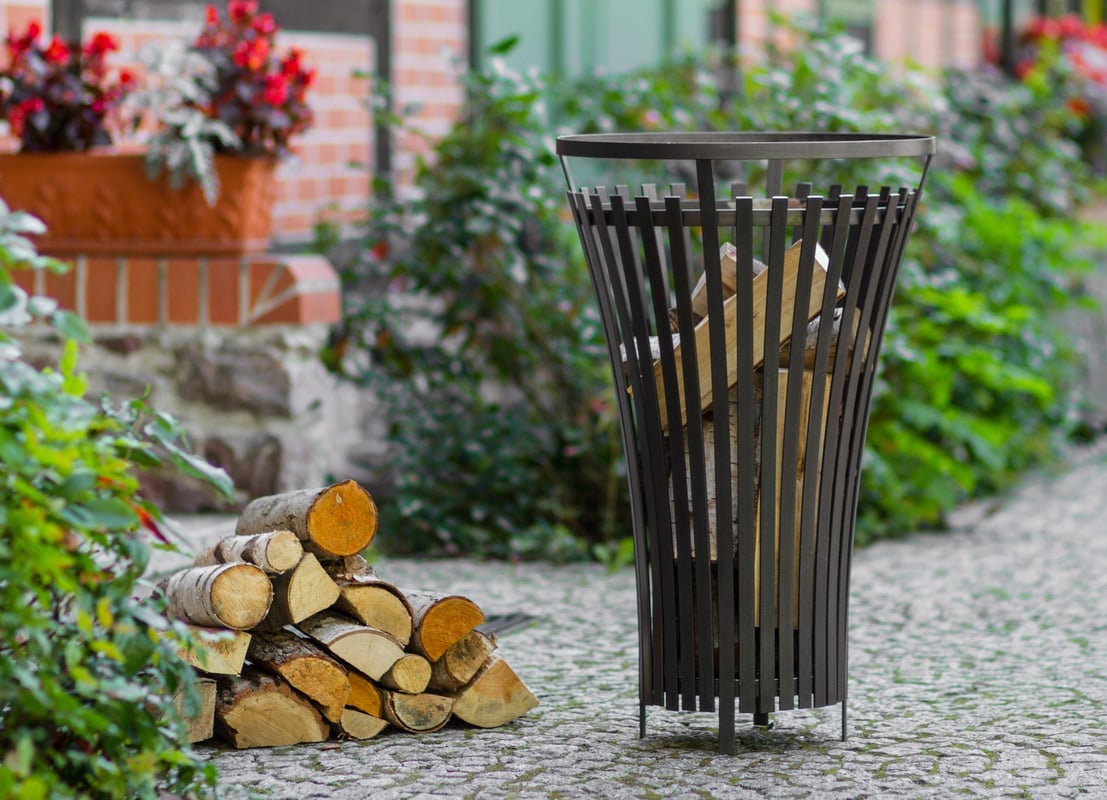
Material: Powder-coated steel (3mm wall) · Weight: ~9kg · Best for: 2-3 person courtyard or balcony · Price: £99
Same idea as the Verona scaled down to 45cm. The right size for a 2-3 person courtyard or balcony where a 60cm pit would dominate. Steel walls, integrated ash plate, footprint just over half a metre square. At £99 it is the cheapest properly-built fire pit in our range and a good first-purchase if you are unsure how often you will use one.
Steel vs cast iron vs Corten at a glance
| Feature | Powder-coated steel | Cast iron | Corten weathering steel |
|---|---|---|---|
| Typical wall thickness | 1.5-3mm | 6-10mm | 3-5mm |
| Typical 70cm pit weight | 10-22kg | 40-90kg | 25-40kg |
| Typical lifespan | 5-12 years | 25-40 years | 20-30 years |
| Annual maintenance | Touch up paint, empty ash | Re-blacken if scuffed, empty ash | None - hose down occasionally |
| Heat retention after burn | Low - cools in 10-15 min | High - warm 30-45 min | Medium - warm 20-30 min |
| Price band (60-90cm) | £89-£269 | £350-£1,500 | £285-£549 |
| Best for | Casual use, renters | Period homes, permanent features | Designer gardens, lifetime piece |
The Corten patina lifecycle
Buyers new to Corten often ask "is it meant to look like that?" at every stage. The answer changes month by month for the first two years.
| Phase | Timeline | What it looks like | What is happening |
|---|---|---|---|
| Phase 1: Mill finish | Day 1 - Week 4 | Slate grey or dark blue | Mill finish before any oxidation |
| Phase 2: Initial bloom | Week 4 - Month 4 | Patchy orange-brown spots | First oxidation cycles after rain and sun |
| Phase 3: Even darkening | Month 4 - Month 12 | Uniform medium-brown | Oxide layer thickening evenly |
| Phase 4: Stable patina | Month 12 - Month 24 | Warm rust-orange, slightly textured | Patina chemistry stabilising |
| Phase 5: Lifetime patina | Year 2 onwards | Stable rust-orange, no further change | Self-protecting layer formed |
The patina sheds a small amount of iron oxide in heavy rain during the first 6 months. This can stain pale paving below the pit. Either accept the staining as part of the look, or place the pit on gravel rather than light limestone or sandstone slabs.
Fuel and UK Smoke Control Areas
Most fire pits are designed for solid fuel - seasoned hardwood logs, smokeless coal, charcoal. Some upmarket models run on gas. Three rules:
- Burn "Ready to Burn" certified hardwood (under 20% moisture). Oak, ash, beech, birch all burn cleanly. Avoid softwood (pine, spruce) for sustained use - it spits and tars the bowl.
- Never burn treated timber, painted wood, MDF, plywood, plastic, or rubbish. The fumes are toxic and the residues damage the metal.
- Smoke Control Areas (much of urban England, Scotland, Wales, Northern Ireland) restrict what you can legally burn. Check the DEFRA Smoke Control Area register before lighting. Standard open fire pits are not exempt appliances; some boroughs may require gas-only setups.
Sizing the fire pit to the space
- 45-60cm pit: 2-4 people seated, 2.5m clear circle, balcony or courtyard scale.
- 61-76cm pit: 4-6 people seated, 3m clear circle, suburban patio scale.
- 76-91cm pit: 6-8 people seated, 3.5-4m clear circle, large patio or fire-pit zone.
- 91cm+: 8+ people, 4m+ circle, dedicated fire pit area.
The clear circle is non-negotiable for safety - no furniture, no cushions, no overhanging structures inside that radius. Most UK insurance policies that cover garden fire require a 1m clear margin around the pit.
Year-round care across all three materials
- Empty ash within 48 hours. Wet ash sitting on the bowl base is the single biggest cause of premature corrosion across every material.
- Cover or invert when not in use. A fitted cover stops rain pooling inside the bowl. If you have no cover, invert the pit so it sheds water.
- Touch up paint chips on powder-coated steel within a month. A £6 tin of high-temperature stove paint stops rust spreading. Apply on a dry day above 10°C.
- Do not paint or seal Corten. The patina is the protection. Sealing it stops the chemistry working and creates pockets of corrosion underneath.
- Inspect cast iron for hairline cracks each spring. Cracks usually start at handle attachment points or the bowl base. Catch them early - the next thermal cycle widens them.
Browse our full garden fire pits range for steel bowls, fire baskets and the full Corten range. For winter protection across all garden ornament materials, our piece on how to protect garden ornaments in winter covers stone, metal and resin in a single month-by-month protocol.
Frequently asked questions
What is the best material for a UK garden fire pit?
Corten weathering steel is the best material for UK gardens that want a lifetime piece. It develops a stable rust-coloured patina in 18-24 months and never needs painting. Powder-coated steel is the right choice for casual use under £200. Cast iron suits period properties where weight and traditional foundry detail matter.
How thick should the wall of a fire pit be?
Aim for 3mm minimum on steel, 6mm+ on cast iron, 3-5mm on Corten. Below 3mm the metal deforms permanently after repeated cherry-red heat cycles. Wall thickness is the single most important spec - more important than diameter, finish or stand height.
Can I use a fire pit in a UK Smoke Control Area?
Yes, but only with authorised fuels. "Ready to Burn" certified seasoned wood (under 20% moisture) and smokeless coal are permitted. Some boroughs require an exempt appliance for solid fuel. Check the DEFRA Smoke Control Area register before lighting.
How long does a Corten fire pit take to weather?
Corten reaches its stable rust-orange patina at 18-24 months in a UK climate. First patchy bloom appears at week 4-6, even darkening sets in by month 6, and the lifetime patina forms at month 18-24. Pits kept under cover take longer because rain is the catalyst.
What size fire pit do I need for 6 people?
A 70-76cm bowl is the right size for six people seated around a fire pit. Allow a 3m clear circle around the rim for safety. Smaller bowls (60-65cm) work for 4 people; larger bowls (80-91cm) suit 8+ and need 3.5-4m clear radius.
Related reading
- The Complete Guide to Garden Ornament Materials
- Metal Garden Ornaments: Rust Finishes, Weathering and Care
- How to Protect Garden Ornaments in Winter
- Summer Garden Styling: Creating the Perfect Outdoor Living Space
- Garden Furniture Buying Guide UK 2026
Browse our full collection of garden ornaments for fire pits, water features, statues and outdoor pieces to round out the patio.