
10 Best Balcony Plants for Sunny Balconies in the UK
Written by Matt W on 27th Jan 2020.
🌻 In This Guide
- ✅ Hardiness rated: Every plant carries its RHS hardiness score so you know what survives a UK winter outdoors.
- ✅ Weight warning included: Check your balcony's load limit before buying stone planters — wet soil is heavier than you think.
- ✅ Month-by-month calendar: A full planting, feeding, and overwintering schedule from March to February.
- ✅ Wind solutions: Practical fixes for exposed upper-floor balconies where gusts dry pots and snap stems.
- ✅ Matt's Pick: Our recommended balcony-ready planter with first-hand review.
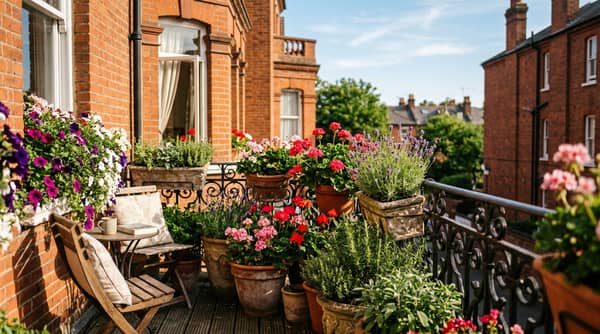
Browse our Stone Garden Planters →
The 10 best plants for a sunny UK balcony are geraniums, lavender, petunias, rosemary, thyme, zinnias, catmint, strawberries, cardinal climbers, and dwarf sunflowers. Each tolerates full south-facing sun for 6+ hours daily and grows well in containers from 2 litres to 25 litres. Most can be planted from late May after the last UK frost. Hardy species like lavender and thyme survive outdoors year-round to −20°C.
⚠️ Before You Buy a Single Plant
Check your balcony's weight limit with building management. A 25-litre stone planter full of wet soil weighs roughly 30kg. Four of those plus a person is 150kg+. Timber decking and older balconies may have lower limits than you expect. If weight is a concern, use resin or fibreglass planters instead of stone or terracotta.
What makes a balcony "sunny"?
A south-facing balcony in the UK receives 6–8 hours of direct sunlight from April to September. That sounds ideal, but it creates two challenges most gardening guides ignore. I learned both the hard way when I started growing on a third-floor balcony in Bristol over fifteen years ago.
First, heat reflection. Glass balustrades, brick walls, and concrete floors bounce sunlight back onto your plants. I once measured the surface temperature of a terracotta pot on a south-facing concrete balcony at 47°C on a 28°C day. That kind of radiant heat will cook roots in shallow pots within hours.
Second, wind exposure. Upper-floor balconies face stronger, more consistent wind than ground-level gardens. Wind forces plants to close their stomata (the tiny pores on leaves) to reduce water loss. This limits CO2 uptake and can slow growth by 50% or more. It also dries containers 2–3 times faster than still air. If you are working with a compact outdoor space, our small garden design ideas guide covers layout tricks that apply to balconies too.
The plants below handle both problems. Every one has been chosen for heat tolerance, drought resistance, and the ability to cope with exposed conditions. I have grown all ten on my own balcony or recommended them to customers who came back with good results.
The 10 best plants for a sunny UK balcony
1. Geraniums (Pelargonium)
| Height | 30–60cm |
| Container | 5–10 litres (20–25cm diameter) |
| Hardiness | Tender (RHS H1c) — plant after late May |
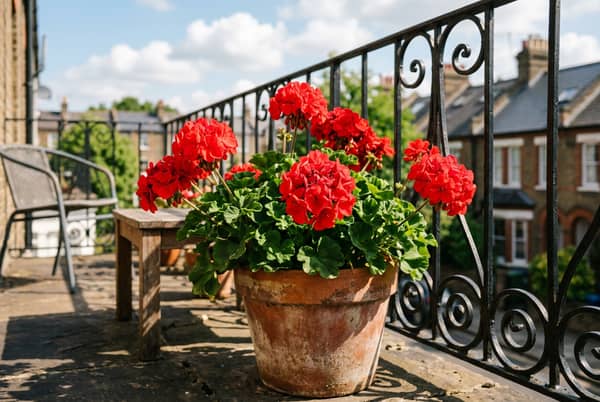
Geraniums are the workhorse of sunny balconies across Europe for good reason. I have had the same three plants for six years running, overwintering them on a bedroom windowsill each October. They tolerate heat, drought, and neglect better than almost any flowering plant. Deadhead spent blooms weekly and they will flower continuously from May to October. Trailing varieties (Pelargonium peltatum) spill beautifully over balcony railings.
Bring them indoors before the first frost in October. Store in a cool room (5–12°C) with minimal watering through winter. They will regrow the following spring.
Browse our Catalan Stone Garden Trough →
2. Lavender (Lavandula angustifolia)
| Height | 30–75cm |
| Container | 10–12 litres (25–30cm diameter) |
| Hardiness | Very hardy (RHS H7) — survives to −20°C outdoors |
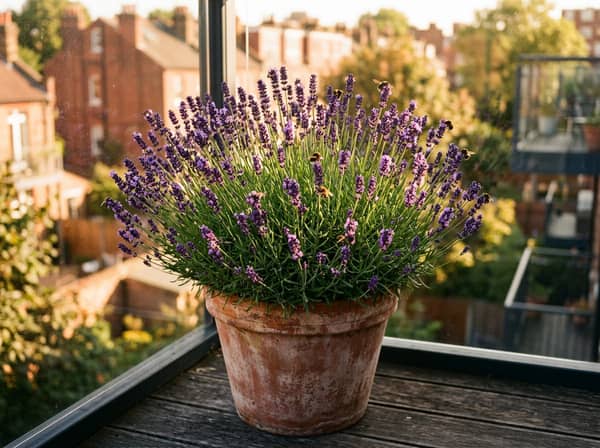
Lavender thrives in poor, well-drained soil and full sun. That makes it perfect for balconies where containers dry quickly. I have a 'Hidcote' that has survived four winters on an exposed west-facing balcony without any protection at all. English lavender (L. angustifolia) is hardier than French varieties and can stay on your balcony year-round. It attracts pollinators all summer and the dried flowers are useful in the house. Prune back to 2–3cm above the woody growth in September.
Browse our Stone Garden Vases →
3. Petunias
| Height | 20–40cm (trailing types reach 60cm+) |
| Container | 3–5 litres per plant |
| Hardiness | Tender (RHS H1c) — plant after late May |
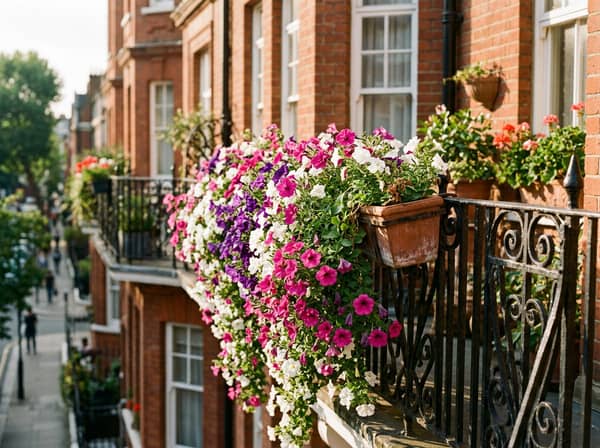
Petunias produce more flowers per square centimetre than almost any annual. Surfinia and Wave types trail over edges, creating cascading walls of colour from a single hanging basket or railing planter. Feed weekly with tomato fertiliser and water daily in summer. They stop flowering if they dry out completely, but recover within days once watered again.
One warning: glass balustrades reflect enough heat to scorch petunia leaves. If you have a glass railing, position petunias 30cm back from the glass or use a trailing variety that hangs over the outside.
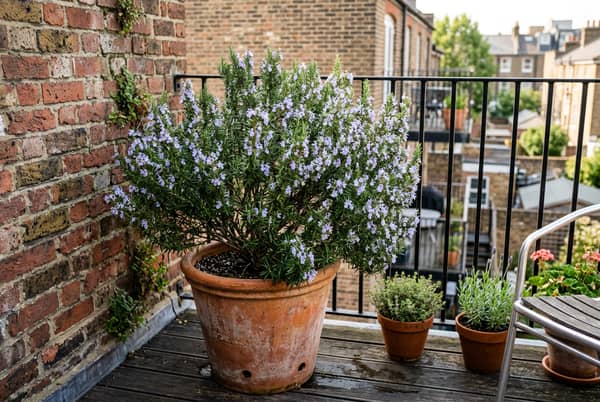
4. Rosemary (Salvia rosmarinus)
| Height | 60–150cm |
| Container | 12+ litres (30cm+ diameter) |
| Hardiness | Hardy (RHS H5–H7) — most varieties survive UK winters outdoors |
Rosemary does double duty on a balcony. It is a drought-tolerant evergreen that looks good year-round, and it produces fresh sprigs for cooking whenever you need them. Upright varieties work as structural plants at the back of a display. Prostrate varieties trail over container edges. Both prefer soil on the dry side — overwatering causes root rot faster than underwatering causes wilting.
Browse our Stone Garden Ornaments →
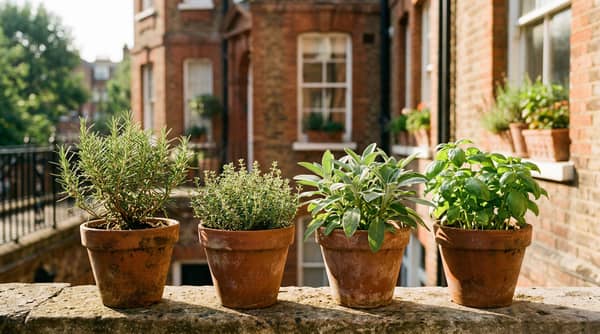
5. Thyme (Thymus vulgaris)
| Height | 15–30cm |
| Container | 2–3 litres (10–15cm diameter) |
| Hardiness | Very hardy (RHS H7) — survives to −20°C |
Thyme is one of the toughest balcony plants you can grow. It thrives in poor soil, full sun, and dry conditions. Creeping thyme (T. serpyllum) spreads horizontally and works well planted around the base of taller plants in shared containers. Common thyme stays more upright and produces the strongest flavour for cooking. Both flower in June–July with tiny blooms that bees love.
Browse our Small Garden Ornaments →
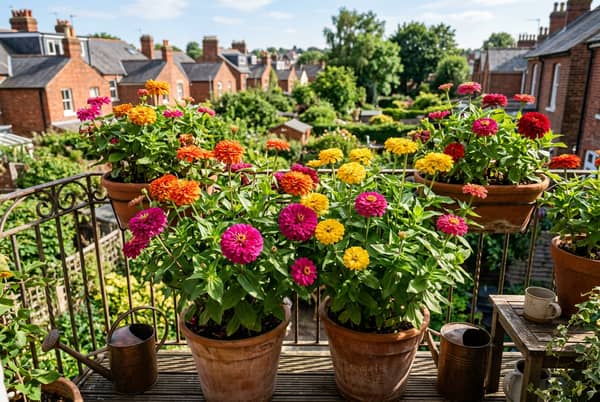
6. Zinnias
| Height | 30–90cm (dwarf varieties 15–30cm) |
| Container | 5–10 litres |
| Hardiness | Tender annual (RHS H1c) — sow indoors April, plant out late May |
Zinnias produce bold, daisy-like flowers in every colour from white through yellow, orange, pink, and deep red. Dwarf varieties like Zinnia 'Profusion' stay compact at 30cm and suit smaller pots. They handle heat better than most annuals and flower continuously from July to the first frost if you deadhead regularly. Start seeds indoors on a windowsill in April and transplant to the balcony after the last frost.
Browse our Stone Garden Sundials →
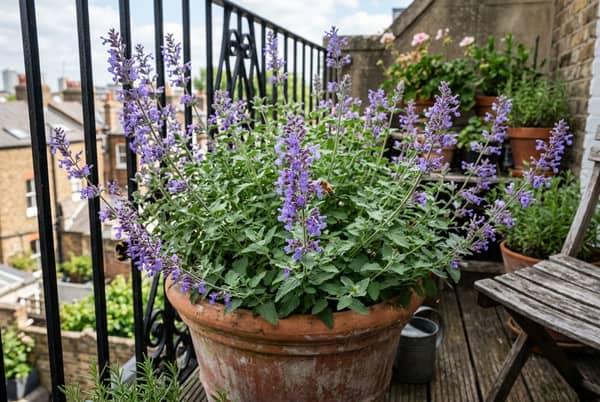
7. Catmint (Nepeta)
| Height | 30–60cm |
| Container | 10–15 litres |
| Hardiness | Very hardy (RHS H7) |
Catmint is the unsung hero of windy balconies. Its flexible stems bend rather than snap in gusts, and its aromatic grey-green foliage is naturally drought-tolerant. Blue-purple flower spikes appear from May to September. Cut the whole plant back by half after the first flush fades in July and it will produce a second wave of flowers in August. Nepeta 'Walker's Low' is the variety to look for — compact, floriferous, and tough as old boots.
Browse our Buddha Garden Ornaments →
8. Strawberries
| Height | 15–25cm |
| Container | 4–6 litres per plant |
| Hardiness | Hardy (RHS H5) — tolerates frost to −15°C |
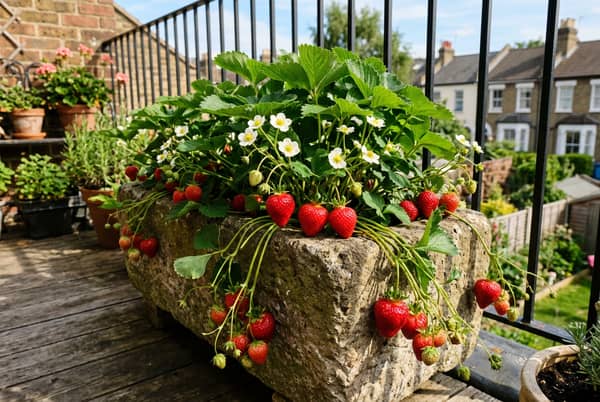
Strawberries are one of the few edible plants that genuinely thrive on sunny balconies. The reflected heat that stresses most crops actually helps strawberries ripen faster and develop more sugar. I picked my first ripe fruit on 4 June last year from a 'Mara des Bois' planted in a stone trough on the balcony. Plant that variety for continuous fruiting from June to October, or 'Elsanta' for a single heavy June crop. They look attractive trailing over container edges and produce runners that fill gaps naturally.
Browse our Stone Animal Garden Ornaments →
9. Cardinal Climbers (Ipomoea quamoclit)
| Height | 2–3m climbing |
| Container | 15–20 litres |
| Hardiness | Tender annual (RHS H1c) — plant late May |
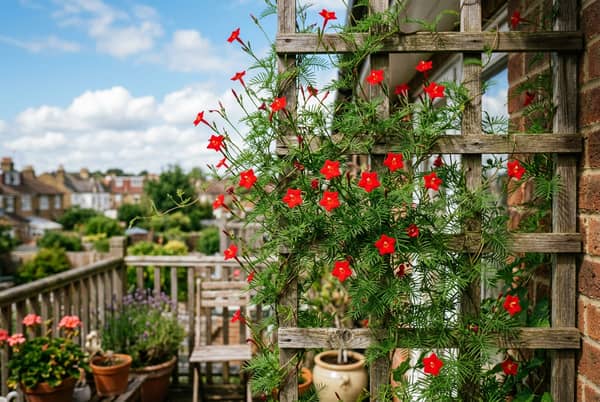
If your balcony needs shade in summer, a climbing vine is the answer. Cardinal climbers grow fast (2–3m in a single season), produce hundreds of small scarlet flowers from July to October, and their finely cut foliage filters sunlight without blocking it entirely. Train them up a simple trellis or along your balcony railing. Their narrow-throated flowers attract butterflies but are too deep for most bees. Remove the entire plant after the first frost — it will not survive a UK winter.
Browse our Resin Garden Ornaments →
10. Dwarf Sunflowers (Helianthus annuus)
| Height | 30–50cm (dwarf varieties) |
| Container | 10–15 litres |
| Hardiness | Tender annual (RHS H1c) — sow April, plant out May |
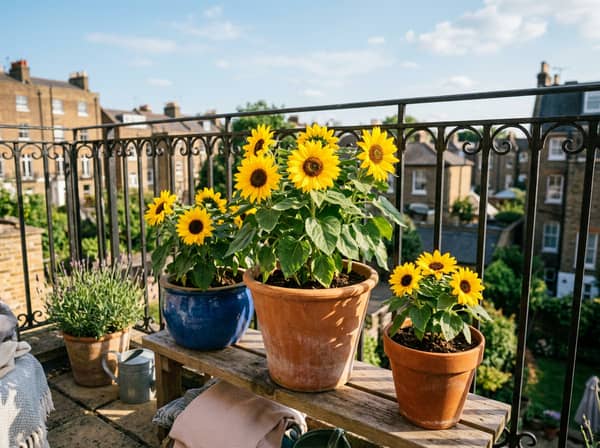
Full-size sunflowers are too tall and top-heavy for balconies. Dwarf varieties solve both problems. 'Pacino' tops out at 30cm, 'Suntastic Yellow' at 50cm. Both produce multiple flower heads from a single plant, unlike tall varieties that produce one. They need a heavier pot (10+ litres with good drainage) because even dwarf sunflowers are top-heavy in wind. Sow seeds directly into their final container in late April and thin to one plant per pot.
Container sizes at a glance
| Plant | Minimum Pot Size | Depth | Drainage Layer |
|---|---|---|---|
| Thyme | 2–3 litres (10–15cm wide) | 10–15cm | 2.5cm pebbles |
| Strawberries | 4–6 litres per plant | 15–20cm | 2.5cm pebbles |
| Petunias | 3–5 litres per plant | 15–20cm | 2.5cm pebbles |
| Geraniums | 5–10 litres (20–25cm wide) | 20–25cm | 5cm pebbles |
| Zinnias | 5–10 litres | 20–25cm | 5cm pebbles |
| Lavender | 10–12 litres (25–30cm wide) | 25–30cm | 5cm pebbles |
| Catmint | 10–15 litres | 25–30cm | 5cm pebbles |
| Dwarf Sunflower | 10–15 litres | 25–30cm | 5cm pebbles |
| Rosemary | 12+ litres (30cm+ wide) | 30cm+ | 5cm pebbles |
| Cardinal Climber | 15–20 litres | 30cm+ | 5cm pebbles |
🌱 Matt's Tip: The Four-Degree Rule
Start protecting tender balcony plants when the thermometer hits 4°C, not 0°C. By the time air temperature reaches freezing, your exposed balcony pots are already below zero. Bring tender plants (geraniums, petunias, zinnias, sunflowers) indoors when overnight temperatures drop to 4°C. Hardy plants (lavender, rosemary, thyme, catmint) can stay out all winter — just wrap their pots in fleece or bubble wrap to protect the roots.
When to plant on a UK balcony
| Month | What to Do |
|---|---|
| March–April | Sow zinnia and sunflower seeds indoors on a windowsill. Repot overwintered herbs. Plant hardy perennials (lavender, catmint, thyme). |
| May | Plant out all tender species: geraniums, petunias, zinnias, sunflowers, cardinal climbers, strawberries. Last frost: end of May in most UK areas, early–mid June in Scotland. |
| June–August | Water daily (twice in heatwaves). Feed weekly with liquid tomato fertiliser. Deadhead spent blooms. Cut catmint back by half after first flush in July. |
| September | Prune lavender to 2–3cm above woody growth. Reduce watering frequency. Harvest rosemary and thyme for drying. |
| October | Bring tender plants indoors when nights hit 4°C. Wrap hardy plant pots in fleece. Remove saucers to prevent waterlogging over winter. |
| Nov–Feb | Water hardy plants only on frost-free days above 5°C. Keep overwintering geraniums in a cool room (5–12°C) with minimal water. |
How to deal with wind on a balcony
Wind is the single biggest challenge on upper-floor UK balconies. It dries containers 2–3 times faster than still conditions, browns leaf edges within hours on hot days, and topples lightweight pots.
Three practical fixes:
- Use heavy containers. Stone or concrete planters resist tipping far better than plastic. If weight is a concern, fill the bottom third of a large resin pot with gravel before adding compost. Our guide on stone vs resin garden ornament materials covers the trade-offs.
- Choose wind-tolerant species. Lavender, catmint, thyme, and rosemary all have small or aromatic leaves that lose less water in wind. Avoid large-leaved plants like hostas or hydrangeas on exposed balconies.
- Group pots together. A cluster of containers creates a microclimate. The outer pots shelter the inner ones, reducing wind speed across the whole display by 30–40%.
Choosing the right planter for a balcony
The material matters as much as the size. I have tested all the common options over the years. Terracotta looks beautiful but dries out faster because the clay is porous — I water my terracotta pots twice as often as my glazed ones in July. Glazed ceramic holds moisture better. Stone and concrete are heavy (good for wind resistance) but may exceed your balcony's weight limit. Resin and fibreglass offer the best balance: lightweight, frost-proof, and available in finishes that mimic stone. For a full breakdown, read our guide to caring for stone garden ornaments.
Whatever material you choose, drainage holes are non-negotiable. A plant sitting in waterlogged soil will develop root rot within days in summer warmth. Add a 2.5–5cm layer of pebbles or broken crocks at the bottom of every container before adding compost. For more ideas on outdoor displays, see our guide on how to position stone garden ornaments.
|
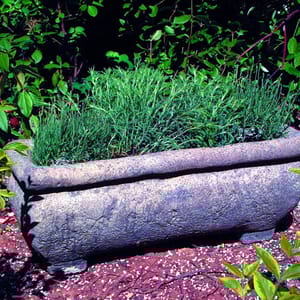
Matt's Pick for Balcony PlantersBest For: Strawberries, trailing geraniums, and herb displays on sunny balconies Why I Recommend It: I grow my own balcony strawberries in one of these. The handcrafted stone holds heat through the evening, the weight stops it tipping in wind, and it develops a beautiful patina after one British winter. Price: £279 View Product Browse our full collection of garden ornaments for more ideas. |
Frequently Asked Questions
How often should I water balcony plants in summer?
Water once daily in the morning during calm weather, twice daily in heatwaves or wind. Stick your finger 2cm into the compost. If it feels dry, water until liquid drains from the bottom. Larger containers (15+ litres) hold moisture longer and need less frequent watering than small pots.
Can balcony plants survive a UK winter outside?
Hardy species rated RHS H5 or above survive UK winters without protection. Lavender, rosemary, thyme, and catmint can stay on your balcony year-round. Wrap their pots in horticultural fleece when temperatures drop below 4°C. Tender plants like geraniums, petunias, and zinnias must come indoors before the first frost or they will die.
What is the best plant for a very windy balcony?
Lavender and catmint handle wind best due to their small leaves and flexible stems. Avoid tall plants over 60cm on exposed balconies unless you can anchor them against a wall. Use heavy stone or concrete containers to prevent pots blowing over. Grouping pots together also reduces wind impact by 30–40%.
Do I need special compost for balcony containers?
Use peat-free multipurpose compost mixed with 20% perlite for drainage. Garden soil is too heavy for containers and compacts over time, suffocating roots. Adding perlite keeps the mix light and well-drained. For Mediterranean plants like lavender and rosemary, add extra grit (30% by volume) to mimic their preferred poor, stony soil.
When should I plant tender plants on a UK balcony?
After the last frost: end of May in most of England and Wales, early to mid-June in Scotland. One night of frost will blacken and kill tender annuals like petunias, zinnias, and geraniums. Start seeds indoors in April and harden them off gradually before planting out. Check the BBC Weather frost forecast for your postcode before committing plants to the balcony.
Further Reading
Matt W
Garden & Outdoor Specialist
Matt has spent over 16 years working hands-on with garden products across the UK. He tests materials in Staffordshire clay soil and hard water conditions, and writes from direct experience fitting, maintaining, and repairing everything from stone statues to cast iron furniture. His advice is based on what actually survives a British winter, not what looks good in a catalogue.