
Garden Water Feature Ideas: Types, Placement & Maintenance
Written by Matt W on 2nd Mar 2026.
📋 Key Takeaways: Garden Water Features
- ✅ Sound Matters: Moving water masks road noise and creates a calming atmosphere in any garden.
- ✅ Self-Contained Is Easiest: No plumbing, no pond — just fill, plug in, and switch on.
- ✅ Solar vs Mains: Solar suits sunny spots with no nearby power. Mains gives stronger, reliable flow.
- ✅ Wildlife Magnet: Even a small water feature attracts birds, frogs, and pollinators to your garden.
- ✅ Low Running Cost: Mains features cost £5–£15 per year. Solar features cost nothing after purchase.
Garden water features in the UK range from £135 self-contained bowl sets to £925 corten steel sculptures. Self-contained features are the most popular choice — they need no plumbing, no pond, just a power source. Solar models suit sunny patios; mains-powered features give stronger, year-round flow. Typical mains running costs are £5–£15 per year.
I have set up water features in gardens of every size, from 2-metre city courtyards to full country plots, and the single biggest thing people underestimate is how much sound changes a space. A trickling water feature masks traffic noise, draws birds in to drink, and gives your garden movement even in the dead of winter. This guide covers the main types, power options, placement, and year-round maintenance.
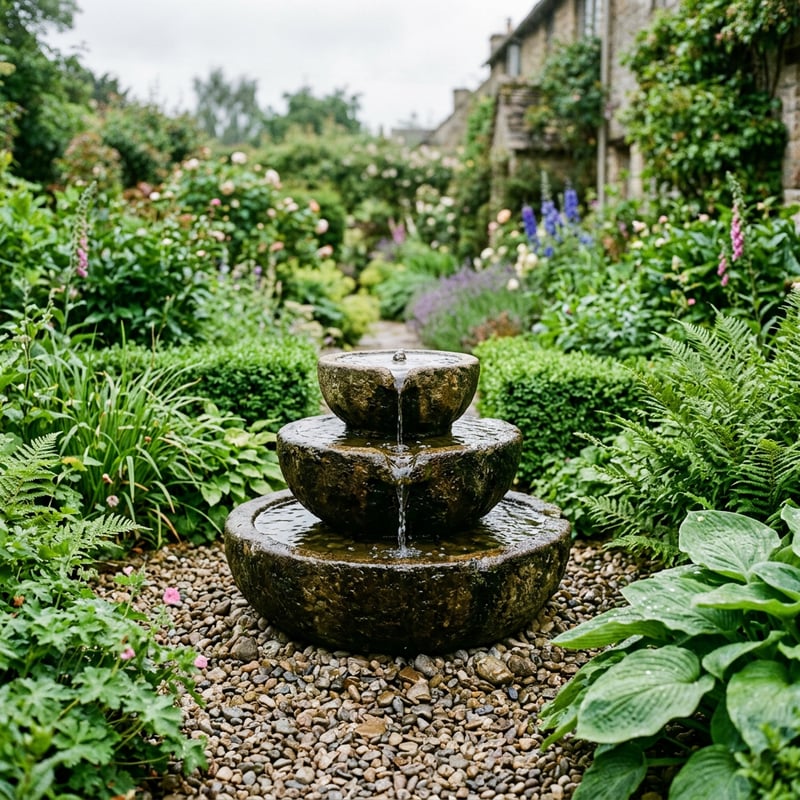
In this guide
- Types of garden water features
- Solar vs mains-powered features
- Where to place a water feature
- Water features for small gardens
- Water features and wildlife
- Maintenance schedule
- Matt’s Pick and top products
What types of garden water features are there?
Not all water features work the same way. Your garden size, budget, and appetite for installation work will narrow down the options.
Self-contained water features
These are the most popular option for UK gardens. A self-contained feature has a built-in reservoir, pump, and bowl or sculpture. Fill it with water and plug it in. It recirculates water in a closed loop. No pond, no plumbing, no mains water connection needed.
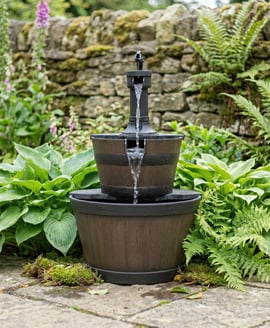
They work well on patios, decking, and in courtyard gardens. Browse our full cascading water features collection for the complete range. Prices start from around £135 for the Aged Bowls Water Feature and go up to £899 for larger designs like the Highland Self Contained Water Feature.
Stone fountains
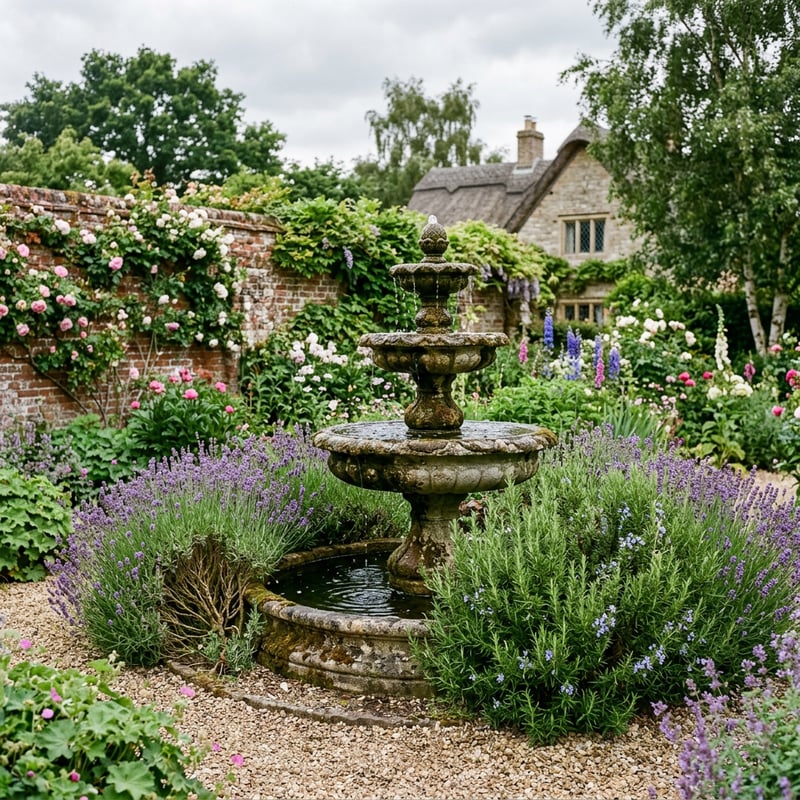
A stone fountain is a traditional centrepiece. Cast from reconstituted limestone or sandstone, these develop a natural patina over 6–12 months. That weathered look makes them seem decades old. They need a separate reservoir basin and a pump.
Our Stone Garden Fountains start from £259 for a simple urchin design. The Viewpoint Stone Fountain tops the range at £545. Pair one with a reservoir grid and pump for a complete setup.
Natural stone water features
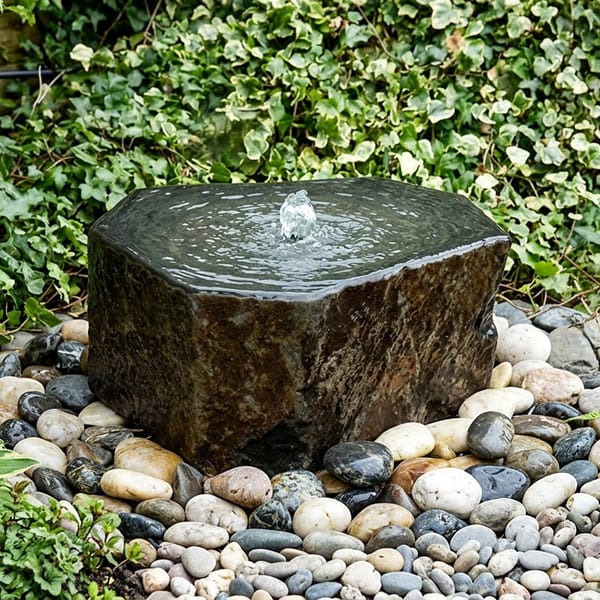
For raw, unpolished character, natural stone features are carved from real basalt, granite, sandstone, or limestone. Water bubbles up through or over the stone. The sound is gentle and organic.
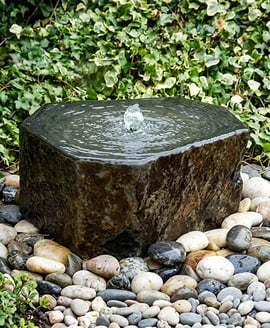
The Babbling Basalt Column at £455 is a good example. Water flows down a single column of real basalt. Natural stone works in both contemporary and traditional gardens.
Corten steel water features
Corten steel develops a rust-orange patina that stabilises over time, protecting the metal beneath. It looks striking against green foliage and suits modern planting schemes. Our Corten Steel Sphere range comes in three sizes: 40cm at £419, 60cm at £599, and 80cm at £925.
Should you choose solar or mains power?
One of the first decisions is how to power the pump. Both options have clear trade-offs.
| Solar Powered | Mains Powered | |
|---|---|---|
| Running cost | Free after purchase | Approx £5–£15 per year |
| Installation | No electrician needed | May need outdoor socket |
| Water flow | Weaker, varies with sunlight | Consistent, stronger flow |
| Best for | Sunny patios, wildlife bowls | Larger features, shaded spots |
| Winter use | Reduced output, short days | Works year-round |
| Pump lifespan | 2–4 years typical | 3–5+ years typical |
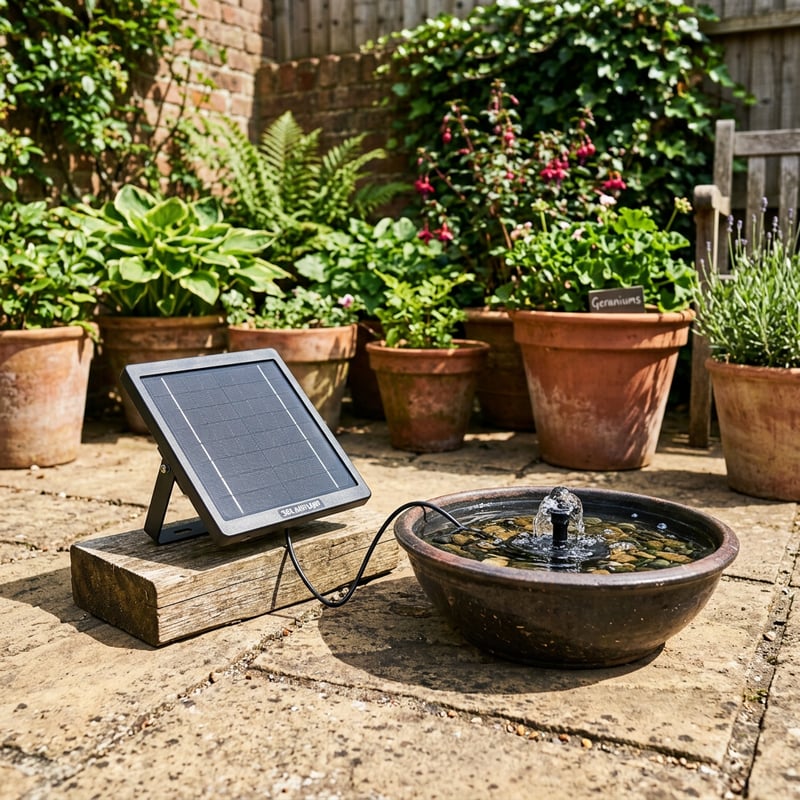
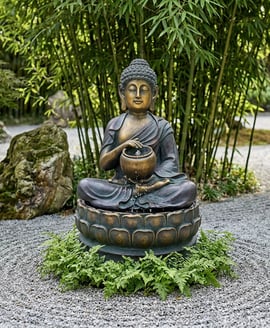
Our recommendation: If your feature gets 4–5 hours of direct sun, solar is a practical wire-free choice. Our Calming Buddha Solar Water Feature at £229 is one of the most popular. For shaded gardens or evening use, go mains. Pumps range from £45 (750 LPH) to £75 (2500 LPH).
Where should you place a water feature?
Placement affects both the look and the performance of your water feature. Get it right and you notice it every day. Get it wrong and it sits ignored in a corner.
Placement tips
- Near seating areas: Place it where you can hear the water. A feature 10 metres away on the far side of the lawn loses its audio impact.
- Visible from indoors: Position your feature where you can see it from a kitchen or living room window. You will enjoy it year-round, not just in summer.
- On a level surface: Uneven ground causes water to flow unevenly and can make the pump work harder.
- Away from large trees: Falling leaves block pumps and turn water green. A 3-metre clearance from overhead branches is a good rule.
- Near a power source (mains features): If you need an outdoor socket, budget £150–£250 for an electrician to install one.
Matt’s Tip: The Sound Test
Before you commit to a spot, sit in your favourite garden seat and ask someone to run a tap or pour water from a watering can where you plan to put the feature. If you can hear it clearly from your chair, that is the right position. I have moved features three or four times for customers who picked a spot that looked right but was too far away to hear. Sound is the whole point — if you cannot hear it from where you sit, move it closer.
For more on placing ornaments and features effectively, read our guide on how to position stone garden ornaments.
What water features work in small gardens?
A small garden does not rule out moving water. Vertical self-contained features take up very little floor space. A wall-mounted fountain or set of stacked bowls fits into a courtyard as small as 2m × 2m.
Choose something proportional. A 90cm feature in a 3m courtyard will look cramped. A 40–50cm bowl or compact tiered design keeps the space balanced. Our Cubed Solar Water Feature at £145 is built for tight spots. It sits neatly on a patio or balcony.
If you are working with a small outdoor area, our Small Garden Design Ideas 2026 guide has more tips on making the most of your space.
Do water features attract wildlife?
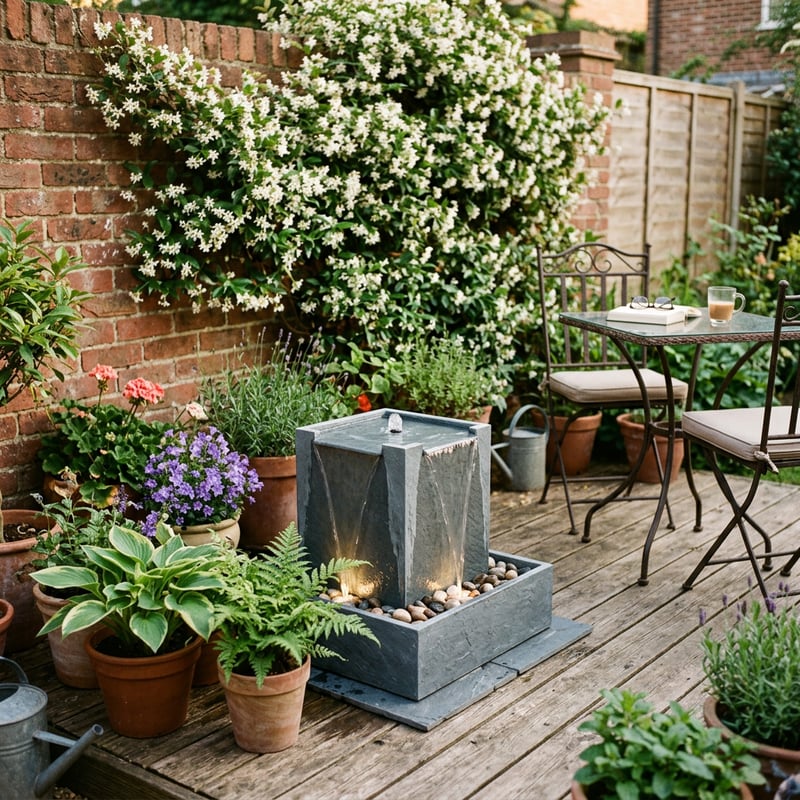
Moving water pulls wildlife into a garden faster than almost anything else. Birds use shallow features for drinking and bathing. Frogs settle near the damp base. Bees and butterflies stop by to drink, especially during dry spells.
To make your water feature wildlife-friendly:
- Add a few pebbles or a flat stone at the edge so birds can perch safely.
- Avoid chemical algae treatments — they harm visiting wildlife. A barley straw extract is a safer alternative.
- Keep the water fresh by running the pump for at least 4 hours daily. Stagnant water breeds mosquitoes.
If you want to take the wildlife theme further, pair your water feature with one of our bird garden ornaments or browse our animal ornament collection. And for more on why water matters for garden birds, see our post on why every garden needs a bird bath.
How do you maintain a water feature?
Water features need regular but straightforward maintenance. Here is what to do and when.
Weekly
- Top up the water level. Evaporation is faster in summer — running a pump dry shortens its lifespan.
- Remove leaves and debris from the surface with a small net.
Monthly
- Clean the pump filter. Pull it out and rinse under a tap — a soft brush and warm water shifts most buildup.
- Wipe algae from the bowl or stone surface with a non-metal brush. Avoid bleach or harsh chemicals.
Before winter
- Drain the water and remove the pump before the first hard frost. Store the pump indoors in a bucket of water to keep the seals from drying out.
- If your feature is frost-proof stone, it can stay outside. Cover it with a breathable tarp to stop water pooling and freezing in the bowl.
- For more winter care tips, read our guide to caring for stone garden ornaments.
|
Matt’s Pick: Best Natural Stone Water FeatureBest For: Gardens that want genuine natural stone character with a gentle water sound Why I Recommend It: Real basalt has a weight and texture that cast stone cannot match. The single-column design means simple setup — just a reservoir, pump, and the column itself. Every one I have installed has become the first thing visitors comment on. Price: £455 |
Our top picks
Three picks from our range, each for a different garden and budget. Browse our full collection of garden ornaments for more ideas.
Water Features for Every Garden
Frequently asked questions
Do garden water features use a lot of electricity?
Most small water features cost just £5–£15 per year to run. A typical pump uses 10–30 watts — roughly the same as a low-energy light bulb. Solar options cost nothing to run after the initial purchase.
Can I leave a stone water feature outside in winter?
Frost-proof stone features can stay outdoors year-round without damage. Drain the water and remove the pump before freezing temperatures arrive. Cover the bowl to stop ice forming inside it.
How do I stop algae building up in my water feature?
Keep the water moving by running the pump for at least 4 hours daily. Remove debris regularly and clean the bowl monthly. Barley straw extract is a safe, natural algae inhibitor that will not harm visiting wildlife.
Do water features attract mosquitoes?
Moving water does not attract mosquitoes — stagnant water does. Mosquitoes breed in still, standing water only. Running your pump for at least 4 hours per day keeps the water circulating and prevents breeding.
What size pump do I need for my water feature?
Pump size depends on the feature height and bowl capacity. Features under 60cm tall need a 450–750 LPH pump. Features between 60cm and 120cm need 1000–1500 LPH. Larger features or those with multiple tiers may need 2000 LPH or more. Check the product listing for specific recommendations.
Matt W
Garden & Outdoor Specialist
Matt has spent over 16 years working hands-on with garden products across the UK. He tests materials in Staffordshire clay soil and hard water conditions, and writes from direct experience fitting, maintaining, and repairing everything from stone statues to cast iron furniture. His advice is based on what actually survives a British winter, not what looks good in a catalogue.