
How to Care for and Maintain Stone Garden Ornaments
Written by Mr Woods on 10th Jan 2025.
Stone garden ornaments need monthly brushing with clean water and a deep clean twice a year using pH-neutral soap. Seal with a breathable stone sealant every autumn before the first frost. Raise ornaments off the ground in winter using pot feet or bricks. This stops water pooling at the base, which causes frost cracks. Fix chips and hairline cracks within 48 hours using colour-matched stone filler before rain worsens them.
Key takeaways
- Clean with a soft brush and pH-neutral soap. Never use a pressure washer or acidic cleaner.
- Seal stone ornaments every autumn with a breathable stone sealant before the first frost.
- Raise ornaments off bare ground in winter to prevent frost cracking at the base.
- Fix chips and cracks within 48 hours. Small damage becomes big damage fast in wet weather.
- Remove bird droppings immediately. The acid etches into stone within hours.
Installer's note
We deliver and position stone ornaments in UK gardens every week. The single biggest cause of damage we see is ornaments sitting directly on soil or grass through winter. Water soaks up from the ground, freezes inside the stone, and cracks it from underneath. A pair of slate pot feet costs under £5 and would have saved every cracked base we have replaced. The second most common problem is people using vinegar or bleach to clean limestone pieces. Both eat into the surface and leave white etching marks that cannot be reversed.

Browse our Stone Garden Ornaments →
How to clean stone garden ornaments without causing damage
Start every clean with plain water and a soft-bristle brush. Work the brush in small circles, starting at the top. Rinse downwards so dirty water does not stain clean areas below. This handles 80% of surface grime on its own.
For tougher dirt, mix a few drops of pH-neutral washing-up liquid into warm water. Dip the brush in, scrub gently, and rinse thoroughly with a hose on a low setting. Never leave soap residue on the stone. It attracts dirt and can cause white marks once it dries. Test any cleaning product on a small hidden area first, especially on coloured or painted stone pieces.
Clean on an overcast day. Direct sun dries the cleaning solution too fast and leaves streaks. If you want to age a garden statue rather than clean it, leave the natural patina alone. Focus only on removing bird droppings and heavy grime.
What never to use on stone ornaments
Pressure washers blast surface detail off cast stone within seconds. We have seen ornate faces reduced to smooth blobs after one pass with a pressure washer. Wire brushes scratch the surface and create grooves that hold water and accelerate cracking. Acidic cleaners like vinegar, lemon juice, or bathroom descalers dissolve limestone and marble on contact, leaving permanent white etching. Bleach is safe only on plain grey reconstituted stone. On anything coloured, it strips the pigment.
| Stain type | Cleaning method | Warning |
|---|---|---|
| General dirt | Warm water + soft brush | Start here first. Often enough on its own. |
| Algae or moss | 1:10 bleach-water solution | Grey stone only. Never on coloured or natural limestone. |
| Bird droppings | Warm water, scrub immediately | Acid in droppings etches stone within hours. |
| Rust stains | Stone-specific rust remover | Never use general rust remover. It contains acid. |
| Lichen | Plastic scraper + soapy water | Scrape gently. Lichen roots penetrate soft stone. |
How to protect stone ornaments from frost damage
Frost is the number one killer of stone garden ornaments in UK gardens. Water gets into tiny pores and cracks, freezes, expands by roughly 9%, and splits the stone from the inside. The base is always the first area to crack because it sits in contact with wet ground.
Before October, apply a breathable stone sealant to every exposed surface. Breathable is the key word here. Standard waterproof sealant traps moisture already inside the stone, which makes frost damage worse. A good breathable sealant lets moisture escape outward while stopping rain from soaking in. Reapply every 12 months. On very porous sandstone or limestone, apply a second coat in early spring.
Raise every ornament off bare ground. Slate pot feet, engineering bricks, or purpose-made stone plinths all work. The goal is a 10mm gap between the base and the ground. This stops water wicking upwards into the stone. For small garden ornaments under 10kg, move them into a shed or garage from November to March.

Matt's tip: covering large ornaments
Never use plastic sheeting. It traps condensation against the stone and you end up with worse frost damage than leaving it uncovered. Use breathable frost fleece or hessian wraps. Tie loosely with garden twine so air can circulate. I keep a roll of horticultural fleece in the shed. Our larger large stone garden ornaments get wrapped in late October every year.
Seasonal care calendar for stone garden ornaments
| Season | Tasks | Why it matters |
|---|---|---|
| Spring (March-April) | Deep clean with soapy water. Check for winter cracks. Reposition any pieces shifted by frost heave. | Winter grime traps moisture. Catching cracks early saves the piece. |
| Summer (May-August) | Monthly brush. Move pieces into partial shade if possible. Clear bird droppings immediately. | UV fades coloured stone. Bird acid etches within hours. |
| Autumn (September-October) | Deep clean. Apply breathable sealant on a dry day. Raise bases off ground. Cover or move small pieces. | This is your frost prep window. Miss it and you risk cracks. |
| Winter (November-February) | Brush off snow gently. Check covers are secure after storms. Do not move frozen pieces. | Frozen stone is brittle. Moving it can snap joins and bases. |
How to repair chips and cracks in stone ornaments
Small chips and hairline cracks are fixable at home. The rule is to act fast. A 2mm crack in autumn becomes a 20mm split by spring once frost gets into it. Buy a stone repair compound matched to your ornament's colour. Most garden centres stock grey and buff. For an exact match, take a photo of the ornament to a specialist stone supplier.
Clean the damaged area with water and let it dry completely (at least 24 hours in summer, 48 in winter). Apply the filler with a palette knife, overfilling slightly. Once set, sand flush with fine-grit sandpaper (180 grit works well). Seal over the repair with the same breathable sealant you use on the rest of the piece.
For structural cracks longer than 50mm, get a professional stone restorer involved. The same applies to antique or high-value stone garden ornaments. A bad DIY repair on a £500 statue can lower its value further. The stone vs resin guide covers material differences if you are weighing up replacement options.
Where to position stone ornaments to reduce weathering
Placement affects how much maintenance your ornaments need. South-facing positions get the most UV, rain, and temperature swings. A piece on a south wall weathers roughly twice as fast as one on a north-facing sheltered wall. East-facing spots catch morning sun and dry the overnight dew quickly, which reduces algae growth.
Stand ornaments on hard surfaces wherever possible. Paving slabs, gravel pads, or concrete bases drain faster than soil and prevent the wicking problem that causes base cracks. If the ornament must sit on grass, place a slab underneath. Bed the slab on a 25mm layer of sharp sand for drainage. Our guide on how to position stone garden ornaments covers placement in more detail.
Keep climbing plants and ivy at least 300mm from detailed stone carvings. Root systems work into joints and hairline cracks over a single growing season, eventually splitting the stone apart. Trim overhanging branches that drip sap or hold moisture over the ornament.
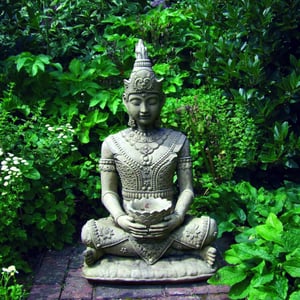
Shop the Serene Buddha Statue →
Common mistakes that ruin stone garden ornaments
After years of delivering and replacing stone pieces, these are the five mistakes we see most often:
- Leaving ornaments on bare soil through winter. The base wicks up water and cracks in the first hard frost.
- Using a pressure washer. Destroys surface detail and drives water deep into the stone.
- Cleaning with vinegar or lemon juice. Dissolves limestone and marble. The white marks are permanent.
- Covering with plastic sheeting. Traps condensation and causes worse frost damage than no cover at all.
- Ignoring small cracks. A 2mm crack in September becomes a 20mm split by February.
Choosing new pieces? Our top 10 stone garden ornament ideas includes options that weather well with minimal upkeep. Browse our full collection of garden ornaments for more ideas.
Frequently asked questions
How often should I clean stone garden ornaments?
Brush monthly with clean water and a soft brush. Do a deeper clean with pH-neutral soap twice a year, in spring and autumn. Remove bird droppings immediately as the acid etches into the stone surface within hours.
Can I use a pressure washer on stone ornaments?
No. Pressure washers destroy surface detail on cast stone. Even a low setting drives water into cracks and pores, accelerating frost damage. Use a garden hose on a gentle spray setting instead. Hand scrubbing with a soft brush is the safest approach.
How do I stop stone ornaments cracking in winter?
Raise them off the ground and seal before the first frost. Use slate pot feet or bricks to create a 10mm gap under the base. Apply a breathable stone sealant in October. Move pieces under 10kg into a shed or garage. Cover larger pieces with breathable fleece, never plastic.
What is the best sealant for stone garden ornaments?
A breathable stone sealant designed for outdoor masonry. Look for silane or siloxane-based products. These let moisture escape from inside the stone while blocking rain absorption. Standard waterproof sealants trap moisture inside and make frost damage worse. Reapply annually.
Can I repair a cracked stone garden ornament myself?
Yes, for chips and cracks under 50mm long. Clean the area, let it dry fully, then fill with a colour-matched stone repair compound. Sand smooth once set and seal over the repair. For structural cracks or antique pieces worth over £200, use a professional stone restorer instead.
Further reading
- How to position stone garden ornaments
- Stone vs resin: which material is best?
- How to age a garden statue
- Sustainable garden ornaments
- Garden water feature ideas and maintenance
Matt W
Garden & Outdoor Specialist
Matt has spent over 16 years working hands-on with garden products across the UK. He tests materials in Staffordshire clay soil and hard water conditions, and writes from direct experience fitting, maintaining, and repairing everything from stone statues to cast iron furniture. His advice is based on what actually survives a British winter, not what looks good in a catalogue.