
Hare & Rabbit Garden Ornaments: Moon Gazers & Folklore
Written by Matt W on 17th Jun 2026.
Key Takeaways
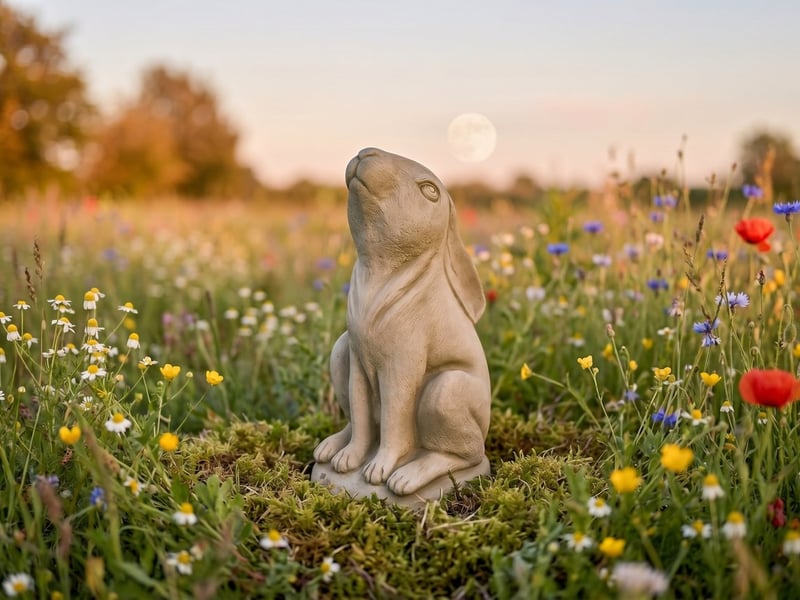
- The moon gazing hare is the classic English piece: a 290mm cast stone hare in an upward gaze, an ancient symbol of rebirth and growth, at £55
- Hare ornaments read taller and leaner with long black-tipped ears; rabbit ornaments sit lower and rounder with shorter ears
- We stock hares from £55 (moon gazing, stone or sandstone) to £149 (600mm bronzed sitting hare) and a 65cm hare birdbath at £219
- Rabbits run £45 to £65: cheeky, sitting and standing designs in cast stone or aged bronze metal
- The "mad as a March hare" saying comes from spring boxing, which is usually a female fending off a male, not two males fighting
- Every stone piece is frost-proof and weighs enough to stay put: the moon gazing hare is 5kg, the cheeky rabbit 6.3kg
Hare and rabbit garden ornaments are a classic of the English garden, and the best known is the moon gazing hare. Ours is a 290mm cast stone hare in the traditional upward gaze, frost-proof and 5kg, at £55 in stone or sandstone. Hares read tall and lean with long black-tipped ears; rabbits sit lower and rounder. Prices run from £45 for a fretwork iron rabbit to £219 for a 65cm hare birdbath. Both bring folklore and a soft, watchful presence to a border.
By Matt W | Garden Ornaments Specialist
Shop the Moon Gazing Hare in Stone →
Matt's Experience
The moon gazing hare outsells every other animal in this part of the range, and people rarely buy it on looks alone. They want the meaning. I have lost count of the customers who bought one to mark a new home, a new baby or a fresh start, because the hare's link to rebirth fits the moment. My one piece of advice is always the same: give it sky. A moon gazer set against a tall hedge looks like it is staring at a wall. Set it where the eye, and the hare, can travel upward.
What is the meaning of a moon gazing hare?
A moon gazing hare symbolises rebirth, growth, abundance and new beginnings. The image is ancient. Hares were sacred to the spring goddess Eostre, whose name gives us Easter, and country folklore held that hares communed with the moon, gazing up at it through the night. Because hares breed in early spring and seem to appear from nowhere in the fields, they became a sign of fertility and the turning year.
That heritage is why the moon gazing hare carries more feeling than most ornaments. People give it to mark a beginning. Our cast stone version takes the traditional upright, nose-to-the-sky pose, and it sits as comfortably in a modern courtyard as a cottage border. We cover the wider story in our guide to what a hare symbolises, alongside lions, dragons and Buddhas.
Shop the Moon Gazing Hare in Sandstone →
What is the difference between a hare and a rabbit ornament?
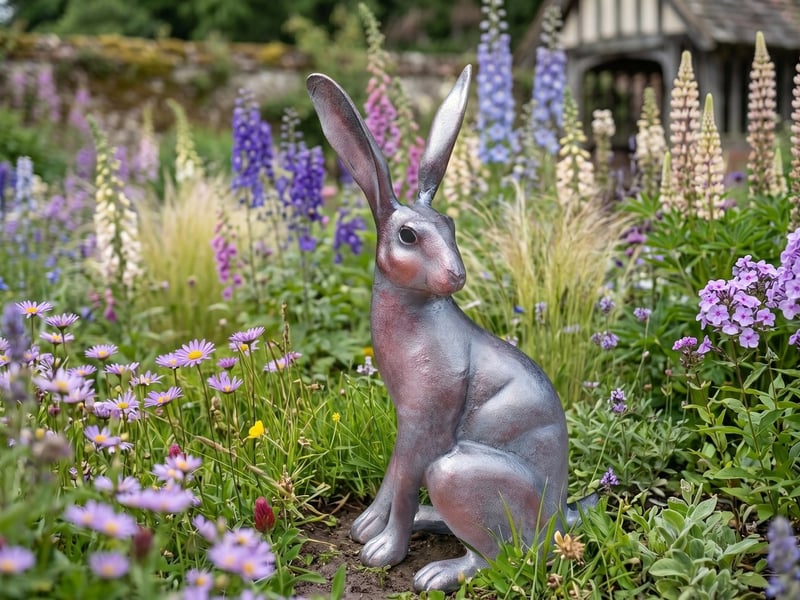
A hare ornament is taller and leaner, with long ears that often carry black tips, long back legs and an alert, upright pose. A rabbit ornament sits lower and rounder, with shorter ears and a softer, crouched shape. The difference mirrors the real animals. Hares are bigger, live above ground in shallow forms, and their young are born furred with open eyes. Rabbits are smaller, live in burrows, and their young are born blind and helpless.
For a garden that means a hare gives you drama and height, while a rabbit gives you charm at ground level. Our 600mm Large Sitting Hare shows the hare's long ears and lean line at their best. The cheeky and sitting rabbits keep things low and friendly. Browse the full range of stone and metal animal ornaments to see them side by side.
Which hare garden ornaments can you buy in the UK?
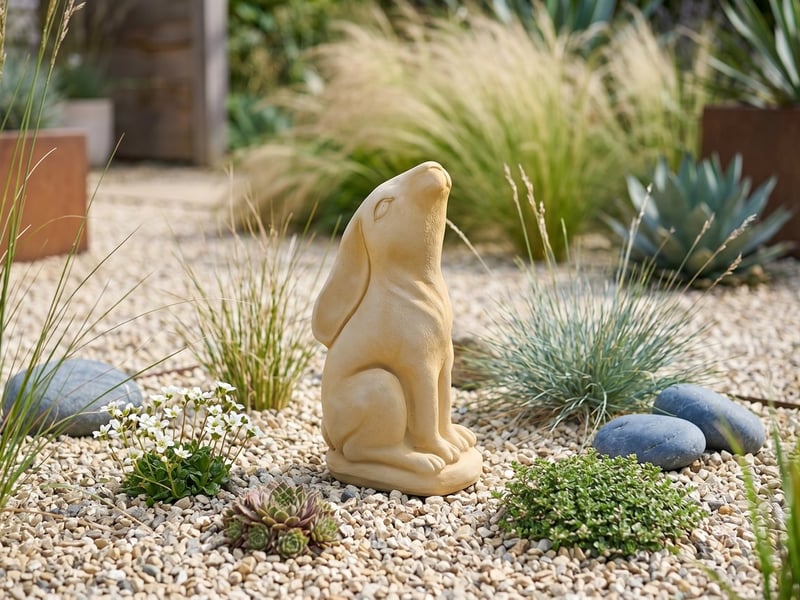
The choice runs from a compact stone piece to a tall metal statement. The 290mm Moon Gazing Hare in cast stone at £55 is the classic, in a natural grey stone or warm sandstone finish, and weighs 5kg on a 240mm base. The 600mm Large Sitting Hare at £149 is solid cast aluminium with a hand-applied aged bronze patina, the piece for height and presence.
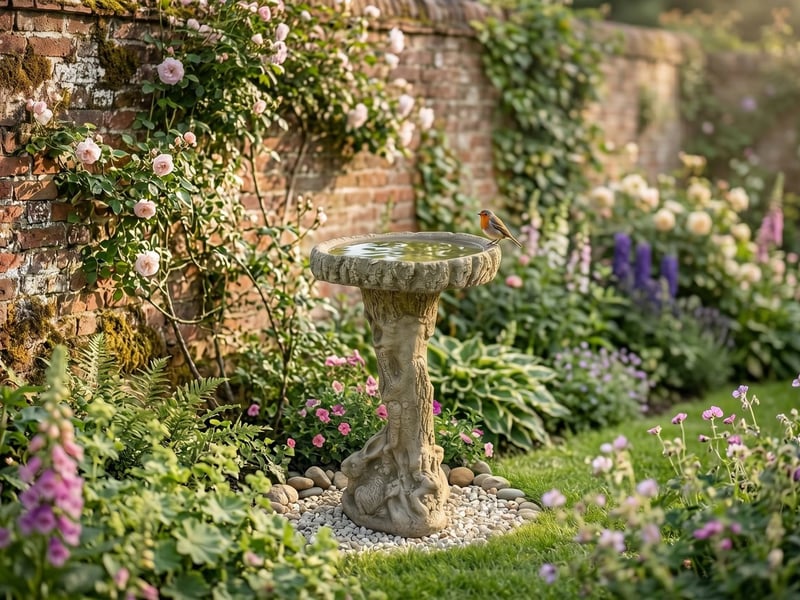
For something that earns its keep, the Hare Birdbath stands 65cm tall with a sculpted hare at the base of a log-effect column and a 440mm shallow bowl, at £219. It pairs folklore with a working bird bath. If birds are the goal, our bird garden ornaments guide covers owls, herons and songbirds to keep it company.
Why is a hare "mad as a March hare"?
The phrase comes from the boxing hares you see in early spring. For years people assumed it was two males fighting over territory. We now know it is usually a female fending off a male she is not ready to mate with, rearing up and cuffing him with her front paws. March is the start of the breeding season, when this behaviour peaks, hence "mad as a March hare".
That wild spring energy is part of the hare's appeal as an ornament. It is a creature of edges and dawn, half real and half folklore, which is why a single hare in a border feels alive in a way a more domestic animal does not. The same long association with luck and the moon runs through our cottage garden ornaments, where the hare has always belonged.
Which rabbit garden ornaments work best?
Rabbit ornaments work best low in the planting, where a real rabbit would sit. The 27cm Cheeky Rabbit in cast stone at £50 is the favourite, a crouched, alert little figure weighing 6.3kg, in grey stone or sandstone. The Sitting and Standing Rabbits at £50 give you a calmer and a more upright pose in the same cast stone.
For metal, the 360mm Standing Rabbit in aged bronze at £65 rears up on its hind legs, full of character, and the iron Fretwork Rabbit at £45 turns the body into a decorative floral cut-out for something more ornamental than lifelike. Rabbits suit the front of a border, a rockery or the edge of a path, tucked into low planting rather than standing proud. Our guide to cat ornaments uses the same placement logic.
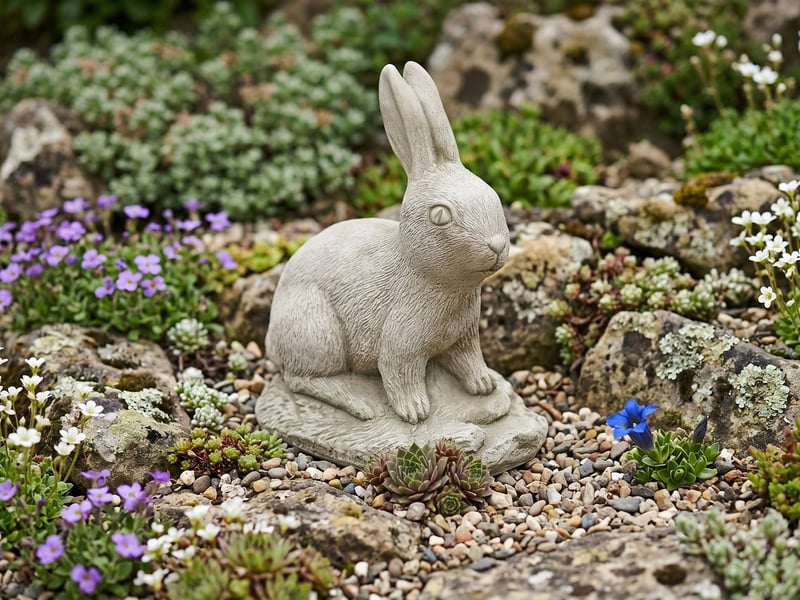
Shop the Cheeky Rabbit in Stone →
Stone or metal: which hare or rabbit lasts best outdoors?
Both last for years, but they age in opposite ways. Cast stone hares and rabbits weather like old carving, picking up moss and a soft patina within a couple of seasons. They are heavy, which keeps them stable: the moon gazing hare is 5kg, the cheeky rabbit 6.3kg, so neither needs fixing in wind. Stone suits cottage gardens, churchyard borders and anywhere you want the piece to look settled and old.
Cast aluminium and iron pieces arrive already aged, with a hand-finished bronze patina that deepens in the rain and never rusts through. They weigh far less, from 1.2kg to 1.33kg for the metal rabbits, so position them out of the worst gusts. Our guide to how stone weathers with age explains the patina, and shows why many gardeners prefer the lived-in look.
| Ornament | Material | Height | Price | Best for |
|---|---|---|---|---|
| Fretwork Rabbit | Iron, aged bronze | 190mm | £45 | Decorative, walls and benches |
| Cheeky Rabbit | Cast stone | 27cm | £50 | Rockeries, border fronts |
| Moon Gazing Hare | Cast stone | 290mm | £55 | Matt's Pick - meaning and presence |
| Standing Rabbit | Cast aluminium | 360mm | £65 | Borders, character pieces |
| Large Sitting Hare | Cast aluminium | 600mm | £149 | Height, statement borders |
| Hare Birdbath | Cast stone | 65cm | £219 | Folklore plus working bird bath |
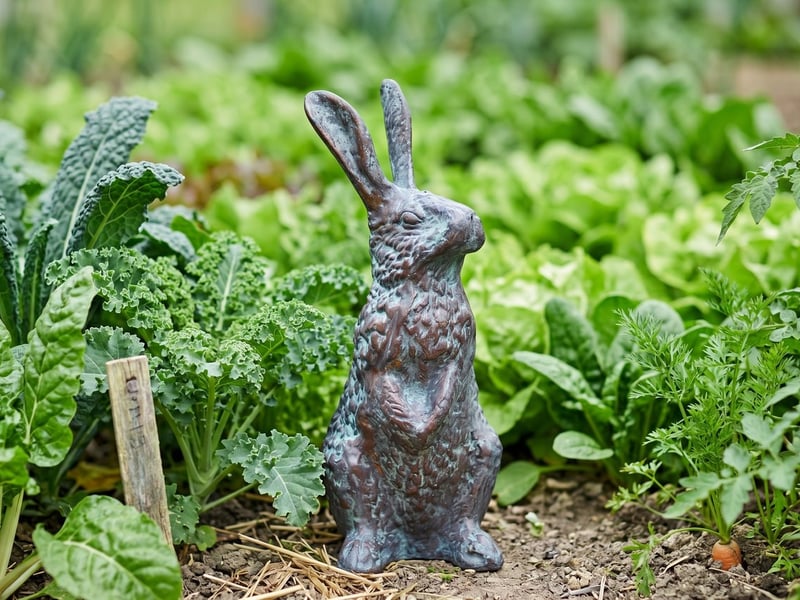
Shop the Standing Rabbit in Metal →
Matt's pick for most gardens
Best For: A border or courtyard where you want a piece with meaning, not just decoration
Why I Recommend It: The Moon Gazing Hare in Stone is the one I recommend first, every time. At 290mm and 5kg it holds its own without dominating, the cast stone weathers beautifully, and the folklore gives it a reason to be there. It is the piece customers come back to tell me about.
Price: £55
Matt's Tip: Pairing Hares and Rabbits
Do not line them up like a shop shelf. One moon gazing hare as a focal point, with a single rabbit tucked low nearby, tells a quiet story and looks intentional. Three rabbits in a row looks like stock. If you want a group, vary the poses and heights, and let planting grow up around the lower pieces so they peek out. The hare stays the star; the rabbits are the supporting cast.
Where should you place a hare or rabbit ornament?
Place a moon gazing hare where its upward gaze has open sky or space above it, never tight against a tall hedge. The front of a border, a gravel area, the turn of a path or a low planting bed all work. Give it room so the eye follows the gaze up. A single hare as a focal point carries more weight than a cluster.
Rabbits want the opposite: low, tucked in, half-hidden. Set them at the front of a border, in a rockery or beside steps, where low planting can grow around the base so they look as if they have just hopped in. The metal pieces suit walls, benches and pots where their lighter weight is an advantage. Our guide to placing garden sculptures covers sightlines and focal points in full.
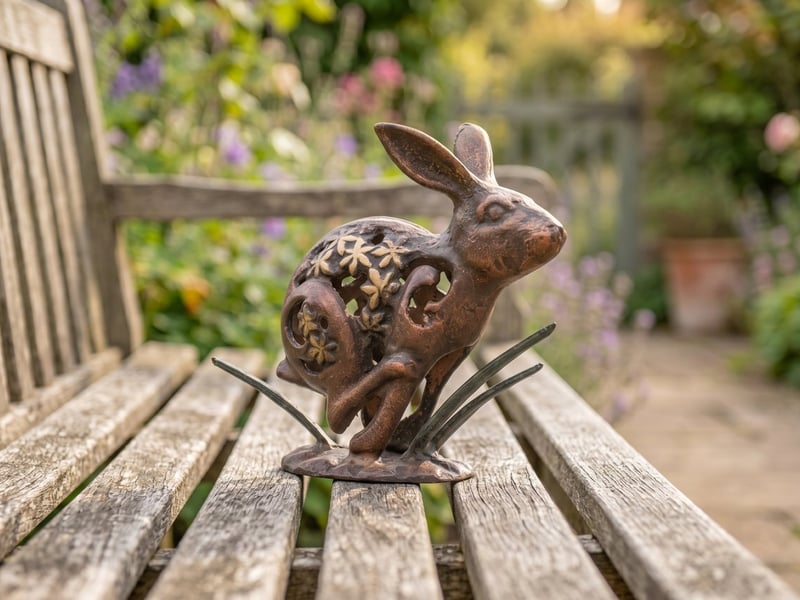
We stock hares and rabbits because they are the ornaments people form an attachment to. The moon gazing hare in particular gets bought for a reason, a beginning or a memory, far more often than for the look alone. We choose cast stone that weathers honestly and bronzed metal that ages without rusting, so the piece you place this spring still looks right in ten years.
- Matt W, Garden Ornaments
Frequently asked questions
What does a moon gazing hare symbolise?
A moon gazing hare symbolises rebirth, growth and new beginnings. The image comes from old folklore that hares communed with the moon. Hares were sacred to the spring goddess Eostre, which is why they link to Easter and fertility.
What is the difference between a hare and a rabbit?
Hares are larger and leaner with long black-tipped ears and long legs. Rabbits are smaller and rounder with shorter ears. Hares live above ground in forms; rabbits live in burrows. In ornaments, hares stand tall while rabbits sit low.
How much do hare garden ornaments cost in the UK?
Hare garden ornaments cost from £55 to £219. The 290mm moon gazing hare in cast stone is £55. The 600mm bronzed sitting hare is £149, and the 65cm cast stone hare birdbath is £219.
Are stone hare and rabbit ornaments frost-proof?
Yes, every cast stone hare and rabbit we stock is frost-proof. They stay outside all year and weather naturally with moss over time. Their weight, from 5kg to 6.3kg, keeps them stable in wind without fixing.
Where should I place a moon gazing hare?
Place a moon gazing hare with open sky or space above it. The front of a border, a gravel area or the turn of a path all work. Avoid setting it tight against a tall hedge, which blocks the upward gaze.
Why are hares linked to the moon and Easter?
Hares were sacred to Eostre, the spring goddess who gives Easter its name. Folklore held that hares gazed at and communed with the moon. Their early spring breeding made them a lasting symbol of fertility and the turning year.
Related articles
- Cat Garden Ornaments UK: Best Picks and Where to Place Them
- Dog Garden Ornaments UK: Breed Guide and Best Picks
- Wildlife Garden Ornaments UK: Attract Birds, Bees and Butterflies
- Metal Garden Ornaments: Rust Finishes, Weathering and Care Guide
- How to Clean Stone Garden Ornaments: Moss, Algae & Stain Removal