
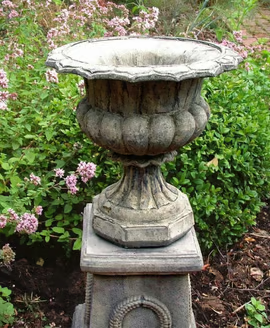
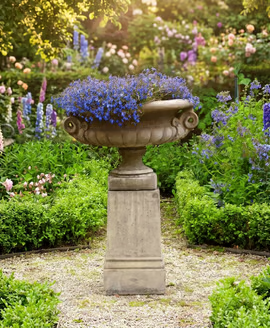
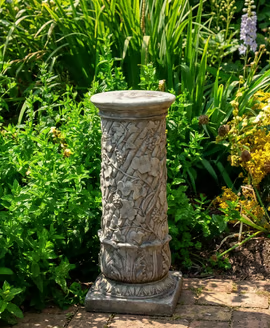
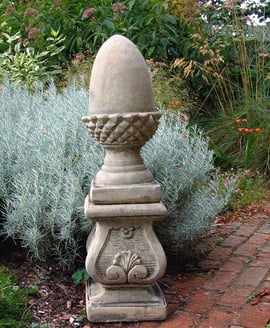
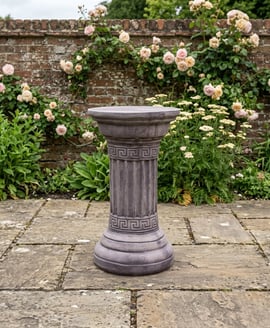
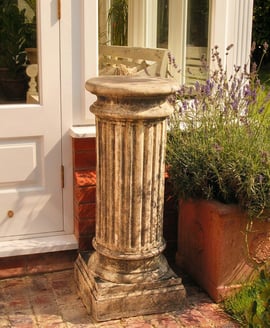
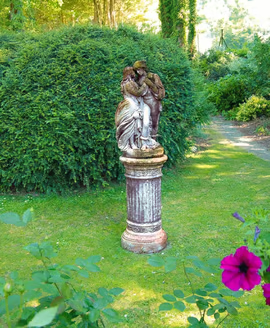
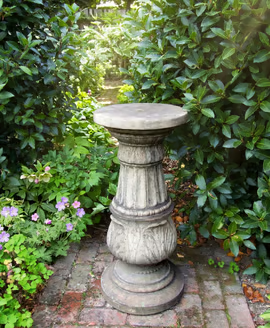
About our stone pedestals
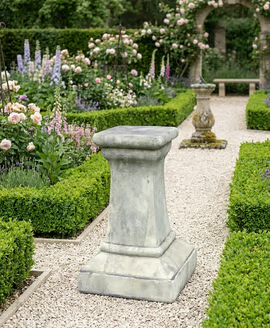
A stone pedestal is the foundation that lets you display garden art at its best. The right base does three things: it lifts the piece to eye level so the detail reads, it stops the ornament tipping in a strong wind, and it keeps the base off damp ground where moss-stains and frost damage start. We stock heavy-duty statue bases and cast stone columns chosen for stability and longevity.
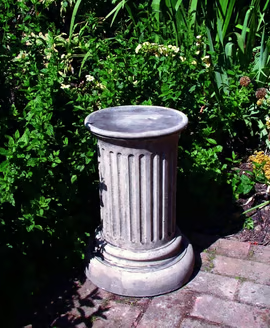
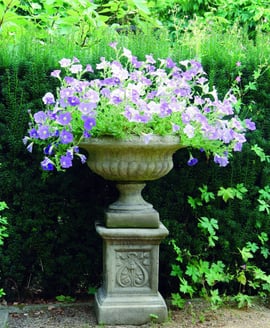
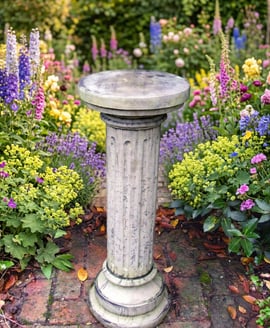
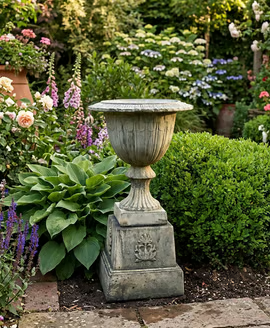
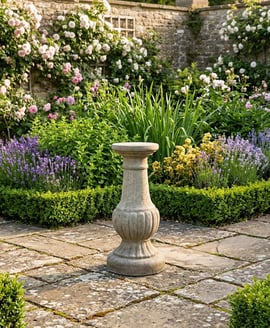
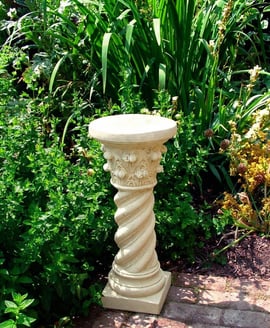
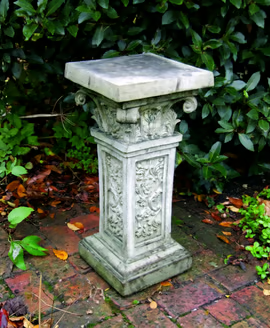
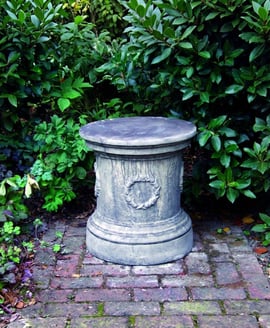
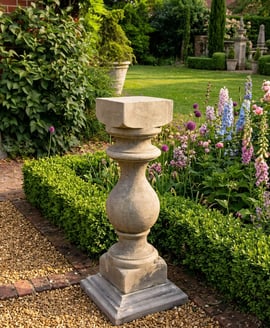
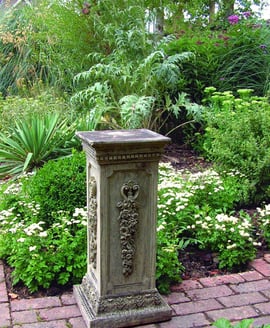
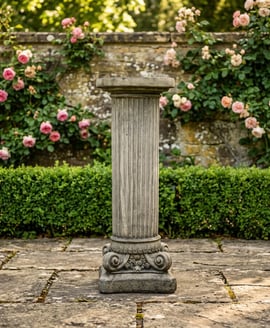
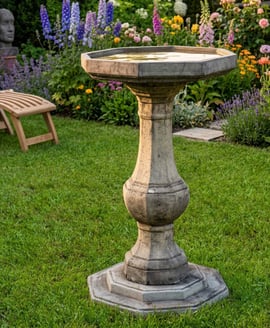
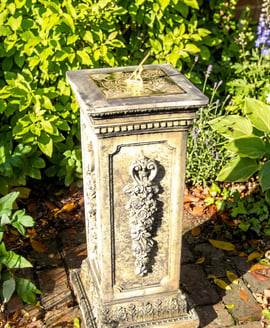
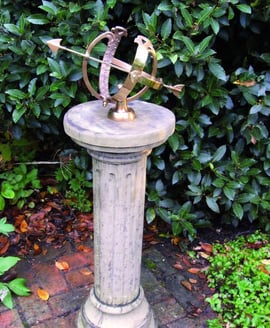
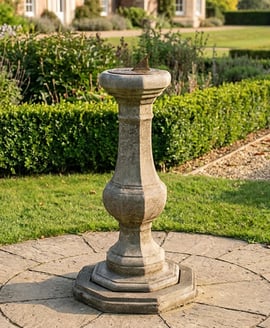
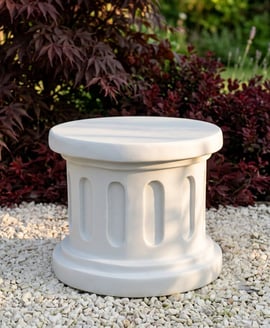
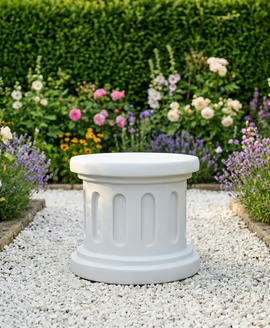
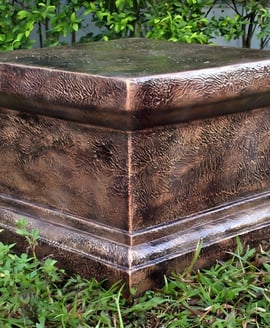
The range covers classical Corinthian columns for formal settings, rustic and reclaimed-style bases for cottage gardens, fluted round pedestals for urns and low profile statue risers for subtle elevation. Every piece is solid reconstituted limestone, not hollow resin, so it stays put in winds without anchoring.
Key features
- British craftsmanship. Hand-cast and finished in the UK using traditional methods.
- Frost-proof. Made from quality limestone and concrete composites that handle UK winters.
- Solid construction. Heavy weight gives stable support for valuable statues.
- Natural ageing. Develops a soft antique patina with moss and lichen over a year or two.
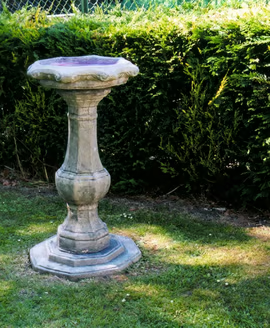
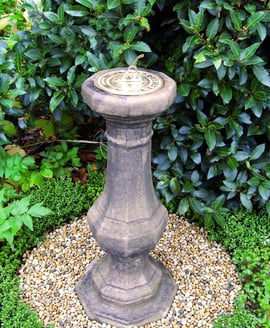
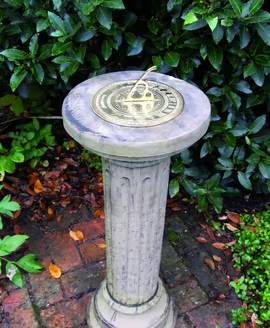
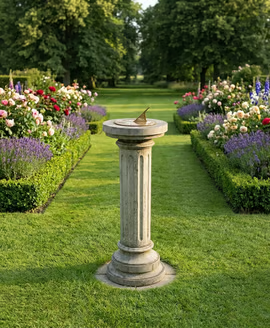
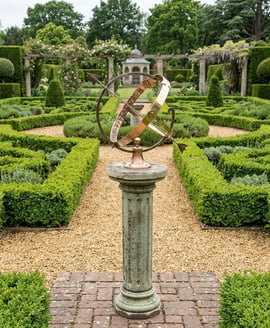
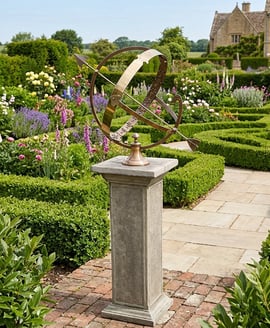
- Versatile. Works with sundials, bird baths, urns and sculptures.
Installation advice
Security matters, especially for heavy statues on top of a tall pedestal.
Choosing your stone pedestal
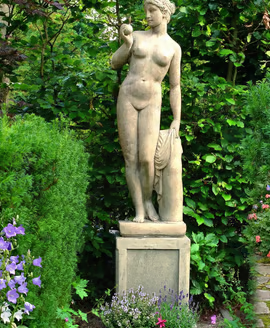
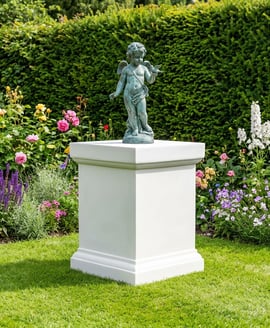
Picking the right base is about weight, proportion, and size. A useful rule: the pedestal top should be at least 10% wider than the base of the object on top. That visual step-in keeps the piece looking grounded and stable. For example, stone garden statues with a 20cm base look right on a plinth with a top surface of 22cm or wider.
Style and material matching
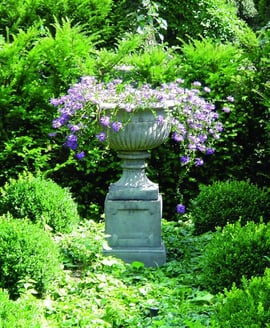
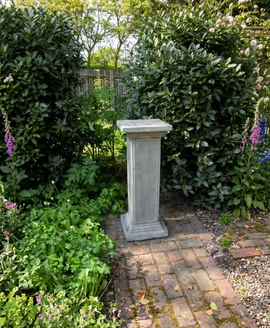
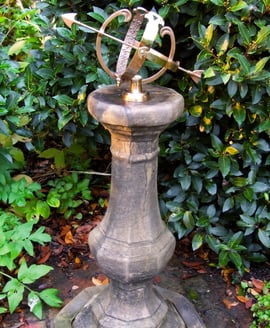
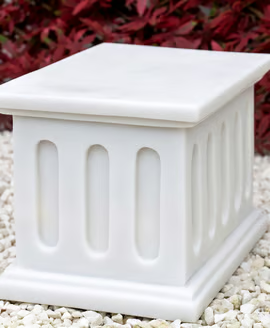
Match the era of the garden. Garden urns often pair well with square display plinths, which give a clean architectural look. Sundials need a perfectly level top, so our precision-cast columns are the safer choice. Read our guide to positioning stone garden ornaments if you want help with placement.
Built for british weather
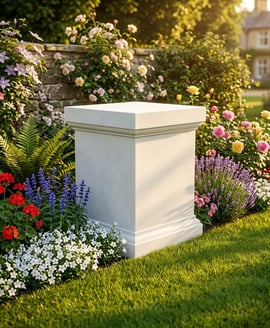
Our limestone pedestals and white cast stone plinths handle UK conditions year-round. They are frost-proof and built to live outside without covering. See our guide to choosing stone ornaments for more detail. Prices run from £85 up to £629.
Need help choosing a base?
Pedestal styles compared
Our delivery records for the year to June 2026 sit behind the Pick row.
| Style | Example | Best for | Price |
|---|---|---|---|
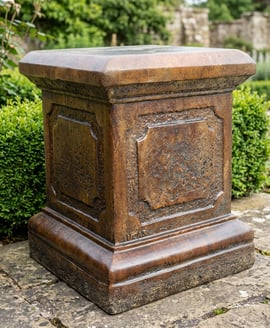
| Emblem (plain panel) | Emblem Stone Garden Pedestal ⭐ Matt's Pick, 5 delivered this year | Any statue or urn, our best seller | £180 |
| Vienna motif | Vienna Emblem Motif Pedestal | Smaller statues, tight budgets | £85 |
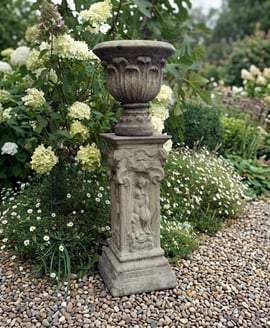
| Classical column | Corinthian Column Pedestal | Greek and Roman figures | £120 |
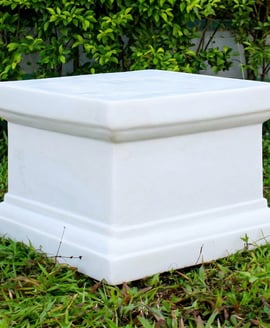
| Victorian plinth | Small Victorian Plinth in White | Busts and formal schemes | £135 |
Matt's note, June 2026
Five Emblem pedestals went out in the twelve months to June 2026, more than any other base we sell. Forty-three are in stock from £85. Most buyers think about style first, but height is the decision that matters. Statue plus pedestal should finish between 1.4 and 1.7 metres for eye-level viewing. And keep proportion in mind. A pedestal narrower than half the statue's height starts to look nervous, whatever the style.
Frequently asked questions
A pedestal is taller and more slender, often column-shaped, used to lift items to eye level. A plinth is shorter, wider and square, working as a heavy anchor or base. Both lift and display items like garden ornaments.
Measure the base of your statue. The pedestal top should be slightly larger than the statue's footprint, ideally 1-2 inches wider on all sides. That gives you visual balance and physical stability.
Solid cast stone pedestals carry significant weight, including heavy iron urns and large stone figures. The whole range handles hundreds of kilograms without flexing or settling.
Yes. To stop the pedestal sinking or leaning over time, place it on a firm level surface such as a paving slab, concrete pad or well-compacted hardcore.
Use an exterior-grade construction adhesive such as CT1 between the statue and the pedestal top. For taller items in exposed positions, drill a hole and use a metal dowel pin alongside the adhesive.