
The Complete Guide to Garden Ornament Materials: Stone vs Resin vs Metal vs Concrete
Written by Matt W on 3rd Mar 2026.
Garden ornaments are made from eight main materials: cast stone, natural stone, resin, bronze, cast iron, aluminium, corten steel, and concrete. Cast stone lasts 30-50 years, weighs 15-80kg, and costs £85-£3,500. Resin lasts 5-10 years, weighs 2-20kg, and costs £30-£500. This guide compares every material by lifespan, frost resistance, weight, maintenance, and cost per year of ownership, based on handling and selling all of them since 2012.
Key Takeaways
- ✓ Cast stone is the best all-round material: frost-proof to -20°C, 30-50 year lifespan, develops natural patina
- ✓ Granite is the most durable material on earth for garden use -- virtually indestructible
- ✓ Resin captures the finest detail but fades with UV and lasts 5-10 years
- ✓ Bronze develops a self-protecting verdigris patina and lasts centuries
- ✓ Cast iron needs rust treatment every 2-3 years but has unmatched character
- ✓ Concrete is the cheapest option but cracks in frost below -5°C
- ✓ Cost per year matters more than purchase price -- stone at £3/year beats resin at £50/year
Installer's Note
We unpack, inspect, and dispatch ornaments in every material listed here. We know what arrives damaged, what customers return, and what survives 10 winters without a mark. The single most common mistake buyers make is choosing by appearance alone. A resin Buddha looks identical to a cast stone Buddha in the photograph. But 5 years later, one has developed a beautiful lichen patina and the other is faded and cracked. Material is the difference between an ornament that becomes part of your garden and one that ends up in a skip.
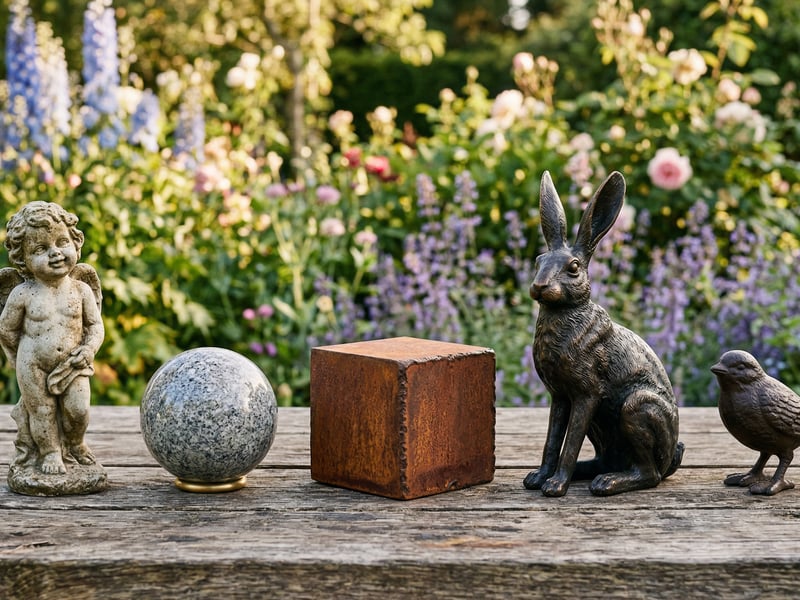
Garden ornament materials compared
This table compares every material side by side. Scan the columns that matter most to you -- lifespan if you want permanence, weight if you need to move it yourself, frost rating if you are in Scotland or northern England.
| Material | Lifespan | Frost Rating | Weight (typical) | Maintenance | Price Range | Cost/Year* |
|---|---|---|---|---|---|---|
| Granite | 100+ years | -25°C+ | 25-180kg | Almost none | £200-£2,000+ | £2-5 |
| Cast stone | 30-50 years | -15°C to -20°C | 15-80kg | Low (annual brush) | £85-£3,500 | £3-8 |
| Bronze | 100+ years | No limit | 10-60kg | Wax twice yearly | £300-£5,000+ | £3-10 |
| Sandstone | 50+ years | -10°C to -15°C | 20-150kg | Low-medium | £200-£1,500 | £4-10 |
| Limestone | 50+ years | -10°C to -15°C | 20-120kg | Low-medium | £150-£2,000 | £3-10 |
| Corten steel | 30+ years | No limit | 15-40kg | Almost none | £350-£800 | £10-25 |
| Cast iron | 50-100 years | No limit | 5-40kg | Rust treatment every 2-3 yrs | £40-£500 | £1-5 |
| Aluminium | 25-40 years | No limit | 3-15kg | Almost none | £50-£400 | £2-8 |
| Marble | 100+ years | -15°C | 20-150kg | Medium (acid-sensitive) | £300-£5,000+ | £3-10 |
| Resin / polyresin | 5-10 years | -5°C to -10°C | 2-20kg | UV spray, repaint every 3-5 yrs | £30-£500 | £6-50 |
| Concrete | 10-20 years | -5°C to -10°C | 10-100kg | Seal annually | £15-£200 | £2-10 |
*Cost per year = purchase price divided by expected lifespan, plus average annual maintenance costs. A £200 cast stone statue lasting 50 years costs £4/year. A £100 resin statue lasting 5 years costs £20/year before maintenance.
Cast stone (reconstituted stone)
Cast stone is the dominant material in UK garden ornaments and for good reason. It is manufactured from 50%+ crushed natural limestone aggregate, mineral filler, and a resin binder, then hand-cast in moulds under controlled conditions. The result is a material that looks, feels, and weathers like quarried stone at 60-70% less cost.
The density is the thing that matters. Cast stone weighs approximately 2,200 kg/m3 -- about 15% denser than standard concrete. That density stops water penetrating deeply enough to cause freeze-thaw damage, which is why quality cast stone is frost-proof to -20°C without any sealant. Our suppliers test every batch. The 5-Year Frost Guarantee is not marketing -- it reflects actual performance.
Within 6-18 months outdoors, cast stone develops a natural patina of moss and lichen. By year 2-3, it looks identical to stone that has been in a garden for decades. Many customers buy cast stone specifically for this weathered character. If you prefer a clean look, a breathable silane sealant applied annually prevents biological growth. Our weatherproofing guide covers this in detail.
Browse our full range of stone garden ornaments -- over 200 pieces from UK workshops including Lucas Stone, Dragonstone, and Onefold.
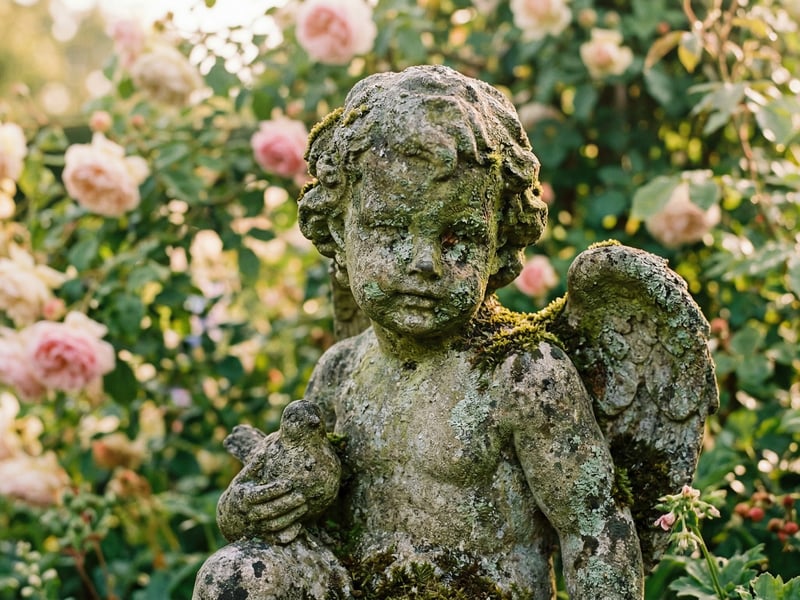
Natural stone: granite, sandstone, limestone, and marble
Natural stone is quarried, cut, and carved rather than cast from a mould. It is the premium option, and each stone type behaves differently outdoors.
Granite is the hardest and most durable. It resists frost below -25°C, shrugs off salt spray (making it ideal for coastal gardens), and holds its colour for decades without UV fading. It is non-porous, so acid rain cannot dissolve it. The trade-off is weight -- a granite water feature can weigh 100-150kg -- and price. But spread over a century of outdoor life, granite is among the cheapest materials per year. We sell natural stone garden ornaments in granite, basalt, and sandstone.
Sandstone has a warm, varied colour range and carves beautifully. It is softer and more porous than granite, so it weathers faster and needs more care in harsh climates. You can use a mild vinegar solution on sandstone (never on limestone or marble). Good for sheltered gardens in the south.
Limestone is the classic English garden stone. It weathers gracefully but is softer than granite and sensitive to acid rain over very long periods. Clean with mild soap only -- never use acidic cleaners. Cotswold limestone and Portland stone are the traditional UK sources.
Marble is the prestige choice. Polished marble catches light in ways no other material matches. It is frost-resistant to about -15°C and lasts centuries with care. The catch: marble stains easily, needs gentle cleaning (mild dish soap only, never anything acidic), and shows weathering more visibly than rougher stones. Reserve it for sheltered feature positions where it gets the attention it deserves.
Resin and polyresin
Resin ornaments are lightweight, affordable, and capture finer detail than any other material. A resin sculptor can reproduce textures -- fur, feathers, bark, fabric folds -- that would be impossible in stone or metal. If you want a lifelike animal ornament with individual whiskers and claws, resin is the material that delivers it.
The downside is longevity. UV radiation degrades the surface within 2-3 summers. Colours fade. The material becomes brittle. In a hard frost below -5°C, trapped moisture inside micro-pores can crack the shell. A quality resin ornament lasts 5-10 years in typical UK conditions. A cheap one can fade in a single summer.
You can extend the life with annual UV-resistant acrylic spray and by moving pieces to shelter during prolonged hard frost. Our stone vs resin comparison breaks down the numbers in detail. For coastal gardens (within 2 miles of the sea), salt spray causes paint bubbling on resin -- stone or metal is a better choice.
Browse our resin garden ornaments -- they are at their best for animal figures and character pieces where the detail justifies the shorter lifespan.
Bronze
Bronze is the most durable metal for outdoor sculpture and has been used for garden statuary for centuries. It develops a green verdigris patina over 6-18 months that actually protects the metal beneath -- a self-healing surface that gets better with age. Unlike iron, bronze does not rust. Unlike aluminium, it has real weight and presence.
True solid bronze is expensive (£300-£5,000+ for garden pieces). What most retailers sell as "bronze" garden ornaments are bronze-effect resin or cold-cast bronze (resin mixed with bronze powder). These look similar when new but do not develop real verdigris and will not last like solid bronze. Check the listing carefully.
If you own real bronze: apply pure beeswax twice a year and never use chemical cleaners. Place on a stone slab rather than directly on soil -- soil chemistry can react with the metal over decades. Our bronze garden sculptures range includes both solid and bronze-finish pieces.
Cast iron
Cast iron has a character that no other material matches. It holds fine detail, carries real weight (good for stability and theft deterrence), and lasts 50-100 years with basic rust management. Victorian cast iron garden furniture and ornaments are still in use 150 years later.
The trade-off is rust. Iron oxidises in moisture, and the UK has plenty of moisture. But rust is manageable. Every 2-3 years: wire-brush any flaking rust, apply a rust-converting primer, then two coats of exterior metal paint. Total cost: about £15 and two hours of work. Between treatments, an annual coat of paste wax keeps moisture out.
Some cast iron ornaments are sold with an intentional rust finish. If that is the look you want, the patina itself acts as a protective layer. Wipe with an oily rag (linseed oil) once in autumn to slow further oxidation without losing the character. Browse our metal garden ornaments for cast iron and other metals.
Aluminium
Aluminium is sometimes called "poor man's bronze" because it can be finished to resemble bronze at a fraction of the cost. It is naturally rust-proof -- it forms an invisible oxide layer that stops corrosion. It is lightweight (a 60cm aluminium statue weighs roughly a third of the same piece in cast iron), which makes it easier to handle but less stable in wind.
The lightweight nature is both the advantage and the limitation. Easy to move, easy to reposition, easy to bring indoors for winter. But a gust of wind can topple a tall piece on an exposed patio. Aluminium works best for sheltered positions or where you need to move ornaments seasonally.
Corten steel
Corten is a steel alloy containing copper, chromium, and nickel that develops a stable rust-orange patina over 3-12 months. Unlike ordinary steel, the rust layer on corten is self-protecting -- it does not flake or deepen beyond the surface. The result is a material that looks deliberately weathered from the start and needs almost zero maintenance.
One warning: corten is not suitable for coastal gardens. Salt spray disrupts the protective patina formation and causes the steel to corrode like ordinary steel. If you are within a mile of the sea, choose granite or bronze instead. Corten also stains light-coloured paving during its initial rusting phase -- place on dark surfaces or use a drip tray for the first year.
We sell corten steel water features -- spheres, blades, and bowls that look striking in modern and minimalist gardens.
Concrete
Concrete is the budget option. It is cheap, widely available, and can be moulded into most shapes. But it has real limitations for UK outdoor use.
Standard concrete is more porous than cast stone (roughly 15% lower density), which means it absorbs more water. In a freeze-thaw cycle, that water expands and cracks the material from inside. Concrete ornaments in exposed Midlands or northern gardens can crack within 3-5 winters without annual sealing. The surface finish is rougher, the detail is less crisp, and it does not weather attractively -- it just goes grey and patchy.
If you buy concrete: seal with a silane/siloxane breathable sealer every September, elevate off the ground on pot feet or slate, and fill any visible cracks before winter. Treat it as a 10-20 year material, not a permanent one. For the difference in quality, our stone ornament buying guide explains why cast stone costs more and why it is worth it.
Which material is right for your garden?
The right material depends on your situation, not just your taste. Here is a quick decision guide.
| Your Situation | Best Material | Why |
|---|---|---|
| Want it to last a lifetime | Granite or bronze | Both outlast the garden, the house, and probably the street. |
| Best value for money | Cast stone | 60-70% cheaper than natural stone. Looks identical after 2-3 years. 30-50 year lifespan. |
| Cannot lift heavy items | Resin or aluminium | Under 20kg for most pieces. One-person handling. |
| Coastal garden (within 2 miles of sea) | Granite or aluminium | Both resist salt spray. Avoid iron, corten, and painted resin near the coast. |
| Exposed / windy hilltop | Cast stone or cast iron | Weight provides stability. 30kg+ pieces do not blow over. |
| Rented property / temporary | Resin | Light enough to take with you when you move. |
| Modern / minimalist garden | Corten steel or polished granite | Clean lines, industrial character, low maintenance. |
| Cottage / traditional garden | Cast stone or natural stone | Weathered patina suits informal planting. |
| Tight budget (under £100) | Cast iron or small resin | Best detail and durability at entry-level prices. |
| Scotland / northern England | Cast stone, granite, or metal | All handle -15°C to -25°C. Avoid concrete and cheap resin. |
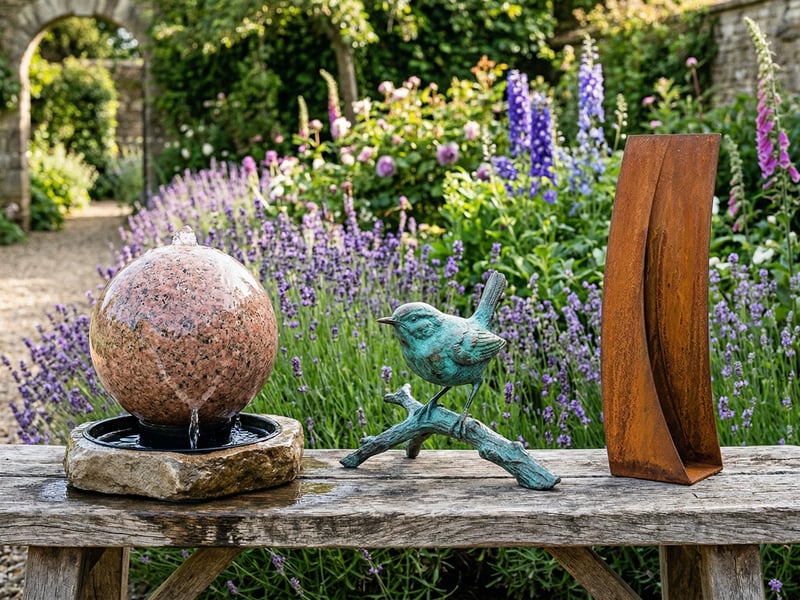
Browse our Natural Stone Garden Ornaments →
Matt's Tip: Think in Decades
Customers often ask me "which is cheaper, stone or resin?" The purchase price says resin. But run the numbers over 10 years and the answer flips. A £200 cast stone piece lasts 30+ years: that is £6/year. A £100 resin piece lasts 5-7 years and then you buy another: that is £15-20/year. Stone costs less in the long run. And you never have to shop for a replacement, carry one home, or work out what to do with the faded old one. Buy once.
|
Matt's Pick for Best All-Round MaterialBest For: Permanent garden centrepiece that develops character every year Why I Recommend It: Lucas Stone cast reconstituted limestone with an aged brass sundial dial. The pedestal is frost-tested to -20°C and the brass will develop its own patina alongside the stone. I have had customers send photos of these 8 years after purchase looking better than the day they arrived. Cast stone and brass is a pairing that genuinely improves with time. Price: £319 |
How to care for each material
Maintenance requirements vary hugely. Here is the honest time commitment for each.
| Material | Annual Time | What To Do | Annual Cost |
|---|---|---|---|
| Granite | 30 mins | Rinse with water. That is it. | £0 |
| Cast stone | 1-2 hours | Brush with water in spring. Optional sealant in September. | £0-5 |
| Bronze | 1-2 hours | Apply beeswax twice yearly. Rinse after coastal storms. | £5-10 |
| Cast iron | 2-3 hours (every 2-3 yrs) | Wire-brush rust, primer, two coats paint. Annual wax between. | £5-15 |
| Aluminium | 30 mins | Wipe with damp cloth. Almost maintenance-free. | £0 |
| Corten steel | 15 mins | Brush debris. Ensure drainage at base. Self-maintaining surface. | £0 |
| Resin | 2-3 hours | UV spray in September. Repaint every 3-5 years. Shelter in hard frost. | £10-25 |
| Concrete | 2-3 hours | Seal annually in September. Fill cracks. Elevate off ground. | £8-15 |
| Marble | 1-2 hours | Mild soap wash. Sealant before winter. Cover in prolonged frost. | £5-10 |
For full seasonal care instructions across all materials, read our stone ornament care guide and weatherproofing guide. Browse our full collection of garden ornaments for more ideas.
Frequently asked questions
What is the best material for garden ornaments?
Cast stone (reconstituted stone) is the best all-round material for UK garden ornaments. It costs 60-70% less than natural stone, holds fine sculptural detail, is frost-proof to -20°C, and develops a natural patina within 6-18 months that looks identical to centuries-old quarried stone. For absolute maximum durability, granite lasts 100+ years with zero maintenance.
What is the difference between cast stone and concrete?
Cast stone uses 50%+ high-grade natural limestone aggregate and is 15% denser than standard concrete. This density makes it frost-proof, while concrete is vulnerable to freeze-thaw cracking. Cast stone holds finer detail, weathers more attractively, and lasts 30-50 years versus 10-20 for concrete. The difference is visible: cast stone feels smooth and heavy, concrete feels gritty and lighter.
How long do resin garden ornaments last?
Resin garden ornaments last 5-10 years in typical UK outdoor conditions. UV radiation fades the colour within 2-3 summers, and the material becomes brittle over time. Cheap resin pieces can fade in a single summer. You can extend the life with annual UV-resistant acrylic spray and by sheltering pieces during hard frost. Quality resin with UV stabilisers lasts longer than budget pieces.
Are stone garden ornaments frost proof?
Quality cast stone ornaments are frost-proof to -15°C to -20°C without any treatment. Natural granite handles -25°C+. Limestone and sandstone are frost-resistant to -10°C to -15°C. The only risk is standing water in bowls and basins -- always empty bird baths and fountain basins before freezing weather. The stone itself is fine.
Will metal garden ornaments rust?
Cast iron and steel will rust. Bronze, aluminium, stainless steel, and corten steel will not. Iron rust is manageable with treatment every 2-3 years (primer + paint). Corten steel develops a stable, self-protecting rust layer that does not deepen. Bronze forms a green verdigris patina that protects the metal beneath. If you want a metal ornament with zero rust risk, choose aluminium or bronze.
What is the cheapest material for garden ornaments?
Concrete is the cheapest material at £15-£200 per piece. However, concrete needs annual sealing and lasts only 10-20 years. Cast iron starts from £40 and lasts 50-100 years with occasional rust treatment. If you calculate cost per year of ownership, cast iron at £1-5/year is cheaper long-term than concrete at £2-10/year because it lasts three times longer.
Are heavy garden ornaments better?
Heavier ornaments are more stable in wind, harder to steal, and generally made from longer-lasting materials. A 30kg+ cast stone piece will not topple in a storm. Weight also correlates with material density, which correlates with frost resistance. The practical limit is handling: items over 30kg need two people, and items over 80kg need a sack truck. If you cannot handle the weight, choose aluminium or resin -- lighter does not mean worse, it just means different care requirements.
Further reading
- Stone vs Resin: Which Material is Best for UK Gardens?
- How to Weatherproof Garden Statues and Ornaments: UK Frost Protection Guide
- Sustainable Garden Ornaments: Why Stone Lasts and Plastic Does Not
- How to Age a Garden Statue: 4 Proven Methods
- How to Choose a Garden Water Feature: Types, Costs and Running Expenses
Matt W
Garden & Outdoor Specialist
Matt has spent over 16 years working hands-on with garden products across the UK. He tests materials in Staffordshire clay soil and hard water conditions, and writes from direct experience fitting, maintaining, and repairing everything from stone statues to cast iron furniture. His advice is based on what actually survives a British winter, not what looks good in a catalogue.