
Stone Pedestals and Plinths: How to Display Garden Statues
Written by Matt W on 7th Apr 2026.
Key Takeaways
- Stone pedestals lift garden statues to eye level, doubling their visual impact and protecting bases from ground damp and splashback
- Doric, Corinthian and classical column styles suit different statue sizes and garden settings, from formal borders to cottage paths
- Reconstituted stone pedestals from £99 to £325 last decades outdoors without cracking, flaking or frost damage
- A pedestal top must be at least 25 mm wider than the statue base on each side for safe, stable display
- Securing a statue with clear adhesive or a dowel pin prevents toppling in wind and deters theft
- Match the pedestal finish (Cotswold, white, aged) to your statue colour for a unified look
Stone pedestals and plinths are the simplest way to transform how a garden statue looks. Raising a figure by 500-900 mm changes it from something you glance down at to something that commands attention at eye level. The right pedestal also protects a statue's base from soil damp, lawn-mower strikes and winter splashback.
This guide covers every pedestal style we stock, from Doric columns at £120 to large ornate pieces at £325. We explain how to pick the right height, match styles to statues, and secure everything safely. Browse our full collection of stone pedestals and stone plinths to see every option.
Team Note
We have paired hundreds of statues with pedestals over the years. The most common mistake customers make is choosing a pedestal that is too short. A 400 mm column under a 600 mm statue looks timid. Go taller than your instinct says. The combined height of statue plus pedestal should sit between chest height and eye level for the best visual impact. We also see people mix finishes, putting a bright white plinth under an aged Cotswold stone figure. Match the colour tone and the pairing looks intentional rather than cobbled together.
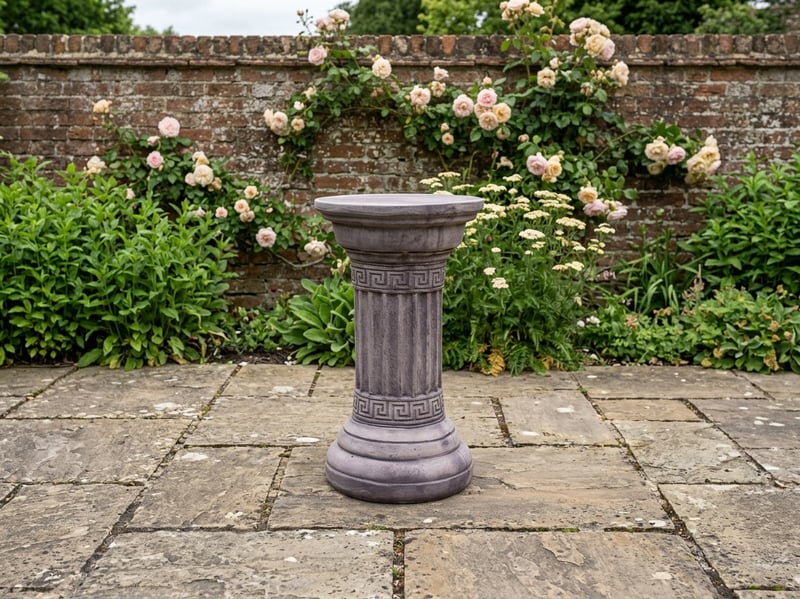
Shop the Classical Column Pedestal →
What is the difference between a pedestal, plinth, and column?
A pedestal is a base with a column and cap designed to display a single statue or urn at height. It typically stands 500-900 mm tall and has three visible parts: a bottom block (the plinth section), a central shaft, and a flat top where the statue sits. The word covers the whole unit from floor to display surface.
A plinth is a simple flat-topped block, usually square or round, standing 200-400 mm high. Plinths raise a statue modestly without the height or decorative detailing of a full pedestal. They work well for heavier pieces where stability matters more than drama. Our Large Square Plinth at £195 is a good example: clean lines, 300 mm tall, wide enough for statues up to 25 kg.
A column is a tall, narrow pedestal with a shaft inspired by classical architecture. Doric columns have plain shafts. Corinthian columns have ornate carved tops. Ionic columns have scroll-shaped capitals. In garden use, the terms overlap. Most customers say "pedestal" and mean any raised display base, and that is fine.

Shop the Large Square Plinth →
How to choose the right pedestal height for your garden statue
The combined height of statue plus pedestal should bring the figure's centre of interest to between 1.2 m and 1.6 m from ground level. For most people, that means the statue's face or focal point sits between chest and eye height. This is the range where a figure feels present rather than towering or crouching.
Start by measuring your statue. A 600 mm bust like the Bust of David at £229 needs a pedestal of at least 700 mm to reach eye level. A 900 mm full-length figure only needs a 400 mm plinth to hit the sweet spot. Overshoot and the statue looks stranded. Undershoot and it disappears into the border.
For pathway entrances and gatepost positions, taller pedestals (700-900 mm) work best because people approach from a distance and need to see the statue before they reach it. For patio corners and courtyard niches, a shorter plinth of 300-500 mm is enough because viewers stand close. Our guide on where to place garden sculptures covers sightline planning in more detail.
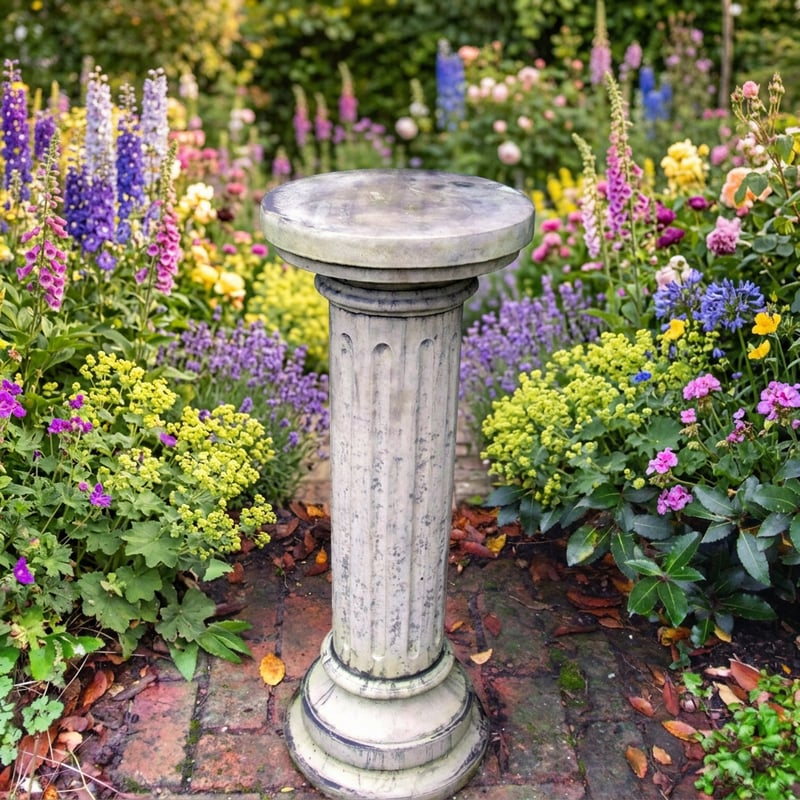
Shop the Brighton Column Pedestal →
Classical column styles explained: Doric, Ionic, and Corinthian
The three classical column orders — Doric, Ionic, and Corinthian — differ in their shaft decoration and capital (top) design, each suiting a different garden mood. All three originated in ancient Greek temple architecture and have been used in English gardens since the 18th century. Knowing the difference helps you pick the right column for your statue and setting.
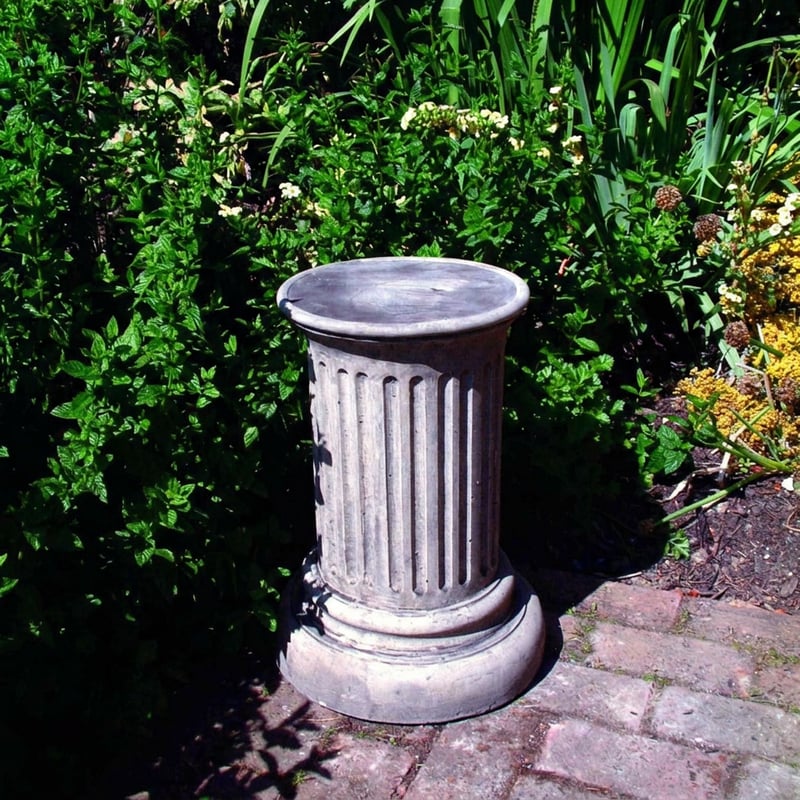
The Doric order is the plainest and sturdiest. A Doric column has a smooth or lightly fluted shaft with a simple, flat capital. It suits rustic and cottage gardens where ornate detailing would look out of place. Our Doric Column Pedestal at £159 is a best seller because it works with almost any statue style.
The Corinthian order is the most decorative. The capital features carved acanthus leaves and scrolls. It suits formal gardens, period properties, and grand entrance displays. Our Corinthian Column Pedestal at £120 offers this ornate look at an entry-level price. The Ionic order sits between the two, with scroll-shaped volutes on the capital. Most garden pedestal ranges focus on Doric and Corinthian because they give the clearest visual contrast.
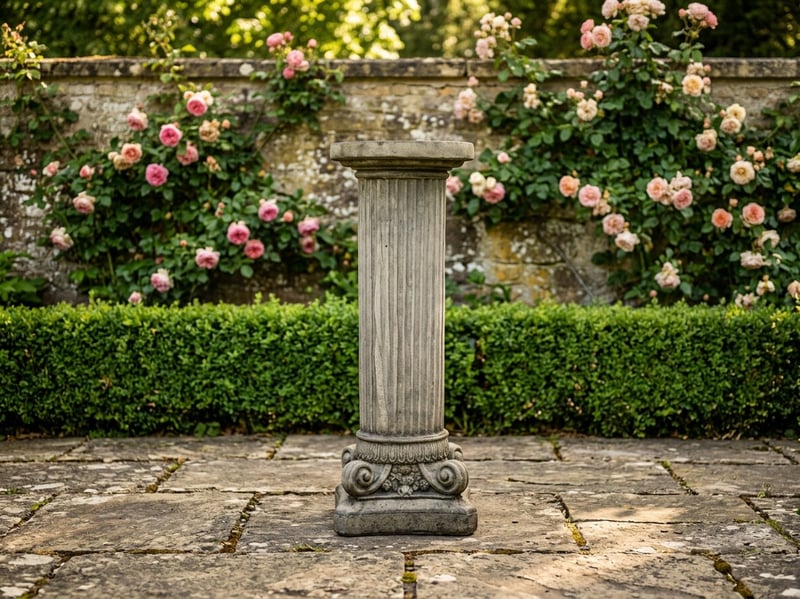
Shop the Corinthian Column Pedestal →
How to match a pedestal material to your statue
The pedestal and statue should share the same material family for the pairing to look natural and age at the same rate. A reconstituted stone statue on a reconstituted stone pedestal will weather together, developing matching lichen and patina over 2-3 years. Mix materials — say a stone statue on a resin pedestal — and they age differently, with the resin fading while the stone darkens.
Colour tone matters as much as material type. Cotswold stone finish (warm honey-gold) pairs with Cotswold statues. White finish pairs with white. Aged stone finish pairs with aged pieces. Our range offers pedestals in Cotswold, white, and aged finishes. The Oxford Stone Column at £295 comes in Cotswold stone, making it a natural partner for our Lucas Stone classical figures.
Weight is the other factor. A heavy statue needs a heavy pedestal. Our reconstituted stone pedestals weigh between 15 kg and 45 kg depending on size. That weight provides natural stability in wind and rain. A lightweight resin column under a 30 kg stone figure is an accident waiting to happen. Read our materials comparison guide for a full breakdown of every option.
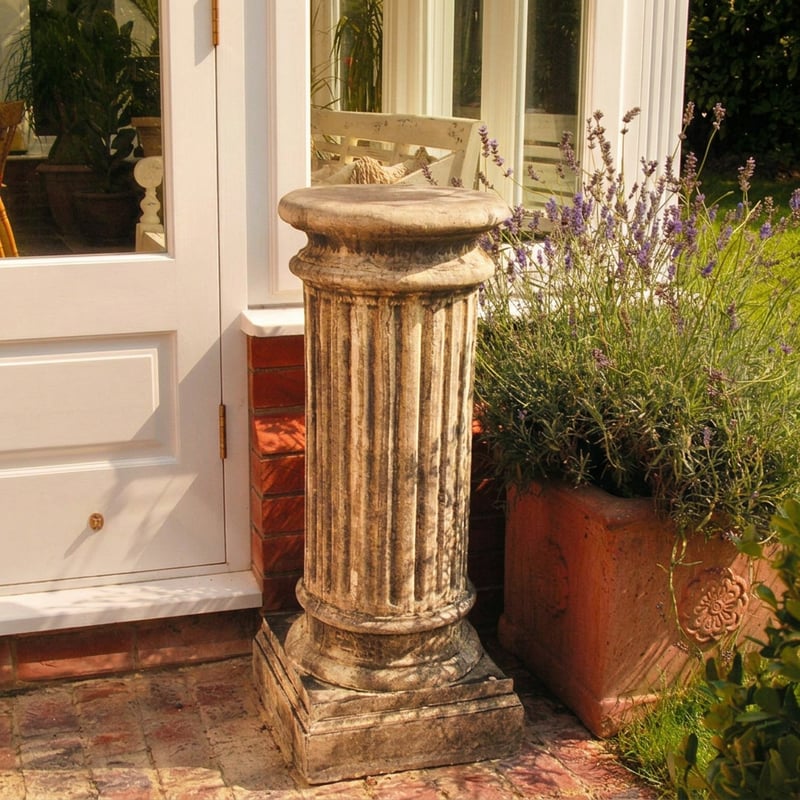
Shop the Oxford Stone Column Pedestal →
How to secure a statue to a garden pedestal
Securing a statue to its pedestal prevents wind toppling, accidental knocks, and opportunistic theft. An unsecured 20 kg bust on a narrow column can be blown over in a 50 mph gust. The fixing methods below take less than ten minutes and use materials from any hardware shop.
The simplest method is clear exterior adhesive. Clean both surfaces, apply a bead of weatherproof silicone or construction adhesive around the base perimeter, and press the statue into position. This holds firmly but allows removal with a palette knife if you want to change the display later. For permanent fixing, drill a 10 mm hole into the pedestal top and the statue base, insert a stainless steel dowel pin with epoxy resin, and lower the statue onto the pin. This creates a mechanical bond that will not fail.
For valuable or exposed-site displays, use both methods together. The adhesive provides continuous contact resistance while the dowel handles shear forces from side impacts. Our securing garden ornaments guide covers anti-theft measures including ground anchoring and covert cable systems.
Shop the Doric Column Pedestal →
Where to position a pedestal in your garden
The best positions for a pedestal and statue are at the end of a path, in the centre of a formal bed, or framing an entrance as a pair. These locations create natural sightlines where the raised figure draws the eye from a distance. The worst position is tucked against a busy mixed border where foliage swallows the display.
Single pedestals work best as full stops: the visual end point of a lawn, path, or archway. A classical column at the end of a straight gravel path creates the kind of vista you see in National Trust gardens. Paired pedestals flanking a gate or doorway create symmetry and formality. The Chatsworth Lion pair at £260 on matching columns is one of our most popular entrance displays.
For smaller gardens, try a single pedestal in a corner where two fences meet. The corner acts as a natural frame, and the height of the pedestal lifts the statue above the fence line for maximum visibility. Our positioning guide covers sightline tricks for every garden size. Browse our full range of garden ornaments for ideas on what to display.
Stone pedestals vs resin pedestals: which lasts longer?
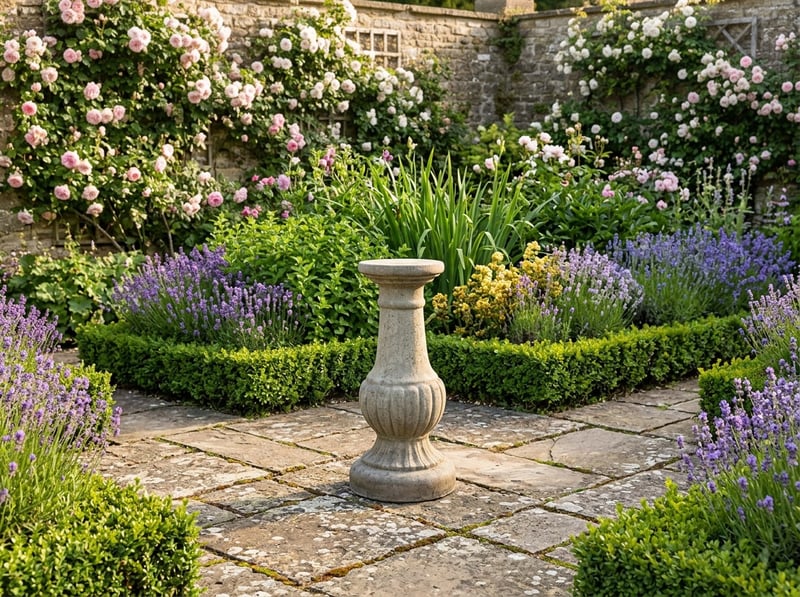
Reconstituted stone pedestals outlast resin equivalents by 30 years or more in UK outdoor conditions. Stone pedestals absorb less than 5% water by weight, so freeze-thaw cycles cannot crack them. They weigh 15-45 kg, making them naturally wind-stable. The surface develops an attractive lichen patina over 2-3 years that makes the piece look increasingly established.
Resin pedestals are lighter (typically 3-8 kg), cheaper upfront, and easier to move. But UV exposure degrades the surface within 2-3 years, causing fading and a chalky texture. Resin also expands and contracts more than stone with temperature changes, which can crack paint finishes. A £50 resin column that needs replacing every 5 years costs more over 20 years than a £159 stone column that lasts indefinitely.
The weight advantage of stone is also a stability advantage. A 3 kg resin column under a 20 kg statue is dangerously top-heavy. A 25 kg stone column under the same statue has a low centre of gravity and will not blow over. For anyone investing in a quality statue, a stone pedestal is the only sensible match. Our UK garden statues guide covers material choices across the full range.
Pedestal comparison: find the right style and size
The table below compares our most popular pedestals and plinths by height, top size, style, and price. Use it to narrow down the right option for your statue and garden.
| Pedestal | Height | Top Width | Style | Price | Best For |
|---|---|---|---|---|---|
| Corinthian Column | 690 mm | 220 mm | Ornate classical | £120 | Formal gardens, busts, urns |
| Doric Column | 690 mm | 220 mm | Plain classical | £159 | Any style, versatile all-rounder |
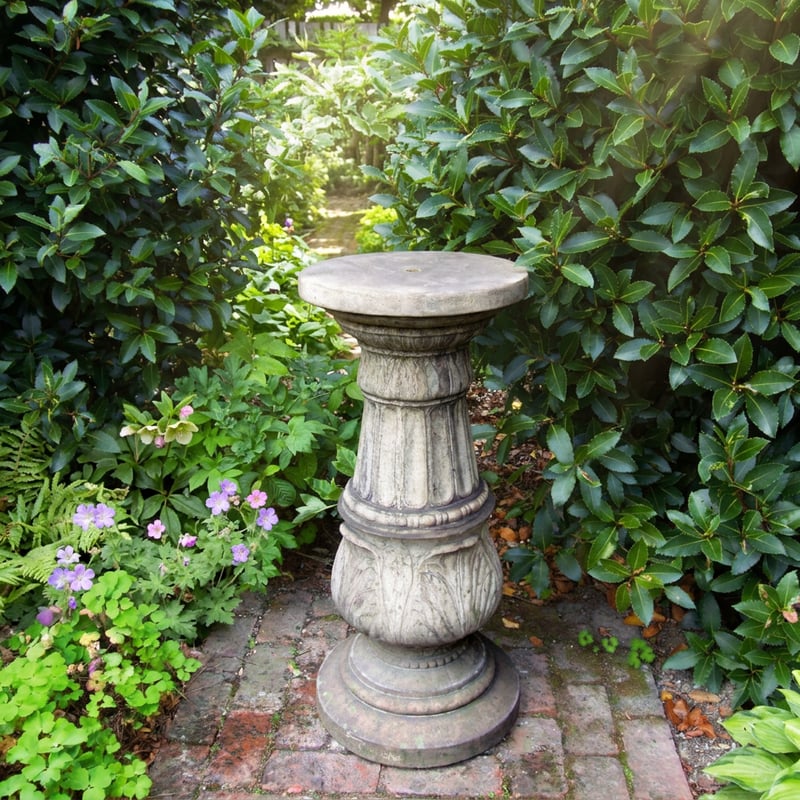
| Classical Column | 750 mm | 250 mm | Traditional column | £159 | Larger statues, entrances |
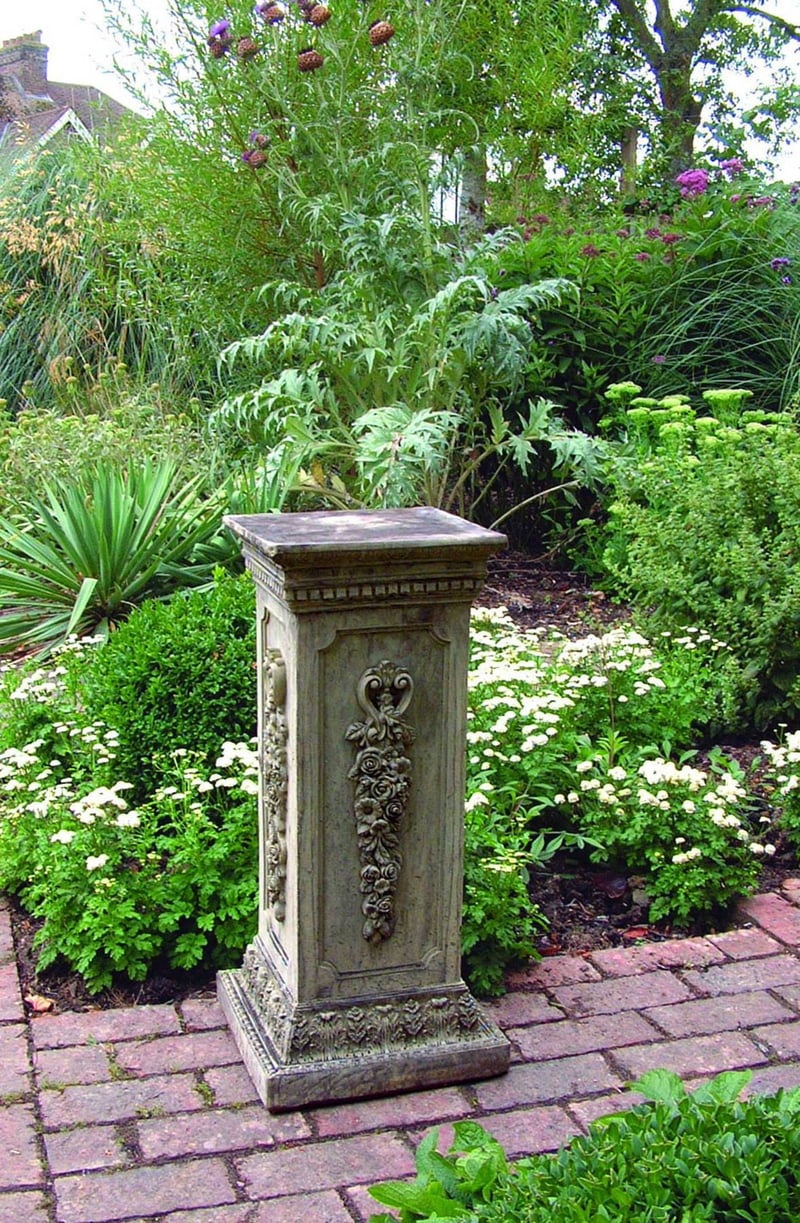
| Victorian Pedestal | 680 mm | 240 mm | Period ornate | £199 | Period homes, cottage gardens |
| Brighton Column | 900 mm | 260 mm | Tall statement | £219 | Paths, focal points, grand entries |
| Floral Pedestal | 680 mm | 250 mm | Decorative floral | £259 | Cottage gardens, flower borders |
| Oxford Stone Column | 830 mm | 270 mm | Grand classical | £295 | Large statues, formal settings |
| Large Stone Pedestal | 900 mm | 300 mm | Heavy-duty large | £325 | Heavyweight statues, pairs |
| Medium Round Plinth | 430 mm | 280 mm dia | Simple round | £99 | Patios, low displays, urns |
| Large Square Plinth | 450 mm | 300 mm sq | Simple square | £195 | Heavy pieces, wide bases |
| Large Victorian Plinth | 500 mm | 320 mm sq | Ornate plinth | £249 | Statement plinths, sundials |
|
|
Matt's Pick for Most Versatile PedestalBest For: First-time buyers who want a classical look at an entry-level price Why I Recommend It: The Corinthian Column is our best value pedestal. At 690 mm tall, it brings most busts and small statues to the perfect eye-level height. The ornate carved capital adds genuine period character without the cost of the larger pieces. I have seen this column under David busts, urns, sundials and small animal figures — it suits them all. Price: £120 |
Shop the Large Stone Pedestal →
Which plinth shape works best: square or round?
Square plinths suit statues with rectangular or square bases, while round plinths work better under circular-base pieces like urns, birdbaths, and sundials. The shape of the plinth top should echo the shape of the statue base. A round urn on a square plinth leaves awkward triangular gaps at the corners. A square-base figure on a round plinth overhangs the edges.
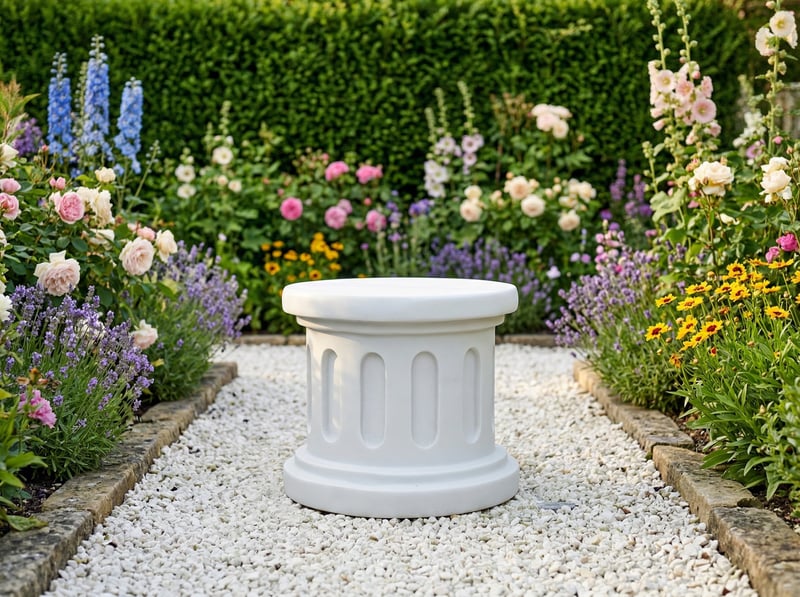
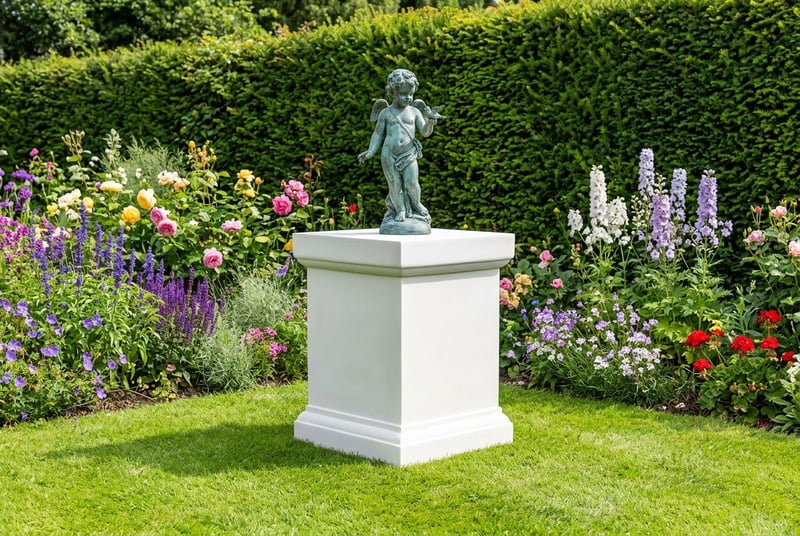
Our Medium Round Plinth at £99 has a 280 mm diameter top, ideal for small urns and birdbath bases. The Large Victorian Plinth at £249 has a 320 mm square top with ornate moulding, perfect under a full-size bust or heavy stone figure. Square plinths also sit more securely on flat surfaces because they have four contact edges rather than a single curved rim.
For maximum stability, the plinth top should extend at least 25 mm beyond the statue base on every side. A statue base measuring 200 mm square needs a plinth top of at least 250 mm square. This overhang gives the statue a visual frame and prevents the base from catching on the plinth edge during positioning.
Shop the Medium Round Plinth →
Shop the Large Victorian Plinth →
Pairing pedestals with statues: our best combinations
The right pedestal and statue pairing depends on three things: scale, style, and setting. A slim Corinthian column under a heavy lion looks wrong. A squat plinth under a delicate bust wastes its potential. The combinations below are pairings we have sold together repeatedly and know work well in real gardens.
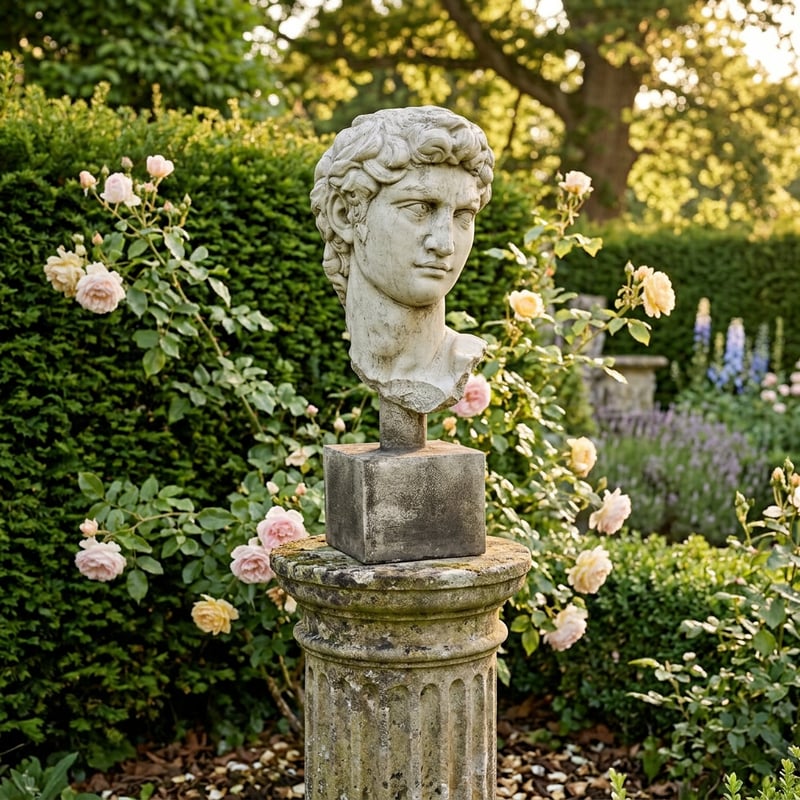
The Bust of David at £229 sits perfectly on the Classical Column at £159. The combined height of around 1.35 m puts David's face at eye level for most adults. This is our most popular bust-and-column combination. For entrance displays, the Chatsworth Lions at £260 on matching Brighton Columns at £219 each create a grand, symmetrical statement.
For cottage gardens, the Floral Pedestal at £259 pairs beautifully with smaller classical figures. The carved flower detail on the column echoes the planting around it. For modern and minimal gardens, the plain Doric Column at £159 keeps the focus on the statue rather than competing with it. The rule is simple: ornate pedestal with simple statue, or simple pedestal with ornate statue. Never match ornate with ornate.
Frequently asked questions
How tall should a garden pedestal be?
Most garden pedestals stand between 500 mm and 900 mm tall. The ideal height depends on the statue size. Add the statue height to the pedestal height and aim for a combined total of 1.2-1.6 m, which places the figure at chest-to-eye level for most adults. Taller pedestals (800-900 mm) suit pathway ends and entrances where the display needs to be visible from a distance.
How much weight can a stone garden pedestal hold?
Reconstituted stone pedestals can safely support 50-80 kg on the top surface. The limiting factor is the pedestal's own weight and base footprint rather than the stone strength. Our Large Stone Pedestal at £325 has a 300 mm top and weighs 45 kg, comfortably holding statues up to 60 kg. Always place the pedestal on a firm, level surface such as paving, concrete, or compacted hardcore to prevent settling.
What is the difference between a pedestal and a plinth?
A pedestal is a tall, columnar display base (500-900 mm), while a plinth is a shorter, blockier base (200-500 mm). Pedestals raise statues to eye level and add architectural interest. Plinths provide a modest lift and wide, stable platform for heavier pieces. Both serve the same purpose: getting a statue off the ground to protect it and improve its visual presence.
Can I leave a stone pedestal outside all year?
Yes, reconstituted stone pedestals are fully frost-proof and designed for permanent outdoor use. The stone aggregate absorbs less than 5% water by weight, so expanding ice crystals cannot crack the surface. Our pedestals are tested to withstand UK winter conditions including repeated freeze-thaw cycles. No covering, treating, or winter storage is needed.
How do I stop a statue falling off a pedestal?
Apply a bead of clear exterior silicone adhesive between the pedestal top and statue base. This holds the statue firmly but allows removal later with a palette knife. For permanent fixing, drill a 10 mm hole in both surfaces and insert a stainless steel dowel pin set in epoxy. For full anti-theft methods, see our securing garden ornaments guide.
Do you deliver pedestals to Northern Ireland and Scotland?
Yes, we deliver stone pedestals and plinths across the whole of the UK including Scotland, Northern Ireland, and the Channel Islands. Delivery is included in the price. Pedestals are shipped on pallets due to their weight. Allow 5-10 working days for delivery. Remote postcode areas may take an extra 2-3 days.
Can I paint or stain a reconstituted stone pedestal?
Yes, but it is rarely necessary and we do not recommend it. Reconstituted stone develops a natural lichen patina over 1-2 years that looks far better than paint. If you want an aged look quickly, brush the surface with natural yoghurt and leave it in a damp, shaded spot. The bacteria encourage moss and lichen growth within weeks. Painting seals the pores and prevents natural ageing.