
Garden Statues UK: Types, Materials, Placement and Prices
Written by Matt W on 24th Mar 2026.
Key Takeaways
- Garden statues in frost-proof reconstituted stone last decades outdoors with zero maintenance beyond an annual wash
- Classical figures, animal sculptures, Buddha heads and modern abstract art all serve different garden styles and moods
- Placement matters more than price: a £129 Egyptian cat at the end of a path creates more impact than a £500 figure hidden in a border
- Stone statues weigh 15-80 kg, making them naturally theft-resistant and wind-stable without fixings
- Pair statues with pedestals to raise them to eye level, doubling their visual impact and protecting bases from splashback
Garden statues turn a patch of lawn into something worth looking at twice. Stone figures, animal sculptures and abstract forms give a garden structure, character and a reason to slow down on the way to the shed. The right statue anchors a space the way a painting anchors a wall.
This guide covers every style of garden statue sold in the UK, from classical Greek figures to modern abstract art, with honest advice on materials, placement and what to spend. We stock over 200 garden statues in frost-proof cast stone, all hand-finished and delivered free.
Lawrie's Note
I have been selling garden statues for over ten years and the single biggest mistake buyers make is choosing a statue that is too small for the space. A 30 cm figure vanishes in a 6-metre border. Go bigger than your instinct tells you. If in doubt, measure the height of your fence panels (usually 1.8 m) and pick a statue that stands at least a third of that height on its plinth.
What types of garden statues are there?
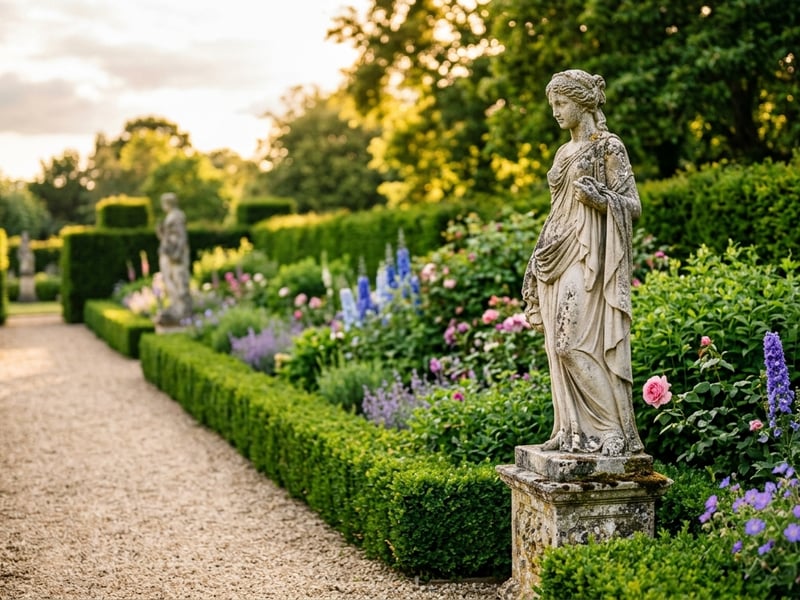
Garden statues fall into five broad categories, each suited to a different mood and garden style. Classical figures bring formality. Animal sculptures add personality. Buddha and Eastern pieces create calm corners. Modern abstract art suits contemporary spaces. Mythical creatures (gargoyles, dragons, demons) add drama and conversation.
The table below shows what each style does best, the typical price range from our collection, and which garden settings they suit.
| Style | Best for | Price range | Garden setting | Example |
|---|---|---|---|---|
| Classical figures | Centre pieces, path ends, formal beds | £199 - £619 | Formal, walled, period | David Statue |
| Animal sculptures | Entrances, gateposts, borders | £69 - £260 | Country, cottage, any | Chatsworth Lions |
| Buddha & Eastern | Quiet corners, water features, zen areas | £49 - £199 | Japanese, modern, courtyard | Easter Island Head |
| Modern abstract | Lawns, gravel gardens, terraces | £199 - £399 | Contemporary, minimalist | Florence Art Statue |
| Mythical & gothic | Walls, corners, woodland gardens | £99 - £299 | Gothic, woodland, eclectic | Demon Statue |
Which material lasts longest for outdoor garden statues?
Reconstituted stone is the best all-round material for UK garden statues. It is made from crusite stone aggregate bound with cement, hand-poured into moulds, and cured for weeks before finishing. The result weighs and feels like quarried stone but costs a fraction of the price. A well-made reconstituted stone statue will last 50 years or more outdoors without cracking, flaking or frost damage.
Resin is light and easy to move but can fade in prolonged sunlight. Plain concrete quality varies and poorly mixed pieces may develop hairline cracks. Reconstituted stone is heavier and normally develops a natural weathered patina. The full materials comparison explains the trade-offs.
Every statue in our range is frost-proof tested. The stone aggregate absorbs less than 5% water by weight, so expanding ice crystals cannot fracture the surface.
How to choose the right size garden statue
Size is the most common mistake people make with garden statues. A statue that looks enormous in a photograph can disappear completely in a large garden. The rule we use is simple: measure the height of the nearest vertical reference (fence, hedge, wall) and pick a statue that stands between a third and half of that height.
For a standard 1.8 m fence, that means a statue of 60-90 cm. For a 2.4 m wall, go for 80-120 cm. Adding a stone pedestal underneath gives you an extra 40-60 cm of height and lifts the figure to eye level, which doubles its presence.
Small statues under 40 cm work brilliantly on tables, walls, window ledges and beside pots. They lose their power when placed directly on the ground in an open space. The exception is small garden ornaments grouped in clusters of three or five, which create a collective centre piece.
Where should you place a garden statue?
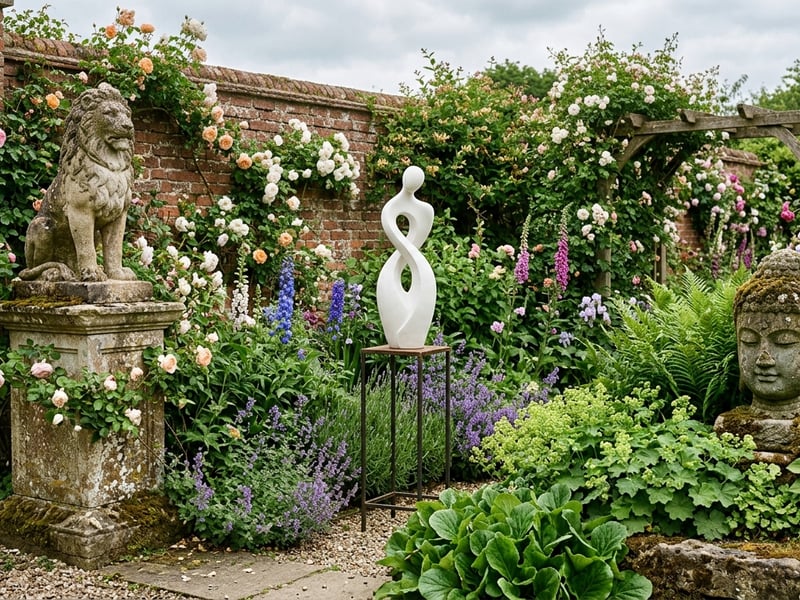
The four strongest positions for a garden statue are: the end of a path, the centre of a lawn, a gap in a hedge, and the back wall of a patio. Each makes a natural line of sight that draws the eye. The worst position is against a busy border where foliage competes with the figure for attention.
We always tell customers to try the "window test" first. Stand at your most-used window and look out. Where does your eye naturally rest? That is where your statue should go. It is the view you see most often, so the statue earns its keep every day rather than hiding in a corner you visit twice a year.
For detailed layout advice including lighting, sightlines and seasonal considerations, read our sculpture placement guide. If you are interested in energy and flow, our feng shui positioning guide covers compass directions and the five elements.
Classical garden statues: greek, roman and renaissance figures
Classical statues remain the best-selling category in the UK. The David, Venus, Diana and draped maiden figures have been garden staples for 300 years because they add instant formality without needing a formal garden to match. A single classical figure in an otherwise wild garden creates the contrast that makes both elements work harder.
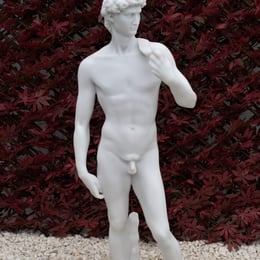
Our best-selling classical piece is the David Garden Statue in White at £210. At 80 cm tall, it works in mid-size and large gardens as a standalone centre piece or paired with a pedestal for extra height. The Dinova range uses a high-density resin-stone composite that replicates the look of Italian marble.
For larger gardens, the Diana the Hunter at £439 stands over a metre tall and makes a real statement at the end of a long path or in the centre of a circular lawn. The Draped Maiden at £514 is one of the most graceful pieces in the Lucas Stone collection, cast from a Victorian original.
|
Lawrie's pick for classical styleBest For: Formal gardens, path centre pieces, period properties Why I Recommend It: The proportions are well suited to UK gardens and the white finish weathers to a natural cream within a season Price: £210 |
Animal garden statues: dogs, cats, lions and wildlife
Animal statues outsell every other category for one reason: people connect with them instantly. A pair of lions flanking a gateway improves a suburban entrance. A stone cat curled on a wall makes visitors smile before they reach the front door. Dogs, birds, elephants and farm animals all have their place, and they work in gardens of any size or style.
The Chatsworth Lion Statues at £276 for the pair are our most popular animal piece. Based on the originals at Chatsworth House in Derbyshire, they sit 38 cm tall and look right on gateposts, steps or flanking a doorway. For something less formal, the Egyptian Cat at £138 suits window ledges, walls and Oriental-themed gardens.
Our full animal garden ornaments guide covers 15 species with placement ideas. Dog lovers should also check our dedicated dog garden ornaments collection, which includes breeds from bulldogs to great danes.
How to care for stone garden statues
Stone garden statues need almost no maintenance. Once a year in spring, brush off loose debris with a dry paintbrush and wash the surface with clean water and a soft cloth. That is it. No sealants, no chemicals, no bringing them indoors for winter.
The green patina that develops on stone over time is not damage. It is algae and lichen colonising the surface, and most people prefer the aged look. If you want to remove it, a 50/50 mix of white vinegar and water applied with a soft brush will lift it in an hour. Never use a pressure washer: the jet cuts into the stone surface and causes irreversible pitting.
For stubborn stains, bird droppings or rust marks, our stone cleaning guide covers every scenario. For winter protection advice, including when covering is worthwhile and when it is not, see our weatherproofing guide.
Shop the Four Seasons Garden Statues →
How to stop garden statues falling over
Weight is the best defence. A reconstituted stone statue weighing 25 kg or more will not blow over in normal UK winds. For lighter pieces or exposed sites, use exterior-grade grab adhesive (CT1 or Stixall) between the statue base and a paving slab. This holds firm but can be cut free with a knife if you want to move the statue later.
Never cement a statue directly to the ground. If the ground shifts with frost heave, a rigid cement bond will crack the base. A flexible adhesive absorbs the movement. Our statue fixing guide covers every method including base plates, ground anchors and adhesive types.
How to age a new garden statue
A brand-new stone statue looks pale and clean. Within a year of being outdoors it will start to develop natural colour variation. Within three years it will have genuine lichen growth. If you want to speed that process up, paint the surface with natural yoghurt and leave it in a damp, shady spot. The bacteria in the yoghurt feed algae growth, and you can have a convincingly aged finish in 6-8 weeks.
Other methods include weak tea (tannin stain), diluted iron sulphate (rusty patina) and manure water (speeds moss). Our statue ageing guide walks through all four methods with before-and-after results.
Lawrie's Tip: Buying Garden Statues Online
Always check the weight in the product description, not just the dimensions. A 60 cm statue that weighs 8 kg is hollow resin. A 60 cm statue that weighs 35 kg is solid stone. The weight tells you more about quality than any photograph. Every product page on our site lists the exact weight so you know what you are getting before it arrives.
How much do garden statues cost in the UK?
Garden statue prices depend on size, material and complexity. Small reconstituted stone figures (under 40 cm) start from around £69. Mid-size pieces (40-80 cm) typically cost £129-£299. Large and extra-large statues (80 cm+) range from £299 to £619. The Enigma range of extra-large goddess figures represents the top end, with pieces like the Grace Goddess at £449 standing over a metre tall.
Resin statues cost 40-60% less but fade within 2-3 years and crack in hard frosts. The cost per year of ownership actually favours stone: a £299 stone statue lasting 30 years costs £10 a year. A £129 resin statue lasting 4 years costs £32 a year. Our resin vs stone comparison breaks down the full economics.
Garden statue ideas by garden style
Matching a statue to your garden style is simpler than it sounds. Formal gardens suit classical figures, symmetrical placement and pairs. Cottage gardens work with animals, weathered finishes and partly-hidden figures among planting. Modern gardens call for clean lines, abstract forms and single bold pieces on gravel or decking.
Japanese-style gardens need restraint: one stone lantern or Buddha head is enough. Our Japanese garden ornaments guide covers the principles. For cottage gardens, the cottage garden ornaments guide shows how to use rustic pieces without overdoing it.
The 2026 trend is towards fewer, larger, bolder pieces. A single statement statue creates more impact than a collection of smaller ornaments scattered around a garden. Read our 2026 trends guide for the full picture.
Frequently asked questions
Are reconstituted stone garden statues frost-proof?
Yes, all reconstituted stone statues in our range are frost-proof tested for UK winters. The stone aggregate absorbs less than 5% water by weight, so ice expansion cannot crack the surface. We have pieces that have stood outdoors for over 15 years without any frost damage. No winter covering or indoor storage is needed.
How heavy are stone garden statues?
Stone garden statues weigh between 5 kg for small pieces and 80 kg for life-size figures. A typical 60 cm classical figure weighs 25-35 kg. This weight is an advantage: it makes statues naturally stable in wind and deters casual theft. Two people can lift most mid-size statues into position. We list exact weights on every product page.
Can I leave garden statues outside all year round?
Stone and metal garden statues can stay outside permanently in all UK weather. Reconstituted stone and cast iron are designed for year-round outdoor use. Resin statues should ideally be brought under cover in hard frosts. Painted statues may need a fresh coat of exterior paint every 2-3 years. Check the product description for material-specific care instructions.
What is the best base for a garden statue?
A flat paving slab on compacted hardcore is the most stable base for any garden statue. Lay a 450 mm square slab on 50 mm of compacted MOT Type 1 sub-base. This prevents sinking and keeps the statue level. For lighter statues on patios, the existing paving is fine. Use a spirit level to check the surface before placing the statue.
How do I secure a garden statue against theft?
The best deterrents are weight, adhesive bonding and visible security lighting. A statue weighing over 30 kg is difficult for one person to carry. Bonding the base to a slab with exterior grab adhesive adds another layer of security. Motion-activated solar lights near the statue act as a visible deterrent. Our full guide covers ground anchors, cables and other methods.
Do garden statues increase property value?
Well-chosen garden features including statues can add 5-15% to perceived property value at sale. Estate agents consistently report that a well-maintained garden with centre pieces photographs better and attracts more viewings. The key is restraint: one or two quality pieces positioned with care, not a crowded collection.
What is the difference between cast stone and natural stone statues?
Cast stone (reconstituted stone) uses crushed natural stone bound with cement, poured into moulds. Natural stone is quarried in solid blocks and carved by hand. Cast stone costs 70-80% less, allows far more fine detail, and is more consistent in quality. Natural stone has unique character but starts at £1,000+ for even simple pieces. For garden use, cast stone is the practical choice.