
Garden Planters & Urns: Stone, Terracotta & Fibrecite Compared
Written by Matt W on 9th Mar 2026.
By Matt W | Garden Ornaments Team
Garden planters and urns in the UK range from £139 for a Long Tom pot to £555 for a Grand Victorian tazza in cast stone. Cast stone planters weigh 15-80kg, resist frost without cracking, and last 25+ years outdoors. Terracotta is lighter at 3-15kg but cracks in hard UK frosts unless brought under cover. Fibrecite weighs under 5kg and mimics stone at a lower price point.
Key Takeaways
- ✓ Cast stone planters are frost-proof, weigh 15-80kg, and last over 25 years in UK gardens
- ✓ Terracotta looks beautiful but cracks in hard frosts below -5°C unless stored under cover
- ✓ Fibrecite gives a stone look at a fraction of the weight, ideal for balconies and roof terraces
- ✓ Weight matters for security: a 40kg stone urn won't blow over or get stolen easily
- ✓ Specialist planters from £139 to £555 outlast cheap big-box alternatives by decades
- ✓ Always check drainage: stone planters need a 15mm hole drilled before planting
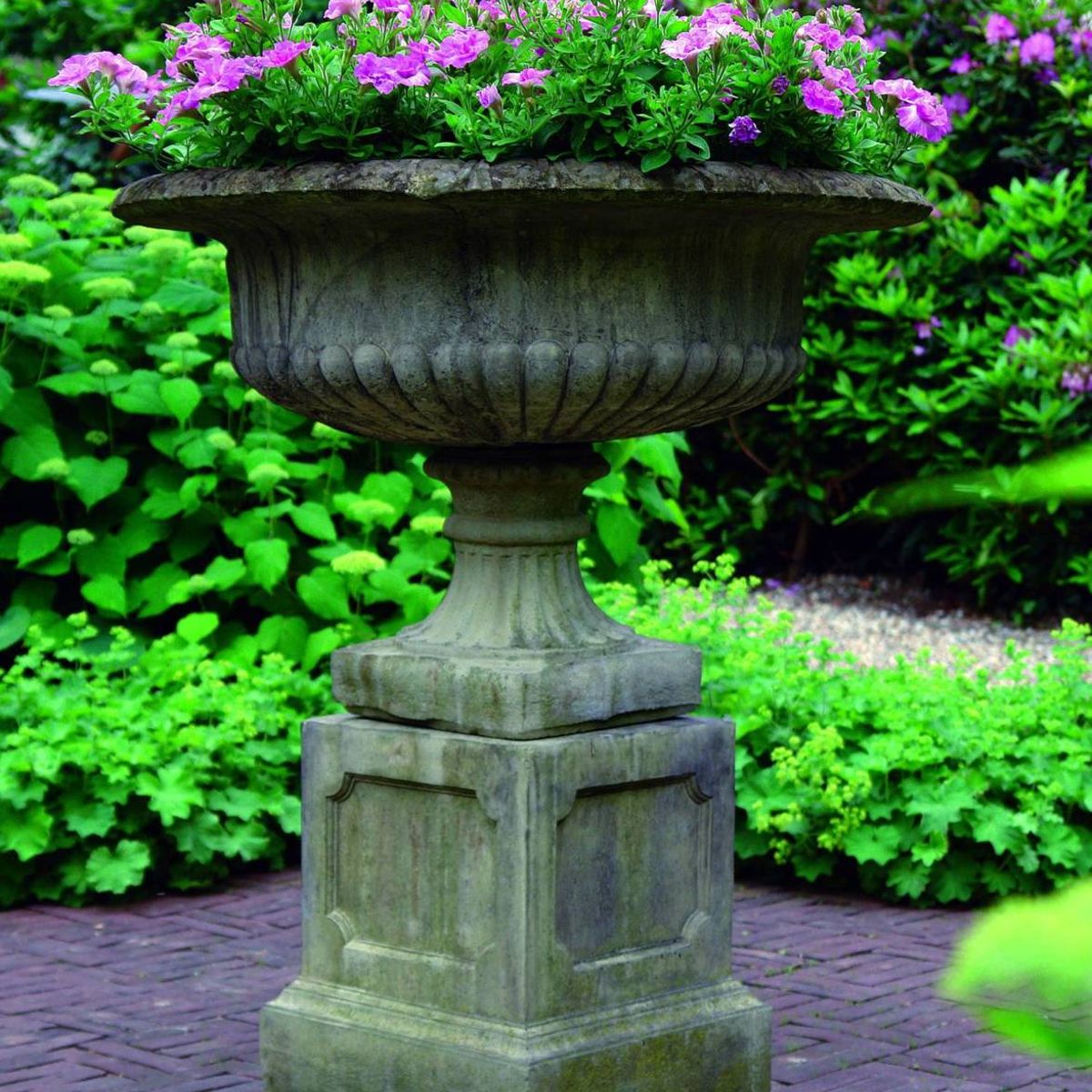
Shop the Grand Victorian Stone Garden Tazza →
Installer's Note
I have moved hundreds of stone planters and urns over the years, and the single biggest mistake people make is underestimating the weight. A Grand Square Stone Planter at 55kg needs two people to lift safely. I have also seen dozens of cracked terracotta pots after a February frost. If you want something that stays outdoors year-round in the UK without any fuss, cast stone is the material to choose. It weathers beautifully, picks up moss and lichen naturally, and it won't split when the temperature drops to -10°C.
What are the best materials for garden planters in the UK?
Cast stone, terracotta, and fibrecite are the three main materials for UK garden planters, each suited to different budgets, locations, and planting styles. Cast stone (also called reconstituted stone) is a blend of crusite aggregate and cement, hand-cast in moulds to create detailed classical designs. It is the heaviest option at 15-80kg per piece but it is also the most durable, lasting 25 years or more outdoors in all UK weather conditions.
Terracotta is traditional fired clay, lighter at 3-15kg, and it gives that warm Mediterranean colour that works especially well in cottage gardens. The drawback is frost vulnerability. Below -5°C, water trapped in the clay expands and cracks the pot from inside. Fibrecite is a modern composite of fibreglass and stone powder. It weighs under 5kg even in large sizes and handles frost without issue. The trade-off is that it doesn't develop the same natural patina as real stone.
B&Q and Wayfair stock mostly machine-made resin and plastic planters. These work for temporary displays but fade, crack, and look cheap within 2-3 seasons. Specialist cast stone planters from makers like garden ornaments suppliers cost more upfront but the per-year value over a 25-year lifespan makes them far cheaper than replacing plastic pots every few years.
How heavy are stone garden urns?
Stone garden urns weigh between 15kg for a small urn and 80kg for a grand tazza, making them stable enough to resist wind and theft but heavy enough to need careful placement. The Thatched Stone Garden Urn weighs approximately 18kg and can be moved by one person. The Large Buckingham Urn at around 35kg needs two people. The Grand Victorian Tazza at the top end weighs over 60kg and should be positioned once, ideally on a flat paving slab, before planting.
This weight is actually a benefit. In exposed gardens, a lightweight planter can blow over and damage plants, paths, or itself. A stone urn stays put through gales. It also deters theft, which is a growing problem in UK front gardens. Nobody is walking away with a 40kg planter under their arm. For balconies and roof terraces where weight limits apply, fibrecite planters provide the look of stone at a tenth of the mass.
When positioning a heavy stone urn, I always place it on a 50mm bed of sharp sand over a paving slab. This distributes the weight evenly and prevents the urn from rocking. Never place a heavy planter directly on a timber deck without checking the joist spacing and load capacity first.
Stone vs terracotta vs fibrecite: which planter material lasts longest?
| Property | Cast Stone | Terracotta | Fibrecite | Resin/Plastic | Concrete |
|---|---|---|---|---|---|
| Weight (typical) | 15-80kg | 3-15kg | 2-5kg | 1-4kg | 20-100kg |
| Frost resistance | Excellent | Poor | Excellent | Good | Moderate |
| Lifespan | 25-50+ years | 5-10 years (outdoors UK) | 15-20 years | 3-5 years | 15-25 years |
| UV resistance | Excellent | Good | Good | Poor (fades) | Good |
| Natural patina | Yes (moss, lichen) | Yes (mineral salts) | Limited | None | Some |
| Price range | £149-£555 | £20-£120 | £40-£200 | £10-£60 | £30-£150 |
| Best for | Permanent focal points | Sheltered patios, conservatories | Balconies, roof terraces | Temporary displays | Utility planting |
| Matt's verdict | Best overall | Beautiful but fragile | Best lightweight option | Avoid for long-term | Functional, not decorative |
Cast stone lasts 25-50 years or more in UK conditions without any maintenance beyond occasional cleaning, making it the clear winner for permanent garden displays. I have handled stone planters from the 1990s that still look as good as the day they were made. The aggregate mix used by UK manufacturers like Lucas Stone is specifically formulated for British weather. It can handle freeze-thaw cycles that destroy terracotta and concrete within a few winters.
Terracotta is the most attractive material straight out of the box, but it has a fatal flaw in the UK: porosity. Unglazed terracotta absorbs water like a sponge. When that water freezes, it expands by 9% and blows the clay apart from the inside. You can extend the life with terracotta sealant, but you need to reapply it every autumn. If you must use terracotta, choose frost-rated Italian pots with a wall thickness over 20mm. Even then, bring them under cover during prolonged freezing spells.
Are large garden planters worth the investment?
A large garden planter costing £300-£500 works out cheaper per year than replacing a £30 plastic pot every 3 years over a 25-year period. The maths is straightforward. A £395 Grand Square Stone Planter lasting 25 years costs £15.80 per year. A £30 plastic planter replaced every 3 years costs £250 over 25 years, which is £10 per year but you also spend time and money on compost, replanting, and trips to the garden centre each time. Factor in the visual impact and the fact that cast stone actually looks better with age, and the specialist planter wins on every measure.
Large planters also give plants more root space. A 500mm diameter pot holds roughly 65 litres of compost compared to 15 litres in a typical 300mm plastic pot. More root space means less watering, better nutrient access, and larger, healthier plants. Evergreen shrubs like box, bay, and yew thrive in large stone planters because they don't dry out as fast as they would in plastic. The thermal mass of stone also buffers root temperature, keeping roots warmer in winter and cooler in summer.
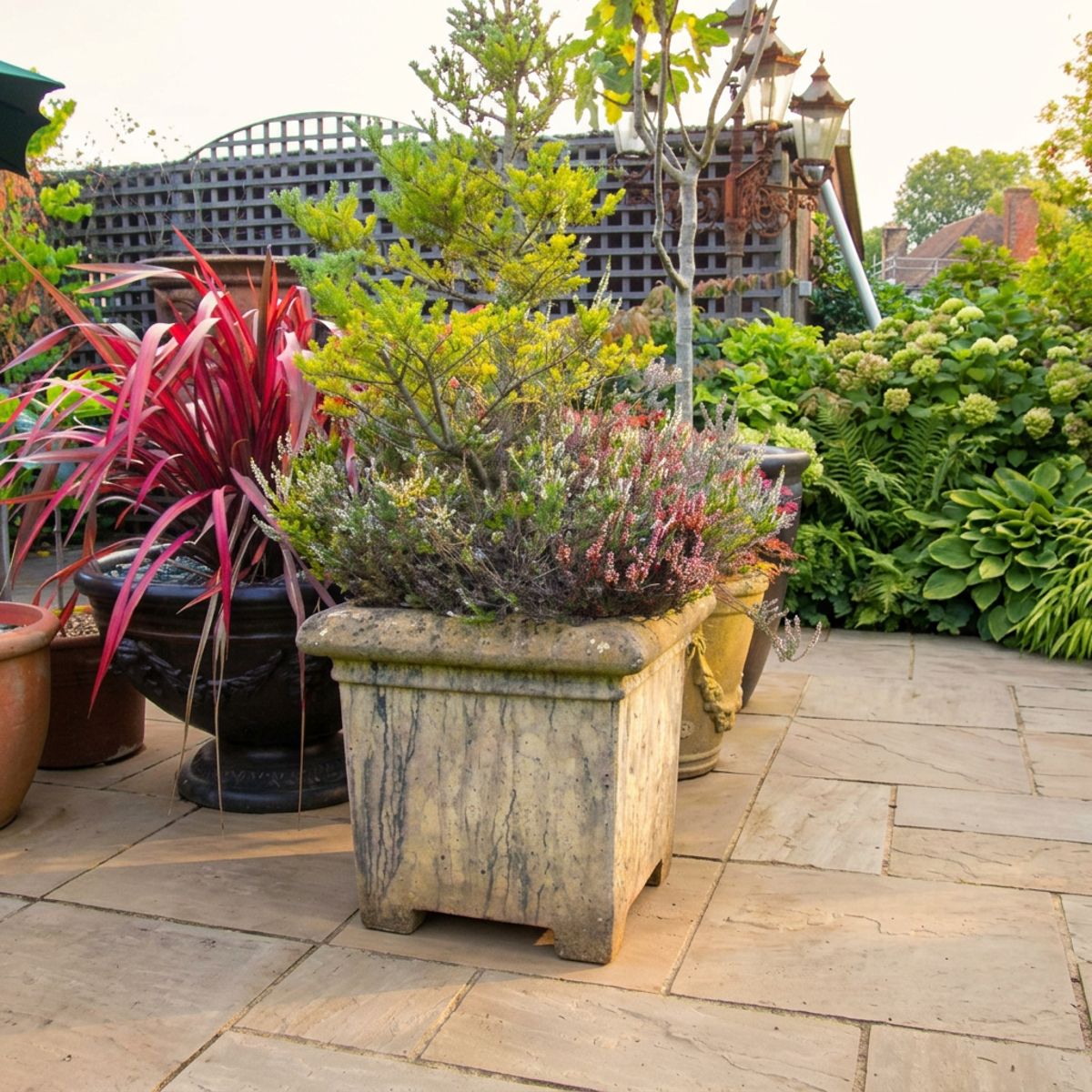
Shop the Grand Square Stone Garden Planter →
What is the best planter for a front garden in the UK?
A pair of matching stone garden urns flanking a front door is the most effective way to add kerb appeal, with the Buckingham Urn at £220 being the most popular choice for this purpose. Front gardens need planters that are heavy enough not to get stolen, attractive enough to impress visitors, and tough enough to handle year-round exposure without maintenance. Cast stone ticks all three boxes. A single Buckingham Urn weighs around 25kg, which is heavy enough to deter casual theft but light enough to position without heavy machinery.
For front garden planting, I recommend evergreen options like clipped box balls, trailing ivy, or seasonal bedding in spring and summer. Stone urns on pedestals create a formal entrance. Troughs along a front wall or fence line work brilliantly for herbs and trailing plants. The key is scale: a planter that looks generous on a website can look lost next to a front door. Measure your space and aim for planters that are at least 400mm in diameter for a single display or 300mm each for a matching pair. The securing garden ornaments guide covers anti-theft methods for front garden displays.
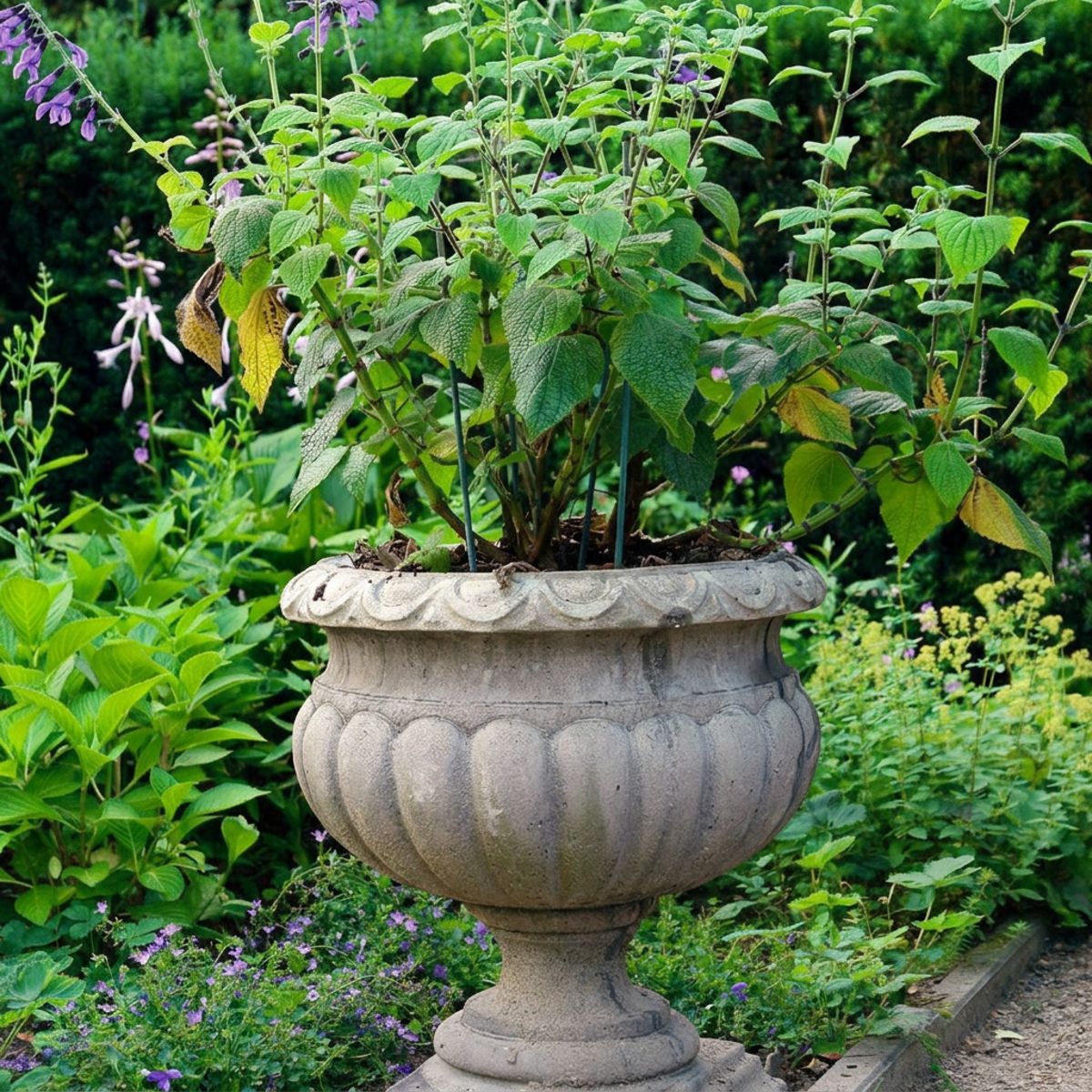
Shop the Buckingham Stone Garden Urn →
Do stone garden planters need drainage holes?
Yes, every stone garden planter needs at least one 15mm drainage hole in the base to prevent waterlogging and root rot. Most cast stone planters from specialist manufacturers come with a pre-drilled drainage hole or a marked point for drilling. If yours doesn't have one, use a masonry drill bit at low speed with water cooling to prevent cracking. I always drill from the inside of the planter outward to get a cleaner edge on the visible face.
After drilling, place a layer of broken crocks or 20mm gravel in the bottom 50mm of the planter before adding compost. This creates an air gap that stops the drainage hole from clogging with soil. For plants that hate wet feet, like lavender and rosemary, I add a 50/50 mix of horticultural grit and compost rather than using pure multi-purpose compost. In winter, raise stone planters 10-15mm off the ground using pot feet or small slate offcuts. This stops water pooling under the base and prevents frost damage to the rim where it contacts the ground. The RHS container planting guide has more detail on compost mixes for different plant types.
How do cast stone planters develop a natural patina?
Cast stone develops moss, lichen, and mineral patina naturally within 6-18 months of outdoor placement, creating an aged appearance that no artificial finish can replicate. The process starts with algae colonising the porous surface. Green algae arrives first, followed by grey and yellow lichen species. In shaded, damp conditions the patina develops faster. A north-facing wall or under a tree canopy can produce visible ageing in as little as 6 months. South-facing, dry positions take 12-18 months.
You can speed up the process by painting natural yoghurt or buttermilk onto the surface. The lactic acid feeds the microorganisms that create the patina. I have tested this on dozens of planters and it consistently cuts the ageing time in half. If you prefer a clean look, a pressure washer on a gentle fan setting removes patina without damaging the stone. Our stone cleaning guide covers the full process. The beauty of cast stone is that you can choose either look and switch between them as your garden style changes.
Which garden planter style suits which garden?
Classical urns and tazzas suit formal and period gardens, troughs work best along walls and fences, and tall pots like Long Toms create vertical interest in modern gardens. The style of planter you choose matters as much as the material. An ornate Empire Urn looks right outside a Victorian terrace but would feel out of place in a minimalist contemporary garden. Equally, a plain cylindrical pot would get lost in a traditional cottage garden setting.
For cottage garden designs, the Thatched Urn at £149 or the Tudor Rose Urn at £229 bring period character without overwhelming the planting. For modern spaces, the Grand Long Tom at £199 or a pair of Catalan Troughs at £279 each give clean architectural lines. For large country gardens, a Grand Victorian Tazza at £555 on a pedestal becomes a commanding centrepiece. Always match the planter scale to the surrounding space. A 600mm urn needs at least 2 metres of clear sightline to make an impact as a focal point.
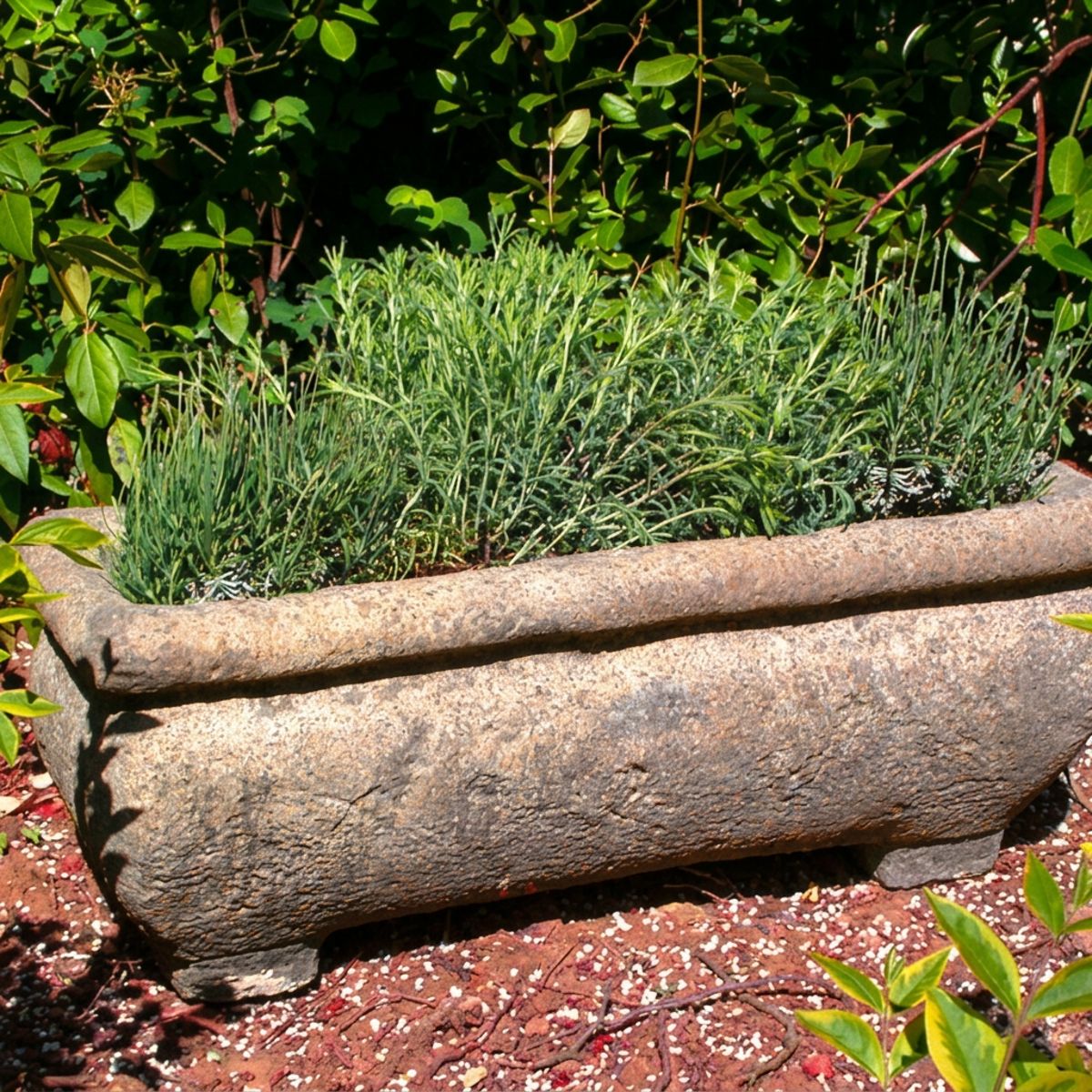
Shop the Catalan Stone Garden Trough →
|
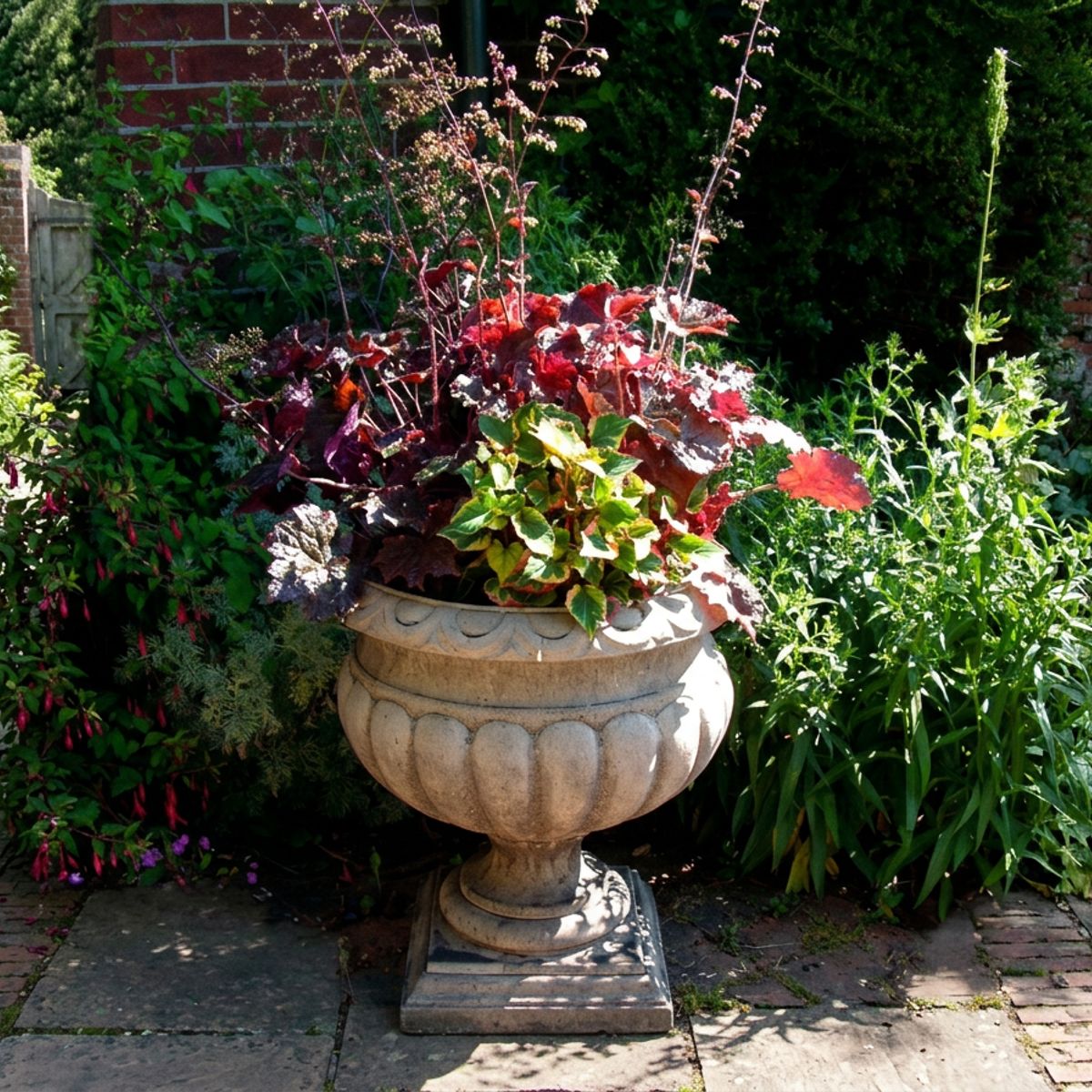
Matt's Pick for Year-Round Front Garden DisplayBest For: Flanking a front door in pairs for maximum kerb appeal Why I Recommend It: I've placed dozens of these at customers' front doors. The fluted detail catches the light beautifully, it's heavy enough to deter theft, and the proportions work with almost any door style. It weathers to a lovely aged grey within a year. Price: £325 |
Matt's Tip: Protecting Planters Over Winter
If you have terracotta pots that you love and don't want to risk losing them, here's what I do. In late October, I empty them, clean off any soil, and store them upside down in the shed or garage. For stone planters that stay outdoors, I raise them onto pot feet and make sure the drainage hole isn't blocked by debris. The biggest killer of planters in winter isn't the cold itself. It's standing water that freezes inside the pot and pushes outward. Keep water moving out and your planters will last decades.
Can you leave stone planters outside all winter in the UK?
Cast stone planters can stay outside all year in the UK, including through hard frosts, without cracking or damage. The aggregate mix used in quality cast stone has very low porosity, meaning it absorbs minimal water. Even when temperatures drop to -15°C, there isn't enough moisture trapped inside the material to cause frost damage. I have seen cast stone planters survive 30+ UK winters without a single crack. The same cannot be said for terracotta, concrete, or cheap reconstituted stone made with high cement ratios.
For planted stone containers staying out over winter, the main concern is the plants rather than the pot. Roots in a container are more exposed to cold than roots in the ground because there's no surrounding soil mass to buffer the temperature. Wrap the outside of the planter with bubble wrap or hessian during prolonged freezing spells to protect sensitive roots. Hardy plants like box, yew, heather, and winter pansies cope well without protection. Our frost protection guide covers winterising techniques in detail.
What size planter do I need for shrubs and small trees?
Shrubs need a minimum 400mm diameter planter with at least 40 litres of compost, while small trees like bay or olive need 500mm or larger with 70+ litres. The common mistake is starting too small. A newly purchased shrub in a 3-litre nursery pot might look lost in a 500mm planter, but it will fill out within one growing season. Stepping up from a small pot to a medium one and then to a large one every 2 years stresses the plant and wastes money on pots you quickly outgrow.
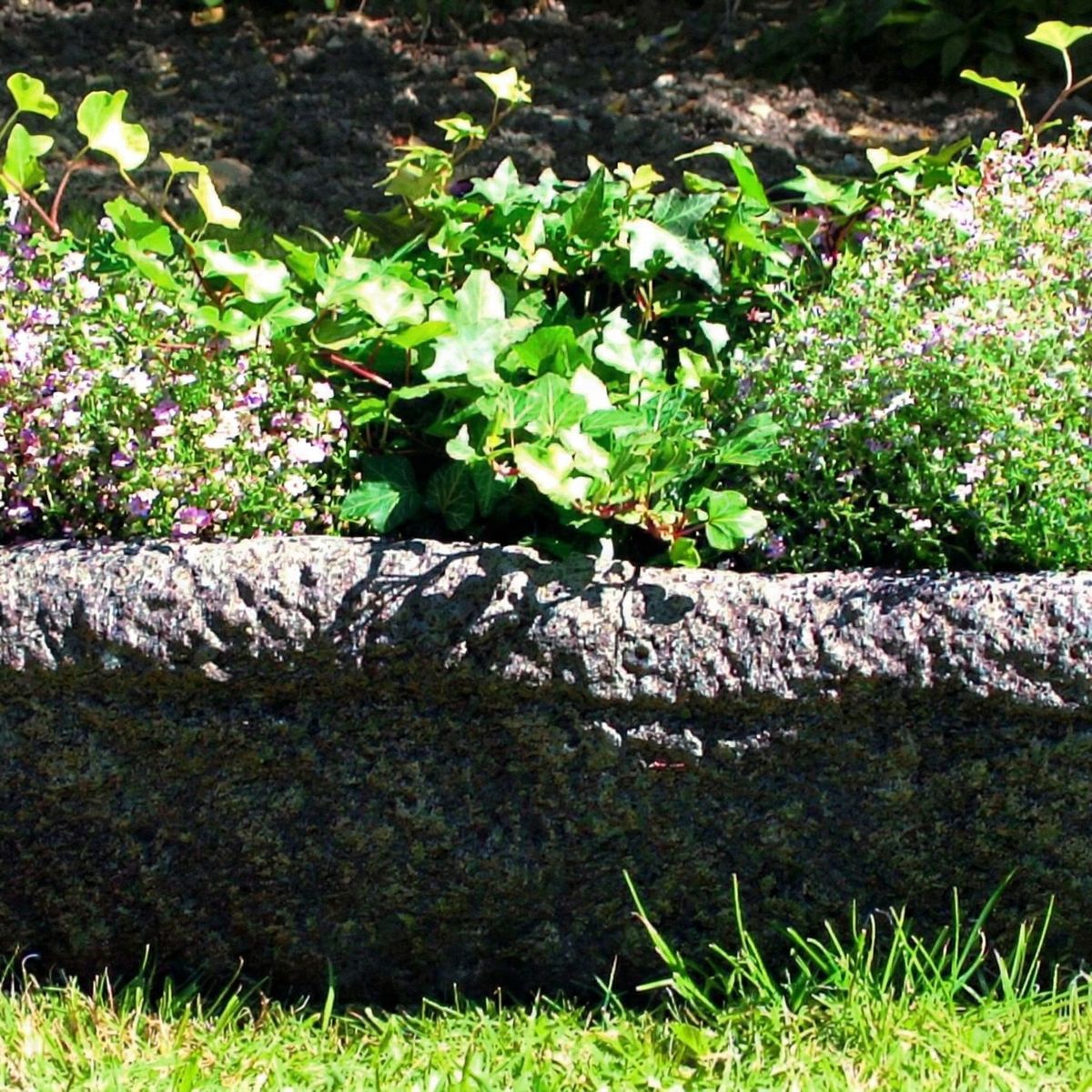
For box balls and topiary, the Grand Stone Garden Flower Pot at £489 with its 550mm internal diameter gives enough root space for a specimen ball to reach 500mm diameter. For trailing displays of geraniums, petunias, and lobelia, troughs like the Shire Trough at £169 provide a long planting run along a wall or terrace edge. For small trees including bay, olive, and Japanese maple, choose the largest planter your space allows. The large garden ornaments guide covers sizing for statement pieces in bigger gardens.
Shop the Shire Stone Garden Trough →
How do specialist garden planters compare to B&Q and Wayfair?
Specialist cast stone planters differ from mass-market alternatives in three measurable ways: material composition, hand-finishing, and UK frost testing. High-street retailers stock machine-moulded resin, lightweight concrete, and imported terracotta. These are fine for temporary seasonal colour but they are not made to last UK winters. Resin fades within 2 summers of UV exposure. Lightweight concrete cracks when water gets into air pockets and freezes. Imported terracotta is often fired at lower temperatures than UK-suitable products, making it even more frost-prone.
Specialist UK manufacturers cast their stone planters using a crushed limestone aggregate bound with white cement, then finish each piece by hand. The result is a product with fine detail, consistent density, and a surface that develops a natural patina over time. Every batch is frost-tested to British Standard BS 7263 before leaving the workshop. You won't find that level of quality control on a mass-produced pot shipped in a container from Southeast Asia. The price difference, typically 3-5 times more than a big-box alternative, pays for itself within 5 years when you factor in replacement costs.
Frequently asked questions
How much do stone garden planters cost in the UK?
Stone garden planters cost between £139 and £555 from specialist UK suppliers. A Large Long Tom Pot starts at £139, mid-range urns like the Buckingham at £220, and grand tazzas reach £555. Mass-market alternatives cost less upfront but need replacing every 3-5 years, making specialist stone planters cheaper per year of use over their 25+ year lifespan.
What is the difference between an urn and a planter?
An urn has a narrower neck and decorative handles, while a planter has a wider opening for easier planting access. Urns are traditionally used as ornamental focal points, often displayed on pedestals. Planters, including troughs and flower pots, are designed primarily for growing plants and have wider, more accessible openings. Many gardeners use urns as planters by choosing trailing varieties that cascade over the narrower rim.
Can I drill drainage holes in a stone planter?
Yes, use a 15mm masonry drill bit at low speed with water cooling. Drill from inside the base outward to keep the outer edge clean. Most specialist cast stone planters come with a drainage hole or a marked drilling point. If drilling your own, avoid the very centre of the base where the stone is thinnest. Place the hole slightly off-centre for best results.
Do terracotta pots crack in UK frost?
Standard terracotta cracks when UK temperatures drop below -5°C for prolonged periods. The clay absorbs water through its porous surface. When that water freezes, it expands by 9% and fractures the pot wall. Frost-rated Italian terracotta fired above 1000°C resists better, but even these should be brought under cover during extended freezing spells. Cast stone is the frost-proof alternative for year-round outdoor use.
What should I plant in a large stone garden urn?
Box balls, bay trees, lavender, and trailing ivy all thrive in large stone urns. The thermal mass of stone buffers root temperature, keeping roots warmer in winter and cooler in summer. For year-round interest, plant a central evergreen like clipped box surrounded by seasonal bedding. Change the bedding in spring (pansies, primulas) and summer (geraniums, petunias) for continuous colour without disturbing the main specimen. The RHS container gardening guide has seasonal planting schedules by region.
How do I stop my stone planter getting stolen?
Weight is the best deterrent: a 40kg stone urn is extremely difficult to carry away quickly. For additional security, use exterior-grade construction adhesive to bond the planter to its pedestal or paving slab. Alternatively, run a galvanised steel cable through the drainage hole and anchor it to a ground anchor. Front garden planters visible from the street are the most common targets, so position them where they can be seen from a window inside your house.
What is fibrecite and is it any good for garden planters?
Fibrecite is a composite of fibreglass and stone powder that weighs 80-90% less than cast stone. It handles UK frosts, doesn't fade in UV light, and can be moulded to mimic carved stone detail. The main drawback is that it lacks the thermal mass and natural patina development of real stone. It is best suited to balconies, roof terraces, and locations where weight is a concern. Quality fibrecite planters last 15-20 years.
Related articles
- The Complete Guide to Garden Ornament Materials: Stone vs Resin vs Metal vs Concrete
- How to Weatherproof Garden Statues and Ornaments: UK Frost Protection Guide
- Stone vs Resin: Which Garden Ornament Material is Best for Your UK Garden
- How to Position Stone Garden Ornaments
- How to Care for and Maintain Stone Garden Ornaments
Matt W
Garden & Outdoor Specialist
Matt has spent over 16 years working hands-on with garden products across the UK. He tests materials in Staffordshire clay soil and hard water conditions, and writes from direct experience fitting, maintaining, and repairing everything from stone statues to cast iron furniture. His advice is based on what actually survives a British winter, not what looks good in a catalogue.