
Metal Garden Ornaments: Rust Finishes, Weathering and Care Guide
Written by Matt W on 9th Mar 2026.
Metal garden ornaments in the UK range from £75 bronzed aluminium owls to £599 corten steel water features. Five metals suit British gardens: cast iron, wrought iron, bronzed aluminium, bronze resin, and corten steel. Cast iron develops warm rust over 3-6 months. Corten steel forms a self-healing oxide layer that protects for 80+ years. Bronzed aluminium resists corrosion entirely. Coastal gardens need more frequent care due to salt air. Metal ornaments stay outside all year with the right maintenance schedule.
By Matt W | 9 March 2026
Key Takeaways
- ✓ Cast iron, wrought iron, bronzed aluminium, bronze resin, and corten steel each weather differently in UK conditions
- ✓ Corten steel develops a protective rust patina in 6 months that lasts 80+ years without painting
- ✓ Bronzed aluminium is the lowest-maintenance metal: no rust, no painting, wipe-clean
- ✓ Cast iron needs annual Hammerite touch-ups or it rusts through in 5-10 years
- ✓ Corten steel stains pale stone and concrete underneath with orange run-off
- ✓ Coastal gardens within 5 miles of the sea need twice-yearly maintenance on iron pieces
- ✓ Metal ornaments from £75 to £599 across our range
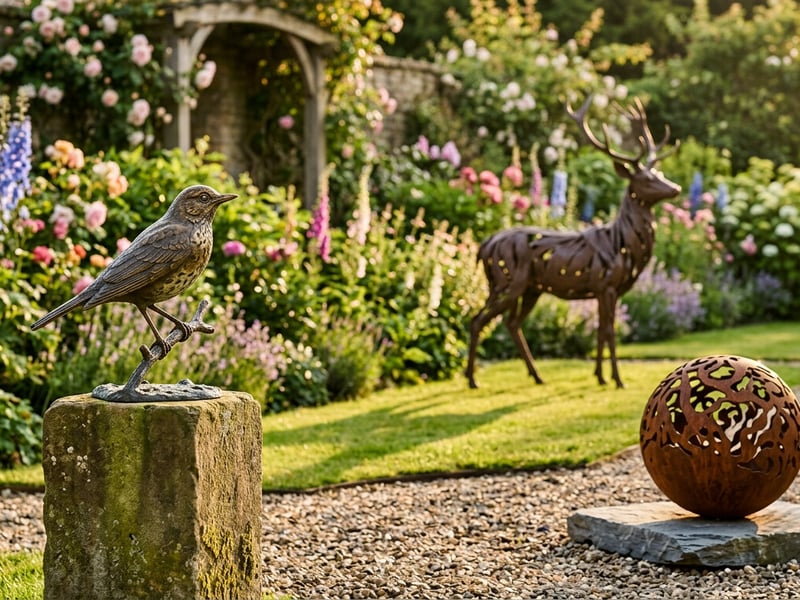
Shop our Metal Garden Ornaments collection →
Matt's Experience
I have handled every type of metal ornament we sell, and the one thing I always tell customers is this: rust is not the enemy. On the right metal, rust is the whole point. A corten steel sphere with six months of weathering looks ten times better than the day it arrived. But rust on untreated cast iron is a different matter. That eats through the metal if you ignore it. Knowing which rust is good and which needs stopping is the difference between an ornament that lasts a lifetime and one that falls apart in five years.
What types of metal are used for garden ornaments?
Five metals are common in UK garden ornaments: cast iron, wrought iron, bronzed aluminium, bronze resin, and corten steel. Each behaves differently in British weather. Pick the wrong one for your situation and you waste money. Cast iron is the traditional choice for heavy ornamental pieces like fire pits, boot scrapers, and animal figures. It develops surface rust within weeks of being outside.
Wrought iron is shaped by hand into gates, arches, and decorative wall art. It is lighter than cast iron and easier to work into fine detail. Bronzed aluminium uses a chemical patina finish to mimic aged bronze at a fraction of the weight. Bronze resin blends real bronze powder with resin for detailed animal sculptures. Corten steel is the modern option, used for planters, spheres, and water features. Read our garden ornament materials guide for a full comparison including stone and resin alternatives.
When is rust a good thing on metal garden ornaments?
Rust is desirable on corten steel and deliberately aged iron pieces where the oxide layer protects the metal underneath. Corten steel contains copper, chromium, and nickel that cause the surface rust to bond tightly, forming a barrier against further corrosion. This protective patina develops fully within 6 months of outdoor exposure in UK weather. The wet-dry cycle of British seasons actually accelerates the process compared to drier climates.
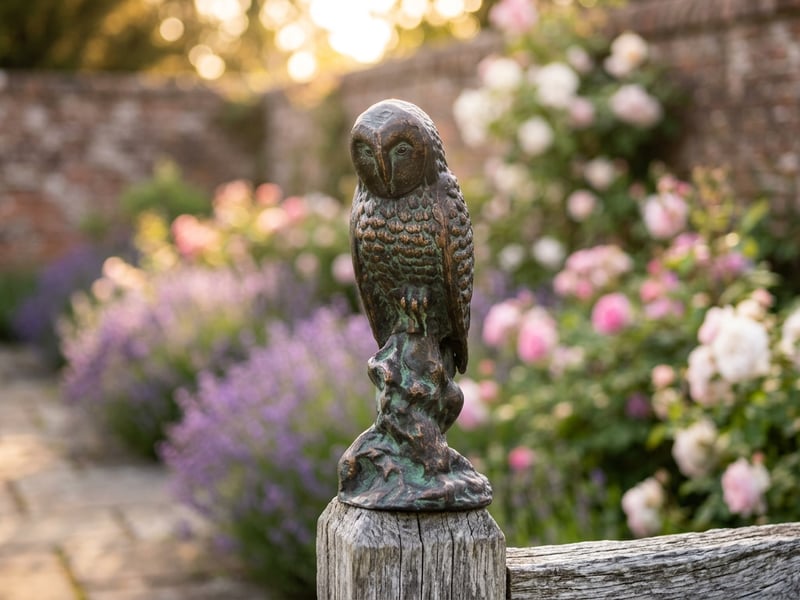
Intentionally rusted cast iron ornaments follow the same principle on a smaller scale. Our barn owl in bronzed patina is designed to develop character as it ages. The warm orange and brown tones soften over time into darker earth colours. This is decorative rust. It adds warmth and texture to garden borders and stands out well against green foliage.
When does rust become a problem?
Rust is damaging when it penetrates untreated iron or cheap steel, weakening the structure until joints fail. Cast iron benches, tables, and ornaments without protective coatings lose 0.1-0.2mm of thickness per year in UK rainfall. That does not sound like much, but thin decorative sections can rust through in 5-10 years. Joints and welds fail first because water pools in the crevices.
The other problem is staining. Rust run-off from any metal ornament will leave permanent orange marks on pale stone, concrete paving, and light-coloured decking. Corten steel is the worst culprit because the oxidation process actively sheds particles for the first few months. Always place rusting metal on dark stone, gravel, or directly on soil. Never put a new corten piece on a pale Indian sandstone patio unless you want permanent staining. Our weatherproofing guide covers protective bases and drip trays.
How to care for cast iron and wrought iron ornaments
Iron ornaments need annual inspection and touch-up painting to prevent structural rust. Every March, check all surfaces for flaking paint or bare metal. Wire-brush any rust spots back to clean metal, apply a rust converter, then coat with Hammerite Direct to Rust paint. This takes 30 minutes per piece and adds years to the lifespan. The Hammerite paint application guide has detailed instructions for different metal types.
Coastal locations within 5 miles of the sea accelerate rust significantly. Salt deposits attract moisture and speed oxidation. Iron ornaments in seaside gardens need checking twice a year: once in March and again in September after the summer salt build-up. A freshwater rinse with a garden hose removes salt deposits before they cause damage. For advice on keeping ornaments stable in coastal winds, see our securing garden ornaments guide.
How does corten steel weather in UK gardens?
Corten steel develops its full protective patina within 6 months of UK outdoor exposure. The process needs repeated wet-dry cycles. British weather handles that part. Fresh corten starts bright orange and darkens through chocolate brown to a deep russet over 12-18 months. The final colour depends on your local conditions. Wetter regions produce darker tones. Drier eastern areas keep a lighter warm brown.
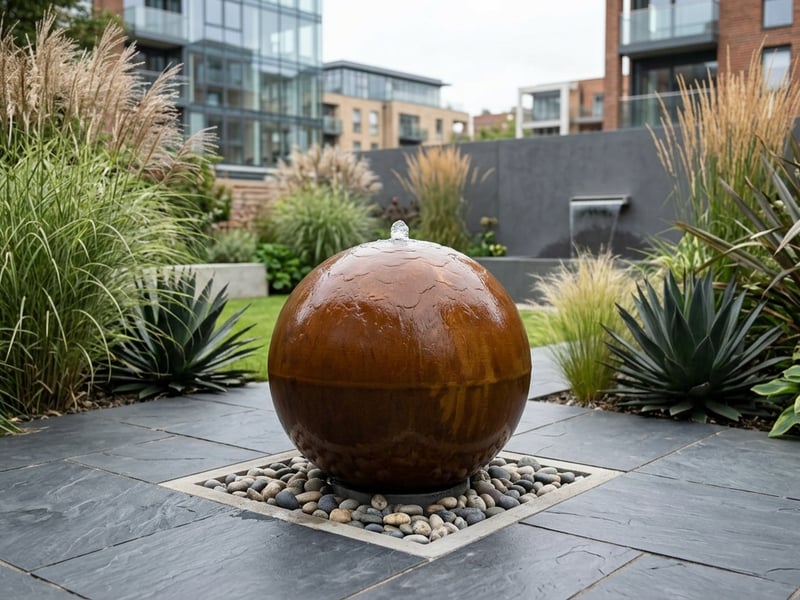
Corten is 100% recyclable and lasts 80+ years without any coating or treatment. The protective oxide layer actually heals itself when scratched. This makes it the lowest-maintenance metal for garden features. Our corten steel sphere water feature at £599 is one of the most popular pieces we sell. The water accelerates the patina process, producing a rich colour within 8-10 weeks.
Metal garden ornament comparison: which type suits your garden?
| Material | Weight | Rust behaviour | Maintenance | Lifespan | Best for | Price range |
|---|---|---|---|---|---|---|
| Cast iron | Heavy (8-40kg) | Rusts if uncoated, needs paint | Annual paint touch-up | 20-50 years with care | Traditional pieces, fire pits | £45-£280 |
| Wrought iron | Medium (3-20kg) | Rusts if uncoated, needs paint | Annual paint touch-up | 30-60 years with care | Wall art, arches, trellises | £30-£350 |
| Bronzed aluminium | Light (1-8kg) | Does not rust at all | Occasional wipe-down | 30+ years | Animal figures, bird ornaments | £44-£285 |
| Bronze resin | Medium (2-15kg) | Does not rust, bronze powder patinas | Minimal, wipe clean | 15-25 years | Detailed animal sculptures | £55-£479 |
| Corten steel | Heavy (10-60kg) | Protective patina, self-healing | None required | 80+ years | Planters, spheres, water features | £120-£599+ |
If you want zero maintenance, corten steel is the clear choice. If you want something you can move around easily, go with bronzed aluminium. Cast and wrought iron suit gardeners who actually enjoy a bit of seasonal upkeep. Browse our full collection of garden ornaments to compare styles across all materials.

|
Matt's Pick for Best Entry-Level Metal OrnamentBest For: First metal ornament purchase, cottage and wildlife gardens Why I Recommend It: The Barn Owl is the piece I suggest to anyone buying their first metal ornament. The bronzed patina finish looks aged from day one. It weighs enough to stay put in wind but is light enough to reposition. At £75, it costs less than most garden centre equivalents and the detail on the feathers is genuinely impressive for the price. Price: £75 |
Can metal garden ornaments stay outside all year?
Yes, all five metal types survive UK winters without being brought indoors. Metal does not absorb water like stone or concrete, so freeze-thaw cycles cannot crack it. The main winter concern is accelerated rust on unprotected iron. Wet autumn leaves sitting against iron surfaces trap moisture and speed corrosion. Clear leaves away from metal ornaments in November and again after heavy winds.
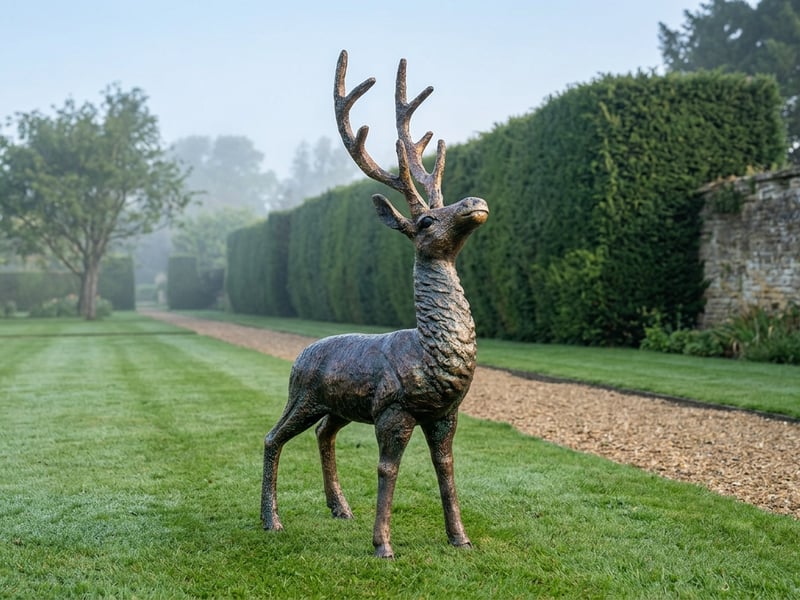
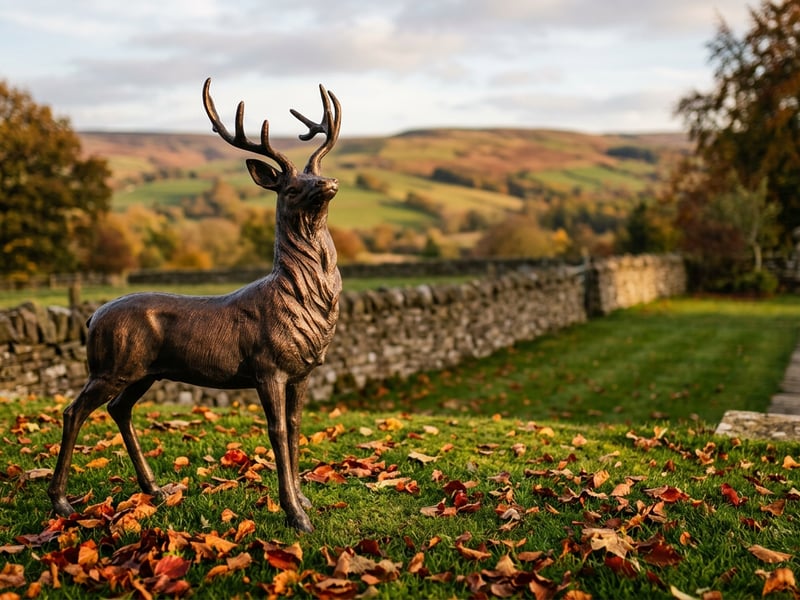
Snow is harmless to metal ornaments. Ice formation on detailed pieces like the large elegant stag can actually look spectacular. Do not try to chip ice off as you risk snapping thin antler or tail sections. Let it melt naturally. The one seasonal task worth doing is a light oil application to iron hinges, moving parts, or any bare metal spots before the first frost. WD-40 or 3-in-1 oil works well.
Matt's Tip: Stopping Corten Stains
If you want a corten steel piece on pale paving, put a 50mm gravel tray underneath for the first 6 months. The loose oxide particles wash down into the gravel instead of staining your stone. Once the patina has stabilised, the run-off stops almost entirely. I learned this the hard way after a customer rang about orange streaks across their brand-new limestone terrace. The gravel tray trick has saved that phone call ever since.
Seasonal care calendar for metal garden ornaments
| Season | Task | Applies to | Time needed |
|---|---|---|---|
| Spring (March) | Inspect for rust, wire-brush flaking, apply Hammerite | Cast iron, wrought iron | 30 mins per piece |
| Spring (March) | Wipe down with soapy water | Bronzed aluminium, bronze resin | 10 mins per piece |
| Summer (July) | Check stability, re-bed if tilted | All metals | 5 mins per piece |
| Autumn (October) | Clear fallen leaves from bases, check for trapped moisture | All metals | 5 mins per piece |
| Autumn (September) | Salt rinse for coastal gardens | Cast iron, wrought iron | 15 mins per piece |
| Winter (November) | Light oil on bare metal spots and joints | Cast iron, wrought iron | 10 mins per piece |
Corten steel and bronzed aluminium are absent from most tasks because they genuinely need no seasonal care. That is why I recommend them for busy gardeners who want the look of metal without the upkeep. For modern garden sculptures that require zero maintenance, corten steel is hard to beat.
How to stop metal garden ornaments rusting
Apply a rust-inhibiting paint or clear lacquer to bare iron and steel surfaces before they oxidise. Prevention is always easier than repair. Hammerite Direct to Rust paint bonds to bare metal and provides a waterproof barrier. For a natural metal finish without colour, use a clear exterior lacquer like Rustins Clear Metal Lacquer. Reapply every 2-3 years or when you notice the finish dulling.
If rust has already started, treat it rather than ignoring it. Wire-brush loose flakes, apply Jenolite rust converter to turn the oxide into a stable black primer, then topcoat with your chosen paint. The whole process takes under an hour for a medium ornament. For pieces where you want controlled rust (like our animal garden ornaments in weathered finishes), skip the converter and let the patina develop naturally. Just monitor thin sections and joints for deep pitting.
Further reading
Frequently asked questions
What is the best metal for garden ornaments in the UK?
Corten steel is the best metal for UK gardens overall. It develops a protective rust patina that lasts 80+ years without any coating or maintenance. The British wet-dry climate accelerates patina formation, making corten look established within 6 months. For lightweight pieces, bronzed aluminium is the best alternative as it never rusts and weighs a fraction of iron.
Do rusted metal garden ornaments keep rusting until they break?
It depends on the metal type. Corten steel stops rusting once the patina layer forms. The oxide bonds tightly and prevents oxygen reaching the metal underneath. Cast iron and mild steel will keep rusting through to the core unless treated with paint or rust converter. Check cast iron pieces yearly and touch up any bare spots before rust penetrates more than surface level.
Will corten steel stain my patio?
Yes, fresh corten stains pale stone and concrete for the first 6 months. The loose oxide particles wash off during rain and leave permanent orange marks on light-coloured surfaces. Place a gravel tray underneath during the weathering period. Once the patina stabilises, run-off reduces to almost nothing. Dark stone, gravel, and soil are safe surfaces from day one.
How do I clean bronzed aluminium garden ornaments?
Warm soapy water and a soft cloth is all you need. Bronzed aluminium does not rust, corrode, or tarnish in UK conditions. Wash it once or twice a year to remove dust, pollen, and bird droppings. Avoid abrasive cleaners or wire brushes as these scratch the patina finish. A light spray of WD-40 on a cloth restores the sheen if the surface dulls.
Can metal garden ornaments stay outside in winter?
Yes, all metals survive UK winters without indoor storage. Metal does not absorb water, so freeze-thaw cycles cannot crack it. Clear wet leaves from iron surfaces in autumn to prevent trapped moisture accelerating rust. Snow and ice are harmless. Do not chip ice from thin decorative sections as you risk snapping them. Let it melt naturally.
How long do metal garden ornaments last?
Corten steel lasts 80+ years, iron lasts 20-60 years with care. Bronzed aluminium and bronze resin ornaments last 15-30 years depending on finish quality. Cast iron with annual paint touch-ups reaches 50 years easily. Wrought iron gates and arches often outlast the gardens they sit in. The lifespan depends entirely on whether the owner maintains the protective coating on iron pieces.
Browse our metal garden ornament collection
From bronzed owls at £75 to corten steel water features at £599. Every piece stays outside year-round in UK weather. Free delivery on orders over £50.
Matt W
Garden & Outdoor Specialist
Matt has spent over 16 years working hands-on with garden products across the UK. He tests materials in Staffordshire clay soil and hard water conditions, and writes from direct experience fitting, maintaining, and repairing everything from stone statues to cast iron furniture. His advice is based on what actually survives a British winter, not what looks good in a catalogue.