
Easter Island Head Garden Ornaments: The Moai Trend Explained
Written by Matt W on 10th Mar 2026.
Easter Island head garden ornaments are among the fastest-growing trends in UK outdoor design. Also called Moai statues, these striking stone faces range from £50 for a 30cm head to £199 for a 60cm full statue. Most are cast from reconstituted stone or crushed limestone, making them frost-proof for British winters. Available in sandstone, grey, black, and white finishes, with free UK delivery on every model.
The Moai's bold, angular features make it one of the few garden ornaments that works equally well in tropical-themed planting schemes and minimalist contemporary gardens. This guide covers their ancient Polynesian origins, explains why they have become so popular in British gardens, and gives practical advice on sizing, positioning, and year-round care.
Key Takeaways
- ✓ 13 Easter Island and Moai ornaments in stock, from £50 small heads to £199 large statues
- ✓ All cast in frost-proof stone that weathers naturally in UK gardens
- ✓ Available in grey, black, white, and sandstone finishes to suit any colour scheme
- ✓ Works as a focal point in borders, beside ponds, along paths, or on patios
- ✓ Pair with bamboo, ferns, and ornamental grasses for an authentic Polynesian feel
- ✓ The planter version (£155) doubles as a container for trailing plants
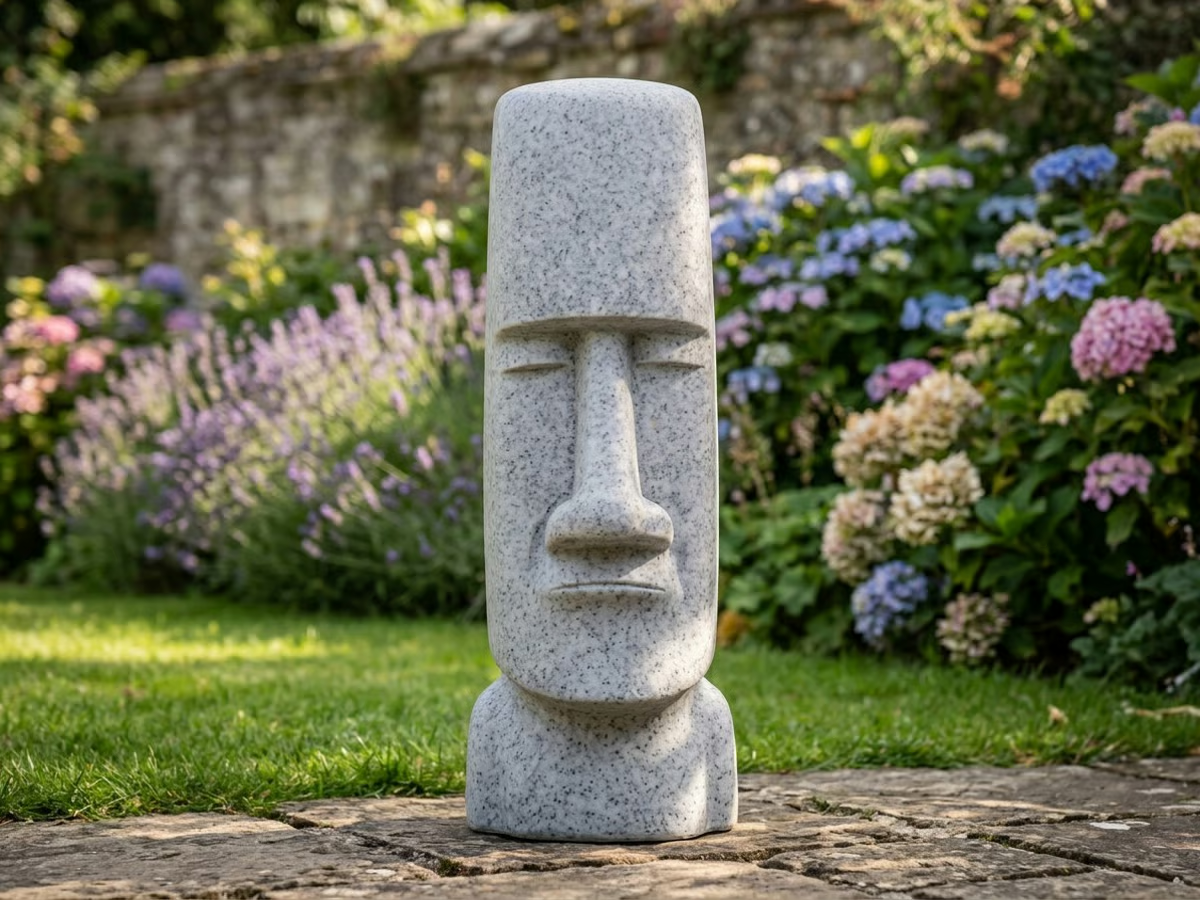
Shop the Easter Island Garden Statue in Grey →
Installer's Note
We have positioned dozens of these Easter Island heads in customers' gardens over the years. The most common mistake is going too small for the space. A 30cm head disappears in a large border. For anything bigger than a courtyard garden, start with the 60cm statues. They carry enough visual weight to hold their own against mature shrubs and established planting. If budget is tight, the £50 sandstone heads work brilliantly in pairs flanking a path or doorway.
What are Moai statues and where do they come from?
Moai are monolithic human figures carved by the Rapa Nui people of Easter Island (Rapa Nui) between 1250 and 1500 CE. Archaeologists have recorded 887 statues quarried from the volcanic tuff of Rano Raraku, the island's main quarry. The average original Moai stands 4 metres tall and weighs around 13 tonnes, though the largest reached 10 metres and 82 tonnes.
Despite their popular nickname "Easter Island heads," most Moai are full-body figures. Many are buried up to their shoulders by centuries of soil erosion, which is why early European visitors assumed they were heads alone. The statues represent ancestral chiefs descended from the gods. The Rapa Nui believed each figure channelled mana — supernatural protective power — to safeguard the community. Some were topped with red stone cylinders called pukao, representing ceremonial headdresses.
The most famous Moai outside Easter Island is Hoa Hakananai'a, a basalt figure dating from 1000-1200 CE now held at the British Museum. It was removed by HMS Topaze in 1868 and presented to Queen Victoria. The Rapa Nui Council of Elders formally requested its return in 2018.
Why are Easter Island heads trending in UK gardens?
Easter Island heads have become one of the top-selling statement ornaments in UK gardens because they combine ancient mystery with a bold, modern silhouette. Unlike traditional stone figures like cherubs or classical statues, a Moai head creates immediate drama. It becomes a conversation piece the moment visitors spot it. That visual punch suits the wider 2026 trend toward expressive, personality-driven garden design.
Their geometric lines also make them unusually versatile. A grey Moai pairs naturally with minimalist gravel gardens. A sandstone version sits comfortably in a cottage-style border. Black finishes suit contemporary slate and mirror-backed designs. This cross-style appeal means a single ornament works regardless of how your garden evolves over the years. The weight of cast stone (most weigh 15-30 kg) also makes them practical. They resist wind without additional fixing, and thieves tend to leave heavy stone pieces alone. For more on keeping ornaments secure, see our guide to securing garden ornaments.
What sizes and materials are Easter Island garden ornaments available in?
Our Easter Island range includes 13 models across three size categories, priced from £50 to £199. Every piece is cast from frost-proof reconstituted stone or crushed limestone, designed to withstand British winters without cracking or flaking. Here is how the range breaks down by size, material, and price.
| Product | Height | Material | Finish | Price |
|---|---|---|---|---|
| Easter Island Head in Sandstone | ~30cm | Reconstituted stone | Sandstone | £50 |
| Easter Island Head in Stone | ~30cm | Reconstituted stone | Natural stone | £50 |
| Moai Head in Sandstone | ~35cm | Reconstituted stone | Sandstone | £52 |
| Moai Head in Stone | ~35cm | Reconstituted stone | Natural stone | £52 |
| Easter Island Planter Granite | ~45cm | Cast stone | Granite | £155 |
| Small Moai Head Statue | ~45cm | Cast limestone | Natural stone | £169 |
| Rapa Nui Head Statue | ~55cm | Cast limestone | Natural stone | £195 |
| Easter Island Head Statue | ~60cm | Cast limestone | Natural stone | £199 |
| Easter Island Statue in White | ~60cm | Reconstituted stone | White | £199 |
| Easter Island Statue in Grey | ~60cm | Reconstituted stone | Grey | £199 |
| Easter Island Statue in Black | ~60cm | Reconstituted stone | Black | £199 |
| Stone Moai Head Statue | ~60cm | Cast limestone | Natural stone | £199 |
Shop the Easter Island Head Statue →
How should you position a Moai statue in your garden?
Place your Moai statue where it will be seen from a distance first, then discovered up close. The most effective position is at the end of a path, a sight line from a window, or in a gap between established shrubs. This creates a moment of surprise that draws people through the garden. Avoid tucking a Moai into a crowded flower bed where its outline gets lost against busy planting.
For tropical-themed gardens, surround the base with bamboo, tree ferns (Dicksonia antarctica), hostas, and ornamental grasses. The combination of bold foliage and ancient stone creates an atmosphere that feels genuinely transported. In minimalist designs, a single Moai on a gravel bed or slate chip surface makes a powerful focal point without any planting at all. For more detailed advice on getting placement right, see our full guide to positioning stone garden ornaments.
Consider the light at different times of day. A west-facing Moai catches golden evening sun across its angular features. Side-lighting from a low solar spotlight after dark gives the face dramatic shadows that completely change its character.
|
Matt's Pick for Statement Focal PointBest For: Medium to large gardens needing a single commanding piece Why I Recommend It: The grey finish is the most versatile. It pairs with every planting scheme I have seen, and the colour darkens naturally over two to three years as lichen and moss take hold. It looks freshly carved on day one and properly ancient by year five. Price: £199 |
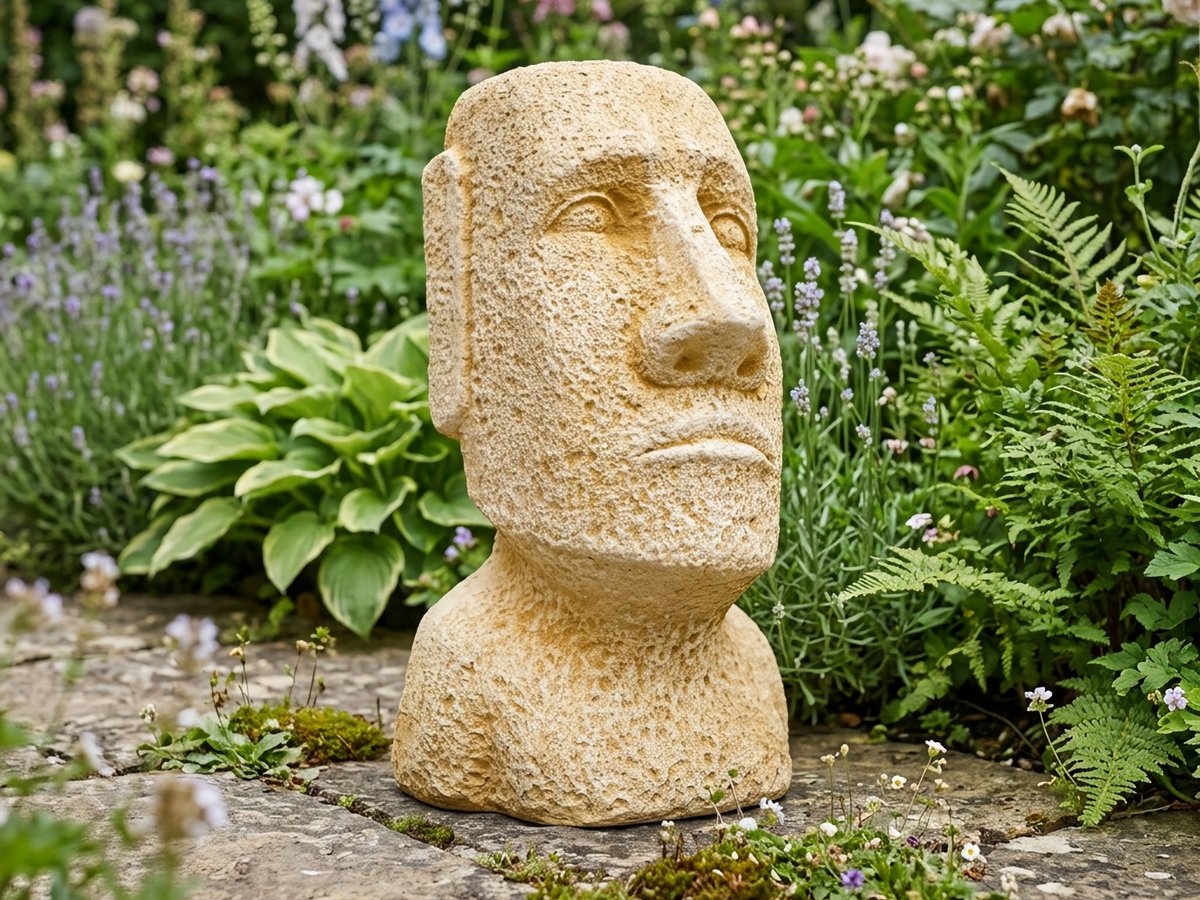
Shop the Moai Head Garden Statue in Sandstone →
How do you care for stone Moai garden ornaments in the UK?
Cast stone Moai statues need very little maintenance, but a few seasonal steps will keep them looking their best for decades. All our Easter Island ornaments are made from frost-proof reconstituted stone. They will not crack in a standard British winter. That said, standing water pooling at the base is the main risk factor, because repeated freeze-thaw cycles can weaken the bottom edge over time.
Raise the statue on stone feet, a plinth, or a few slate tiles so water drains freely beneath it. Once a year — ideally in October before the first frost — apply a breathable stone sealer. Never use a non-breathable varnish or gloss, because trapped moisture causes more damage than the weather itself. For a deeper look at winter protection, read our frost protection guide.
For routine cleaning, a stiff brush and clean water once a month removes dust and bird droppings. Remove droppings promptly — the acid etches stone surfaces if left for more than a few days. Twice a year, use a specialist stone cleaner for a deeper clean. Our full stone cleaning guide covers moss, algae, and stubborn stain removal step by step.
Matt's Tip: Ageing a New Moai
If you want the weathered, moss-covered look without waiting five years, brush the surface with natural yoghurt and leave it in a shady spot for four to six weeks. The lactic acid encourages lichen and moss growth. I have done this with a dozen statues and the results are consistently good. Avoid using milk — it attracts foxes and smells awful after a week.
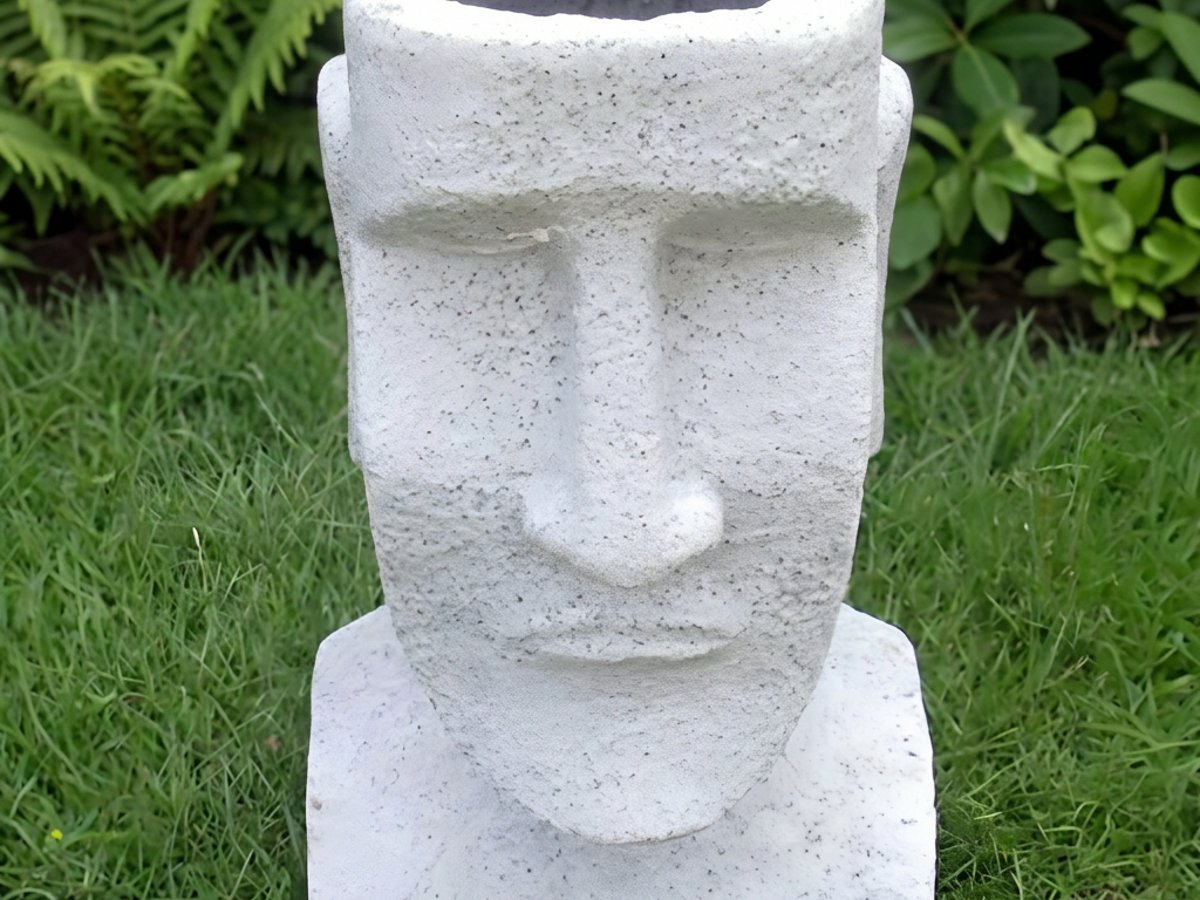
Shop the Easter Island Garden Planter →
Is it disrespectful to have a Moai garden ornament?
Garden replicas of Moai statues are widely sold and displayed around the world, but the cultural context matters. The original Moai are sacred ancestral figures to the Rapa Nui people. Each statue represented a specific chief and was believed to be a living vessel of spiritual power. The Rapa Nui term is "aringa ora" — living face. That history deserves acknowledgement.
The key distinction is between respectful replicas and novelty versions. Authentic-style reproductions that faithfully copy the angular features and proportions of real Moai are generally considered acceptable by cultural commentators. Comedy versions with sunglasses, open mouths, or cartoon features are a different matter. A Rapa Nui community member said that laughing or exaggerated versions should not be called Moai.
Our range focuses on faithful reproductions cast from detailed moulds. They reflect the proportions and surface texture of the originals. If you display one, share the genuine history with visitors. It is an opportunity to educate, not just decorate.
Frequently asked questions
What do Easter Island heads represent?
Moai represent ancestral chiefs of the Rapa Nui people, believed to channel protective supernatural power. Each statue was carved to honour a specific leader. The completed figure became an "aringa ora" (living face) that safeguarded the community. Most faced inland to watch over the villages rather than out to sea.
Are Easter Island head garden ornaments frost-proof?
All our Easter Island ornaments are cast from frost-proof reconstituted stone or cast limestone. They are designed to stay outdoors year-round in the British climate. For extra protection, raise the base off the ground. This prevents standing water pooling during freeze-thaw cycles.
How heavy are Moai garden statues?
Our smallest Moai heads weigh around 8-10 kg, while the large 60cm statues weigh 25-30 kg. Two people can comfortably carry and position the larger pieces. The weight is an advantage for stability in windy gardens. You do not need additional fixing for most positions.
What size Easter Island head is best for a small garden?
The 30-35cm heads (from £50) suit small gardens, balconies, and courtyard spaces. Place one on a raised plinth or garden wall to add height. In a very small space, a single Moai head works better than a group because it keeps the design clean. Pair it with a few potted ferns or grasses for context.
Can you plant in a Moai garden ornament?
The Easter Island Garden Planter (£155) has a hollow top designed for trailing plants, succulents, or small ferns. It adds a living element to the stone sculpture. Use a well-drained compost mix. Choose plants that tolerate some shade, as the opening collects rainwater.
How tall are the real Moai on Easter Island?
The average Moai stands 4 metres tall and weighs 13 tonnes. The tallest erected statue, Paro, reaches 10 metres. An unfinished Moai still in the quarry at Rano Raraku would have stood 21 metres if completed. Our garden versions range from 30cm to 60cm, roughly 1:7 to 1:13 scale replicas of the average original.
Where should I put a Moai statue in my garden?
Place it at the end of a path, in a gap between shrubs, or beside a pond. Clear sight lines from a distance are essential. Surround the base with hostas, bamboo, or tree ferns for a tropical feel. Avoid busy fences or walls where the outline gets lost.
Related articles
- How to Care for and Maintain Stone Garden Ornaments
- Large Garden Ornaments: Statement Pieces That Transform Outdoor Spaces
- Japanese Garden Ornaments: Lanterns, Pagodas and Water Basins for UK Gardens
- Where to Place Garden Sculptures: Layout, Lighting and Focal Points
- The Complete Guide to Garden Ornament Materials
Matt W
Garden & Outdoor Specialist
Matt has spent over 16 years working hands-on with garden products across the UK. He tests materials in Staffordshire clay soil and hard water conditions, and writes from direct experience fitting, maintaining, and repairing everything from stone statues to cast iron furniture. His advice is based on what actually survives a British winter, not what looks good in a catalogue.