
Why Stone Garden Ornaments Get Better With Age
Written by Matt W on 7th Apr 2026.
Cast stone garden ornaments develop natural patina, moss and lichen within 6-12 months of outdoor placement. Quality reconstituted stone statues last 50+ years in UK weather, compared to 5-10 years for resin alternatives. We recommend cast stone for buyers who want ornaments that gain character rather than degrade. Frost-proof to -15°C, stone ornaments require no annual sealing or protective coatings to age beautifully.
The Garden Ornaments Team
Specialist garden ornament retailer with over 900 products across stone statues, metal sculptures, water features and garden decor
Key Takeaways
- ✓Cast stone ornaments develop visible patina within 6-12 months outdoors in UK conditions
- ✓Quality reconstituted stone lasts 50+ years — resin typically degrades within 5-10 years
- ✓Moss and lichen growth is harmless to stone and adds natural character worth preserving
- ✓Natural yoghurt or buttermilk applied to stone can accelerate moss growth by 4-8 weeks
- ✓Stone ornaments are frost-proof to -15°C and need no protective coatings to weather safely
- ✓Textured surfaces and sheltered positions produce the richest patina fastest
What causes patina on stone garden ornaments?
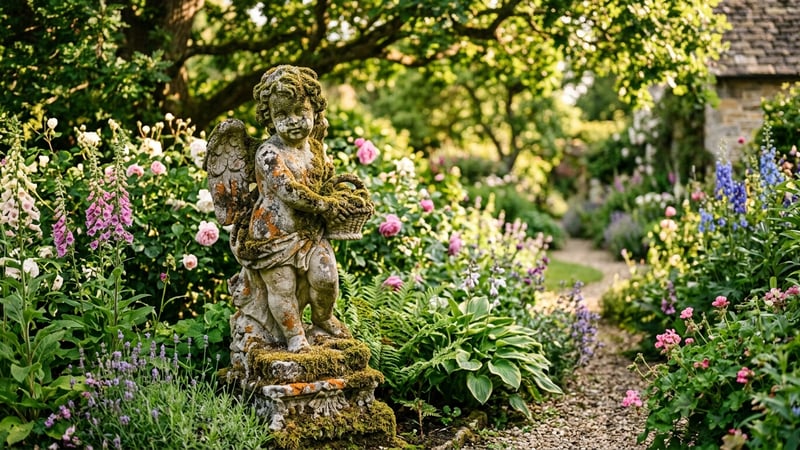
Three things create patina on stone garden ornaments: mineral oxidation, biological colonisation and weathering. Within weeks of outdoor placement, airborne algae spores settle into the porous surface of cast stone. Rain and dew feed these organisms. Over 3-6 months, green algae gives way to grey and golden lichen colonies.
The chemical process is straightforward. Rainwater is slightly acidic, with a typical UK pH of 5.0-5.6. This slowly dissolves calcium carbonate on the stone surface, softening sharp edges. It also creates micro-textures. These tiny pits and grooves trap more moisture, speeding up biological growth.
Cast stone develops patina well because of its composition. A typical mix contains 80-85% crushed stone aggregate bound with white Portland cement. The aggregate has the same mineral content as natural stone. Algae and lichen feed on it readily. Resin ornaments lack this mineral content entirely.
UV light also plays a role. Sunlight gradually mellows the bright white of new cast stone into warmer cream and buff tones. South-facing ornaments mellow faster but develop less moss. North-facing pieces stay cooler and damper, growing thicker moss. A partially shaded position gives the best balance of colour change and moss coverage.
Our Stone Moai Head Statue (from £199) is a perfect example. Its deep-carved features collect moisture and develop rich green patina within the first season.
How long does it take stone to weather naturally?
Cast stone shows visible weathering within 6-12 months outdoors in the UK. Three factors set the pace: position, local climate and surface texture.
Here is what to expect season by season:
- Weeks 1-4: Surface bloom appears. New stone loses its factory-fresh look as minerals react with rainwater.
- Months 2-4: Green algae colonises damp areas, particularly on north-facing surfaces and in textured crevices.
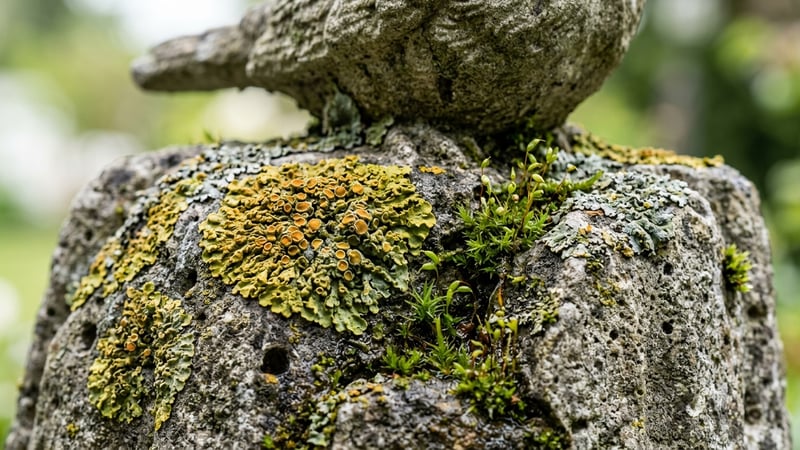
- Months 4-8: Algae matures into darker patches. Early lichen spots appear as yellow, grey or orange dots.
- Months 8-12: Lichen colonies spread and merge. Moss establishes in sheltered grooves and joins between surfaces.
- Years 2-5: Full patina develops. The ornament looks as though it has been in the garden for decades.
Wetter regions like the Lake District, Wales and western Scotland see faster colonisation. Gardens in drier eastern counties take 2-3 months longer. Placing a new ornament near existing moss-covered stone or under deciduous trees speeds things up.
The Baluster Stone Birdbath (from £210) weathers particularly well. The bowl collects standing water, creating ideal conditions for natural ageing around the rim and pedestal.
Cast stone vs reconstituted stone: what ages better?
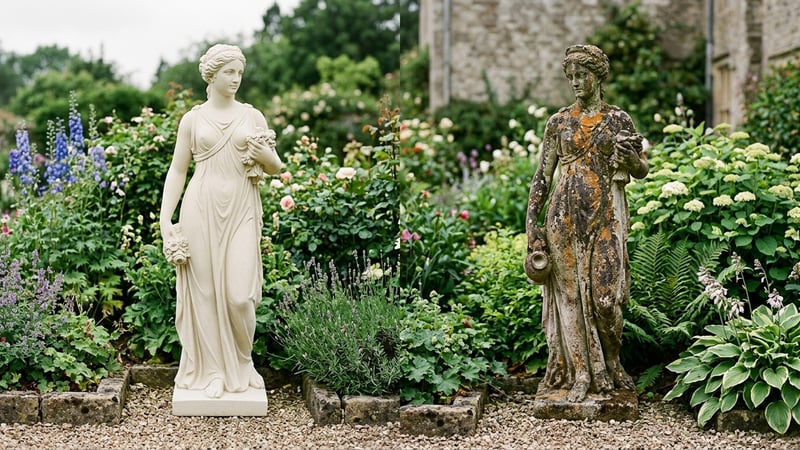
People use cast stone and reconstituted stone interchangeably, but they differ in ways that affect ageing. Cast stone uses natural stone aggregate in a cement binder, poured into moulds. Reconstituted stone is crushed natural stone reformed with resin or cement binders. Both age well. Cast stone with cement binders develops more authentic patina.
The key difference is porosity. Cement-bound cast stone has roughly 12-18% porosity, similar to natural limestone. Moisture penetrates the surface and supports biological growth. Resin-bound reconstituted stone sits at just 3-5% porosity. It weathers more slowly and often looks blotchy rather than evenly patinated.
For UK gardens, cement-bound cast stone is the better choice. It responds to our damp climate exactly as natural stone does. After 2-3 years outdoors, even an expert struggles to tell quality cast stone from a piece carved 50 years ago. That is the whole point.
Our Stone Buddha Head Statue (from £225) is made from cement-bound cast stone. Its facial details and textured hair create dozens of micro-channels where moss and lichen colonise naturally.
For a detailed material comparison, read our guide on garden ornament materials: stone vs resin vs metal vs concrete.
Does moss damage stone garden ornaments?
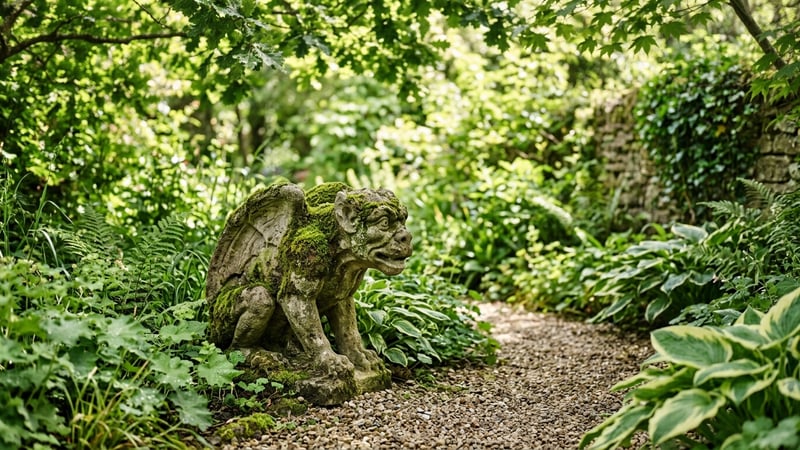
Moss does not damage cast stone garden ornaments. We hear this concern more than any other. Moss roots (rhizoids) are hair-thin and sit on the stone surface. They do not penetrate it. They anchor the plant without breaking down the material underneath.
Lichen is equally harmless. It grows at roughly 1-2mm per year and bonds to the outer surface only. Building Research Establishment studies show lichen actually protects stone. It reduces moisture penetration during heavy rain. Historic buildings covered in centuries of lichen show less erosion than cleaned sections.
The only biological growth to watch is ivy or other climbing plants. Their aerial roots force into cracks and cause structural damage. Keep climbing plants trimmed away from ornamental stonework.
Algae, the green film that appears first, sits on the surface only. It washes off with a stiff brush and clean water. But most gardeners leave it. A stone ornament covered in natural growth looks settled in a way that a pristine white one never does.
Want to manage moss levels? Our guide to cleaning stone garden ornaments covers safe removal methods that will not damage the surface.
How to speed up natural weathering on new stone
New cast stone ornaments can look startlingly white in an established garden. A few proven methods speed up the natural ageing process.
The yoghurt method is the most popular. Mix natural live yoghurt with water at a 1:1 ratio. Brush it onto the stone surface, working it into crevices and textured areas. The live cultures feed algae and moss spores already in the air. Expect visible green growth within 3-4 weeks in spring or autumn. Summer heat can kill the cultures, so avoid July and August.
Buttermilk works equally well. Apply it undiluted with a paintbrush. Its lactic acid bacteria break down the stone surface microscopically. This creates the same micro-textures that take months of weathering naturally. Results appear within 2-4 weeks.
Position matters more than any treatment. Place new ornaments in partial shade, near existing mossy surfaces if possible. Under a tree canopy is ideal. North-facing walls are second best. A piece in full sun on an exposed patio takes 3-4 times longer to develop patina than one beside a shady border.
Water features nearby help. Splashing water raises local humidity around the ornament. Our Aged Brass Sundial on Stone Garden Pedestal (from £345) combines aged brass with cast stone that weathers beautifully on its own.
For a full walkthrough of ageing techniques, see our dedicated guide on how to age a garden statue: 4 proven methods.
Stone vs resin: which ages better in UK weather?
Stone ages gracefully. Resin degrades. That is the fundamental difference. It shows within 3-5 years outdoors in UK conditions.
| Factor | Cast Stone | Resin |
|---|---|---|
| Lifespan outdoors | 50-100+ years | 5-10 years |
| Patina development | Natural moss, lichen, colour mellowing | Fading, chalking, surface cracking |
| UV resistance | Colour mellows naturally | Fades and yellows within 2-3 years |
| Frost resistance | Frost-proof to -15°C | Can crack at -5°C if moisture trapped |
| Moss/lichen growth | Encouraged — adds character | Rare — non-porous surface |
| Weight (300mm statue) | 8-15 kg | 1-3 kg |
| Appearance at 5 years | Looks established and authentic | Looks tired and sun-bleached |
| Appearance at 20 years | Looks like antique stonework | Likely in landfill |
| Typical cost | £55-£350 | £15-£80 |
| Cost per year (20-year view) | £2.75-£17.50 | £3-£16 (replaced 2-4 times) |
Resin ornaments are lighter and cheaper upfront. But UV radiation breaks down the polymer chains within 2-3 years. Colours fade. Surfaces develop a chalky white residue. Fine detail erodes. By year 5, most resin pieces look noticeably worse than when purchased.
Stone follows the opposite path. Every year adds character. Rain softens edges. Lichen adds colour. Moss fills crevices. A 20-year-old stone ornament looks better than the day it was made. That is not marketing — it is chemistry and biology working together.
The cost difference shrinks over time. A stone Barn Owl Garden Ornament in Sandstone at £55 will last decades. A resin equivalent at £20 needs replacing every 5-7 years, costing more in total.
Read more in our guide to sustainable garden ornaments: why stone lasts and plastic does not.
Which stone garden ornaments develop the best patina?
Ornaments with deep textures, carved details and rough surfaces develop the richest patina. Smooth, polished finishes shed water too quickly for moss and lichen. The best candidates share three qualities: textured surfaces, sheltered crevices and a vertical element that stays damp.
Statues and figures are the top performers. Facial features, folds in clothing and textured hair all trap moisture. A stone Buddha develops green tones in the eye sockets and ear details within months. Animal statues with fur textures — like our Stone Meerkat Statue (from £85) — show similar results.
Birdbaths and pedestals age fast because standing water deposits minerals and algae onto the stone. The join between bowl and column is always the first spot to show green growth.
Sundials on stone columns combine multiple ageing factors. The flat dial surface collects rainwater. The column stays damp on the north side. The base sits in contact with damp soil or grass.
Wall plaques and masks mounted on north-facing walls develop patina fastest of all. They stay shaded and damp throughout the day. A Green Man wall plaque can look centuries old within 18-24 months in the right position.
Need to protect stone through harsh winters without stripping the patina? See our frost protection guide for garden statues and ornaments.
Caring for aged stone without losing the patina
The best maintenance for patinated stone is almost none. Cast stone needs no sealing, painting or annual treatment. Rain does the cleaning. Frost does no harm down to -15°C.
Brush off bird droppings or heavy leaf fall with a soft bristle brush and clean water. Never use bleach, pressure washers or acidic cleaners on patinated stone. A pressure washer strips years of natural ageing in seconds. Bleach kills the lichen and moss colonies that took months to establish.
Check stability once a year. Heavier statues and birdbaths settle unevenly on soft ground over time. Re-level with a paving slab or flat stone beneath the base. A stable ornament weathers more evenly than one that has shifted.
To clean a specific area — say, removing algae from an inscription — use a wooden scraper or plastic brush on that spot only. Leave the surrounding patina untouched. This keeps the aged look while maintaining readable details.
Our guide to caring for stone garden ornaments covers seasonal checks and stain removal in full.
Frequently Asked Questions
Cast stone develops visible patina within 6-12 months outdoors. The bright white finish softens as minerals react with rainwater. Green algae appears within 2-4 months in sheltered or shaded spots. Full moss and lichen coverage takes 2-3 years, varying by region. Western and northern UK areas see faster growth due to higher rainfall.
Moss does not damage cast stone garden statues. Moss rhizoids sit on the surface without penetrating the stone. Lichen grows at just 1-2mm per year and actually provides weather protection. The only growth to remove is ivy or climbing plants, whose aerial roots force into existing cracks.
Yes, yoghurt or buttermilk accelerates natural ageing by 4-8 weeks. Mix live natural yoghurt with water at a 1:1 ratio and brush onto the stone surface. Apply in spring or autumn when temperatures are 8-18°C. Placing ornaments in partial shade near existing mossy surfaces also speeds up colonisation.
Quality cast stone ornaments last 50-100+ years outdoors. They are frost-proof to -15°C and need no protective coatings. Resin ornaments last 5-10 years before UV damage causes fading and cracking. Stone is fully recyclable at end of life. Resin goes to landfill.
Cast stone and reconstituted stone are similar but not identical. Cast stone uses natural stone aggregate in a cement binder, poured into moulds. Reconstituted stone is crushed natural stone reformed with cement or resin binders. Cement-bound versions of both age well. Resin-bound reconstituted stone has lower porosity and develops patina more slowly.
No, do not seal cast stone garden ornaments. Sealant blocks the natural weathering that makes stone attractive over time. It stops moisture absorption, preventing moss and lichen from establishing. Sealed stone looks artificially shiny and needs resealing every 2-3 years. Leave stone untreated and let UK weather do its work.
Partial shade is the best position for natural patina development. North-facing spots or under tree canopies stay damp longest, encouraging moss and lichen. Fully exposed south-facing spots dry out too quickly for biological growth. The stone still mellows in colour though. Place new ornaments near existing moss-covered stone to speed up colonisation.