
Ornamental Metal Gates: Style Guide for UK Gardens
Written by Matt W on 7th Apr 2026.
Ornamental metal gates for UK gardens start from £459 for powder-coated steel arch-and-gate sets measuring 2490mm tall by 1850mm wide. Wrought iron gates offer the strongest period character but require annual rust treatment. Modern powder-coated steel gates resist corrosion for 15 years or more with minimal upkeep. Pairing gates with stone urns, lion statues, or climbing-plant archways creates a structured entrance that adds kerb appeal and property value.
Styling UK gardens for over a decade. We hand-pick every gate, arch, and ornament in our collection and advise customers daily on pairing pieces for maximum impact.
Key Takeaways
- ✓ Powder-coated steel gates start from £459 and resist rust for 15+ years without annual treatment
- ✓ Standard ornamental gate arches measure 2490mm tall by 1850mm wide — wide enough for a wheelbarrow
- ✓ Wrought iron gives the strongest period look but needs wire-brushing and repainting every 1–2 years
- ✓ Pair gates with stone lion statues, urns, or climbing arches to frame a proper garden entrance
- ✓ Always set gate posts 300–450mm into the ground in concrete for stability in UK winds
- ✓ Aluminium gates weigh 40–60% less than steel but cost 20–30% more for equivalent designs
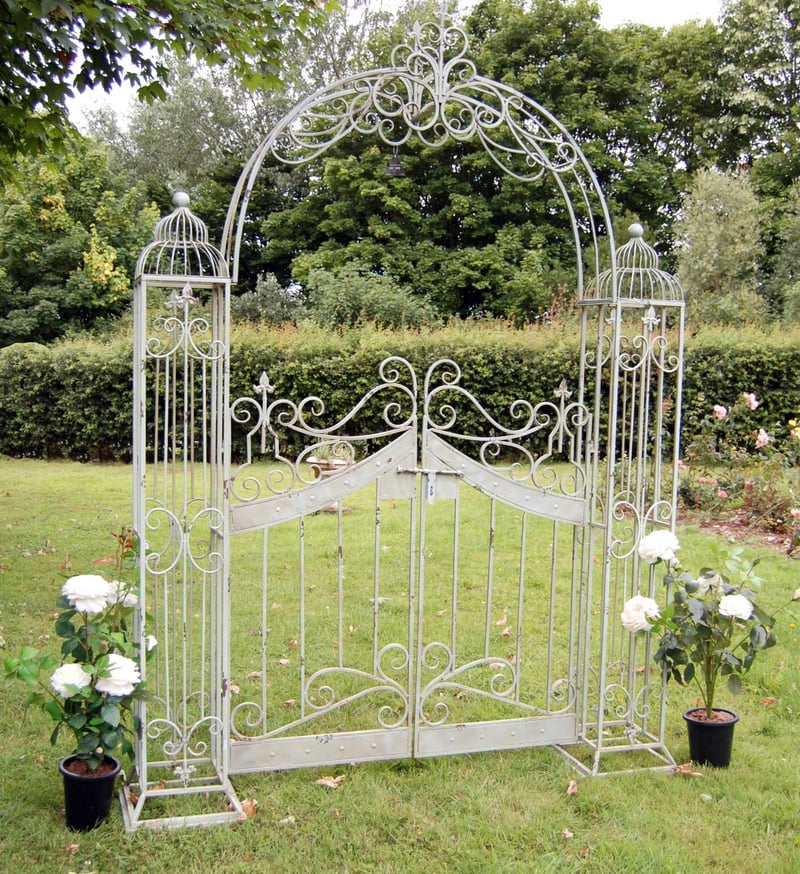
Shop the Antiqued Green Vintage Metal Garden Arch with Gates →
From Our Team
We have been fitting ornamental gates for customers across the UK for years. The single biggest mistake we see is skipping the concrete footings. A metal gate arch weighing 25–35kg catches the wind like a sail. Without posts set at least 300mm into concrete, the whole structure rocks and eventually leans. We always tell customers: spend 30 minutes on proper footings and you will never have to re-do the job.
What are ornamental metal gates made from?
Most ornamental metal gates sold in the UK use mild steel, wrought iron, cast iron, or aluminium. Mild steel is the most common material for modern gate arches. It is strong, relatively lightweight, and takes powder-coating well. Our own gate arches use powder-coated steel tubing with ornate scrollwork welded to the frame.
Wrought iron was the traditional choice for Victorian and Edwardian gates. It is hand-forged, which gives each piece a slightly irregular, handmade character. True wrought iron is increasingly rare and expensive because few UK blacksmiths still produce it. Many gates labelled "wrought iron" are actually mild steel shaped to look similar.
Cast iron is poured into moulds. It produces highly detailed decorative panels but is brittle under impact. Aluminium is lighter than steel and naturally rust-resistant, but it lacks the weight and solidity that many gardeners prefer. For most UK gardens, powder-coated steel hits the right balance of strength, finish, and price. Browse our full collection of ornamental metal gates to see the range.
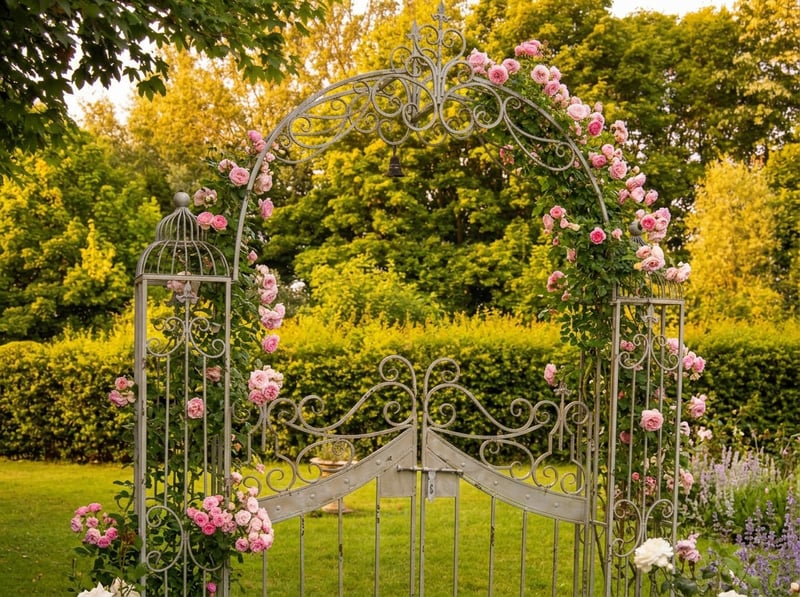
Shop the Antiqued Green Vintage Gate Arch →
Wrought iron vs steel vs cast iron: which is best for garden gates?
Powder-coated steel is the best all-round choice for UK garden gates, offering 15+ years of corrosion resistance at a lower price than wrought iron. Steel gate arches like our Antiqued Green model at £459 arrive pre-finished and need no annual treatment. Wrought iron gives a more authentic period look but demands wire-brushing and repainting every 12–24 months to prevent rust.
Cast iron is heavier and more ornate. It works well for standalone decorative panels and pillar caps. However, cast iron is brittle. A heavy impact — a falling branch, a wheelbarrow collision — can crack it. Steel flexes and absorbs the same blow. Aluminium resists rust naturally but costs 20–30% more than steel for comparable designs. It also feels lighter, which some customers find less reassuring in high winds.
If you want a gate that looks traditional, lasts a decade without fuss, and costs under £500, powder-coated steel is the practical winner. Reserve wrought iron for restoration projects where period accuracy matters more than maintenance effort.
| Material | Weight | Durability | Maintenance | Rust Risk | Typical Cost | Best For |
|---|---|---|---|---|---|---|
| Wrought Iron | Heavy (30–50kg) | Very high | Annual repaint | High without treatment | £600–£2,000+ | Period properties, restoration |
| Powder-Coated Steel | Medium (20–35kg) | High | Minimal (wash yearly) | Low (15+ year coating) | £135–£500 | Most UK gardens, best value |
| Cast Iron | Very heavy (40–60kg) | High (but brittle) | Annual repaint | High without treatment | £500–£1,500 | Decorative panels, pillar caps |
| Aluminium | Light (12–20kg) | Medium | Very low | None (naturally resistant) | £400–£800 | Coastal gardens, lightweight needs |
|
|
Matt's Pick for Best All-Round Garden GateBest For: Creating a classic entrance to a cottage, country, or period-style garden Why I Recommend It: The antiqued green finish blends into established planting within weeks. The scrollwork is detailed enough to look hand-forged, and the powder coating means no annual rust treatment. We have sold hundreds of these and the feedback is consistently positive. Price: £459 (RRP £475) |
How to choose the right style of ornamental gate
Match the gate style to the architecture of your property and the planting around it. A heavily scrolled Victorian-style gate suits a period cottage or a formal walled garden. A clean-lined modern arch suits contemporary builds and minimalist planting schemes. Getting this wrong creates a visual clash that no amount of climbing roses will fix.
Consider the gate's practical purpose. A gate between front and back gardens needs to be wide enough for a wheelbarrow (minimum 900mm clear opening). A gate at the end of a long border is more decorative and can be narrower. Our vintage arch-and-gate sets provide a 1850mm-wide opening, which handles a standard wheelbarrow and garden trolley easily.
Height matters too. A 2490mm-tall gate arch creates a sense of arrival. Anything under 2000mm feels cramped once climbing plants fill the top third. For cottage gardens, our Avebury Ornate Metal Garden Archway at £379 provides the height without the gates, letting you frame a view rather than close a boundary.
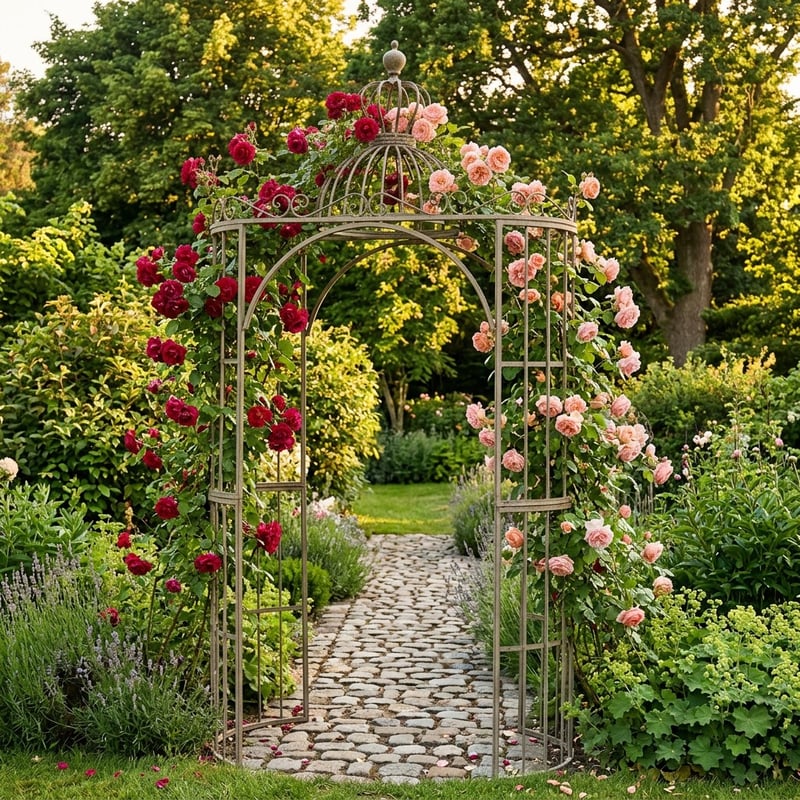
Shop the Avebury Ornate Metal Garden Archway →
How to pair ornamental gates with garden ornaments
Flanking an ornamental gate with matching stone statues or urns is the most effective way to create a formal garden entrance. The gate itself is one element. What sits either side of it defines the tone. A pair of stone lions on plinths either side of the gate signals grandeur. Stone urns planted with trailing ivy or box balls give a softer, more classical look.
We recommend pairing our gate arches with the Chatsworth Lion Statues at £260 for a pair. Position them 300–400mm either side of the gate posts, facing slightly outward. For a less formal look, use the Buckingham Stone Garden Urn at £220, planted with lavender or trailing geraniums. The urn's fluted design echoes the scrollwork on our gate arches.
For larger entrances, the Lion With Ball Metal Garden Ornament at £845 makes a bold statement piece beside a gated entrance. Match metal finishes: pair green-patina gates with bronze-finished ornaments, or pair black gates with stone-coloured pieces. Browse our full collection of garden ornaments for more pairing ideas.
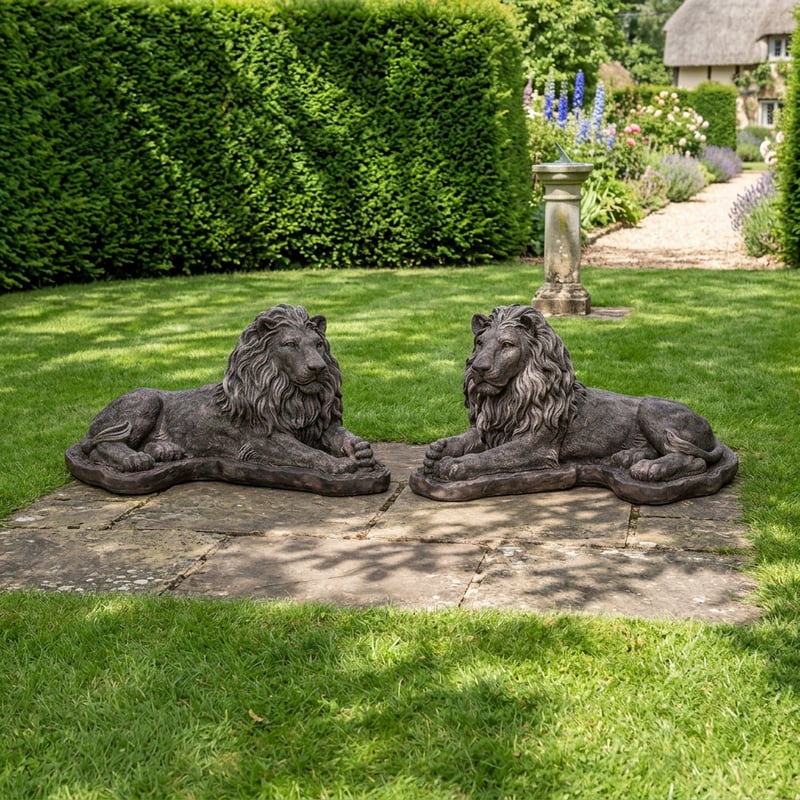
Shop the Chatsworth Lion Statues (Pair) →
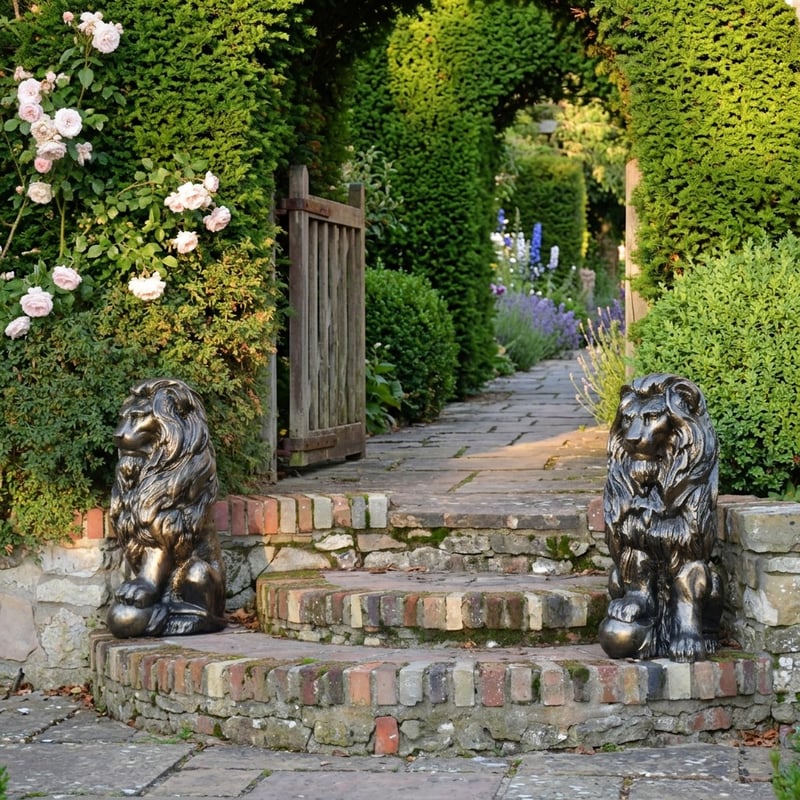
Shop the Lion With Ball Metal Garden Ornament →
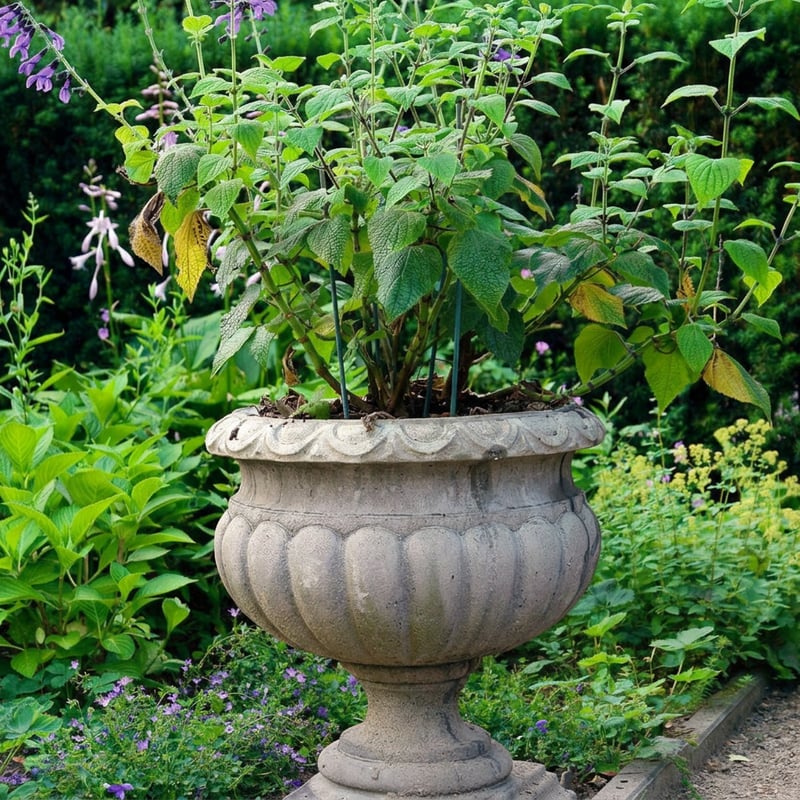
Shop the Buckingham Stone Garden Urn →
How to install an ornamental metal gate
Set gate posts 300–450mm into the ground in postcrete or standard concrete to withstand UK weather. Most ornamental gate arches come with ground spikes or bolt plates. Ground spikes are faster to install but less secure in soft or clay soils. Bolt plates fixed to a concrete pad give the strongest hold, especially for arches with gates that swing open and closed.
Here is the installation process we recommend:
- Mark out the footprint. Measure the full width (1850mm for our arch-and-gate sets) and add 50mm clearance each side.
- Dig holes 300–450mm deep and 200mm wide for each post.
- Drop in the ground spikes or post supports. Check they are plumb with a spirit level.
- Fill with postcrete and water, or mix standard concrete (4:1 ballast to cement).
- Wait 24 hours before hanging the gate panels or attaching the arch top.
- Fit hinges and latch hardware. Use stainless steel fixings to prevent galvanic corrosion between different metals.
On exposed sites, add a 150mm gravel collar around each post base. This improves drainage and stops waterlogging, which accelerates rust at ground level. If you are mounting onto an existing patio, use expanding anchor bolts rated for the slab thickness.
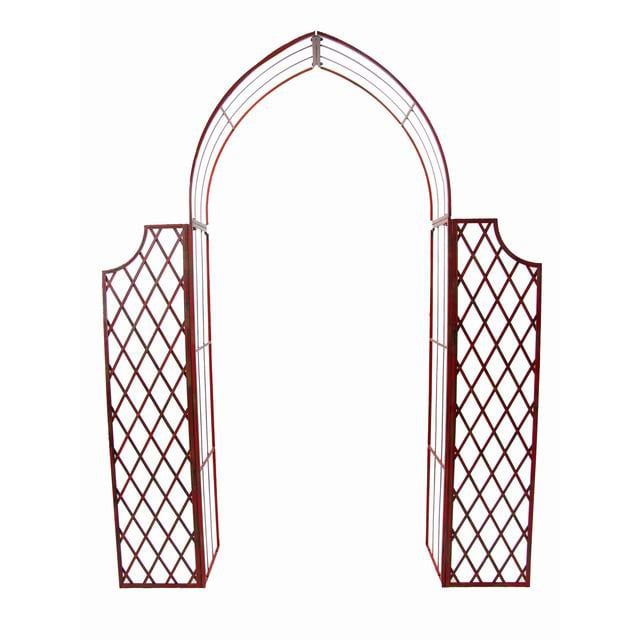
Shop the Lattice Metal Garden Arch with Side Panels →
How to prevent rust on metal garden gates
Powder-coated steel gates need only an annual wash with soapy water and a visual check for chips. The powder coating acts as a sealed barrier between the steel and moisture. As long as that barrier stays intact, rust cannot form. Chipped or scratched areas are the weak points. Touch up any damage immediately with a matching exterior metal paint (Hammerite or Rust-Oleum work well).
For wrought iron and bare steel gates, apply a zinc-rich primer followed by two coats of exterior metal paint. Repeat every 12–24 months depending on exposure. Gates facing prevailing westerly winds in the UK take more weather punishment and need more frequent attention. Wire-brush any orange rust spots back to bare metal before repainting.
Preventative steps that make a real difference:
- Keep soil and mulch 50mm clear of the gate base. Trapped moisture accelerates corrosion.
- Oil hinges and latches with a PTFE-based lubricant every 6 months.
- Apply a clear wax sealant (Renaissance Wax or similar) to exposed ironwork for extra protection.
- In coastal areas, wash gates monthly to remove salt spray deposits.
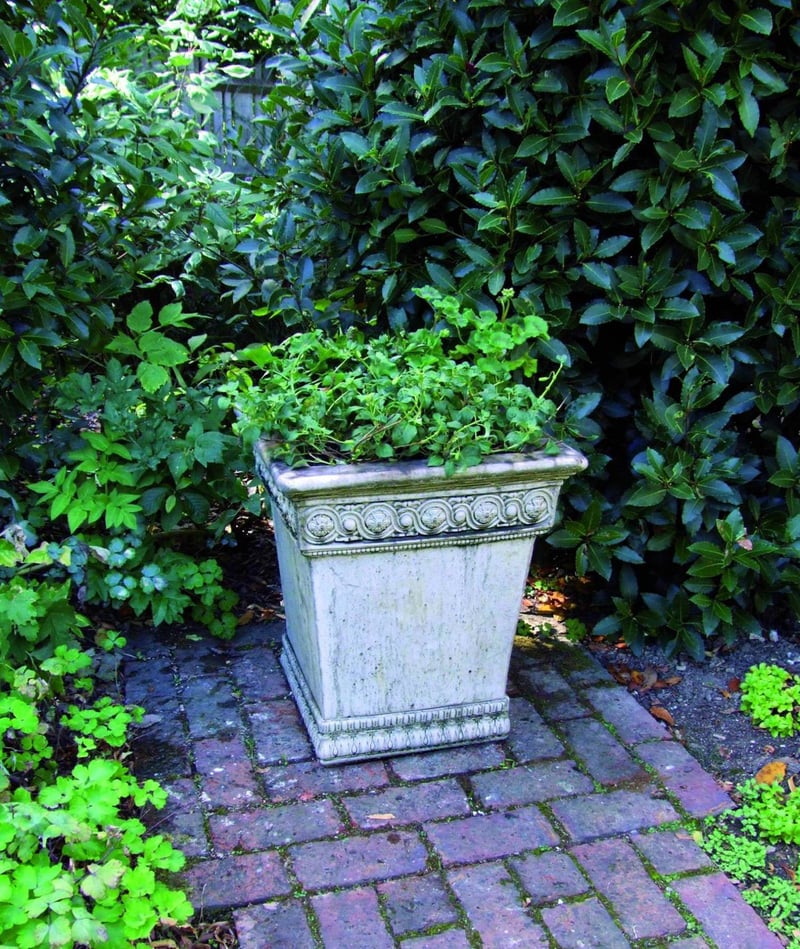
Shop the Empire Stone Garden Urn →
How much do ornamental metal gates cost in the UK?
Ornamental metal gate arches in the UK range from £135 for a simple arch to £479 for a full vintage gate-and-arch set with scrollwork. The price depends on material, finish, size, and whether gates are included or sold separately. Our Streamline Moderne Metal Garden Arch in Sage Green starts at £135 for a clean-lined arch without gates. The Rusty Green Vintage Gate Arch at £479 includes a full pair of opening gates with a heavier weathered patina finish.
Here is a quick cost breakdown for our range:
| Product | Type | Price |
|---|---|---|
| Streamline Moderne Arch (Sage Green) | Arch only | £135 |
| Lattice Arch with Side Panels | Arch + panels | £219 |
| Avebury Ornate Archway | Arch only | £379 |
| Antiqued Green Gate Arch | Arch + gates | £459 |
| Rusty Green Gate Arch | Arch + gates | £479 |
Bespoke wrought iron gates from UK blacksmiths typically start at £800 and can exceed £3,000 for large driveway sets. For most garden boundaries and pathway entrances, a powder-coated steel arch with gates between £400 and £500 gives the best combination of looks, durability, and value. View our full range of garden arches and gate sets to compare options side by side.
Matt's Tip: Choosing Between Antiqued and Rusty Finishes
Customers often ask us whether to go for the Antiqued Green finish (£459) or the Rusty Green (£479). My advice: pick the Antiqued Green if your garden is already well-established with lots of green foliage. The finish disappears into the planting. Go for the Rusty Green if you have a modern or industrial-style garden, or if you want the gate to stand out as a feature. The weathered patina catches the light differently throughout the day and looks better against gravel, slate, and stone than it does against dense greenery.
Frequently asked questions
How long do ornamental metal gates last in the UK?
Powder-coated steel gates last 15–20 years with minimal maintenance. The powder coating protects against rain, frost, and UV degradation. Touch up chips promptly with exterior metal paint. Wrought iron gates can last 50+ years if repainted every 12–24 months. Cast iron gates are similarly long-lived but more vulnerable to impact cracks.
Do I need planning permission for a garden gate in the UK?
Most garden gates do not need planning permission under permitted development rights. Gates and fences up to 1 metre high next to a highway, or 2 metres elsewhere, are usually permitted. A gate arch at 2490mm exceeds the 2-metre limit, so check with your local council if it faces a public road. Listed buildings and conservation areas have stricter rules. Always verify before installing.
Can I fit an ornamental metal gate myself?
Yes, most ornamental gate arches are designed for DIY installation in 2–3 hours. You need a tape measure, spirit level, spade, postcrete or concrete mix, and a socket set. The arch sections bolt together on-site. The hardest part is getting the posts perfectly plumb and level. A second pair of hands makes the job much easier, especially when lifting the arch top into position.
What is the best climbing plant for a metal gate arch?
Climbing roses (Rosa 'New Dawn' or 'Iceberg') are the most popular choice for UK metal gate arches. They flower from June to October and tolerate the heat retained by metal in full sun. Clematis montana works well for fast coverage but can become heavy. Star jasmine (Trachelospermum jasminoides) suits sheltered south-facing gates and adds fragrance. Avoid vigorous climbers like Russian vine — they will smother the metalwork within two seasons.
How do I stop an ornamental gate from squeaking?
Apply a PTFE-based dry lubricant to the hinge pins every 6 months. Avoid WD-40 as a long-term solution — it evaporates quickly and attracts dust. If the gate has already developed a squeak, remove the hinge pin, clean it with wire wool, apply the lubricant, and refit. If the hinges are worn through, replace them with stainless steel hinges rated for the gate weight.
Are ornamental metal gates secure enough for garden boundaries?
Ornamental gates provide moderate security suitable for garden boundaries, not perimeter security. A steel gate with a proper latch deters casual access and keeps pets and children contained. For stronger security, add a padlock hasp or magnetic catch. Our gate arches feature latching points built into the frame. They are not designed as anti-theft barriers but do provide a clear physical boundary that most people will not climb over.
Can ornamental metal gates be painted a different colour?
Yes, powder-coated gates can be repainted with exterior metal paint in any colour. Lightly sand the existing coating with 240-grit sandpaper to give the new paint a key. Apply one coat of metal primer and two coats of your chosen colour. Hammerite smooth or Rust-Oleum Painter's Touch both adhere well to powder-coated surfaces. Allow 24 hours drying time between coats.