
Garden Obelisks & Finials: Adding Height & Structure to Borders
Written by Matt W on 9th Mar 2026.
Garden obelisks and stone finials add vertical structure to flat borders, drawing the eye upward and creating focal points at heights between 30cm and 90cm. Reconstituted stone finials start from £99 for acorn and fir cone styles, while classical column pedestals range from £120 to £269. Steel decorative columns offer a modern alternative from £105. All pieces are frost-resistant and suited to UK gardens year-round.
Key Takeaways
- ✓ Stone finials (acorn, fir cone, ball) sit on gateposts, walls and pillars to add 30-50cm of height from £99
- ✓ Classical column pedestals (Corinthian, Doric, Roman) stand 60-90cm tall and work as standalone border features from £120
- ✓ Steel decorative columns like the Dandelion design bring a modern, weathering Corten finish from £105
- ✓ Pair finials with pedestals for a layered, tiered effect that draws the eye through a border
- ✓ All reconstituted stone pieces are frost-resistant and maintenance-free in UK conditions
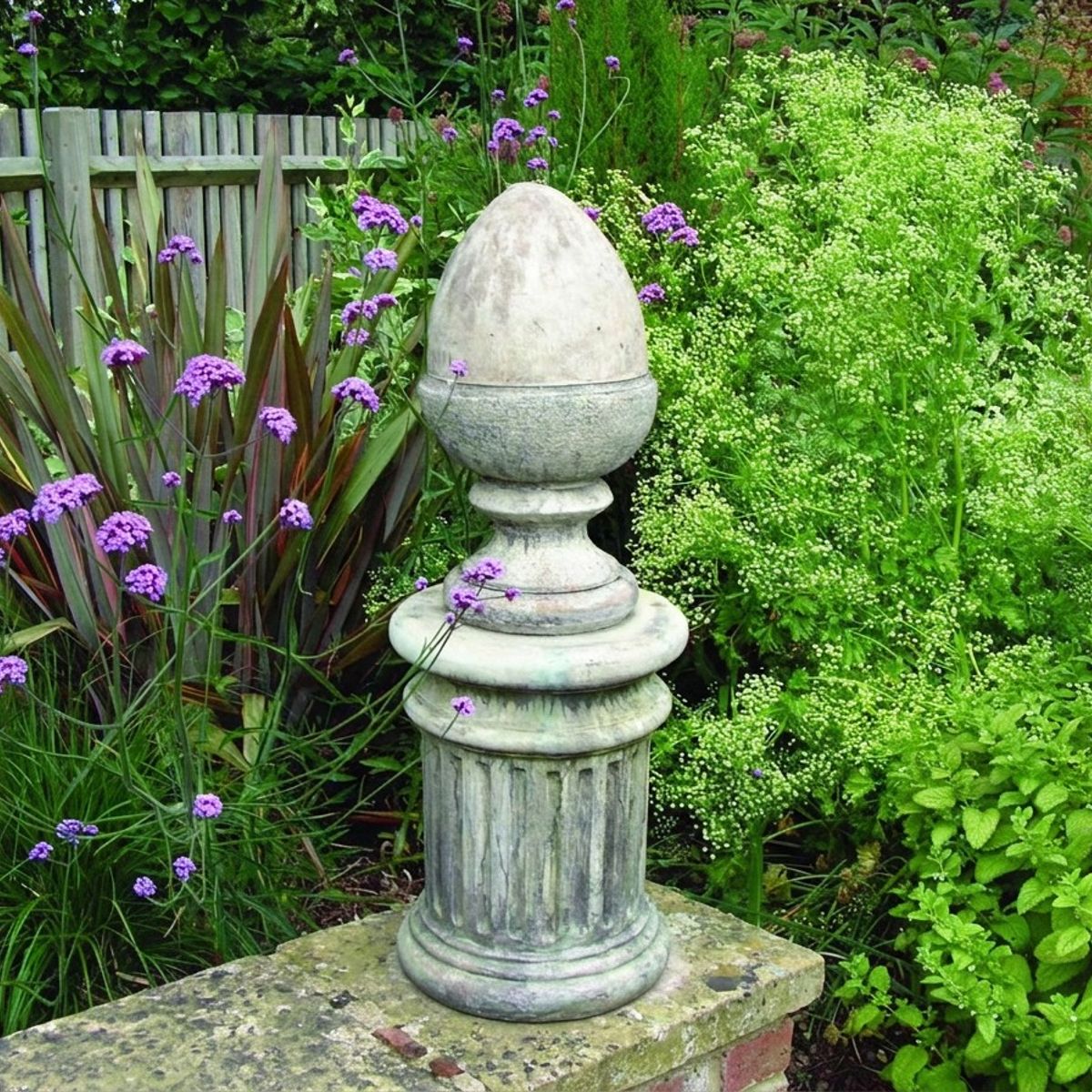
Shop the Keymer Acorn Stone Garden Finial →
Installer's Note
I have been positioning stone finials and pedestals in gardens across the south of England for over ten years. The single biggest mistake I see is placing them too low in a border, where surrounding plants swallow them by midsummer. Finials need clear sky behind them. Set them on walls, gateposts or raised plinths where they sit above the planting line. A 40cm finial on an 80cm pillar gives you 120cm of vertical interest that no perennial border can match.
What are garden obelisks and finials?
Garden obelisks are tall, tapered vertical structures that create height in borders, while finials are decorative stone caps designed to sit on top of pillars, gateposts and walls. The Royal Horticultural Society recommends using vertical elements to break up flat planting schemes and guide the eye through a garden. Obelisks traditionally served as climbing frames for roses and clematis. Stone finials developed from architectural detailing on country houses and churches, where acorn, ball and fir cone shapes topped every pillar and parapet.
Today, both elements serve a purely decorative purpose in most UK gardens. A pair of fir cone finials on brick gateposts frames an entrance. A tall column pedestal in a herbaceous border gives structure through winter when perennials die back. The key is choosing pieces that match the scale and style of your garden, from classical Corinthian columns for formal layouts to rusted steel columns for modern planting schemes.
How do stone finials add height to garden borders?
Stone finials add 30-50cm of height when mounted on pillars, gateposts or walls, creating permanent focal points that anchor a planting scheme year-round. Unlike plants, finials hold their shape through winter, giving structure to borders that would otherwise look bare from November to March. The RHS advises using architectural elements to maintain winter interest in mixed borders.
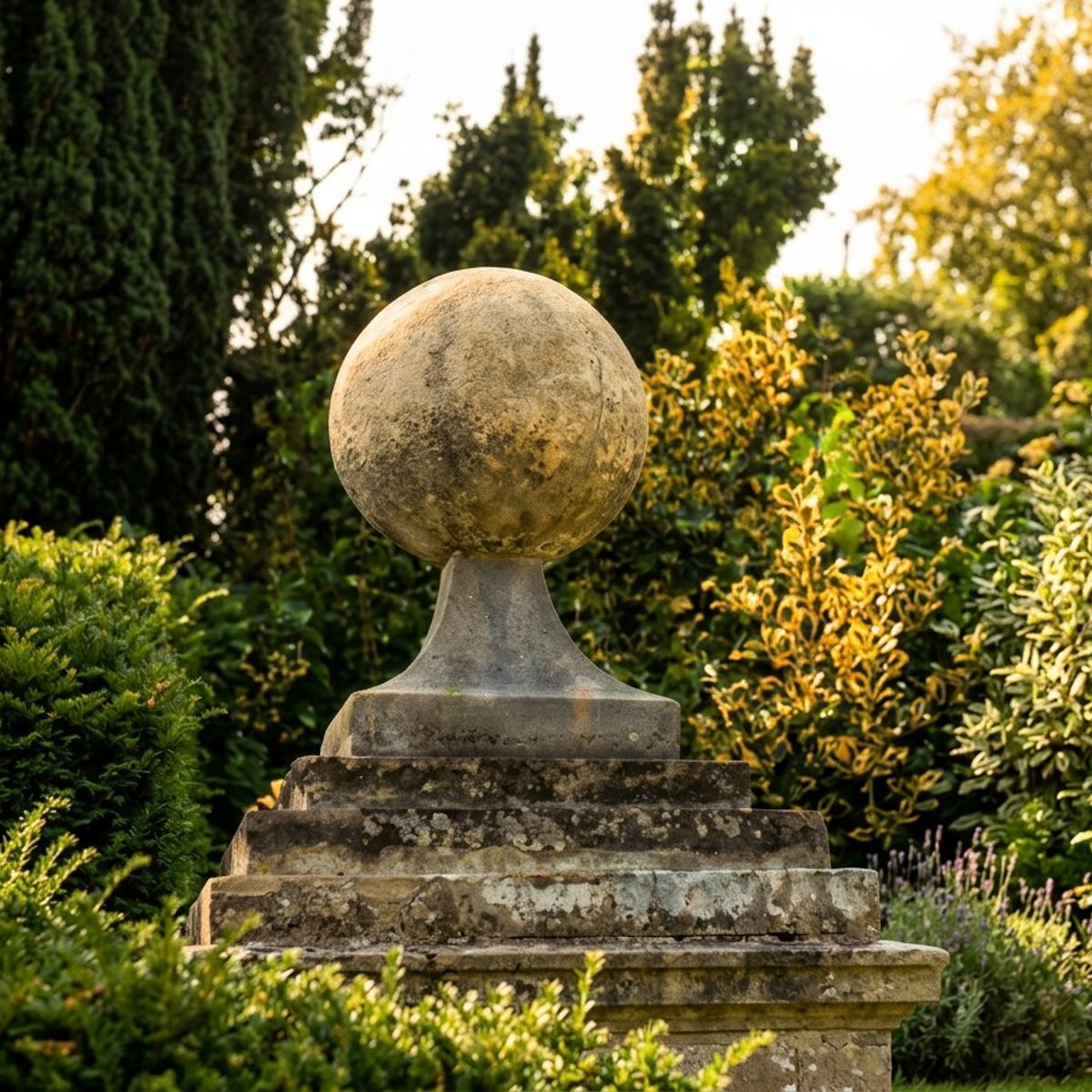
The most popular finial shapes for UK gardens are the acorn, the fir cone and the ball on base. Each creates a different silhouette. Acorns suit cottage and traditional gardens. Fir cones work well in woodland-edge plantings. Ball finials look best in formal, symmetrical layouts where you need matching pairs. All three are cast in reconstituted stone, which weathers naturally to develop a patina of lichen and moss within two to three years.
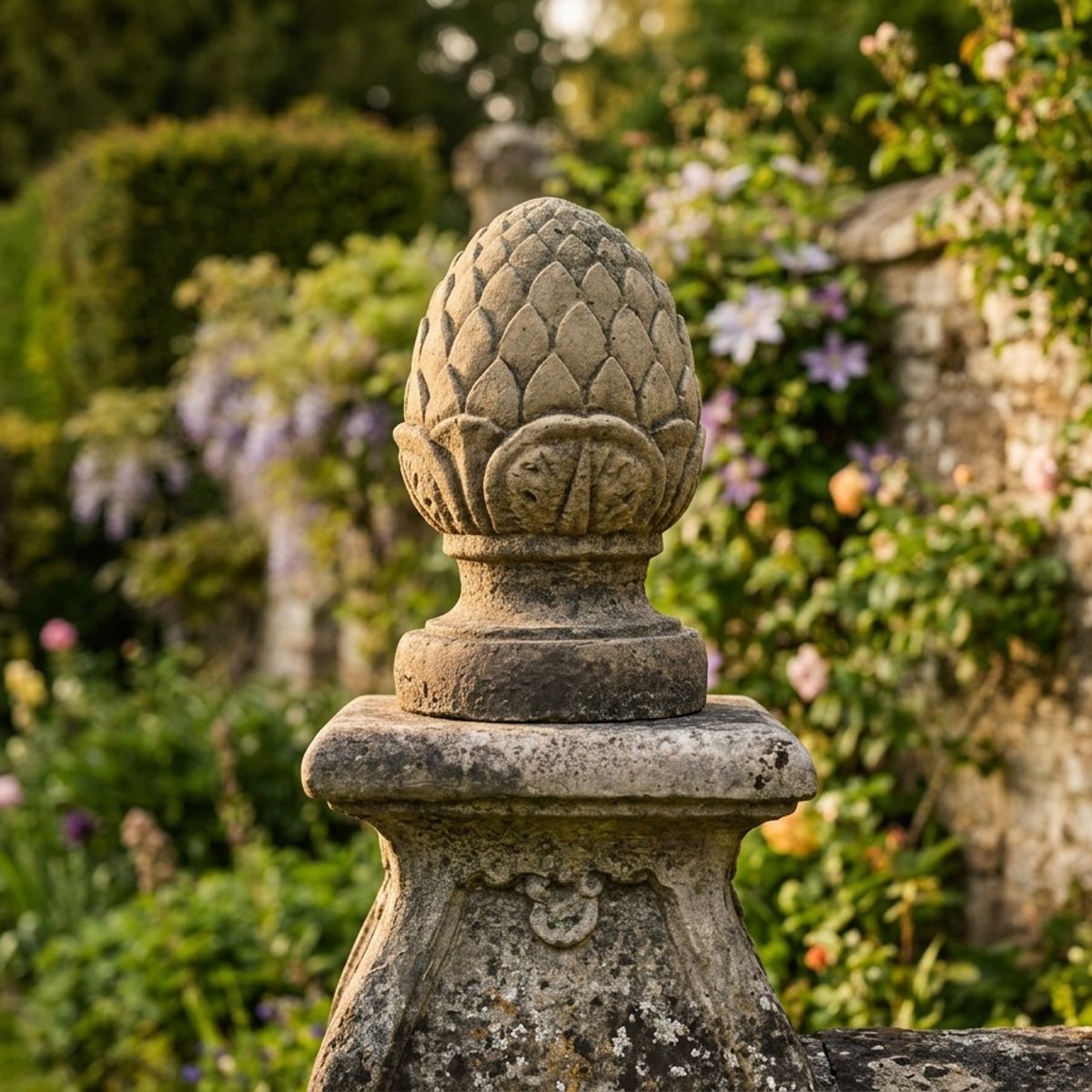
Shop the Fir Cone Stone Garden Finial →
Which stone column pedestals work best as border features?
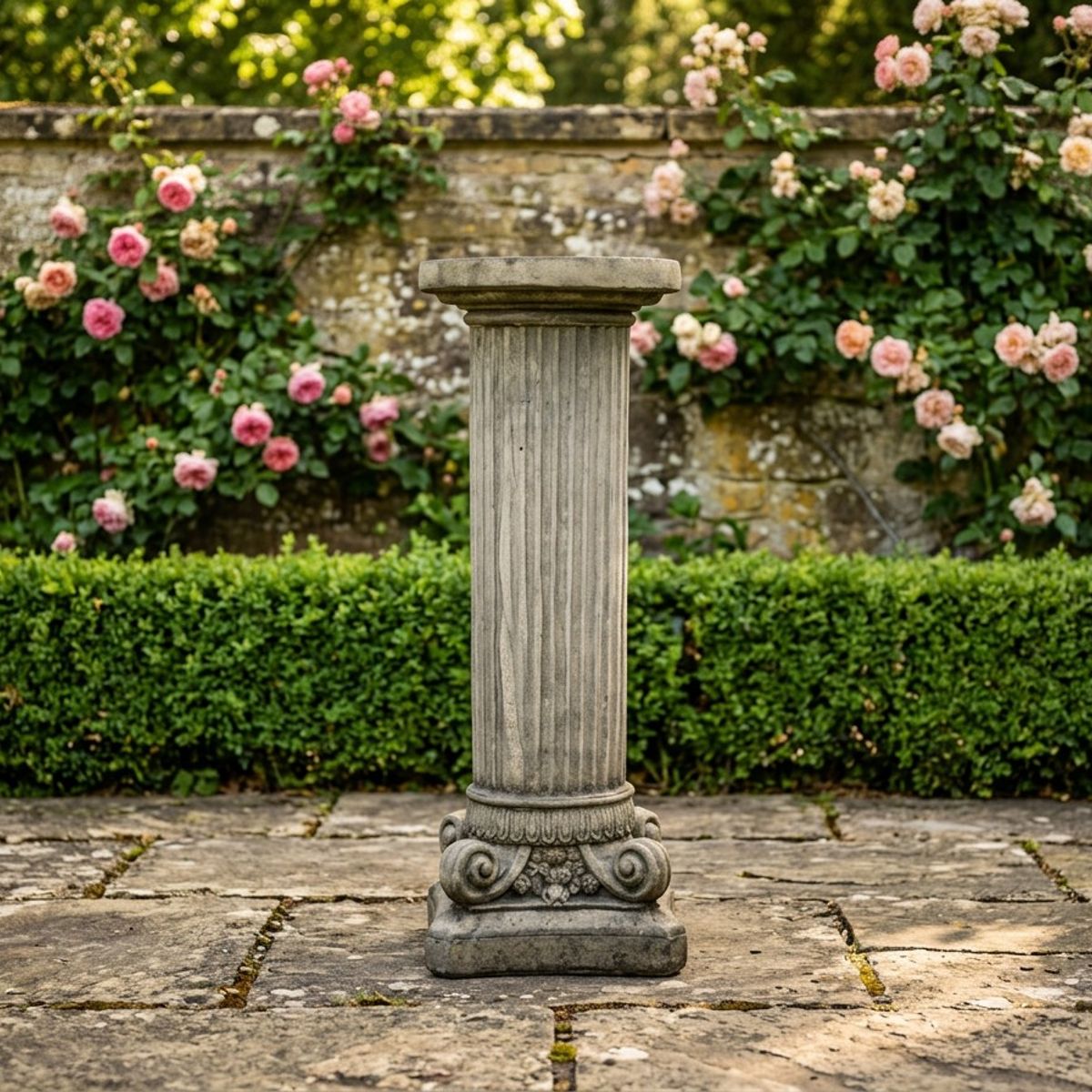
Classical column pedestals standing 60-90cm tall work as standalone vertical features in borders, providing permanent height without any planting or maintenance. The Corinthian Column Stone Garden Pedestal at £120 features ornate acanthus leaf detailing and stands as a striking focal point in formal gardens. The Doric Column at £159 offers a simpler, sturdier profile that suits both traditional and contemporary settings.
Pedestals were originally designed to display statues, sundials and urns. But garden designers increasingly use them as standalone sculptures. A single column pedestal placed at the back of a deep border, surrounded by tall grasses or delphiniums, creates a sense of depth and perspective. Pair two matching pedestals either side of a path entrance for a classical framing effect. The Classical Column Pedestal is particularly effective for this because its proportions echo Georgian and Regency architecture.
Can you use obelisks and finials in small gardens?
Vertical ornaments are especially effective in small gardens because they add interest without taking up ground space, drawing the eye upward to make borders feel larger. A single finial on a low wall or a slim column pedestal in a corner border adds structure without overwhelming a compact plot. The Medium Fir Cone Stone Garden Finial at £99 is specifically sized for smaller settings, providing the same decorative detail as its larger counterpart in a more restrained footprint.
The trick in small gardens is restraint. One or two vertical pieces placed at key sightlines create more impact than scattering multiple ornaments. Position a finial where you see it from a kitchen window or back door. Place a column where it terminates a short path. These placement decisions matter more than the size of the piece itself. Browse our full collection of garden ornaments for pieces scaled to every garden size.
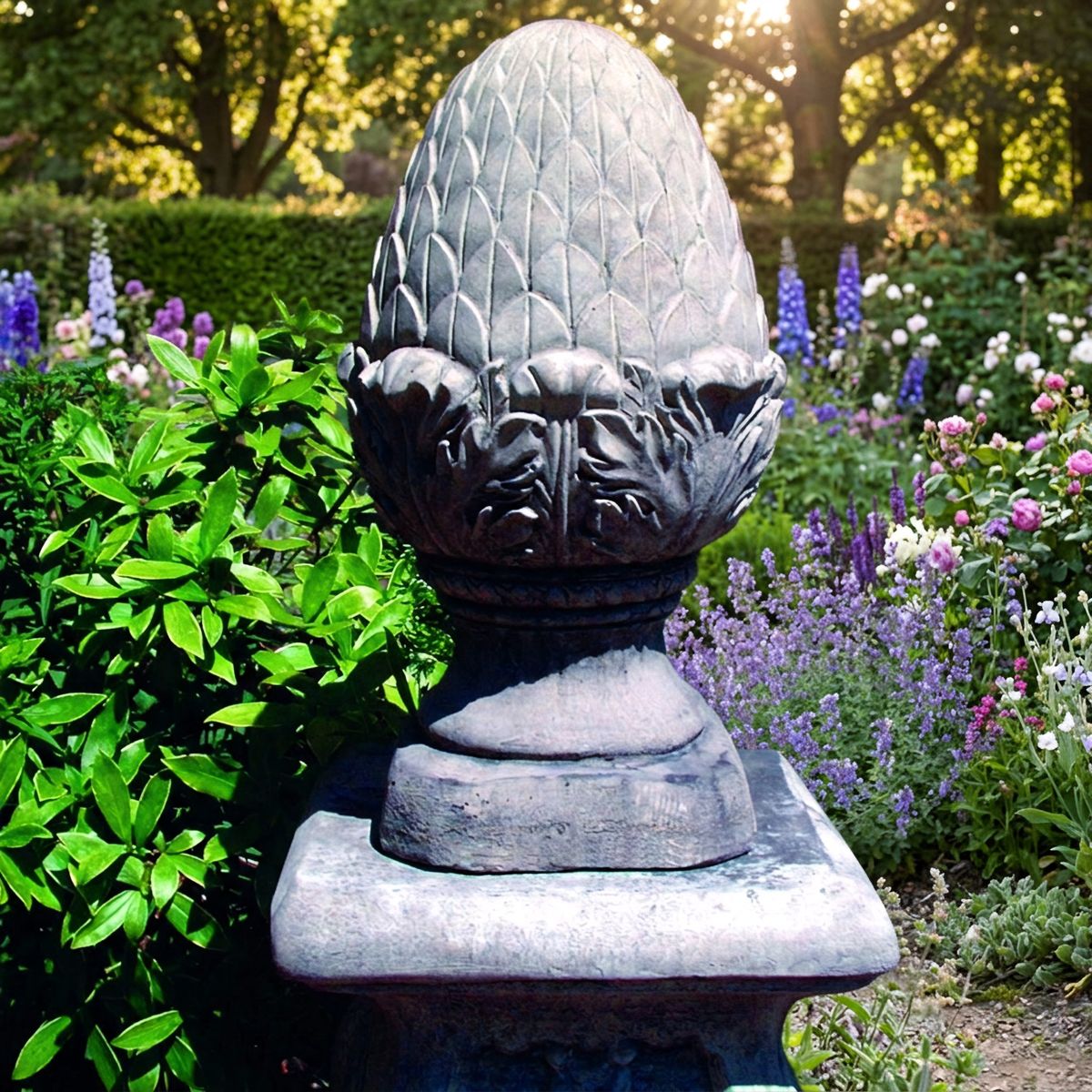
Shop the Medium Fir Cone Stone Garden Finial →
What is the difference between stone and metal garden obelisks?
Stone obelisks and finials offer a classical, weathered appearance that suits traditional gardens, while metal alternatives like Corten steel columns provide a modern, industrial aesthetic. Stone pieces are heavier (typically 15-30kg), more stable in exposed positions and develop a natural patina over time. Metal pieces are lighter, taller for their footprint and can incorporate cut-out patterns that cast shadows through planting.
The Dandelion Steel Decorative Garden Column at £105 is a good example of modern vertical interest. Its laser-cut dandelion pattern creates dappled light effects when positioned in front of low planting. The rusted Corten finish develops naturally and protects the steel underneath. For gardeners wanting a contemporary border, mixing a steel column with naturalistic grasses like Miscanthus or Stipa creates a striking contrast between organic movement and geometric structure.
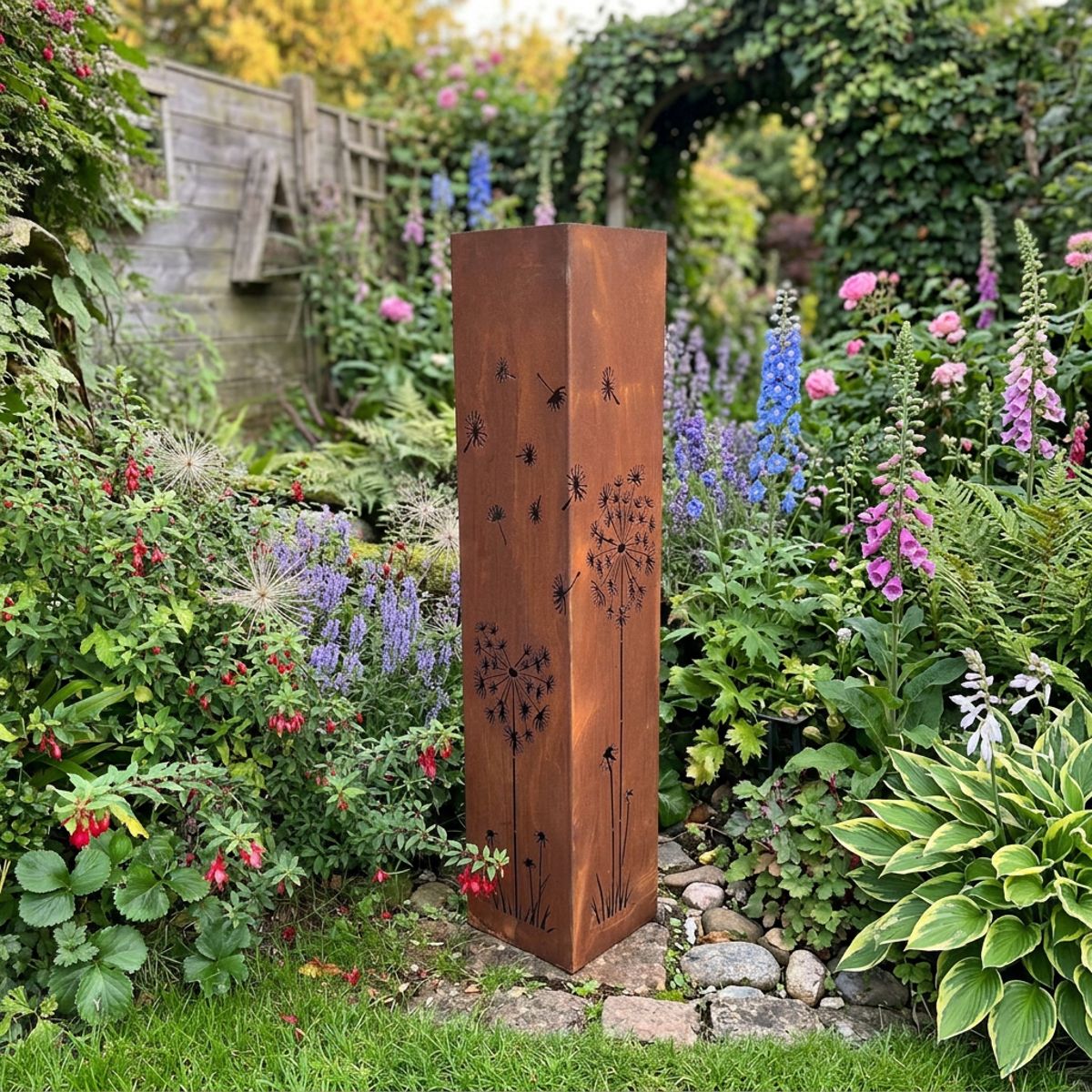
Shop the Dandelion Steel Decorative Garden Column →
How to position obelisks and finials in a border
Place tall vertical ornaments at the back or centre of a border, ensuring they sit above the mature height of surrounding plants for year-round visibility. The National Trust recommends using structural elements at key sightlines, path junctions and the termination points of garden vistas.
The most effective positions follow three principles. First, place finials where they have clear sky behind them. A stone acorn finial silhouetted against sky reads far more strongly than one lost against a hedge. Second, use odd numbers. A single pedestal or a group of three finials at different heights creates a natural, rhythmic flow. Third, consider the view from indoors. Most UK gardens are seen from the house more often than from within the garden itself, so position your tallest vertical feature where it catches your eye from the most-used room.
Stone finials and pedestals compared
| Product | Material | Height | Best For | Price |
|---|---|---|---|---|
| Keymer Acorn Stone Garden Finial | Reconstituted stone | 40cm | Gateposts, wall caps, cottage gardens | £175 |
| Fir Cone Stone Garden Finial | Reconstituted stone | 45cm | Woodland borders, traditional pillars | £99 |
| Large Ball on Base Stone Garden Finial | Reconstituted stone | 50cm | Formal gardens, symmetrical pairs | £269 |
| Medium Fir Cone Stone Garden Finial | Reconstituted stone | 35cm | Small gardens, low walls | £99 |
| Corinthian Column Stone Garden Pedestal | Reconstituted stone | 70cm | Formal borders, statue displays | £120 |
| Doric Column Stone Garden Pedestal | Reconstituted stone | 80cm | Deep borders, path entrances | £159 |
| Dandelion Steel Decorative Garden Column | Corten steel | 90cm | Modern borders, contemporary gardens | £105 |
|
Matt's Pick for Adding Border HeightBest For: Creating a classical focal point in herbaceous borders Why I Recommend It: I have used the Corinthian Column in dozens of garden designs. The acanthus leaf carving gives it real presence, and at 70cm it sits above most mid-border perennials. It works standalone or topped with a sundial or planter. The price makes it the best value classical column in our range. Price: £120 |
Matt's Tip: Anchoring Finials Properly
I always fix stone finials to their pillar or wall using a thin bed of exterior-grade mortar or a marine adhesive like Sikaflex. Gravity alone is not enough in exposed UK gardens. A 15kg finial on a 1.2m gatepost catches serious wind load, and I have seen unfixed pieces blown off in autumn storms. Apply a 5mm bed of adhesive, press the finial down firmly and leave it for 24 hours before touching it. This one step prevents 90% of breakages.
How to care for stone finials and pedestals outdoors
Reconstituted stone finials and pedestals need no routine maintenance and are designed to weather naturally in UK conditions, developing a patina of lichen and moss over time. Most gardeners prefer this aged look, which develops within two to three years of outdoor placement. If you want to keep a cleaner appearance, a soft brush and clean water once a year in spring removes surface algae without damaging the stone.
Never use a pressure washer on reconstituted stone. The high-pressure jet erodes the surface detail that gives finials and columns their character. For stubborn green algae, a diluted solution of biological washing liquid left on for 30 minutes before rinsing works well. Our full guide on how to clean stone garden ornaments covers every method in detail. For winter protection advice, read our guide on how to weatherproof garden statues.
Where to buy garden obelisks and stone finials in the UK
Specialist garden ornament retailers offer the widest selection of stone finials and column pedestals, with reconstituted stone pieces ranging from £99 to £269 depending on size and design complexity. Our range of stone finials includes four distinct styles: the Keymer Acorn at £175, the Fir Cone at £99, the Medium Fir Cone at £99 and the Large Ball on Base at £269. Column pedestals span from the Corinthian at £120 to the Grand Baluster at £269.
When choosing, consider the architectural style of your property. Victorian and Edwardian houses suit ornate designs like the Corinthian or the Keymer Acorn. Modern builds pair better with the Dandelion Steel Column or simpler ball finials. Cottage gardens work with the Fir Cone range, which echoes the natural forms found in woodland. For advice on securing garden ornaments once you have chosen your piece, our fixing guide covers every method.
Shop the Large Ball on Base Stone Garden Finial →
Frequently asked questions
What is the best stone finial for a gatepost?
The Keymer Acorn Stone Garden Finial at £175 is the most popular choice for gateposts. Its traditional acorn shape suits brick, stone and rendered pillars equally well. The reconstituted stone base sits flat on any square-topped pillar, and the proportions look balanced on posts between 90cm and 150cm tall. Fix it with exterior adhesive for a permanent installation that withstands UK weather.
How tall should a garden obelisk be for a border?
A garden obelisk or column pedestal should stand at least 20cm above the mature height of surrounding plants. For a typical herbaceous border with plants reaching 60-80cm, a pedestal of 80-90cm works well. For shorter alpine or gravel borders, a 40-50cm finial on a low wall provides enough vertical contrast. The goal is visibility above the planting line in midsummer when growth is at its peak.
Do stone finials crack in frost?
Quality reconstituted stone finials are frost-resistant and do not crack in normal UK winter conditions. The manufacturing process uses a dense aggregate mix that resists water absorption, which is the main cause of frost damage. Cheap concrete alternatives are more porous and can spall in hard frosts. All finials and pedestals in our range are rated for outdoor use year-round without protection or covering.
Can you use a column pedestal without a statue on top?
Yes, column pedestals work as standalone sculptural features without anything placed on top. Garden designers increasingly use empty pedestals as minimalist focal points in borders. The Corinthian and Doric styles are detailed enough to stand alone. If you prefer a topped look, a stone ball finial, sundial or planted urn all sit naturally on a flat-topped pedestal. Our sculpture placement guide explains positioning principles.
What is the difference between a finial and an obelisk?
A finial is a decorative cap that sits on top of a pillar or wall, while an obelisk is a freestanding tapered column. Finials are designed to be mounted and typically stand 30-50cm tall. Obelisks stand independently and range from 90cm garden features to tall climbing structures. Both add vertical interest to borders, but finials require existing architecture to mount on, whereas obelisks and column pedestals stand on their own at ground level.
How do you fix a stone finial to a brick pillar?
Apply a 5mm bed of exterior-grade adhesive (such as Sikaflex or CT1) to the top of the pillar and press the finial down firmly. Clean both surfaces first to remove dust, moss or loose mortar. Centre the finial carefully and check it is level before the adhesive sets. Leave it undisturbed for 24 hours. For extra security on tall or exposed pillars, drill and pin with stainless steel dowels before applying adhesive. Our guide on securing garden ornaments covers advanced fixing techniques.
Are metal garden columns better than stone?
Metal garden columns are lighter and taller for their footprint, while stone offers greater stability and a classical weathered finish. Corten steel columns like the Dandelion design at £105 suit modern planting schemes and develop a protective rust patina. Stone columns suit traditional and formal gardens. Neither is objectively better. The choice depends on your garden style, exposure level and whether you want a piece that weathers to orange-brown (steel) or grey-green (stone).
Related articles
- Cottage Garden Ornaments: Traditional Styles That Never Date
- Large Garden Ornaments: Statement Pieces That Transform Outdoor Spaces
- The Complete Guide to Garden Ornament Materials
- Garden Sundials and Armillary Spheres: Positioning, History and Buying Guide
- Metal Garden Ornaments: Rust Finishes, Weathering and Care Guide
Matt W
Garden & Outdoor Specialist
Matt has spent over 16 years working hands-on with garden products across the UK. He tests materials in Staffordshire clay soil and hard water conditions, and writes from direct experience fitting, maintaining, and repairing everything from stone statues to cast iron furniture. His advice is based on what actually survives a British winter, not what looks good in a catalogue.