
How to stop garden statues falling over: bases, adhesives and fixing methods
Written by Matt W on 4th Mar 2026.
Garden statues fall over because of wind, uneven ground, frost heave, or a base too small for the statue's height. The fix depends on your surface: adhesive on paving, a buried slab on lawn, or rebar through hollow ornaments. Most methods cost under £30 and take less than an hour. A 600mm paving slab, a tube of exterior adhesive, and a spirit level will solve 90% of toppling problems.
Key takeaways
- Wind and uneven ground cause most topples. Fix the surface first, then secure the statue.
- On paving: exterior adhesive bonds stone to stone permanently. Everbuild Stixall costs £8-£12 per tube.
- On lawn: bury a 600mm paving slab flush with the turf. Sit the statue on top for a stable, level base.
- Tall statues over 90cm need a wider base. At least 1.5 times the width of the statue's footprint.
- A stone pedestal lowers the centre of gravity. Combined weight makes any statue harder to topple.
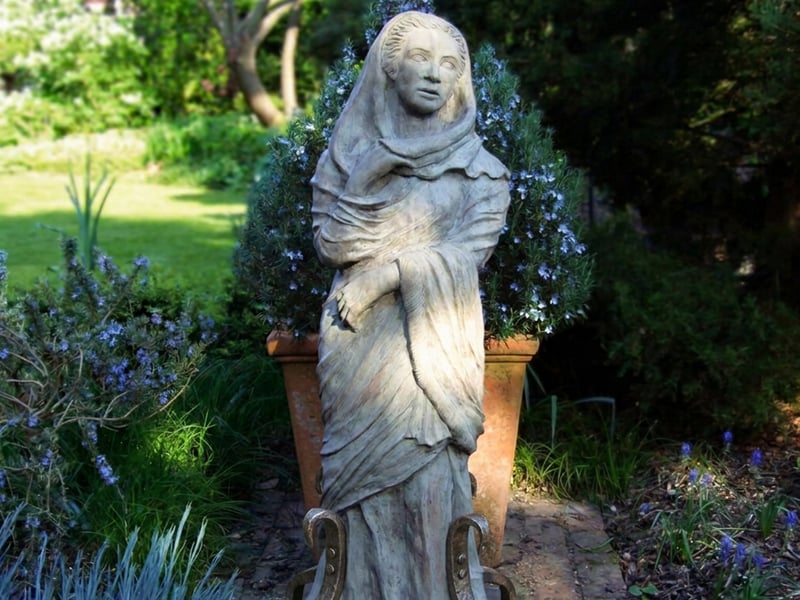
Shop the Draped Maiden Garden Statue →
Installer's Note
I get asked about this more than almost anything else. Someone spends £300 on a statue, puts it on the lawn, and three weeks later it is face-down in the flower bed. The statue is rarely at fault. The ground is. A cast stone statue weighing 40kg sounds heavy until you realise it sits on 150mm of topsoil that turns to porridge every time it rains. The answer is almost always a proper base. Not glue, not stakes, not hope. A flat, level, hard surface underneath.
Why garden statues fall over
Before you fix anything, work out what knocked it over. The method you need depends on the cause, and most gardens have more than one thing working against you.
Wind is the obvious one
UK gardens get average wind speeds of 10-15 mph. Gusts during autumn and winter storms regularly hit 40-60 mph. A 90cm statue with a narrow base acts like a lever: wind pushes the top, and the base is too narrow to resist. Exposed gardens in coastal areas, on hilltops, or facing west catch the worst of it. If your statue only falls over between October and March, wind is your problem.
Uneven ground and settling
Soft ground shifts. Lawn and border soil compact unevenly under weight, especially after rain. A statue that looked perfectly level in August can develop a 5-degree lean by December. That lean gets worse over time as rain runs down the low side and washes more soil away. One wet weekend can finish the job.
Frost heave
Water in the soil freezes, expands, and pushes the ground upward. When it thaws, the ground drops back but not always evenly. Over several freeze-thaw cycles through a UK winter, a statue can shift sideways by 10-15mm. That does not sound like much until you realise the base was only level to start with because of gravity.
The base is too small
This is the one people miss. A statue 120cm tall with a 200mm-diameter base is asking to fall over. The ratio of height to base width matters far more than weight. A general rule: the base should be at least 1.5 times the width of the statue's widest point. For a 120cm figure with 250mm shoulders, you want a base of at least 375mm across.
Animal interference
Foxes, cats, and dogs knock ornaments over more often than people admit. Foxes climb onto raised surfaces at night. Cats rub against things. Dogs wag into them at speed. If you find your statue tipped over in the morning with no wind damage elsewhere, suspect wildlife.
How to fix a statue on paving or patio slabs
Paving gives you the best starting point because the surface is already hard and flat. The problem is usually that the statue is just sitting there, relying on its own weight to stay put.
Exterior adhesive is the fastest and most reliable fix. Clean both surfaces (base of statue and paving slab) with a stiff brush and let them dry. Apply a bead of Everbuild Stixall or CT1 adhesive around the contact area. Press the statue down firmly and leave it for 24 hours. This creates a bond that holds through rain, frost, and wind. A 290ml tube costs £8-£12 from Screwfix or B&Q and covers 3-4 statues.
If you want a removable option, use museum wax or clear silicone sealant. Museum wax peels off cleanly when you want to move the statue. Silicone cuts away with a craft knife. Neither is as strong as construction adhesive, but both handle moderate wind.
For heavy statues over 50kg, adhesive alone is enough on flat paving. The weight does most of the work. The adhesive just stops lateral sliding during gusts.
How to fix a statue on grass or lawn
Lawn is where most statues end up face-down. Grass looks flat but the soil underneath moves constantly. You cannot glue anything to turf, and the surface is never level enough to rely on weight alone.
The buried slab method works every time. Cut a square of turf slightly larger than your paving slab (a 600mm x 600mm slab works for most statues). Dig out the turf and enough soil to sit the slab flush with the surrounding lawn. Add 25mm of sharp sand underneath, tamp it flat, and use a spirit level to check. Drop the slab in, check the level again, and place the statue on top. The turf grows back around the edges within a few weeks.
You now have a hard, level, draining surface that will not shift, sink, or heave. Total cost: one paving slab (£3-£8), a bag of sharp sand (£4), and 30 minutes of work.
For lighter resin ornaments under 10kg, you can skip the slab. Drive a length of 12mm rebar into the ground, leaving 150mm above the surface. If the ornament is hollow, lower it over the rod. The rod holds it upright even in strong wind. This will not work for solid cast stone because there is no cavity.
How to fix a statue on gravel
Gravel shifts under weight. Every time someone walks past or rain washes through, the stones rearrange. A statue on bare gravel will lean within weeks.
Clear the gravel back from where the statue will sit. Scrape down to the substrate (usually compacted hardcore or soil). Place a paving slab or flat stone directly on the substrate, level it with sand, and put the statue on the slab. Push the gravel back around the edges so the slab is hidden. The statue now sits on a solid surface while the gravel covers the join.
If you do not want to dig, use a flat piece of slate or York stone at least 50mm thick. Make it large enough to extend beyond the statue's base by 100mm on all sides. The extra width gives a broader footprint on the gravel and reduces sinking.
How to fix a statue on decking
Decking boards flex, and the screws holding them can pull out if a heavy statue lands on its side. You need to spread the load and attach to the joists, not just the boards.
Use a timber base plate screwed through the deck boards into the joist below. A 400mm x 400mm piece of 18mm exterior plywood works well. Pre-drill and countersink, then screw it down with 75mm stainless steel screws into the joist. Sit the statue on the plywood and secure it with adhesive. The plywood spreads the statue's weight across a larger area and gives the adhesive a stable surface to grip.
For composite decking, check the manufacturer's guidance on screw types. Some composites crack with wood screws. Stainless steel self-tapping screws designed for composite decking cost £8-£15 per box.
Which adhesive to use for garden statues
Not all adhesives survive outdoors in the UK. You need something that handles rain, frost, UV, and temperature swings from -10°C to +35°C without cracking or losing grip.
| Adhesive | Best for | Removable? | UK price | Cure time |
|---|---|---|---|---|
| Everbuild Stixall | Stone to stone or paving | No (permanent) | £8-£12 | 24 hours |
| CT1 Sealant & Adhesive | All materials including metal | No (permanent) | £10-£14 | 24-48 hours |
| Gorilla Glue (polyurethane) | Porous stone, concrete | No | £6-£10 | 24 hours |
| Clear silicone sealant | Temporary fix, smooth surfaces | Yes (cuts away) | £4-£7 | 24 hours |
| Museum wax | Statue on pedestal (sheltered) | Yes (peels off) | £8-£15 | Immediate |
| Epoxy resin (2-part) | Repairing broken statues | No | £5-£12 | 4-12 hours |
My pick for outdoor stone ornaments is Everbuild Stixall. It is a hybrid polymer adhesive that bonds wet surfaces, works in freezing temperatures, and stays flexible after curing. That flexibility matters because it does not crack when the stone expands and contracts with the seasons. A single tube does 3-4 statues. Available at any Screwfix, B&Q, or Toolstation branch.
Avoid standard PVA, wood glue, or household adhesives. They dissolve in rain within weeks. Superglue goes brittle in cold weather and snaps. Neither will last a UK winter.
Mechanical fixings: dowels, rebar, and threaded rod
Adhesive holds a statue to its base. Mechanical fixings hold a statue to the ground. For tall, top-heavy, or exposed statues, use both.
The rebar method
Drive a 600mm length of 12mm steel rebar into the ground, leaving 100-150mm above the surface. If the statue has a flat base, drill a matching hole in the underside using a masonry bit. Apply adhesive inside the hole and lower the statue onto the rebar. The rod acts like a root, anchoring the statue through the base and into the ground. Cost: £3-£5 for a length of rebar from any builders' merchant.
Threaded rod and resin anchor
For stone statues on paving, drill a 14mm hole through the paving slab and into the substrate. Drop in a length of M10 threaded rod. Fill the hole with chemical resin anchor (Rawlplug or Fischer brands, £8-£12 per cartridge). Drill a matching hole in the statue base, apply adhesive, and lower it onto the rod. This gives you a bond that will survive anything short of someone deliberately pulling the statue out.
Ground anchors
Platipus ground anchors are purpose-made for securing outdoor objects. You drive them into the soil at an angle and attach a cable or strap to the statue. They hold in soft ground where rebar would wobble. A pack of four costs £15-£25 online. Useful for exposed or hilltop gardens where wind is the main threat.
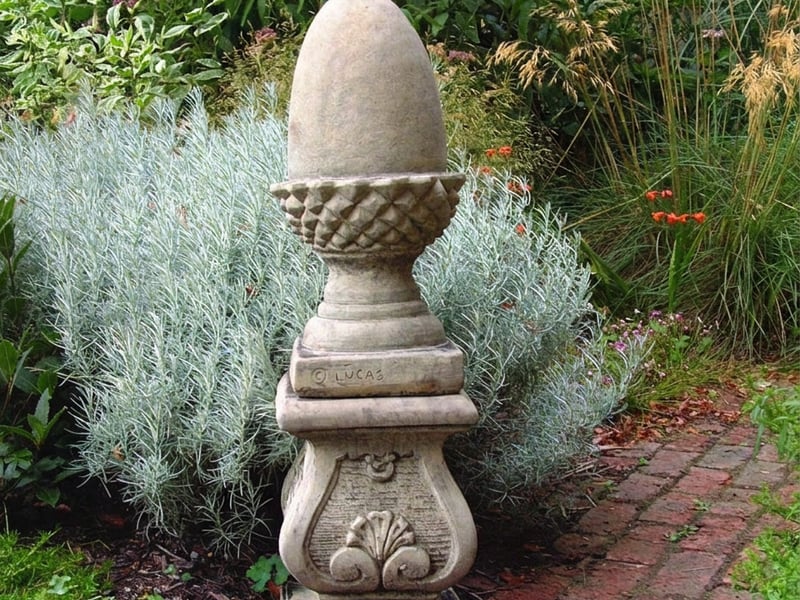
Shop the Scroll Plinth Garden Pedestal →
Why a pedestal solves most problems
A stone pedestal does three things at once. It adds weight low down, widens the base footprint, and raises the statue off damp ground. That last point matters for cast stone because moisture wicking up from soil accelerates frost damage at the base, which is exactly where the stone needs to be strongest.
A pedestal like our Scroll Plinth weighs around 25kg on its own. Sit a 30kg statue on top and you have 55kg of combined weight on a base that is 300mm across. That combination resists wind far better than the statue alone on its original 150mm footprint.
When pairing a statue with a pedestal, use a bead of exterior adhesive between the two. The statue-to-pedestal joint is where most movement happens because the pedestal sits stable while the statue rocks in the wind. Adhesive turns two separate pieces into one solid unit.
You can browse our full range of garden statues paired with matching pedestals for the most stable combination.
Matt's Tip: The spirit level test
Before you reach for adhesive or start drilling, put a spirit level on the surface where the statue will sit. If the bubble is off-centre, fix the surface first. No amount of adhesive will compensate for a statue starting life at a lean. On paving, a thin layer of exterior tile adhesive can level out a slightly uneven slab. On lawn, dig out and re-lay the buried slab until it reads level in both directions. Two minutes with a spirit level saves you doing the job twice.
How tall is too tall without fixing?
Short, squat ornaments rarely need securing. Anything under 45cm with a base wider than half its height will usually stay put under its own weight. The danger zone starts at around 60cm and gets worse as height increases.
| Statue height | Typical weight (cast stone) | Needs fixing? | Recommended method |
|---|---|---|---|
| Under 30cm | 2-8kg | Only on decking or in wind tunnels | Adhesive pad or museum wax |
| 30-60cm | 8-25kg | On lawn or gravel, yes | Buried slab + adhesive |
| 60-90cm | 25-50kg | Yes, on any surface | Pedestal + adhesive, or rebar |
| 90-120cm | 50-100kg | Yes, always | Concrete pad + rebar + adhesive |
| Over 120cm | 100kg+ | Mandatory | Professional concrete footing |
Resin statues weigh roughly a third of cast stone equivalents at the same height. They need fixing at shorter heights. A 60cm resin figure at 5kg will blow over in a moderate breeze. Treat resin ornaments as if they are one size category taller in the table above.
Material-specific advice
Cast stone and concrete
Cast stone bonds well with most exterior adhesives because the surface is slightly porous. Roughen the contact area with 80-grit sandpaper before applying adhesive for a stronger grip. If drilling for rebar, use a masonry bit at slow speed with the hammer action off. Cast stone can crack if you hammer-drill aggressively. Our materials guide covers the properties of each type in detail.
Resin and fibreglass
Resin is lightweight and non-porous, which makes adhesive bonding weaker. Use CT1 or a flexible MS polymer adhesive rather than rigid epoxy. For hollow resin statues, the rebar method works well: slide the statue over a ground rod and pack the cavity with dry sand for added weight. A 60cm hollow resin figure filled with sand goes from 5kg to around 15kg.
Metal ornaments
Metal statues usually have a flat plate or legs at the base. Drill through the plate and bolt directly to a paving slab or concrete pad using M8 stainless steel bolts. Counter-bore the holes from underneath the slab for hidden fixings. For ornate metal pieces where drilling is not an option, use cable ties or stainless steel hose clamps around the base, attached to ground anchors.
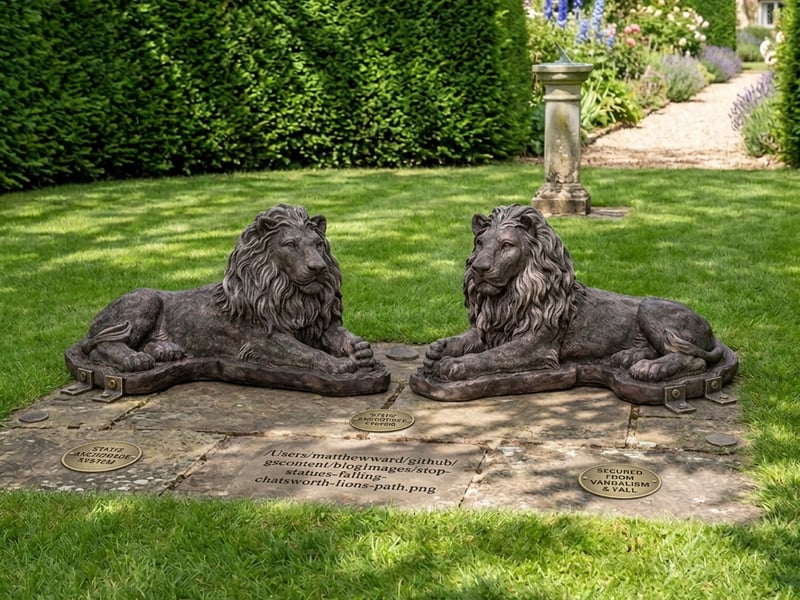
Shop the Chatsworth Lion Statues →
Seasonal checks that prevent problems
A statue can shift so gradually that you do not notice until it falls. A quick check at three points in the year catches problems early.
October (before winter storms): Check every statue with a spirit level. Re-apply adhesive if the bond has cracked. Tighten any mechanical fixings. Clear leaves and debris from around bases where moisture could pool.
March (after frost season): Look for frost heave. If a statue has shifted on its base, lift it off, re-level the surface underneath, and re-secure. Check for cracks in the statue base where water may have frozen and expanded. Our frost protection guide covers winter damage in detail.
July (mid-summer): Dry weather causes clay soils to shrink, which can undermine bases and create voids under slabs. If a buried slab has developed a wobble, lift it out, add sand, re-compact, and re-level.
When to call a professional
Most statue-fixing jobs are straightforward DIY. But a few situations genuinely call for help.
Statues over 150kg need machinery to lift. Trying to manhandle a 200kg statue onto rebar risks back injuries and broken ornaments. A landscaper with a mini crane or engine hoist can position heavy pieces safely for £100-£200.
Listed properties and conservation areas may restrict what you can fix to the ground. Drilling into historic paving or laying new concrete slabs may need approval from your local planning authority. Check before you start.
Statue repairs after a fall can be tricky. A clean break glues back with 2-part epoxy and looks fine. A shattered piece needs a stone restoration specialist. Expect to pay £50-£200 depending on complexity. Our large ornaments guide covers weight handling for bigger pieces.
Common mistakes to avoid
Using indoor adhesive outdoors. Standard silicone bathroom sealant, PVA glue, and wood glue all fail within weeks in rain. Always check the label says "exterior" or "outdoor use".
Fixing to an uneven surface. Adhesive fills small gaps but cannot compensate for a 10mm lean. Level the surface first, then secure.
Ignoring drainage. Water pooling around the base accelerates settling on soil and frost damage on stone. If water collects where your statue sits, improve drainage first. Even a handful of gravel around the base helps.
Over-tightening bolts on stone. Cast stone is strong in compression but weak in tension. If you bolt a metal bracket to a stone pedestal, tighten until snug and stop. Another quarter turn can crack the stone. Browse our full collection of garden ornaments for more ideas.
| Matt's Pick for Statue Stability | |
| Best For | Adding weight and a wider base to any garden statue |
| Why I Recommend It | At 25kg, the Scroll Plinth nearly doubles the weight of a medium statue. The 300mm top gives a broader platform than most statue bases, and the scroll detailing suits classical and traditional figures. I recommend it to anyone buying a statue over 60cm tall. |
| Price | From £165 |
| Link | View the Scroll Plinth Garden Pedestal |
Frequently asked questions
What is the best adhesive to fix a garden statue to paving?
Everbuild Stixall or CT1 are the best exterior adhesives for stone. Both are hybrid polymer formulas that stay flexible, waterproof, and frost-resistant. A 290ml tube costs £8-£14 and covers 3-4 statue bases. Apply to clean, dry surfaces and allow 24 hours to cure before exposing to wind or rain.
Can I fix a garden statue to grass without digging?
Rebar works for hollow statues without digging. Drive a steel rod into the ground and lower the ornament over it. For solid cast stone, there is no reliable way to fix to grass without burying a paving slab or flat stone first. The slab only needs to be 50mm below the surface and takes about 20 minutes to install.
How do I stop a resin garden ornament blowing over?
Fill hollow resin ornaments with dry sand to triple their weight. For solid resin, use a rebar ground rod or bolt the base to a paving slab. Resin is too light to rely on weight alone. A 60cm resin statue weighing 5kg needs mechanical fixing in any exposed position.
Will adhesive damage my paving slabs?
Permanent adhesives leave a residue when removed. They may pull a thin layer of stone from the slab. If you plan to move the statue later, use clear silicone sealant or museum wax instead. Silicone cuts away with a craft knife without damaging the paving underneath.
How heavy does a statue need to be to stay up without fixing?
A statue needs roughly 2kg per centimetre of height on a flat surface. A 60cm statue would need at least 120kg to resist moderate wind without fixing. Most garden statues are lighter than this, which is why securing them is worth the effort.
Matt W
Garden & Outdoor Specialist
Matt has spent over 16 years working hands-on with garden products across the UK. He tests materials in Staffordshire clay soil and hard water conditions, and writes from direct experience fitting, maintaining, and repairing everything from stone statues to cast iron furniture. His advice is based on what actually survives a British winter, not what looks good in a catalogue.
Related articles
- How to Secure Garden Ornaments: Anti-Theft and Wind Protection
- Where to Place Garden Sculptures: Layout, Lighting and Focal Points
- How to Care for and Maintain Stone Garden Ornaments
- Cottage Garden Ornaments: Traditional Styles That Never Date
- How to Weatherproof Garden Statues and Ornaments: UK Frost Protection Guide