
How to Age a Garden Statue: 4 Proven Methods
Written by on 6th Mar 2025.
New cast stone garden statues can be aged to look decades old using natural yoghurt, buttermilk, or compost paste. The yoghurt method is fastest, producing visible lichen and moss within 3-5 weeks. Brush yoghurt onto the statue and place it in shade. The live bacteria accelerate biological weathering. Only porous materials like cast stone and concrete respond. Resin, metal, and glazed ceramics will not age this way.
Key takeaways
- Natural yoghurt is the fastest ageing method. Visible results in 3-5 weeks for around £1.
- Only porous stone and concrete can be aged. Resin, metal, and glazed surfaces will not work.
- Shade and moisture speed up the process. South-facing sun dries out the treatment too fast.
- Expect a brief smell and red spots in week one. Both disappear by week three.
- Once the ageing starts, leave it alone. Nature takes over from there.
Installer's note
We deliver new stone ornaments that look fresh out of the mould. Customers often ask us how long it takes for the "new" look to wear off naturally. In a shaded, damp UK garden, you will see the first signs of weathering within 6-12 months. In an exposed, sunny spot, it can take 2-3 years. The yoghurt method skips all of that. We have used it on display pieces in our own garden. After five weeks, the results are indistinguishable from a statue that has been outside for a decade.
Browse our Stone Garden Ornaments →
How to age a garden statue with yoghurt
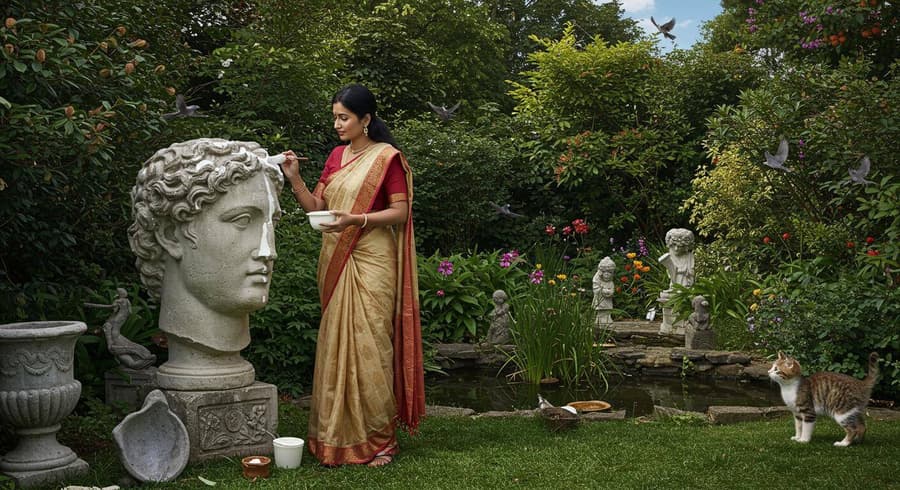
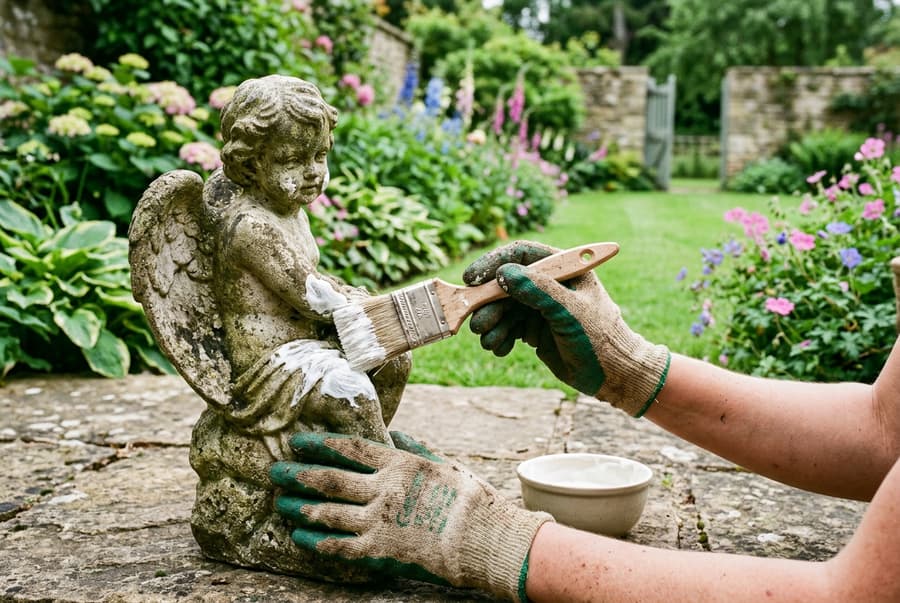
The yoghurt method is the most popular for good reason. It is cheap, simple, and produces dramatic results. The live bacteria in natural yoghurt feed on the stone's mineral surface. This creates conditions for lichen and moss spores to take hold.
What you need
- 1 pot of natural yoghurt (Greek or plain, with live cultures)
- An old paintbrush (50mm or wider)
- Gardening gloves
- A shaded spot out of direct rain for the first few days
Step by step
- Clean the statue with plain water and let it dry for 24 hours.
- Brush yoghurt over the entire surface. Work it into crevices and detailed areas.
- Apply a thick coat. Do not thin it with water at this stage.
- Place the statue in a shaded, sheltered spot for 3-5 days.
- After 5 days, move it to its final position. Rain will not wash off the bacteria colony by this point.
What to expect week by week
| Week | What you will see | What to do |
|---|---|---|
| Week 1 | Red/orange spots, slight smell | Leave it. This is the bacteria colonising the surface. |
| Week 2-3 | Red fades, grey-green tint appears | Nothing. The smell disappears by now. |
| Week 4-5 | Visible lichen patches, moss in crevices | The statue now looks naturally aged. |
| Month 3+ | Full patina, moss spreading on shaded sides | Leave it alone. Nature handles the rest. |
Shop the Sitting Buddha Statue →
Matt's tip: the cheap yoghurt works best
Do not waste money on expensive Greek yoghurt. The cheapest own-brand natural yoghurt from any supermarket works just as well. What matters is that it contains live cultures. Check the label for "Lactobacillus" or "live cultures." The 500ml pots for around £1 cover a medium-sized statue easily. I have tried both and seen no difference in results.
The compost and paint method for deeper ageing
This method takes longer but produces a more layered, authentic finish. It combines a painted base coat with biological growth for a result that looks like genuine decades of weathering.
What you need
- Black or dark grey acrylic paint (water-soluble)
- Natural yoghurt
- Garden compost or well-rotted manure
- A handful of garden moss
- Large paintbrush, gloves, bucket
Step by step
- Mix acrylic paint with water until it looks like dirty dishwater. Brush onto the statue. Let it dry and repeat until the base colour looks right.
- In a bucket, mix equal parts yoghurt, water, and compost into a thick paste.
- Wearing gloves, coat the statue with the paste. Focus on recesses and undersides where natural grime would collect.
- Rub handfuls of moss over the coated surface. This spreads spores into the paste.
- Place in a shaded, damp spot and leave for 4-6 weeks.
The paint base coat gives the statue that grey, weathered tone immediately. The yoghurt-compost layer then adds biological growth over the following weeks. The combined effect is more convincing than either method alone.
Other methods that work
Buttermilk and moss slurry
Blend moss, buttermilk, and a splash of water in a blender until you get a thick green paste. Paint it onto the statue and keep it moist for a week. This method is popular for "moss graffiti" on walls and works well on stone ornaments. Buttermilk has similar live cultures to yoghurt and feeds moss growth. Results show within 4-6 weeks.
Soil burial
Bury small ornaments in damp garden soil for 2-4 weeks. The minerals, bacteria, and moisture in the soil stain the surface and kick-start biological colonisation. Dig it up and brush off loose soil. The stone will have a natural earthy patina that no paint can replicate.
The do-nothing method
Place the statue in a shaded, north-facing corner near dense planting. Moss, lichen, and algae will colonise it naturally. This takes 6-18 months in a typical UK garden. It is the slowest method but produces the most authentic result because you are not forcing anything. Our guide on positioning stone garden ornaments explains which spots in your garden age ornaments fastest.
Which materials can be aged?
| Material | Can it be aged? | Notes |
|---|---|---|
| Cast stone (reconstituted) | Yes, excellent | The porous surface holds yoghurt and compost well. |
| Concrete | Yes, good | Slightly smoother surface. May need two coats. |
| Natural stone | Yes, excellent | Sandstone and limestone respond fastest. |
| Resin | No | Non-porous surface. Yoghurt slides off and nothing grows. |
| Metal | No | Different patina process. Metal develops rust, not moss. |
| Glazed ceramic | No | The glaze seals the surface. Nothing can take hold. |
If you are deciding between materials for a new purchase, our stone vs resin comparison explains the differences. For ageing purposes, cast stone from our stone garden ornaments range responds best to all of these methods.
Common mistakes when ageing garden statues
- Using flavoured yoghurt. Only natural yoghurt with live cultures works. Strawberry yoghurt will attract wasps and do nothing for the stone.
- Placing in full sun. Direct sunlight dries the yoghurt before the bacteria can colonise. Shade is essential for the first 2-3 weeks.
- Washing it too soon. Rain in the first 3 days can wash off the treatment. Shelter the statue initially or reapply.
- Trying to age resin. Resin is non-porous. No amount of yoghurt will make moss grow on it.
- Panicking at week one. Red spots and a bad smell are normal. They disappear by week three. Do not scrub it off.
Shop the Kneeling Buddha Statue →
How to maintain an aged statue
Once the ageing process has taken hold, leave it alone. The moss, lichen, and patina will continue developing naturally. Do not seal the statue. Sealant stops biological growth and defeats the purpose of ageing. If moss starts growing too thick and covers the detail, gently brush back the excess with a soft dry brush. Keep the fine layer and remove only the heavy clumps.
If you ever want to reverse the ageing, a scrub with warm soapy water removes most of the surface growth. For a full clean back to near-original condition, follow the steps in our stone ornament care guide. But we find that most people who age a statue never want to go back. Browse our full collection of garden ornaments for more ideas.
Frequently asked questions
How long does yoghurt take to age a garden statue?
Visible results appear within 3-5 weeks. The first signs are a colour shift from bright white to grey-green. Lichen patches form by week four. Full moss coverage in crevices takes 2-3 months. Results are faster in shaded, damp positions and slower in dry, exposed spots.
Will ageing a statue damage it?
No. These methods mimic natural weathering. Yoghurt, buttermilk, and compost encourage biological growth that occurs naturally over years. The stone surface is not weakened. These methods only work on porous stone and concrete, not metal or resin.
Does the yoghurt method smell?
Yes, slightly, for about a week. The bacteria produce a mild sour smell during the first 5-7 days. It disappears completely once the colony establishes. Place the statue away from seating areas during the first week if this concerns you.
Can I age a resin garden ornament?
No. Resin is non-porous and will not respond. Yoghurt and compost slide off the smooth surface without colonising. Only cast stone, concrete, and natural stone can be aged using biological methods. Resin can be painted to look older, but it will not grow moss.
What is the cheapest way to age a garden statue?
A £1 pot of natural yoghurt and a paintbrush. That is all you need for the yoghurt method. Results are visible within 3-5 weeks. The compost method costs nothing extra if you have a compost bin. Buttermilk costs around £1.50 per carton.
Further reading
- How to care for and maintain stone garden ornaments
- How to position stone garden ornaments
- Stone vs resin: which material is best?
- Top 10 stone garden ornament ideas for UK gardens
- Feng shui garden statue placement guide
Matt W
Garden & Outdoor Specialist
Matt has spent over 16 years working hands-on with garden products across the UK. He tests materials in Staffordshire clay soil and hard water conditions, and writes from direct experience fitting, maintaining, and repairing everything from stone statues to cast iron furniture. His advice is based on what actually survives a British winter, not what looks good in a catalogue.